
Ppt 04 PS 8 Thermodynamics energy changes heat

- Slides: 48
Ppt 04 (PS 8), Thermodynamics • • energy changes (heat flows) Very global (“the universe”) Applies to all fields of science Led to creation of heat engines/refrigerators/air conditioners • In chemistry, focus is on physical and chemical changes • How can we use “spontaneous processes” to “do work”? • We can use tabulated data to make predictions (and even calculate K’s for possible processes!) Ppt 04_Thermo 1
“Spontaneous” “fast” !! • Spontaneity refers to “directionality” – Does it occur (on its own) in the forward [or stated] direction, or does it not? • Thermodynamics will answer / address this question. • Does not depend on how the process is carried out. • Fast refers to rate at which it occurs (in the spontaneous direction) – How fast will it occur? • Kinetics will answer / address this question • Does depend on how the process occurs (“pathway”; transition state, activation energy, etc. ) • Recall that we should be spontaneously combusting right now!! Ppt 04_Thermo 2
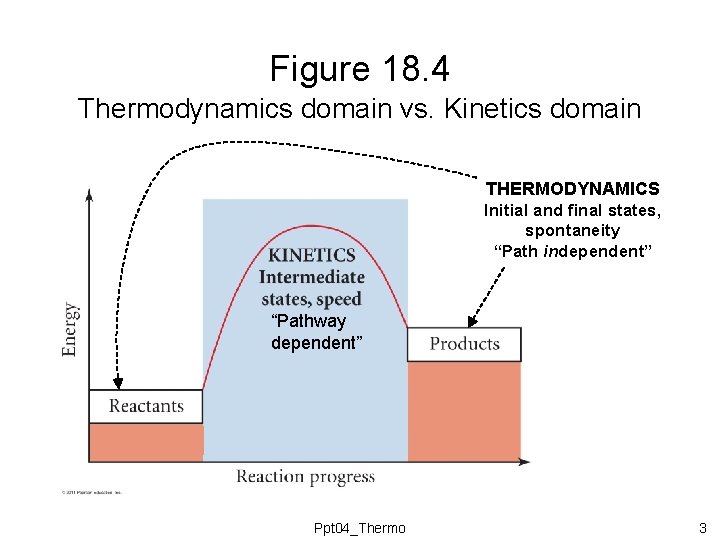
Figure 18. 4 Thermodynamics domain vs. Kinetics domain THERMODYNAMICS Initial and final states, spontaneity “Path independent” “Pathway dependent” Ppt 04_Thermo 3
Reminder: 1 st Law of Thermodynamics • The total amount of energy in the universe never changes (it’s constant) • Euniv= 0 Esys = - Esurr • “If energy leaves the system, it must go to the surroundings, and vice versa” • Has nothing to do with “spontaneity” – 1 st Law is consistent with a casserole dish coming out of the oven colder than when it was put in, as long as the oven would get hotter! Ppt 04_Thermo 4
Spontaneity and the 2 nd Law • A spontaneous process is one that occurs (at a specified set of conditions) “without external intervention”. – Gases expand into the volume of their containers – Ice will melt at 10°C – Water will freeze at -10°C – A chemical reaction will occur in the forward direction if Q < K Ppt 04_Thermo 5
Spontaneity and the 2 nd Law (continued) • At the same conditions, the reverse process of a spontaneous one is not spontaneous – Gases won’t spontaneously “contract” into a smaller volume (perfume molecules going back into the bottle after opened? ) – Water will not freeze at 10°C – Ice will not melt at -10°C – A chemical reaction will not occur in the reverse direction if Q < K Ppt 04_Thermo 6
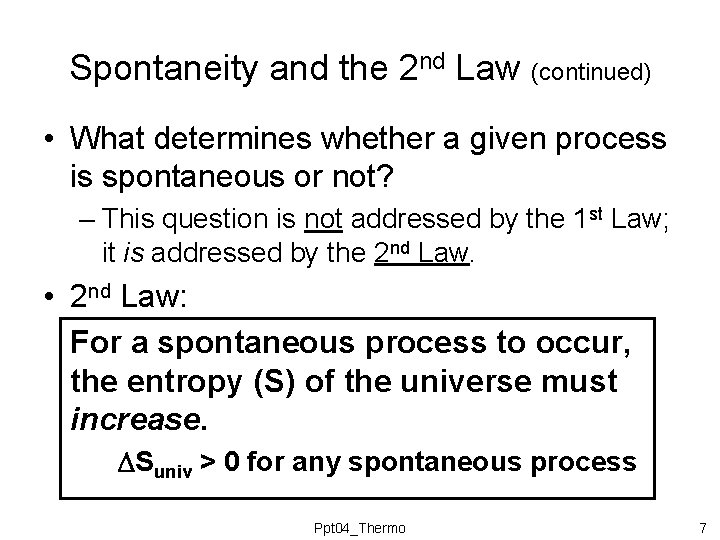
Spontaneity and the 2 nd Law (continued) • What determines whether a given process is spontaneous or not? – This question is not addressed by the 1 st Law; it is addressed by the 2 nd Law. • 2 nd Law: For a spontaneous process to occur, the entropy (S) of the universe must increase. Suniv > 0 for any spontaneous process Ppt 04_Thermo 7
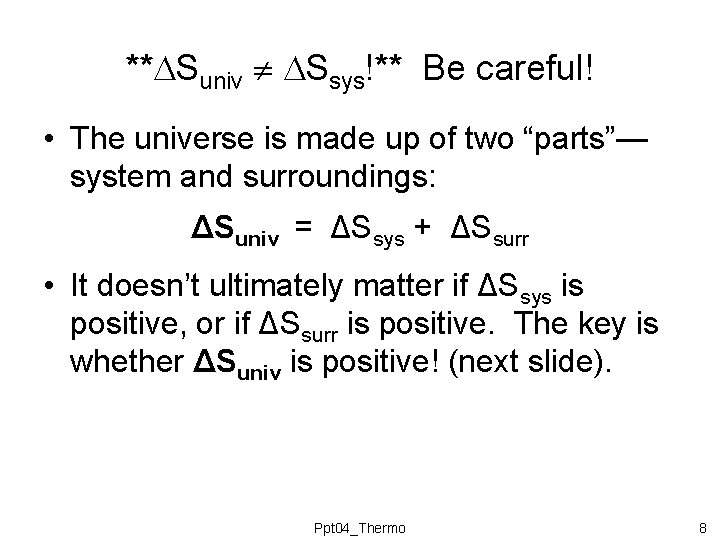
** Suniv Ssys!** Be careful! • The universe is made up of two “parts”— system and surroundings: ΔSuniv = ΔSsys + ΔSsurr • It doesn’t ultimately matter if ΔSsys is positive, or if ΔSsurr is positive. The key is whether ΔSuniv is positive! (next slide). Ppt 04_Thermo 8
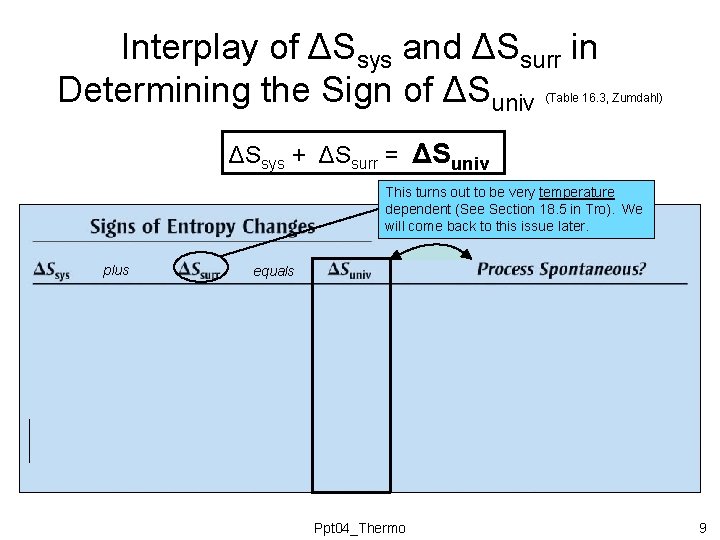
Interplay of ΔSsys and ΔSsurr in Determining the Sign of ΔSuniv (Table 16. 3, Zumdahl) ΔSsys + ΔSsurr = ΔSuniv This turns out to be very temperature dependent (See Section 18. 5 in Tro). We will come back to this issue later. plus equals See next slide Ppt 04_Thermo 9
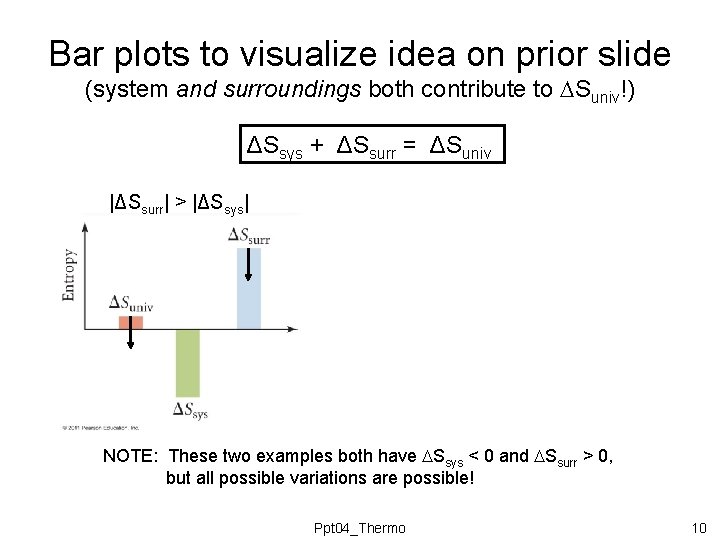
Bar plots to visualize idea on prior slide (system and surroundings both contribute to Suniv!) ΔSsys + ΔSsurr = ΔSuniv |ΔSsurr| > |ΔSsys| > |ΔSsurr| NOTE: These two examples both have Ssys < 0 and Ssurr > 0, but all possible variations are possible! Ppt 04_Thermo 10
What is entropy? • Hard thing to define conceptually! – Something like “energy dispersal”--not necessarily “spatial” dispersal, but energy dispersed over the various motions of atoms & molecules. Reflects quality or usefulness of energy. • Let’s start with individual substances – Look at what affects the amount of entropy in a sample of a single substance (without necessarily understanding “what” it is”). • Then we’ll look at mixtures of substances (in a reactive system, e. g. ) – When a change occurs in the system, Ssys changes because there are new substances present (or new physical states) • We’ll consider the surroundings last – Just a “bunch of substances not doing anything” (Prof. Mines’ view) Ppt 04_Thermo 11
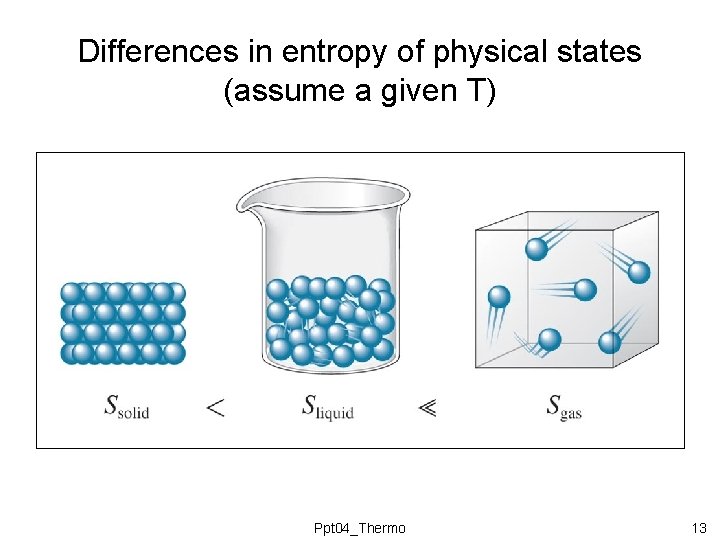
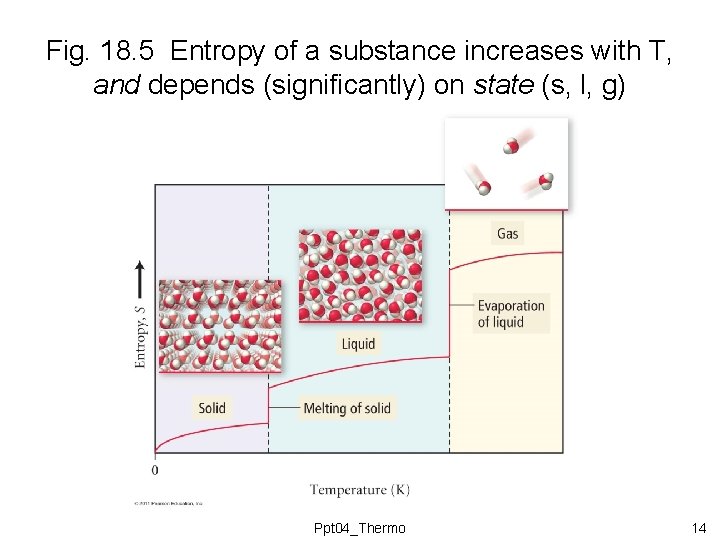
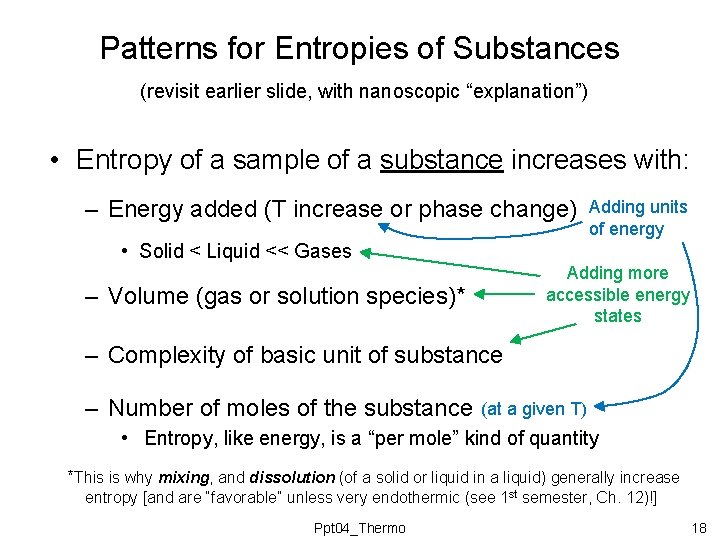
Patterns for Entropies of Substances (see handout/outline for details; Tro does this later; Section 18. 7) • Entropy of a sample of a substance increases with: – Energy added (T increase or phase change) • Solid < Liquid << Gases – Volume (gas or solution species) – Complexity of basic unit of substance – Number of moles of the substance • Entropy, like energy, is a “per mole” kind of quantity • Recall that we’ll typically only specify substances that undergo some change to be part of the system. Ppt 04_Thermo 12
Differences in entropy of physical states (assume a given T) Ppt 04_Thermo 13
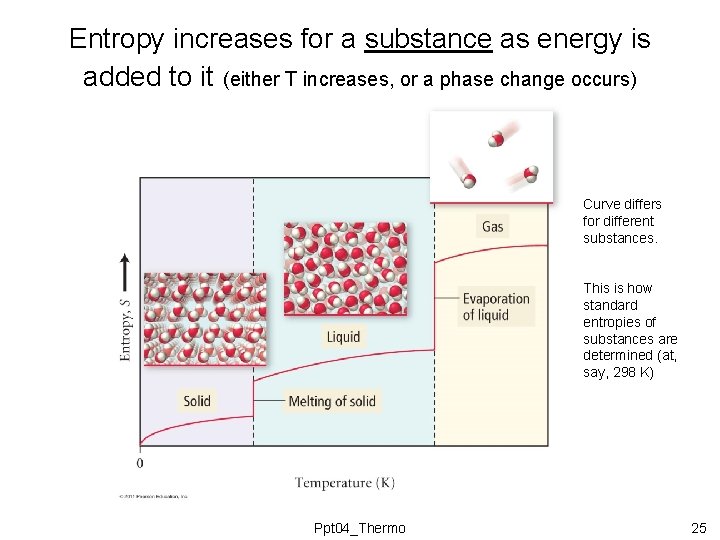
Fig. 18. 5 Entropy of a substance increases with T, and depends (significantly) on state (s, l, g) Ppt 04_Thermo 14
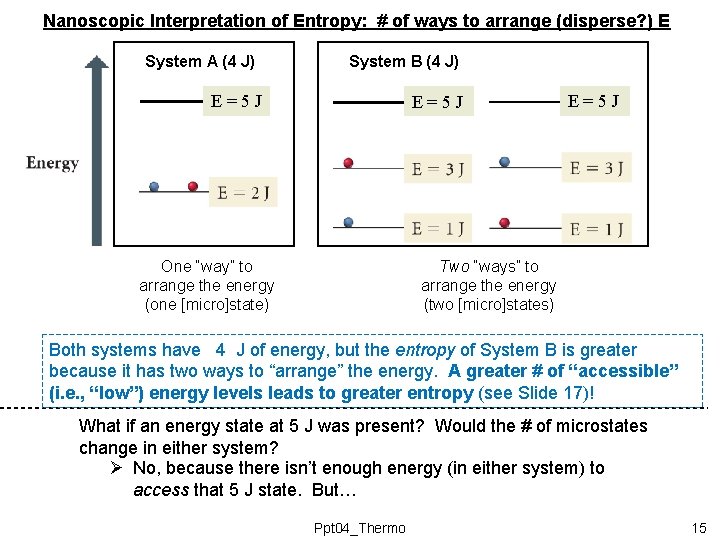
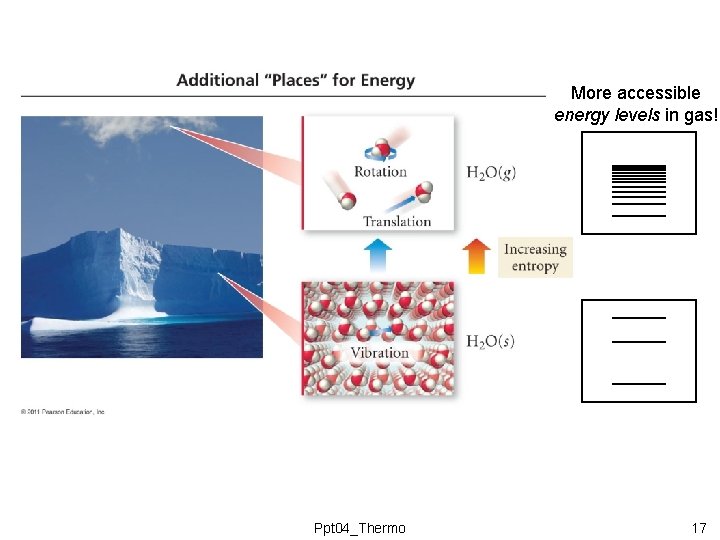
Nanoscopic Interpretation of Entropy: # of ways to arrange (disperse? ) E System A (4 J) System B (4 J) E=5 J One “way” to arrange the energy (one [micro]state) E=5 J Two “ways” to arrange the energy (two [micro]states) Both systems have 4 J of energy, but the entropy of System B is greater because it has two ways to “arrange” the energy. A greater # of “accessible” (i. e. , “low”) energy levels leads to greater entropy (see Slide 17)! What if an energy state at 5 J was present? Would the # of microstates change in either system? Ø No, because there isn’t enough energy (in either system) to access that 5 J state. But… Ppt 04_Thermo 15
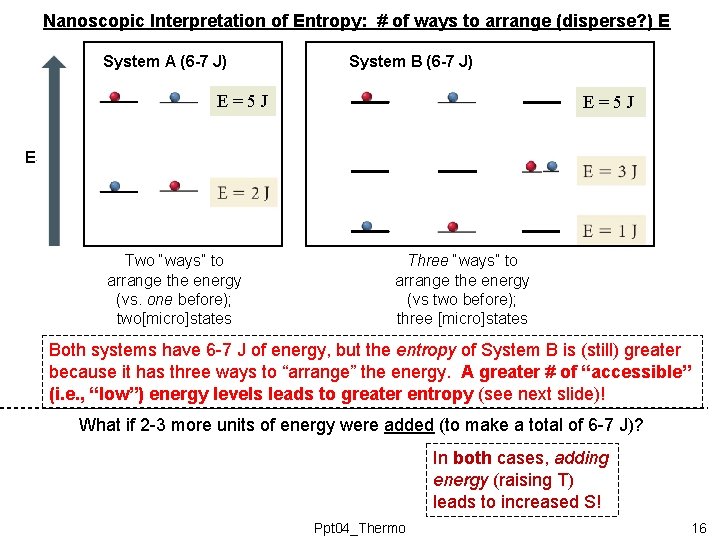
Nanoscopic Interpretation of Entropy: # of ways to arrange (disperse? ) E System A (6 -7 J) System B (6 -7 J) E=5 J E Two “ways” to arrange the energy (vs. one before); two[micro]states Three “ways” to arrange the energy (vs two before); three [micro]states Both systems have 6 -7 J of energy, but the entropy of System B is (still) greater because it has three ways to “arrange” the energy. A greater # of “accessible” (i. e. , “low”) energy levels leads to greater entropy (see next slide)! What if 2 -3 more units of energy were added (to make a total of 6 -7 J)? In both cases, adding energy (raising T) leads to increased S! Ppt 04_Thermo 16
More accessible energy levels in gas! Ppt 04_Thermo 17
Patterns for Entropies of Substances (revisit earlier slide, with nanoscopic “explanation”) • Entropy of a sample of a substance increases with: – Energy added (T increase or phase change) Adding units of energy • Solid < Liquid << Gases Adding more accessible energy states – Volume (gas or solution species)* – Complexity of basic unit of substance – Number of moles of the substance (at a given T) • Entropy, like energy, is a “per mole” kind of quantity *This is why mixing, and dissolution (of a solid or liquid in a liquid) generally increase entropy [and are “favorable” unless very endothermic (see 1 st semester, Ch. 12)!] Ppt 04_Thermo 18
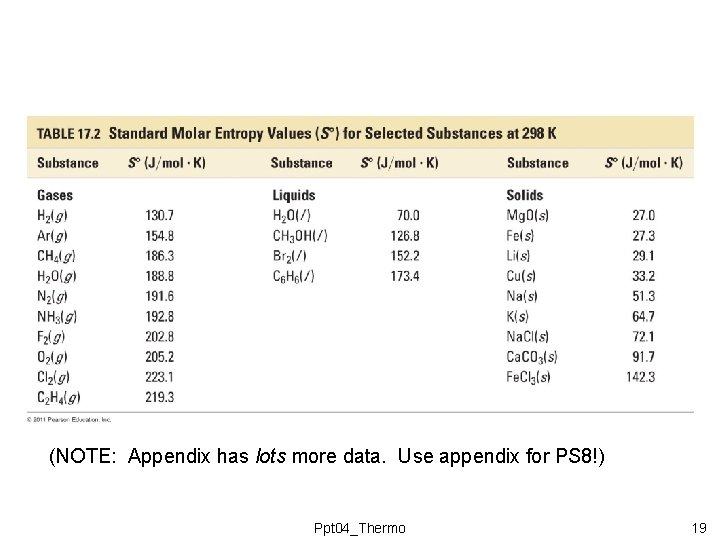
(NOTE: Appendix has lots more data. Use appendix for PS 8!) Ppt 04_Thermo 19
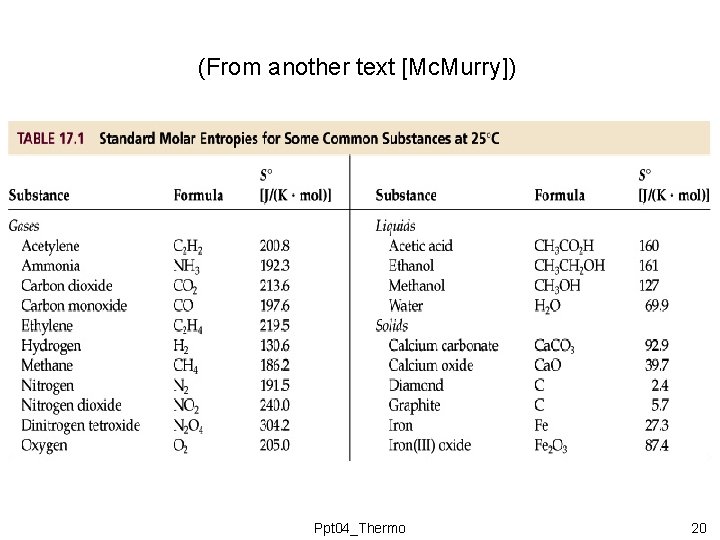
(From another text [Mc. Murry]) Ppt 04_Thermo 20
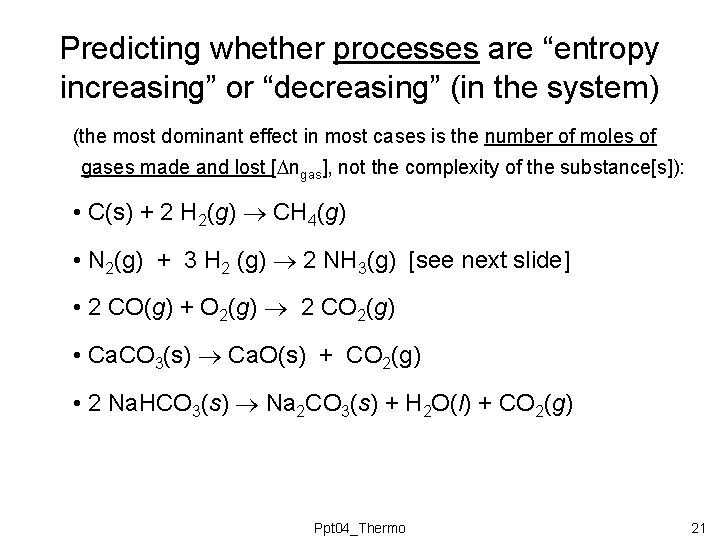
Predicting whether processes are “entropy increasing” or “decreasing” (in the system) (the most dominant effect in most cases is the number of moles of gases made and lost [ ngas], not the complexity of the substance[s]): • C(s) + 2 H 2(g) CH 4(g) • N 2(g) + 3 H 2 (g) 2 NH 3(g) [see next slide] • 2 CO(g) + O 2(g) 2 CO 2(g) • Ca. CO 3(s) Ca. O(s) + CO 2(g) • 2 Na. HCO 3(s) Na 2 CO 3(s) + H 2 O(l) + CO 2(g) Ppt 04_Thermo 21
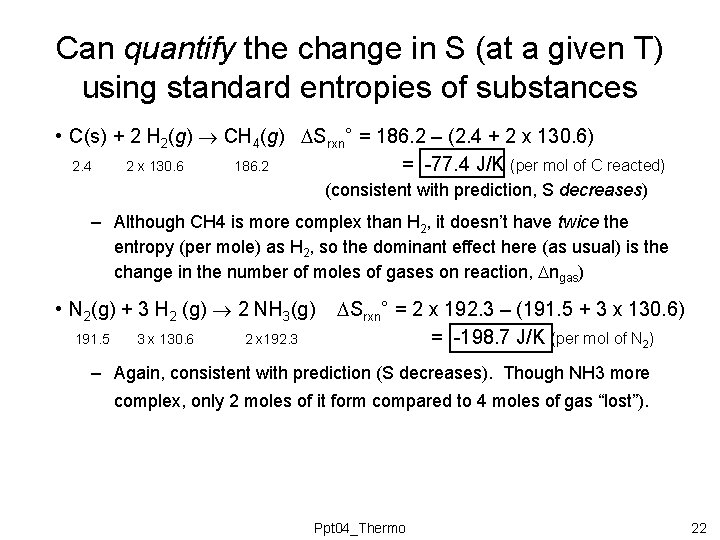
Can quantify the change in S (at a given T) using standard entropies of substances • C(s) + 2 H 2(g) CH 4(g) Srxn° = 186. 2 – (2. 4 + 2 x 130. 6) 2. 4 2 x 130. 6 186. 2 = -77. 4 J/K (per mol of C reacted) (consistent with prediction, S decreases) – Although CH 4 is more complex than H 2, it doesn’t have twice the entropy (per mole) as H 2, so the dominant effect here (as usual) is the change in the number of moles of gases on reaction, ngas) • N 2(g) + 3 H 2 (g) 2 NH 3(g) 191. 5 3 x 130. 6 2 x 192. 3 Srxn° = 2 x 192. 3 – (191. 5 + 3 x 130. 6) = -198. 7 J/K (per mol of N 2) – Again, consistent with prediction (S decreases). Though NH 3 more complex, only 2 moles of it form compared to 4 moles of gas “lost”). Ppt 04_Thermo 22
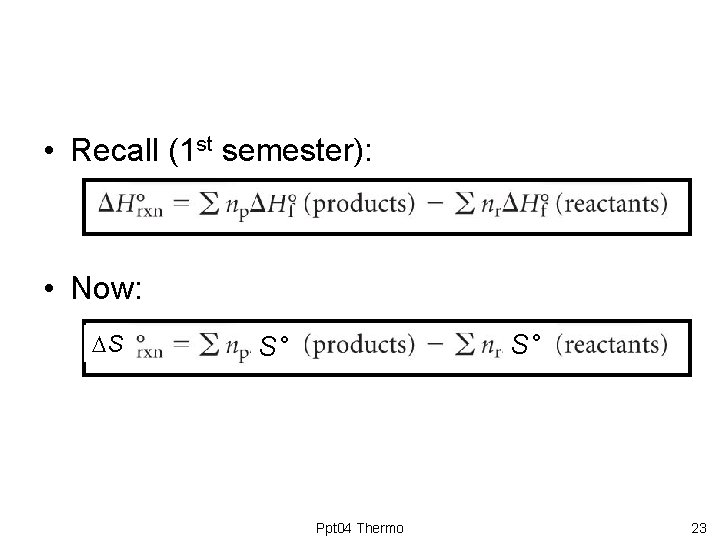
• Recall (1 st semester): • Now: S S° S° Ppt 04 Thermo 23
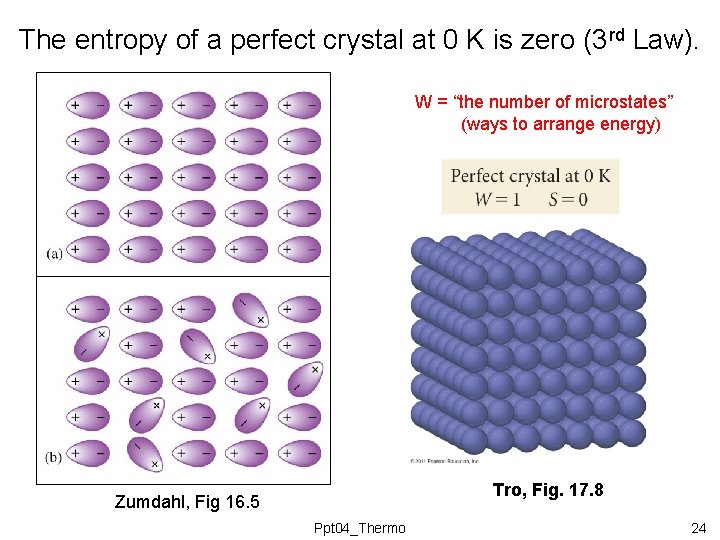
The entropy of a perfect crystal at 0 K is zero (3 rd Law). W = “the number of microstates” (ways to arrange energy) Tro, Fig. 17. 8 Zumdahl, Fig 16. 5 Ppt 04_Thermo 24
Entropy increases for a substance as energy is added to it (either T increases, or a phase change occurs) Curve differs for different substances. This is how standard entropies of substances are determined (at, say, 298 K) Ppt 04_Thermo 25
Relating Entropy of the Surroundings to a Property of the System--What is “free energy” (G)? • See Section IV of Handout Outline • Up through the derivation of the expression: G = H –T S Ppt 04_Thermo 26
EXAMPLE 17. 3 Computing Gibbs Free Energy Changes and Predicting Spontaneity from H and S Consider the reaction for the decomposition of carbon tetrachloride gas: (a) Calculate G at 25 C and determine whether the reaction is spontaneous. (b) If the reaction is not spontaneous at 25 C, determine at what temperature (if any) the reaction becomes spontaneous. Consider only (a) for now. SOLUTION (a) Use Equation 17. 9 to calculate G from the given values of H and S. The temperature must be in kelvins. Be sure to express both H and S in the same units (usually joules). The reaction is not spontaneous. © 2011 Pearson Education, Inc. Ppt 04_Thermo At the specific conditions / concentrations of the reaction system! 27
Back to Outline • Conceptual connections… Ppt 04_Thermo 28
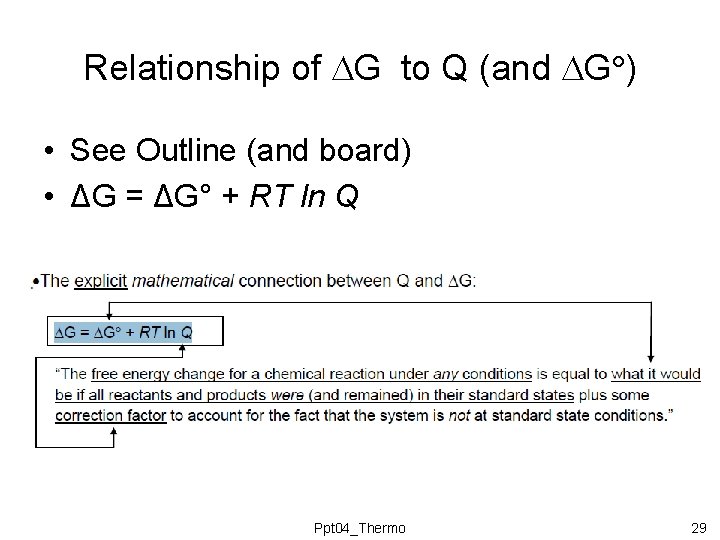
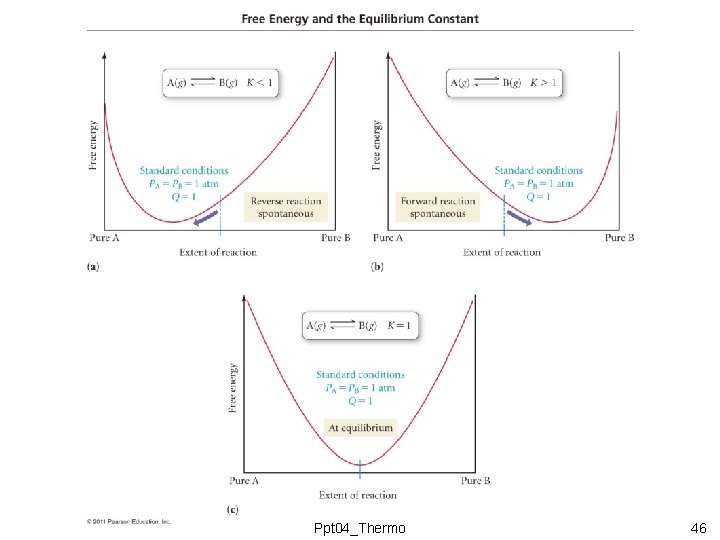
Relationship of G to Q (and G ) • See Outline (and board) • ΔG = ΔG° + RT ln Q Ppt 04_Thermo 29
Relationship of G to K • See Outline—Derive from prior slide’s relationship! Ppt 04_Thermo 30
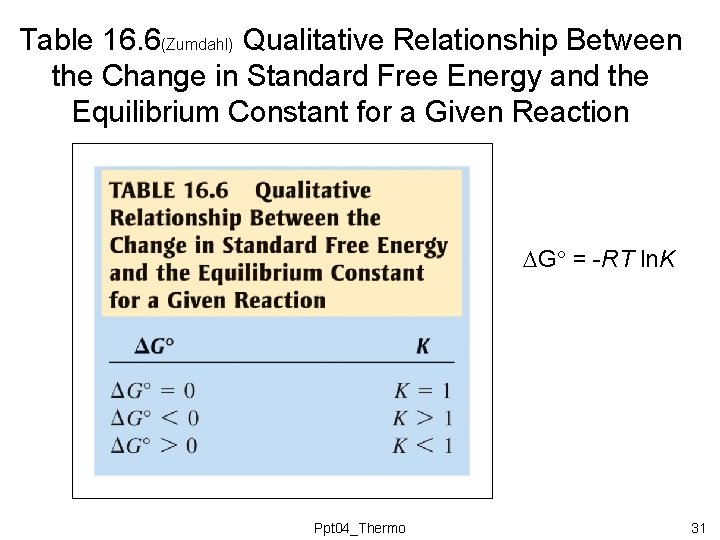
Table 16. 6(Zumdahl) Qualitative Relationship Between the Change in Standard Free Energy and the Equilibrium Constant for a Given Reaction G = -RT ln. K Ppt 04_Thermo 31
Return from Outline • …to discuss T-dependence of spontaneity (specifically, Suniv and Gsys) • First look at T-dependence of Gsys Ppt 04_Thermo 32
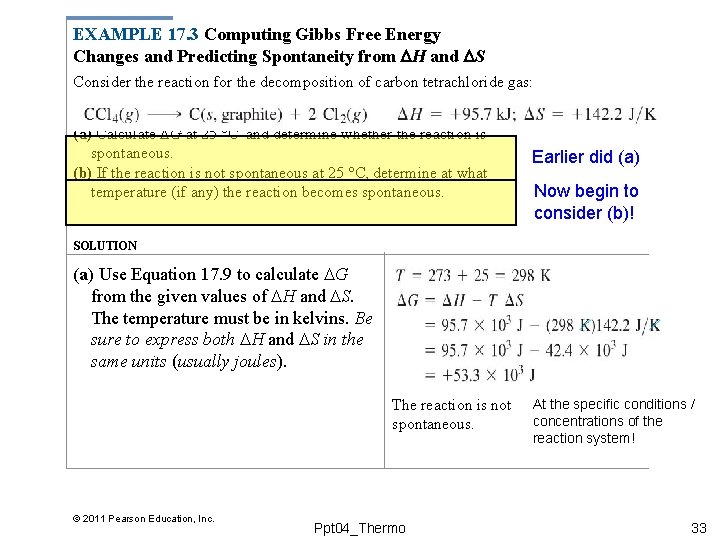
EXAMPLE 17. 3 Computing Gibbs Free Energy Changes and Predicting Spontaneity from H and S Consider the reaction for the decomposition of carbon tetrachloride gas: (a) Calculate G at 25 C and determine whether the reaction is spontaneous. (b) If the reaction is not spontaneous at 25 C, determine at what temperature (if any) the reaction becomes spontaneous. Earlier did (a) Now begin to consider (b)! SOLUTION (a) Use Equation 17. 9 to calculate G from the given values of H and S. The temperature must be in kelvins. Be sure to express both H and S in the same units (usually joules). The reaction is not spontaneous. © 2011 Pearson Education, Inc. Ppt 04_Thermo At the specific conditions / concentrations of the reaction system! 33
Board Work • T-dependence of Gsys Ppt 04_Thermo 34
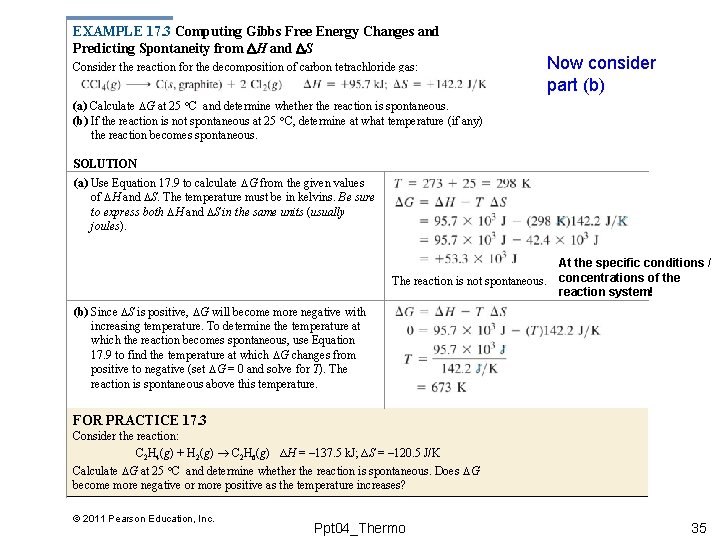
EXAMPLE 17. 3 Computing Gibbs Free Energy Changes and Predicting Spontaneity from H and S Consider the reaction for the decomposition of carbon tetrachloride gas: Now consider part (b) (a) Calculate G at 25 C and determine whether the reaction is spontaneous. (b) If the reaction is not spontaneous at 25 C, determine at what temperature (if any) the reaction becomes spontaneous. SOLUTION (a) Use Equation 17. 9 to calculate G from the given values of H and S. The temperature must be in kelvins. Be sure to express both H and S in the same units (usually joules). The reaction is not spontaneous. At the specific conditions / concentrations of the reaction system! (b) Since S is positive, G will become more negative with increasing temperature. To determine the temperature at which the reaction becomes spontaneous, use Equation 17. 9 to find the temperature at which G changes from positive to negative (set G = 0 and solve for T). The reaction is spontaneous above this temperature. FOR PRACTICE 17. 3 Consider the reaction: C 2 H 4(g) + H 2(g) C 2 H 6(g) ∆H = – 137. 5 k. J; ∆S = – 120. 5 J/K Calculate G at 25 C and determine whether the reaction is spontaneous. Does G become more negative or more positive as the temperature increases? © 2011 Pearson Education, Inc. Ppt 04_Thermo 35
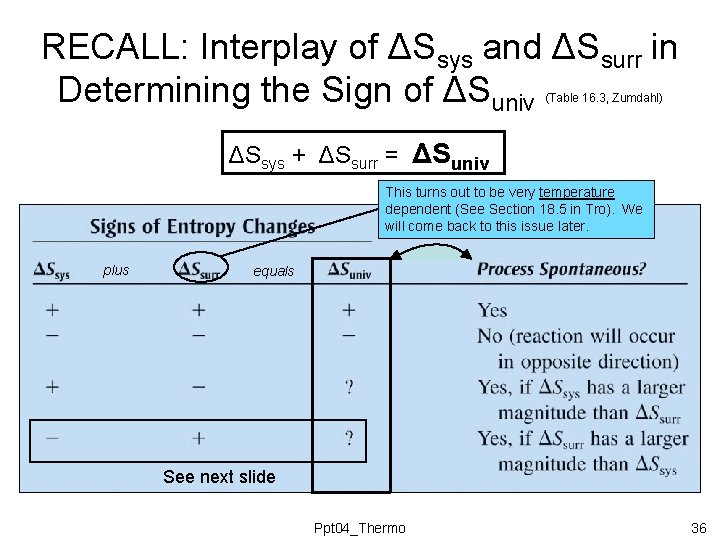
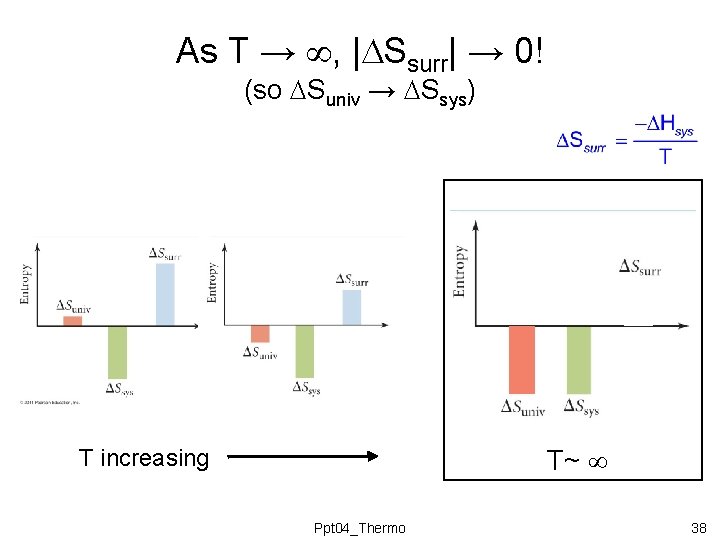
RECALL: Interplay of ΔSsys and ΔSsurr in Determining the Sign of ΔSuniv (Table 16. 3, Zumdahl) ΔSsys + ΔSsurr = ΔSuniv This turns out to be very temperature dependent (See Section 18. 5 in Tro). We will come back to this issue later. plus equals See next slide Ppt 04_Thermo 36
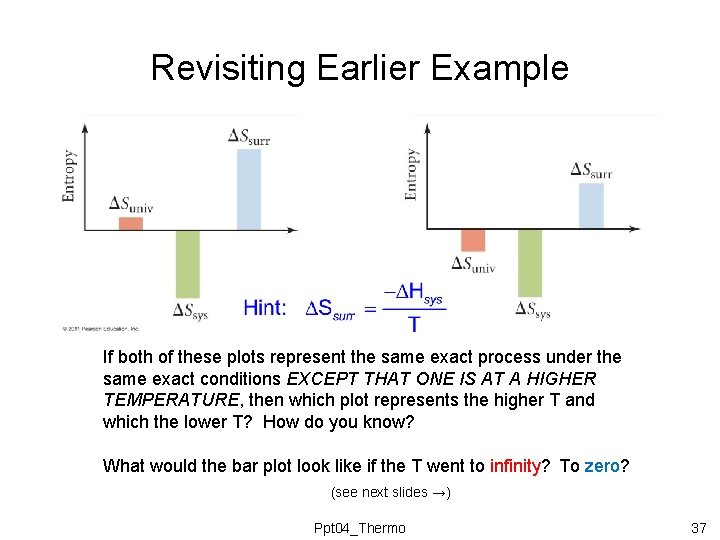
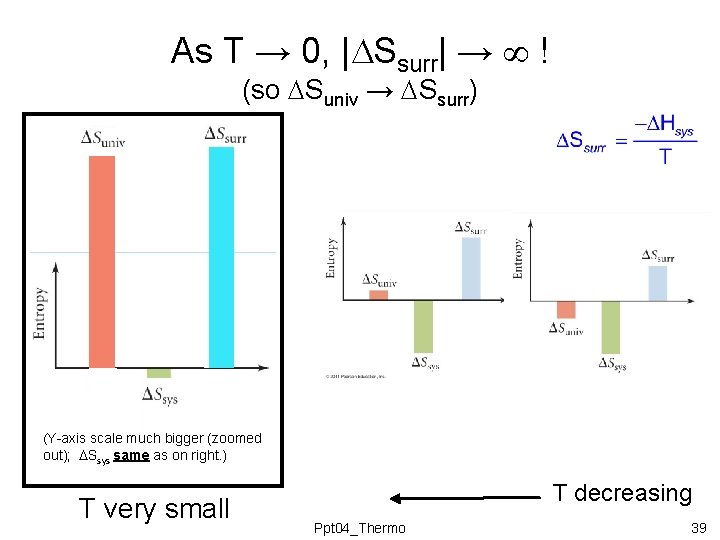
Revisiting Earlier Example If both of these plots represent the same exact process under the same exact conditions EXCEPT THAT ONE IS AT A HIGHER TEMPERATURE, then which plot represents the higher T and which the lower T? How do you know? What would the bar plot look like if the T went to infinity? To zero? (see next slides →) Ppt 04_Thermo 37
As T → , | Ssurr| → 0! (so Suniv → Ssys) T~ T increasing Ppt 04_Thermo 38
As T → 0, | Ssurr| → ! (so Suniv → Ssurr) (Y-axis scale much bigger (zoomed out); Ssys same as on right. ) T very small T decreasing Ppt 04_Thermo 39
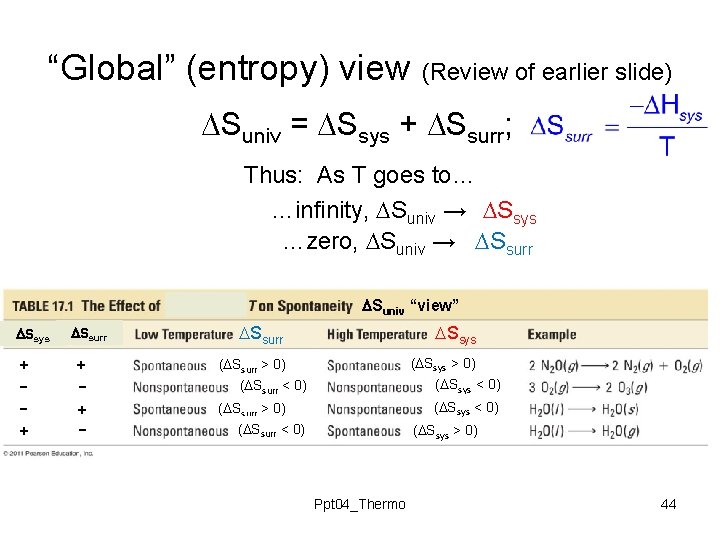
Summary, T-dependence of Suniv • At very high T, Suniv approaches Ssys – Because Ssurr becomes tiny (and Ssys remains essentially unchanged) • At very low T, Suniv approaches Ssurr – Because Ssurr becomes huge, while Ssys remains essentially unchanged **A more detailed summary table of this will be discussed a bit later. NOTE: Many people (most, actually) end up taking a different approach to this “T-dependence” issue: They look at Gsys rather than Suniv. We’ll explore this next! Ppt 04_Thermo 40
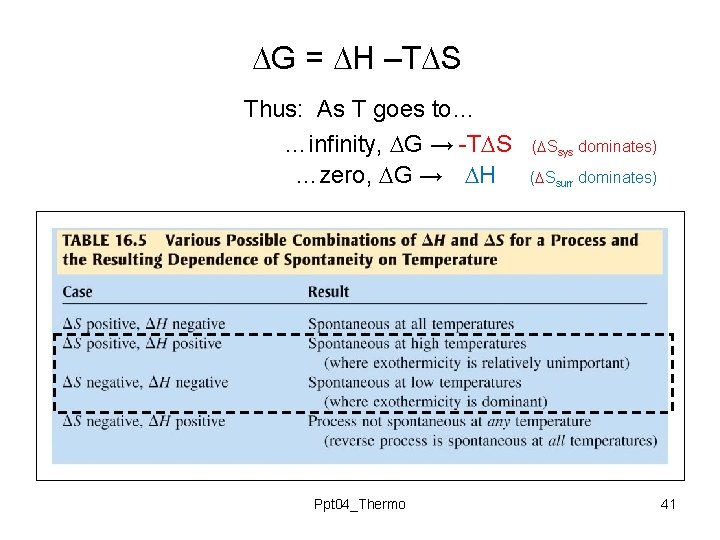
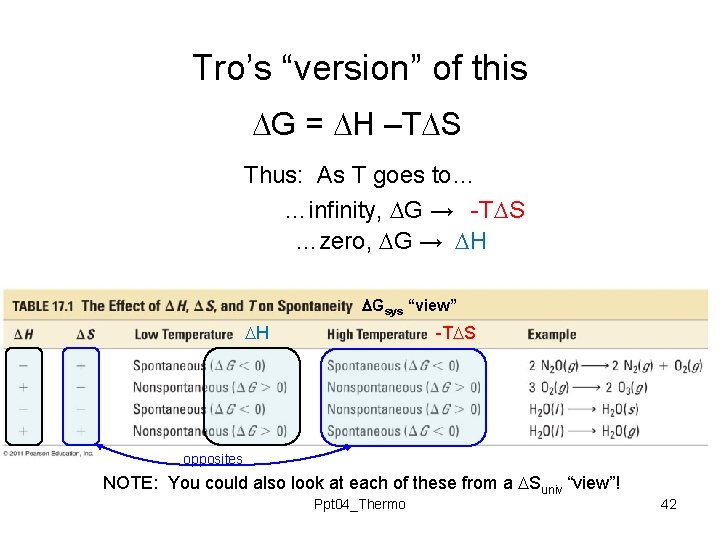
G = H –T S Thus: As T goes to… …infinity, G → -T S …zero, G → H Ppt 04_Thermo ( Ssys dominates) ( Ssurr dominates) 41
Tro’s “version” of this G = H –T S Thus: As T goes to… …infinity, G → -T S …zero, G → H Gsys “view” H -T S opposites NOTE: You could also look at each of these from a Suniv “view”! Ppt 04_Thermo 42
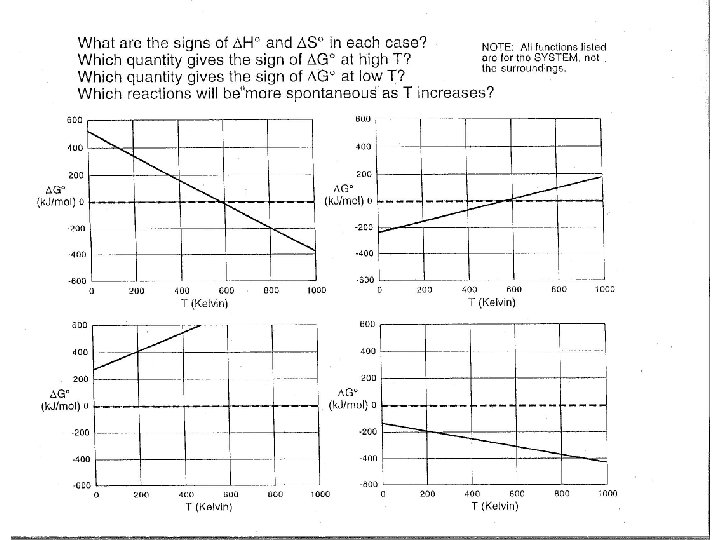
Ppt 04 Thermo 43
“Global” (entropy) view (Review of earlier slide) Suniv = Ssys + Ssurr; Thus: As T goes to… …infinity, Suniv → Ssys …zero, Suniv → Ssurr Suniv “view” Ssys Ssurr Ssys ( Ssurr > 0) ( Ssys > 0) + + - - ( Ssurr < 0) ( Ssys < 0) - + - ( Ssurr > 0) ( Ssurr < 0) ( Ssys < 0) + ( Ssys > 0) Ppt 04_Thermo 44
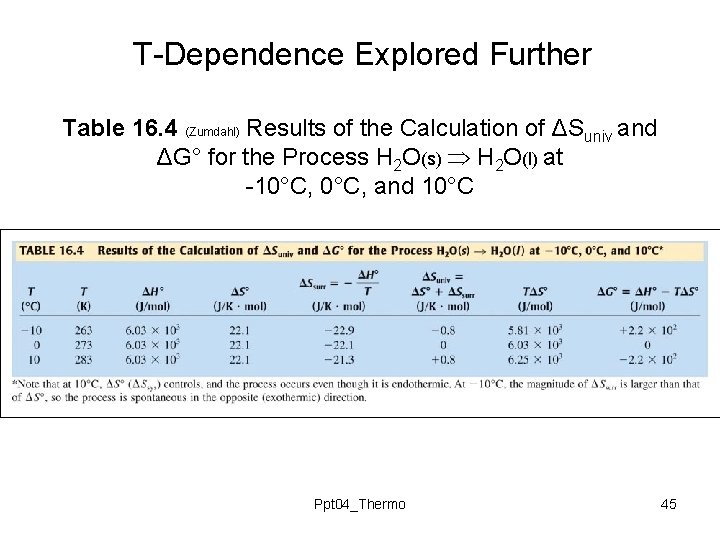
T-Dependence Explored Further Table 16. 4 (Zumdahl) Results of the Calculation of ΔSuniv and ΔG° for the Process H 2 O(s) H 2 O(l) at -10°C, and 10°C Ppt 04_Thermo 45
Ppt 04_Thermo 46
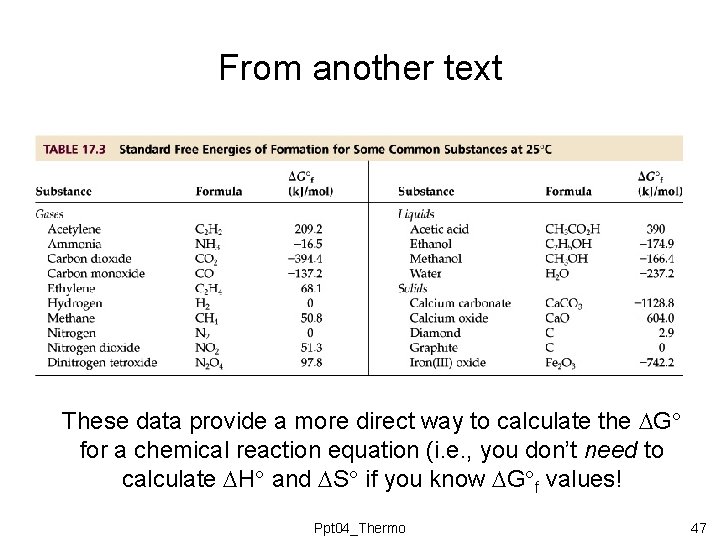
From another text These data provide a more direct way to calculate the G for a chemical reaction equation (i. e. , you don’t need to calculate H and S if you know G f values! Ppt 04_Thermo 47
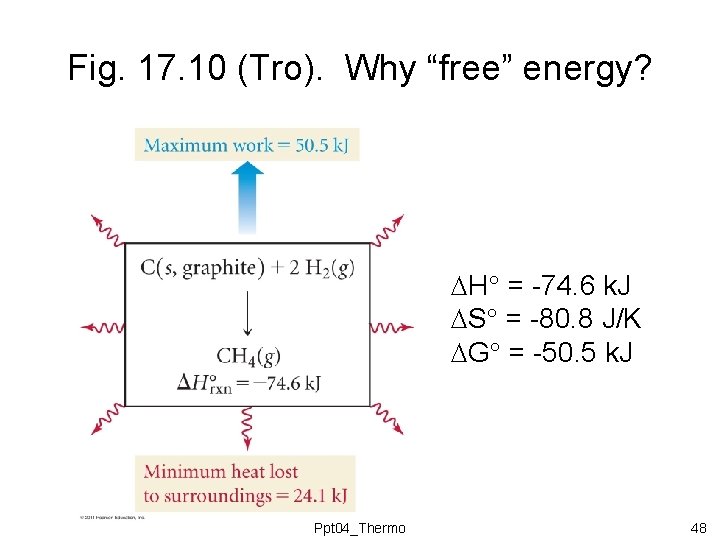
Fig. 17. 10 (Tro). Why “free” energy? H = -74. 6 k. J S = -80. 8 J/K G = -50. 5 k. J Ppt 04_Thermo 48