
PP 8 Genetic Issues Year 10 Science Timeline


- Slides: 32
PP 8 Genetic Issues Year 10 Science
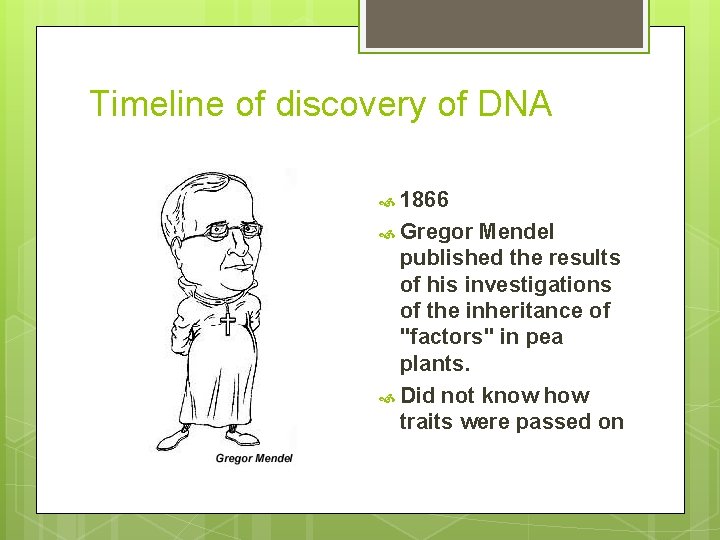
Timeline of discovery of DNA 1866 Gregor Mendel published the results of his investigations of the inheritance of "factors" in pea plants. Did not know how traits were passed on
1952 Rosalind Franklin Was a biophysicist and X-Ray crystallographer who investigated structure of DNA Provided images which would later help Watson and Crick
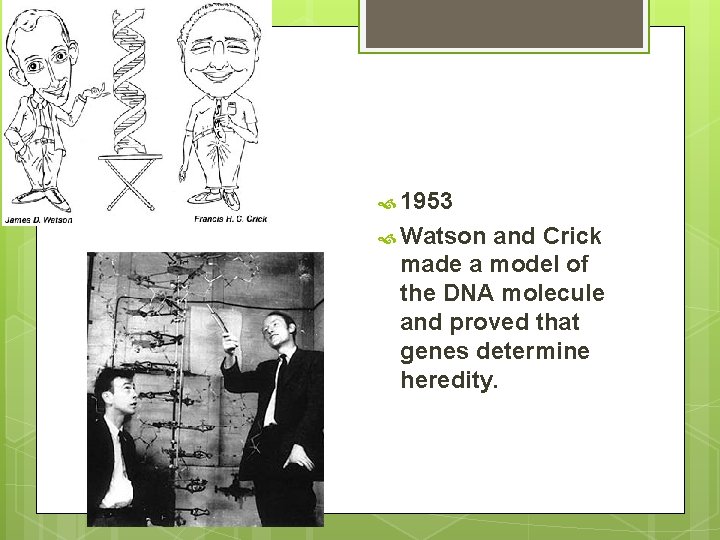
1953 Watson and Crick made a model of the DNA molecule and proved that genes determine heredity.
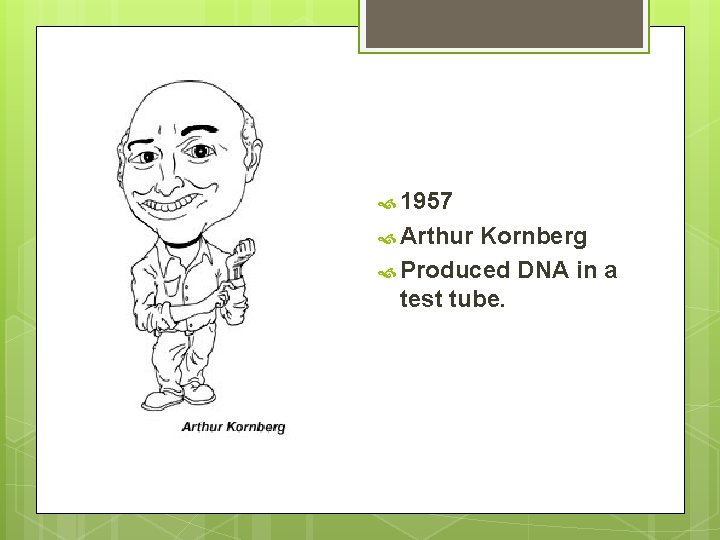
1957 Arthur Kornberg Produced DNA in a test tube.
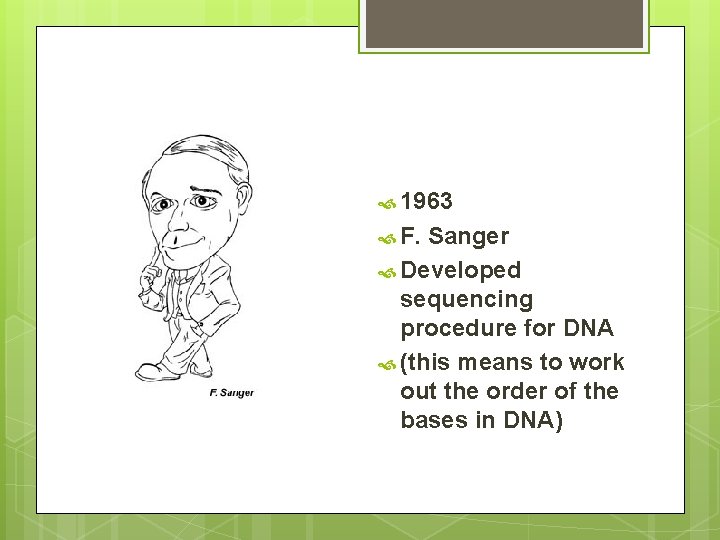
1963 F. Sanger Developed sequencing procedure for DNA (this means to work out the order of the bases in DNA)
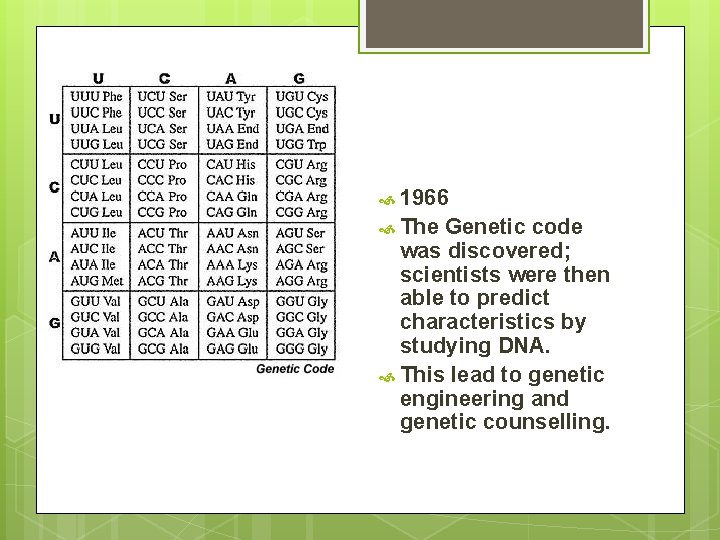
1966 The Genetic code was discovered; scientists were then able to predict characteristics by studying DNA. This lead to genetic engineering and genetic counselling.
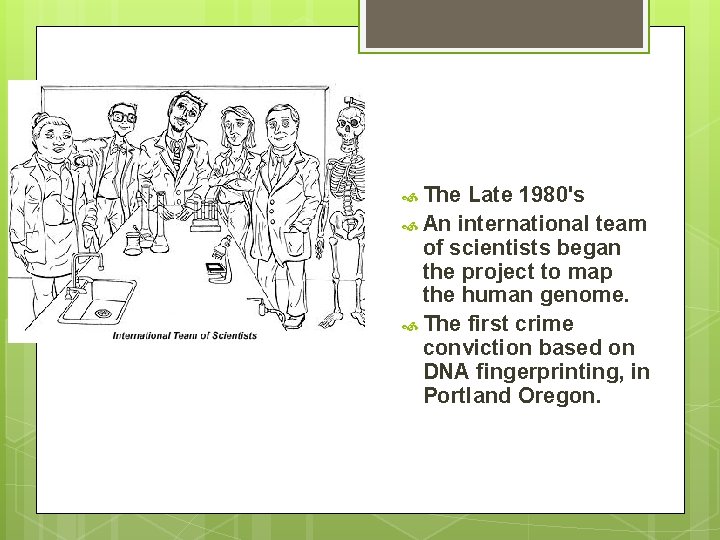
The Late 1980's An international team of scientists began the project to map the human genome. The first crime conviction based on DNA fingerprinting, in Portland Oregon.
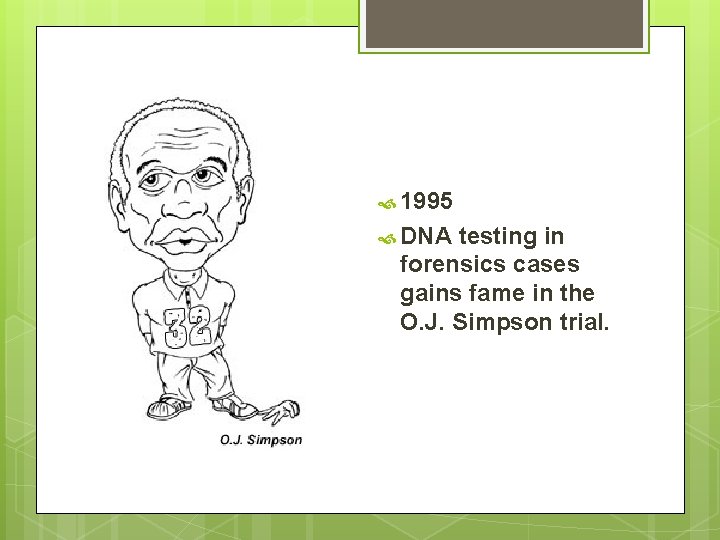
1995 DNA testing in forensics cases gains fame in the O. J. Simpson trial.
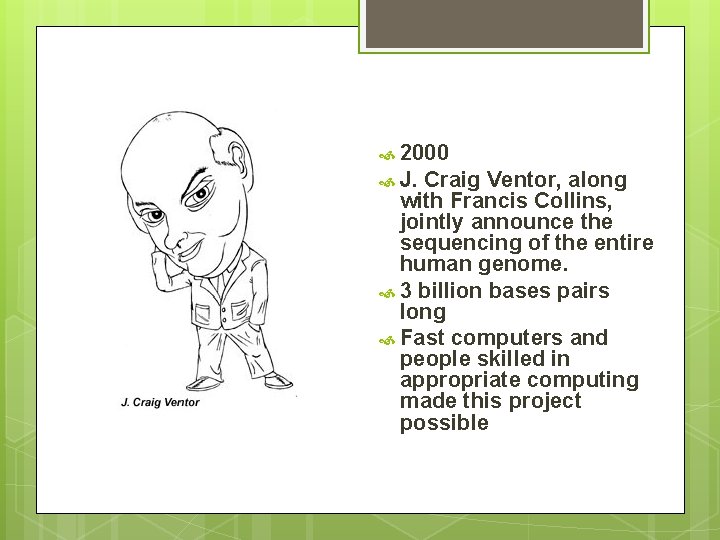
2000 J. Craig Ventor, along with Francis Collins, jointly announce the sequencing of the entire human genome. 3 billion bases pairs long Fast computers and people skilled in appropriate computing made this project possible
Genetic Disease? There are many diseases that can be inherited. Some people can be “carriers” of genetic disease without showing symptoms themselves – this depends if the trait is dominant or recessive Some genetic diseases show symptoms at birth and others not until later in life Some can be easily managed and others are fatal
What is Genetic Testing? …. a type of medical test that identifies changes in chromosomes, genes, or proteins. The results of a genetic test can confirm or rule out a suspected genetic condition or help determine a person’s chance of developing or passing on a genetic disorder to their children More than 1, 000 genetic tests are currently in use, and more are being developed.
Types of Genetic testing Several methods can be used for genetic testing: Gene tests study single genes to identify faults that lead to a genetic disorder. Eg Huntingdons disease Chromosomal tests analyse whole chromosomes or long lengths of DNA to see if there are large genetic changes, such as an extra copy of a chromosome, that cause a genetic condition. Eg Downs Syndrome or Klinefelters Biochemical tests study the amount or activity level of proteins; abnormalities in either can indicate changes to the DNA that result from a genetic disorder. Eg PKU
Pros and Cons Genetic testing is voluntary. Testing has benefits as well as limitations and risks, The decision about whether to be tested is a personal and complex one. A geneticist or genetic counsellor can help by discussing the pros and cons and the social and emotional aspects of testing Who should have the right to know – Family? insurance companies? Employers? Would you be given the same opportunities if they did or didn’t know?
Some points to think about http: //www. youtube. com/watch? v=9 b 88 ww. Mx. M_I http: //www. youtube. com/watch? v=71 kp. Mg. X 0 v 2 A https: //www. youtube. com/watch? v=WC 25 Yoh 8 c. Pc
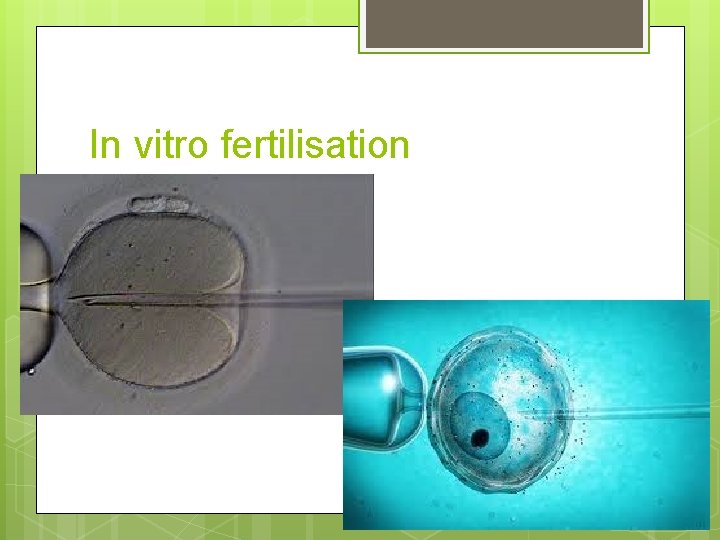
In vitro fertilisation (IVF) is medical technology where the fertilisation of an egg and a sperm are done in a test tube The embryo is grown for 3 -5 days before being transferred into the mothers womb in the hope that it will implant This technology is designed for couples who for many reasons may not be able to conceive naturally
In vitro fertilisation
Embryo Selection The fertilised egg (called the blastocyst) is viewed under a microscope and ones that are growing at the correct rate are chosen to be implanted There are specialised genetic tests now available to determine if the embryo is carrying any genetic disorders
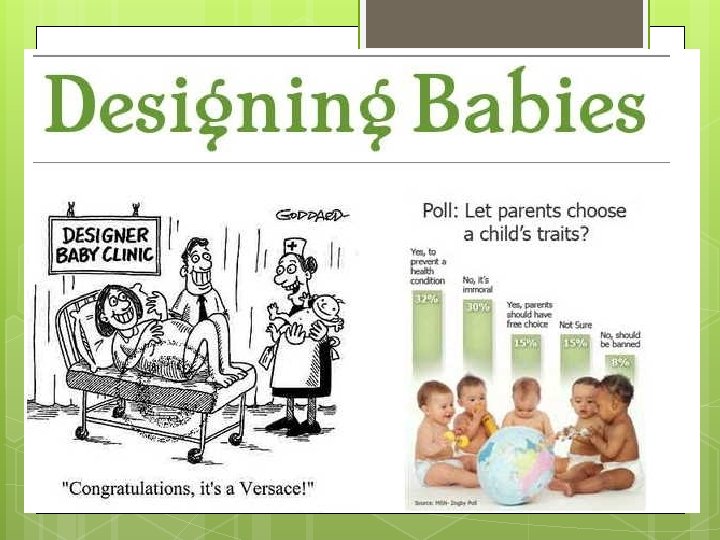
Why test an embryo? Previous pregnancy with genetic disorder One of the parents with a disorder or both carriers In some countries, couples can chose the gender of the embryo to be implanted It is not lawful in Australia to chose gender unless there is risk of a sex linked disorder Just because we can? Should we?
Who should know? If a person gets tested for a genetic disorder, should they “have” to tell others Eg; health or life insurance policies ask for pre existing conditions? Lots of bio ethics issues surrounding genetic technologies
Ethical principals Autonomy Informed consent Understand risks and benefits Free of coaxing or cohersion – must be own choice Justice fair distribution of scarce resources, Reproductive technologies create ethical dilemmas because treatment is not equally available to all people. Beneficence Provides an overall benefit – more good than harm This is to the individual and society Non-maleficence Cannot be the cause of harm
Gene Therapy Gene therapy is an experimental technique that uses genes to treat or prevent disease. In the future, this technique may allow doctors to treat a disorder by inserting a gene into a patient’s cells instead of using drugs or surgery.
How does it work? Researchers are testing several approaches to gene therapy, including: Replacing a mutated gene that causes disease with a healthy copy of the gene. Inactivating, or “knocking out, ” a mutated gene that is functioning improperly. Introducing a new gene into the body to help fight a disease.
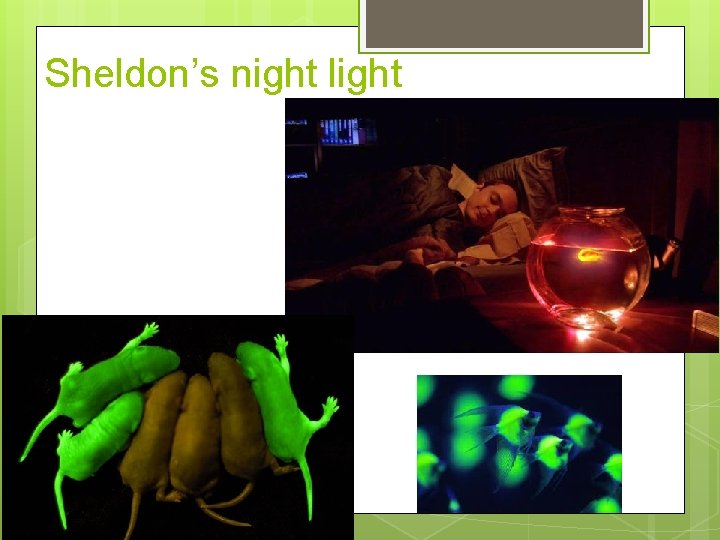
Genetic Engineering is the process of manually adding new DNA to an organism. The goal is to add one or more new traits that are not already found in that organism. Examples of genetically engineered (transgenic) organisms; plants with resistance to some insects, plants that can tolerate herbicides, crops with increased yields (fruits/oils) Bacteria producing human products Spider silk in goats milk
Sheldon’s night light
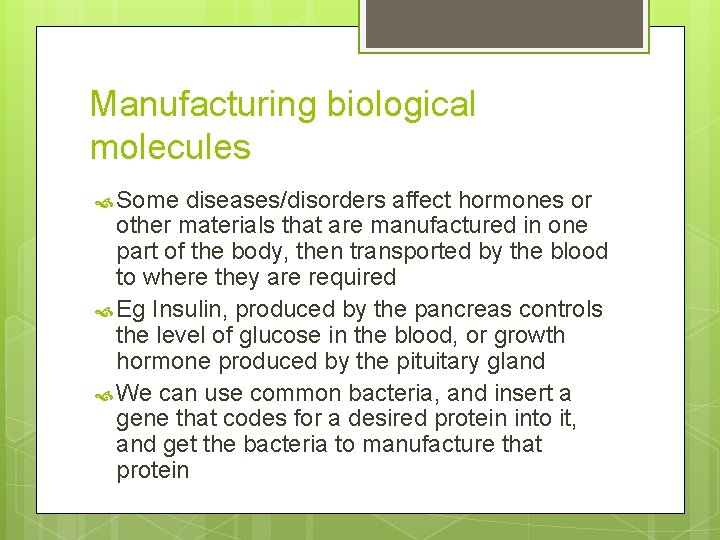
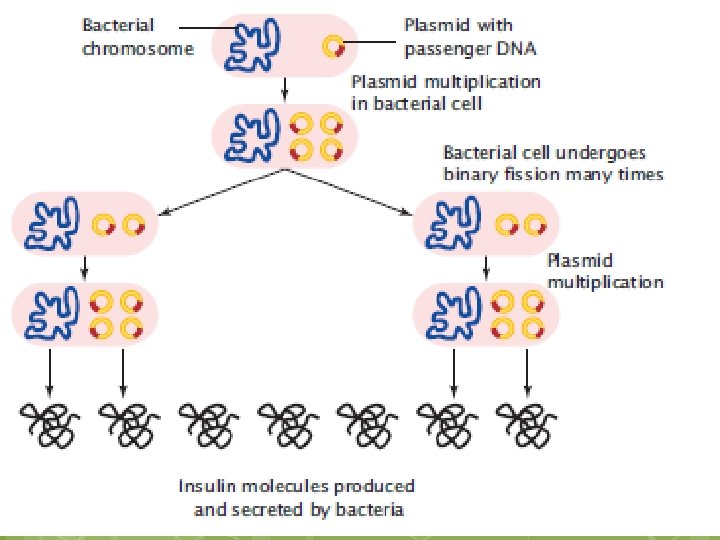
Manufacturing biological molecules Some diseases/disorders affect hormones or other materials that are manufactured in one part of the body, then transported by the blood to where they are required Eg Insulin, produced by the pancreas controls the level of glucose in the blood, or growth hormone produced by the pituitary gland We can use common bacteria, and insert a gene that codes for a desired protein into it, and get the bacteria to manufacture that protein
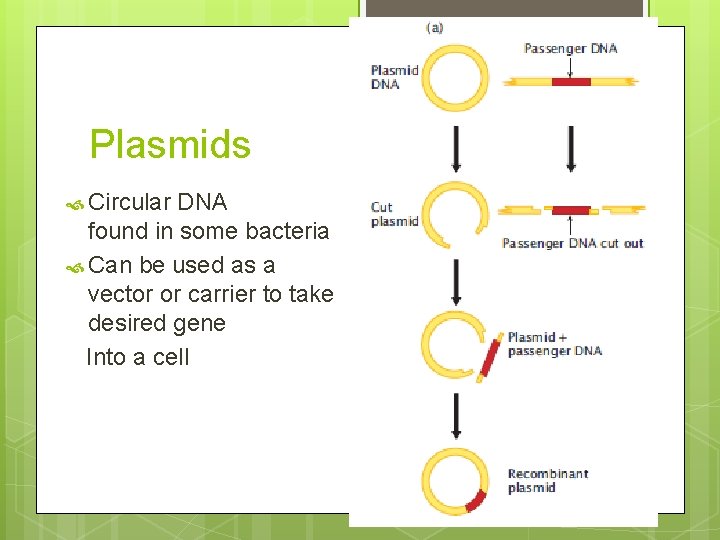
Plasmids Circular DNA found in some bacteria Can be used as a vector or carrier to take desired gene Into a cell
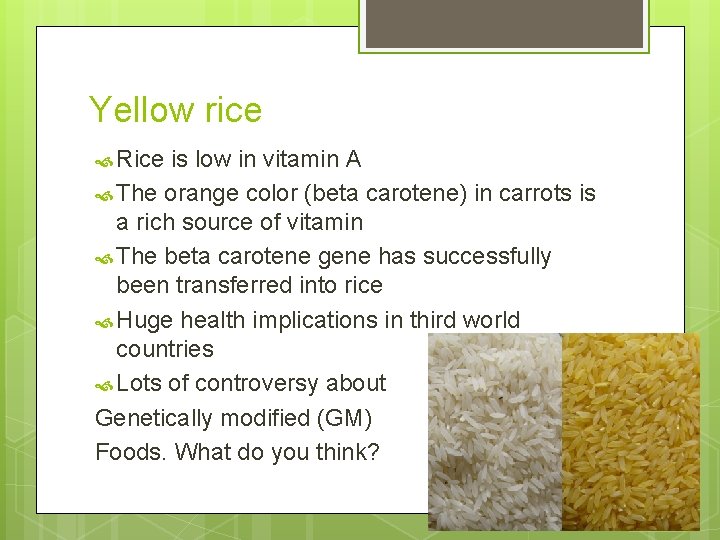
Yellow rice Rice is low in vitamin A The orange color (beta carotene) in carrots is a rich source of vitamin The beta carotene gene has successfully been transferred into rice Huge health implications in third world countries Lots of controversy about Genetically modified (GM) Foods. What do you think?
CAT Use these ideas as a basis for completing the bio ethics component of the “Genetics disorder and bioethics” research CAT