
PP 5 Gas Exchange The Respiratory System The


- Slides: 22
PP 5 – Gas Exchange The Respiratory System
The respiratory system What is respiration responsible for? Gas exchange, breathing, taking in oxygen and releasing carbon dioxide. Why do we respire? To provide our body with oxygen for cellular respiration
3 stages of respiration External respiration (breathing) occurs outside the cells and involves the exchange of gases between the lungs and the blood. Internal respiration takes place when gases are exchanged between the blood and the body cells. Cellular respiration is the energy releasing series of chemical that takes place inside the cells – it requires oxygen
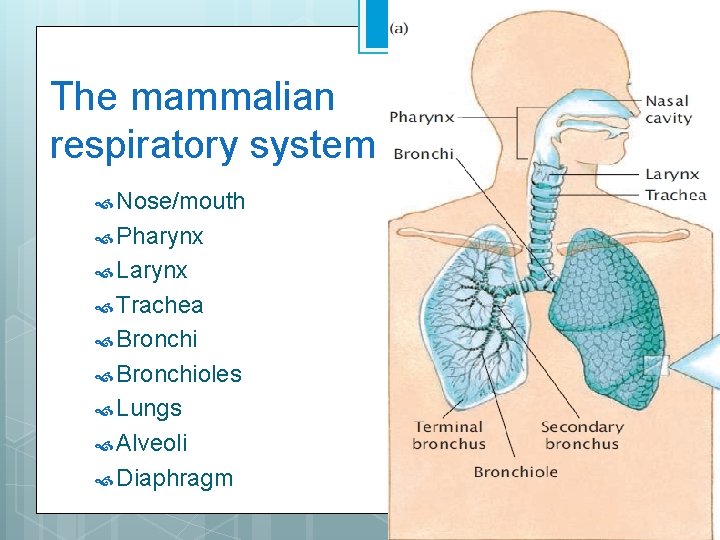
The mammalian respiratory system Nose/mouth Pharynx Larynx Trachea Bronchioles Lungs Alveoli Diaphragm
Breathing Air first enters the respiratory system through the nostrils and mouth. From the nostrils, air moves through hollow cavities, called nasal passages, to the throat. The nasal passage is lined with mucous membranes and hair-like structures called cilia. Air is filtered by the cilia where it is moistened and warmed by the mucous membranes before it enters the pharynx.
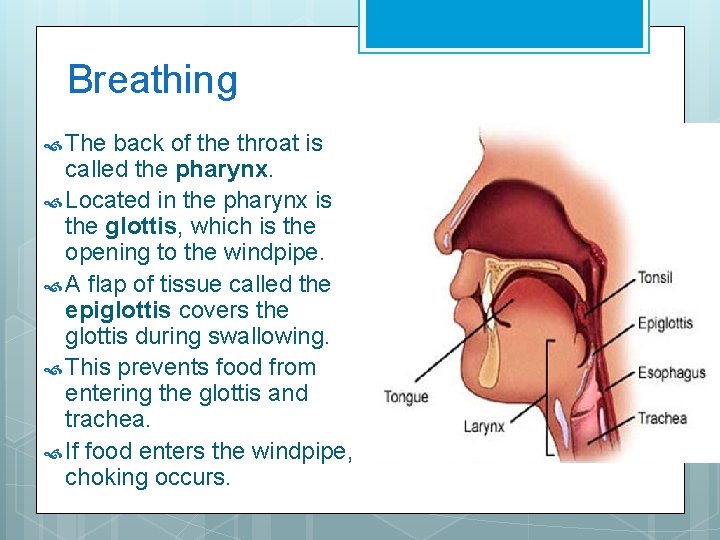
Breathing The back of the throat is called the pharynx. Located in the pharynx is the glottis, which is the opening to the windpipe. A flap of tissue called the epiglottis covers the glottis during swallowing. This prevents food from entering the glottis and trachea. If food enters the windpipe, choking occurs.
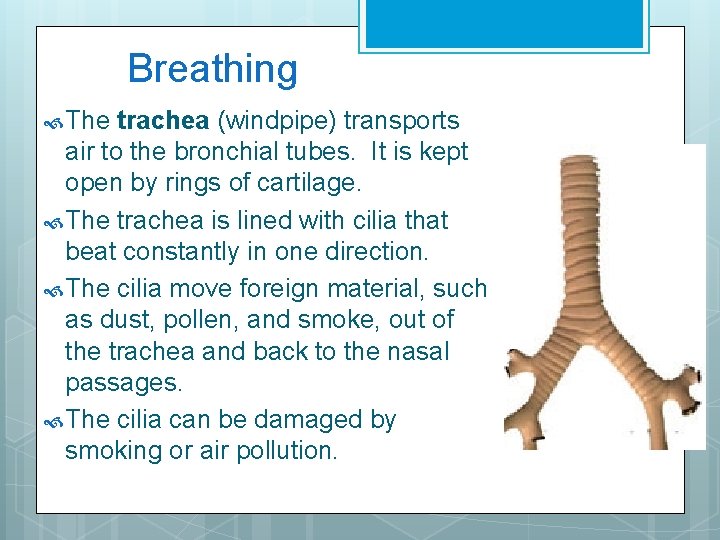
Breathing The trachea (windpipe) transports air to the bronchial tubes. It is kept open by rings of cartilage. The trachea is lined with cilia that beat constantly in one direction. The cilia move foreign material, such as dust, pollen, and smoke, out of the trachea and back to the nasal passages. The cilia can be damaged by smoking or air pollution.
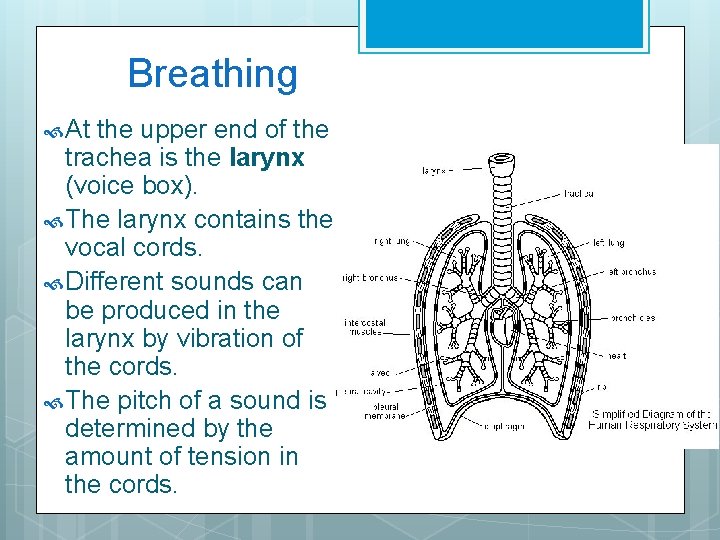
Breathing At the upper end of the trachea is the larynx (voice box). The larynx contains the vocal cords. Different sounds can be produced in the larynx by vibration of the cords. The pitch of a sound is determined by the amount of tension in the cords.
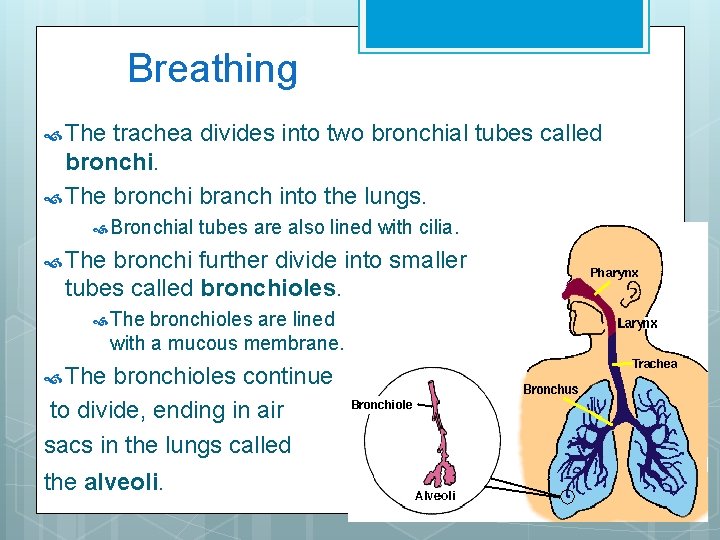
Breathing The trachea divides into two bronchial tubes called bronchi. The bronchi branch into the lungs. Bronchial tubes are also lined with cilia. The bronchi further divide into smaller tubes called bronchioles. The bronchioles are lined with a mucous membrane. The bronchioles continue to divide, ending in air sacs in the lungs called the alveoli.
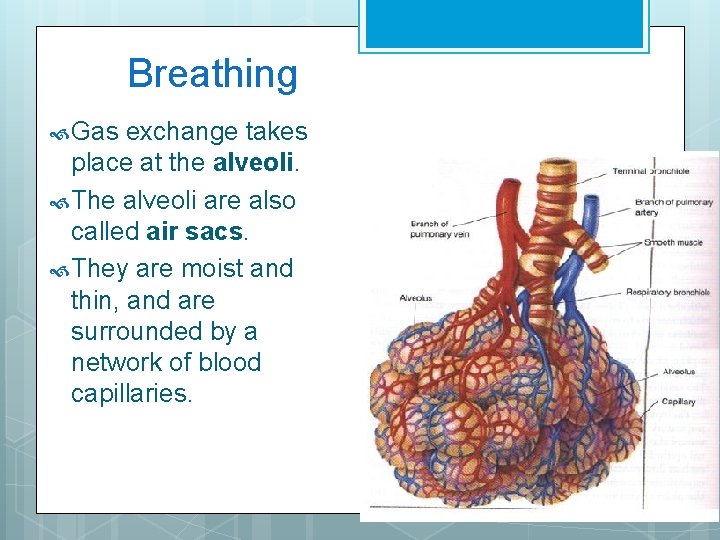
Breathing Gas exchange takes place at the alveoli. The alveoli are also called air sacs. They are moist and thin, and are surrounded by a network of blood capillaries.
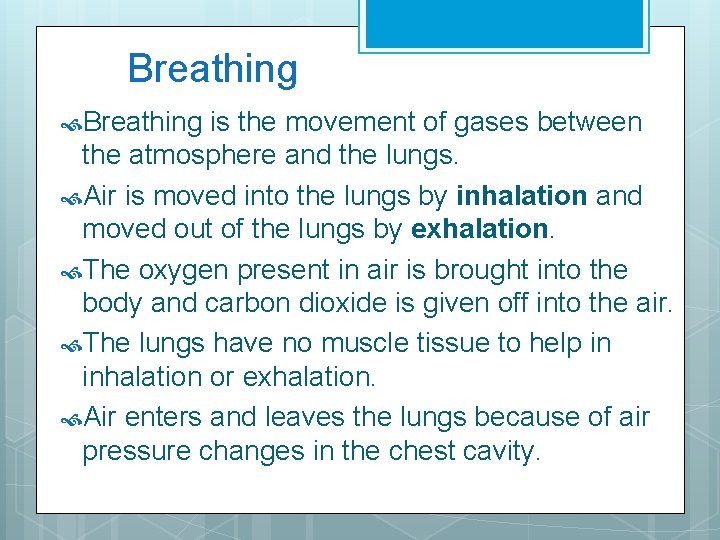
Breathing is the movement of gases between the atmosphere and the lungs. Air is moved into the lungs by inhalation and moved out of the lungs by exhalation. The oxygen present in air is brought into the body and carbon dioxide is given off into the air. The lungs have no muscle tissue to help in inhalation or exhalation. Air enters and leaves the lungs because of air pressure changes in the chest cavity.
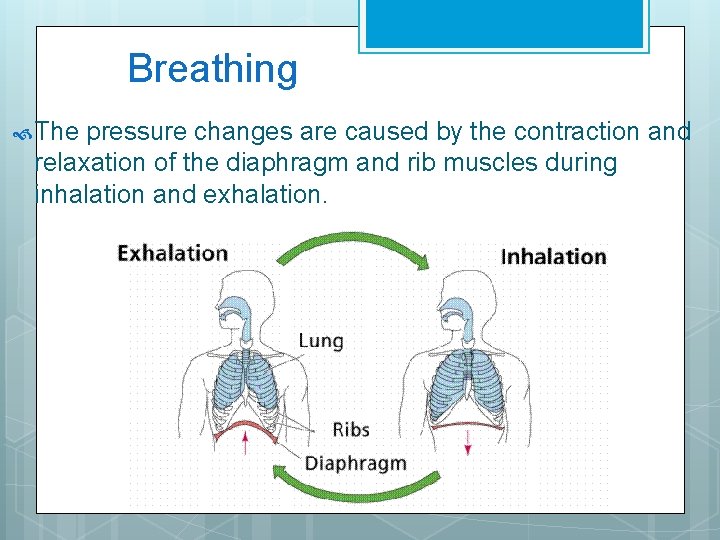
Breathing The pressure changes are caused by the contraction and relaxation of the diaphragm and rib muscles during inhalation and exhalation.
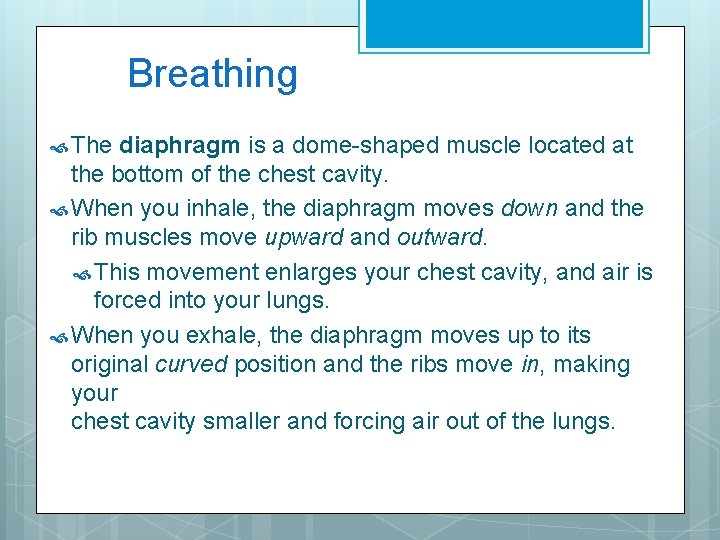
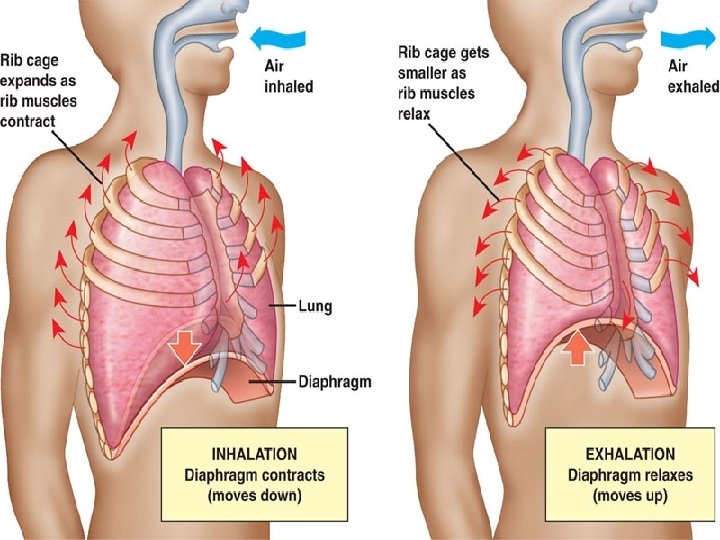
Breathing The diaphragm is a dome-shaped muscle located at the bottom of the chest cavity. When you inhale, the diaphragm moves down and the rib muscles move upward and outward. This movement enlarges your chest cavity, and air is forced into your lungs. When you exhale, the diaphragm moves up to its original curved position and the ribs move in, making your chest cavity smaller and forcing air out of the lungs.
Breathing Rate Breathing rate is affected by foreign particles from smoking or air pollution, and the oxygen (O 2), carbon monoxide (CO), and carbon dioxide (CO 2) levels in the blood. The most important factor in controlling breathing rate is the concentration of carbon dioxide (CO 2) in the blood. An increase in blood CO 2 concentration increases breathing rate. When the blood CO 2 level decreases, breathing rate decreases. Exercise also increases the breathing rate.
Animations http: //www. youtube. com/watch? v=Hi. T 621 Prr O 0
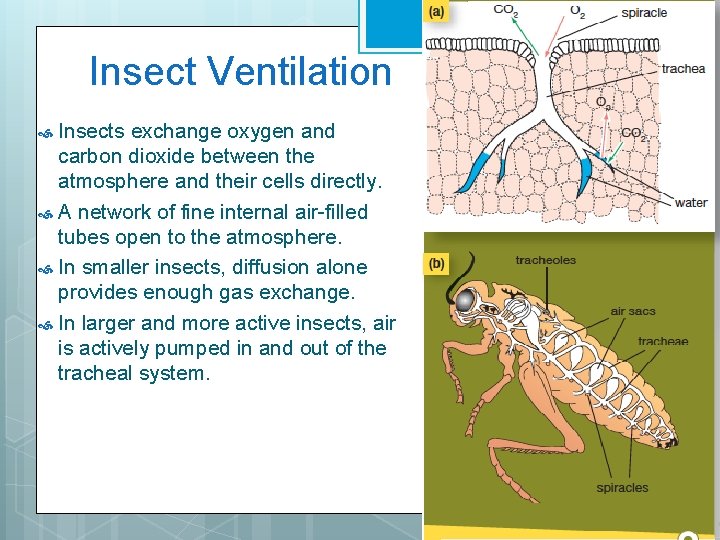
Gas exchange in other animals Mammals/Birds Insects Fish – Lungs – Spiracles, Tracheae, trachioles – Gills Amphibians axolotls) – Body surface, lungs, and external gills (like
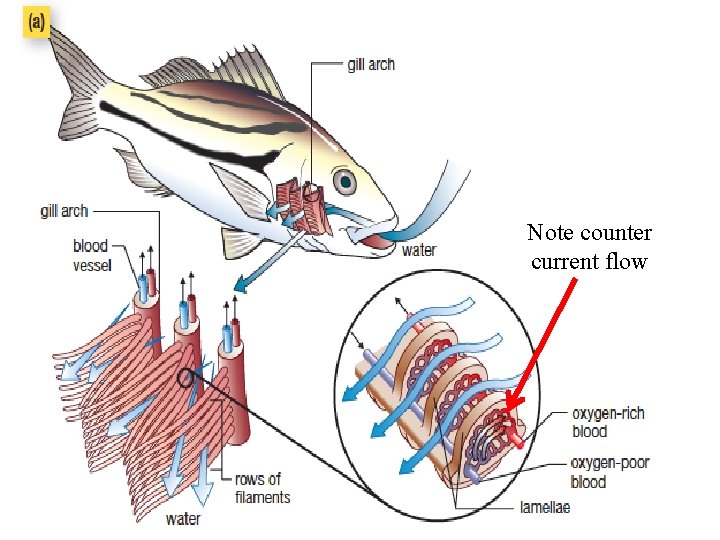
Water Ventilation - Gills can be ventilated with water in two ways: Moving the gills through water: practical only for small organisms. Moving water past the gills. In fish water in drawn into the mouth and then pushed between gill arches by compressing the pharynx with the mouth closed. Counter current flow - Because blood flows through the lamellae in the opposite direction to water, gills are able to extract up to 80 or 90% of the oxygen in the water.
Respiration in Fish Note counter current flow
Insect Ventilation Insects exchange oxygen and carbon dioxide between the atmosphere and their cells directly. A network of fine internal air-filled tubes open to the atmosphere. In smaller insects, diffusion alone provides enough gas exchange. In larger and more active insects, air is actively pumped in and out of the tracheal system.
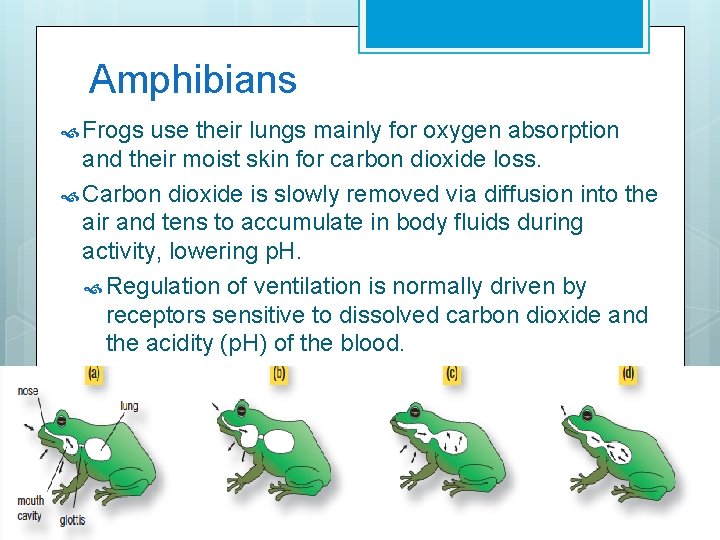
Amphibians Frogs use their lungs mainly for oxygen absorption and their moist skin for carbon dioxide loss. Carbon dioxide is slowly removed via diffusion into the air and tens to accumulate in body fluids during activity, lowering p. H. Regulation of ventilation is normally driven by receptors sensitive to dissolved carbon dioxide and the acidity (p. H) of the blood.
Activity Worksheet – “Respiration”