
POXVIRUSES Classification Of Poxviruses v Family Poxviridae v
- Slides: 23
POXVIRUSES
Classification Of Poxviruses v. Family: Poxviridae v. SUBFAMILIES üEntomopoxvirinae (insects) üChordopoxvirinae (vertebrates) üUnclassified • Yatapoxvirus: Tanapox, Yabapox • Molluscipoxvirus: Molluscum contagiosum
Chordopoxvirinae GENERA-six v. Orthopoxvirus: Variola, Vaccinia, Monkey pox, Cowpox v. Parapoxvirus: paravaccinia(Milker’s nodes), Orf(contagious pustular dermatitis) v. Capripoxvirus: sheep & goats v. Leporipox virus: myxoma & fibroma in rabbits v. Avipox virus: fowlpox, turkeypox v. Suipox: swine pox
Variola & Vaccinia • Causative agent of small pox • Caused death and disfigurement • Global eradication of smallpox on 8 th May 1980
Variola virus • Variola major • Variola minor
Vaccinia virus • Artificial virus • Safe to work with • Vector for recombinant vaccines
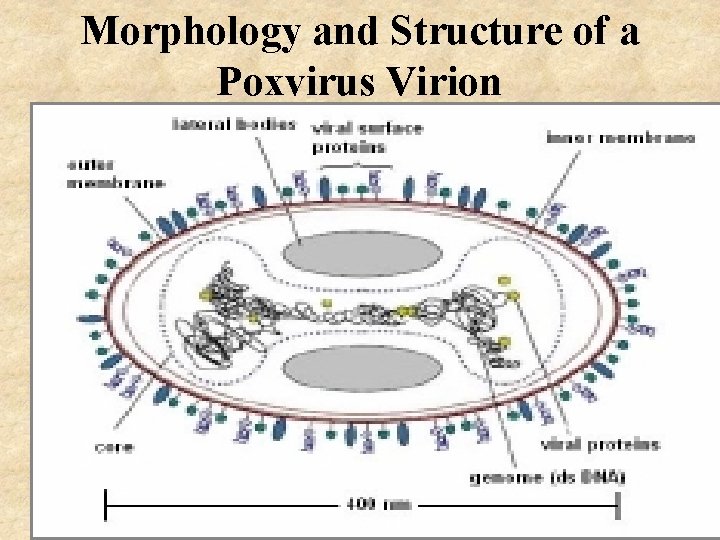
Morphology • Brick shaped, largest virus. • Biconcave double stranded DNA core surrounded by double layered membrane • Lateral bodies on either side of DNA core • 300 x 200 x 100 nm
Morphology and Structure of a Poxvirus Virion
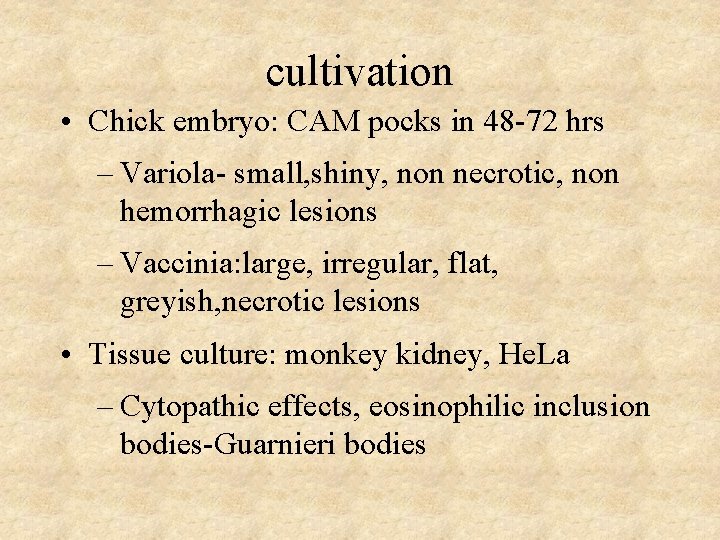
cultivation • Chick embryo: CAM pocks in 48 -72 hrs – Variola- small, shiny, non necrotic, non hemorrhagic lesions – Vaccinia: large, irregular, flat, greyish, necrotic lesions • Tissue culture: monkey kidney, He. La – Cytopathic effects, eosinophilic inclusion bodies-Guarnieri bodies
Epidemiology • Winter & Early spring – Like measles and chickenpox – Virus killed by heat and humidity • Age Distribution – Historically affected younger children and unvaccinated persons
Transmission • Person – Primarily droplet, or aerosol – No animal reservoir or vector • Very contagious, but less than measles or chickenpox – Less transmissible (lower 2° attack rates)
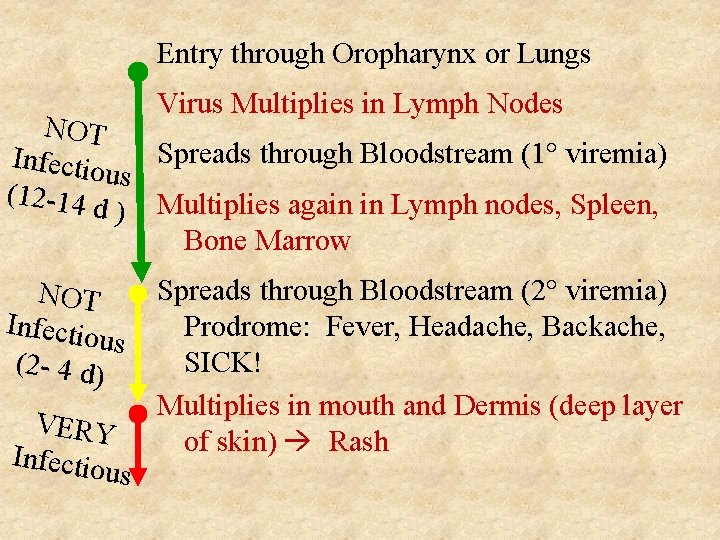
Entry through Oropharynx or Lungs Virus Multiplies in Lymph Nodes NOT Spreads through Bloodstream (1° viremia) Infectio us (12 -14 d ) Multiplies again in Lymph nodes, Spleen, Bone Marrow NOT Infectio us (2 - 4 d) VERY Infectio us Spreads through Bloodstream (2° viremia) Prodrome: Fever, Headache, Backache, SICK! Multiplies in mouth and Dermis (deep layer of skin) Rash
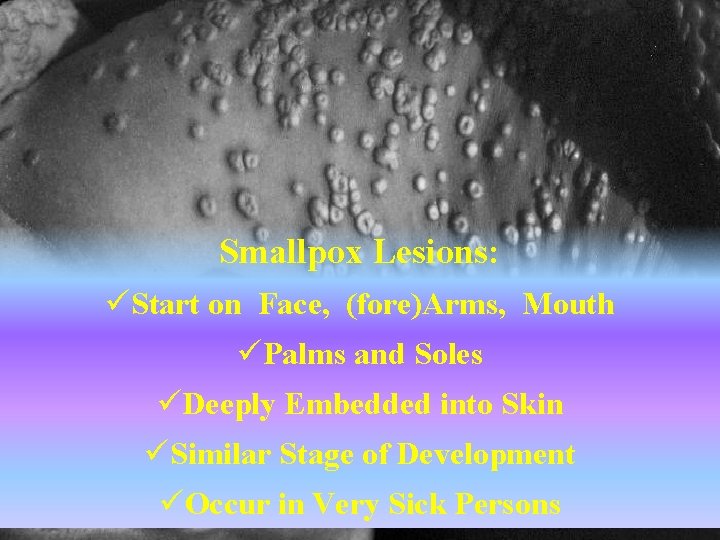
Variola (Smallpox) • Smallpox is an acute exanthematous disease caused by infection with the poxvirus variola. • The significant clinical features include: 1. Three-day prodromal illness characterized by fever, headache, 2. Generalized centrifugal rash that follows prodrome 3. Begins centrally then spreads to the extremities and face 4. Rapid succession of papules, vesicles, pustules, • Central umbilication of the pustule is characteristic of smallpox.
Smallpox Lesions: üStart on Face, (fore)Arms, Mouth üPalms and Soles üDeeply Embedded into Skin üSimilar Stage of Development üOccur in Very Sick Persons
DIAGNOSIS • Direct detection of virus (EM), • Isolation of virus : Chorioallantoic membrane of chick embryo, tissue cultures: Monkey kidney, He. La cells. • Cytopathic effects: Variola produces small discrtete pocks, while vaccinia produces large hemorrhagic pocks • Eosinophilic inclusion bodies: Guarnieri bodies
Prophylaxis • A natural infection of small pox gives life long immunity. • Vaccination with vaccinia gives protection for five years.
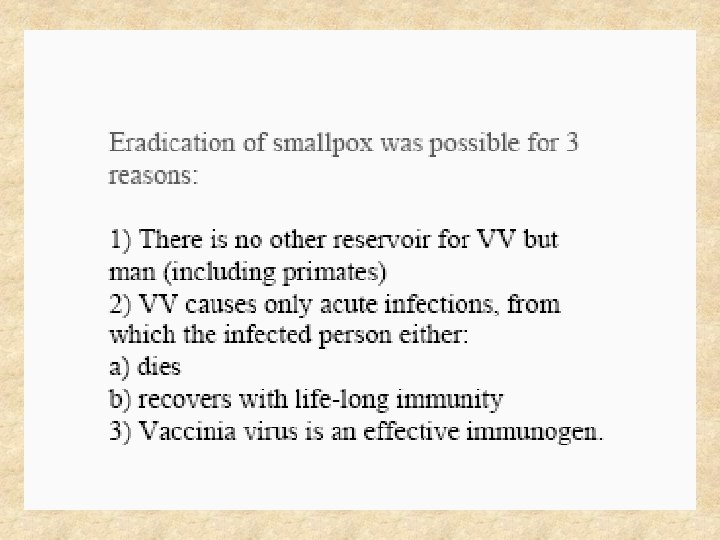
Eradication of smallpox • • No subclinical infection or carrier state. An effective vaccine present No animal reservior Aggressive surveillance measures
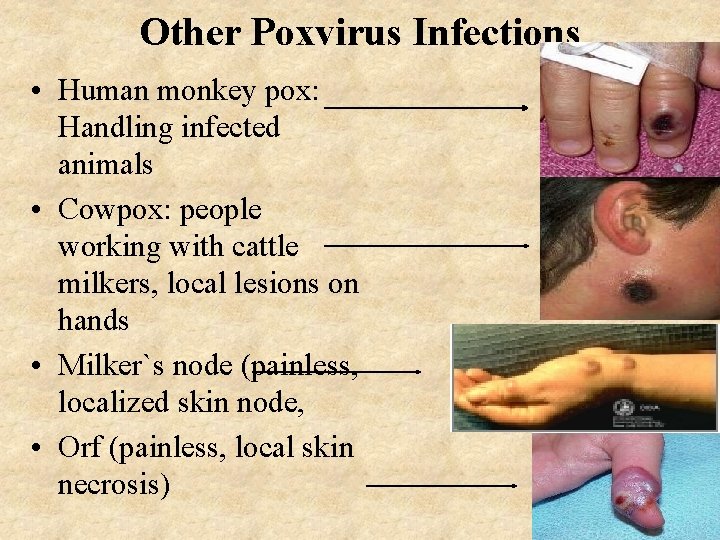
Other Poxvirus Infections • Human monkey pox: Handling infected animals • Cowpox: people working with cattle milkers, local lesions on hands • Milker`s node (painless, localized skin node, • Orf (painless, local skin necrosis)
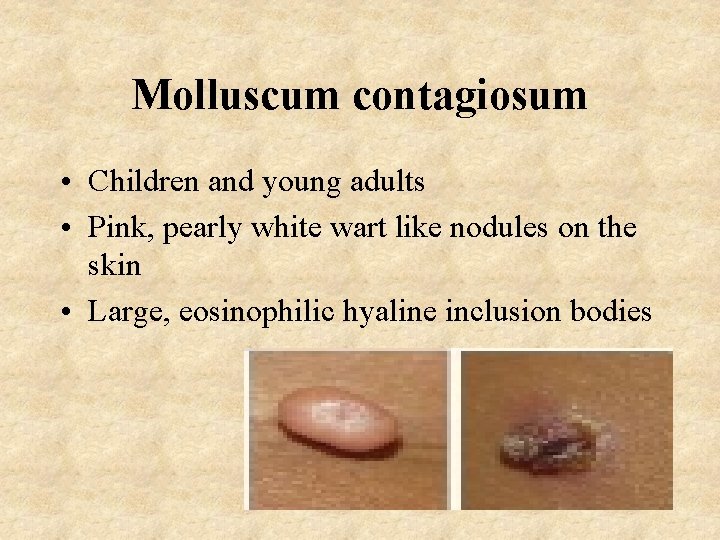
Molluscum contagiosum • Children and young adults • Pink, pearly white wart like nodules on the skin • Large, eosinophilic hyaline inclusion bodies
• Molluscum bodies composed of large nos of virus particles, embedded in protein matrix • Humans are only susceptible host • Virus not cultivable • STD: inflamed and ulcerated simulates HSV infections