
Powers of Congress Chapter 11 Section 1 THE

- Slides: 10
Powers of Congress Chapter 11
Section 1 THE EXPRESSED POWERS OF MONEY AND COMMERCE
Powers of Congress • Delegated Powers – Expressed Powers – Implied Powers – Inherent Powers • Congresses power may seem vast, but it has very real limits on it. – expressed limits, inherent limits
Expressed Powers: Money and Commerce • There are 27 powers given to Congress in the U. S. Constitution. – Article 1; Section 8 • Throughout history, Congress and the Supreme Court have interpreted these powers in many ways. • The majority of the implied powers that Congress exercises today are derived from the commerce clause and the powers of taxation.
The Commerce Power • Power of Congress to regulate interstate and foreign trade. – Power to regulate commerce has been much of the reason for the economic success of the U. S. – First upheld in Gibbons v. Ogden (1824) • Limits – Must not violate the Constitution.
The Power to Tax • Lack of power to tax led to failure of the Articles of Confederation. • Money raised by the government to meet a public need. • Limits – Must not violate the Constitution.
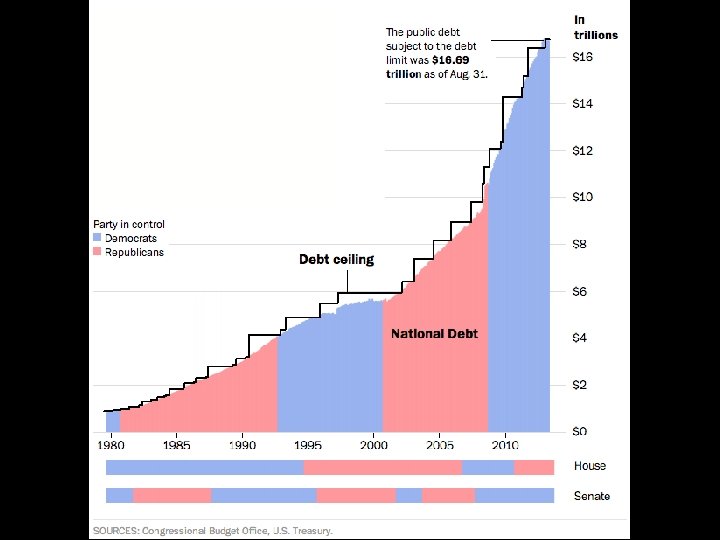
The Borrowing Power • Congress places a statutory limit on the amount of debt the government can take on. • For decades, the Federal Government has practiced deficit financing. – Only 11 of the last 82 years has the Federal Gov’t not spent more than they took in. • 1998 -2002
Bankruptcy and Currency • Congress makes laws regulating bankruptcies in the United States. • Congress has the power to coin and regulate a national currency.