
Power The Key to Leadership Robert Calvillo BUSN
Power: The Key to Leadership Robert Calvillo BUSN 56 – DE 1
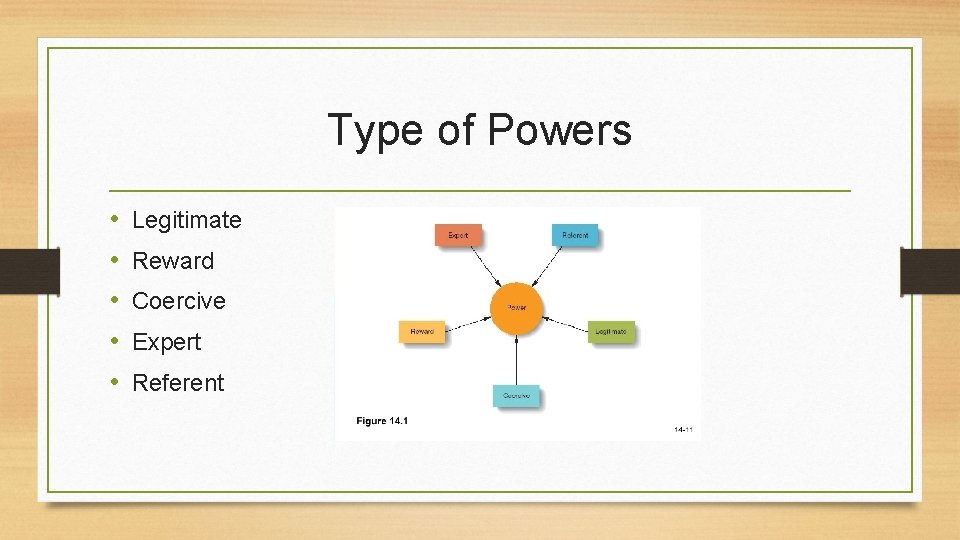
Type of Powers • • • Legitimate Reward Coercive Expert Referent

Legitimate Power • The authority a manager has by virtue of his or her position in the organization’s hierarchy. • Personal leadership style influences how a manager exercises their power. • Example: Carol Loray, a first-line manager at a greeting card company, has the power to hire new employees, assign project to artisits and designers, monitor their work, and appraise their performance.
Reward Power • The ability of a manager to give or withhold tangible rewards and intangible rewards. • Tangible rewards include pay raises, bonuses, choice job assignments • Intangible rewards include verbal praise, a pat on the back, respect • Major source of power that allows managers to motivate their workforce. • Effective managers use reward power to show appreciation to subordinates’ good work and effort
Coercive Power • The ability of a manager to punish others. • Can range from verbal reprimands to reductions in pay or working hours to actual dismissal • Managers who rely heavily on coercive power are typically ineffective • Excessive use seldom produces high performance and is ethically questionable • Borders on mental abuse
Expert Power • Based on the special knowledge, skills, and expertise that a leader possesses. • Nature of power varies, depending on the leader’s level in the hierarchy • Effective leaders take the necessary steps: • To obtain adequate amount of expertise to perform their leadership roles • Through additional training or education • Stay up to date with the latest developments in their field • Changes in technology, general rules or regulations, and environment
Referent Power • Power that comes from subordinates’ and coworkers’ respect, admiration, and loyalty • A function of the personal characteristics of a leader • Effective managers take time to get to know their employees— showing interest and concern for them.
Empowerment • An ingredient in modern management. • The process of giving employees at all levels the authority to • • Make decisions Be responsible for their outcomes Improve quality Cut costs
Empowerment = Effective Leadership • Increases a manager’s ability to get things done because they have the support and help of subordinates. • Increases worker’s involvement, motivation, and commitment • Gives managers more time to concentrate on more pressing concerns.
Summary • Five key sources of managerial power • Legitimate • Reward • Coercive • Expert • Referent • Effective managers have sufficient amounts of each power and wield them in beneficial ways. • Empowerment of subordinates is an effective way to motivate and keep employees engaged.
- Slides: 10