
Power System Expansion Planning with WASP Presented by
Power System Expansion Planning with WASP Presented by: Bruce Hamilton 15 May 2017 1
Topics of Discussion 1. Financial Analysis Concepts – NPV, IRR and WACC 2. Economic Evaluation Method 1 – Levelized Cost of Electricity 3. Economic Evaluation Method 2 – Screening Curves 12/27/2021 2
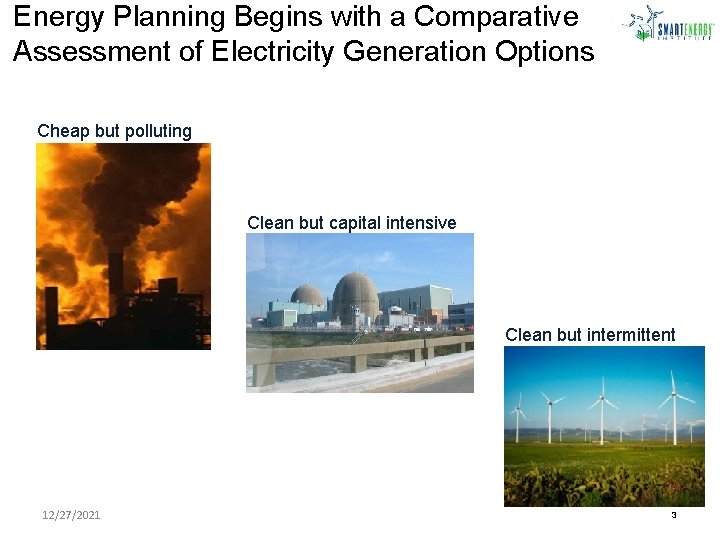
Energy Planning Begins with a Comparative Assessment of Electricity Generation Options Cheap but polluting Clean but capital intensive Clean but intermittent 12/27/2021 3
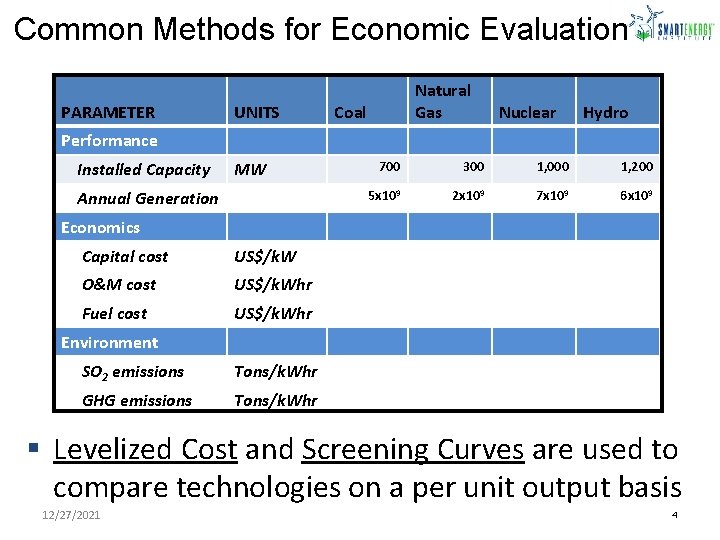
Common Methods for Economic Evaluation PARAMETER UNITS Natural Gas Coal Nuclear Hydro Performance Installed Capacity MW Annual Generation 700 300 1, 000 1, 200 5 x 10⁹ 2 x 10⁹ 7 x 10⁹ 6 x 10⁹ Economics Capital cost US$/k. W O&M cost US$/k. Whr Fuel cost US$/k. Whr Environment SO 2 emissions Tons/k. Whr GHG emissions Tons/k. Whr § Levelized Cost and Screening Curves are used to compare technologies on a per unit output basis 12/27/2021 4
Calculating Levelized Cost of Electricity 1. Time Value of Money 2. Net Present Value (NPV) 3. Internal Rate of Return (IRR) 4. Levelized Cost of Electricity (LCOE), also referred to as Levelized Unit Electricity Cost (LUEC) 5. Weighted Average Cost of Capital (WACC) 6. MS Excel Example 12/27/2021 5
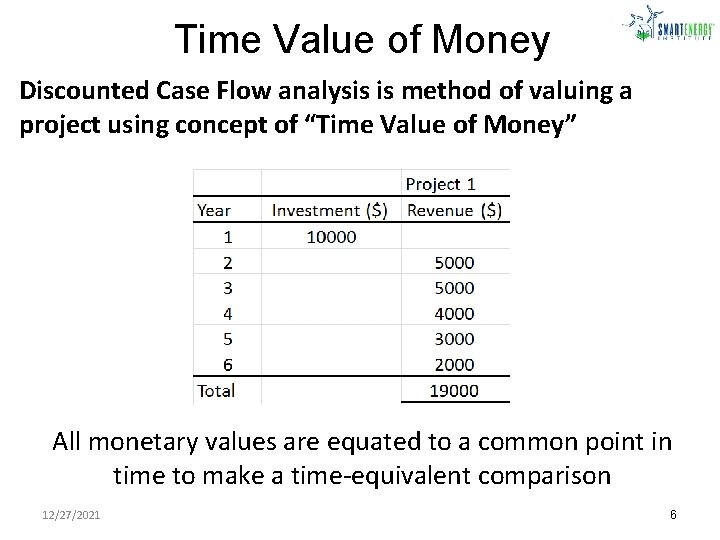
Time Value of Money Discounted Case Flow analysis is method of valuing a project using concept of “Time Value of Money” All monetary values are equated to a common point in time to make a time-equivalent comparison 12/27/2021 6
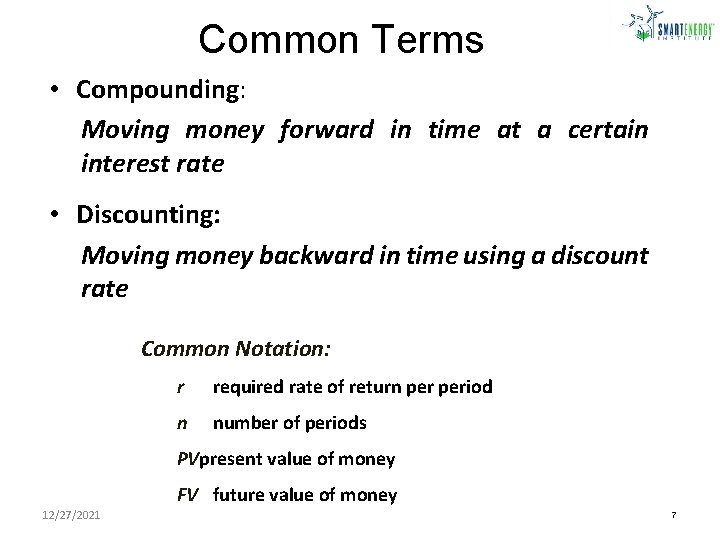
Common Terms • Compounding: Moving money forward in time at a certain interest rate • Discounting: Moving money backward in time using a discount rate Common Notation: r required rate of return period n number of periods PVpresent value of money FV future value of money 12/27/2021 7
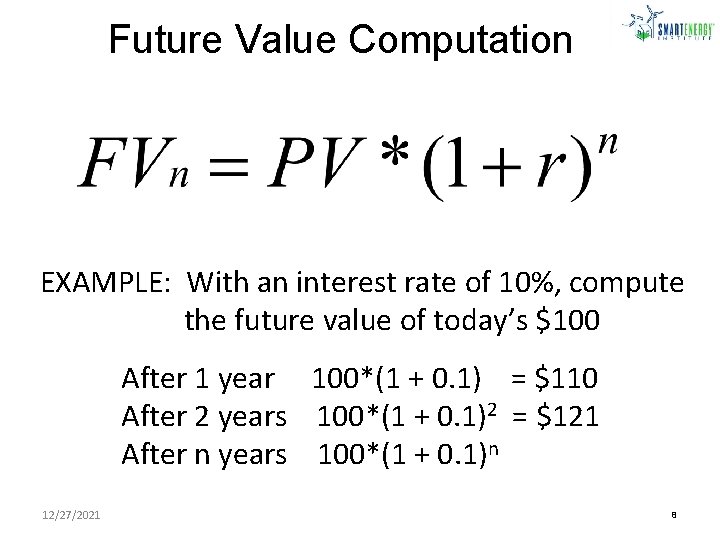
Future Value Computation EXAMPLE: With an interest rate of 10%, compute the future value of today’s $100 After 1 year 100*(1 + 0. 1) = $110 After 2 years 100*(1 + 0. 1)2 = $121 After n years 100*(1 + 0. 1)n 12/27/2021 8
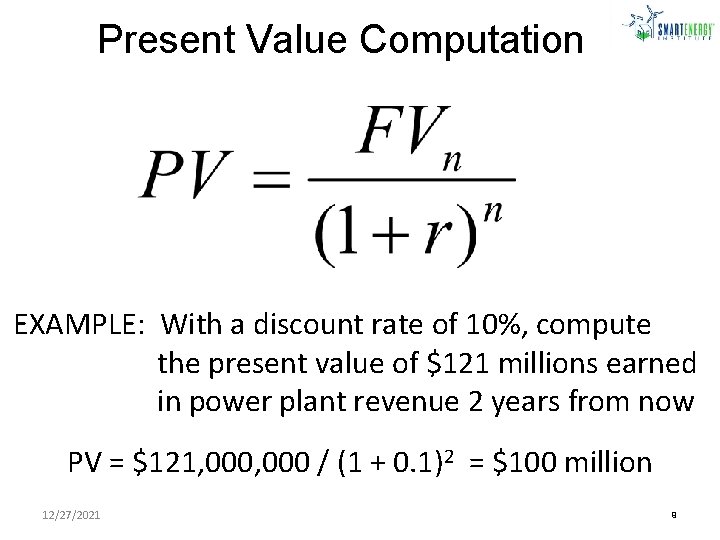
Present Value Computation EXAMPLE: With a discount rate of 10%, compute the present value of $121 millions earned in power plant revenue 2 years from now PV = $121, 000 / (1 + 0. 1)2 = $100 million 12/27/2021 9
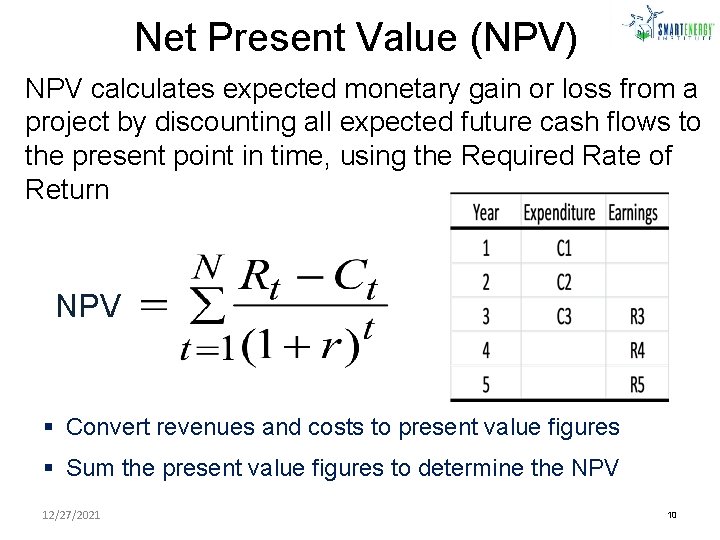
Net Present Value (NPV) NPV calculates expected monetary gain or loss from a project by discounting all expected future cash flows to the present point in time, using the Required Rate of Return NPV § Convert revenues and costs to present value figures § Sum the present value figures to determine the NPV 12/27/2021 10
NPV – Criteria for Project Evaluation § Accept projects with positive NPV § Reject projects with negative NPV 12/27/2021 11
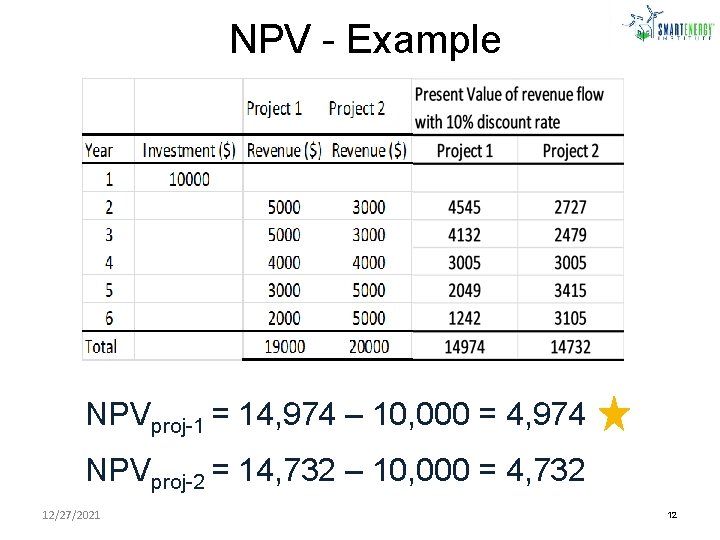
NPV - Example NPVproj-1 = 14, 974 – 10, 000 = 4, 974 NPVproj-2 = 14, 732 – 10, 000 = 4, 732 12/27/2021 12
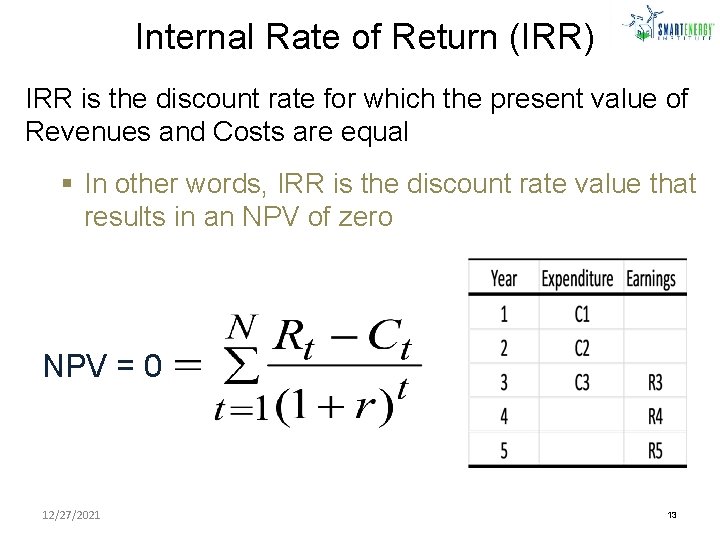
Internal Rate of Return (IRR) IRR is the discount rate for which the present value of Revenues and Costs are equal § In other words, IRR is the discount rate value that results in an NPV of zero NPV = 0 12/27/2021 13
IRR – Criteria for Project Evaluation § A project is acceptable if the IRR exceeds the required return and rejected otherwise. § For two projects, accept the one with higher IRR 12/27/2021 14
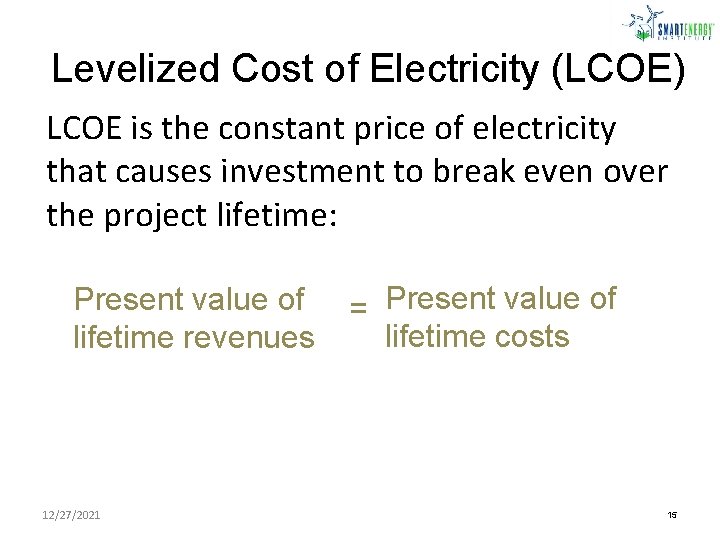
Levelized Cost of Electricity (LCOE) LCOE is the constant price of electricity that causes investment to break even over the project lifetime: Present value of lifetime revenues 12/27/2021 = Present value of lifetime costs 15
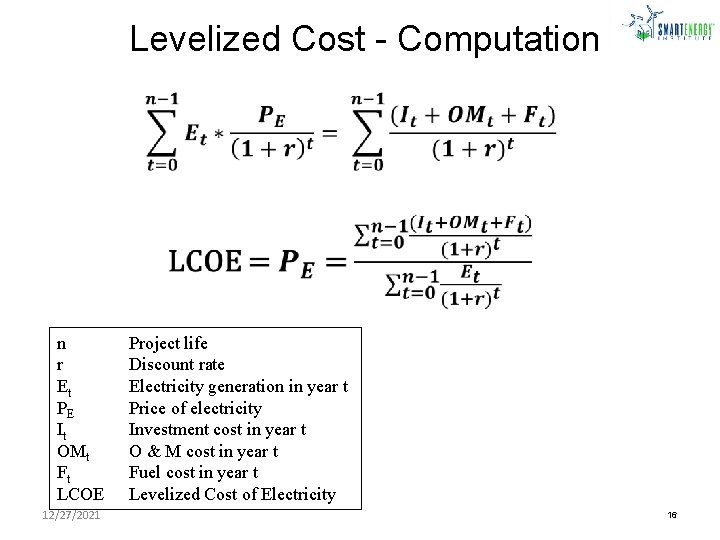
Levelized Cost - Computation n r Et PE It OMt Ft LCOE 12/27/2021 Project life Discount rate Electricity generation in year t Price of electricity Investment cost in year t O & M cost in year t Fuel cost in year t Levelized Cost of Electricity 16
Weighted Average Cost of Capital • WACC is the aggregated required return on all sources of long-term capital (debt and equity) 12/27/2021 17
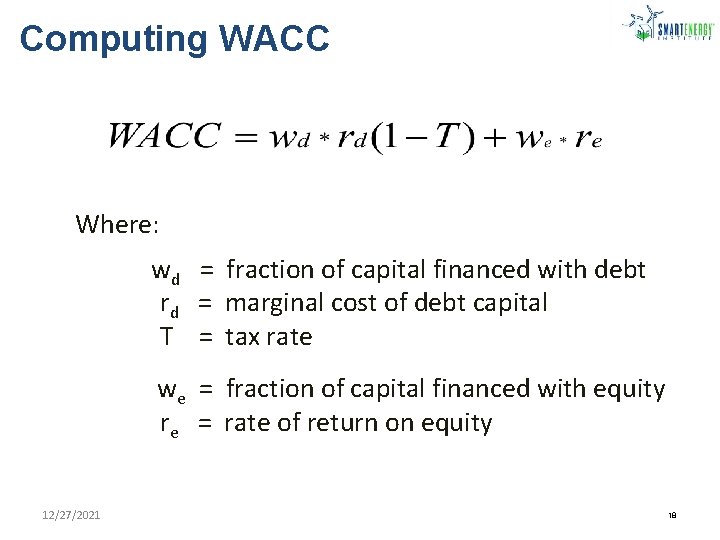
Computing WACC Where: wd = fraction of capital financed with debt rd = marginal cost of debt capital T = tax rate we = fraction of capital financed with equity re = rate of return on equity 12/27/2021 18
Influence of WACC on Project Evaluation • WACC is the Required Rate of Return acceptable for a capital project • WACC is the discount rate used in NPV analysis and the hurdle rate when using IRR 12/27/2021 19
Spreadsheet Example of WACC, NPV, IRR and LCOE 12/27/2021 20
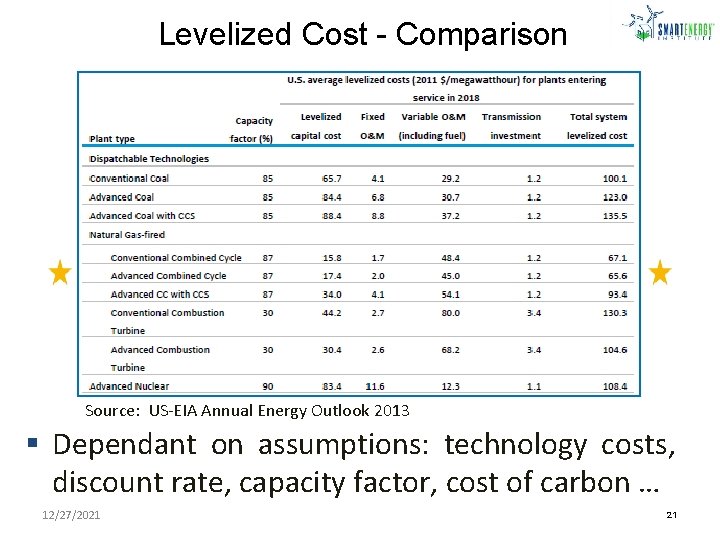
Levelized Cost - Comparison Source: US-EIA Annual Energy Outlook 2013 § Dependant on assumptions: technology costs, discount rate, capacity factor, cost of carbon … 12/27/2021 21
Screening Curve - Methodology Determines least-cost alternatives as a function of technology utilization: § Separate technology costs into “fixed” and “variable” components § Construct cost curves for each technology § Plot total cost vs. capacity factor 12/27/2021 22
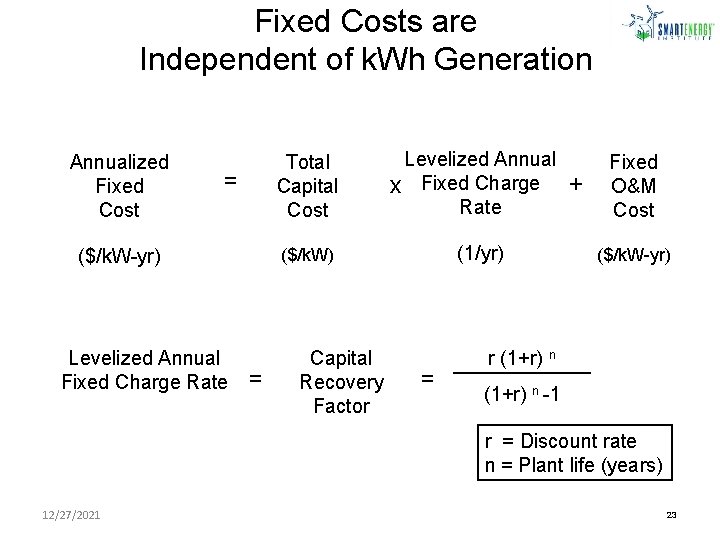
Fixed Costs are Independent of k. Wh Generation Annualized Fixed Cost Total Capital Cost = (1/yr) ($/k. W-yr) Levelized Annual Fixed Charge Rate Levelized Annual x Fixed Charge Rate = Capital Recovery Factor = + Fixed O&M Cost ($/k. W-yr) r (1+r) n -1 r = Discount rate n = Plant life (years) 12/27/2021 23
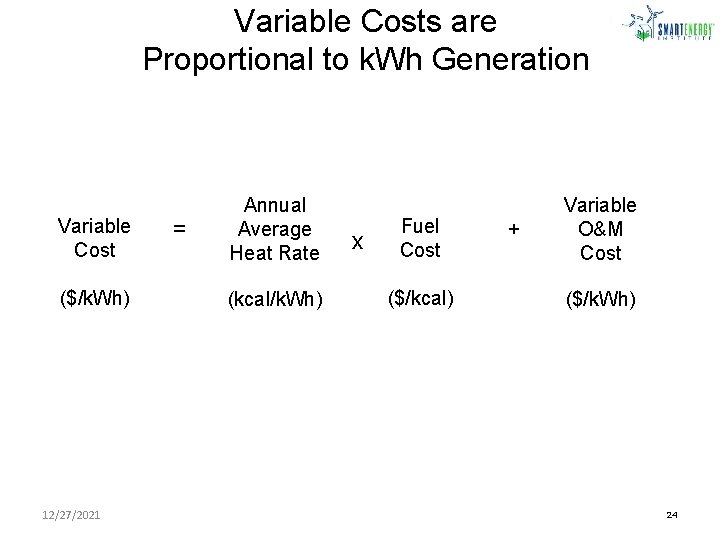
Variable Costs are Proportional to k. Wh Generation Variable Cost ($/k. Wh) 12/27/2021 = Annual Average Heat Rate (kcal/k. Wh) x Fuel Cost ($/kcal) + Variable O&M Cost ($/k. Wh) 24
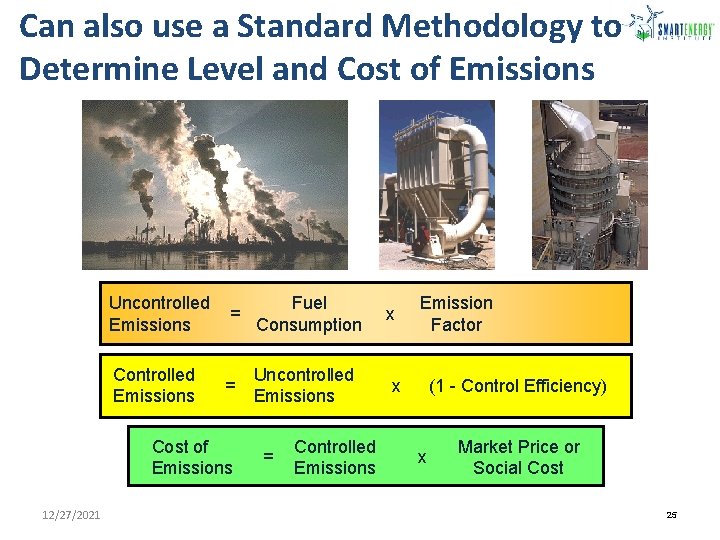
Can also use a Standard Methodology to Determine Level and Cost of Emissions Uncontrolled Emissions = Fuel Consumption Controlled Emissions = Uncontrolled Emissions Cost of Emissions 12/27/2021 = Controlled Emissions x Emission Factor x (1 - Control Efficiency) x Market Price or Social Cost 25
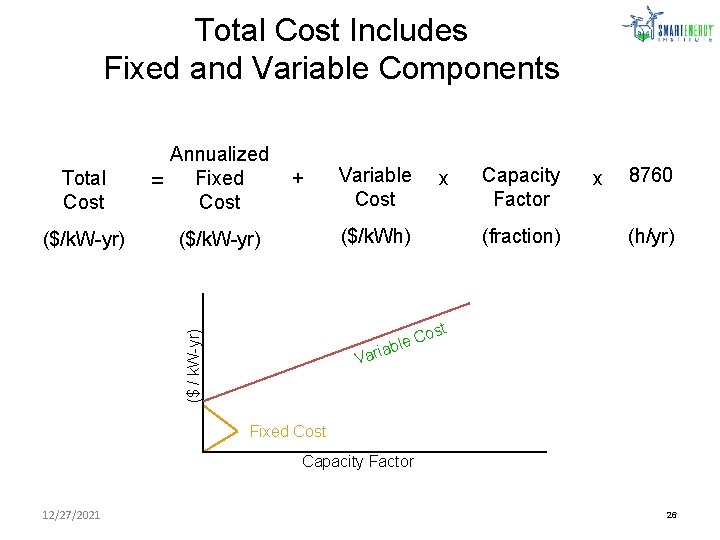
Total Cost Includes Fixed and Variable Components Total Cost + Variable Cost x ($/k. Wh) ($/k. W-yr) Capacity Factor (fraction) x 8760 (h/yr) ost C le riab ($ / k. W-yr) ($/k. W-yr) Annualized = Fixed Cost Va Fixed Cost Capacity Factor 12/27/2021 26
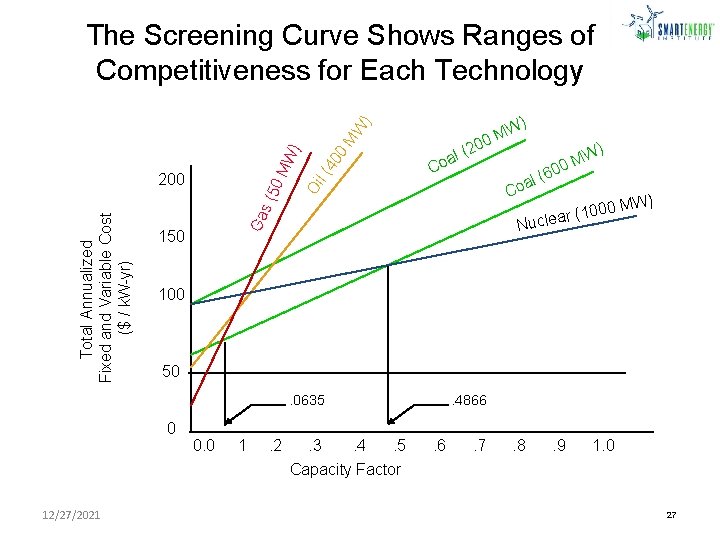
The Screening Curve Shows Ranges of Competitiveness for Each Technology s (5 150 W) 00 M 0 1 ( r a cle M 0 40 l( Nu 100 50. 0635 0 12/27/2021 W) M 0 60 ( oal C Ga Total Annualized Fixed and Variable Cost ($ / k. W-yr) 200 0 (2 l a Co Oi 0 M W) W ) ) W 0 M 0. 0 1 . 2 . 3. 4. 5 Capacity Factor . 4866 . 7 . 8 . 9 1. 0 27
Spreadsheet Example of Screening Curves 12/27/2021 28

Thank you! Any questions? 12/27/2021 29
- Slides: 29