
Power Supply Specifications Specified Voltage Range VS Operating

- Slides: 14
Power Supply Specifications Specified Voltage Range (VS) Operating Voltage Range (VS) Quiescent Current (IQ) 1
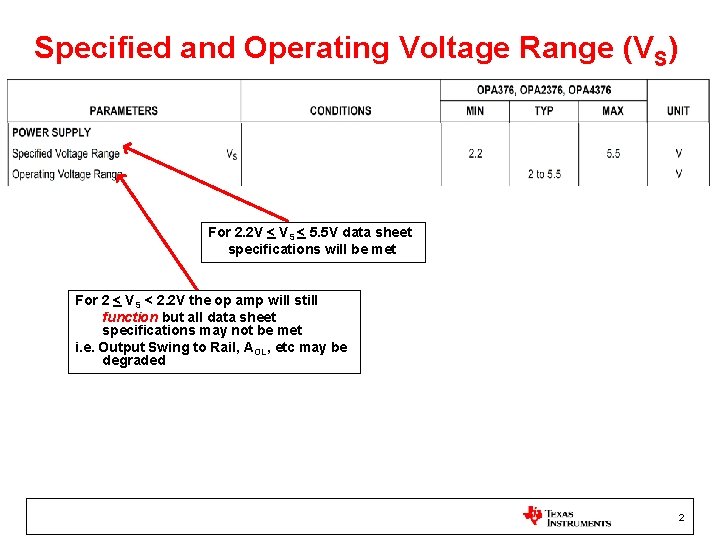
Specified and Operating Voltage Range (VS) For 2. 2 V < VS < 5. 5 V data sheet specifications will be met For 2 < VS < 2. 2 V the op amp will still function but all data sheet specifications may not be met i. e. Output Swing to Rail, AOL, etc may be degraded 2
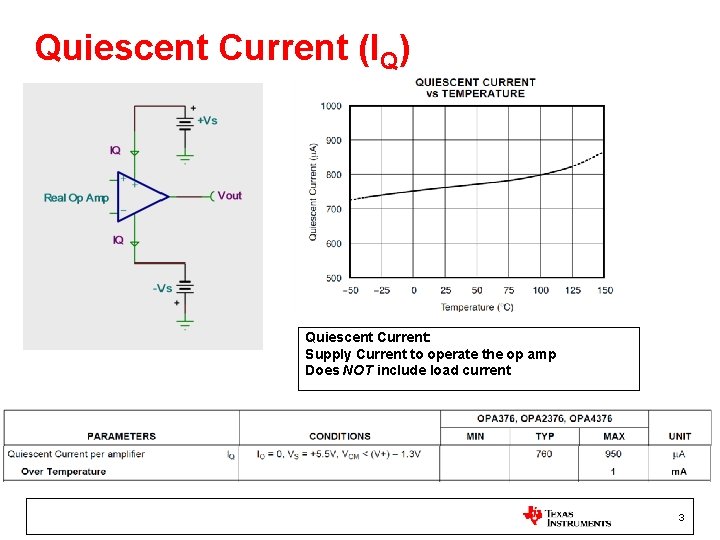
Quiescent Current (IQ) Quiescent Current: Supply Current to operate the op amp Does NOT include load current 3
Temperature Range Specifications Specified Range Operating Range Thermal Resistance (QJA) 4
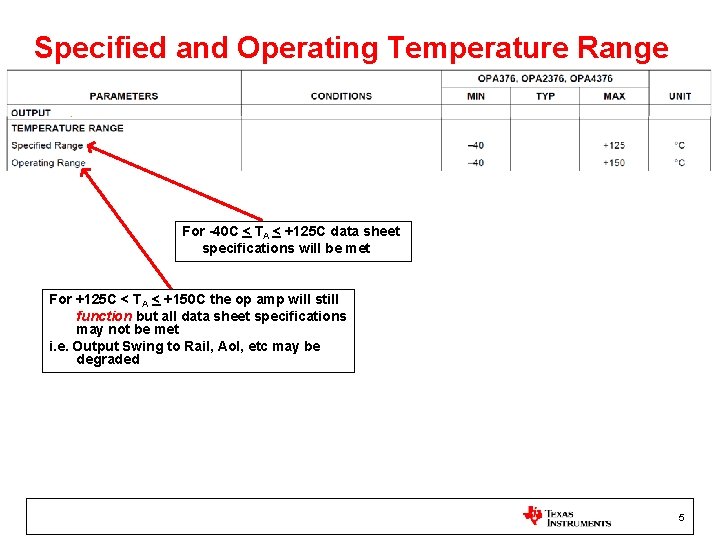
Specified and Operating Temperature Range For -40 C < TA < +125 C data sheet specifications will be met For +125 C < TA < +150 C the op amp will still function but all data sheet specifications may not be met i. e. Output Swing to Rail, Aol, etc may be degraded 5
Thermal Resistance (QJA) 6
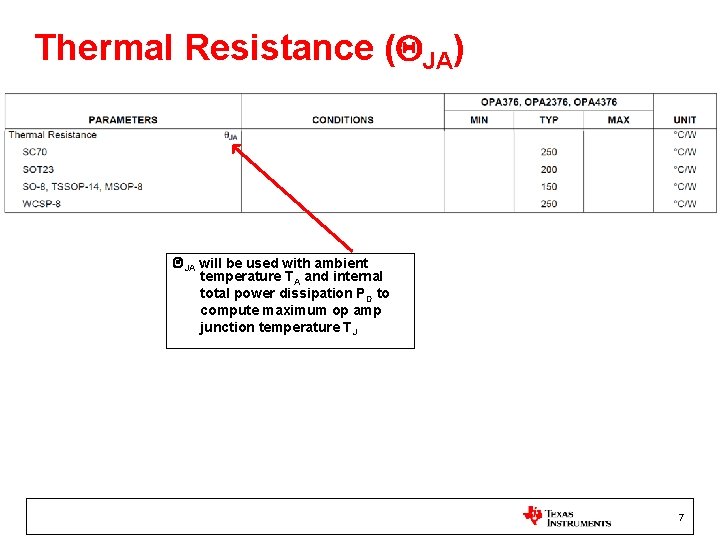
Thermal Resistance (QJA) QJA will be used with ambient temperature TA and internal total power dissipation PD to compute maximum op amp junction temperature TJ 7
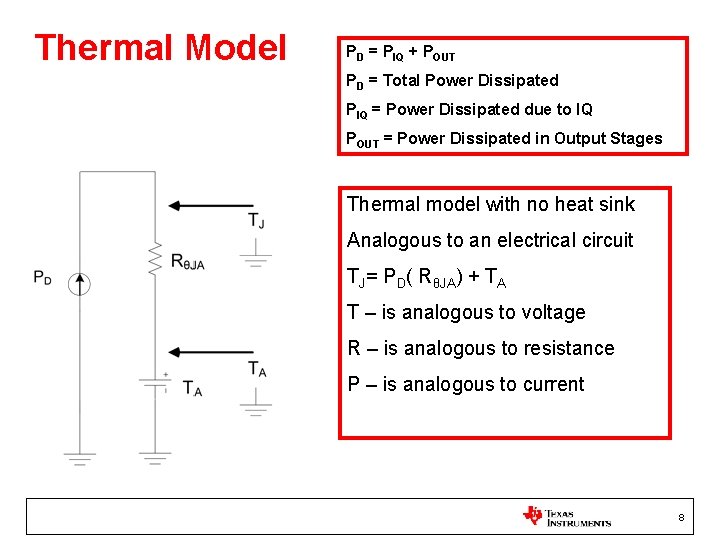
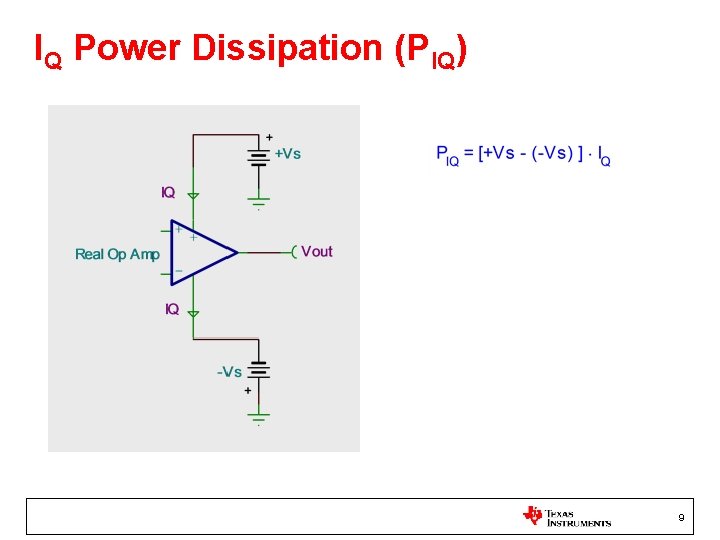
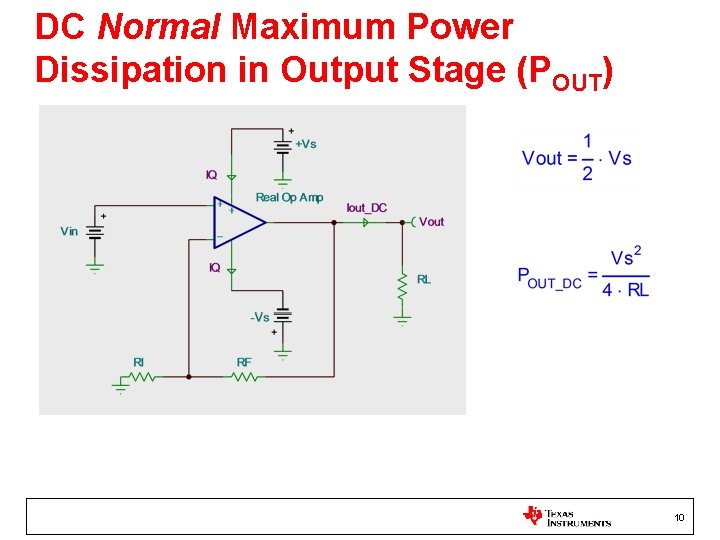
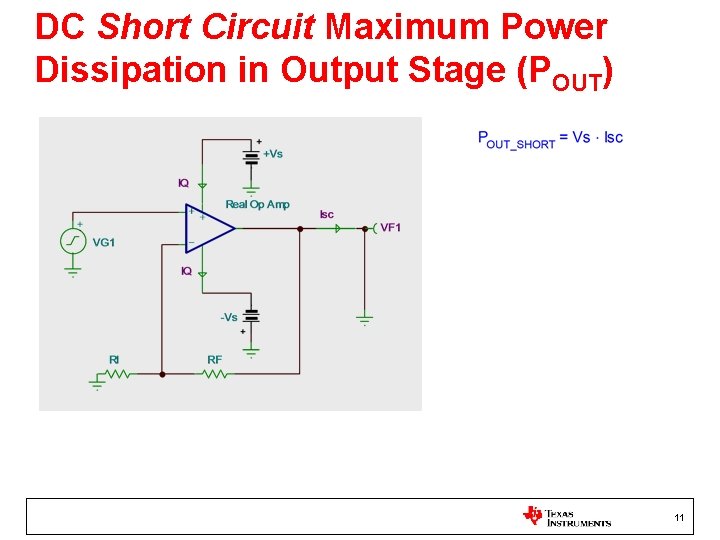
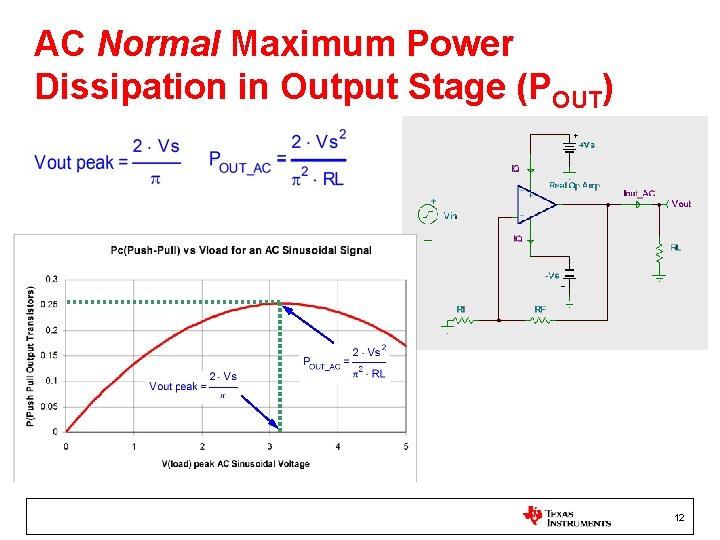
Thermal Model PD = PIQ + POUT PD = Total Power Dissipated PIQ = Power Dissipated due to IQ POUT = Power Dissipated in Output Stages Thermal model with no heat sink Analogous to an electrical circuit TJ= PD( RθJA) + TA T – is analogous to voltage R – is analogous to resistance P – is analogous to current 8
IQ Power Dissipation (PIQ) 9
DC Normal Maximum Power Dissipation in Output Stage (POUT) 10
DC Short Circuit Maximum Power Dissipation in Output Stage (POUT) 11
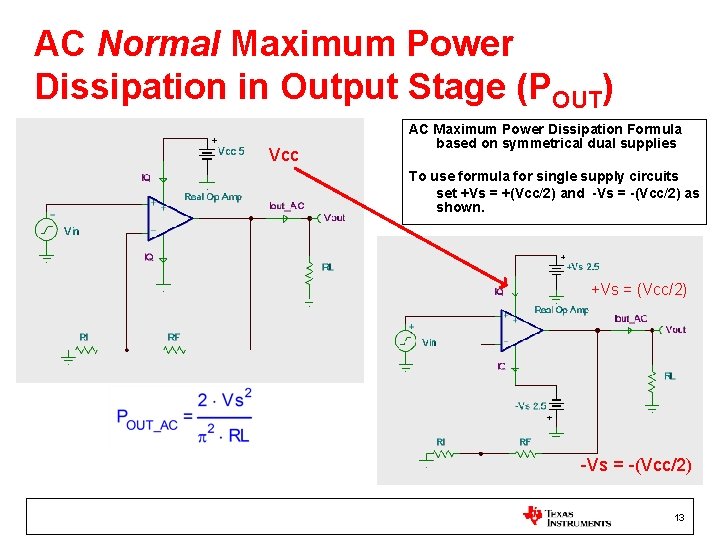
AC Normal Maximum Power Dissipation in Output Stage (POUT) 12
AC Normal Maximum Power Dissipation in Output Stage (POUT) Vcc AC Maximum Power Dissipation Formula based on symmetrical dual supplies To use formula for single supply circuits set +Vs = +(Vcc/2) and -Vs = -(Vcc/2) as shown. +Vs = (Vcc/2) -Vs = -(Vcc/2) 13
Thank you! 14