
Power Sum and Difference Rules HigherOrder Derivatives Section
- Slides: 16
* Power, Sum, and Difference Rules, Higher-Order Derivatives Section 3. 3 a
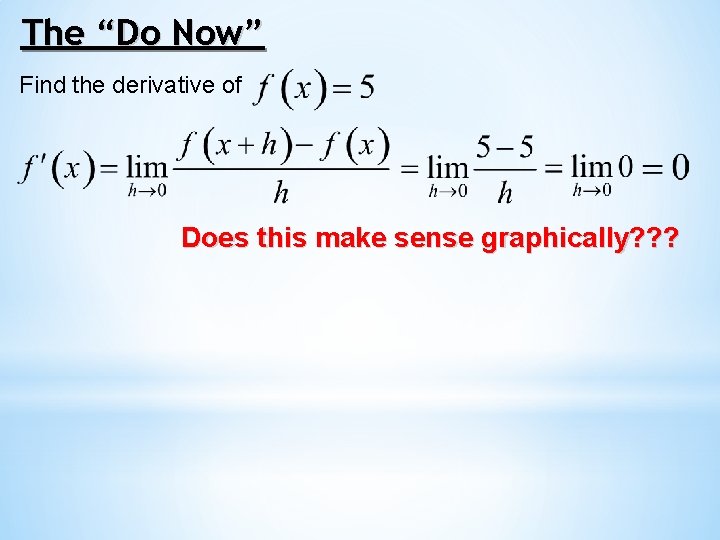
The “Do Now” Find the derivative of Does this make sense graphically? ? ?
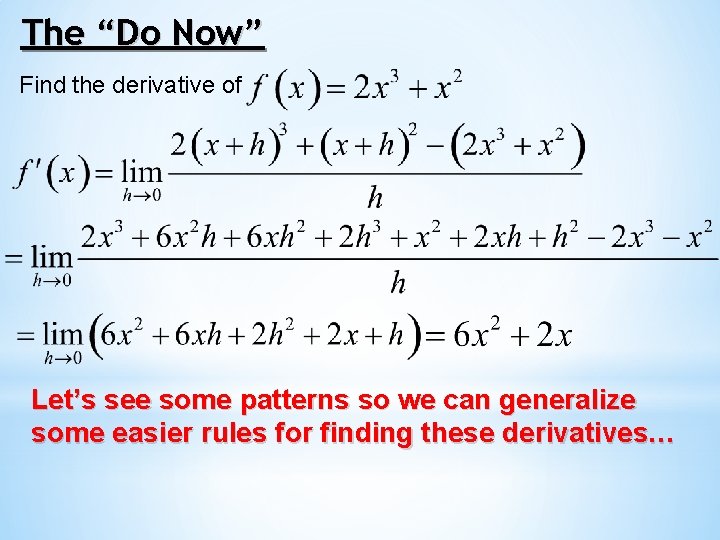
The “Do Now” Find the derivative of Let’s see some patterns so we can generalize some easier rules for finding these derivatives…
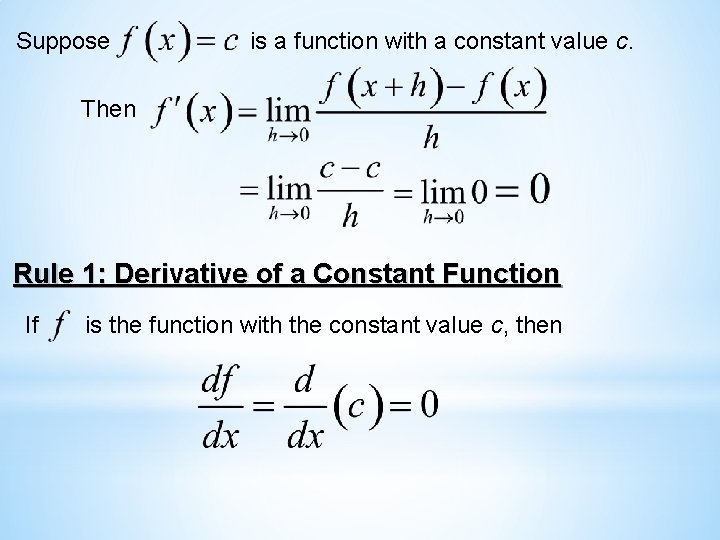
Suppose is a function with a constant value c. Then Rule 1: Derivative of a Constant Function If is the function with the constant value c, then
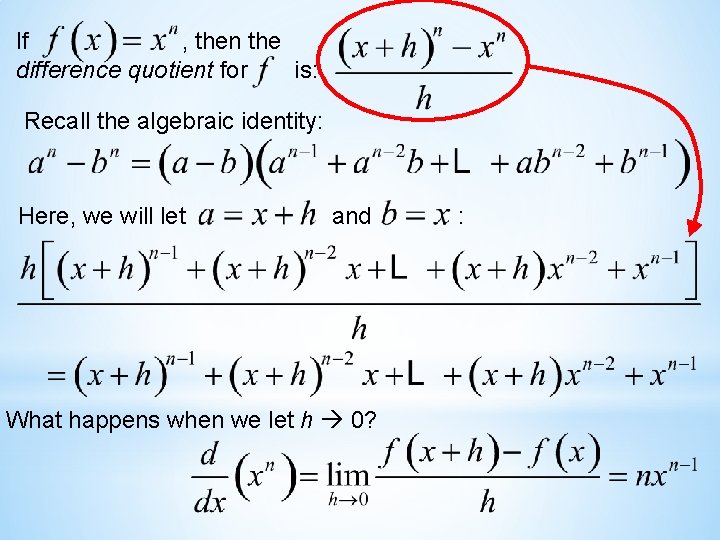
If , then the difference quotient for is: Recall the algebraic identity: Here, we will let and What happens when we let h 0? :
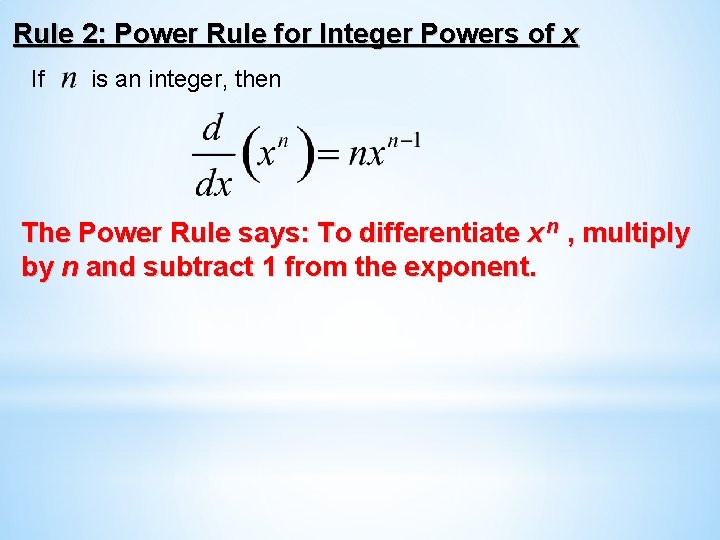
Rule 2: Power Rule for Integer Powers of x If is an integer, then The Power Rule says: To differentiate x n , multiply by n and subtract 1 from the exponent.
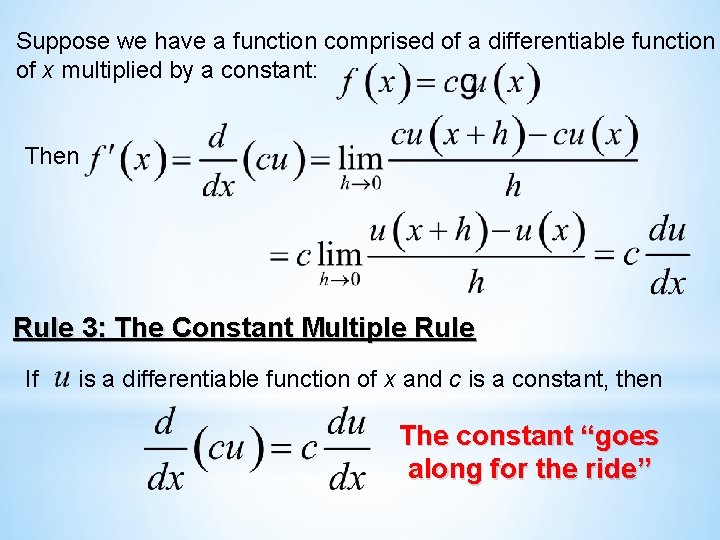
Suppose we have a function comprised of a differentiable function of x multiplied by a constant: Then Rule 3: The Constant Multiple Rule If is a differentiable function of x and c is a constant, then The constant “goes along for the ride”
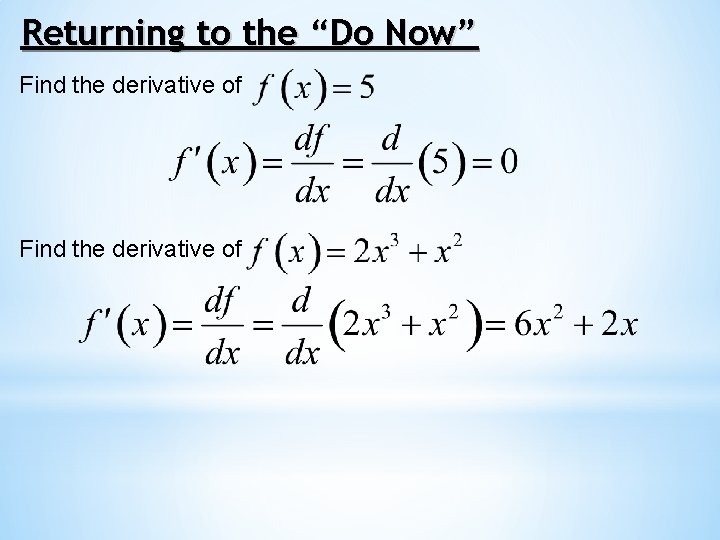
Returning to the “Do Now” Find the derivative of
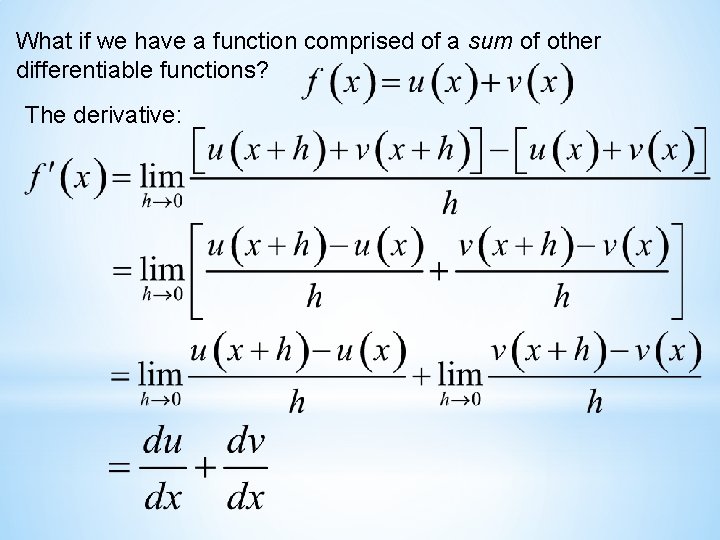
What if we have a function comprised of a sum of other differentiable functions? The derivative:
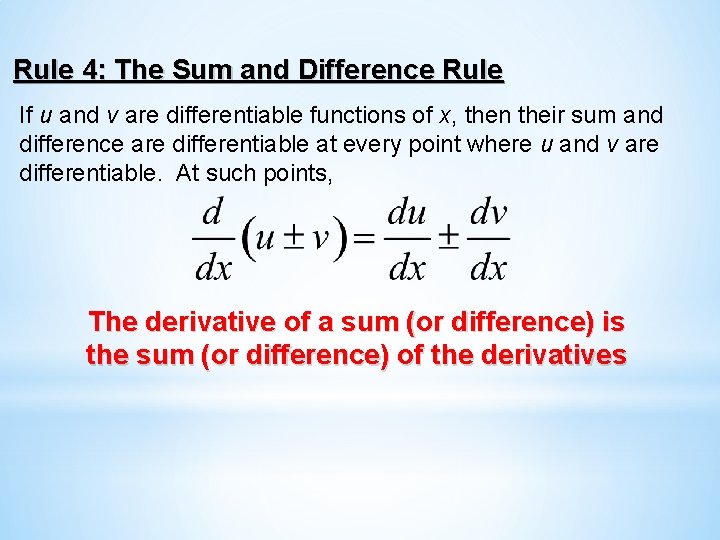
Rule 4: The Sum and Difference Rule If u and v are differentiable functions of x, then their sum and difference are differentiable at every point where u and v are differentiable. At such points, The derivative of a sum (or difference) is the sum (or difference) of the derivatives
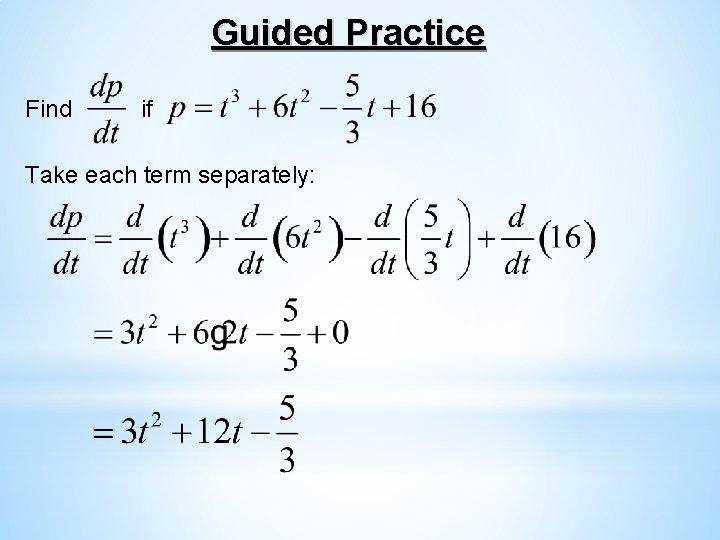
Guided Practice Find if Take each term separately:
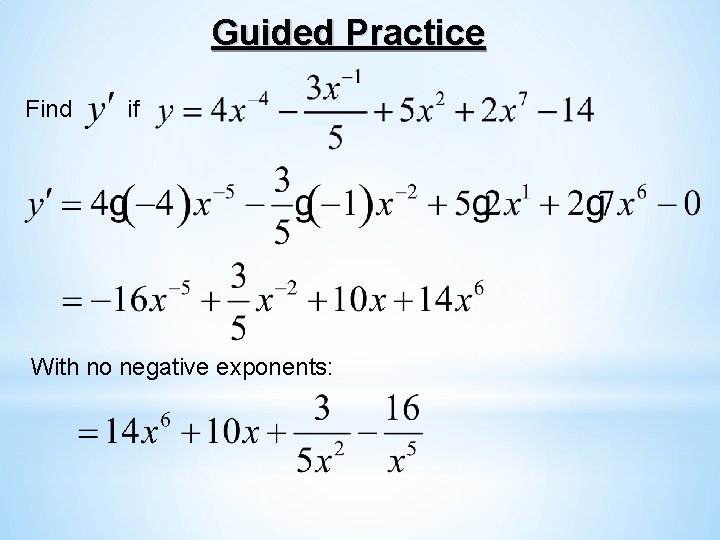
Guided Practice Find if With no negative exponents:
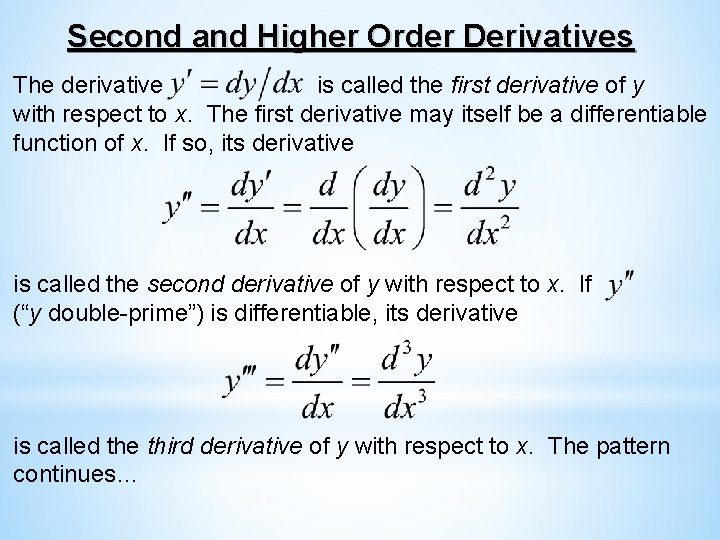
Second and Higher Order Derivatives The derivative is called the first derivative of y with respect to x. The first derivative may itself be a differentiable function of x. If so, its derivative is called the second derivative of y with respect to x. If (“y double-prime”) is differentiable, its derivative is called the third derivative of y with respect to x. The pattern continues…
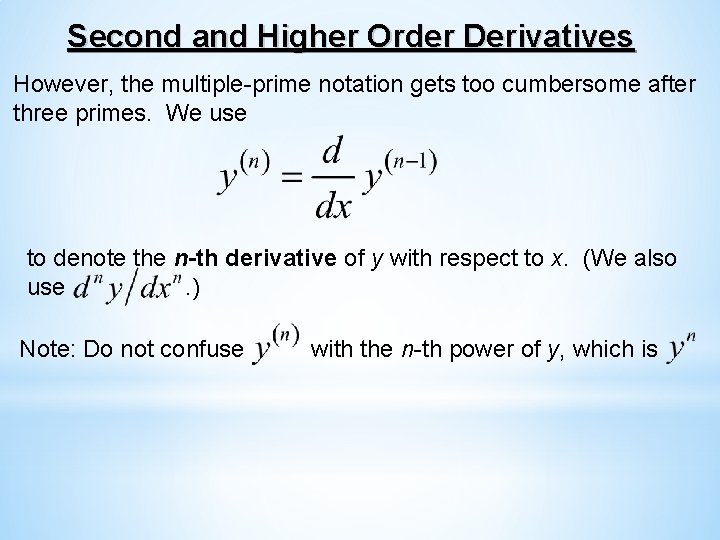
Second and Higher Order Derivatives However, the multiple-prime notation gets too cumbersome after three primes. We use to denote the n-th derivative of y with respect to x. (We also use. ) Note: Do not confuse with the n-th power of y, which is
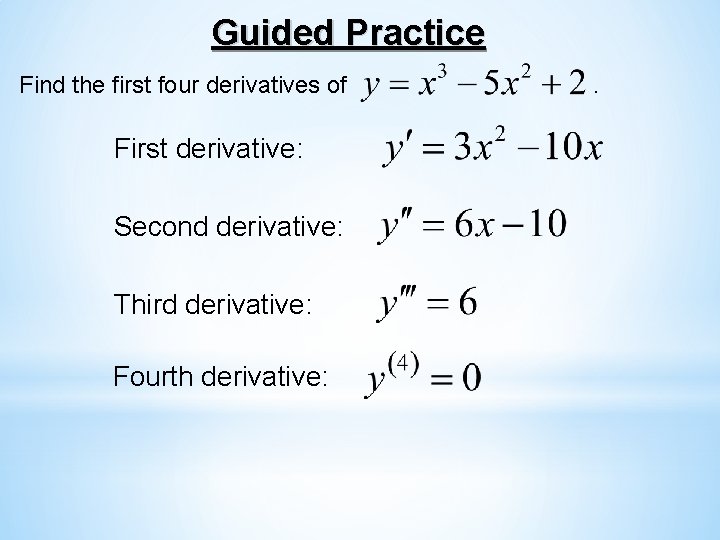
Guided Practice Find the first four derivatives of First derivative: Second derivative: Third derivative: Fourth derivative: .
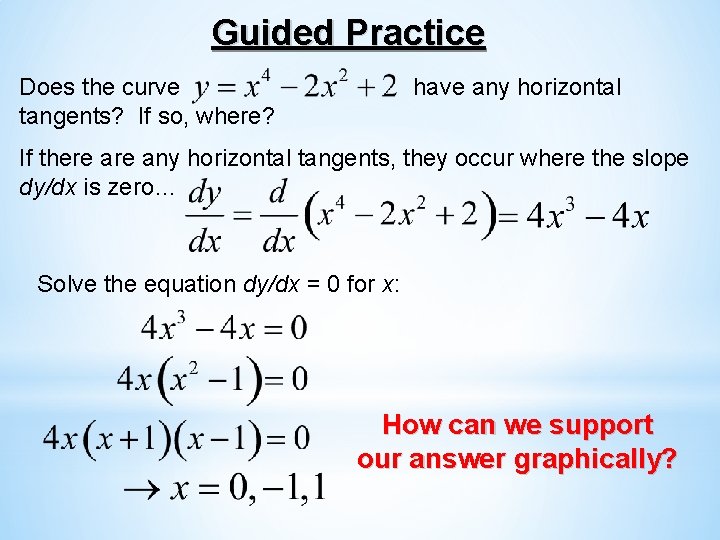
Guided Practice Does the curve tangents? If so, where? have any horizontal If there any horizontal tangents, they occur where the slope dy/dx is zero… Solve the equation dy/dx = 0 for x: How can we support our answer graphically?