
Power Shifts BackgroundHistorical Developments People around the world

Power Shifts
Background/Historical Developments • People around the world developed a new sense of commonality based on language, religion, social customs, and territory. • This was sometimes harnessed by governments to foster a sense of unity • Newly imagined national communities often linked this new national identity with borders of the state, and in some cases, nationalists challenged boundaries or sought unification of fragmented regions.
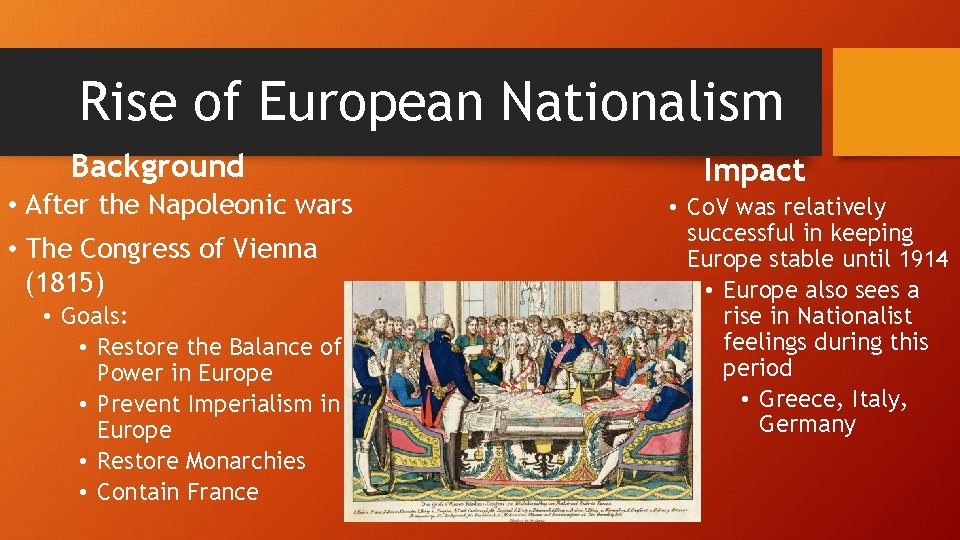
Rise of European Nationalism Background • After the Napoleonic wars • The Congress of Vienna (1815) • Goals: • Restore the Balance of Power in Europe • Prevent Imperialism in Europe • Restore Monarchies • Contain France Impact • Co. V was relatively successful in keeping Europe stable until 1914 • Europe also sees a rise in Nationalist feelings during this period • Greece, Italy, Germany
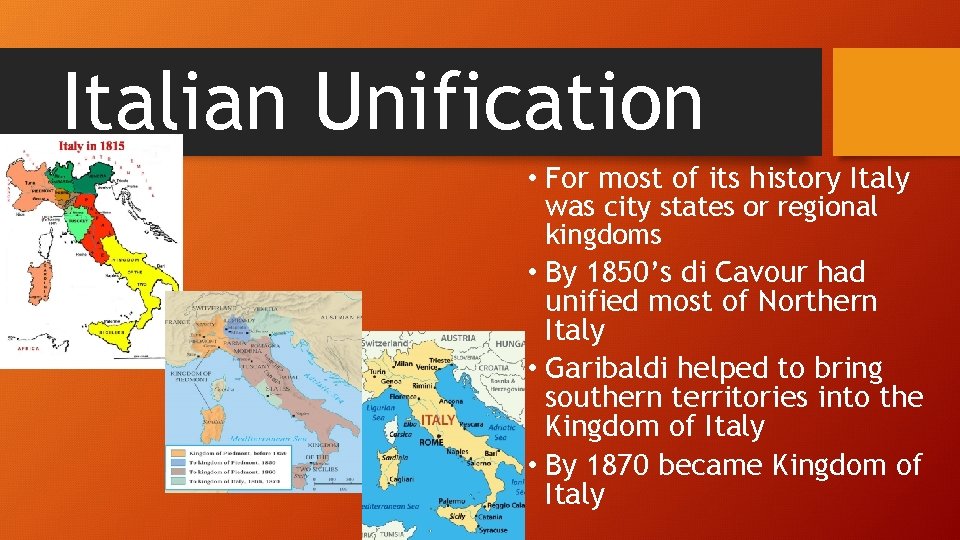
Italian Unification • For most of its history Italy was city states or regional kingdoms • By 1850’s di Cavour had unified most of Northern Italy • Garibaldi helped to bring southern territories into the Kingdom of Italy • By 1870 became Kingdom of Italy

German Unification • Modern Germany did not exist until 1871 • Was part of the Holy Roman Empire • Prussia was the most powerful principality of the HRE • Otto Von Bismark as Prime Minister Prussia was able to: • Modernize and expand army • Win wars against rivals which allowed the Prussian king to name himself emperor of the Second German Empire (Second Reich) • Embraced all German speaking people outside Austria and Switzerland
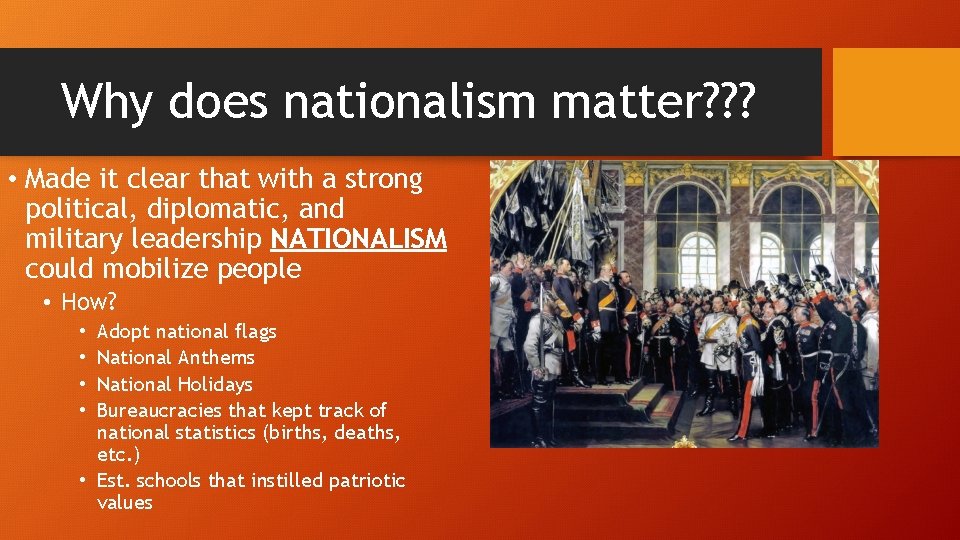
Why does nationalism matter? ? ? • Made it clear that with a strong political, diplomatic, and military leadership NATIONALISM could mobilize people • How? Adopt national flags National Anthems National Holidays Bureaucracies that kept track of national statistics (births, deaths, etc. ) • Est. schools that instilled patriotic values • •

Shifting Power in Latin America: Mexico Case Study • Mexican Revolution – 1910 • Mexico ruled by a dictator (Diaz) • Corrupt • Allowed heavy foreign influence • Widespread economic inequality
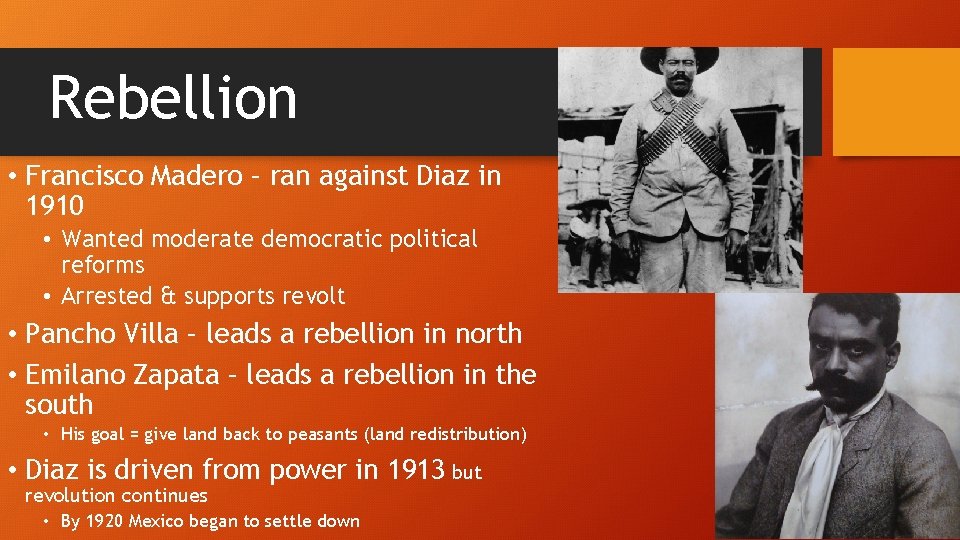
Rebellion • Francisco Madero – ran against Diaz in 1910 • Wanted moderate democratic political reforms • Arrested & supports revolt • Pancho Villa – leads a rebellion in north • Emilano Zapata – leads a rebellion in the south • His goal = give land back to peasants (land redistribution) • Diaz is driven from power in 1913 but revolution continues • By 1920 Mexico began to settle down
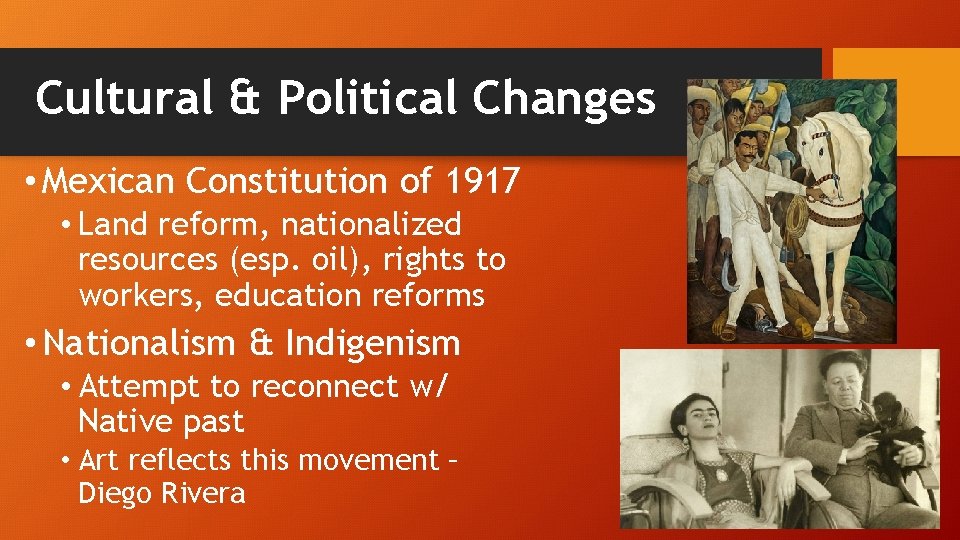
Cultural & Political Changes • Mexican Constitution of 1917 • Land reform, nationalized resources (esp. oil), rights to workers, education reforms • Nationalism & Indigenism • Attempt to reconnect w/ Native past • Art reflects this movement – Diego Rivera
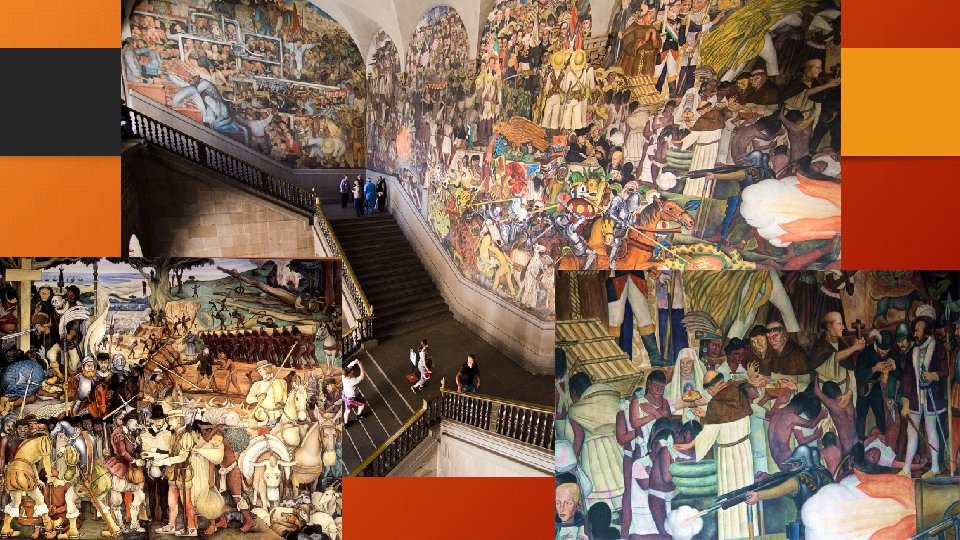
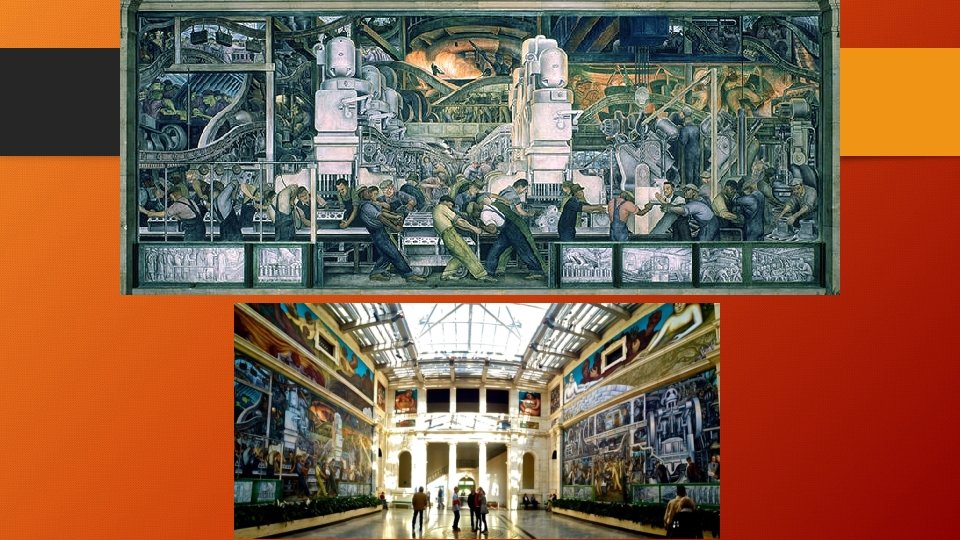
So what? ? ? • German unification and nationalism is going to become a contributing factor to World War I • The political upheaval and violence in Mexico ultimately give way to stability that lasted the rest of the 20 th century.
- Slides: 12