
POWER SHARING The case of Belgium The case
POWER SHARING
The case of Belgium
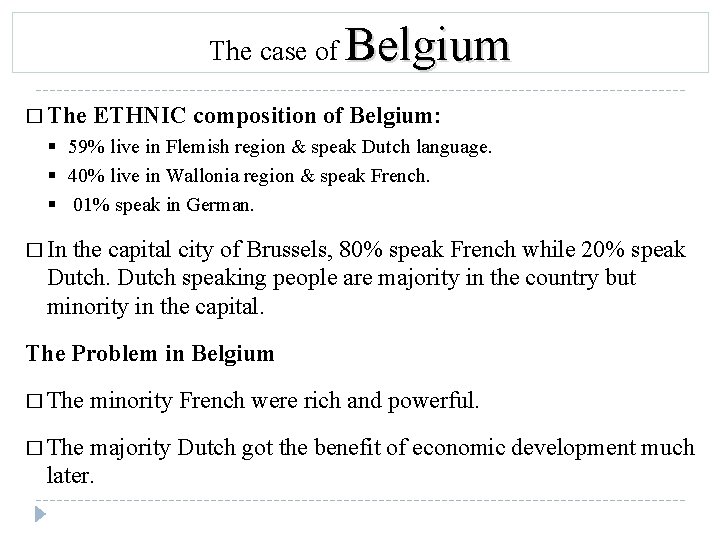
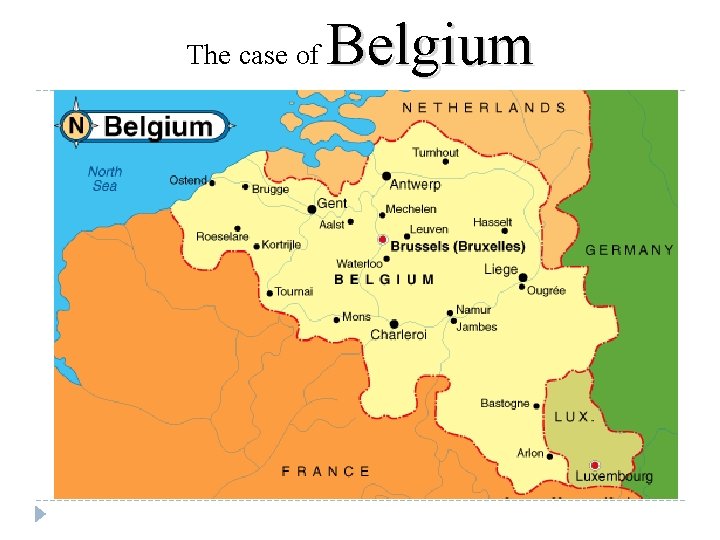
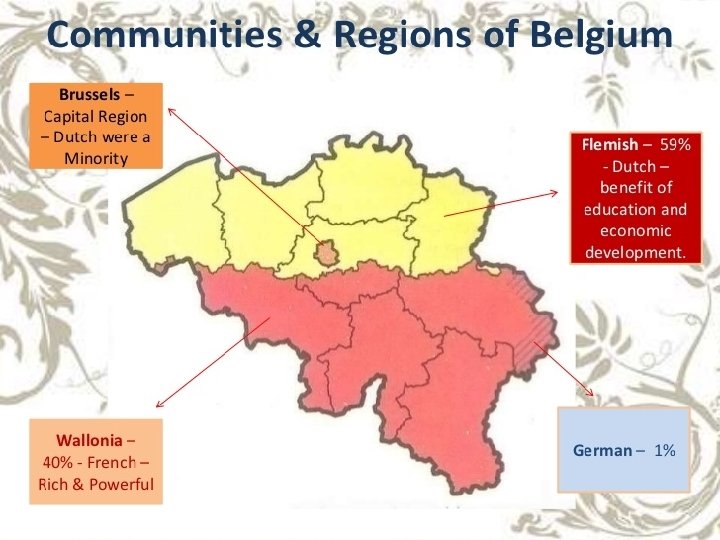
The case of � The Belgium ETHNIC composition of Belgium: § 59% live in Flemish region & speak Dutch language. § 40% live in Wallonia region & speak French. § 01% speak in German. � In the capital city of Brussels, 80% speak French while 20% speak Dutch speaking people are majority in the country but minority in the capital. The Problem in Belgium � The minority French were rich and powerful. majority Dutch got the benefit of economic development much later.
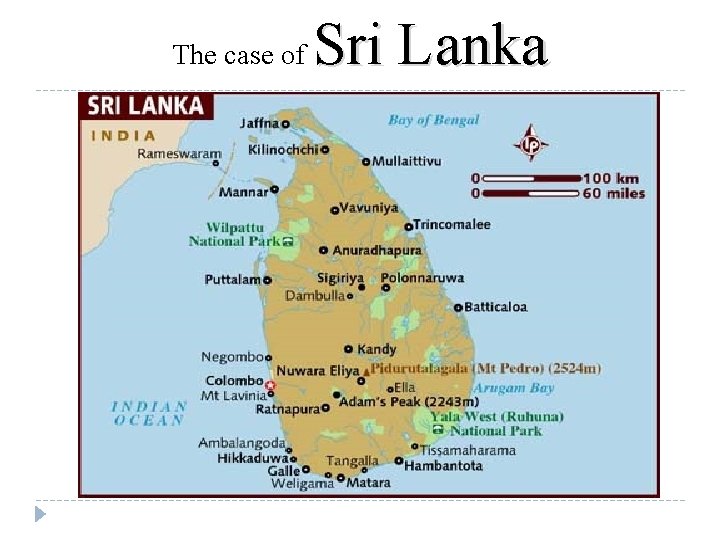
The case of Sri Lanka
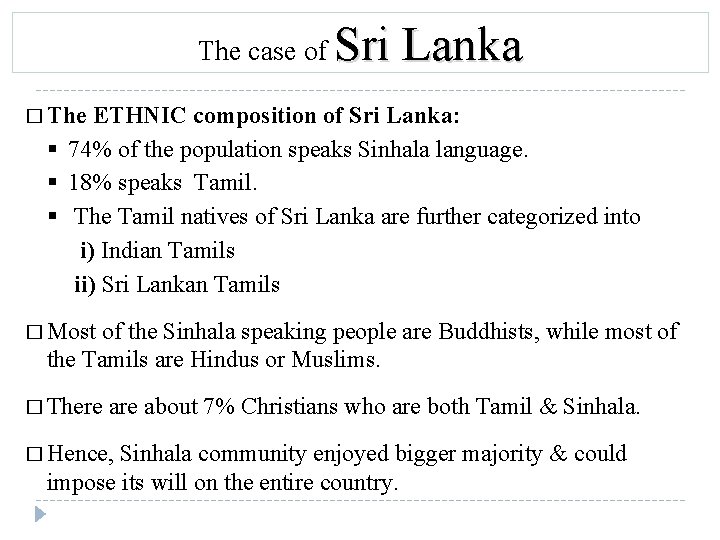
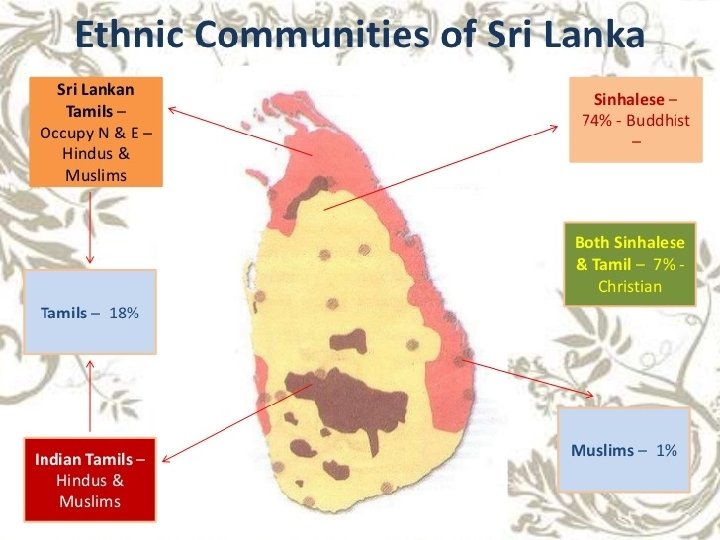
The case of Sri Lanka � The ETHNIC composition of Sri Lanka: § 74% of the population speaks Sinhala language. § 18% speaks Tamil. § The Tamil natives of Sri Lanka are further categorized into i) Indian Tamils ii) Sri Lankan Tamils � Most of the Sinhala speaking people are Buddhists, while most of the Tamils are Hindus or Muslims. � There about 7% Christians who are both Tamil & Sinhala. � Hence, Sinhala community enjoyed bigger majority & could impose its will on the entire country.
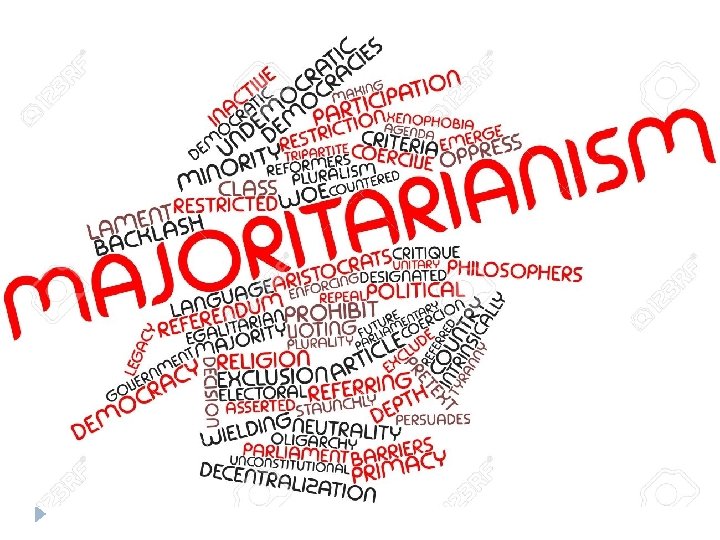
Majoritarianism in Ø Sri Lanka After Sri Lankan independence in 1948, the democratically elected government adopted a series of MAJORITARIAN measures to establish Sinhala supremacy. 1) In 1956, an Act was passed to recognize Sinhala as the only official language, thus disregarding Tamil. 2) Preferential treatment to Sinhala applicants for university positions & government jobs. 3) Protection & promotion of Buddhism. Ø The Tamils, hence felt that the constitution & government of Sri Lanka is denying them equal rights & opportunities.
Power Struggle in Sri Lanka Ø The Sri Lankan Tamils launched parties & struggles for: § Recognition of Tamil as an official language. § Regional autonomy. § Opportunity in securing education & jobs. Ø Several political organizations were formed demanding an independent Tamil Eelam. Ø The continuous struggle between the two communities resulted in a Civil War in which lakhs of people were killed over the period of 3 decades. Ø The Civil war had a devastating impact on the social, cultural & economical life of the country.
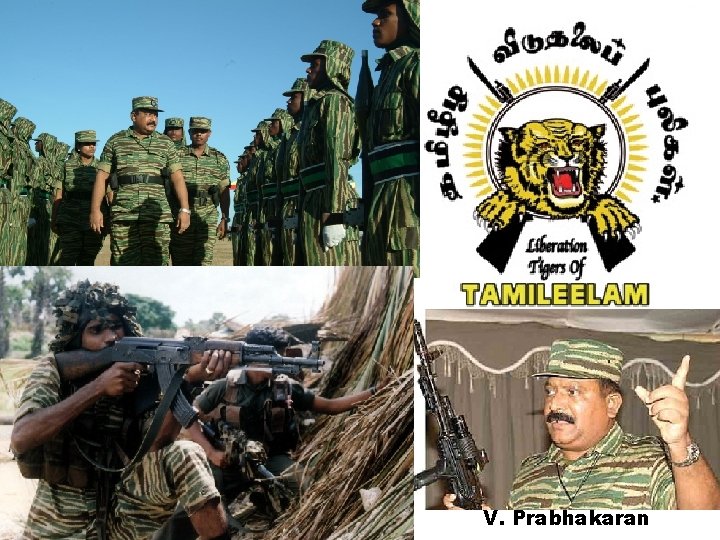
V. Prabhakaran
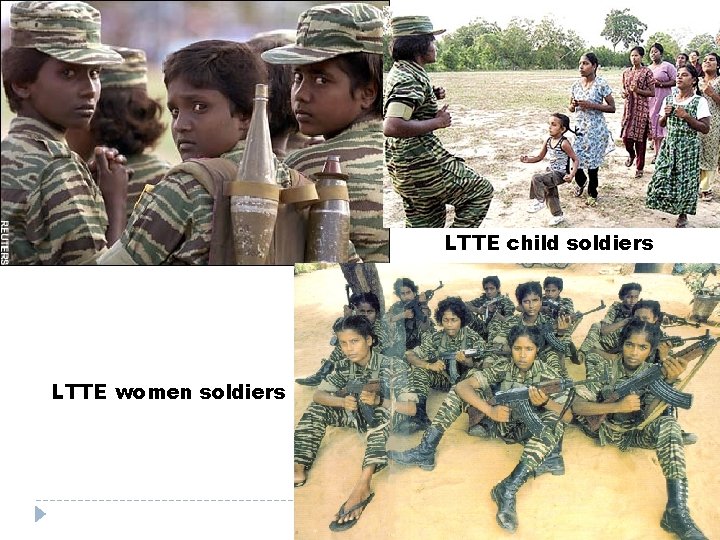
LTTE child soldiers LTTE women soldiers
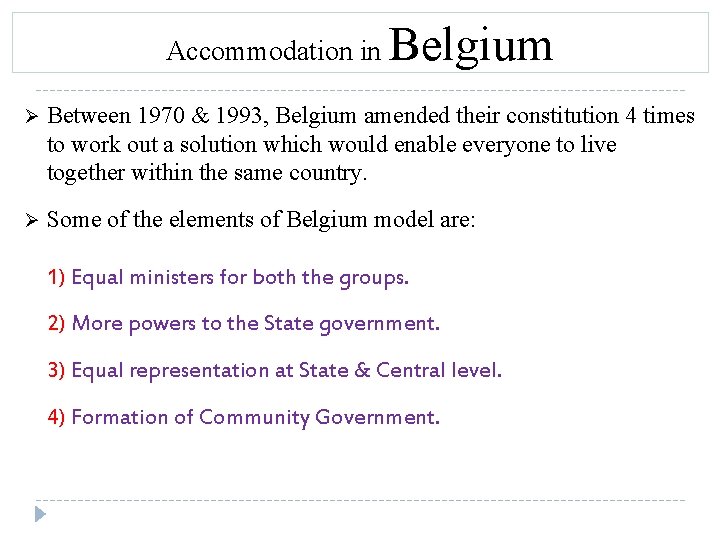
Accommodation in Belgium Ø Between 1970 & 1993, Belgium amended their constitution 4 times to work out a solution which would enable everyone to live together within the same country. Ø Some of the elements of Belgium model are: 1) Equal ministers for both the groups. 2) More powers to the State government. 3) Equal representation at State & Central level. 4) Formation of Community Government.
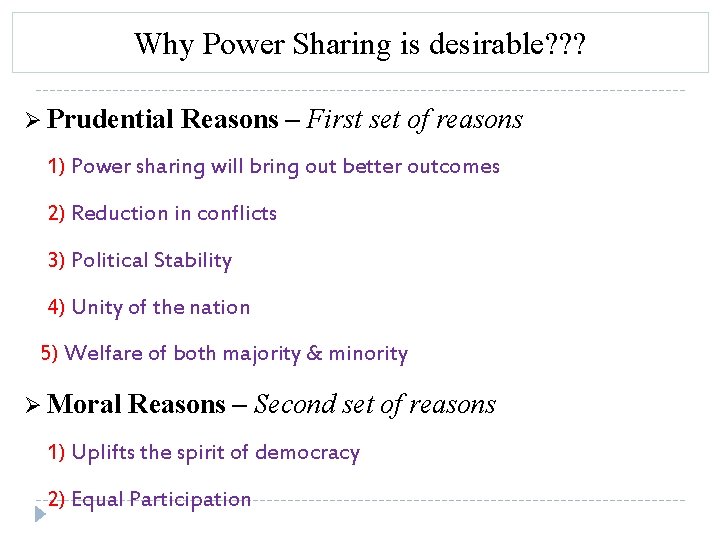
Why Power Sharing is desirable? ? ? Ø Prudential Reasons – First set of reasons 1) Power sharing will bring out better outcomes 2) Reduction in conflicts 3) Political Stability 4) Unity of the nation 5) Welfare of both majority & minority Ø Moral Reasons – Second set of reasons 1) Uplifts the spirit of democracy 2) Equal Participation
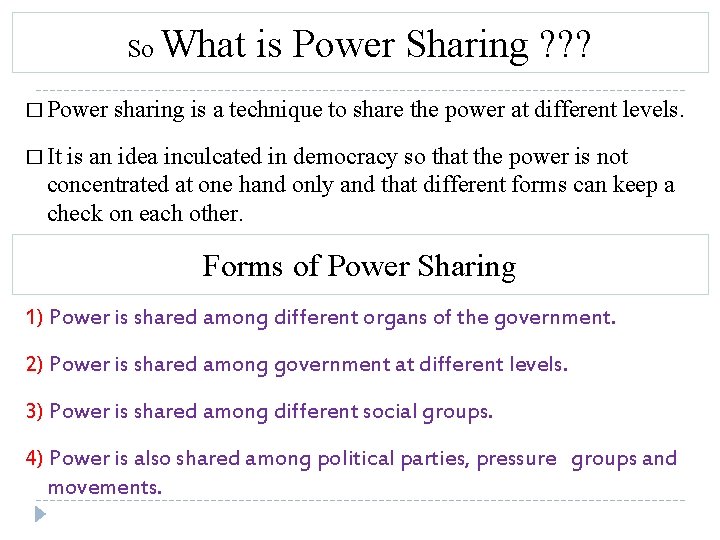
So � Power What is Power Sharing ? ? ? sharing is a technique to share the power at different levels. � It is an idea inculcated in democracy so that the power is not concentrated at one hand only and that different forms can keep a check on each other. Forms of Power Sharing 1) Power is shared among different organs of the government. 2) Power is shared among government at different levels. 3) Power is shared among different social groups. 4) Power is also shared among political parties, pressure groups and movements.
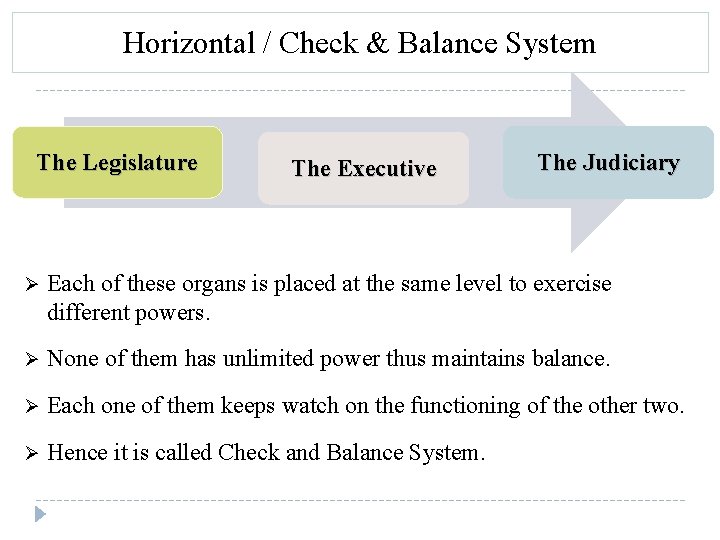
Horizontal / Check & Balance System The Legislature The Executive The Judiciary Ø Each of these organs is placed at the same level to exercise different powers. Ø None of them has unlimited power thus maintains balance. Ø Each one of them keeps watch on the functioning of the other two. Ø Hence it is called Check and Balance System.
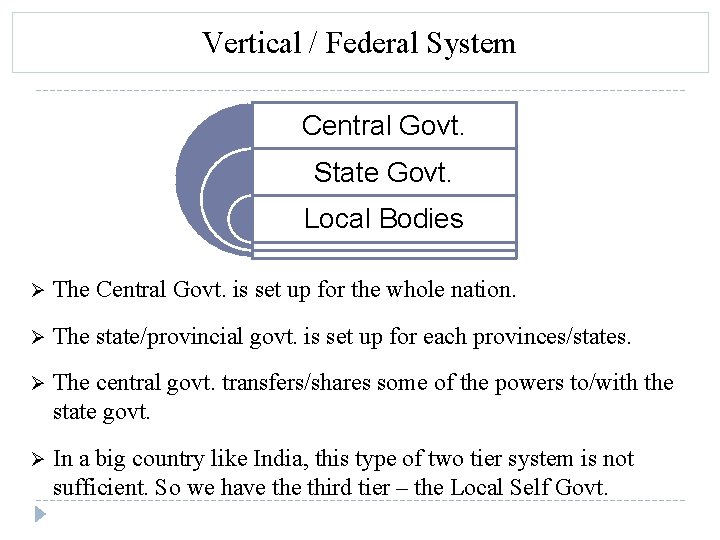
Vertical / Federal System Central Govt. State Govt. Local Bodies Ø The Central Govt. is set up for the whole nation. Ø The state/provincial govt. is set up for each provinces/states. Ø The central govt. transfers/shares some of the powers to/with the state govt. Ø In a big country like India, this type of two tier system is not sufficient. So we have third tier – the Local Self Govt.
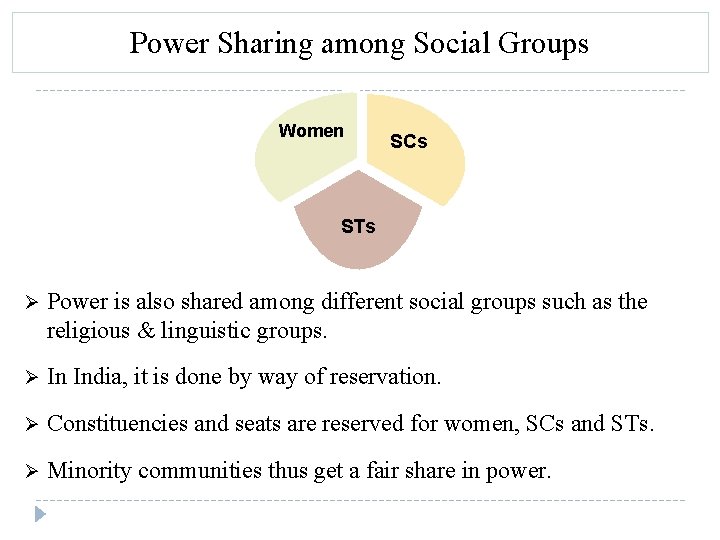
Power Sharing among Social Groups Women SCs STs Ø Power is also shared among different social groups such as the religious & linguistic groups. Ø In India, it is done by way of reservation. Ø Constituencies and seats are reserved for women, SCs and STs. Ø Minority communities thus get a fair share in power.

Power Sharing among Political Parties, Pressure Groups & Movements Ø No political party enjoys power forever. Ø With the emergence of coalition govt. many parties share power at the same time. Ø Pressure groups and movements have share in power by exerting pressure on the govt. Ø They exert pressure by various means and get policies framed in their favour.
- Slides: 20