
Power Sharing Communities Regions of Belgium Brussels Capital
Power Sharing

Communities & Regions of Belgium Brussels – Capital Region – Dutch were a Minority Wallonia – 40% - French – Rich & Powerful Flemish – 59% - Dutch – benefit of education and economic development. German – 1%
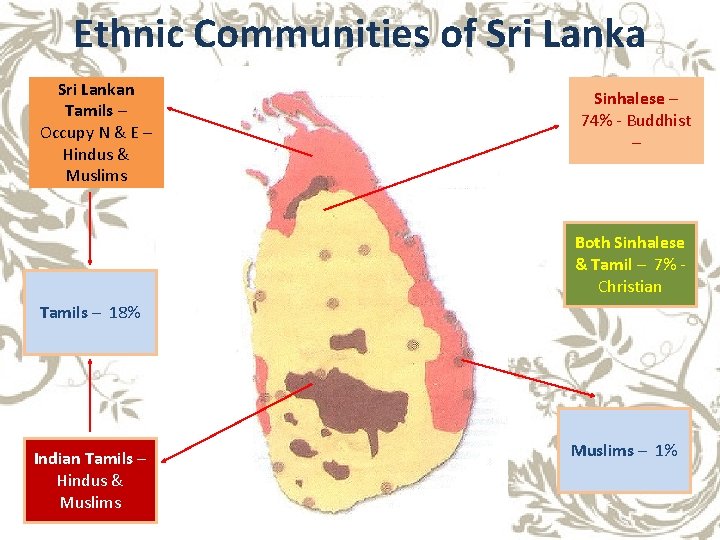
Ethnic Communities of Sri Lankan Tamils – Occupy N & E – Hindus & Muslims Sinhalese – 74% - Buddhist – Both Sinhalese & Tamil – 7% Christian Tamils – 18% Indian Tamils – Hindus & Muslims – 1%
Reasons for Alienation of Sri Lankan Tamils / Majoritarianism in Sri Lanka
Reasons… • Dominance of Sinhalese community due to majority • 1956 Act made Sinhala as the only official language • Preferential policies favouring Sinhalese in university position and jobs • State to protect and foster Buddhism
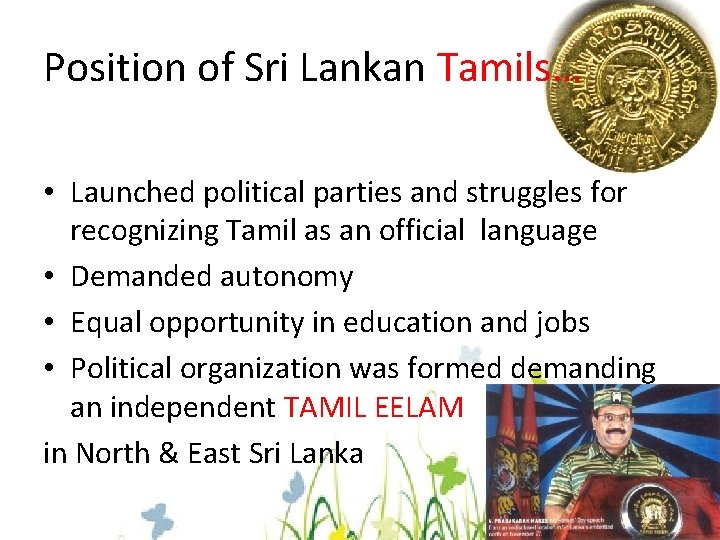
Position of Sri Lankan Tamils… • Launched political parties and struggles for recognizing Tamil as an official language • Demanded autonomy • Equal opportunity in education and jobs • Political organization was formed demanding an independent TAMIL EELAM in North & East Sri Lanka
Civil War… Causes Both sides started distrusting each other Effects Social, Cultural& Economic setback
Power Sharing by Accommodation in Belgium
Power Sharing - Belgium • Equal number of Ministers from Dutch and French speaking areas in the Central Govt. • No single community can make decisions unilaterally • Transfer of power from the centre to the state. State govt. will not be a subordinate to the centre. • Separate govt. in Brussels with equal representation for the French and the Dutch. • Formation of COMMUNITY Govt elected by the people belonging to one language community Dutch, French and German wherever they live. This has power regarding • Culture, education and language related issues.
Power Sharing - Result The country united respecting the feelings of different communities and regions.
Belgium & Sri Lanka Similarities: Both are democracies. Differences: Power sharing arrangement is different. What is unique about Belgium? Leaders have realized that unity of the country is possible only by respecting the feelings and interests of different communities and regions. • What was the drawback in the system followed by Sri Lanka? • Dominance of majority community - Sinhalese by refusing to share power with Tamils resulting in disunity. • •
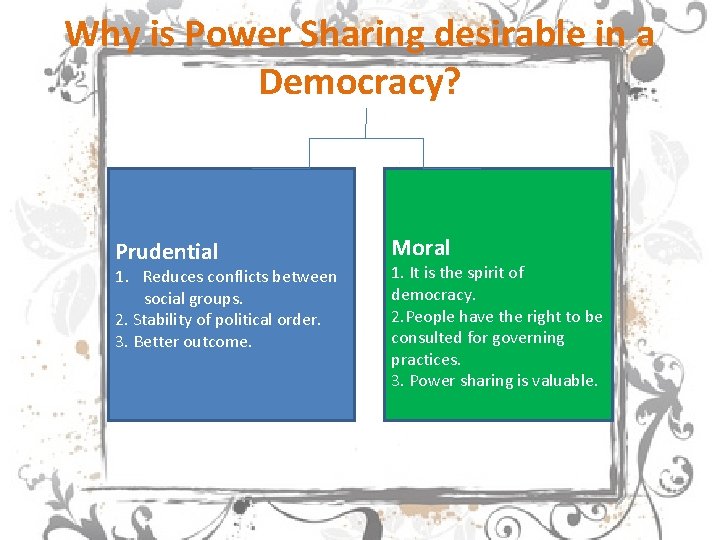
Why is Power Sharing desirable in a Democracy? Prudential 1. Reduces conflicts between social groups. 2. Stability of political order. 3. Better outcome. Moral 1. It is the spirit of democracy. 2. People have the right to be consulted for governing practices. 3. Power sharing is valuable.
Why in a democracy should political power be distributed? • People are the source of all power. • People rule themselves through institutions of self governance. • Due respect is given to diverse groups and views. • All have a voice in shaping public policies.
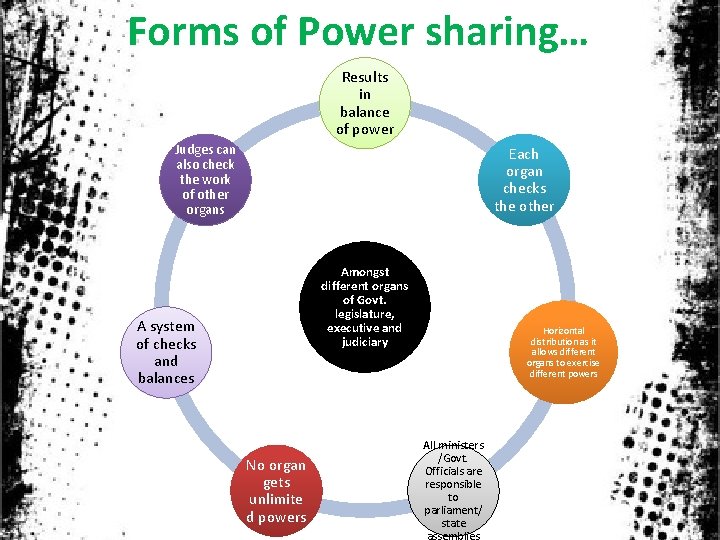
Forms of Power sharing… Results in balance of power Judges can also check the work of other organs Each organ checks the other Amongst different organs of Govt. legislature, executive and judiciary A system of checks and balances No organ gets unlimite d powers Horizontal distribution as it allows different organs to exercise different powers All ministers /Govt. Officials are responsible to parliament/ state assemblies
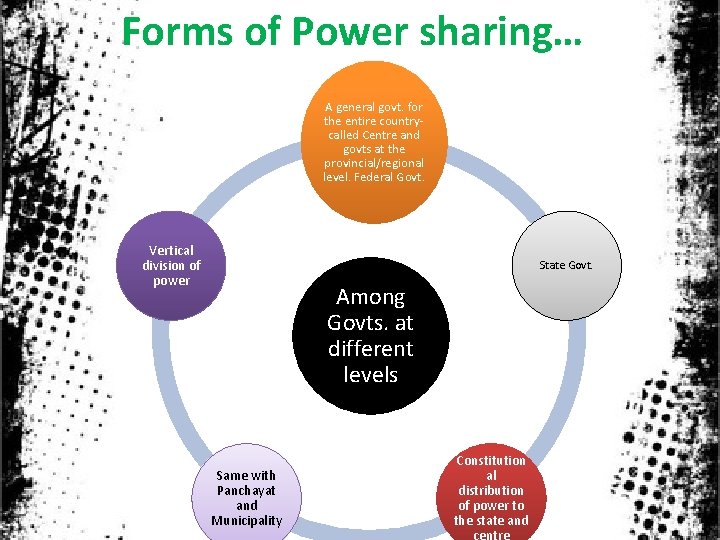
Forms of Power sharing… A general govt. for the entire countrycalled Centre and govts at the provincial/regional level. Federal Govt. Vertical division of power State Govt. Among Govts. at different levels Same with Panchayat and Municipality Constitution al distribution of power to the state and
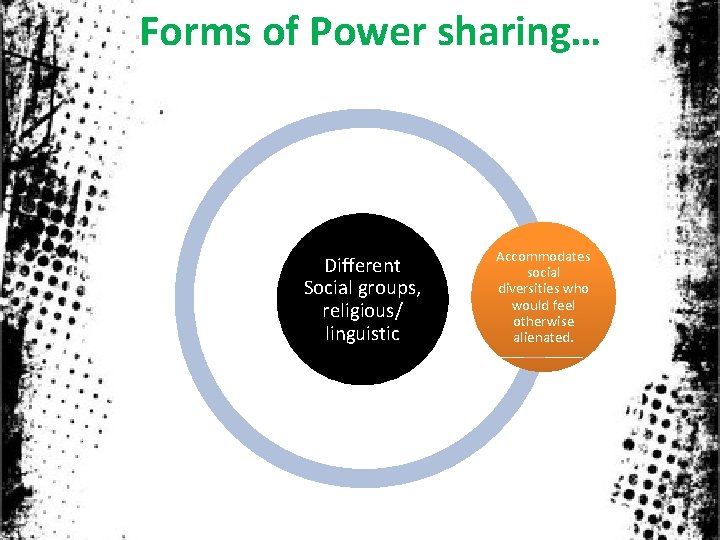
Forms of Power sharing… Different Social groups, religious/ linguistic Accommodates social diversities who would feel otherwise alienated.
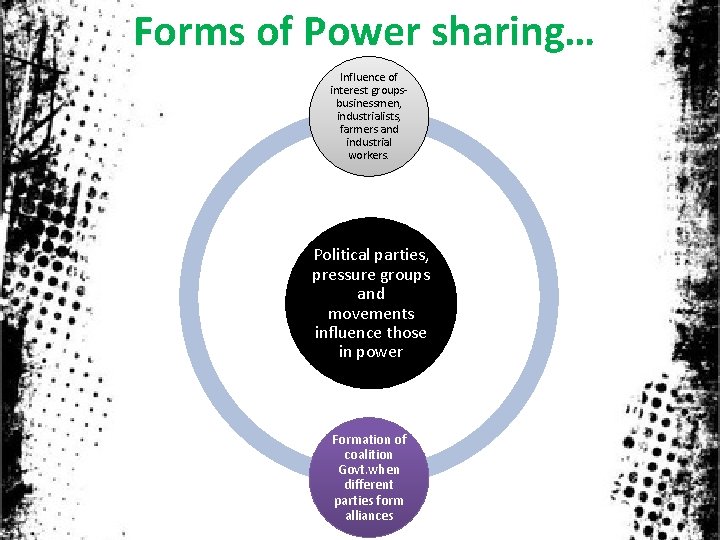
Forms of Power sharing… Influence of interest groupsbusinessmen, industrialists, farmers and industrial workers. Political parties, pressure groups and movements influence those in power Formation of coalition Govt. when different parties form alliances
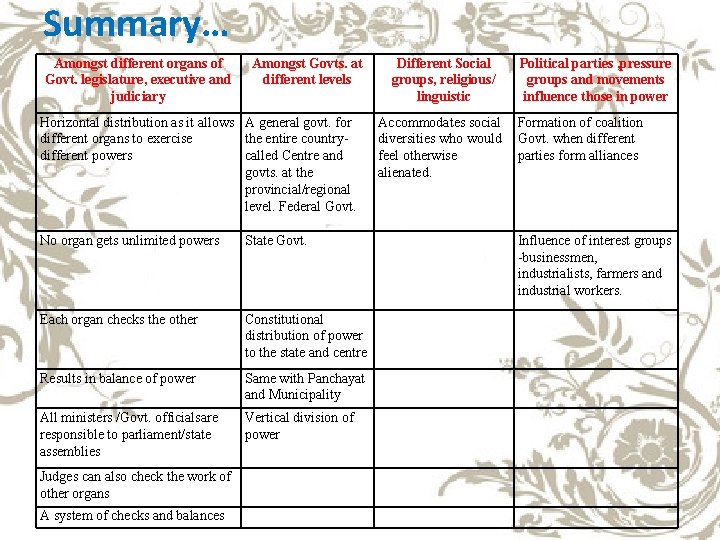
Summary… Amongst different organs of Govt. legislature, executive and judiciary Amongst Govts. at different levels Horizontal distribution as it allows A general govt. for different organs to exercise the entire countrydifferent powers called Centre and govts. at the provincial/regional level. Federal Govt. No organ gets unlimited powers State Govt. Each organ checks the other Constitutional distribution of power to the state and centre Results in balance of power Same with Panchayat and Municipality All ministers /Govt. officialsare responsible to parliament/state assemblies Vertical division of power Judges can also check the work of other organs A system of checks and balances Different Social groups, religious/ linguistic Accommodates social diversities who would feel otherwise alienated. Political parties , pressure groups and movements influence those in power Formation of coalition Govt. when different parties form alliances Influence of interest groups -businessmen, industrialists, farmers and industrial workers.
Any Question? • Thank You!
- Slides: 19