
POWER Power and privilege is assigned to different


- Slides: 16
POWER
Power and privilege is assigned to different groups. Because of this, power will be used. The question is, is it going to be used for good or for evil? Our role, as Christians, is to bring Jesus’ redemptive influence into these structures of power and privilege, re-working and redefining them for kingdom purposes.
On Power God created men and women to have authority, and we are meant to exercise it Genesis 1 God’s intention was for us to steward and nurture the earth
On Power However, we chose to exercise power wrongly… Against God In the Garden (Gen 1: 4 -7) The Tower of Babel (Gen 11: 4) Against other men and women Social Injustice (Amos 1)
Positive Examples of Power Mark 5: Jesus cast out demons, healing the woman uses power to restore people in society John 4: The woman at the well she was the outcast and then is given power by interacting with Jesus and being transformed into a witness for her community. She becomes a missionary.
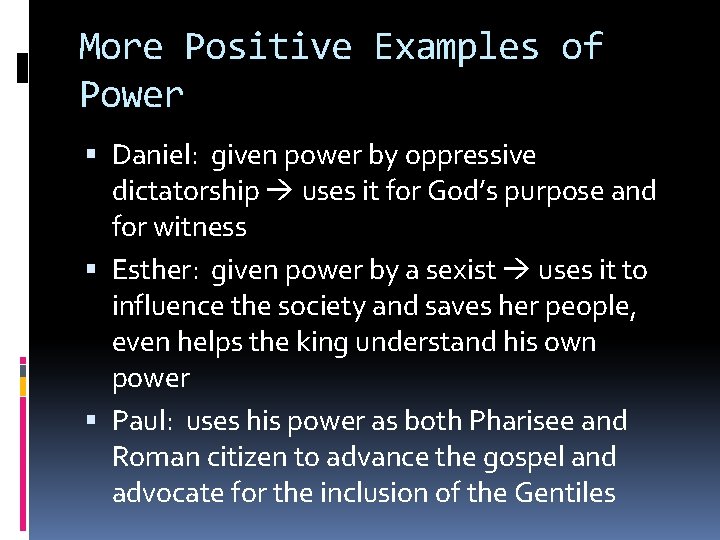
More Positive Examples of Power Daniel: given power by oppressive dictatorship uses it for God’s purpose and for witness Esther: given power by a sexist uses it to influence the society and saves her people, even helps the king understand his own power Paul: uses his power as both Pharisee and Roman citizen to advance the gospel and advocate for the inclusion of the Gentiles
Types of Power There are different types of Power including Hard Power Social Power
Power: Hard Power Overt forms of power Governmental power Military force Privilege gained in explicit ways
Power: Social Power Soft power is more subtle Expert Character Role Culture
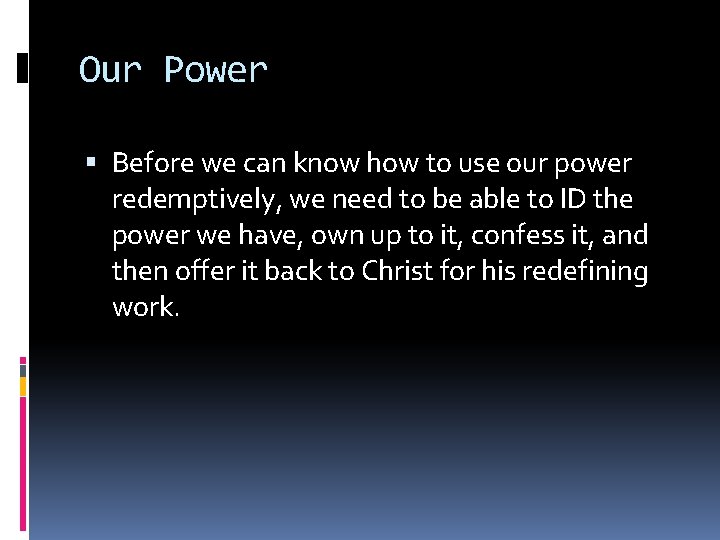
Our Power Before we can know how to use our power redemptively, we need to be able to ID the power we have, own up to it, confess it, and then offer it back to Christ for his redefining work.
Power Exercise
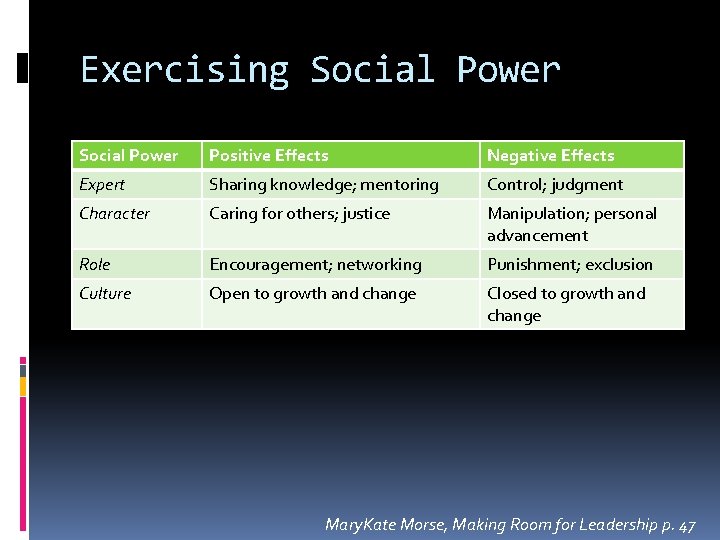
Exercising Social Power Positive Effects Negative Effects Expert Sharing knowledge; mentoring Control; judgment Character Caring for others; justice Manipulation; personal advancement Role Encouragement; networking Punishment; exclusion Culture Open to growth and change Closed to growth and change Mary. Kate Morse, Making Room for Leadership p. 47
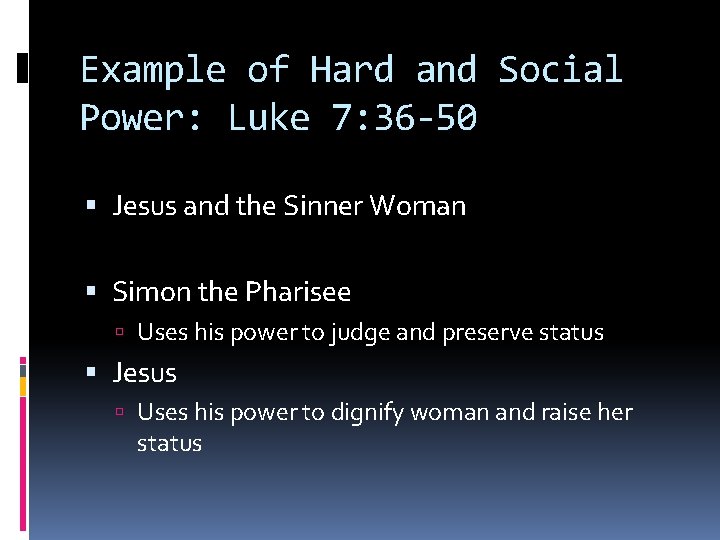
Example of Hard and Social Power: Luke 7: 36 -50 Jesus and the Sinner Woman Simon the Pharisee Uses his power to judge and preserve status Jesus Uses his power to dignify woman and raise her status
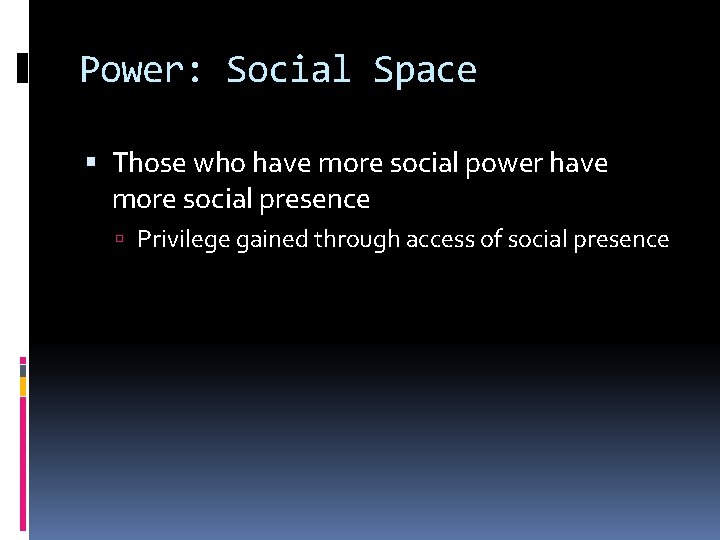
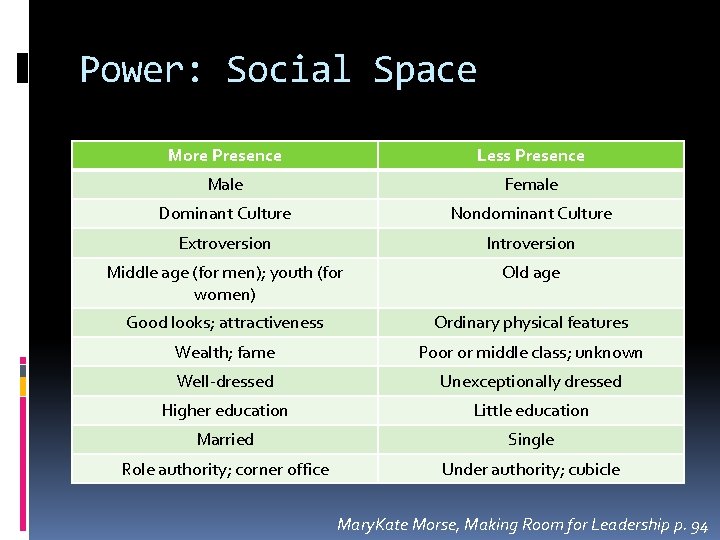
Power: Social Space Those who have more social power have more social presence Privilege gained through access of social presence
Power: Social Space More Presence Less Presence Male Female Dominant Culture Nondominant Culture Extroversion Introversion Middle age (for men); youth (for women) Old age Good looks; attractiveness Ordinary physical features Wealth; fame Poor or middle class; unknown Well-dressed Unexceptionally dressed Higher education Little education Married Single Role authority; corner office Under authority; cubicle Mary. Kate Morse, Making Room for Leadership p. 94
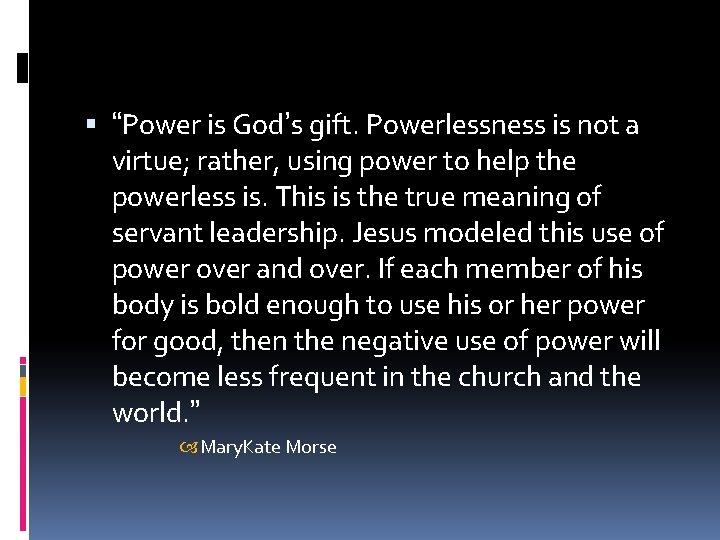
“Power is God’s gift. Powerlessness is not a virtue; rather, using power to help the powerless is. This is the true meaning of servant leadership. Jesus modeled this use of power over and over. If each member of his body is bold enough to use his or her power for good, then the negative use of power will become less frequent in the church and the world. ” Mary. Kate Morse