
Power Point Presentation Chapter 12 Utility Interconnection Distributed
Power. Point® Presentation Chapter 12 Utility Interconnection Distributed Generation • Generators • Inverters • Interconnection Codes and Standards • Interconnection Concerns • Point of Connection • Metering • Utility Interconnection Policies • Public Utilities Regulatory Policy Act (PURPA) • Interconnection Agreements
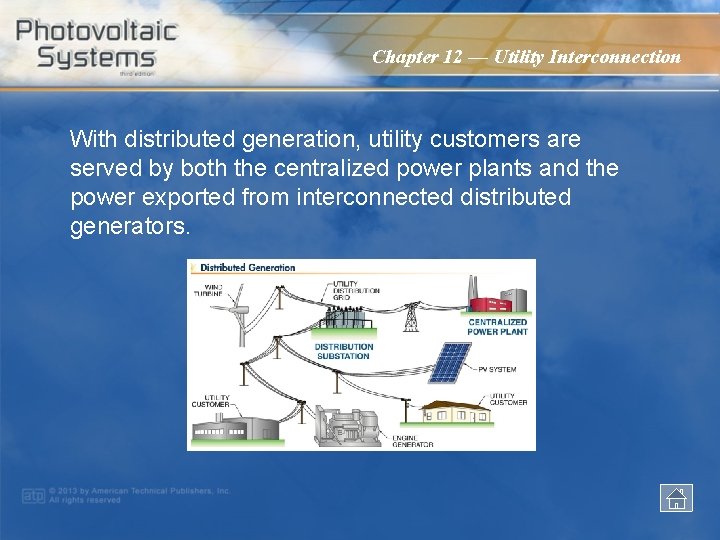
Chapter 12 — Utility Interconnection With distributed generation, utility customers are served by both the centralized power plants and the power exported from interconnected distributed generators.
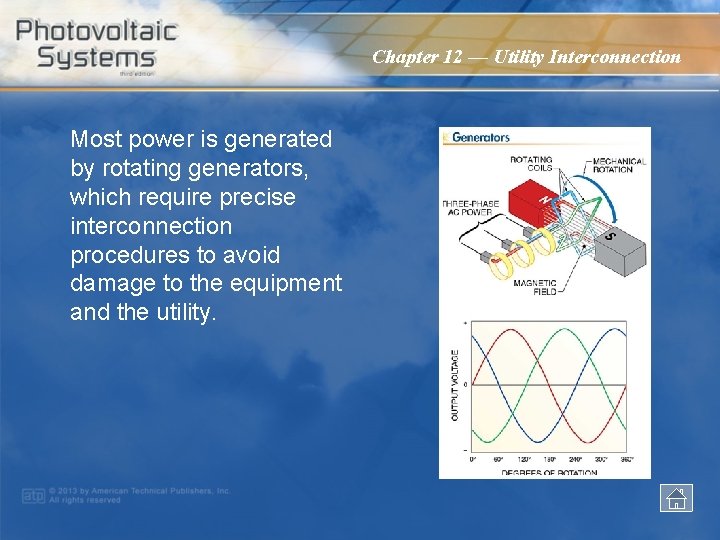
Chapter 12 — Utility Interconnection Most power is generated by rotating generators, which require precise interconnection procedures to avoid damage to the equipment and the utility.
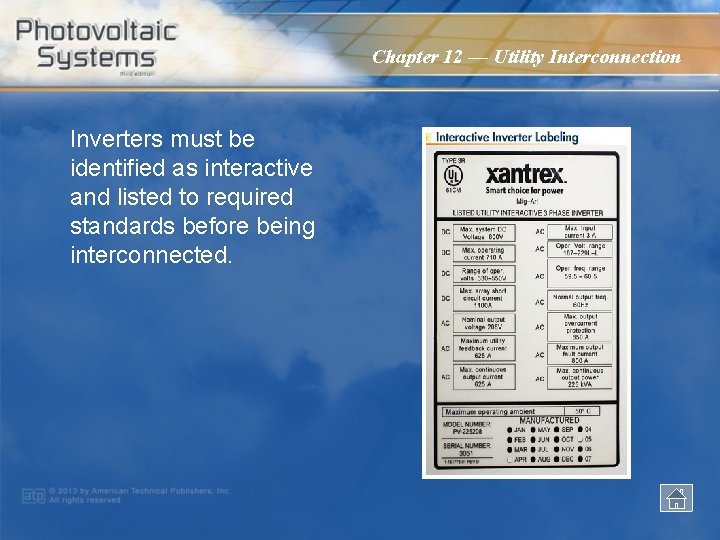
Chapter 12 — Utility Interconnection Inverters must be identified as interactive and listed to required standards before being interconnected.
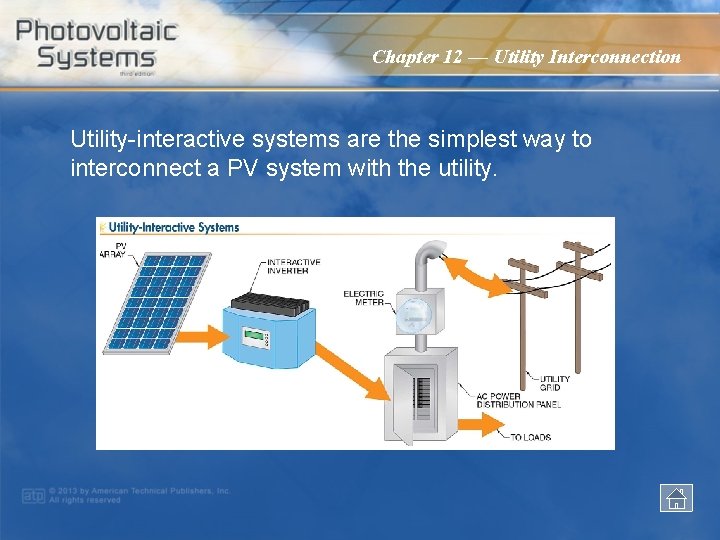
Chapter 12 — Utility Interconnection Utility-interactive systems are the simplest way to interconnect a PV system with the utility.
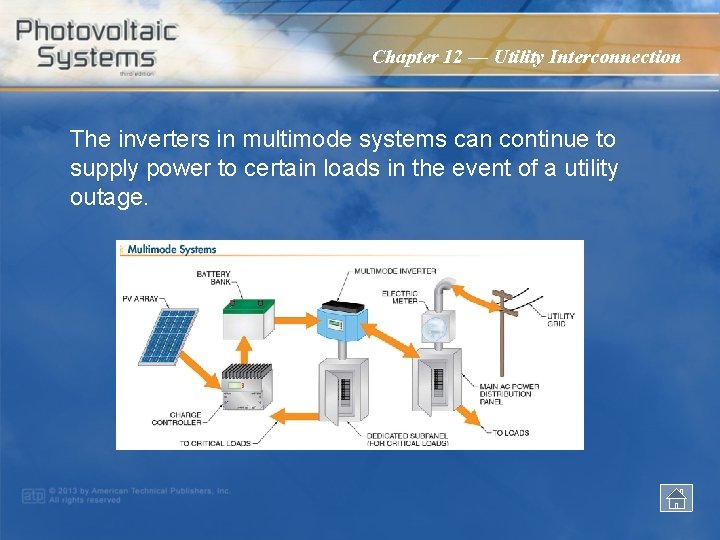
Chapter 12 — Utility Interconnection The inverters in multimode systems can continue to supply power to certain loads in the event of a utility outage.
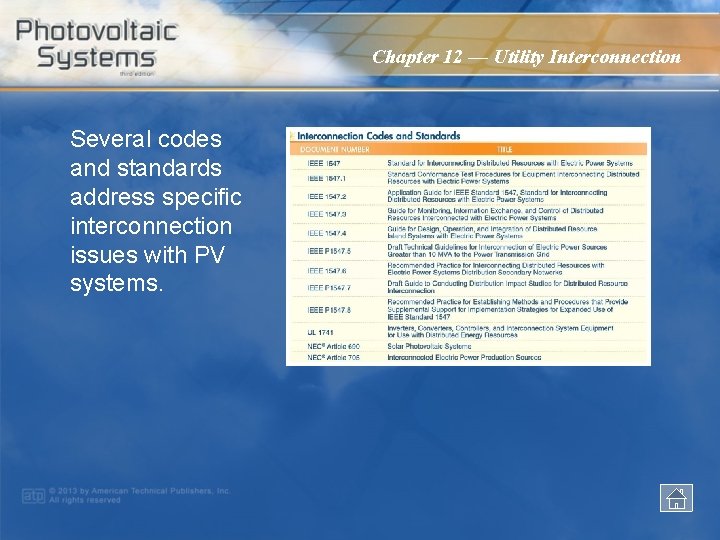
Chapter 12 — Utility Interconnection Several codes and standards address specific interconnection issues with PV systems.
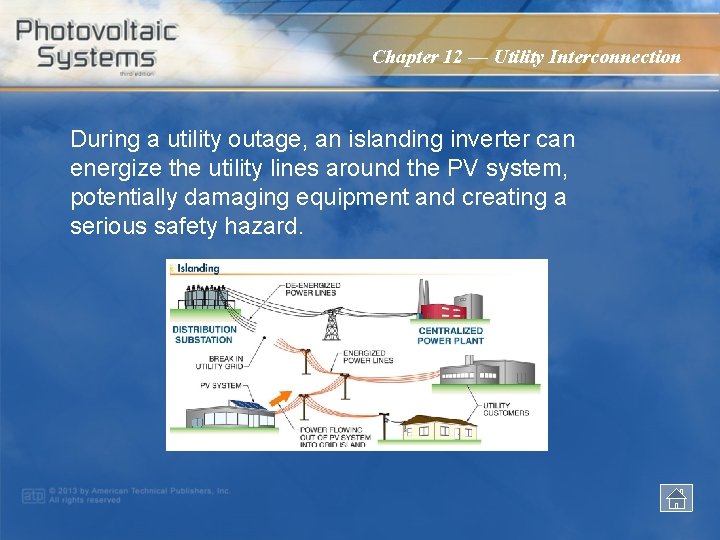
Chapter 12 — Utility Interconnection During a utility outage, an islanding inverter can energize the utility lines around the PV system, potentially damaging equipment and creating a serious safety hazard.
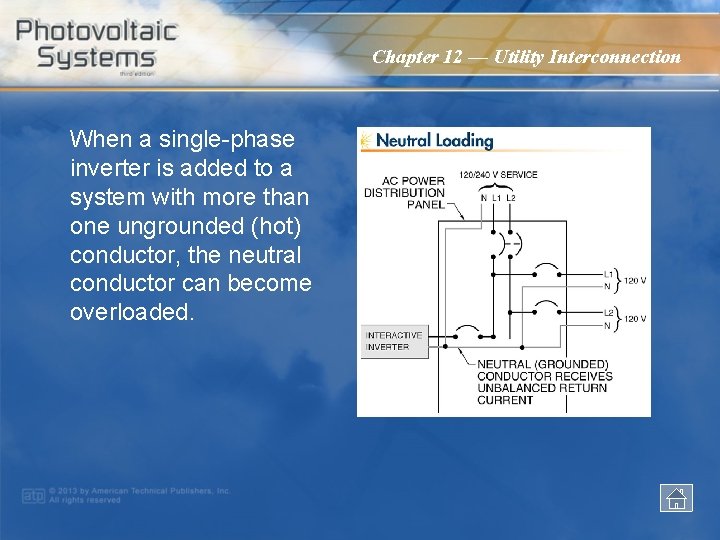
Chapter 12 — Utility Interconnection When a single-phase inverter is added to a system with more than one ungrounded (hot) conductor, the neutral conductor can become overloaded.
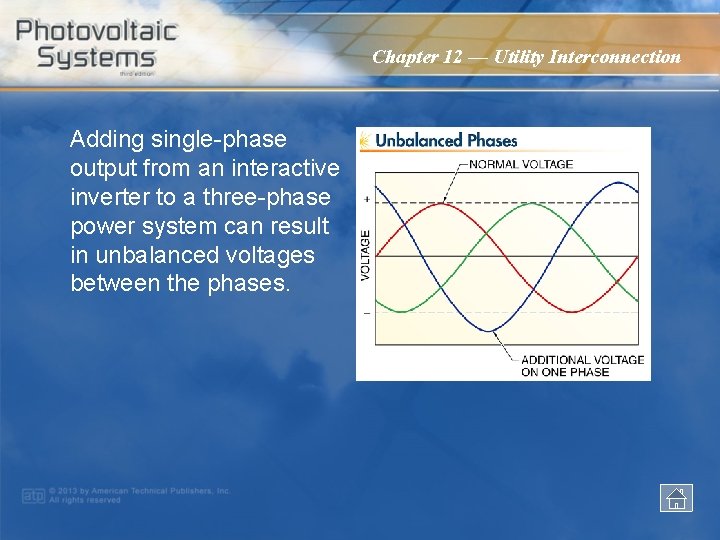
Chapter 12 — Utility Interconnection Adding single-phase output from an interactive inverter to a three-phase power system can result in unbalanced voltages between the phases.
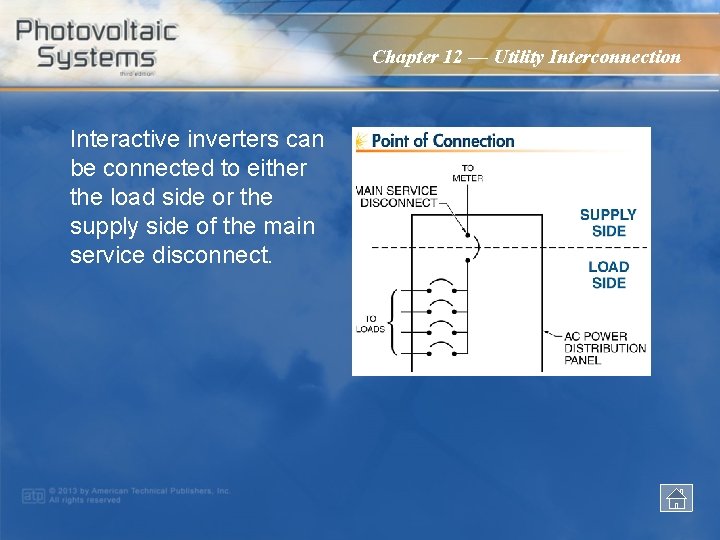
Chapter 12 — Utility Interconnection Interactive inverters can be connected to either the load side or the supply side of the main service disconnect.
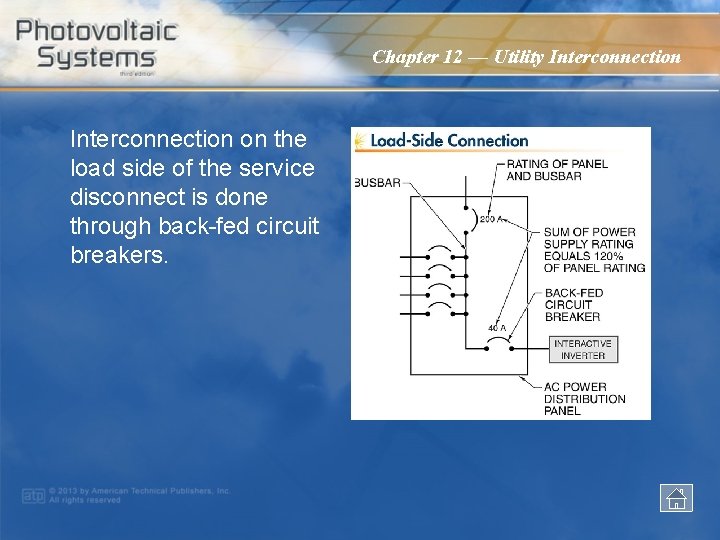
Chapter 12 — Utility Interconnection on the load side of the service disconnect is done through back-fed circuit breakers.

Chapter 12 — Utility Interconnection Back-fed circuit breakers are circuit breakers on the load side of the main service disconnect that supply PV power to the busbar.
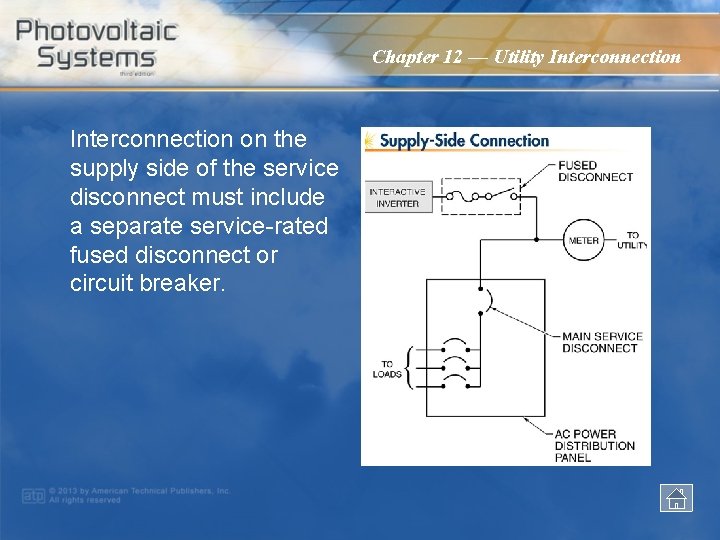
Chapter 12 — Utility Interconnection on the supply side of the service disconnect must include a separate service-rated fused disconnect or circuit breaker.
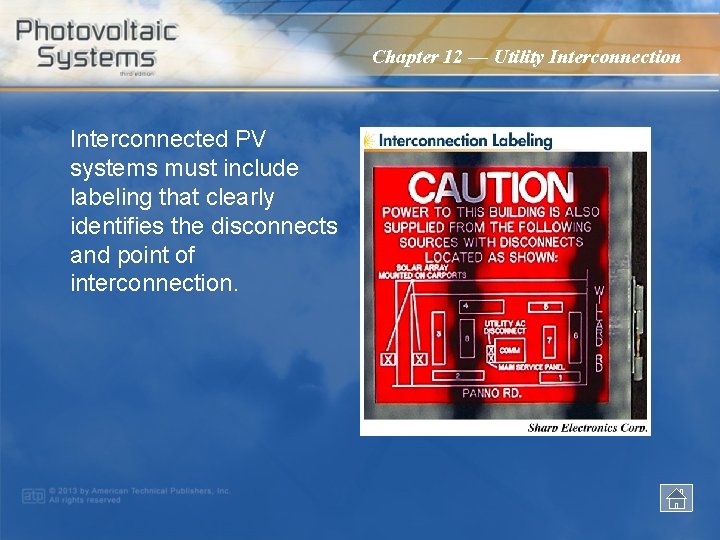
Chapter 12 — Utility Interconnection Interconnected PV systems must include labeling that clearly identifies the disconnects and point of interconnection.
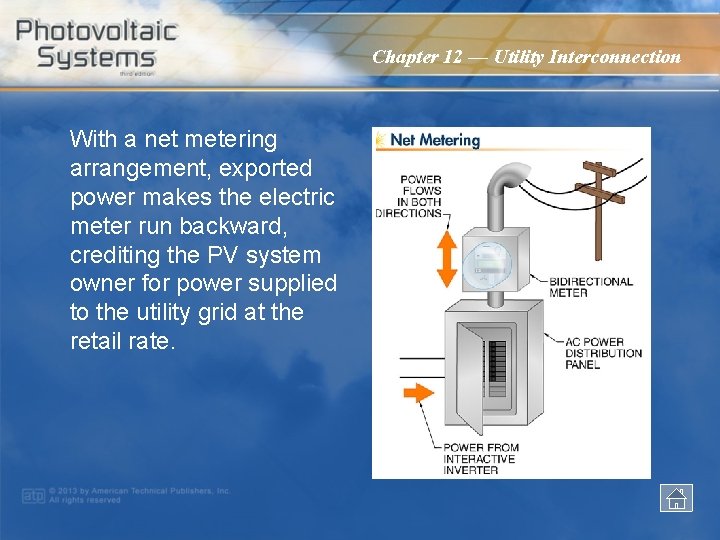
Chapter 12 — Utility Interconnection With a net metering arrangement, exported power makes the electric meter run backward, crediting the PV system owner for power supplied to the utility grid at the retail rate.
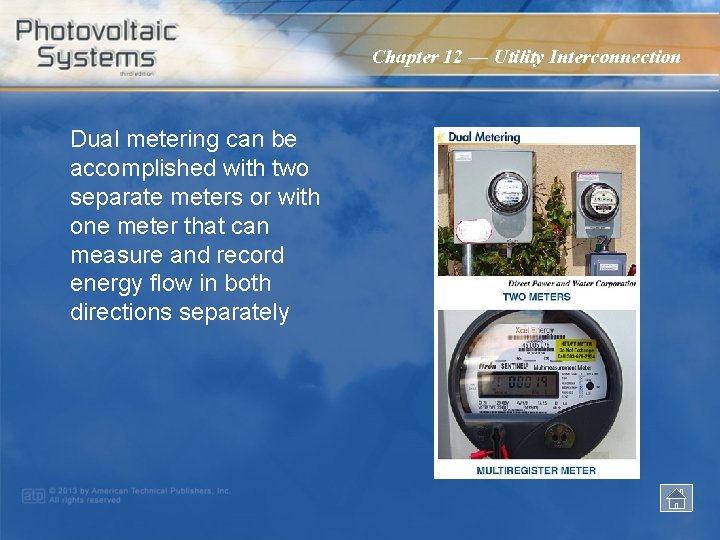
Chapter 12 — Utility Interconnection Dual metering can be accomplished with two separate meters or with one meter that can measure and record energy flow in both directions separately
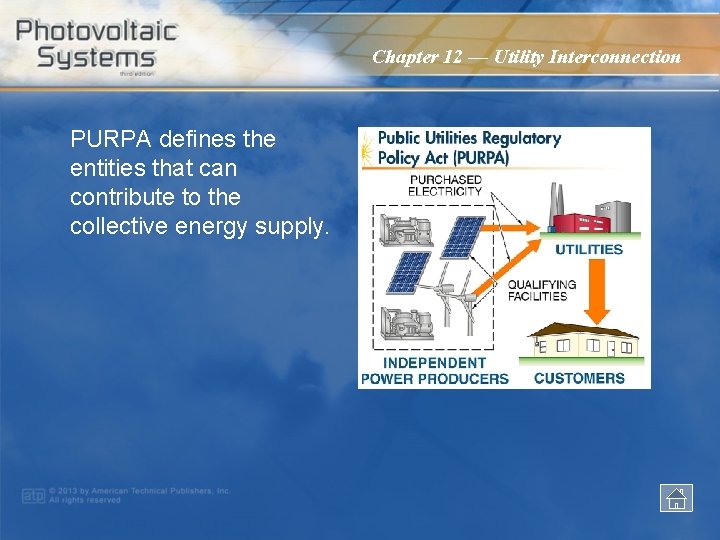
Chapter 12 — Utility Interconnection PURPA defines the entities that can contribute to the collective energy supply.
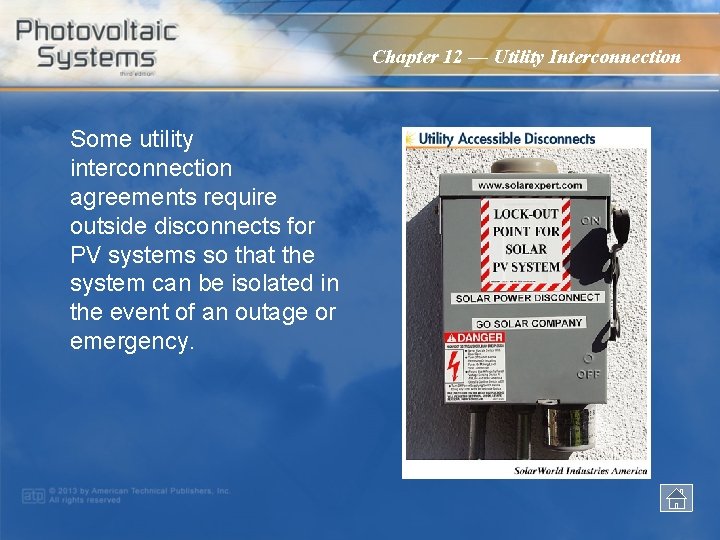
Chapter 12 — Utility Interconnection Some utility interconnection agreements require outside disconnects for PV systems so that the system can be isolated in the event of an outage or emergency.
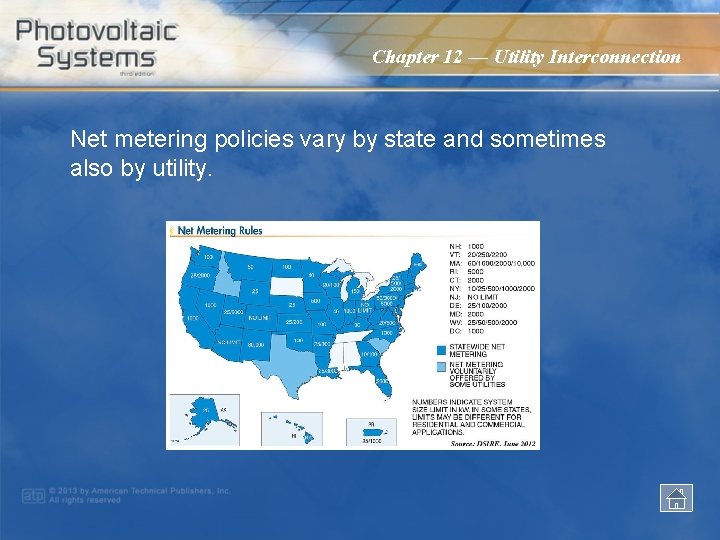
Chapter 12 — Utility Interconnection Net metering policies vary by state and sometimes also by utility.
- Slides: 21