
Power Point Lecture Slide Presentation Chapter 11 The
- Slides: 30
Power. Point® Lecture Slide Presentation Chapter 11 The Cardiovascular System Exercise Physiology for Health, Fitness, and Performance Fourth Edition Denise L. Smith • Sharon A. Plowman Copyright © 2014 Wolters Kluwer Health | Lippincott Williams & Wilkins
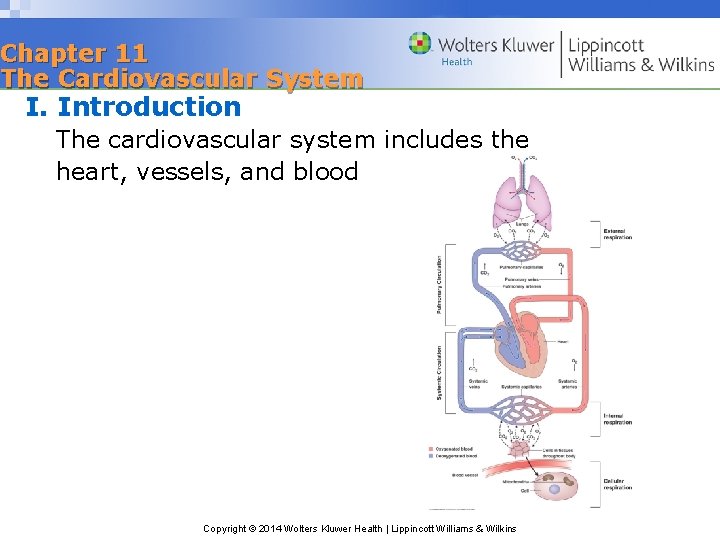
Chapter 11 The Cardiovascular System I. Introduction The cardiovascular system includes the heart, vessels, and blood Copyright © 2014 Wolters Kluwer Health | Lippincott Williams & Wilkins
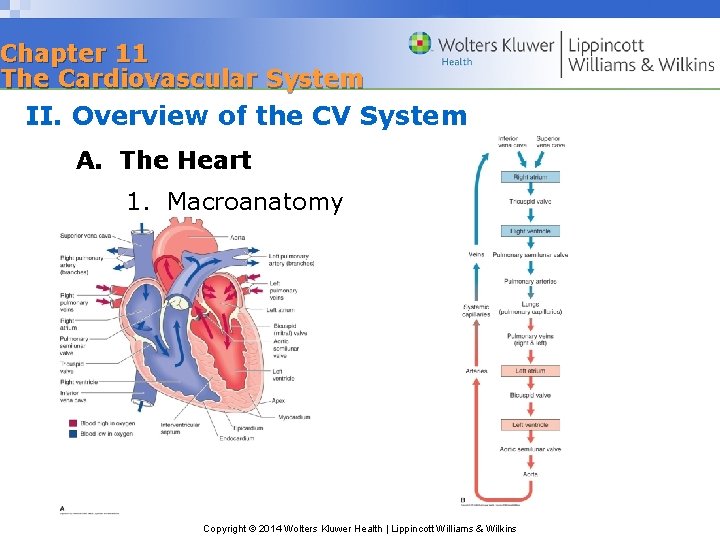
Chapter 11 The Cardiovascular System II. Overview of the CV System A. The Heart 1. Macroanatomy Copyright © 2014 Wolters Kluwer Health | Lippincott Williams & Wilkins
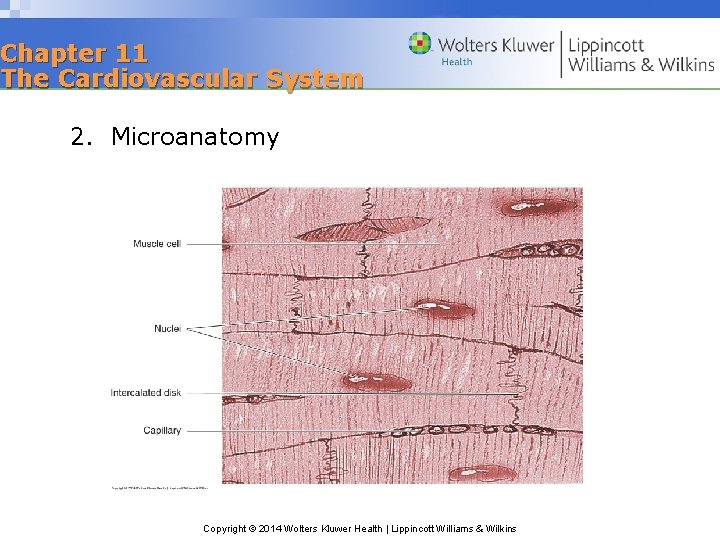
Chapter 11 The Cardiovascular System 2. Microanatomy Copyright © 2014 Wolters Kluwer Health | Lippincott Williams & Wilkins
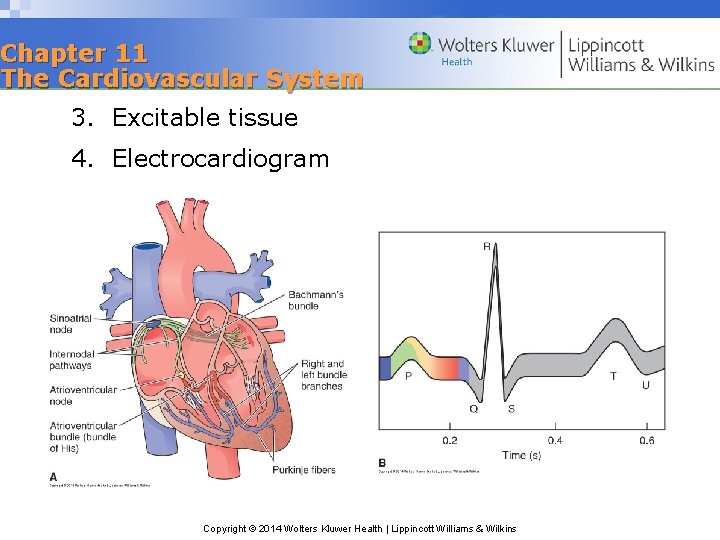
Chapter 11 The Cardiovascular System 3. Excitable tissue 4. Electrocardiogram Copyright © 2014 Wolters Kluwer Health | Lippincott Williams & Wilkins
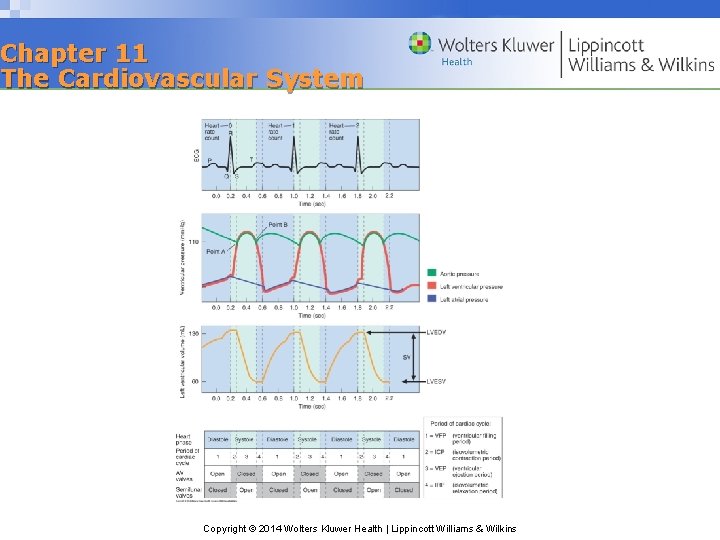
Chapter 11 The Cardiovascular System 5. Cardiac Cycle - one complete sequence of contraction and relaxation of the heart Copyright © 2014 Wolters Kluwer Health | Lippincott Williams & Wilkins
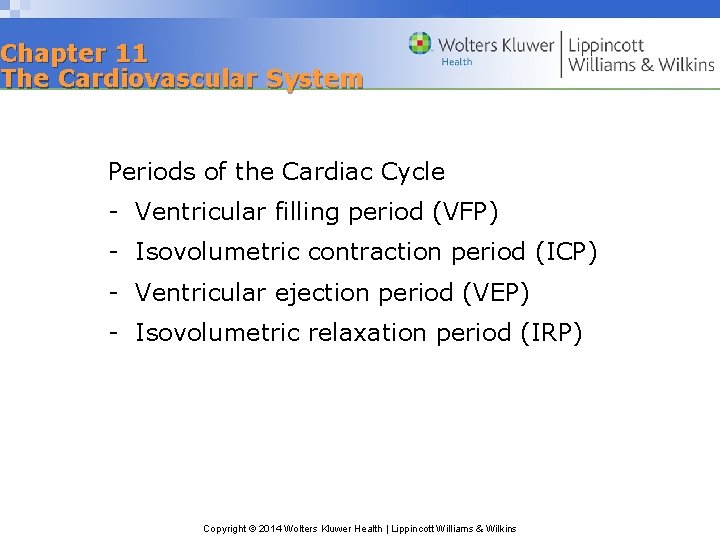
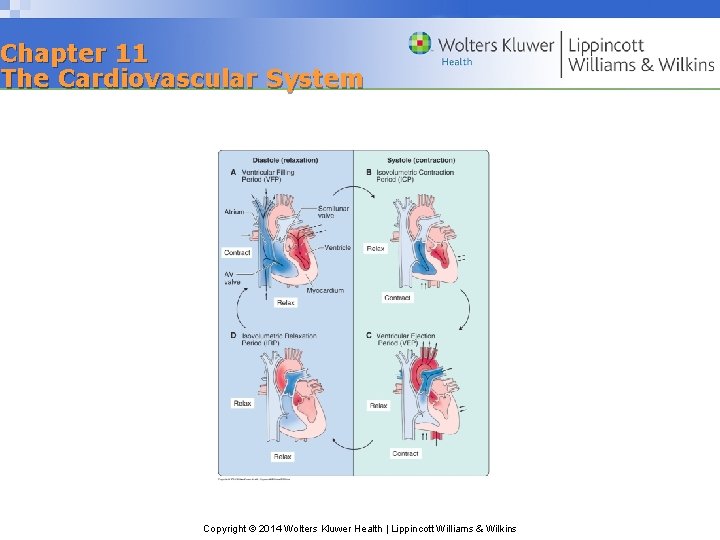
Chapter 11 The Cardiovascular System Periods of the Cardiac Cycle - Ventricular filling period (VFP) - Isovolumetric contraction period (ICP) - Ventricular ejection period (VEP) - Isovolumetric relaxation period (IRP) Copyright © 2014 Wolters Kluwer Health | Lippincott Williams & Wilkins
Chapter 11 The Cardiovascular System Copyright © 2014 Wolters Kluwer Health | Lippincott Williams & Wilkins
Chapter 11 The Cardiovascular System Copyright © 2014 Wolters Kluwer Health | Lippincott Williams & Wilkins
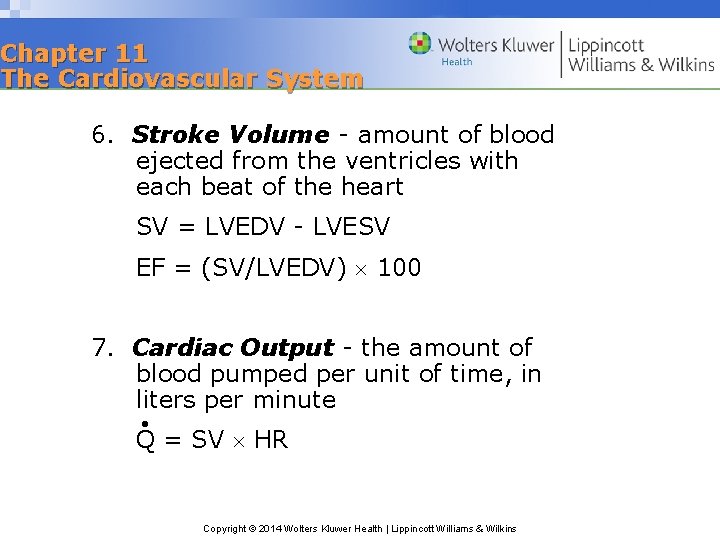
Chapter 11 The Cardiovascular System 6. Stroke Volume - amount of blood ejected from the ventricles with each beat of the heart SV = LVEDV - LVESV EF = (SV/LVEDV) 100 7. Cardiac Output - the amount of blood pumped per unit of time, in liters per minute • Q = SV HR Copyright © 2014 Wolters Kluwer Health | Lippincott Williams & Wilkins
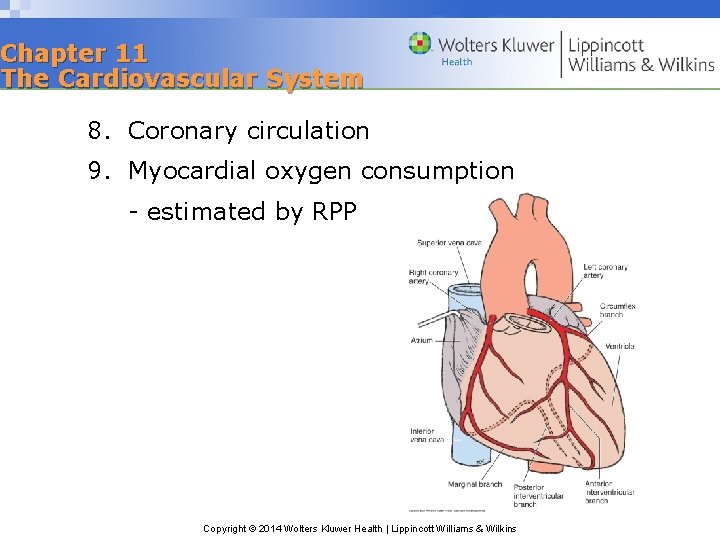
Chapter 11 The Cardiovascular System 8. Coronary circulation 9. Myocardial oxygen consumption - estimated by RPP Copyright © 2014 Wolters Kluwer Health | Lippincott Williams & Wilkins
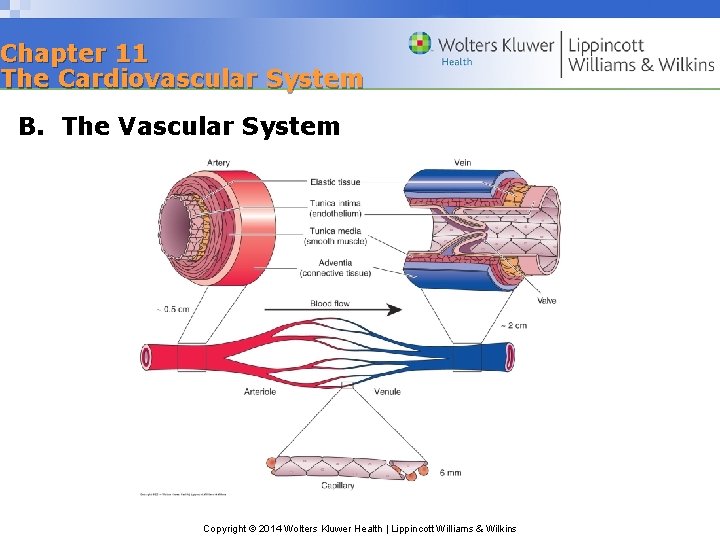
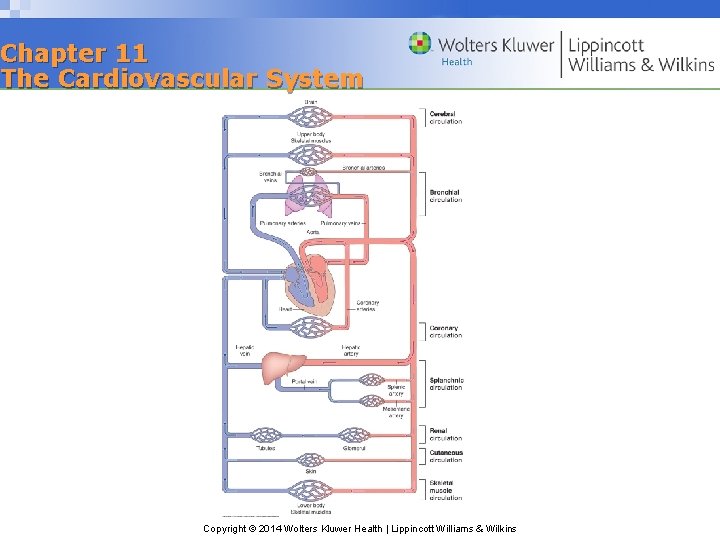
Chapter 11 The Cardiovascular System B. The Vascular System Copyright © 2014 Wolters Kluwer Health | Lippincott Williams & Wilkins
Chapter 11 The Cardiovascular System Copyright © 2014 Wolters Kluwer Health | Lippincott Williams & Wilkins
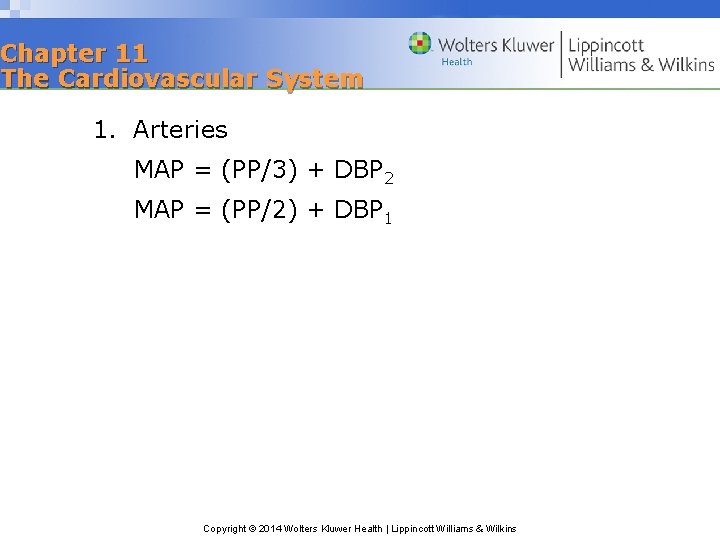
Chapter 11 The Cardiovascular System 1. Arteries MAP = (PP/3) + DBP 2 MAP = (PP/2) + DBP 1 Copyright © 2014 Wolters Kluwer Health | Lippincott Williams & Wilkins
Chapter 11 The Cardiovascular System 2. Arterioles Resistance vessels - another name for arterioles due to their ability to vasodilate and vasoconstrict; changing diameter allows them to control the flow of blood Copyright © 2014 Wolters Kluwer Health | Lippincott Williams & Wilkins
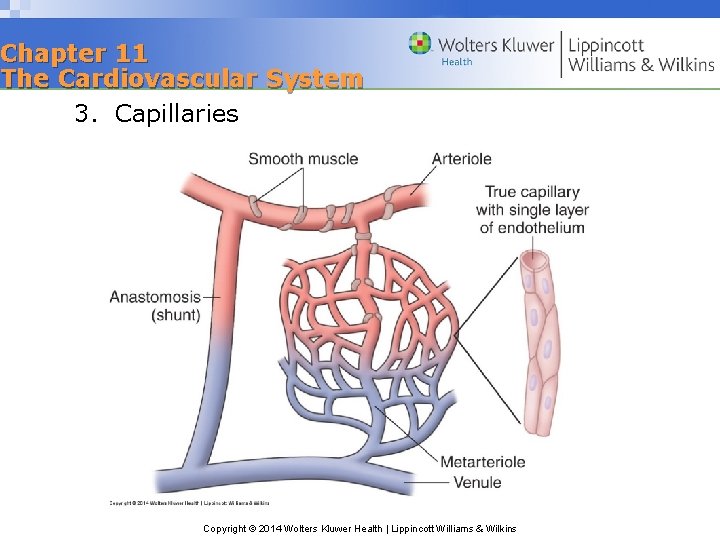
Chapter 11 The Cardiovascular System 3. Capillaries Copyright © 2014 Wolters Kluwer Health | Lippincott Williams & Wilkins
Chapter 11 The Cardiovascular System 4. Venules 5. Veins Capacitance vessels - another name for veins, owing to their distensibility, which enables them to pool large volumes of blood and become reservoirs for blood Copyright © 2014 Wolters Kluwer Health | Lippincott Williams & Wilkins
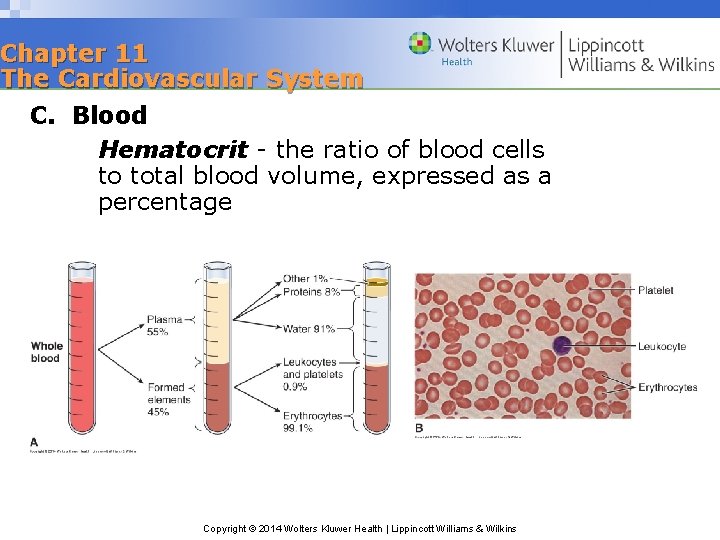
Chapter 11 The Cardiovascular System C. Blood Hematocrit - the ratio of blood cells to total blood volume, expressed as a percentage Copyright © 2014 Wolters Kluwer Health | Lippincott Williams & Wilkins
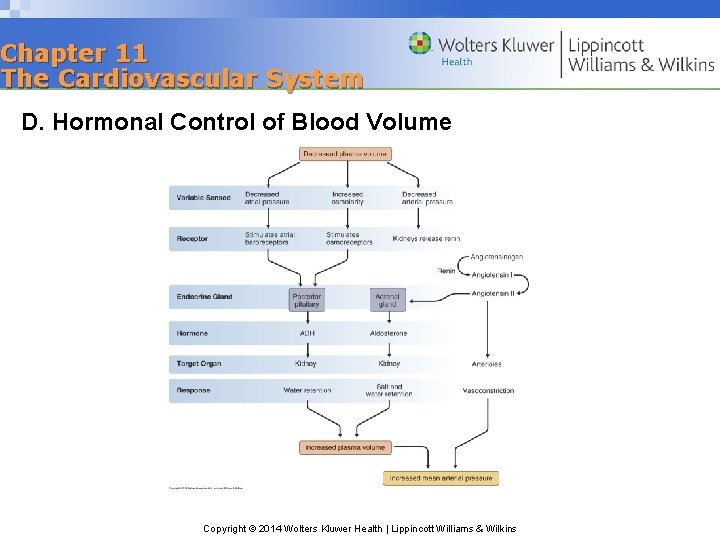
Chapter 11 The Cardiovascular System D. Hormonal Control of Blood Volume Copyright © 2014 Wolters Kluwer Health | Lippincott Williams & Wilkins
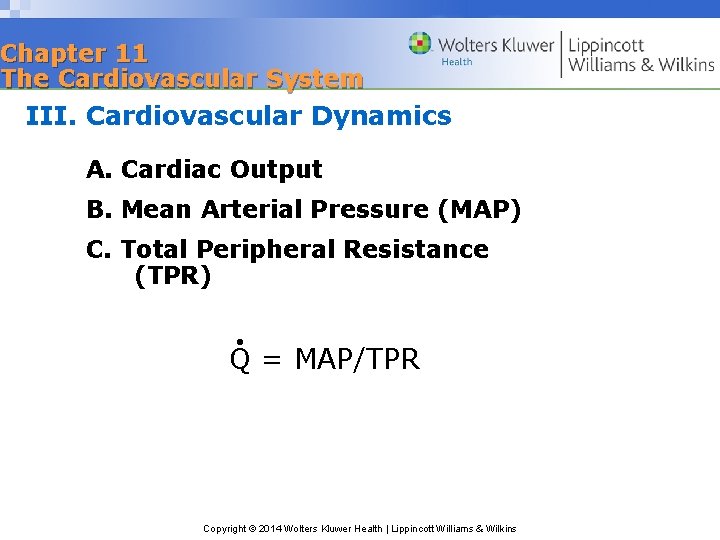
Chapter 11 The Cardiovascular System III. Cardiovascular Dynamics A. Cardiac Output B. Mean Arterial Pressure (MAP) C. Total Peripheral Resistance (TPR) • Q = MAP/TPR Copyright © 2014 Wolters Kluwer Health | Lippincott Williams & Wilkins
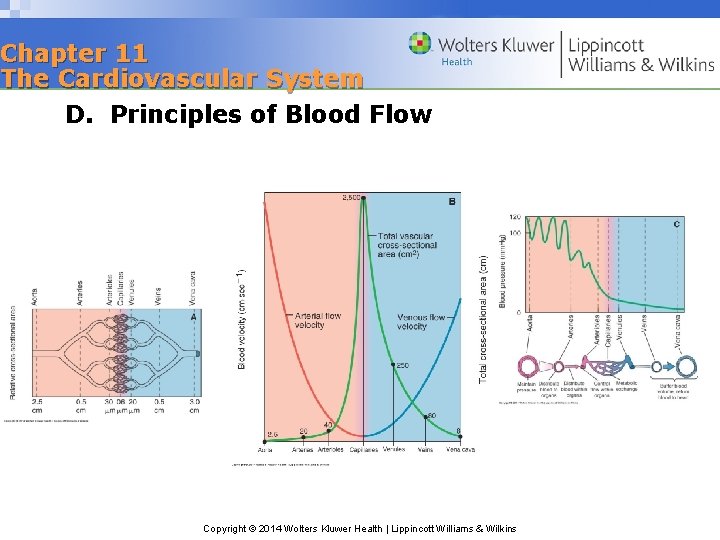
Chapter 11 The Cardiovascular System D. Principles of Blood Flow Copyright © 2014 Wolters Kluwer Health | Lippincott Williams & Wilkins
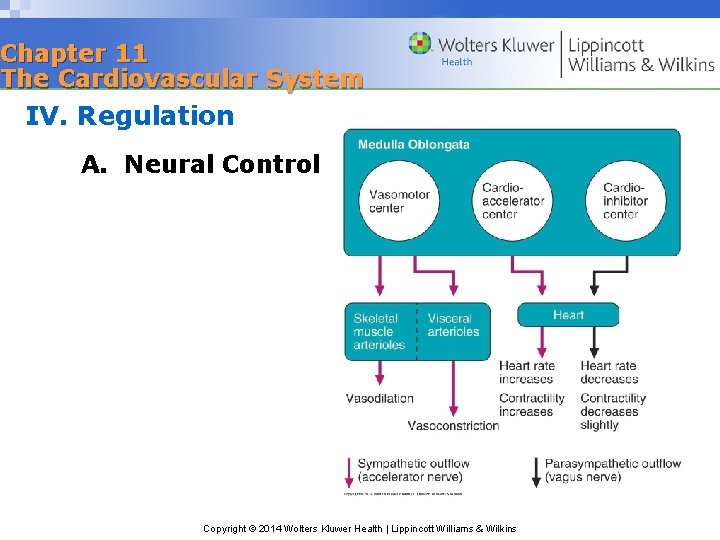
Chapter 11 The Cardiovascular System IV. Regulation A. Neural Control Copyright © 2014 Wolters Kluwer Health | Lippincott Williams & Wilkins
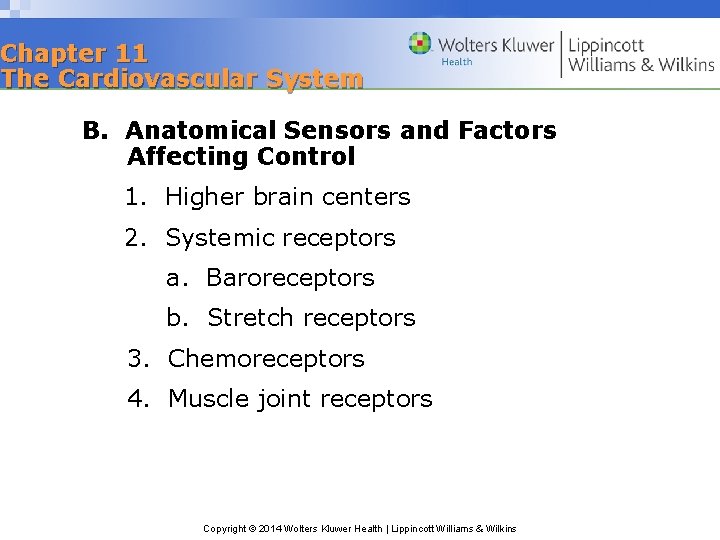
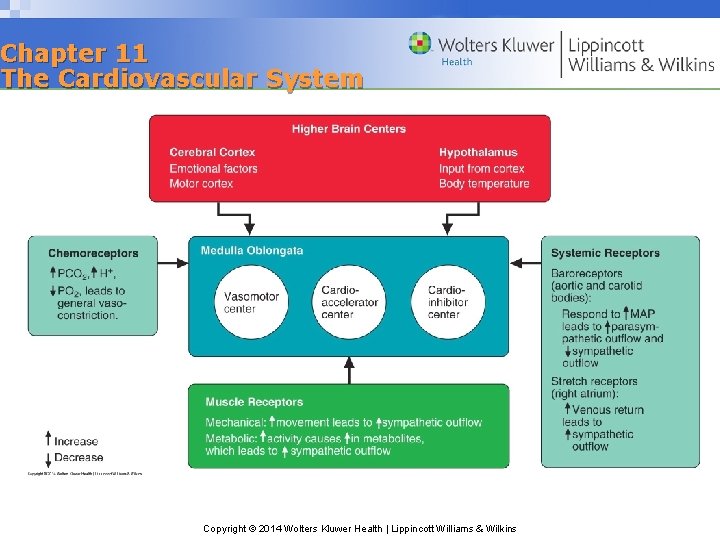
Chapter 11 The Cardiovascular System B. Anatomical Sensors and Factors Affecting Control 1. Higher brain centers 2. Systemic receptors a. Baroreceptors b. Stretch receptors 3. Chemoreceptors 4. Muscle joint receptors Copyright © 2014 Wolters Kluwer Health | Lippincott Williams & Wilkins
Chapter 11 The Cardiovascular System Copyright © 2014 Wolters Kluwer Health | Lippincott Williams & Wilkins
Chapter 11 The Cardiovascular System C. Neurohormonal Control • Epinephrine/Norephinephrine • Alosterone/ADH Copyright © 2014 Wolters Kluwer Health | Lippincott Williams & Wilkins
Chapter 11 The Cardiovascular System V. Measurement of CV Variables A. Cardiac Output Fick equation • • Q = (VO 2/a-v. O 2 diff) Copyright © 2014 Wolters Kluwer Health | Lippincott Williams & Wilkins
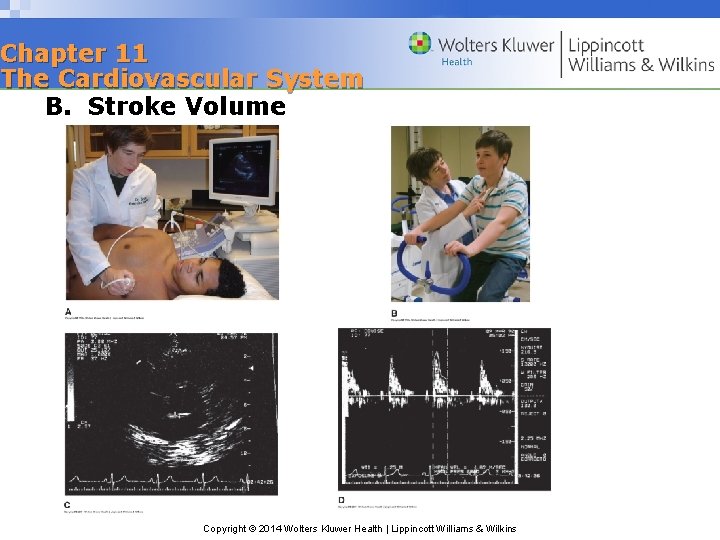
Chapter 11 The Cardiovascular System B. Stroke Volume Copyright © 2014 Wolters Kluwer Health | Lippincott Williams & Wilkins
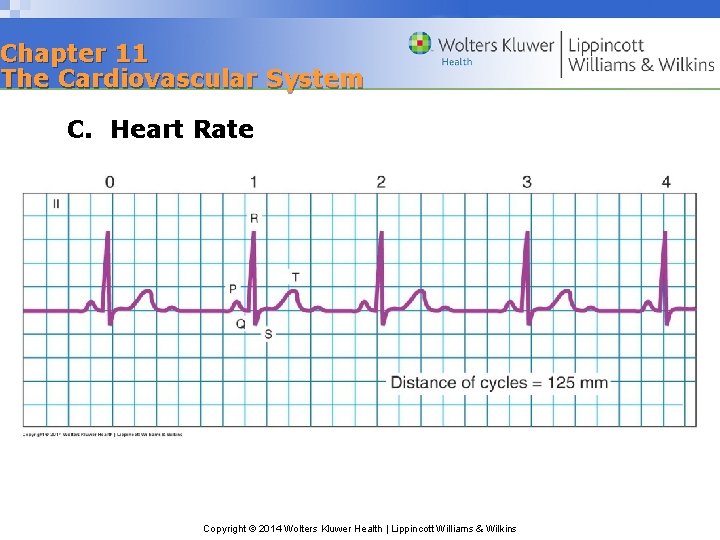
Chapter 11 The Cardiovascular System C. Heart Rate Copyright © 2014 Wolters Kluwer Health | Lippincott Williams & Wilkins
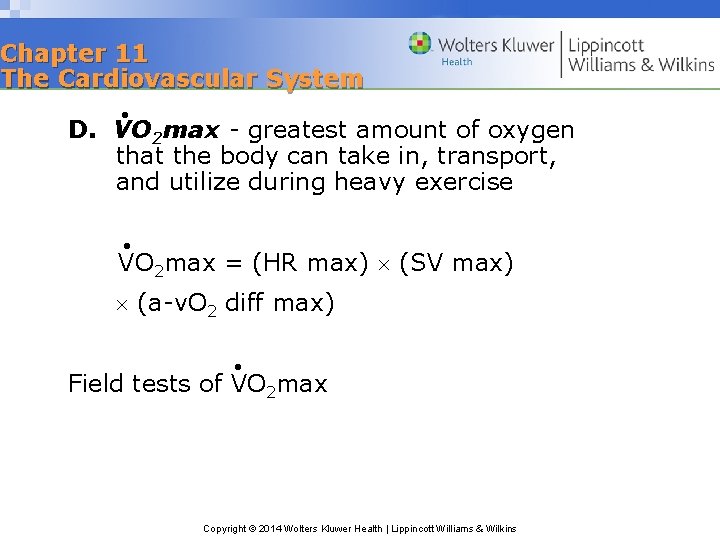
Chapter 11 The Cardiovascular System • D. VO 2 max - greatest amount of oxygen that the body can take in, transport, and utilize during heavy exercise • VO 2 max = (HR max) (SV max) (a-v. O 2 diff max) • Field tests of VO 2 max Copyright © 2014 Wolters Kluwer Health | Lippincott Williams & Wilkins
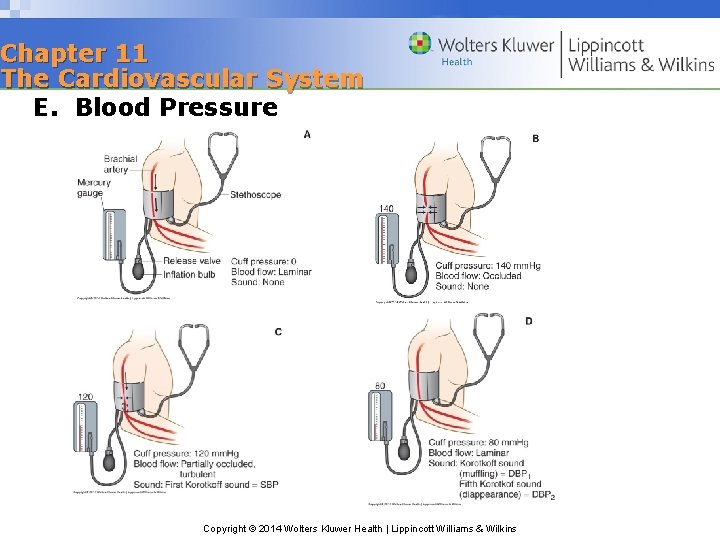
Chapter 11 The Cardiovascular System E. Blood Pressure Copyright © 2014 Wolters Kluwer Health | Lippincott Williams & Wilkins