
Power Point Lecture Slide Presentation by Robert J
Power. Point® Lecture Slide Presentation by Robert J. Sullivan, Marist College Human Biology Concepts and Current Issues Second Edition MICHAEL D. JOHNSON CHAPTER 18 CANCER: UNCONTROLLED CELL DIVISION AND DIFFERENTIATION Copyright © 2003 Pearson Education, Inc. publishing as Benjamin Cummings.
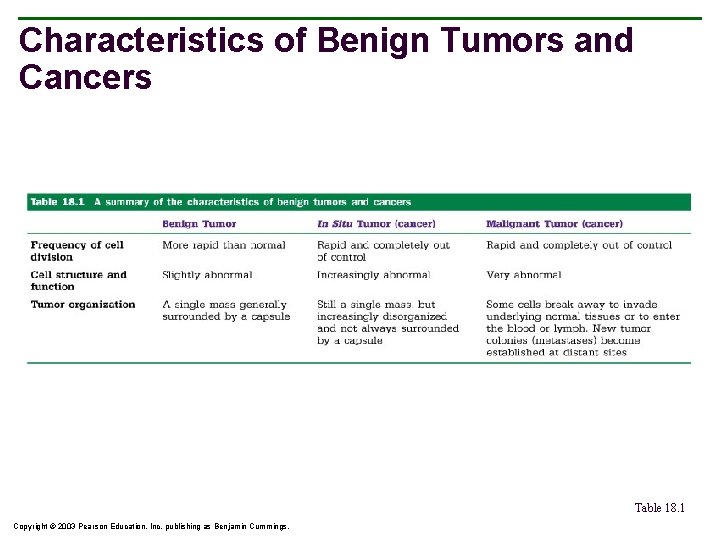
Characteristics of Benign Tumors and Cancers Table 18. 1 Copyright © 2003 Pearson Education, Inc. publishing as Benjamin Cummings.
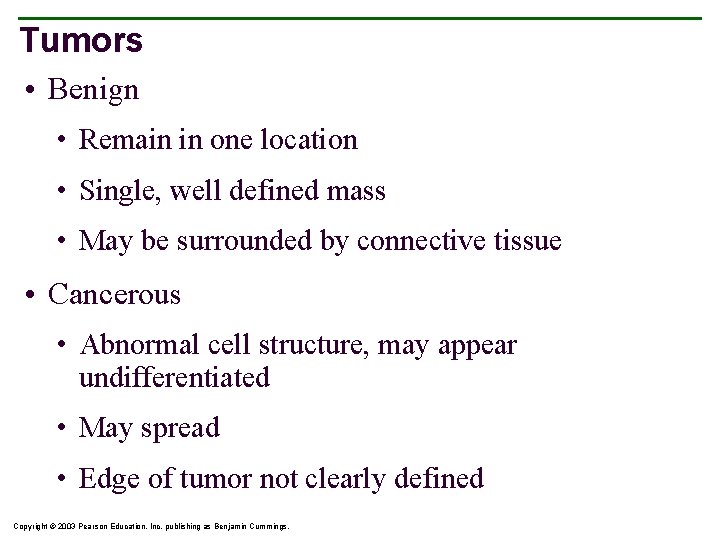
Tumors • Benign • Remain in one location • Single, well defined mass • May be surrounded by connective tissue • Cancerous • Abnormal cell structure, may appear undifferentiated • May spread • Edge of tumor not clearly defined Copyright © 2003 Pearson Education, Inc. publishing as Benjamin Cummings.
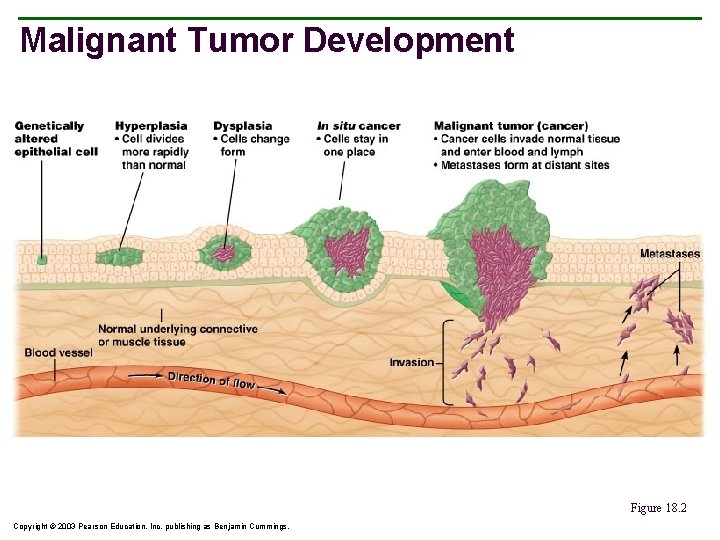
Malignant Tumor Development Figure 18. 2 Copyright © 2003 Pearson Education, Inc. publishing as Benjamin Cummings.
Cancerous Cells: Lose Control Over Cell Functions • Dysplasia: abnormal change in cell structure • In Situ Cancer: malignant tumor in only one place • Matastases: secondary tumors at other locations Copyright © 2003 Pearson Education, Inc. publishing as Benjamin Cummings.
How Cancer Develops • Mutated or damaged genes • Proto-oncogenes: normal regulatory genes • Oncogenes: mutated or damaged proto-oncogenes • Tumor suppressor genes: regulatory genes repress cell growth, division, differentiation, adhesion • May be turned off, damaged or mutated in cancers Copyright © 2003 Pearson Education, Inc. publishing as Benjamin Cummings.
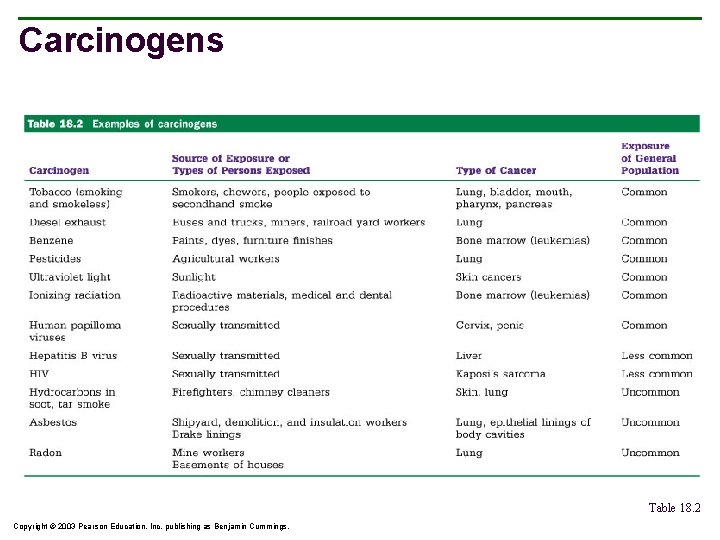
Carcinogens Table 18. 2 Copyright © 2003 Pearson Education, Inc. publishing as Benjamin Cummings.
Advances in Diagnosis: Early Detection • Tumor imaging: X-rays, PET, MRI • Genetic testing: identify mutated genes, privacy and treatment issues • Enzyme tests for cancer markers: screening large numbers of people Copyright © 2003 Pearson Education, Inc. publishing as Benjamin Cummings.
Cancer Treatments • Conventional treatments: surgery, radiation, and chemotherapy • Immunotherapy: promotes the immune response • Starving cancers: inhibits angiogenesis • Molecular treatments: target oncogenes Copyright © 2003 Pearson Education, Inc. publishing as Benjamin Cummings.
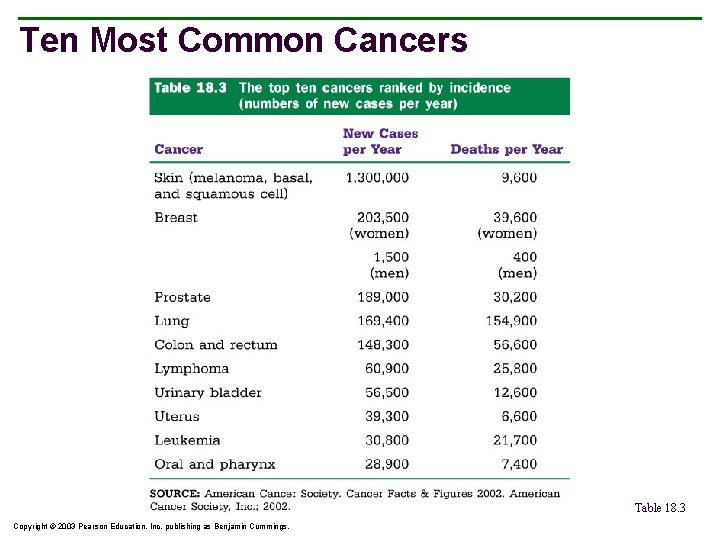
Ten Most Common Cancers Table 18. 3 Copyright © 2003 Pearson Education, Inc. publishing as Benjamin Cummings.

Most Common Cancers • Skin cancer: three major types • Breast cancer: almost exclusively in women • Prostate cancer: most common after age 50 in males • Lung cancer: smoking is the leading risk factor • Cancers of colon and rectum: early detection has increased survival rates to 62% Copyright © 2003 Pearson Education, Inc. publishing as Benjamin Cummings.
Most Common Cancers (cont. ) • Lymphoma: related to altered immune function • Urinary bladder cancer: surgery needed early • Cancer of the uterus: includes cervical cancer and cancer of the endometrium • Leukemia: chemotherapy often effective • Cancers of mouth and pharynx: tobacco major risk Copyright © 2003 Pearson Education, Inc. publishing as Benjamin Cummings.
Most Cancers are Preventable • Know family history • Get regular medical screenings • Learn self-examination techniques • Avoid direct sunlight 10 AM to 4 PM, avoid sunlamps and tanning salons • Watch diet and weight • Don’t smoke • Drink in moderation, if at all • Be informed Copyright © 2003 Pearson Education, Inc. publishing as Benjamin Cummings.
- Slides: 13