
Power Point Lecture Slide Presentation by Patty BostwickTaylor
Power. Point® Lecture Slide Presentation by Patty Bostwick-Taylor, Florence-Darlington Technical College Epithelial Tissue 3 PART C Copyright © 2009 Pearson Education, Inc. , publishing as Benjamin Cummings
Body Tissues § Groups of cells with similar structure and function § Four primary types § Epithelial tissue (epithelium) § Connective tissue § Muscle tissue § Nervous tissue Copyright © 2009 Pearson Education, Inc. , publishing as Benjamin Cummings

Body Tissues Copyright © 2009 Pearson Education, Inc. , publishing as Benjamin Cummings
Epithelial Tissues § Locations § Body coverings & linings § Glandular tissue § Functions § Protection § Absorption § Filtration § Secretion Copyright © 2009 Pearson Education, Inc. , publishing as Benjamin Cummings
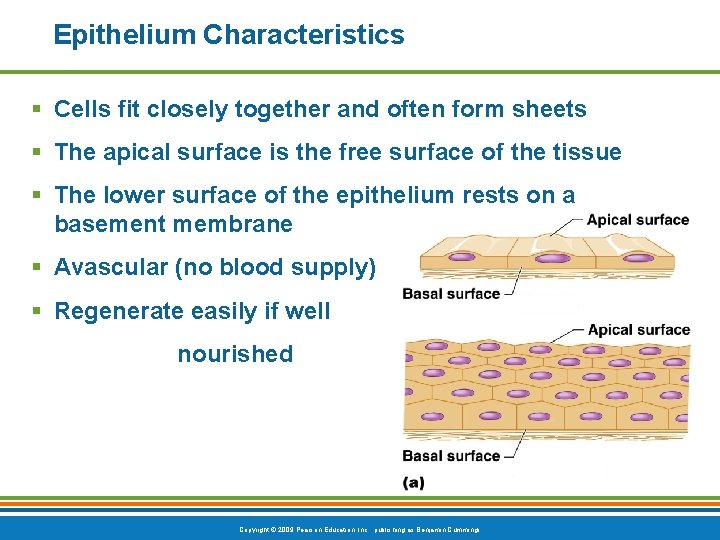
Epithelium Characteristics § Cells fit closely together and often form sheets § The apical surface is the free surface of the tissue § The lower surface of the epithelium rests on a basement membrane § Avascular (no blood supply) § Regenerate easily if well nourished Copyright © 2009 Pearson Education, Inc. , publishing as Benjamin Cummings
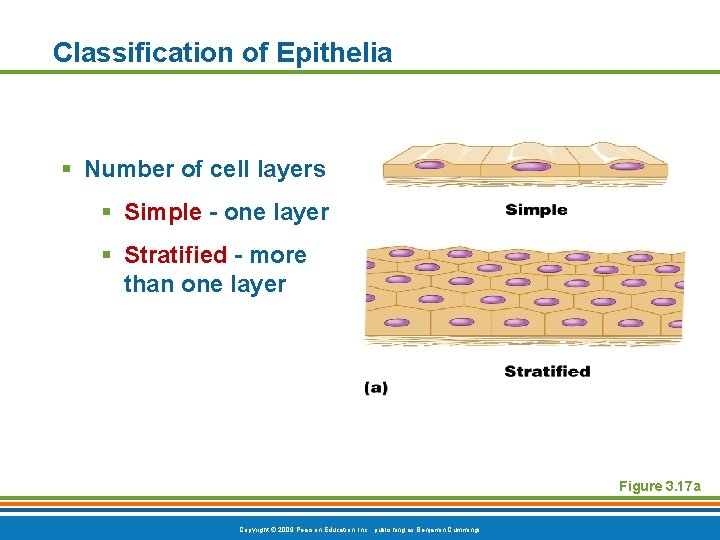
Classification of Epithelia § Number of cell layers § Simple - one layer § Stratified - more than one layer Figure 3. 17 a Copyright © 2009 Pearson Education, Inc. , publishing as Benjamin Cummings
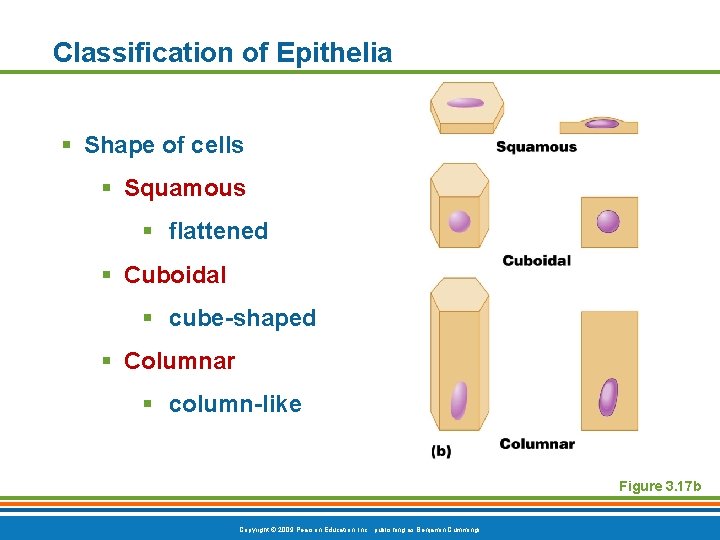
Classification of Epithelia § Shape of cells § Squamous § flattened § Cuboidal § cube-shaped § Columnar § column-like Figure 3. 17 b Copyright © 2009 Pearson Education, Inc. , publishing as Benjamin Cummings
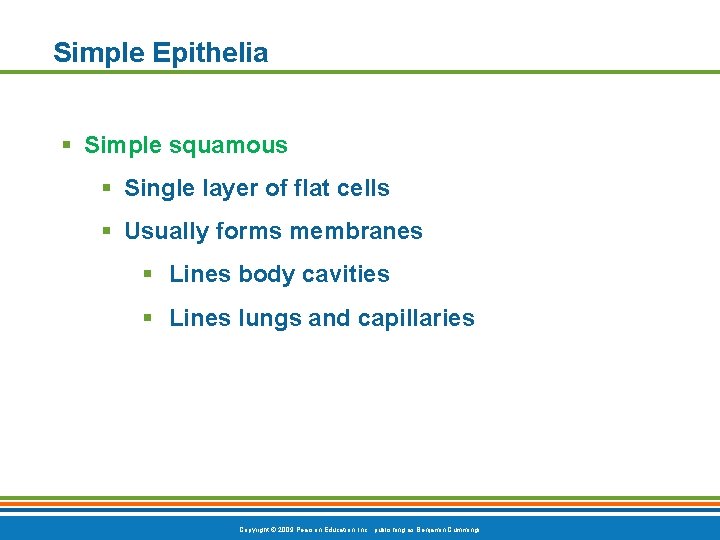
Simple Epithelia § Simple squamous § Single layer of flat cells § Usually forms membranes § Lines body cavities § Lines lungs and capillaries Copyright © 2009 Pearson Education, Inc. , publishing as Benjamin Cummings
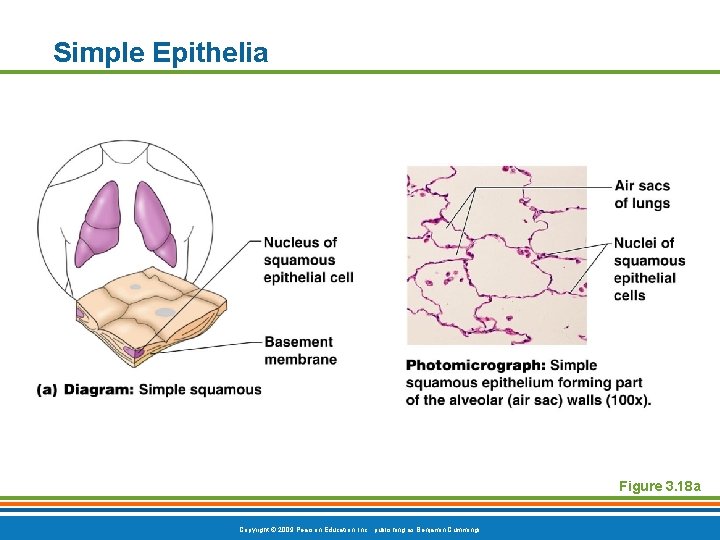
Simple Epithelia Figure 3. 18 a Copyright © 2009 Pearson Education, Inc. , publishing as Benjamin Cummings
Simple Epithelia § Simple cuboidal § Single layer of cube-like cells § Common in glands and their ducts § Forms walls of kidney tubules § Covers the ovaries Copyright © 2009 Pearson Education, Inc. , publishing as Benjamin Cummings
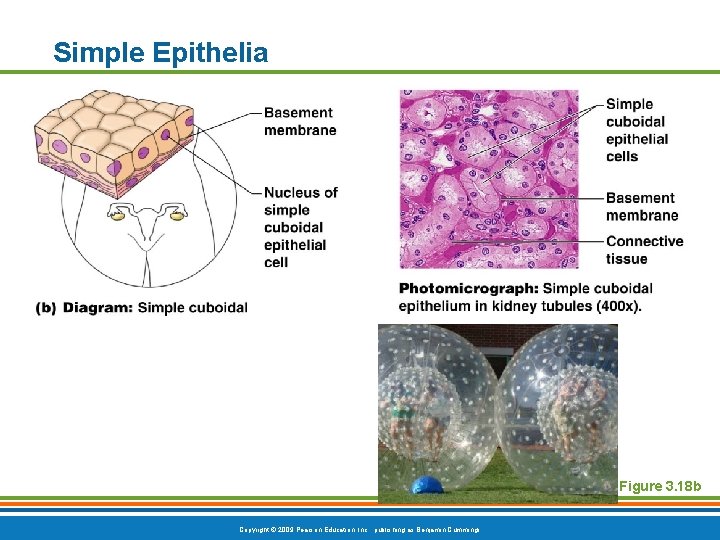
Simple Epithelia Figure 3. 18 b Copyright © 2009 Pearson Education, Inc. , publishing as Benjamin Cummings
Simple Epithelia § Simple columnar § Single layer of tall cells § Often includes mucus-producing goblet cells § Lines digestive tract Copyright © 2009 Pearson Education, Inc. , publishing as Benjamin Cummings
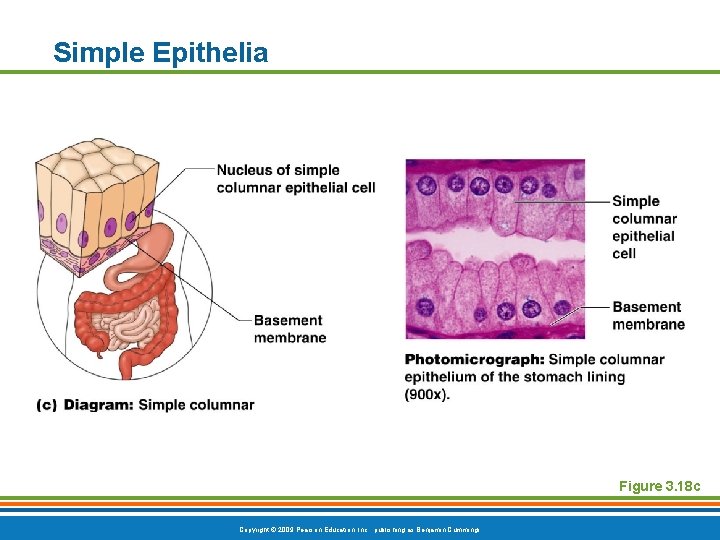
Simple Epithelia Figure 3. 18 c Copyright © 2009 Pearson Education, Inc. , publishing as Benjamin Cummings
Simple Epithelia § Pseudostratified columnar § Single layer, but some cells are shorter than others § Often looks like a double layer of cells § Sometimes ciliated, such as in the respiratory tract § May function in absorption or secretion Copyright © 2009 Pearson Education, Inc. , publishing as Benjamin Cummings
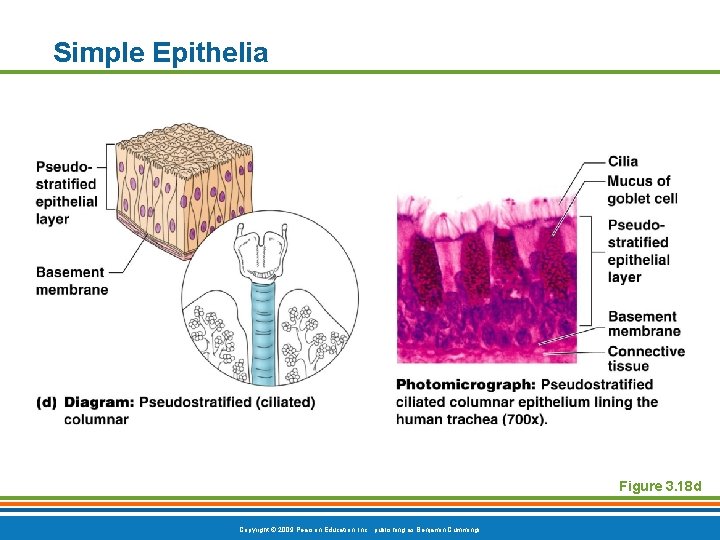
Simple Epithelia Figure 3. 18 d Copyright © 2009 Pearson Education, Inc. , publishing as Benjamin Cummings
Stratified Epithelia § Stratified squamous § Cells at the apical surface are flattened § Found as a protective covering where friction is common § Locations § Skin § Mouth § Esophagus Copyright © 2009 Pearson Education, Inc. , publishing as Benjamin Cummings
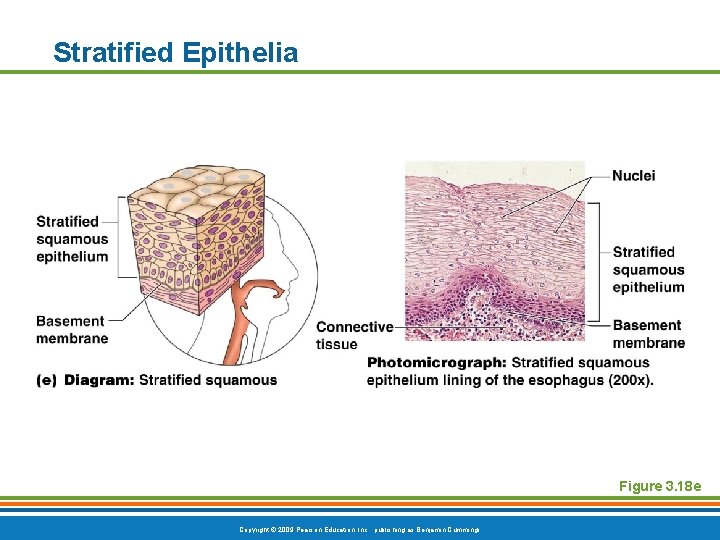
Stratified Epithelia Figure 3. 18 e Copyright © 2009 Pearson Education, Inc. , publishing as Benjamin Cummings
Stratified Epithelia § Stratified cuboidal - two layers of cuboidal cells § Stratified columnar - surface cells are columnar, cells underneath vary in size and shape § Stratified cuboidal and columnar § Rare in human body § Found mainly in ducts of large glands Copyright © 2009 Pearson Education, Inc. , publishing as Benjamin Cummings
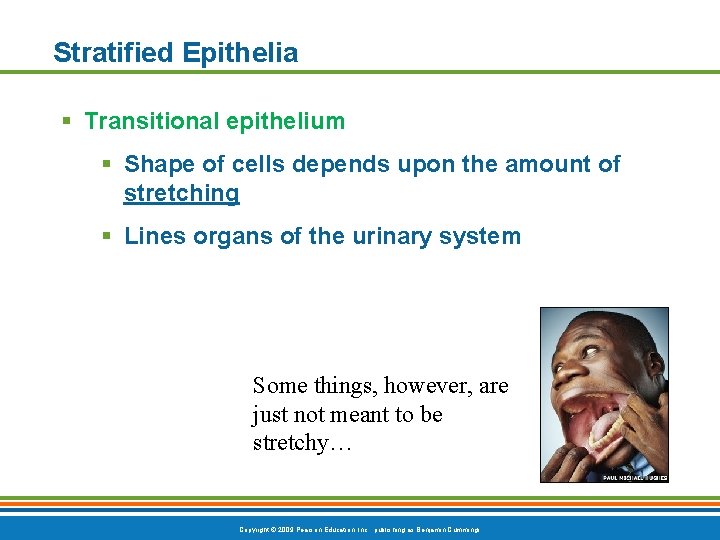
Stratified Epithelia § Transitional epithelium § Shape of cells depends upon the amount of stretching § Lines organs of the urinary system Some things, however, are just not meant to be stretchy… Copyright © 2009 Pearson Education, Inc. , publishing as Benjamin Cummings
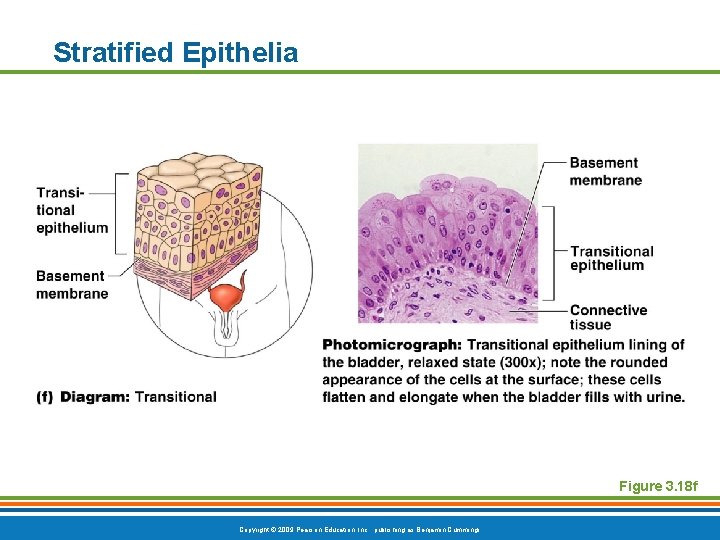
Stratified Epithelia Figure 3. 18 f Copyright © 2009 Pearson Education, Inc. , publishing as Benjamin Cummings
Glandular Epithelium § Gland § One or more cells responsible for secreting a particular product § Glandular epithelium is simple cuboidal Copyright © 2009 Pearson Education, Inc. , publishing as Benjamin Cummings
Glandular Epithelium § Two major gland types § Endocrine gland § Ductless since secretions diffuse into blood vessels § All secretions are hormones § Exocrine gland § Secretions empty through ducts to the epithelial surface § Include sweat and oil glands Copyright © 2009 Pearson Education, Inc. , publishing as Benjamin Cummings
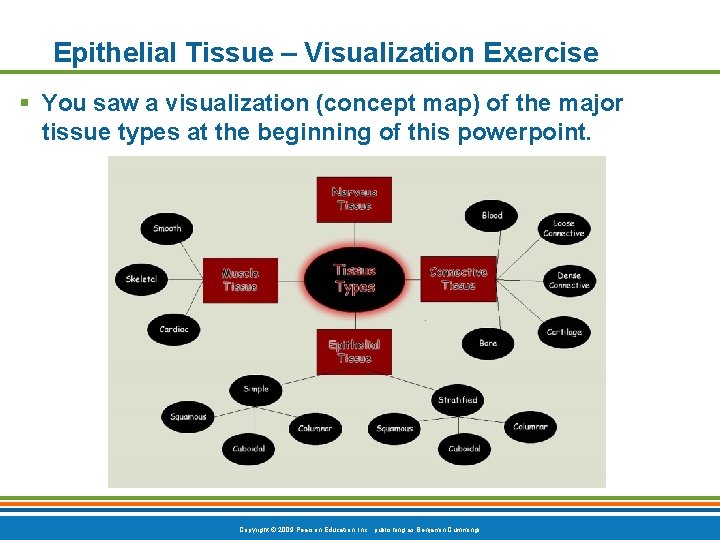
Epithelial Tissue – Visualization Exercise § You saw a visualization (concept map) of the major tissue types at the beginning of this powerpoint. Copyright © 2009 Pearson Education, Inc. , publishing as Benjamin Cummings
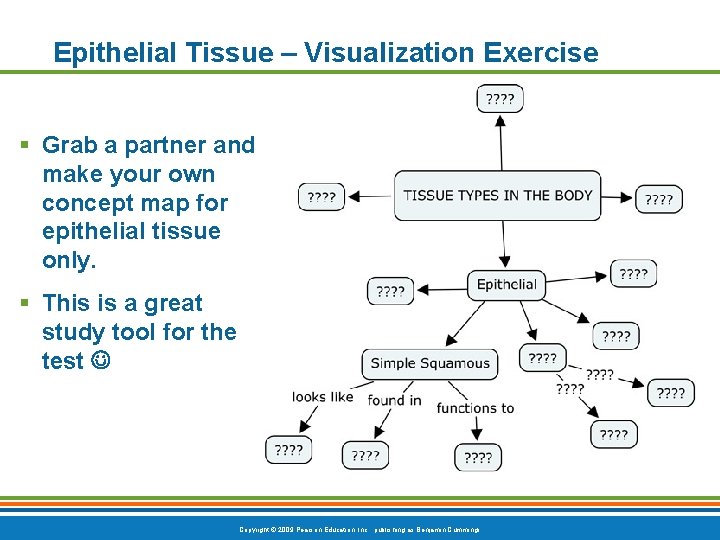
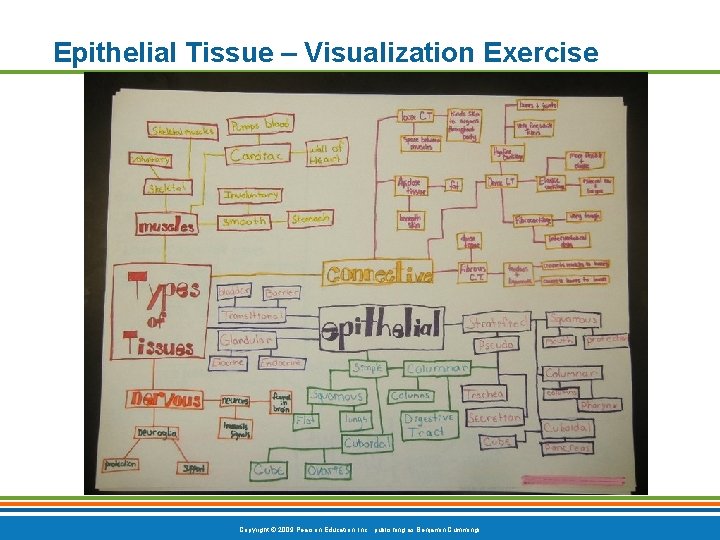
Epithelial Tissue – Visualization Exercise § Grab a partner and make your own concept map for epithelial tissue only. § This is a great study tool for the test Copyright © 2009 Pearson Education, Inc. , publishing as Benjamin Cummings
Epithelial Tissue – Visualization Exercise Copyright © 2009 Pearson Education, Inc. , publishing as Benjamin Cummings
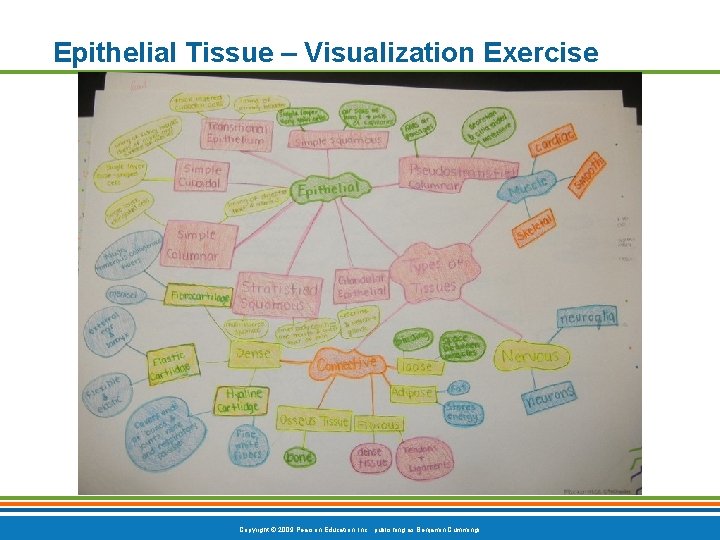
Epithelial Tissue – Visualization Exercise Copyright © 2009 Pearson Education, Inc. , publishing as Benjamin Cummings
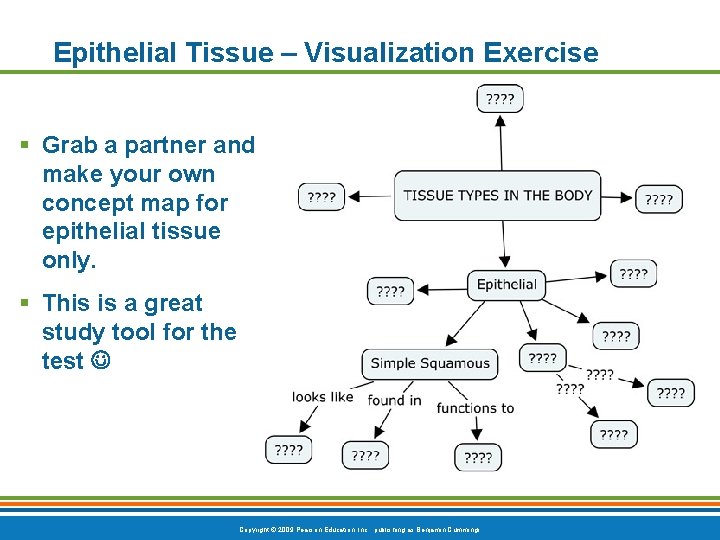
Epithelial Tissue – Visualization Exercise § Grab a partner and make your own concept map for epithelial tissue only. § This is a great study tool for the test Copyright © 2009 Pearson Education, Inc. , publishing as Benjamin Cummings
- Slides: 27