
Power Point Lecture Presentations prepared by Mindy MillerKittrell

Power. Point® Lecture Presentations prepared by Mindy Miller-Kittrell, North Carolina State University CHAPTER 24 Microbial Diseases of the Urinary and Reproductive Systems © 2015 Pearson Education, Inc.

Structures of the Urinary and Reproductive Systems • Females have distinct urinary and reproductive systems • Male urinary and reproductive systems share some components © 2015 Pearson Education, Inc.
Structures of the Urinary and Reproductive Systems • Structures of the Urinary System • Kidneys remove waste from the blood and excrete it in urine • Nephrons are the functional unit of the kidneys • Filter the blood to form urine • Ureters carry urine to the urinary bladder • The urinary bladder stores urine until it can be eliminated • Urine is excreted via the urethra © 2015 Pearson Education, Inc.
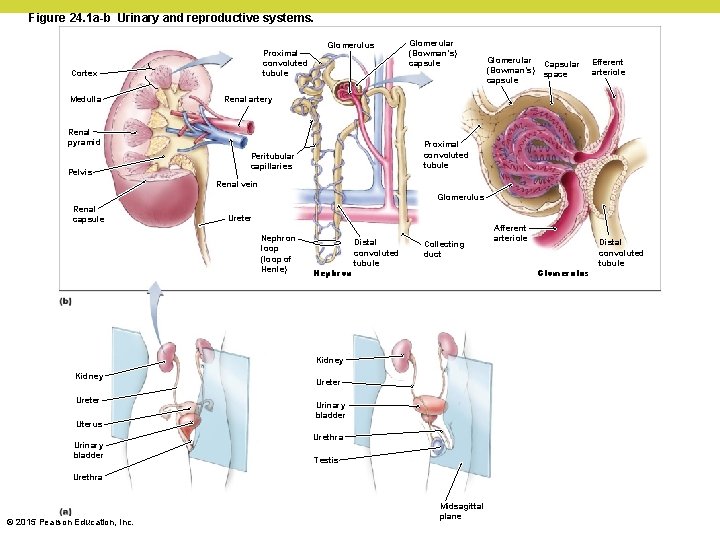
Figure 24. 1 a-b Urinary and reproductive systems. Proximal convoluted tubule Cortex Medulla Glomerulus Glomerular (Bowman’s) capsule Capsular space Efferent arteriole Renal artery Renal pyramid Pelvis Glomerular (Bowman’s) capsule Proximal convoluted tubule Peritubular capillaries Renal vein Glomerulus Renal capsule Ureter Nephron loop (loop of Henle) Nephron Distal convoluted tubule Collecting duct Glomerulus Kidney Ureter Uterus Urinary bladder Ureter Urinary bladder Urethra Testis Urethra © 2015 Pearson Education, Inc. Afferent arteriole Midsagittal plane Distal convoluted tubule
Structures of the Urinary and Reproductive Systems • Structures of the Reproductive System • Structures of the female reproductive system • Ovaries • Uterine tubes • Uterus • Vagina • External genitalia • Microorganisms enter through the vagina © 2015 Pearson Education, Inc.
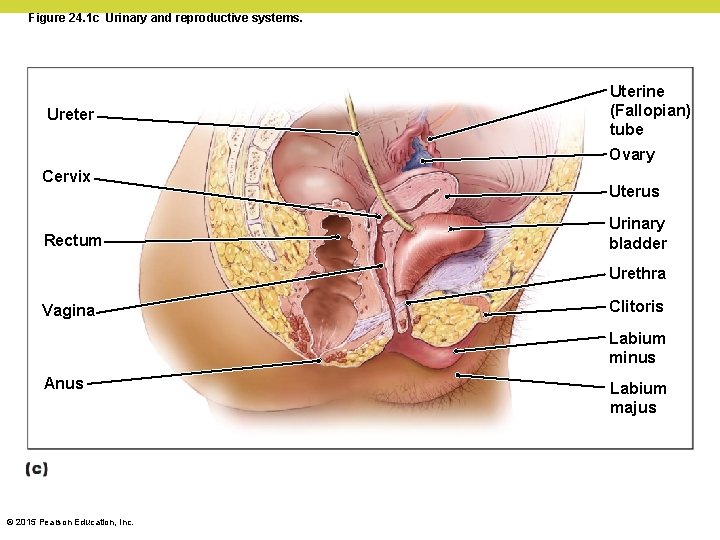
Figure 24. 1 c Urinary and reproductive systems. Ureter Uterine (Fallopian) tube Ovary Cervix Rectum Uterus Urinary bladder Urethra Vagina Clitoris Labium minus Anus © 2015 Pearson Education, Inc. Labium majus
Structures of the Urinary and Reproductive Systems • Structures of the Reproductive System • Structures of the male reproductive system • Testes • Scrotum • System of ducts • Accessory glands • Penis • Microorganisms enter through the urethra and skin of the penis © 2015 Pearson Education, Inc.
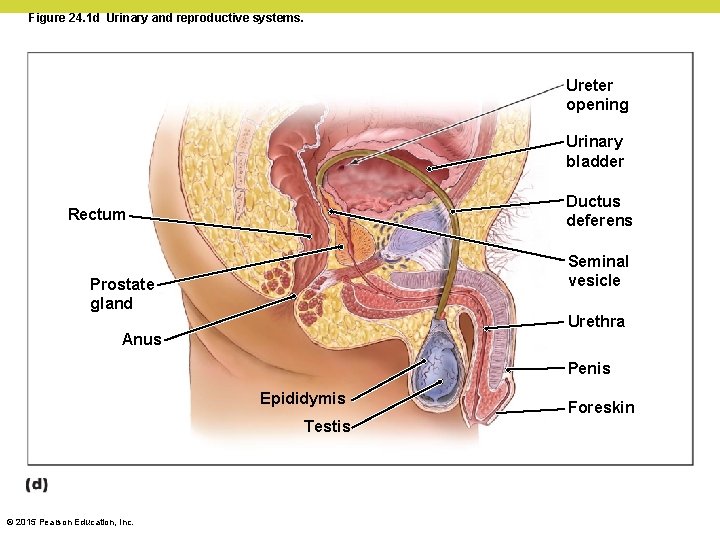
Figure 24. 1 d Urinary and reproductive systems. Ureter opening Urinary bladder Ductus deferens Rectum Seminal vesicle Prostate gland Urethra Anus Penis Epididymis Testis © 2015 Pearson Education, Inc. Foreskin
Structures of the Urinary and Reproductive Systems • Normal Microbiota of the Urinary and Reproductive Systems • Urinary system • Urethra supports colonization by some microorganisms • Include Lactobacillus and Staphylococcus • The other urinary organs are sterile • Male reproductive system • Regions above the prostate are sterile • Female reproductive system • The vagina is colonized by various microorganisms, depending on hormone levels © 2015 Pearson Education, Inc.
Structures of the Urinary and Reproductive Systems • Normal Microbiota of the Urinary and Reproductive Systems • Microorganisms in the urethra can move up to infect the kidneys • Opportunistic and sexually transmitted microbes can infect the reproductive system © 2015 Pearson Education, Inc.
Structures of the Urinary and Reproductive Systems • Tell Me Why • Why are newborn girls less likely to contract vaginal infections than are three-year-olds? © 2015 Pearson Education, Inc.
Bacterial Diseases of the Urinary Systems • Bacterial Urinary Tract Infections • Signs and symptoms • Frequent, urgent, painful urination • Urine may be cloudy with foul odor • Pathogens and virulence factors • Enteric bacteria are the most common cause • Escherichia coli causes most cases • Virulence factors include flagella and attachment fimbriae © 2015 Pearson Education, Inc.
Bacterial Diseases of the Urinary Systems • Bacterial Urinary Tract Infections • Pathogenesis and epidemiology • Often results when fecal bacteria is self-inoculated into urethra • More common in females • Diagnosis, treatment, and prevention • Diagnosis is based on urinalysis • Many cases resolve without treatment • Some treated with antimicrobial drugs • Prevented by limiting contamination by fecal microbes © 2015 Pearson Education, Inc.
Bacterial Diseases of the Urinary Systems • Leptospirosis • Zoonotic disease seen primarily in animals • Signs and symptoms • Abrupt fever, myalgia, muscle stiffness, and headache • Rarely fatal • Pathogen • Caused by Leptospira interrogans • Normally lives in many wild and domestic animals • Virulent strains make adhesins, are motile, and can evade complement activity © 2015 Pearson Education, Inc.
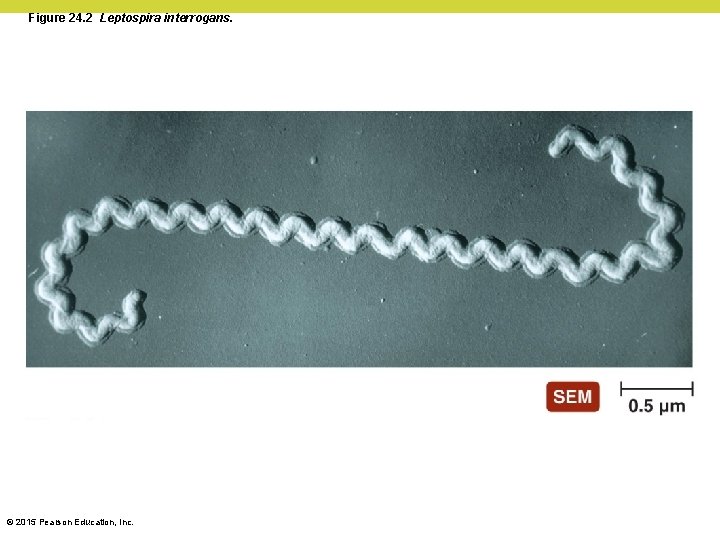
Figure 24. 2 Leptospira interrogans. © 2015 Pearson Education, Inc.
Bacterial Diseases of the Urinary Systems • Leptospirosis • Pathogenesis • Transmitted by contact with urine of infected animal or urine-contaminated water • Spirochete travels via the bloodstream through the body • Epidemiology • Occurs throughout world but rare in the U. S. • Diagnosis, treatment, and prevention • Diagnosis is based on antibody test • Treated with antimicrobial drugs • Prevented by avoiding contaminated water © 2015 Pearson Education, Inc.
Bacterial Diseases of the Urinary Systems • Streptococcal Acute Glomerulonephritis • Some antibody-antigen complexes against group A streptococci strains are not removed from the body • Complexes are deposited in the glomeruli of the kidneys • Cause inflammation of the glomeruli and nephrons • Produce hypertension and low urine output • Irreversible kidney damage can occur in adults © 2015 Pearson Education, Inc.
Bacterial Diseases of the Urinary Systems • Tell Me Why • Why does insertion of a urinary catheter increase the likelihood of cystitis? © 2015 Pearson Education, Inc.
Nonvenereal Diseases of the Reproductive Systems • Staphylococcal Toxic Shock Syndrome • Signs and symptoms • Sudden-onset fever, chills, vomiting, diarrhea, low blood pressure, confusion, and severe red rash • Individuals go into shock if untreated • Pathogen and virulence factors • Caused by some strains of S. aureus • These strains produce toxic shock syndrome toxin • Cause excessive cytokine production by T cells © 2015 Pearson Education, Inc.
Nonvenereal Diseases of the Reproductive Systems • Staphylococcal Toxic Shock Syndrome • Pathogenesis and epidemiology • Absorption of toxin into blood triggers toxic shock syndrome • Most cases occur in menstruating females • Diagnosis, treatment, and prevention • Diagnosis is based on signs and symptoms • Considered medical emergency • Requires removal of foreign material and antimicrobial drugs • Avoiding tampons or using less absorbent tampons reduces risk © 2015 Pearson Education, Inc.

Figure 24. 3 The incidence of staphylococcal toxic shock syndrome in the United States, 1979– 2012. © 2015 Pearson Education, Inc.
Nonvenereal Diseases of the Reproductive Systems • Bacterial Vaginosis • Signs and symptoms • White vaginal discharge with a "fishy" odor • Pathogen and virulence factors • Caused by various anaerobic bacteria • Pathogenesis and epidemiology • Associated with multiple sexual partners and vaginal douching • Diagnosis, treatment, and prevention • Diagnosed is based on signs and symptoms • Treated with oral or vaginal metronidazole © 2015 Pearson Education, Inc.
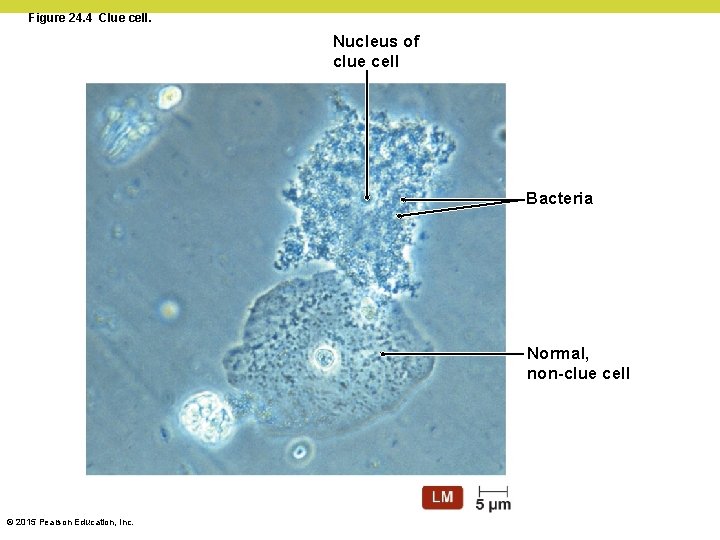
Figure 24. 4 Clue cell. Nucleus of clue cell Bacteria Normal, non-clue cell © 2015 Pearson Education, Inc.
Nonvenereal Diseases of the Reproductive Systems • Vaginal Candidiasis • Signs and symptoms • Severe vaginal itching and burning • Pathogen and virulence factors • Most commonly caused by Candida albicans • Normal microbiota of skin and mucous membranes © 2015 Pearson Education, Inc.
Nonvenereal Diseases of the Reproductive Systems • Vaginal Candidiasis • Pathogenesis and epidemiology • Candida overgrows if vaginal p. H becomes alkaline or normal microbial populations are reduced • Can become systemic in immunocompromised people • Diagnosis, treatment, and prevention • Identification of Candida in presence of symptoms is diagnostic • Treated with azole or fluconazole • Avoiding excessive use of antibacterial drugs can prevent candidiasis © 2015 Pearson Education, Inc.
Nonvenereal Diseases of the Reproductive Systems • Tell Me Why • Why does Candida albicans, which is a member of the normal microbiota, sometimes cause disease? © 2015 Pearson Education, Inc.
Sexually Transmitted Infections (STIs) and Diseases (STDs) • STIs occur from the sexual transmission of potential pathogens • Resulting disease is an STD • STDs are common worldwide • Young people who experiment with sex are at risk • Presence of lesions from STDs is a risk factor for transmission of HIV • Female adolescents are at risk because the cervical lining is prone to bacterial infection • Can cause pelvic inflammatory disease © 2015 Pearson Education, Inc.
Sexually Transmitted Infections (STIs) and Diseases (STDs) • Prevention includes abstinence or mutual monogamy • Condoms must be used properly and consistently to provide protection © 2015 Pearson Education, Inc.
Sexually Transmitted Infections (STIs) and Diseases (STDs) • Tell Me Why • Why have STIs and STDs become pandemic over the past 50 years? © 2015 Pearson Education, Inc.
Bacterial STDs • Gonorrhea • Signs and symptoms • Men experience painful urination and a purulent discharge • Women are often asymptomatic • Pelvic inflammatory disease my develop • Pathogen and virulence factors • Caused by Neisseria gonorrhoeae • Virulence factors include fimbriae, capsule, and endotoxin © 2015 Pearson Education, Inc.
Bacterial STDs • Gonorrhea • Pathogenesis • Bacteria attach to epithelial cells of the mucous membranes • Infections outside the reproductive tract also occur • Babies delivered vaginally by infected mothers can become infected • Epidemiology • Gonorrhea occurs only in humans • Cases in the U. S. have been declining • Risk increases with frequency of sexual encounters © 2015 Pearson Education, Inc.

Figure 24. 5 The incidence of civilian gonorrhea in the United States. © 2015 Pearson Education, Inc.
Bacterial STDs • Gonorrhea • Diagnosis, treatment, and prevention • Genetic probes are used to diagnose asymptomatic infection • Treated with broad-spectrum cephalosporin • Spread of gonococcal strains resistant to many antimicrobials has complicated treatment • Prevented with safe sex practices © 2015 Pearson Education, Inc.
Bacterial STDs • Syphilis • Signs and symptoms • Four phases of syphilis • Primary syphilis • Secondary syphilis • Latent syphilis • Tertiary syphilis © 2015 Pearson Education, Inc.
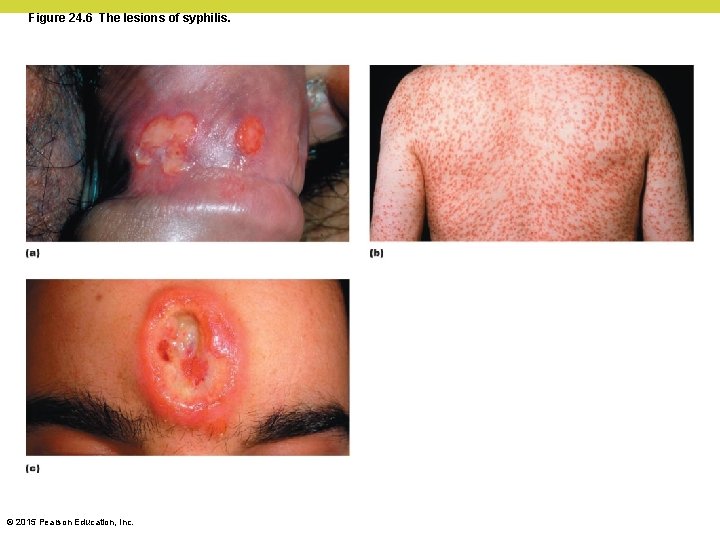
Figure 24. 6 The lesions of syphilis. © 2015 Pearson Education, Inc.

Bacterial STDs • Syphilis • Pathogen and virulence factors • Treponema pallidum causes syphilis • Lives only in humans • Virulence factors have been difficult to identify • Pathogenesis • Transmitted mostly via sexual contact • Sometimes transmitted from mother to child • Most individuals do not develop tertiary syphilis © 2015 Pearson Education, Inc.
Bacterial STDs • Syphilis • Epidemiology • Syphilis occurs worldwide • Endemic among sex workers, men who have sex with men, and users of illegal drugs • Diagnosis, treatment, and prevention • Antibody test is used to diagnose primary, secondary, and congenital syphilis • Tertiary syphilis is difficult to diagnose • Penicillin G is used to treat all but tertiary syphilis • Prevented with safe sex practices © 2015 Pearson Education, Inc.

Figure 24. 7 The incidence of syphilis in the United States. © 2015 Pearson Education, Inc.
Bacterial STDs • Chlamydial Infections • Signs and symptoms • Women are usually asymptomatic • Men have painful urination and pus discharge from penis • Causes numerous diseases • Epididymitis: inflammation of the epididymis • Orchitis: inflammation of the testes • Trachoma: disease of the eye • Lymphogranuloma venereum: formation of a genital lesion and bubo in the groin © 2015 Pearson Education, Inc.
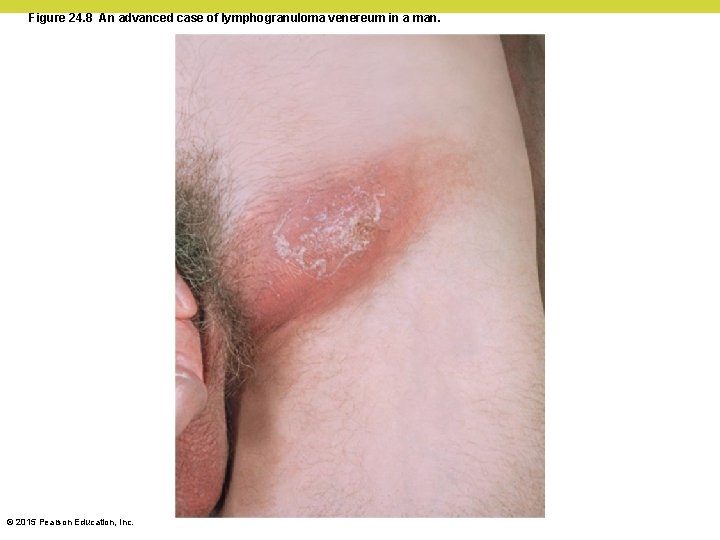
Figure 24. 8 An advanced case of lymphogranuloma venereum in a man. © 2015 Pearson Education, Inc.
Bacterial STDs • Chlamydial Infections • Pathogens and virulence factors • Caused by Chlamydia trachomatis • All strains but one are pathogens of humans • Grow only within vesicles inside host cells • Developmental cycle • Elementary bodies are the infective form • Reticulate bodies are the reproductive form © 2015 Pearson Education, Inc.
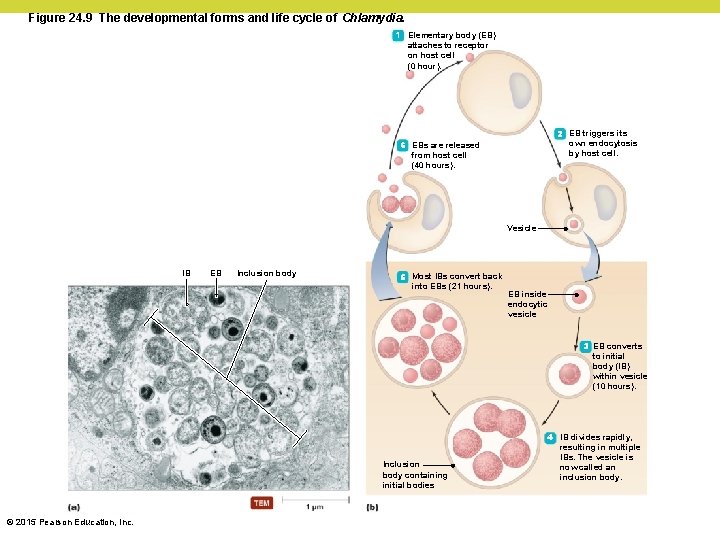
Figure 24. 9 The developmental forms and life cycle of Chlamydia. 1 Elementary body (EB) attaches to receptor on host cell (0 hour). 2 EB triggers its own endocytosis by host cell. 6 EBs are released from host cell (40 hours). Vesicle IB EB Inclusion body 5 Most IBs convert back into EBs (21 hours). EB inside endocytic vesicle 3 EB converts to initial body (IB) within vesicle (10 hours). Inclusion body containing initial bodies © 2015 Pearson Education, Inc. 4 IB divides rapidly, resulting in multiple IBs. The vesicle is now called an inclusion body.
Bacterial STDs • Chlamydial Infections • Pathogenesis • • Microbes enter body through scrapes or cuts Infect conjunctiva or cells lining mucous membranes Spread to the lymphatic system causes proctitis Adolescent infection increases cervical cancer risk • Epidemiology • Most common reportable STD in the U. S. • Eye infections endemic in poor, crowded areas • Diagnosis, treatment, and prevention • Detection of chlamydial DNA by PCR is diagnostic • Treated with antimicrobial drugs • Prevented by abstinence or mutual monogamy © 2015 Pearson Education, Inc.
Bacterial STDs • Chancroid • Signs and symptoms • Soft chancres; in women, pain upon urination • Pathogen and virulence factors • Caused by Haemophilus ducreyi • Produces a toxin that kills epithelial cells • Pathogenesis and epidemiology • Most cases in the U. S. are due to foreign travel • Diagnosis, treatment, and prevention • Diagnosis based on presence of lesion and buboes • Treated with antimicrobial drugs • Prevented by abstinence or mutual monogamy © 2015 Pearson Education, Inc.
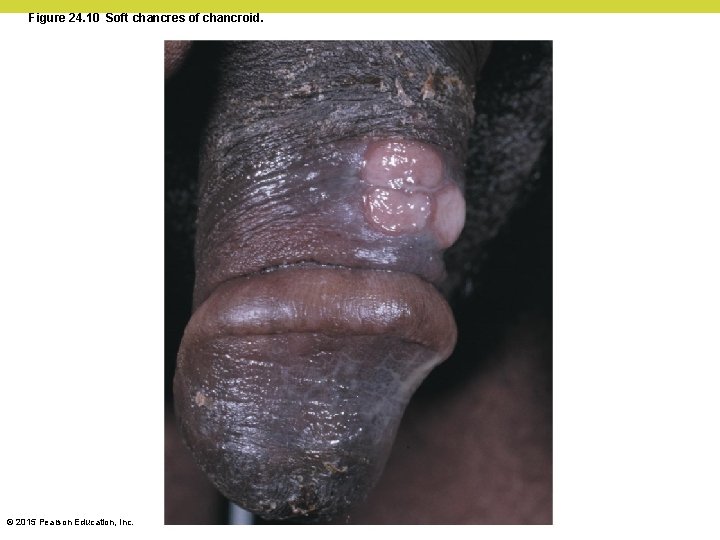
Figure 24. 10 Soft chancres of chancroid. © 2015 Pearson Education, Inc.
Bacterial STDs • Tell Me Why • Why is erythromycin substituted for tetracycline in treatment of chlamydial infections in children? Why are penicillins and cephalosporins useless against Chlamydia? © 2015 Pearson Education, Inc.
Viral STDs • Genital Herpes • Signs and symptoms • Small blisters on or around the genitals or rectum • Pathogen and virulence factors • Human herpesvirus 2 causes most cases • Human herpesvirus 1 causes remainder of cases • Virus can become latent in nerve cells • Pathogenesis • Herpesvirus kills epithelial cells at infection site • Blisters may form at sites far from initial infection • Babies can become infected during birth © 2015 Pearson Education, Inc.
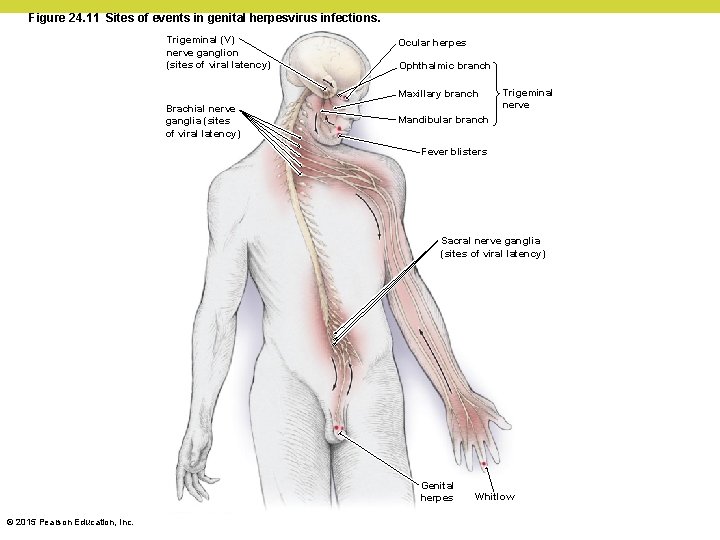
Figure 24. 11 Sites of events in genital herpesvirus infections. Trigeminal (V) nerve ganglion (sites of viral latency) Ocular herpes Ophthalmic branch Maxillary branch Brachial nerve ganglia (sites of viral latency) Trigeminal nerve Mandibular branch Fever blisters Sacral nerve ganglia (sites of viral latency) Genital herpes © 2015 Pearson Education, Inc. Whitlow
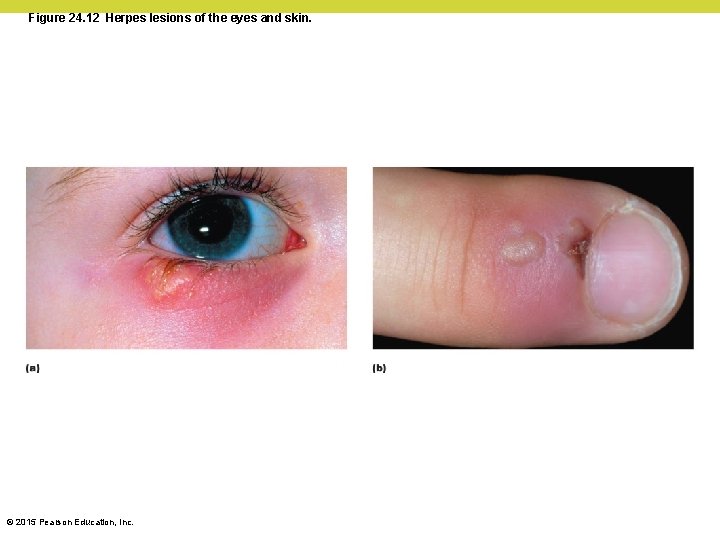
Figure 24. 12 Herpes lesions of the eyes and skin. © 2015 Pearson Education, Inc.
Viral STDs • Genital Herpes • Epidemiology • Genital herpes quadruples the risk of HIV infection • Diagnosis, treatment, and prevention • Diagnosis is based on characteristic lesions • Acyclovir or other antiviral agents can lessen symptoms • Circumcised males are at lower risk of infection • Condoms often provide little protection • Infected pregnant women should deliver by C-section © 2015 Pearson Education, Inc.
Viral STDs • Genital Warts • Signs and symptoms • Warts on the genitalia and surrounding areas • Large growths called condylomata acuminata may form • Pathogens • Caused by human papillomaviruses (HPV) • Viral proteins can trigger cancer © 2015 Pearson Education, Inc.
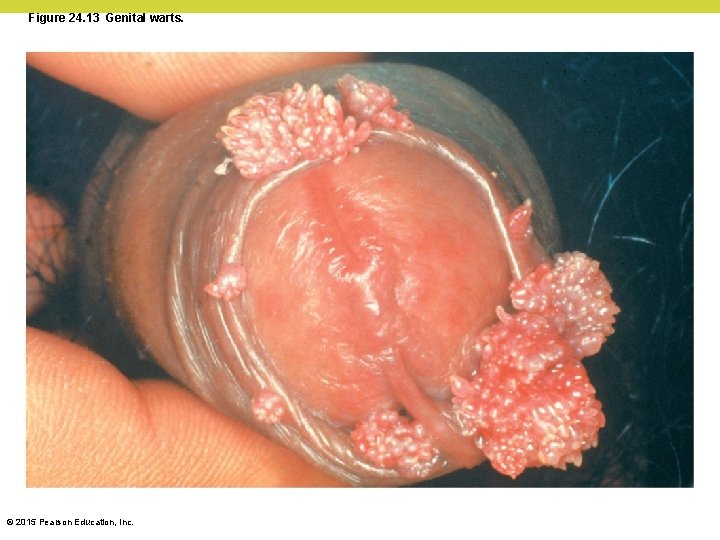
Figure 24. 13 Genital warts. © 2015 Pearson Education, Inc.
Viral STDs • Genital Warts • Pathogenesis and epidemiology • HPVs invade skin or mucous membranes during sex • Most common STD in the U. S. • Diagnosis, treatment, and prevention • Diagnosis is made by presence of warts • Variety of methods available to remove warts • Vaccine is available against HPV strain associated with cervical cancer © 2015 Pearson Education, Inc.
Viral STDs • Tell Me Why • Why are DNA viruses, such as herpesviruses and papillomaviruses, more likely to cause recurrent diseases and cancers than are RNA viruses? © 2015 Pearson Education, Inc.
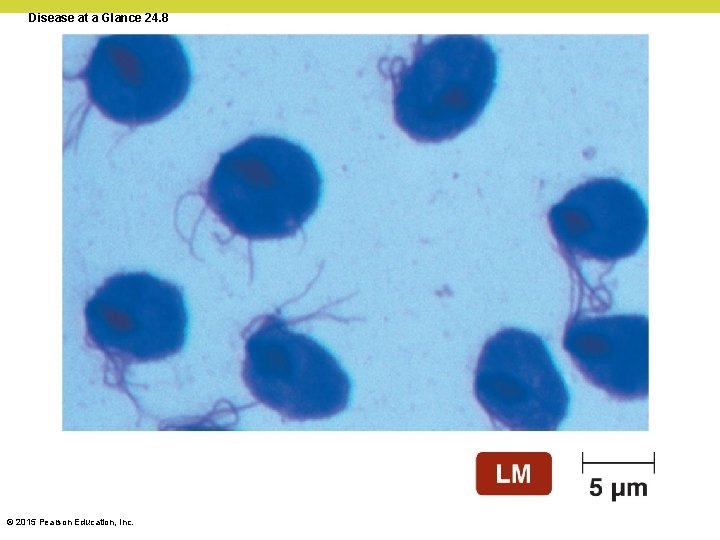
Protozoan STDs • Trichomoniasis • Signs and symptoms • Females have vaginal discharge and irritation • Males are typically asymptomatic • Pathogen and virulence factors • Caused by Trichomonas vaginalis • Pathogenesis and epidemiology • Transmitted primarily via sexual intercourse • Most common curable STD in women • Trichomoniasis increases risk of infection by HIV • Various virulence factors contribute to disease © 2015 Pearson Education, Inc.
Disease at a Glance 24. 8 © 2015 Pearson Education, Inc.
Protozoan STDs • Trichomoniasis • Diagnosis, treatment, and prevention • Diagnosed by presence of Trichomonas in clinical samples • Treated with a single dose of oral metronidazole • Prevented by avoiding sexual intercourse with infected persons © 2015 Pearson Education, Inc.
Protozoan STDs • Tell Me Why • Why might a course of antibacterial drugs trigger a case of trichomoniasis in a female patient? © 2015 Pearson Education, Inc.
- Slides: 58