
Power Point Lecture Outlines 14 Avoiding Substance Use
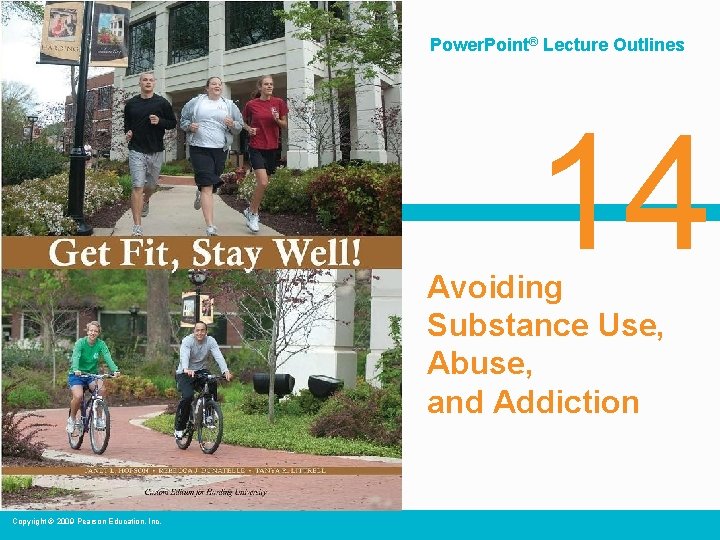
Power. Point® Lecture Outlines 14 Avoiding Substance Use, Abuse, and Addiction Copyright © 2009 Pearson Education, Inc.
Objectives • Define addiction and list four symptoms of it. • Describe the short-term and long-term health effects of alcohol use. • Discuss ways to identify a “problem drinker” and describe potential strategies for treatment. • Describe the short-term and long-term effects of tobacco use. • Define secondhand smoke and discuss the health risks associated with it. • Define drug use and drug abuse. • Identify and describe seven common types of drugs. Copyright © 2009 Pearson Education, Inc.
What Is Addiction and What Are Its Effects? • Continued involvement with a substance or activity despite ongoing negative consequences. • Addictive behaviors initially provide a sense of pleasure that the addict cannot achieve in other ways. • What is the cost of alcohol, tobacco, drug and other addictions on an • Individual? • Family? • Society? Copyright © 2009 Pearson Education, Inc.

Addictive Behaviors • What are some possible addictive behaviors? • Alcohol, tobacco, & drugs • Gambling • Shopping/spending • Pornography • Internet • Gaming • Sex • Work • Exercise Copyright © 2009 Pearson Education, Inc. • Four common symptoms of addictions • Compulsion • Loss of control • Negative consequences • Denial
Dangers of Alcohol Use and Abuse Alcohol abuse is common on college campuses. • Most popular drug among college students. • Almost half of college students engage in binge drinking. Alcohol profoundly affects the body. • Contains ethanol, an addictive drug that is absorbed throughout the whole gastrointestinal system. • The higher the alcohol concentration, the faster it is absorbed by the body. • Individual characteristics influence absorption of alcohol and intoxication. Copyright © 2009 Pearson Education, Inc.

Dangers of Alcohol Use and Abuse Short-Term Risks and Effects of Ethanol • Depressed central nervous system function. • Lower respiratory, pulse, and blood pressure rates. • Binge drinkers are at risk for irregular heartbeat and heart damage. • Alcohol poisoning may result in death. Long-Term Risks and Effects of Ethanol • Diseases of the nervous and circulatory systems. • Liver disease, including cirrhosis & hepatitis. • Increased risk of cancer. • Fetal alcohol syndrome in pregnant women. • Increased risk of osteoporosis. • Brain size shrinkage and brain cell damage. Copyright © 2009 Pearson Education, Inc.
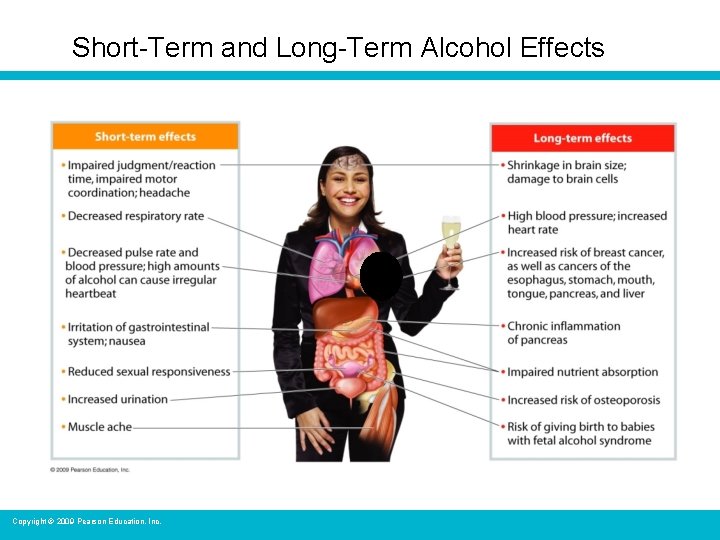
Short-Term and Long-Term Alcohol Effects Copyright © 2009 Pearson Education, Inc.
Dangers of Alcohol Use and Abuse Drinking and driving is a major safety threat. • About 39% of all traffic deaths are alcohol related. Alcohol use can lead to alcoholism. • Problems are often denied by alcohol abusers. • Multiple symptoms are common, including the inability to stop drinking, feelings of guilt or remorse, and memory loss. Recovery from alcohol addiction is difficult. • People often experience many serious problems before they’re ready to deal with their addiction. • First step to recovery is regaining a sense of personal control and assuming responsibility for one’s actions. Copyright © 2009 Pearson Education, Inc.
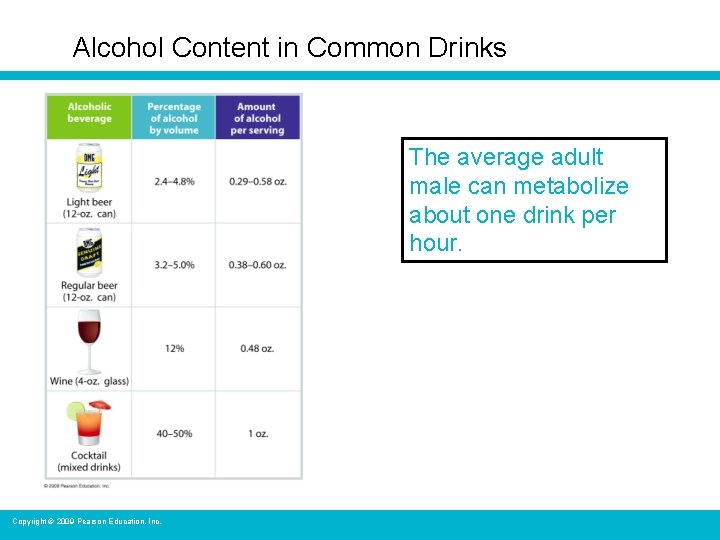
Alcohol Content in Common Drinks The average adult male can metabolize about one drink per hour. Copyright © 2009 Pearson Education, Inc.
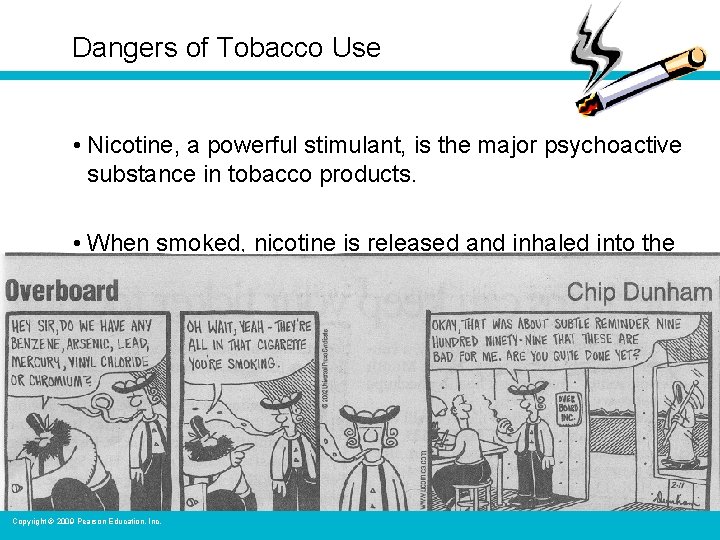
Dangers of Tobacco Use • Nicotine, a powerful stimulant, is the major psychoactive substance in tobacco products. • When smoked, nicotine is released and inhaled into the lungs, along with tar and 4, 700 other chemicals including arsenic, formaldehyde, and ammonia. • Cigarette smoke also contains carbon monoxide, a dangerous gas. When smoked, its concentration is 800 times higher than the level considered safe. Copyright © 2009 Pearson Education, Inc.
Dangers of Tobacco Use Short-Term Effects and Risks of Nicotine Use • Aroused mental state. • Increased heart and respiratory rates. • Constricted blood vessels. • Reduced appetite. Long-Term Effects and Risks of Nicotine Use • Cancer. • Cardiovascular disease. • Respiratory diseases, especially emphysema. • Sexual dysfunction. • Gum disease. Nicotine poisoning is the symptoms experienced by new smokers; includes dizziness, rapid pulse, damp skin, nausea, and vomiting. Copyright © 2009 Pearson Education, Inc.
Dangers of Tobacco Use Secondhand smoke is air pollution from tobacco smoke. • Mainstream smoke is emitted from a smoker’s mouth. Sidestream smoke is emitted from the burning end of a product. • About 50, 000 deaths occur each year from secondhand smoke. Quitting smoking is not easy. • 90% of people who try to quit smoking fail. • Smokers often falsely believe they can “quit anytime. ” • Nicotine is deeply addictive in the brain and body. • Consistent treatment and efforts can result in quitting. • Within 1 year of quitting, risks of major disease start to substantially reduce. Copyright © 2009 Pearson Education, Inc.
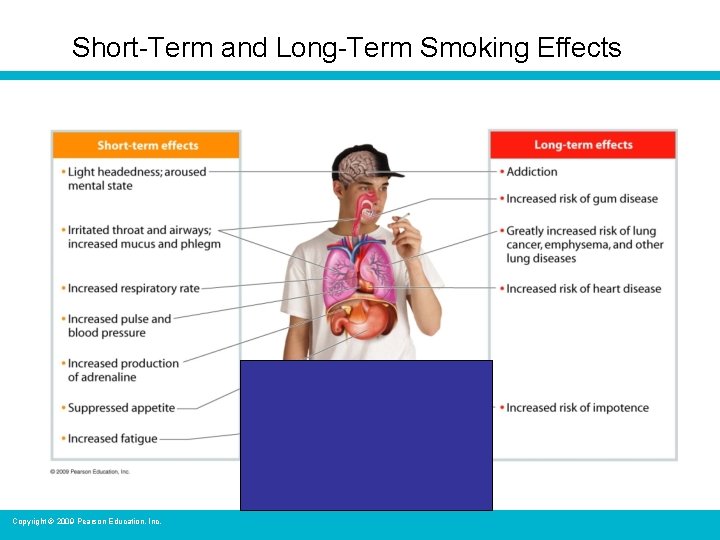
Short-Term and Long-Term Smoking Effects Copyright © 2009 Pearson Education, Inc.
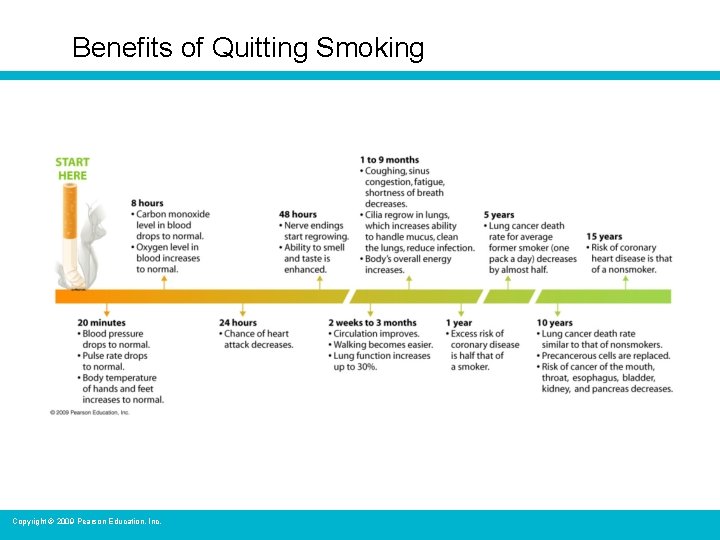
Benefits of Quitting Smoking Copyright © 2009 Pearson Education, Inc.
Dangers of Drug Use and Abuse • Drug misuse and abuse are huge societal problems. Drug misuse = using drugs for an unintended purpose. Drug abuse = excessive use of any drug. • Drug use contributes to the death of 120, 000 Americans yearly. • Costs taxpayers more than $294 billion a year in preventable health care expenses, law enforcement, auto accidents, crime, and lost productivity. • World-wide problems result from U. S. drug use Copyright © 2009 Pearson Education, Inc.
Commonly Used Drugs Marijuana • Most popular drug used by college students. • THC concentration determines the potency. • Long-term studies show it causes lung damage. • Other risks include immune function suppression, blood pressure changes, and impaired memory. Designer Drugs (“Club Drugs”) • Produced in chemical laboratories, made in private homes, sold illegally. • Commonly include Ecstasy (mood enhancer), GHB (tranquilizer), and Special K (anesthetic). • Dangers include brain damage, loss of consciousness, seizures, respiratory distress, and death. Copyright © 2009 Pearson Education, Inc.
Commonly Used Drugs Stimulants • Powerful drugs that stimulate the central nervous system. • Among the most addictive substances available. • Include cocaine (a naturally occurring stimulant) and amphetamines (synthetic agents). Depressants • Agents that depress central nervous system functions. • Include opiates such as morphine, codeine, and heroine. • Highly addictive, sometimes deadly, substances. • Most overdose deaths caused by combining with alcohol Hallucinogens – (LSD, PCP, mescaline, mushrooms) • Primary effects alter feelings, thoughts, and perceptions. • Mainly consumed for hallucinogenic side effects; all are illegal. Copyright © 2009 Pearson Education, Inc.
Commonly Used Drugs Inhalants • Chemicals that produce vapors that, when inhaled, create euphoric effects. • Include rubber cement, model glue, paint thinner, lighter fluid, varnish, wax, spot removers, and gasoline. Steroids • Artificial forms of the male hormone testosterone, used illegally to promote muscle growth and strength. • Many claims for their effectiveness are unfounded, and side effects can be serious and lifelong (see Chapter 5). Prescription Drugs • Abuse of prescription drugs has risen steeply in recent years. • When not taken as directed they can be extremely dangerous, especially when taken in high doses or combined wrongly. • Ritalin, Oxy. Contin, Vicodin, Xanax, Valium, etc. Copyright © 2009 Pearson Education, Inc.
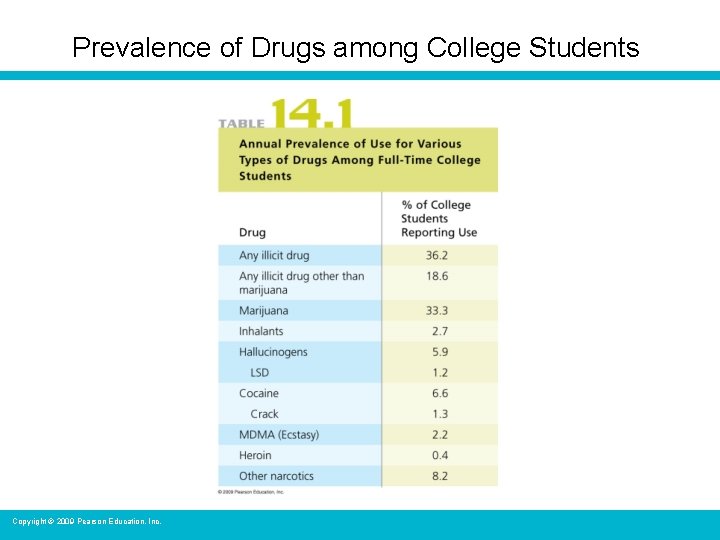
Prevalence of Drugs among College Students Copyright © 2009 Pearson Education, Inc.
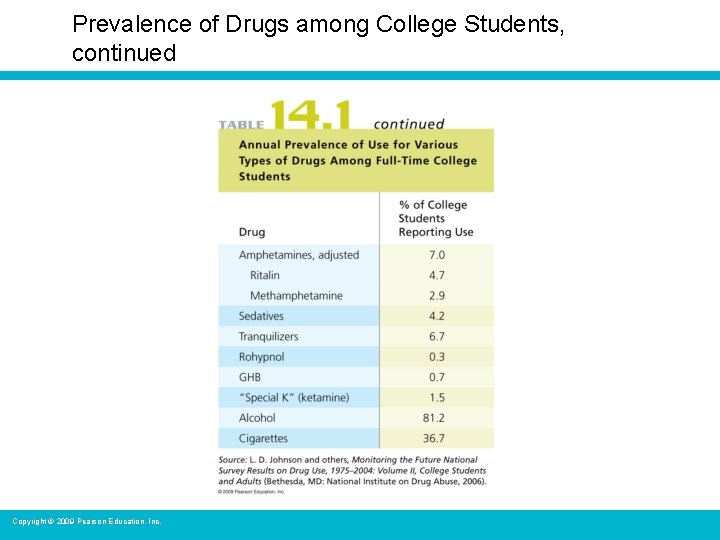
Prevalence of Drugs among College Students, continued Copyright © 2009 Pearson Education, Inc.
Overcoming Drug Abuse • Vast body of evidence suggests that it’s almost inevitable that prolonged drug use will lead to addiction. • Most addicts need specialized medical and psychological treatment to help them quit. • Main treatments are drug programs combined with medications and behavioral therapy. • Resources include hospitals, outpatient clinics, residential programs, and community-based 12 -step programs. Copyright © 2009 Pearson Education, Inc.

Pornography, Cybersex and Cyberporn www. xxxchurch. com 53% of pastors have Internet Visitors to pornsales sites: =gowho 72% $4. 9 40 Christians Porn 260 million new websites porn U. S. who sites – adults say 4. 2 porn onis visited porn sites in the billion male/28% annually female visit a million line major pornographic each (12% problem day of total) in past year websites home – 47% regularly. Average the a boy views pornography? • Printed – 11 Internet - ? 6 -8 Systemic Issue – it affects many areas of a user’s life. “I made a covenant with my eyes not to look lustfully at a girl. ” Job 31: 1 Copyright © 2009 Pearson Education, Inc.
John Bentley (2005) Survey done for Campbell Street Church of Christ Stats from C of C members • Surveyed 4, 210 • 84% men & 51% women viewed porn • 45% of men struggled with online porn • For 19 -29 yr. olds about ¾’s struggle & 59% have viewed porn 25 times + • 41% of men & 29% of women say it is one of the biggest problems facing the church Copyright © 2009 Pearson Education, Inc.
Secular View • APA considers pornography in a way similar to alcohol use • It’s o. k. unless it causes problems • Can be progressive with tolerance & addiction Three A’s of Pornography • Accessibility • Affordability • Anonymity What has the internet changed? Copyright © 2009 Pearson Education, Inc.
Strong Vicarious Experience • Like watching a movie but stronger • Masturbation with viewing • Affects brain like a powerful drug • Progressive • Produces tolerance & addiction • Leads to acting out • Affects how men view women Copyright © 2009 Pearson Education, Inc.
Warnings • Matt. 5: 29 paraphrased, “If your computer or internet connection causes you to sin, rip it out and throw it away. It is better for you to lose your computer or internet connection than for your whole body and family to be thrown into hell. ” Resources www. xxxchurch. com www. pornharms. com www. focusonthefamily. com Copyright © 2009 Pearson Education, Inc.
Gaming/Internet Addictions • On-line gambling, multi-player role playing games, multi-user domain games, social networks, etc. • “One of top reasons for college drop-outs”, Deborah Tate of FCC in 2008. • Causes loss of maintained concentration and inability to retain as much information • Signs of addiction • On-line Gamers Anonymous – www. olganon. com Copyright © 2009 Pearson Education, Inc.
ABC News: Alcohol | Alcohol Discussion Questions: • How did each of the men differ regarding body size, past drinking patterns, and food intake on the day of the competition? • How did they differ during the drinking bout, in their roadside sobriety test, and in their blood alcohol content? • What was each man’s perception of how drunk he was at the end of the competition? Copyright © 2009 Pearson Education, Inc.
ABC News: Illicit Drugs | Illicit Drugs Discussion Questions: • Do you think the man and woman in the video had a history of methamphetamine abuse? Why or why not? • How did crystal meth interfere with the man attempting to get help? Copyright © 2009 Pearson Education, Inc.
- Slides: 29