
Power Point Lecture Notes Presentation Chapter 1 Introduction
- Slides: 30
Power. Point Lecture Notes Presentation Chapter 1 Introduction and Historical Review Abnormal Psychology, Eleventh Edition by Ann M. Kring, Gerald C. Davison, John M. Neale, & Sheri L. Johnson
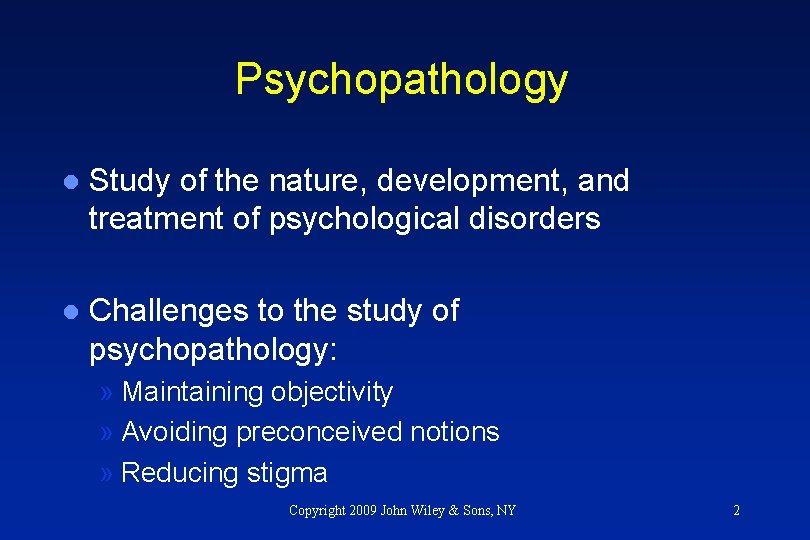
Psychopathology l Study of the nature, development, and treatment of psychological disorders l Challenges to the study of psychopathology: » Maintaining objectivity » Avoiding preconceived notions » Reducing stigma Copyright 2009 John Wiley & Sons, NY 2
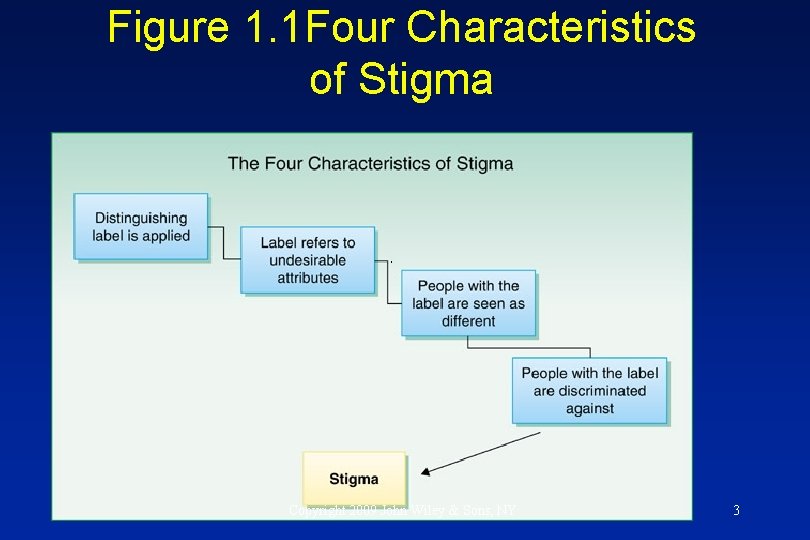
Figure 1. 1 Four Characteristics of Stigma Copyright 2009 John Wiley & Sons, NY 3
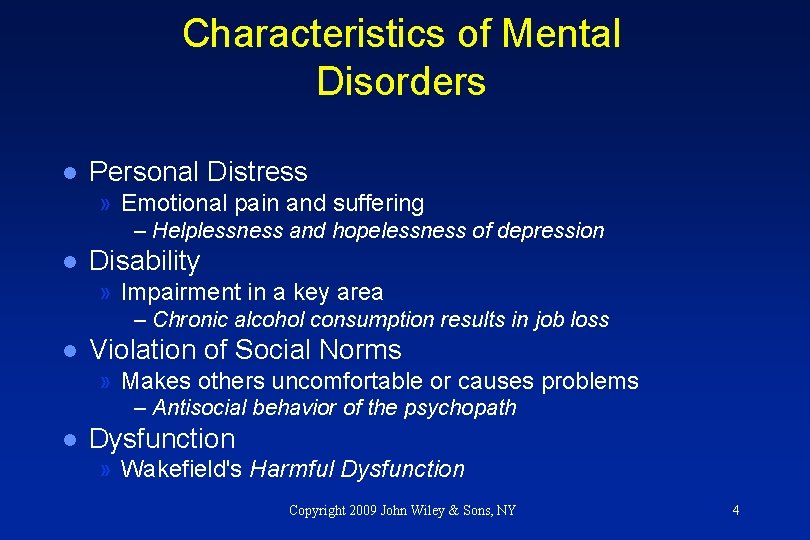
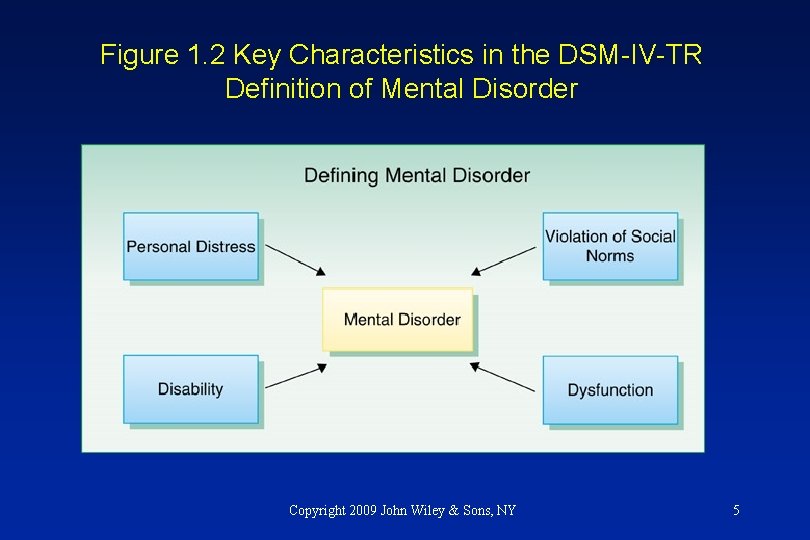
Characteristics of Mental Disorders l Personal Distress » Emotional pain and suffering – Helplessness and hopelessness of depression l Disability » Impairment in a key area – Chronic alcohol consumption results in job loss l Violation of Social Norms » Makes others uncomfortable or causes problems – Antisocial behavior of the psychopath l Dysfunction » Wakefield's Harmful Dysfunction Copyright 2009 John Wiley & Sons, NY 4
Figure 1. 2 Key Characteristics in the DSM-IV-TR Definition of Mental Disorder Copyright 2009 John Wiley & Sons, NY 5
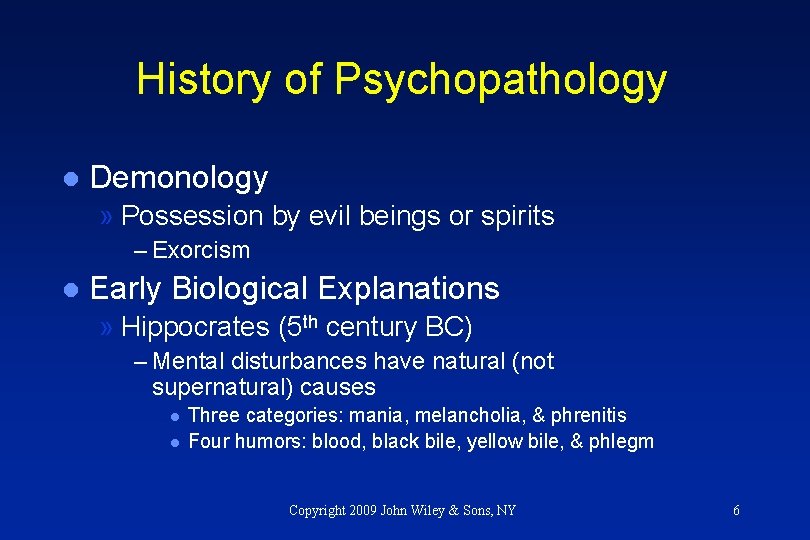
History of Psychopathology l Demonology » Possession by evil beings or spirits – Exorcism l Early Biological Explanations » Hippocrates (5 th century BC) – Mental disturbances have natural (not supernatural) causes l l Three categories: mania, melancholia, & phrenitis Four humors: blood, black bile, yellow bile, & phlegm Copyright 2009 John Wiley & Sons, NY 6
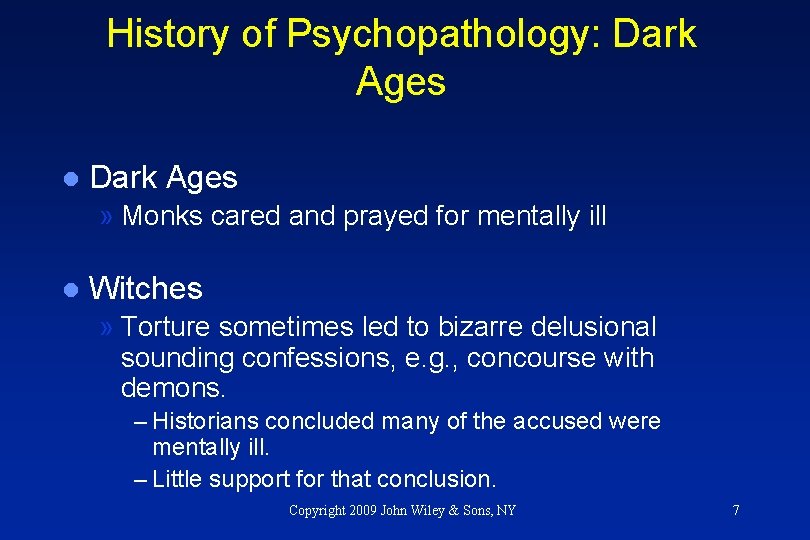
History of Psychopathology: Dark Ages l Dark Ages » Monks cared and prayed for mentally ill l Witches » Torture sometimes led to bizarre delusional sounding confessions, e. g. , concourse with demons. – Historians concluded many of the accused were mentally ill. – Little support for that conclusion. Copyright 2009 John Wiley & Sons, NY 7
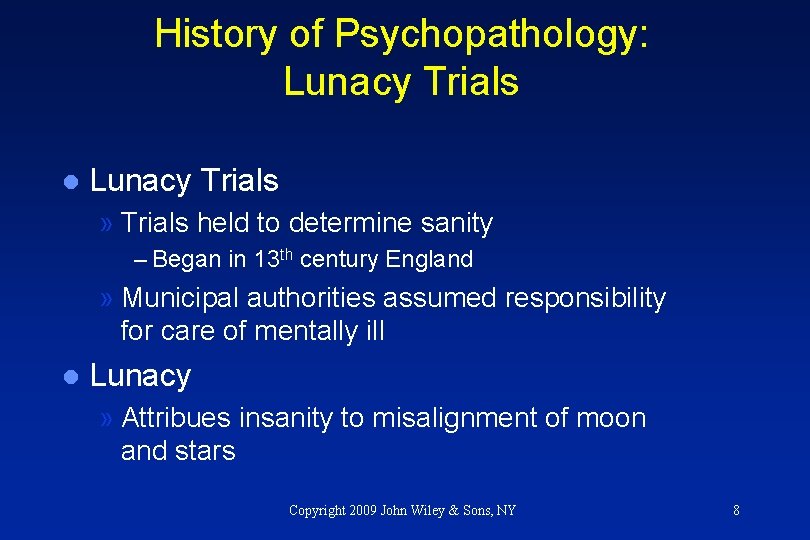
History of Psychopathology: Lunacy Trials l Lunacy Trials » Trials held to determine sanity – Began in 13 th century England » Municipal authorities assumed responsibility for care of mentally ill l Lunacy » Attribues insanity to misalignment of moon and stars Copyright 2009 John Wiley & Sons, NY 8
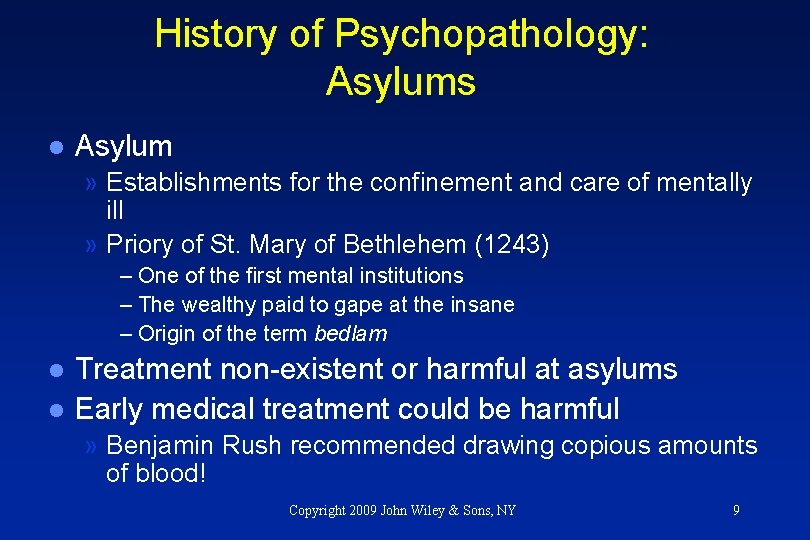
History of Psychopathology: Asylums l Asylum » Establishments for the confinement and care of mentally ill » Priory of St. Mary of Bethlehem (1243) – One of the first mental institutions – The wealthy paid to gape at the insane – Origin of the term bedlam l l Treatment non-existent or harmful at asylums Early medical treatment could be harmful » Benjamin Rush recommended drawing copious amounts of blood! Copyright 2009 John Wiley & Sons, NY 9
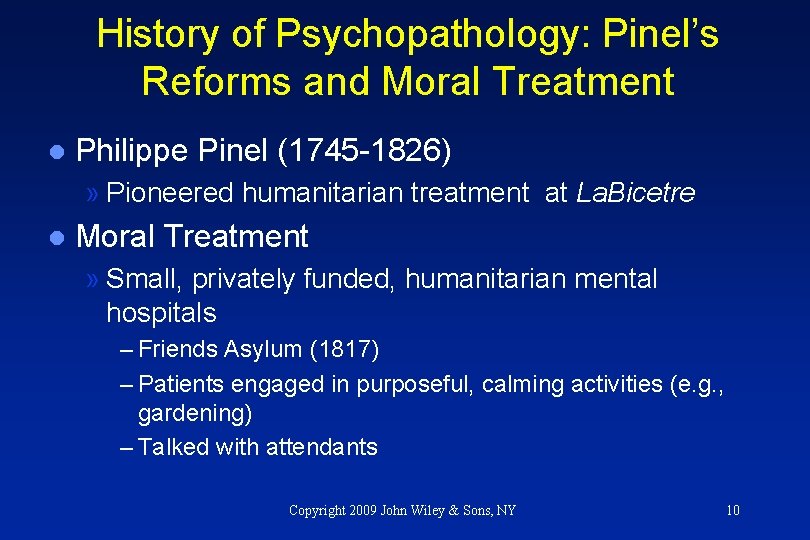
History of Psychopathology: Pinel’s Reforms and Moral Treatment l Philippe Pinel (1745 -1826) » Pioneered humanitarian treatment at La. Bicetre l Moral Treatment » Small, privately funded, humanitarian mental hospitals – Friends Asylum (1817) – Patients engaged in purposeful, calming activities (e. g. , gardening) – Talked with attendants Copyright 2009 John Wiley & Sons, NY 10
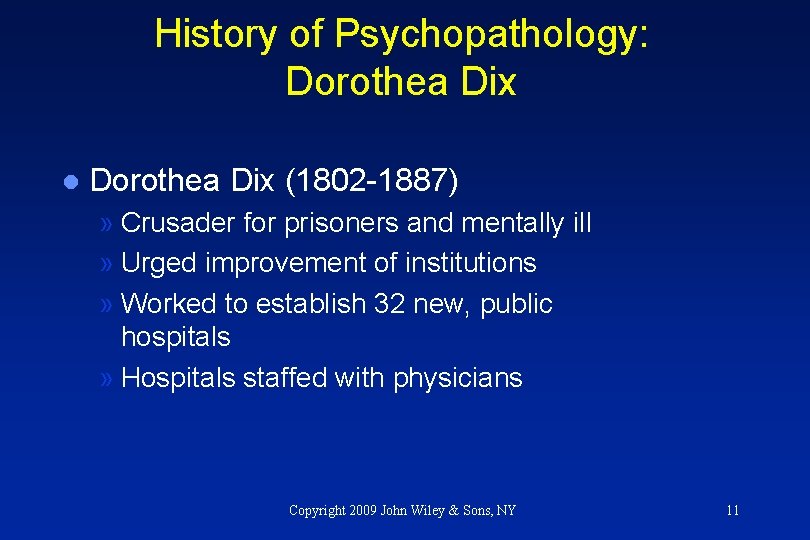
History of Psychopathology: Dorothea Dix l Dorothea Dix (1802 -1887) » Crusader for prisoners and mentally ill » Urged improvement of institutions » Worked to establish 32 new, public hospitals » Hospitals staffed with physicians Copyright 2009 John Wiley & Sons, NY 11
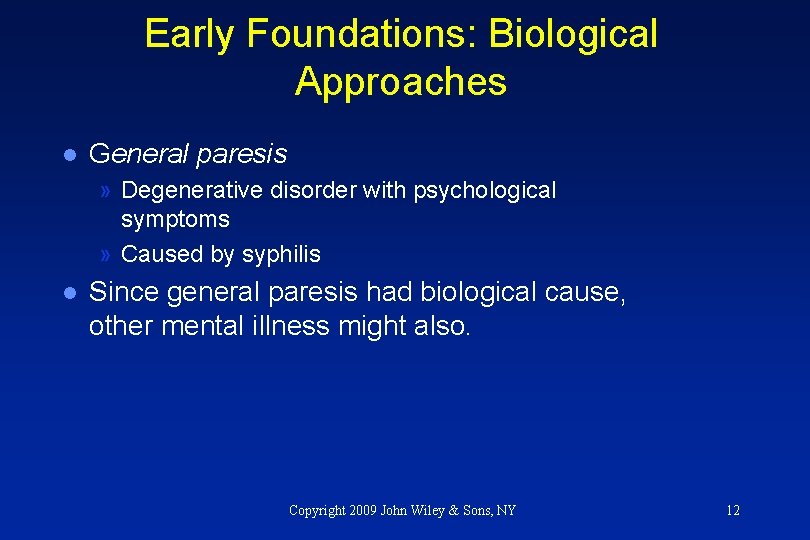
Early Foundations: Biological Approaches l General paresis » Degenerative disorder with psychological symptoms » Caused by syphilis l Since general paresis had biological cause, other mental illness might also. Copyright 2009 John Wiley & Sons, NY 12
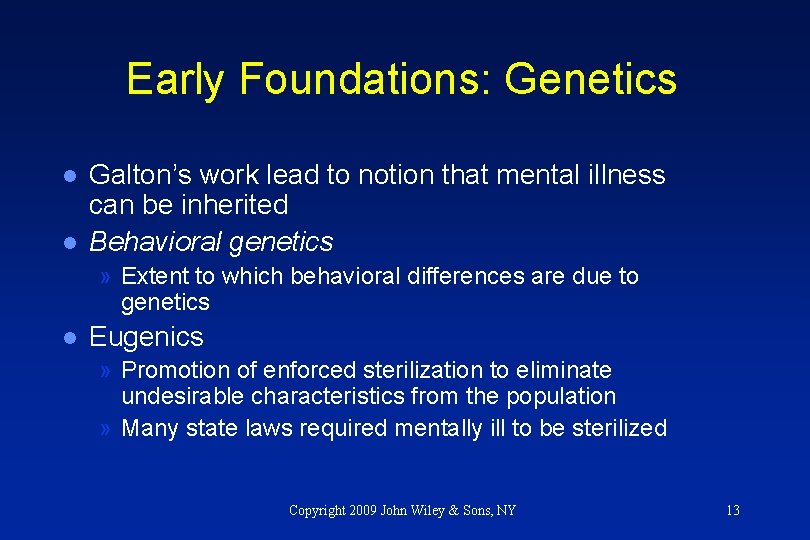
Early Foundations: Genetics l l Galton’s work lead to notion that mental illness can be inherited Behavioral genetics » Extent to which behavioral differences are due to genetics l Eugenics » Promotion of enforced sterilization to eliminate undesirable characteristics from the population » Many state laws required mentally ill to be sterilized Copyright 2009 John Wiley & Sons, NY 13
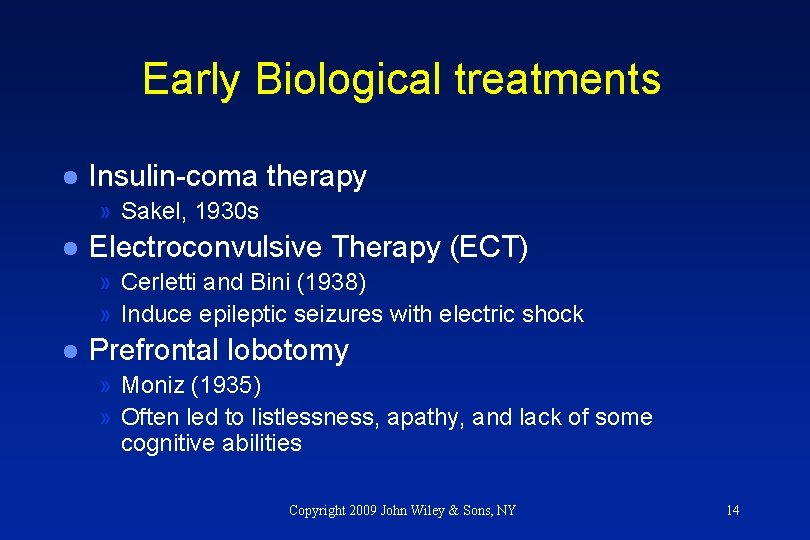
Early Biological treatments l Insulin-coma therapy » Sakel, 1930 s l Electroconvulsive Therapy (ECT) » Cerletti and Bini (1938) » Induce epileptic seizures with electric shock l Prefrontal lobotomy » Moniz (1935) » Often led to listlessness, apathy, and lack of some cognitive abilities Copyright 2009 John Wiley & Sons, NY 14
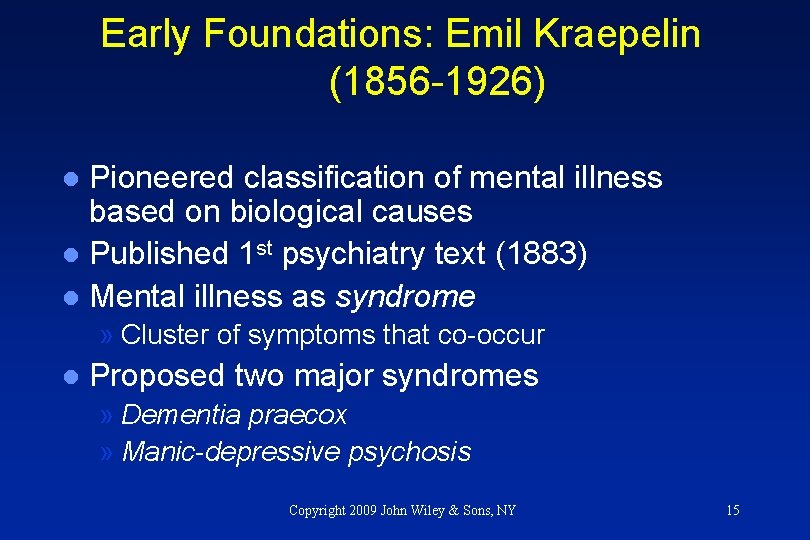
Early Foundations: Emil Kraepelin (1856 -1926) Pioneered classification of mental illness based on biological causes l Published 1 st psychiatry text (1883) l Mental illness as syndrome l » Cluster of symptoms that co-occur l Proposed two major syndromes » Dementia praecox » Manic-depressive psychosis Copyright 2009 John Wiley & Sons, NY 15
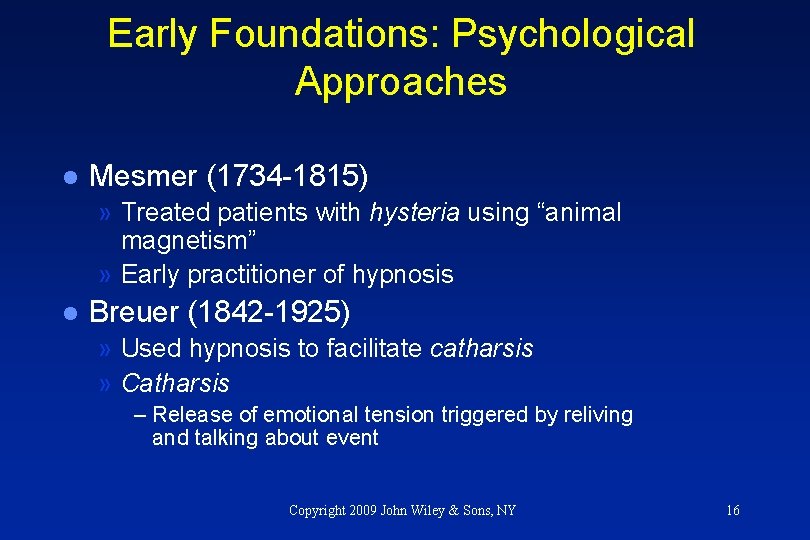
Early Foundations: Psychological Approaches l Mesmer (1734 -1815) » Treated patients with hysteria using “animal magnetism” » Early practitioner of hypnosis l Breuer (1842 -1925) » Used hypnosis to facilitate catharsis » Catharsis – Release of emotional tension triggered by reliving and talking about event Copyright 2009 John Wiley & Sons, NY 16
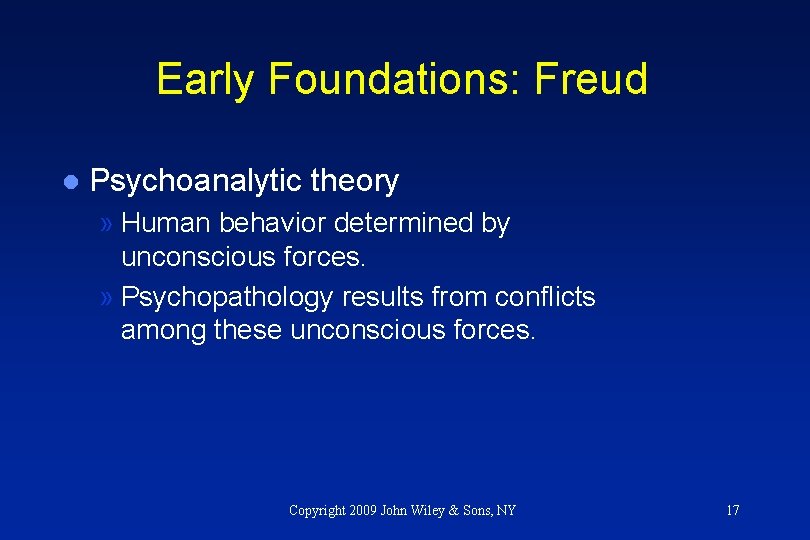
Early Foundations: Freud l Psychoanalytic theory » Human behavior determined by unconscious forces. » Psychopathology results from conflicts among these unconscious forces. Copyright 2009 John Wiley & Sons, NY 17
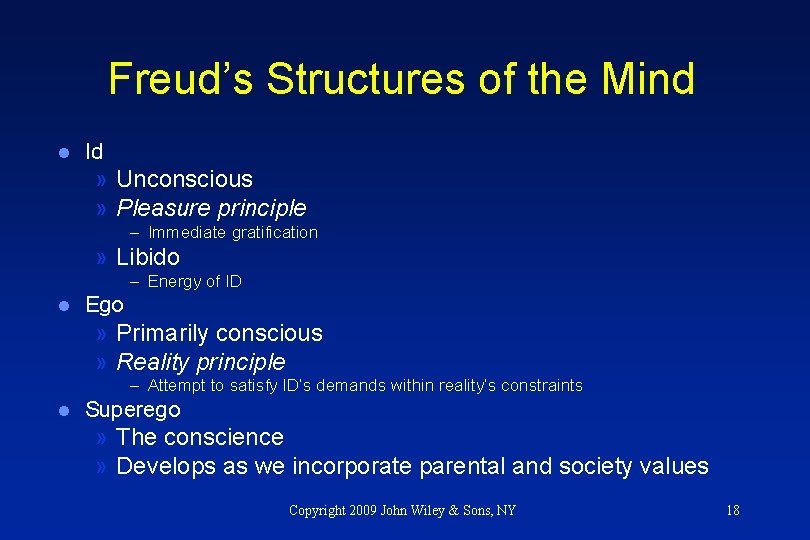
Freud’s Structures of the Mind l Id » Unconscious » Pleasure principle – Immediate gratification » Libido – Energy of ID l Ego » Primarily conscious » Reality principle – Attempt to satisfy ID’s demands within reality’s constraints l Superego » The conscience » Develops as we incorporate parental and society values Copyright 2009 John Wiley & Sons, NY 18
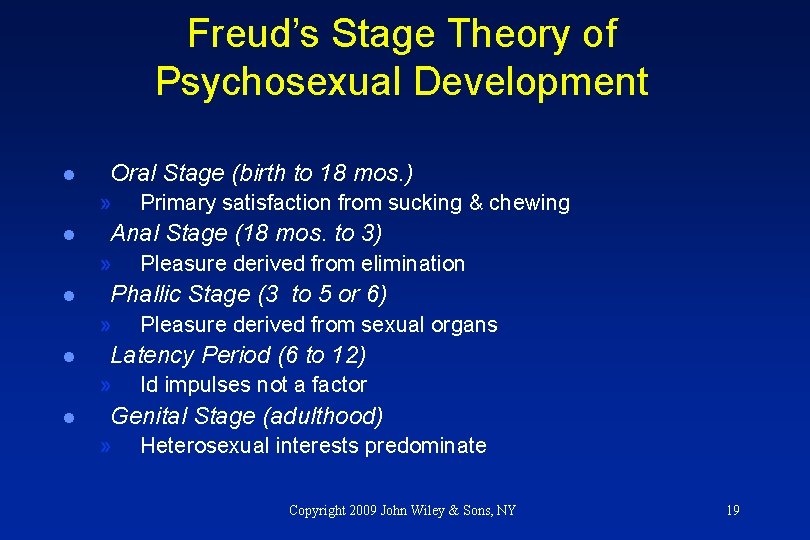
Freud’s Stage Theory of Psychosexual Development l Oral Stage (birth to 18 mos. ) » l Anal Stage (18 mos. to 3) » l Pleasure derived from sexual organs Latency Period (6 to 12) » l Pleasure derived from elimination Phallic Stage (3 to 5 or 6) » l Primary satisfaction from sucking & chewing Id impulses not a factor Genital Stage (adulthood) » Heterosexual interests predominate Copyright 2009 John Wiley & Sons, NY 19
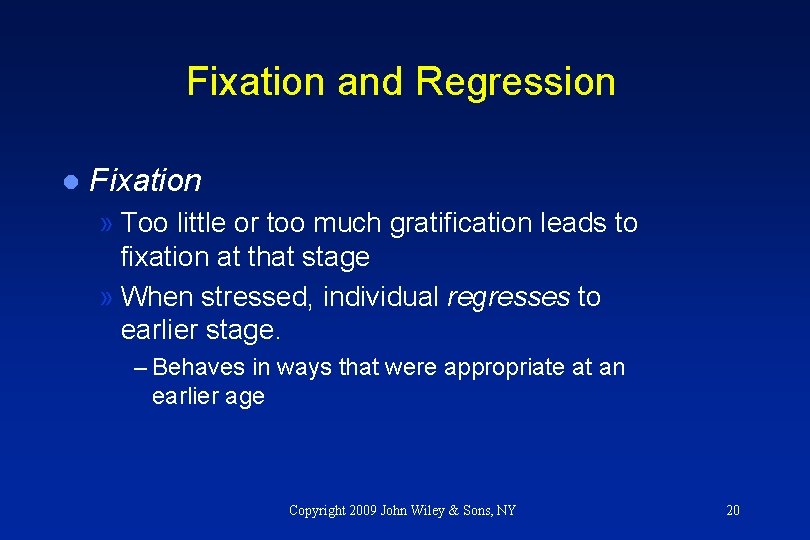
Fixation and Regression l Fixation » Too little or too much gratification leads to fixation at that stage » When stressed, individual regresses to earlier stage. – Behaves in ways that were appropriate at an earlier age Copyright 2009 John Wiley & Sons, NY 20
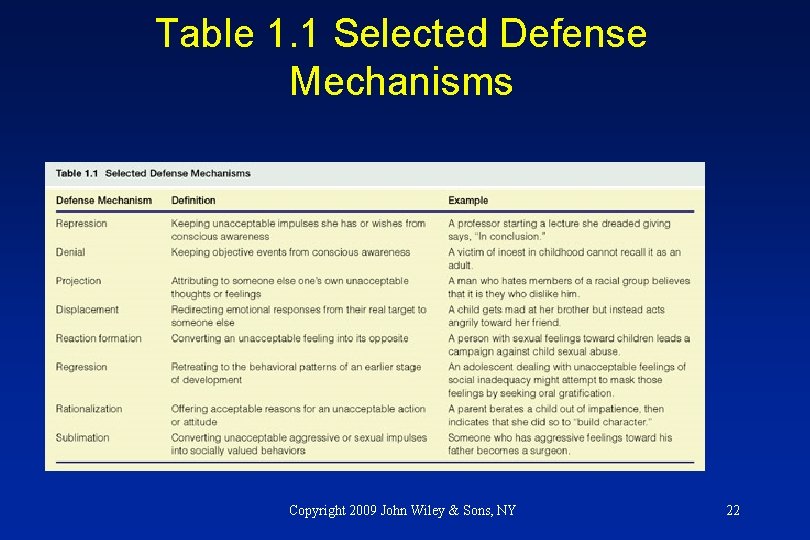
Defense Mechanisms Id, Ego, & Superego continually in conflict l Conflict generates anxiety l Defense mechanisms l » Psychological maneuvers used to manage stress & anxiety l Repression » Intentional, although unconscious, forgetting – Memories, impulses, traumatic events Copyright 2009 John Wiley & Sons, NY 21
Table 1. 1 Selected Defense Mechanisms Copyright 2009 John Wiley & Sons, NY 22
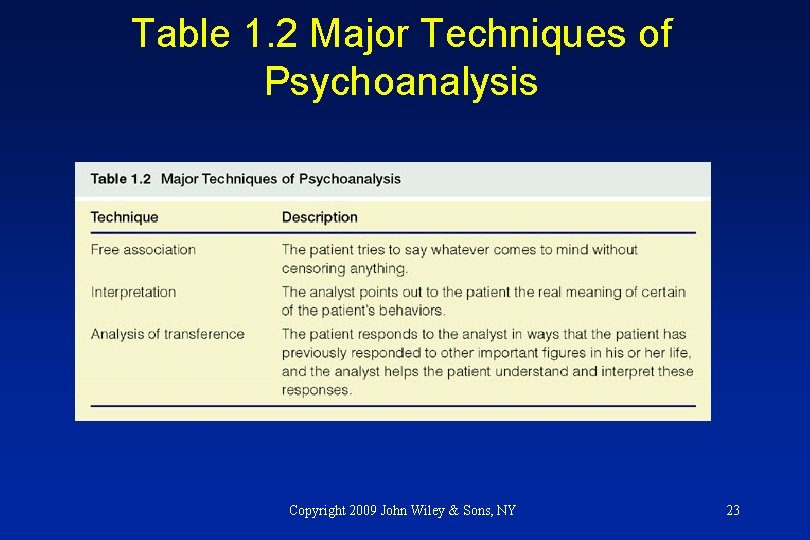
Table 1. 2 Major Techniques of Psychoanalysis Copyright 2009 John Wiley & Sons, NY 23
Neo-Freudians l Jung » Analytical psychology – Incorporates Freudian and humanistic psychology » Collective unconscious l l Archetypes Adler » Individual psychology – Fulfillment derived from working for the social good l Ego Analysis » Emphasized individual’s control of environment Copyright 2009 John Wiley & Sons, NY 24
Rise of Behaviorism John Watson (1878 -1958) l Behaviorism l » Emphasis on learning rather than innate tendencies » Focus on observable behavior Copyright 2009 John Wiley & Sons, NY 25
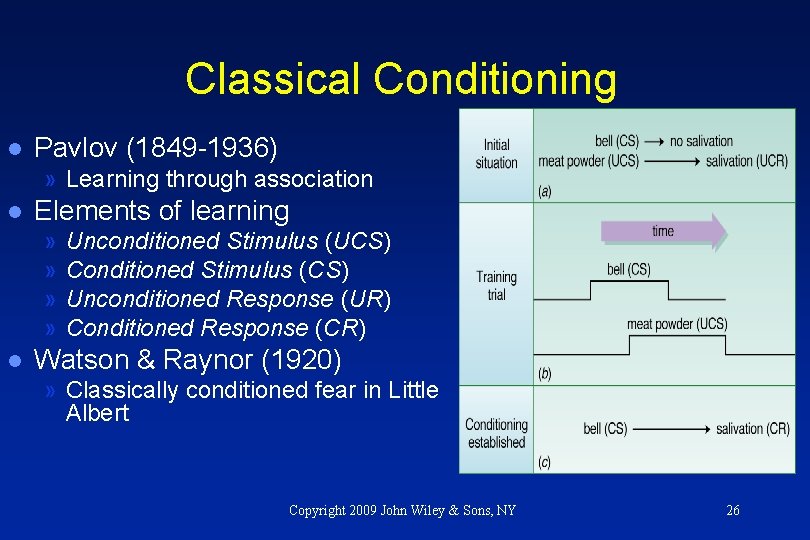
Classical Conditioning l Pavlov (1849 -1936) » Learning through association l Elements of learning » » l Unconditioned Stimulus (UCS) Conditioned Stimulus (CS) Unconditioned Response (UR) Conditioned Response (CR) Watson & Raynor (1920) » Classically conditioned fear in Little Albert Copyright 2009 John Wiley & Sons, NY 26
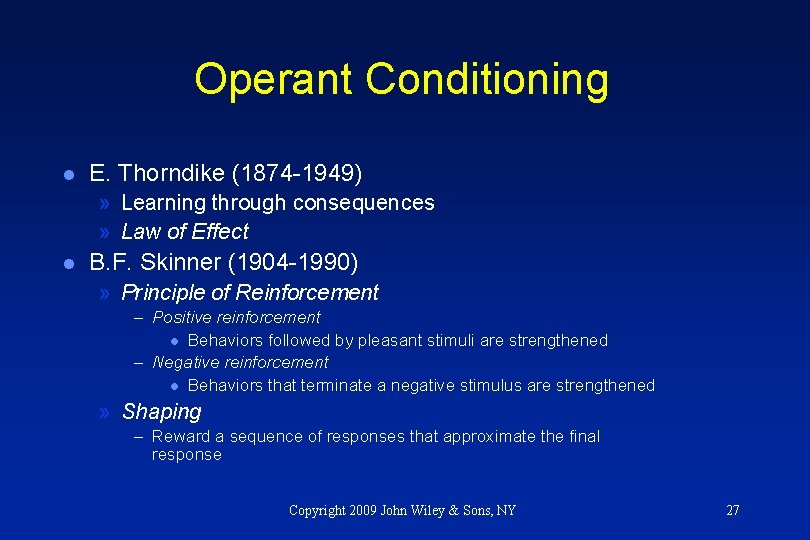
Operant Conditioning l E. Thorndike (1874 -1949) » Learning through consequences » Law of Effect l B. F. Skinner (1904 -1990) » Principle of Reinforcement – Positive reinforcement l Behaviors followed by pleasant stimuli are strengthened – Negative reinforcement l Behaviors that terminate a negative stimulus are strengthened » Shaping – Reward a sequence of responses that approximate the final response Copyright 2009 John Wiley & Sons, NY 27
Modeling l Learning by imitating others’ behavior » Can occur without reinforcement l Bandura & Menlove (1968) » Modeling reduced children’s fear of dogs l Behavior Therapy » Systematic Desensitization » Aversive conditioning Copyright 2009 John Wiley & Sons, NY 28
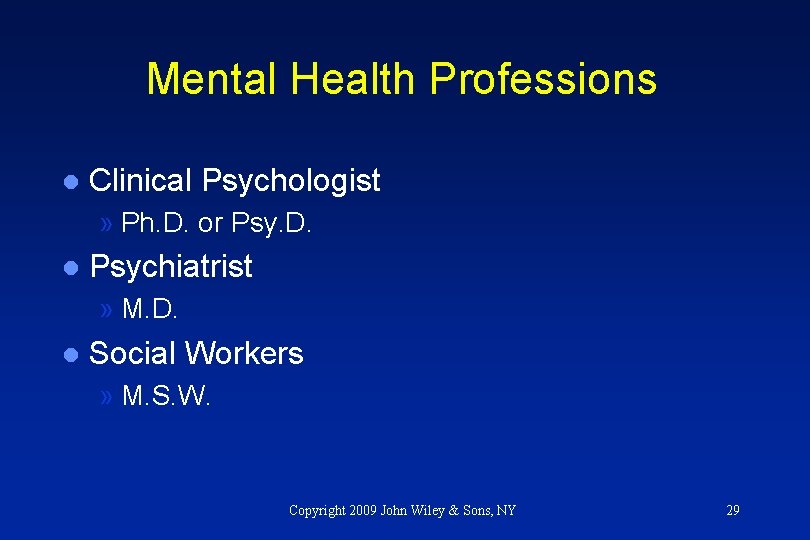
Mental Health Professions l Clinical Psychologist » Ph. D. or Psy. D. l Psychiatrist » M. D. l Social Workers » M. S. W. Copyright 2009 John Wiley & Sons, NY 29
COPYRIGHT Copyright 2009 by John Wiley & Sons, New York, NY. All rights reserved. No part of the material protected by this copyright may be reproduced or utilized in any form or by any means, electronic or mechanical, including photocopying, recording or by any information storage and retrieval system, without written permission of the copyright owner. Copyright 2009 John Wiley & Sons, NY 30