
Power Point for THE WORLD OF FASHION MERCHANDISING
- Slides: 22
Power. Point for THE WORLD OF FASHION MERCHANDISING By Vicki Shaffer-White Publisher The Goodheart-Willcox Co. , Inc. Tinley Park, Illinois
Part 1: Basic Fashion and Business Concepts Chapter 2 Fashion Movement
Objectives: § Explain the role of fashion leaders and § § § followers in fashion movement State theories of fashion movement Describe the stages and time spans of fashion cycles Analyze the main principles of fashion movement Compare factors that speed up or slow down fashion movement Relate the importance of fashion change
Understanding Fashion Movement § Fashion movement is the ongoing change in what is considered fashionable from acceptance to obsolescence (the rejection of a fashion in favor of a new one) § A fashion trend is the direction fashion is moving OBSOLETE
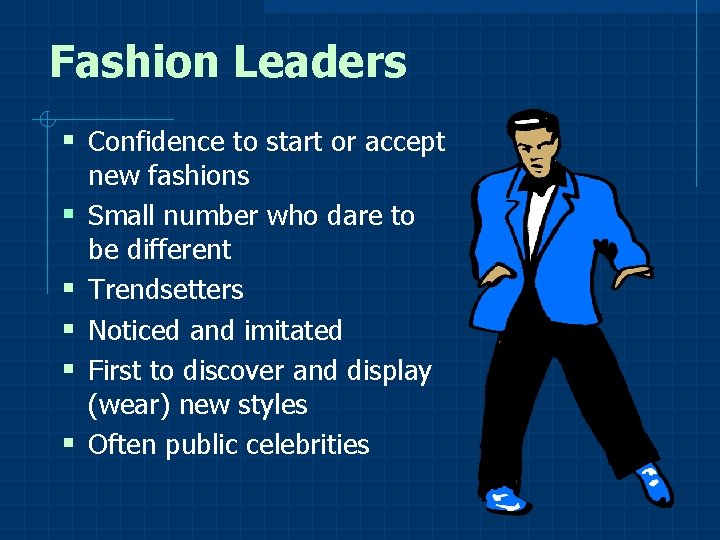
Fashion Leaders § Confidence to start or accept § § § new fashions Small number who dare to be different Trendsetters Noticed and imitated First to discover and display (wear) new styles Often public celebrities
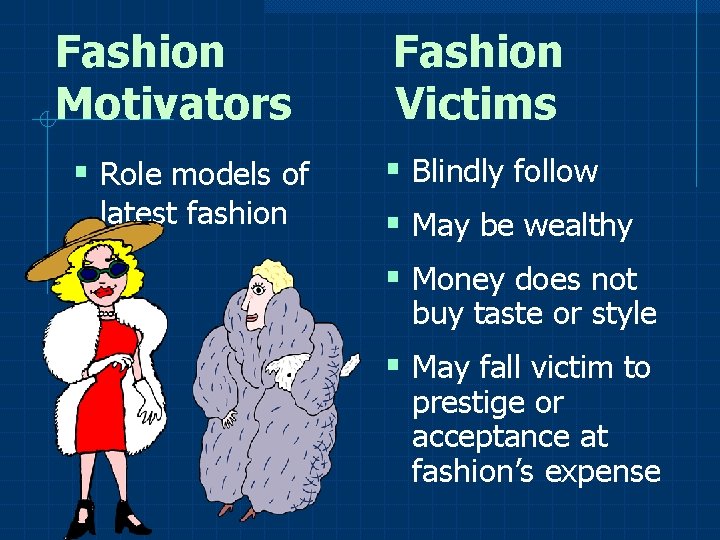
Fashion Motivators § Role models of latest fashion Fashion Victims § Blindly follow § May be wealthy § Money does not buy taste or style § May fall victim to prestige or acceptance at fashion’s expense
Fashion Followers § Need time for fashion to be § § firmly accepted by majority before they will adopt it Fashions must become well -established May lack time, money, interest, and devotion to fashion Tend to admire and imitate Insecure about their own tastes or sense of fashion
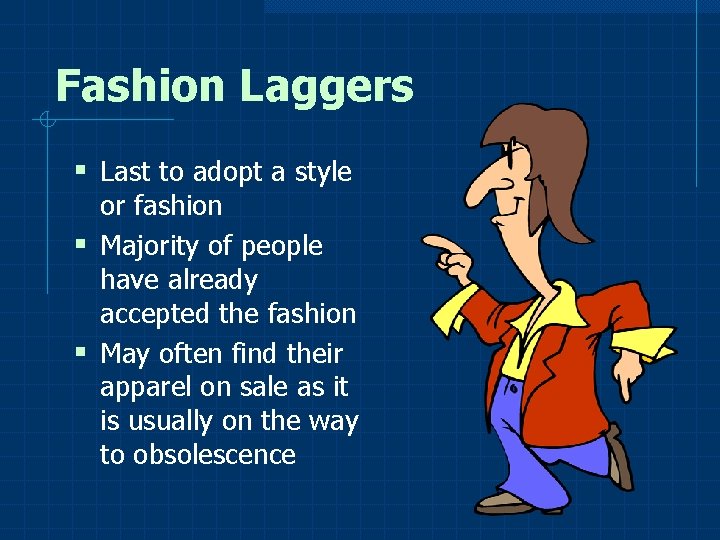
Fashion Laggers § Last to adopt a style or fashion § Majority of people have already accepted the fashion § May often find their apparel on sale as it is usually on the way to obsolescence
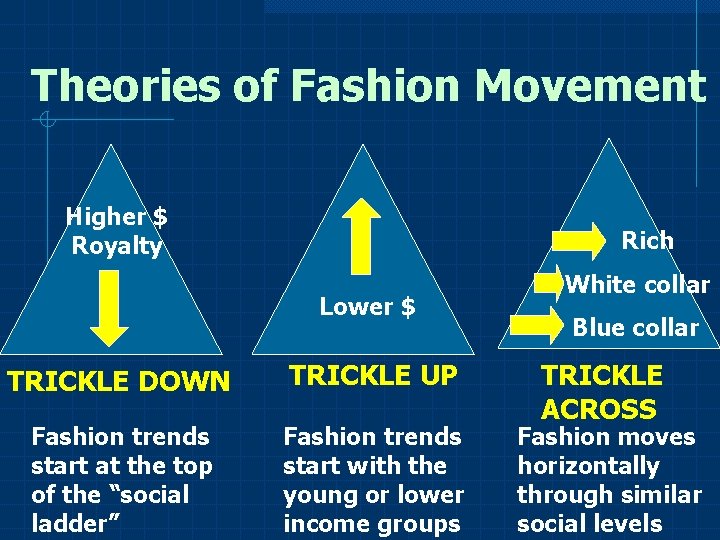
Theories of Fashion Movement Higher $ Royalty Rich Lower $ TRICKLE DOWN TRICKLE UP Fashion trends start at the top of the “social ladder” Fashion trends start with the young or lower income groups White collar Blue collar TRICKLE ACROSS Fashion moves horizontally through similar social levels
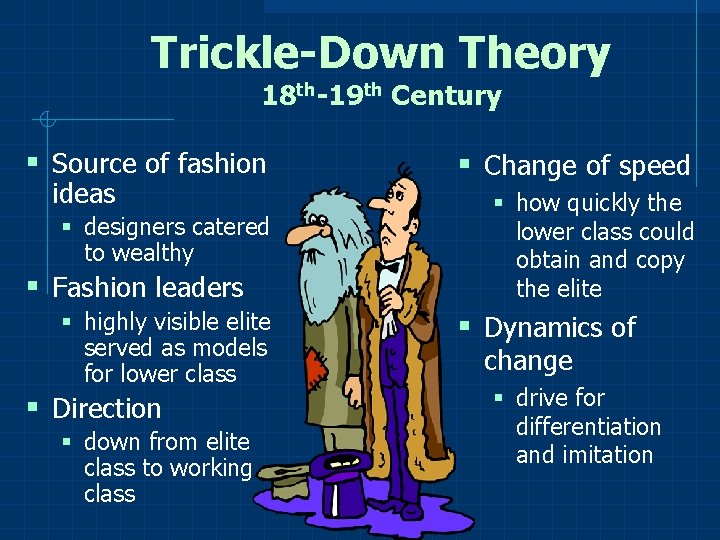
Trickle-Down Theory 18 th-19 th Century § Source of fashion § Change of speed § designers catered to wealthy § how quickly the lower class could obtain and copy the elite ideas § Fashion leaders § highly visible elite served as models for lower class § Direction § down from elite class to working class § Dynamics of change § drive for differentiation and imitation
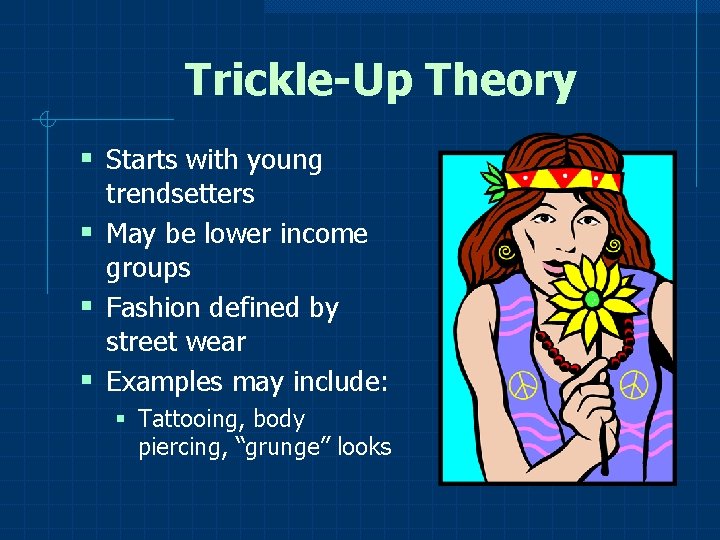
Trickle-Up Theory § Starts with young trendsetters § May be lower income groups § Fashion defined by street wear § Examples may include: § Tattooing, body piercing, “grunge” looks
Mass Market Trickle-Across Essentials § Mass production § Newest looks available quickly § Fast-paced communication and mass media § Style information available to all at same time § Each social group has own fashion leaders
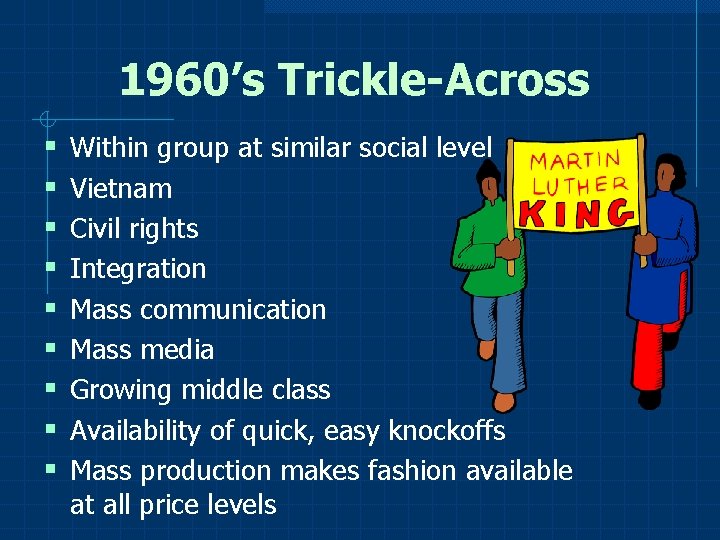
1960’s Trickle-Across § § § § § Within group at similar social level Vietnam Civil rights Integration Mass communication Mass media Growing middle class Availability of quick, easy knockoffs Mass production makes fashion available at all price levels
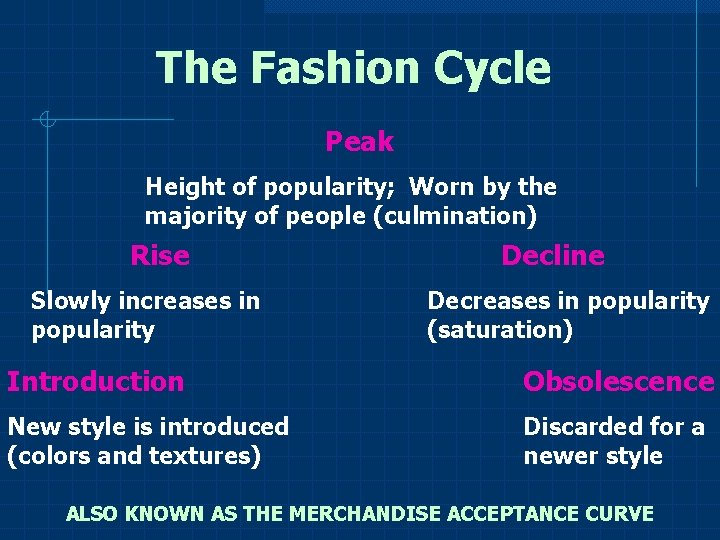
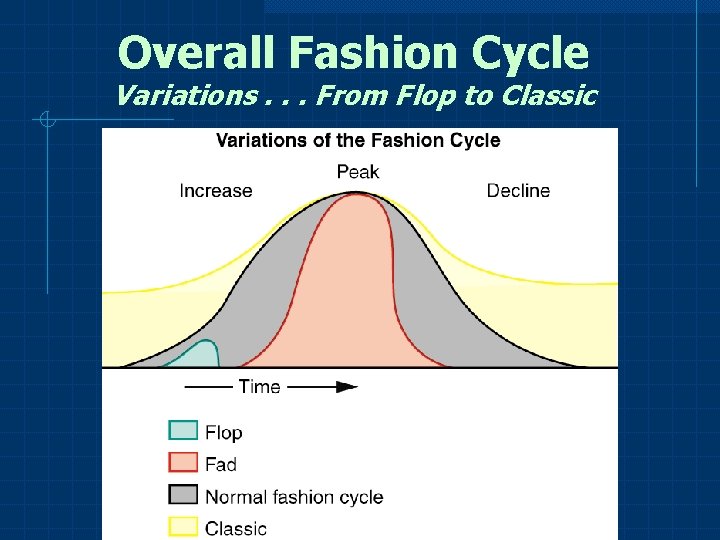
The Fashion Cycle Peak Height of popularity; Worn by the majority of people (culmination) Rise Slowly increases in popularity Decline Decreases in popularity (saturation) Introduction Obsolescence New style is introduced (colors and textures) Discarded for a newer style ALSO KNOWN AS THE MERCHANDISE ACCEPTANCE CURVE
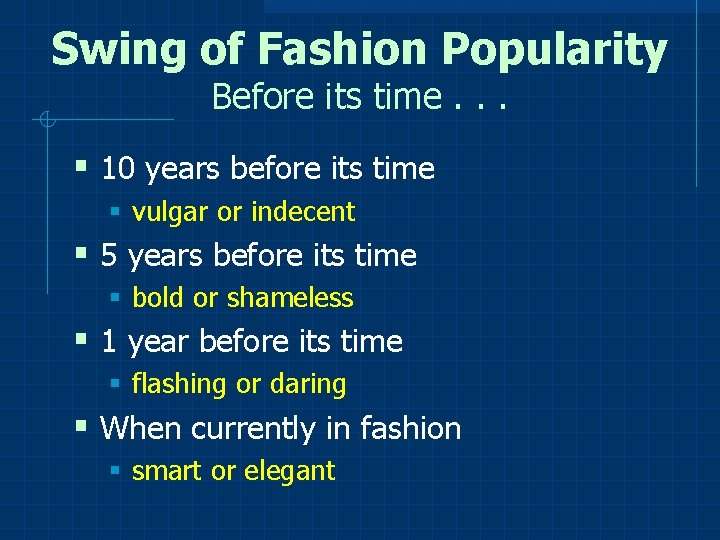
Swing of Fashion Popularity Before its time. . . § 10 years before its time § vulgar or indecent § 5 years before its time § bold or shameless § 1 year before its time § flashing or daring § When currently in fashion § smart or elegant
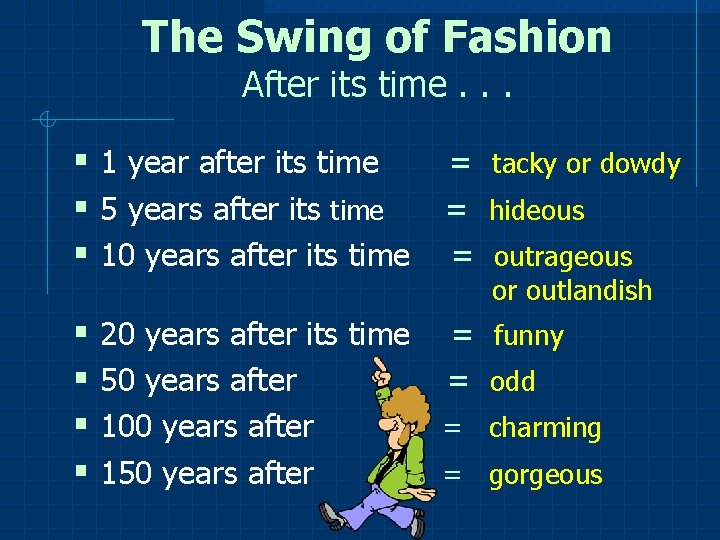
The Swing of Fashion After its time. . . § 1 year after its time = § 5 years after its time = § 10 years after its time = § 20 years after its time § 50 years after § 100 years after § 150 years after tacky or dowdy hideous outrageous or outlandish = funny = odd = charming = gorgeous
Overall Fashion Cycle Variations. . . From Flop to Classic
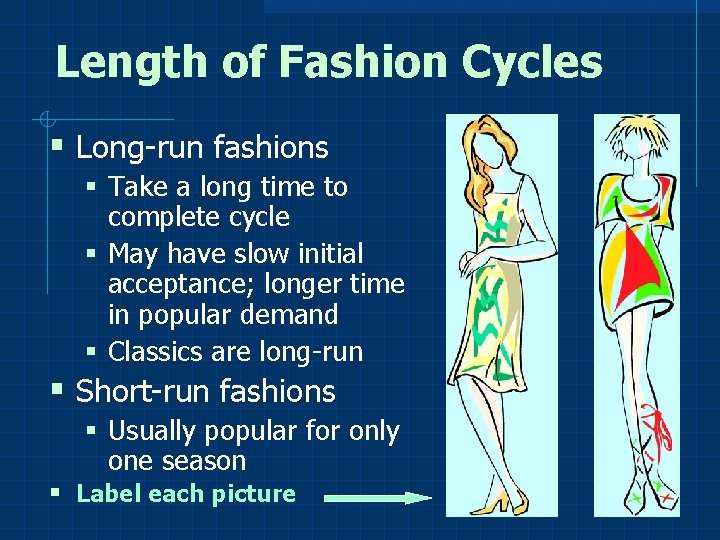
Length of Fashion Cycles § Long-run fashions § Take a long time to complete cycle § May have slow initial acceptance; longer time in popular demand § Classics are long-run § Short-run fashions § Usually popular for only one season § Label each picture
Principles of Fashion Movement Fashion is. . . § Accepted or rejected by § § consumers Not determined by price Not determined by sales promotion Evolutionary, not revolutionary Or can be extreme, causing reversal or abrupt change
Factors that Speed Up Fashion Cycle Movement § Mass media, modern communications § Good economic conditions § Increased competition § Technological advances § Social and physical mobility § More leisure time § Higher levels of education § Changing roles of women § Seasonal changes
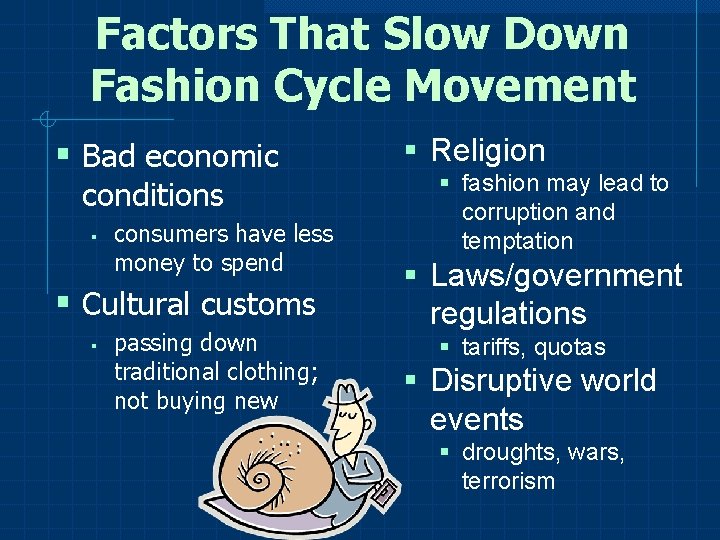
Factors That Slow Down Fashion Cycle Movement § Bad economic conditions § consumers have less money to spend § Cultural customs § passing down traditional clothing; not buying new § Religion § fashion may lead to corruption and temptation § Laws/government regulations § tariffs, quotas § Disruptive world events § droughts, wars, terrorism
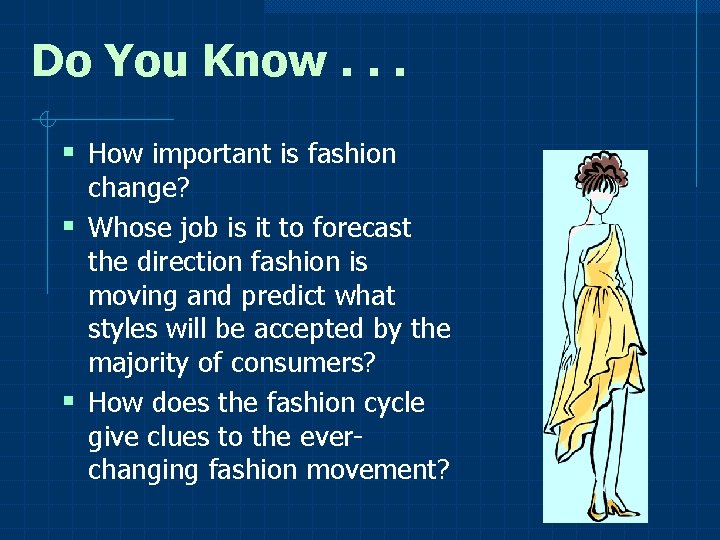
Do You Know. . . § How important is fashion change? § Whose job is it to forecast the direction fashion is moving and predict what styles will be accepted by the majority of consumers? § How does the fashion cycle give clues to the everchanging fashion movement?