
Power of Question Fostering Critical Thinking and Student
- Slides: 15
Power of Question Fostering Critical Thinking and Student Engagement
Questions Lead us to God • By seeking knowledge through an engaged criticalthinking-mind we will discover God’s presence. In her book Education (2002) Ellen G. White writes: “Whatever line of investigation we pursue, with a sincere purpose to arrive at truth, we are brought in touch with the unseen, mighty Intelligence that is working in and through all. ” (14)
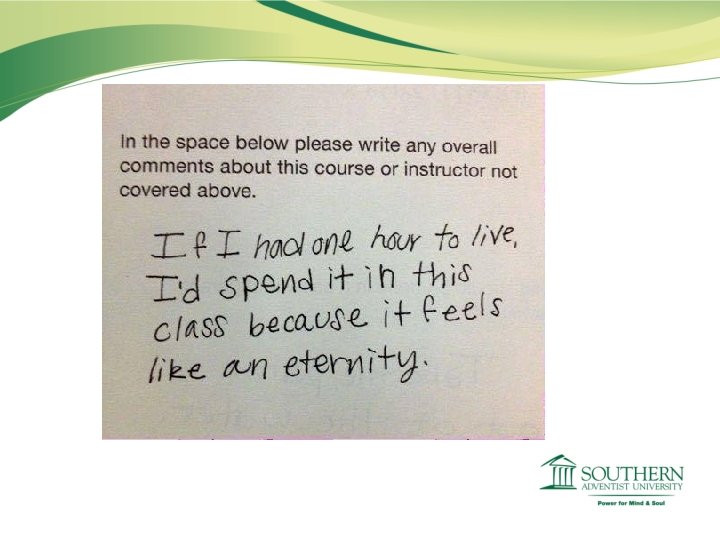
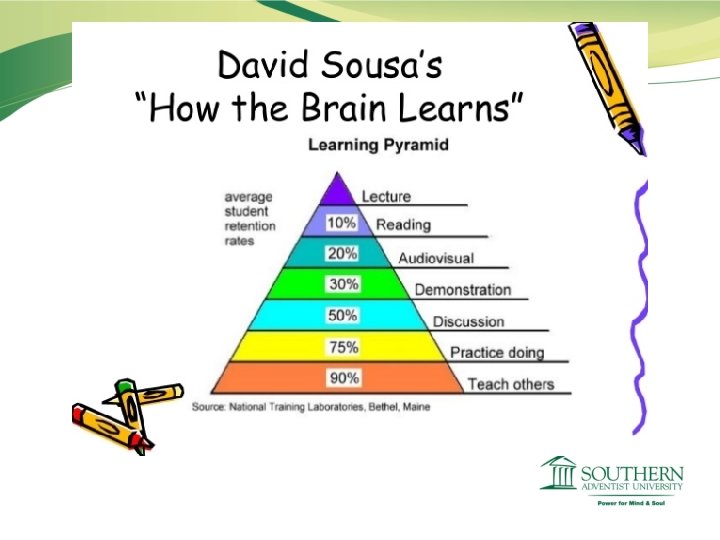
The Problem with Lecture • Lectures are the LEAST effective way to transfer information to a brain’s long-term memory with only 5 to 10 percent of information retained after 24 hours, wrote Wilson. • Wilson quotes author David Sousa as saying “Lecture continues to be the most prevalent model in secondary and higher education but produces the lowest degree of retention. ” Brainbased Education-An Oveview- Leslie Owen Wilson
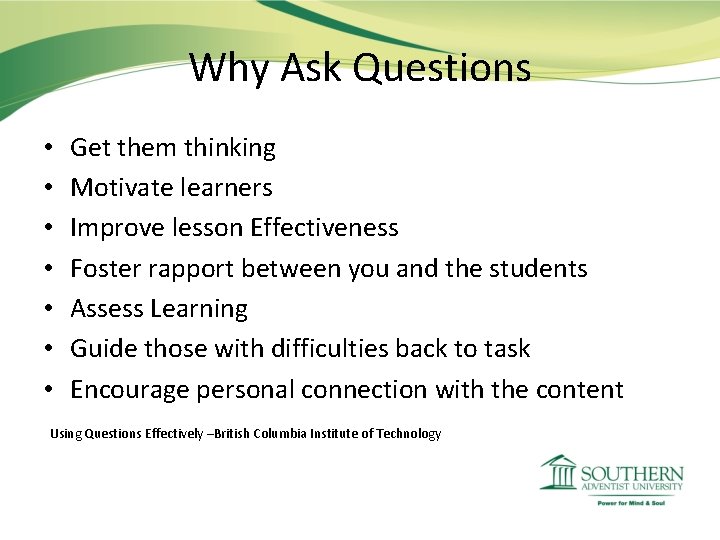
Why Ask Questions • • Get them thinking Motivate learners Improve lesson Effectiveness Foster rapport between you and the students Assess Learning Guide those with difficulties back to task Encourage personal connection with the content Using Questions Effectively –British Columbia Institute of Technology
• “The most important ability man has yet developed is the art and science of asking questions- is not taught in schools!” Postman and Weingartner, Teaching as a Subversive Activity (1969)
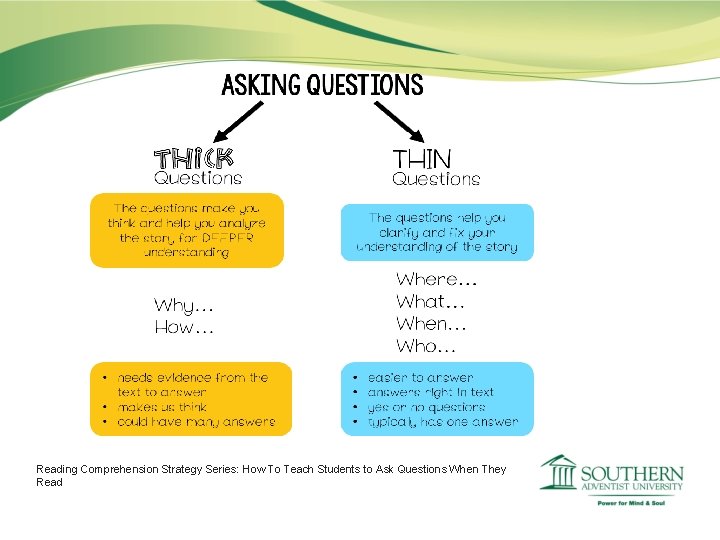
Reading Comprehension Strategy Series: How To Teach Students to Ask Questions When They Read
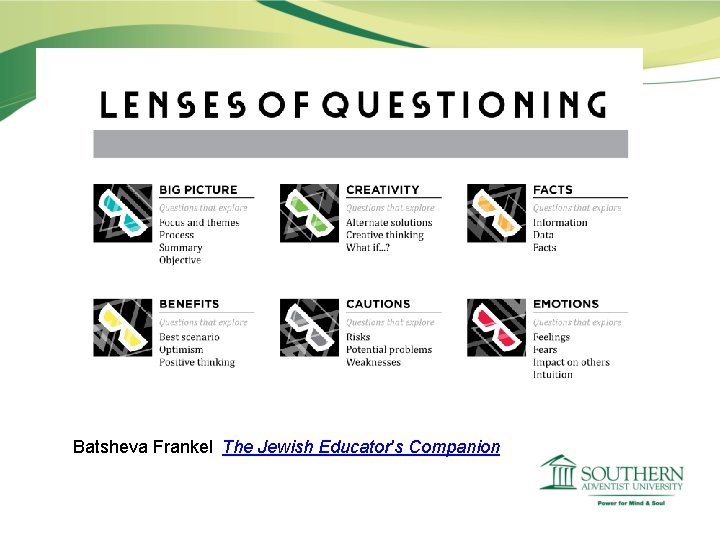
va Batsheva Frankel The Jewish Educator's Companion
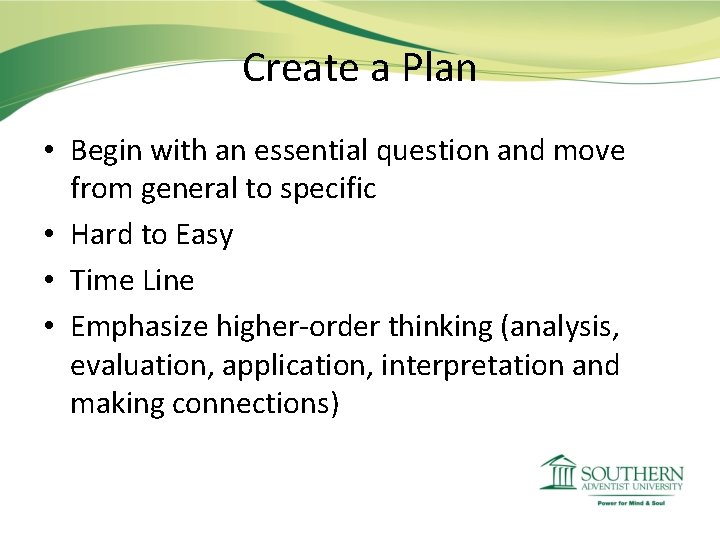
Create a Plan • Begin with an essential question and move from general to specific • Hard to Easy • Time Line • Emphasize higher-order thinking (analysis, evaluation, application, interpretation and making connections)
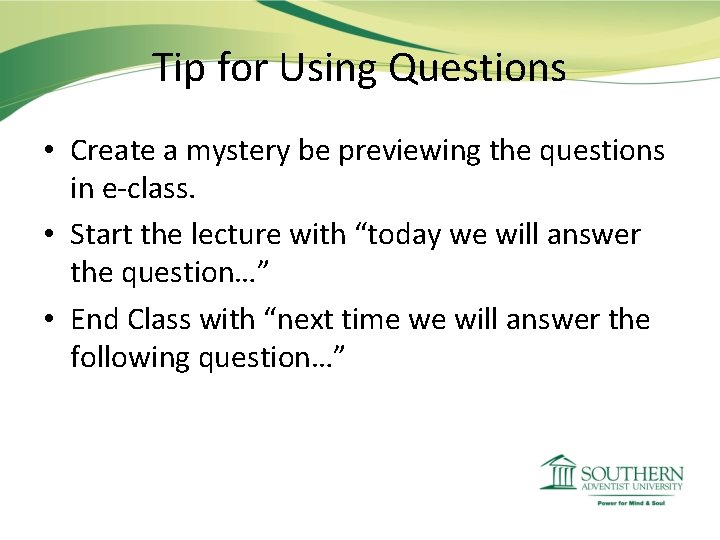
Tip for Using Questions • Create a mystery be previewing the questions in e-class. • Start the lecture with “today we will answer the question…” • End Class with “next time we will answer the following question…”
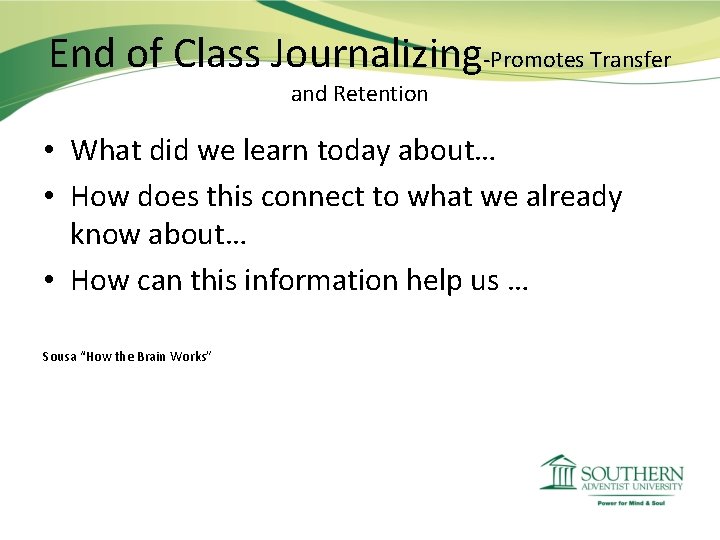
End of Class Journalizing-Promotes Transfer and Retention • What did we learn today about… • How does this connect to what we already know about… • How can this information help us … Sousa “How the Brain Works”
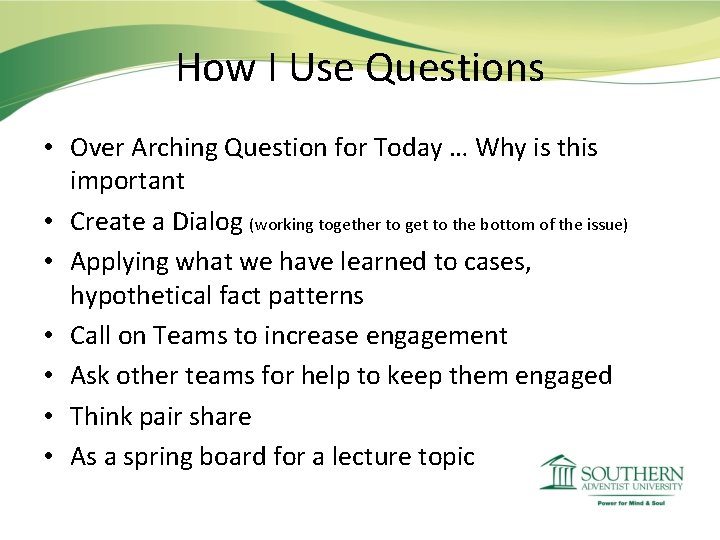
How I Use Questions • Over Arching Question for Today … Why is this important • Create a Dialog (working together to get to the bottom of the issue) • Applying what we have learned to cases, hypothetical fact patterns • Call on Teams to increase engagement • Ask other teams for help to keep them engaged • Think pair share • As a spring board for a lecture topic
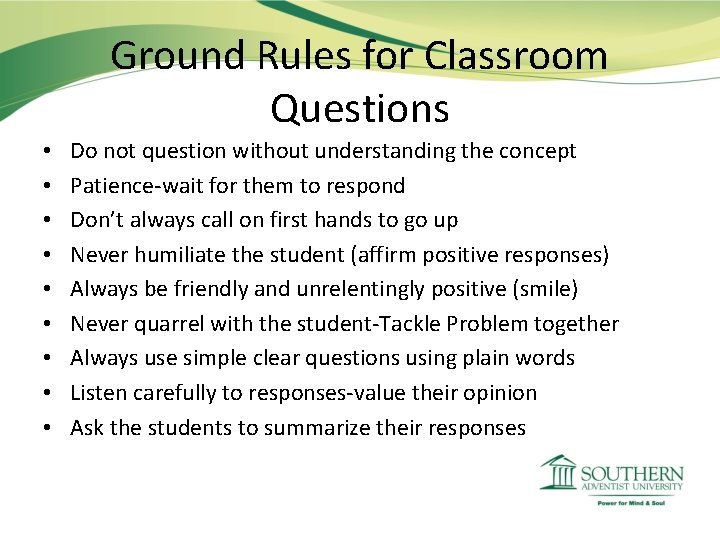
Ground Rules for Classroom Questions • • • Do not question without understanding the concept Patience-wait for them to respond Don’t always call on first hands to go up Never humiliate the student (affirm positive responses) Always be friendly and unrelentingly positive (smile) Never quarrel with the student-Tackle Problem together Always use simple clear questions using plain words Listen carefully to responses-value their opinion Ask the students to summarize their responses
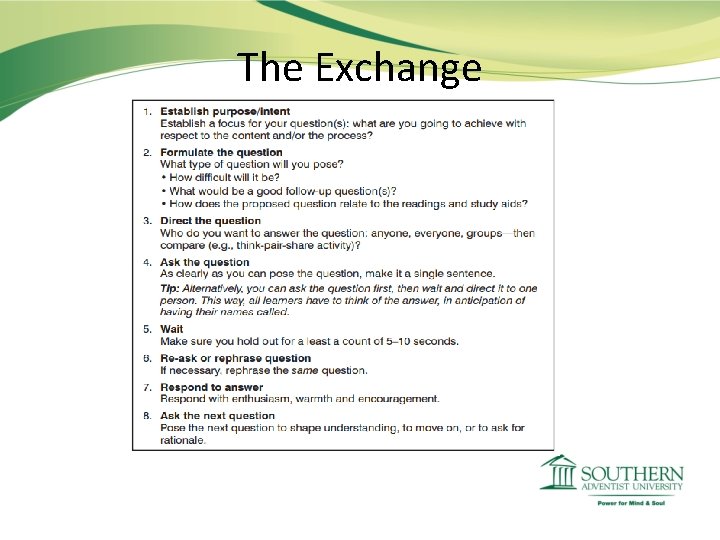
The Exchange