
Power of Big Business in the Progressive Era
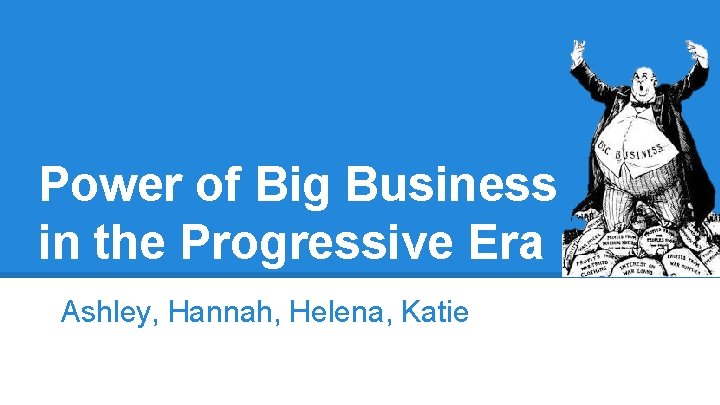
Power of Big Business in the Progressive Era Ashley, Hannah, Helena, Katie
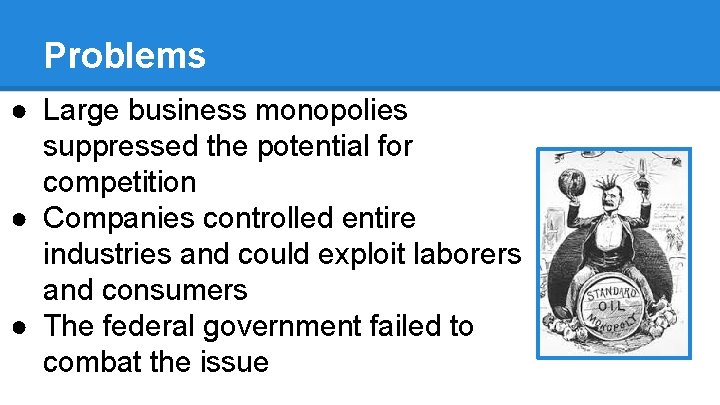
Problems ● Large business monopolies suppressed the potential for competition ● Companies controlled entire industries and could exploit laborers and consumers ● The federal government failed to combat the issue
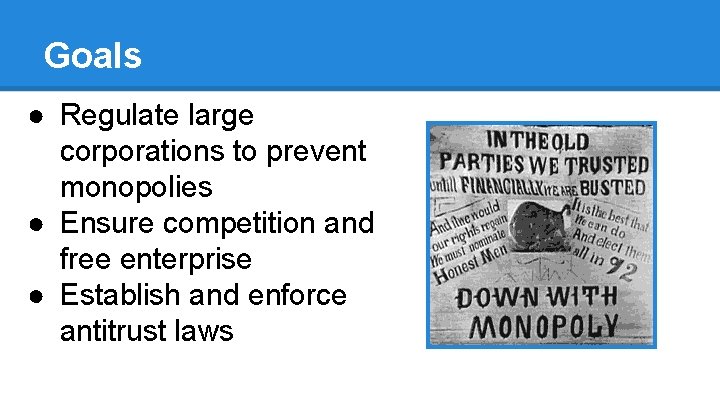
Goals ● Regulate large corporations to prevent monopolies ● Ensure competition and free enterprise ● Establish and enforce antitrust laws
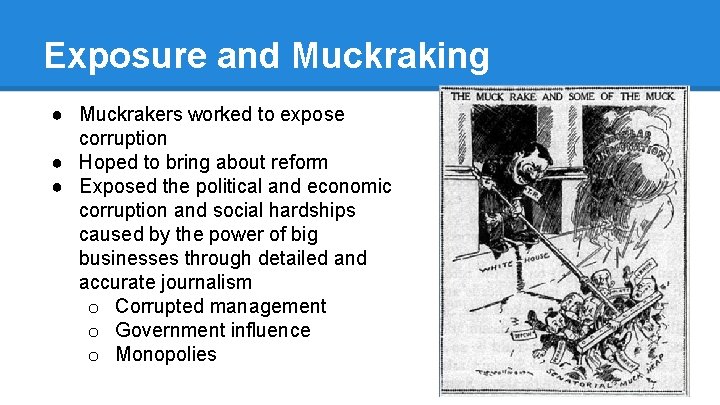
Exposure and Muckraking ● Muckrakers worked to expose corruption ● Hoped to bring about reform ● Exposed the political and economic corruption and social hardships caused by the power of big businesses through detailed and accurate journalism o Corrupted management o Government influence o Monopolies
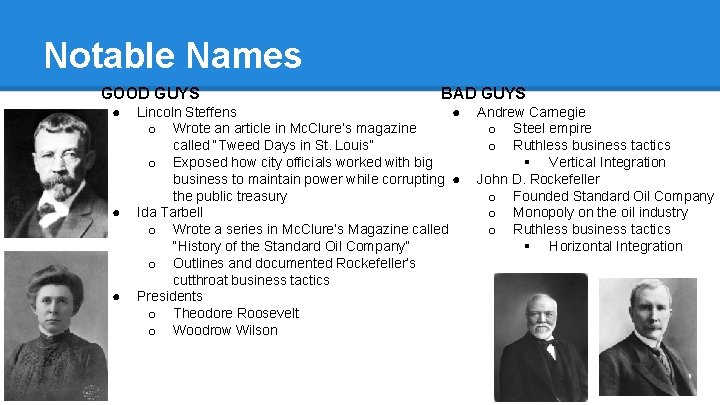
Notable Names GOOD GUYS ● ● ● BAD GUYS Lincoln Steffens ● o Wrote an article in Mc. Clure’s magazine called “Tweed Days in St. Louis” o Exposed how city officials worked with big business to maintain power while corrupting ● the public treasury Ida Tarbell o Wrote a series in Mc. Clure’s Magazine called “History of the Standard Oil Company” o Outlines and documented Rockefeller’s cutthroat business tactics Presidents o Theodore Roosevelt o Woodrow Wilson Andrew Carnegie o Steel empire o Ruthless business tactics § Vertical Integration John D. Rockefeller o Founded Standard Oil Company o Monopoly on the oil industry o Ruthless business tactics § Horizontal Integration
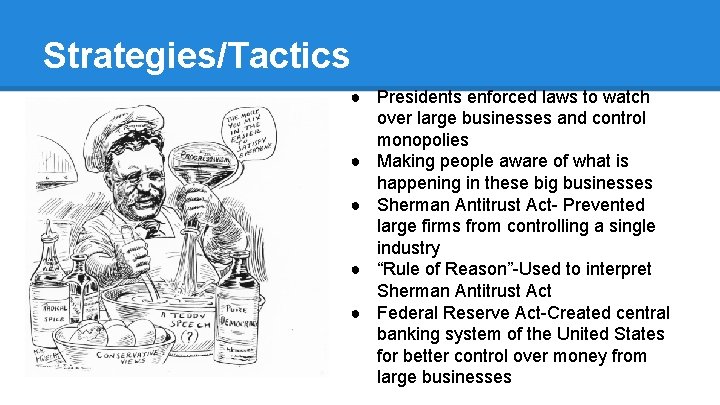
Strategies/Tactics ● Presidents enforced laws to watch over large businesses and control monopolies ● Making people aware of what is happening in these big businesses ● Sherman Antitrust Act- Prevented large firms from controlling a single industry ● “Rule of Reason”-Used to interpret Sherman Antitrust Act ● Federal Reserve Act-Created central banking system of the United States for better control over money from large businesses
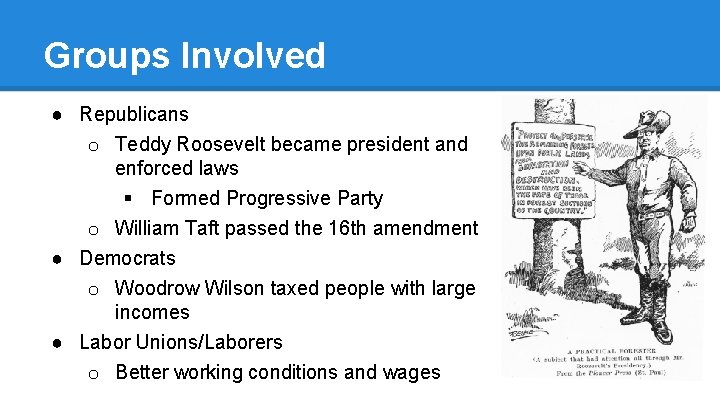
Groups Involved ● Republicans o Teddy Roosevelt became president and enforced laws § Formed Progressive Party o William Taft passed the 16 th amendment ● Democrats o Woodrow Wilson taxed people with large incomes ● Labor Unions/Laborers o Better working conditions and wages
Obstacles Faced ● Unfairness in markets ● Entrepreneurs had more say in government ● Difficulty passing legislation ● Discrimination & poverty were obstacles against individual freedom & liberty
Successes/Failures ● Congress enacted law regulating railroads (Interstate Commerce Act 1887) ● Election of sympathetic presidents (Roosevelt & Wilson) who enforced these laws ● Antitrust Law prohibits monopoly & unfair business practice ● Attempted to prevent large firms from controlling a single industry (Sherman Antitrust Act 1890)
- Slides: 9