
Power MOSFETs Two Types Depletion Type Channel region
- Slides: 13
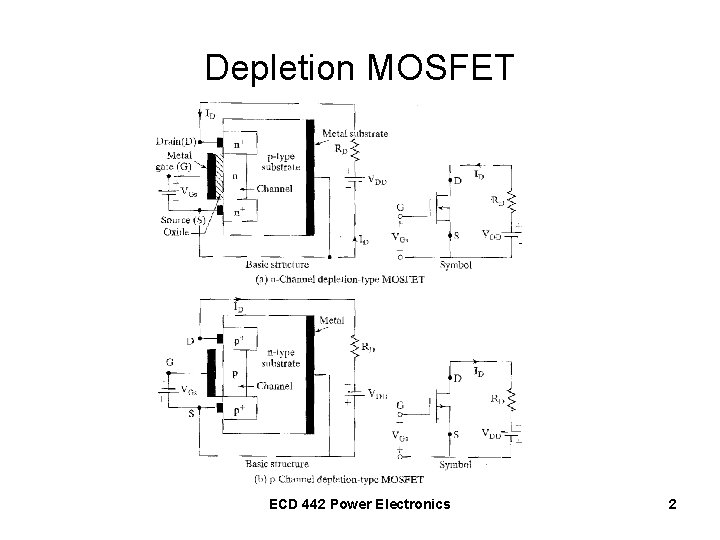
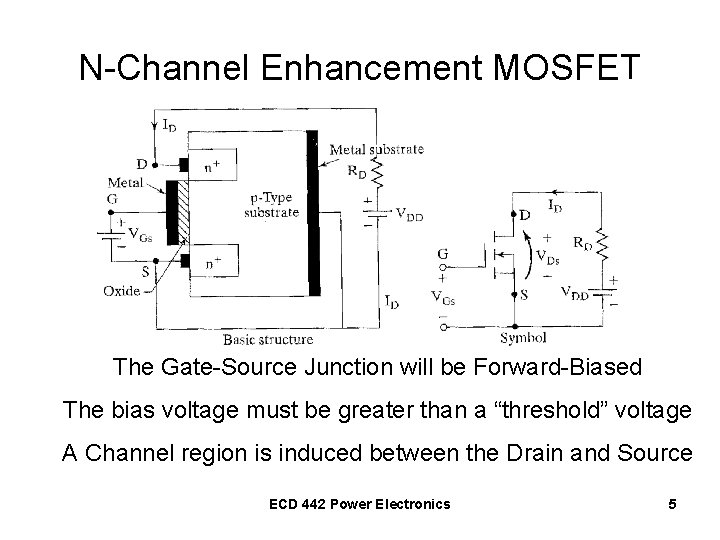
Power MOSFETs • Two Types – Depletion Type • Channel region is already diffused between the Drain and Source • Deplete, or “pinch-off” the Channel – Enhancement Type • No channel region exists between the Drain and Source • “Invert” the region between the Drain and Source to induce a channel ECD 442 Power Electronics 1
Depletion MOSFET ECD 442 Power Electronics 2
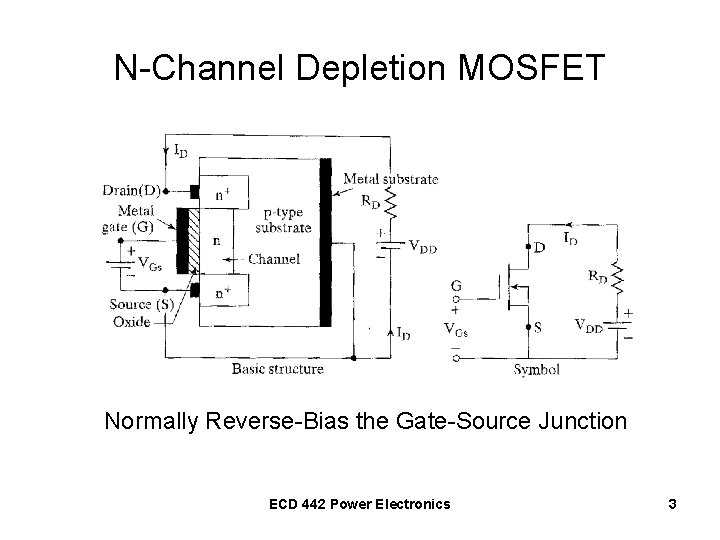
N-Channel Depletion MOSFET Normally Reverse-Bias the Gate-Source Junction ECD 442 Power Electronics 3
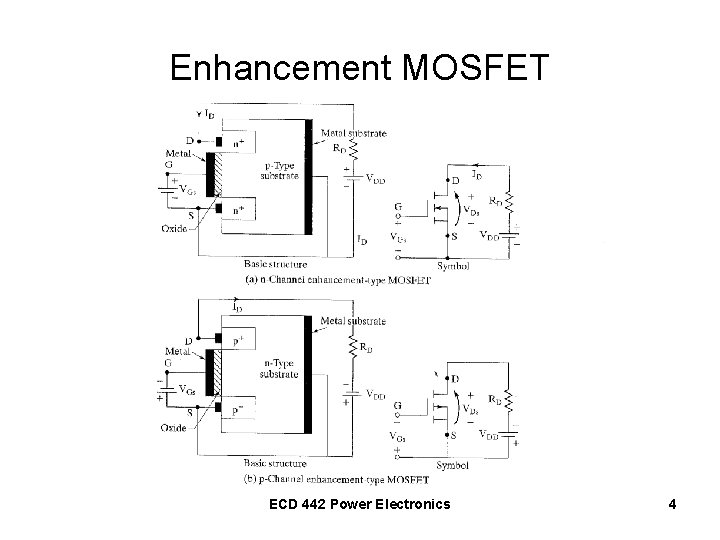
Enhancement MOSFET ECD 442 Power Electronics 4
N-Channel Enhancement MOSFET The Gate-Source Junction will be Forward-Biased The bias voltage must be greater than a “threshold” voltage A Channel region is induced between the Drain and Source ECD 442 Power Electronics 5
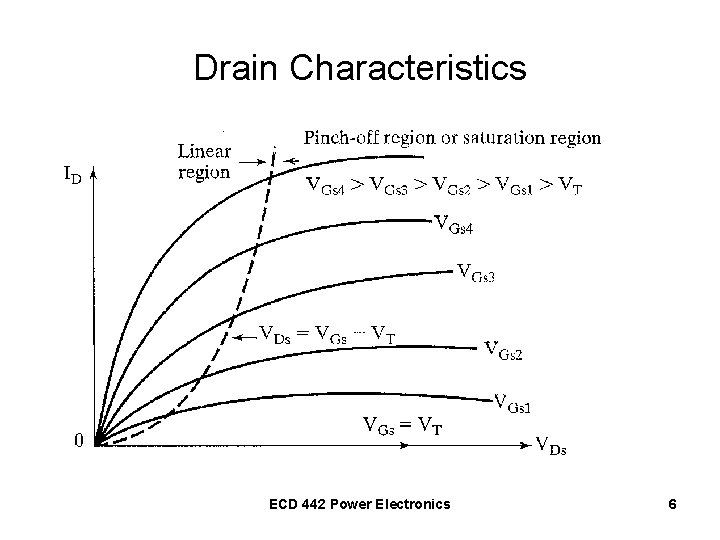
Drain Characteristics ECD 442 Power Electronics 6
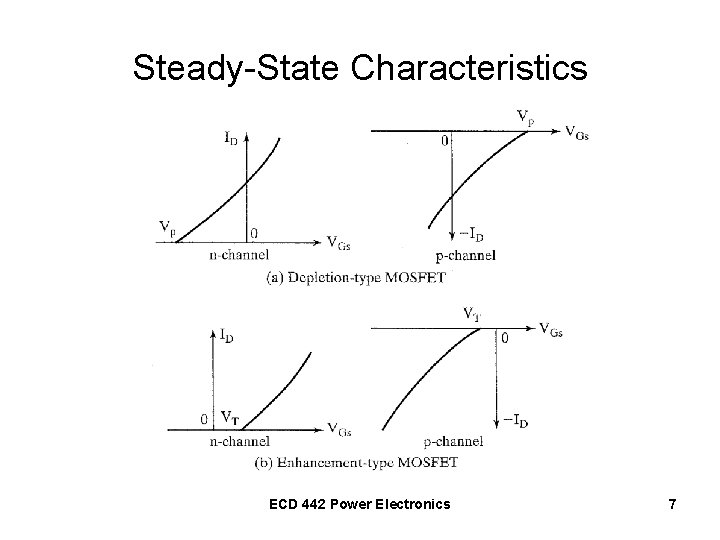
Steady-State Characteristics ECD 442 Power Electronics 7
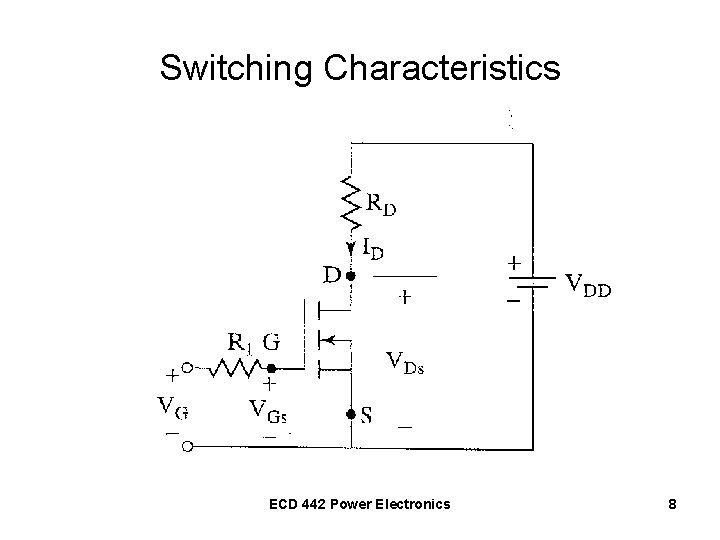
Switching Characteristics ECD 442 Power Electronics 8
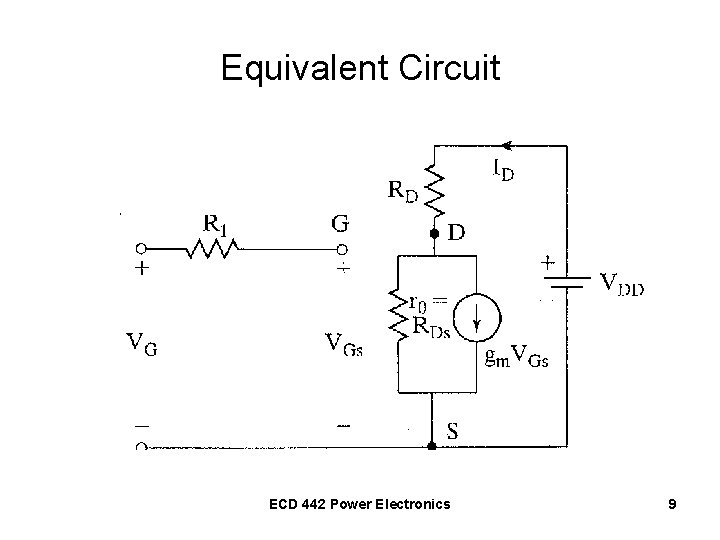
Equivalent Circuit ECD 442 Power Electronics 9
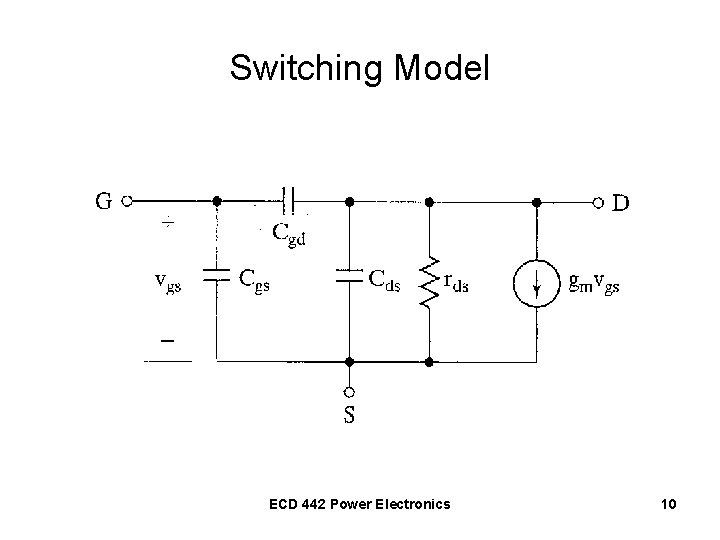
Switching Model ECD 442 Power Electronics 10
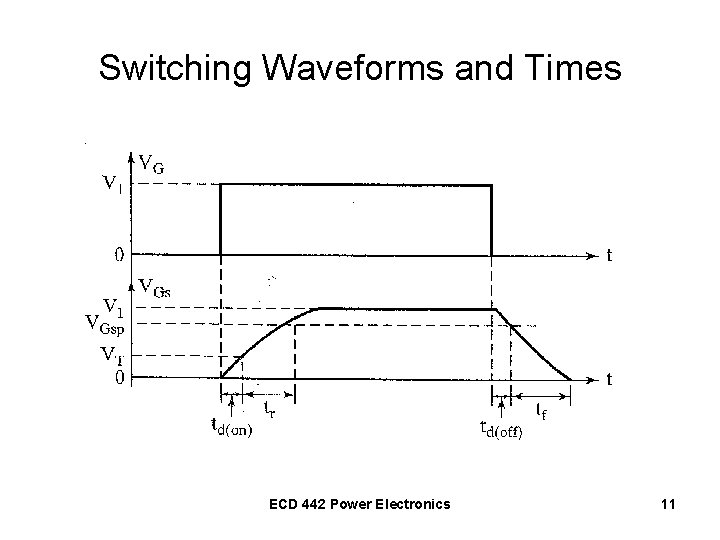
Switching Waveforms and Times ECD 442 Power Electronics 11
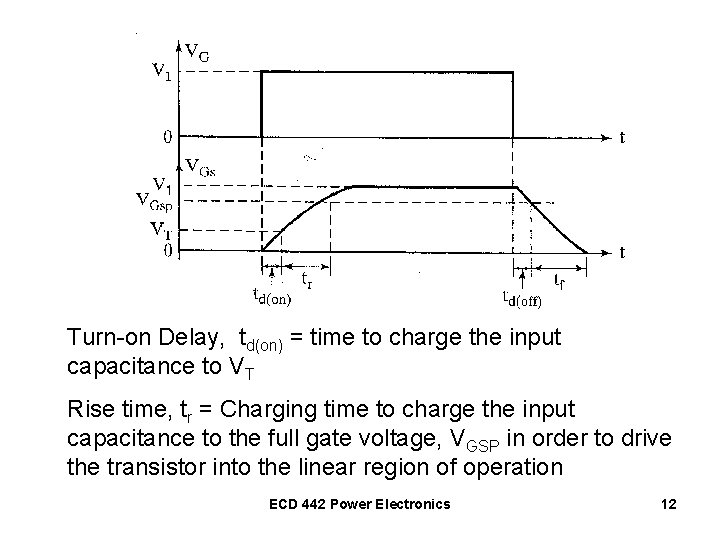
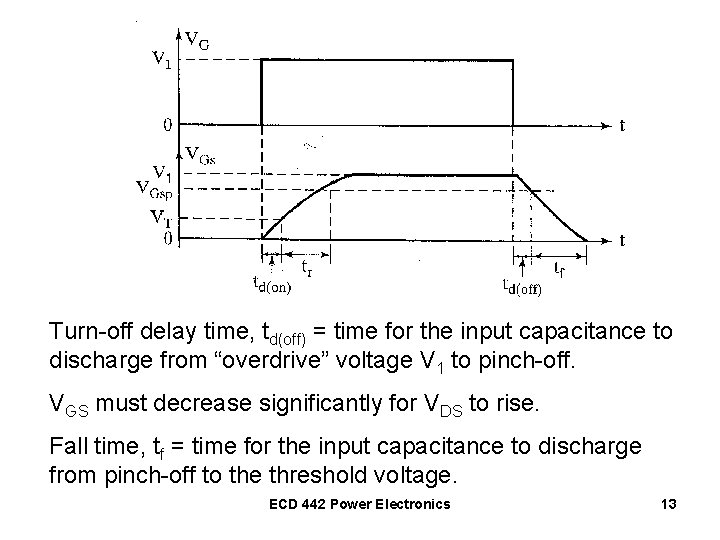
Turn-on Delay, td(on) = time to charge the input capacitance to VT Rise time, tr = Charging time to charge the input capacitance to the full gate voltage, VGSP in order to drive the transistor into the linear region of operation ECD 442 Power Electronics 12
Turn-off delay time, td(off) = time for the input capacitance to discharge from “overdrive” voltage V 1 to pinch-off. VGS must decrease significantly for VDS to rise. Fall time, tf = time for the input capacitance to discharge from pinch-off to the threshold voltage. ECD 442 Power Electronics 13