
Power Focus Leverage systems THINKING strategies for THINKING

- Slides: 37
Power… Focus… Leverage… systems THINKING strategies for THINKING FASTER, SMARTER, & TOGETHER April 29, 2015 Rachel Ferencik, Georgia Health Policy Center Chris Soderquist, Pontifex Consulting
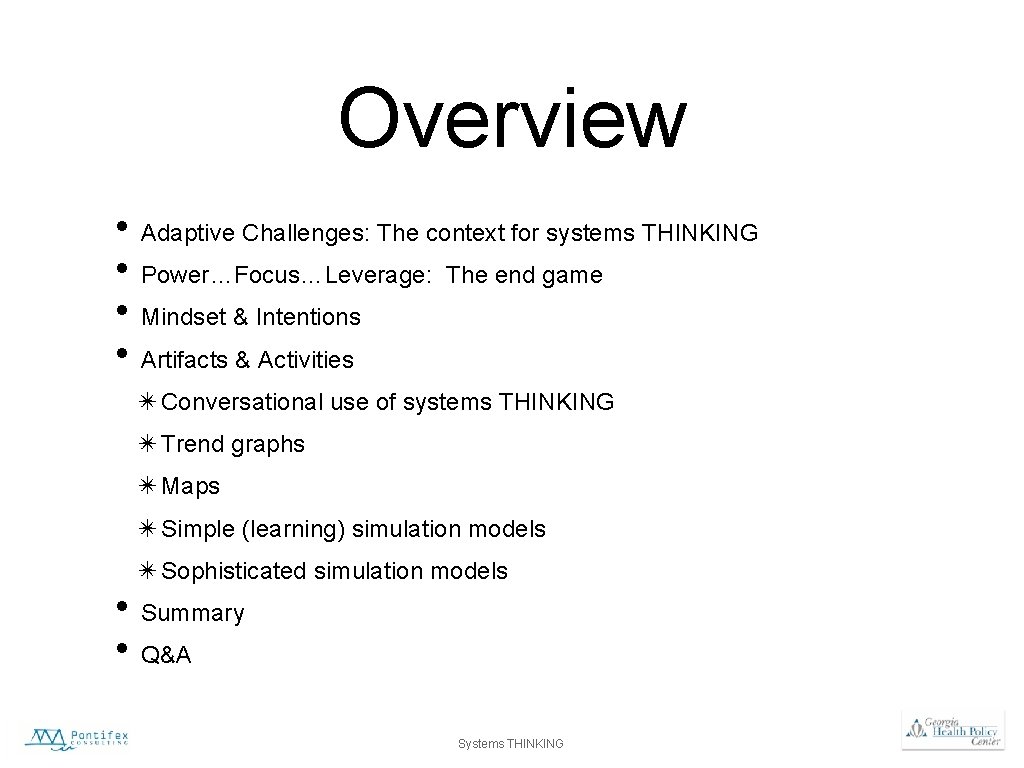
Overview • Adaptive Challenges: The context for systems THINKING • Power…Focus…Leverage: The end game • Mindset & Intentions • Artifacts & Activities ✴ Conversational use of systems THINKING ✴ Trend graphs ✴ Maps ✴ Simple (learning) simulation models ✴ Sophisticated simulation models • Summary • Q&A Systems THINKING
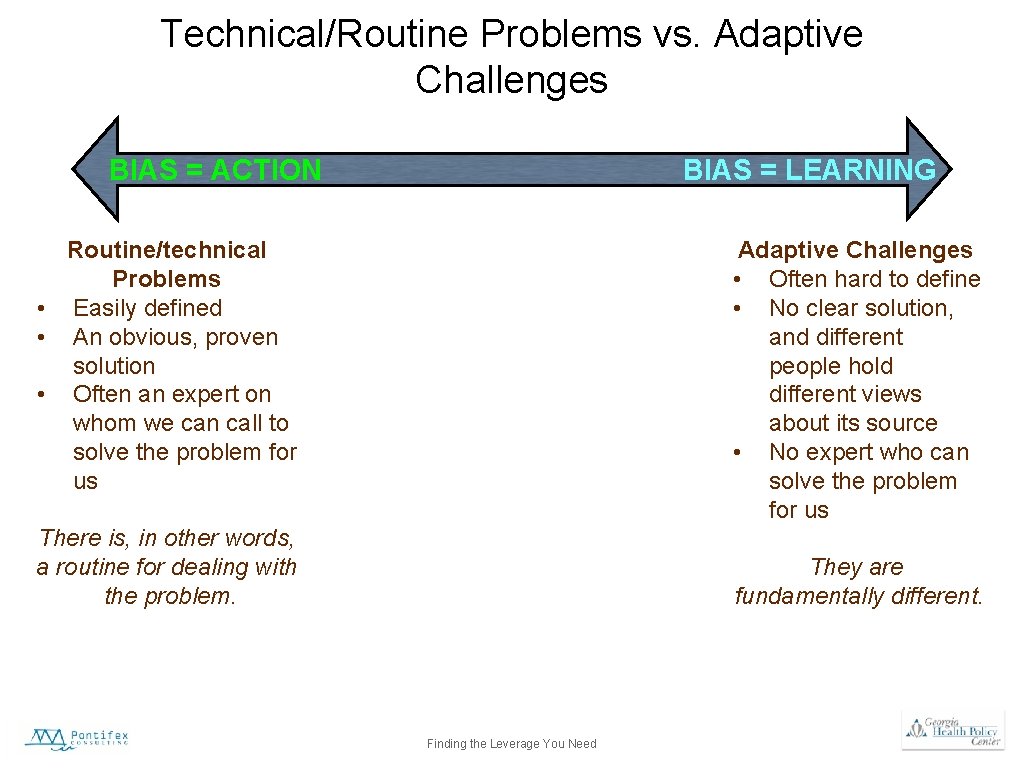
Technical/Routine Problems vs. Adaptive Challenges BIAS = ACTION BIAS = LEARNING Adaptive Challenges • Often hard to define • No clear solution, and different people hold different views about its source • No expert who can solve the problem for us Routine/technical Problems • Easily defined • An obvious, proven solution • Often an expert on whom we can call to solve the problem for us There is, in other words, a routine for dealing with the problem. They are fundamentally different. Finding the Leverage You Need
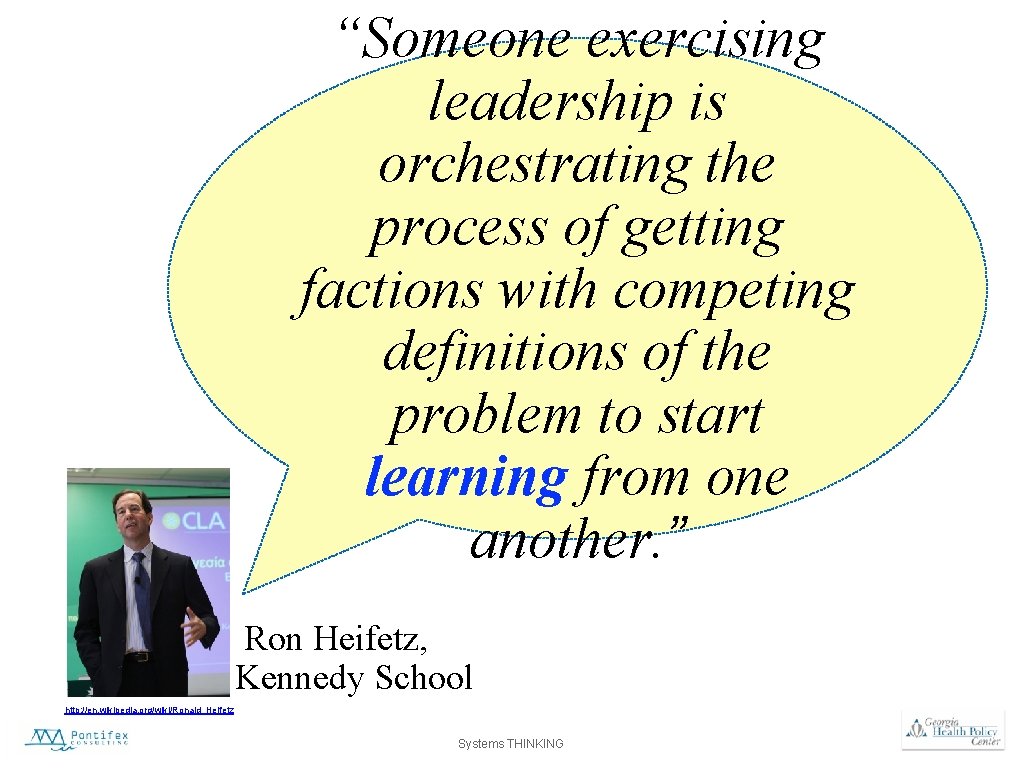
“Someone exercising leadership is orchestrating the process of getting factions with competing definitions of the problem to start learning from one another. ” Ron Heifetz, Kennedy School http: //en. wikipedia. org/wiki/Ronald_Heifetz Systems THINKING
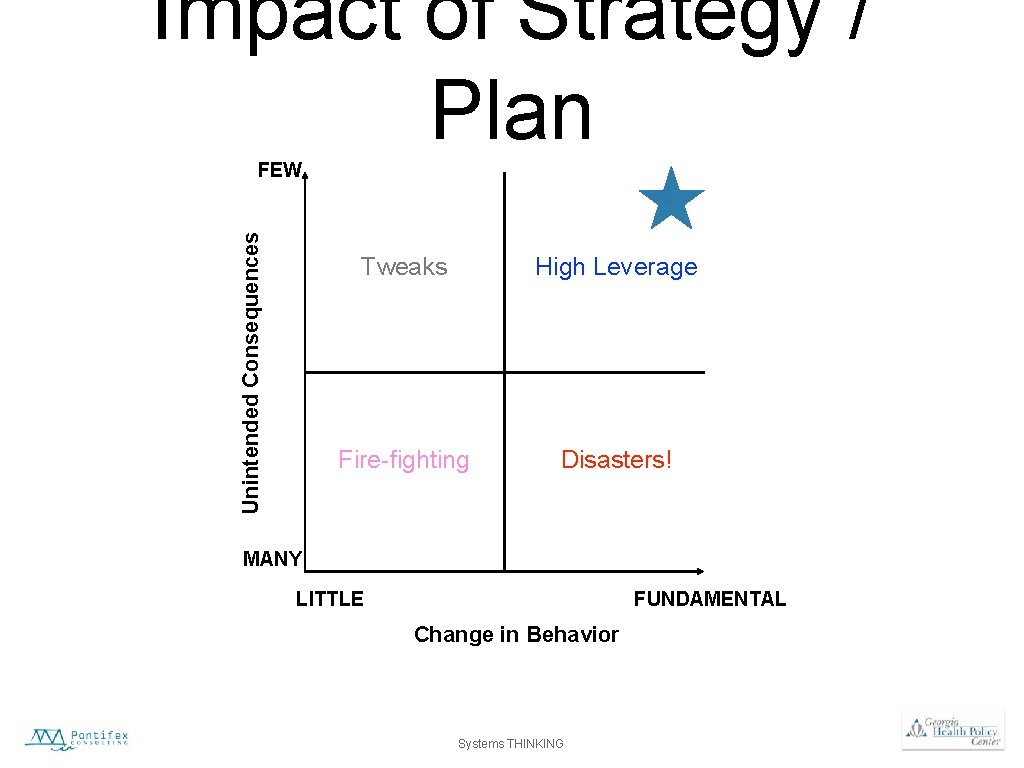
Impact of Strategy / Plan Unintended Consequences FEW Tweaks High Leverage Fire-fighting Disasters! MANY LITTLE FUNDAMENTAL Change in Behavior Systems THINKING
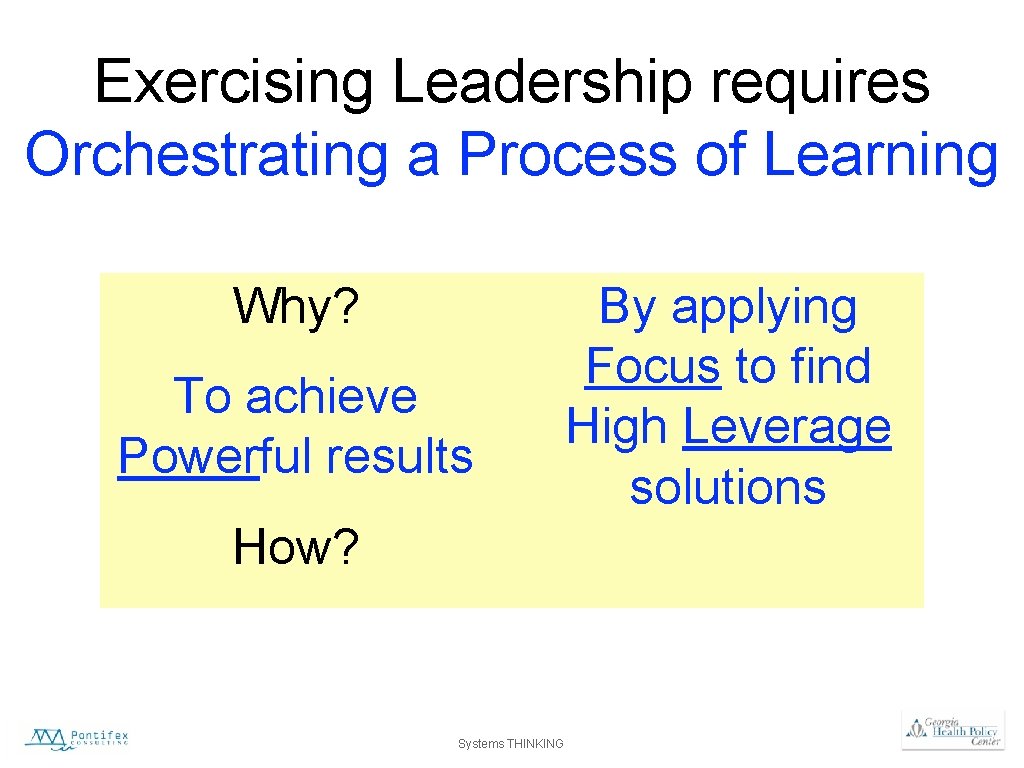
Exercising Leadership requires Orchestrating a Process of Learning Why? To achieve Powerful results How? Systems THINKING By applying Focus to find High Leverage solutions
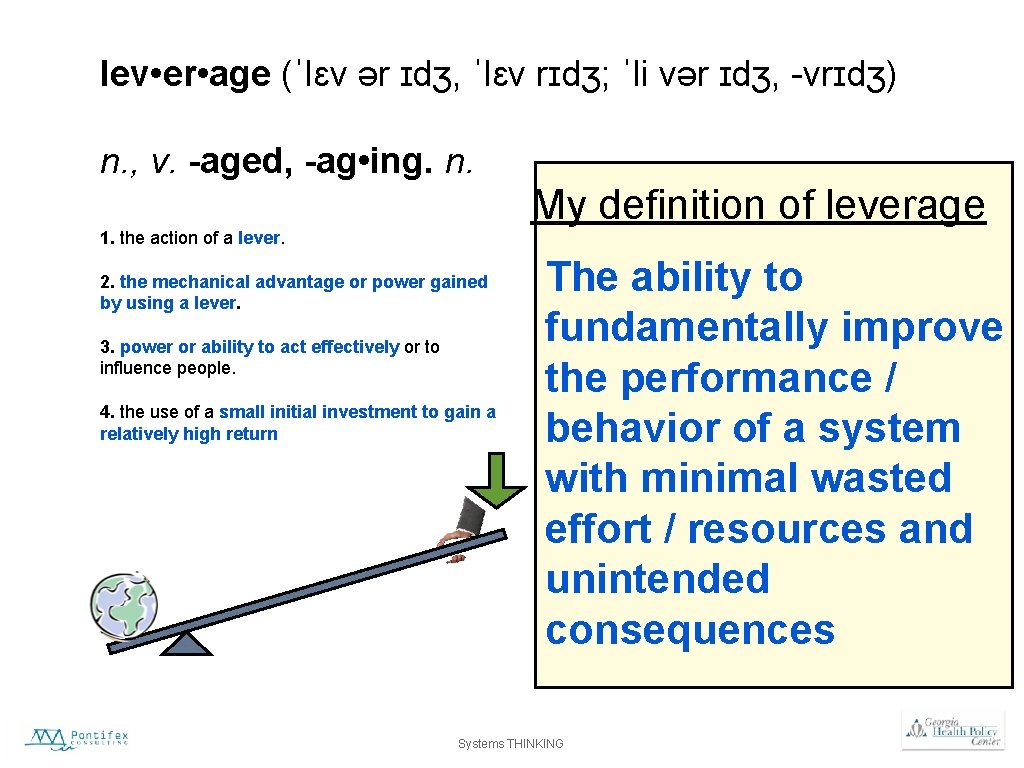
lev • er • age (ˈlɛv ər ɪdʒ, ˈlɛv rɪdʒ; ˈli vər ɪdʒ, -vrɪdʒ) n. , v. -aged, -ag • ing. n. My definition of leverage 1. the action of a lever. 2. the mechanical advantage or power gained by using a lever. 3. power or ability to act effectively or to influence people. 4. the use of a small initial investment to gain a relatively high return The ability to fundamentally improve the performance / behavior of a system with minimal wasted effort / resources and unintended consequences Systems THINKING
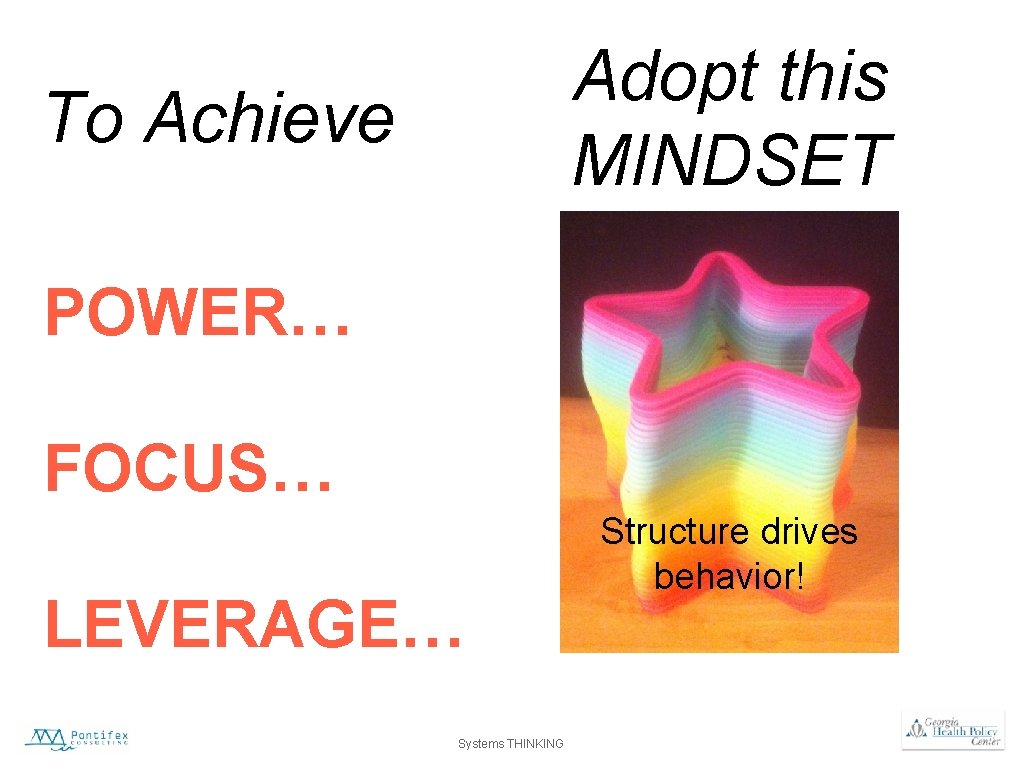
Adopt this MINDSET To Achieve POWER… FOCUS… LEVERAGE… Systems THINKING Structure drives behavior!
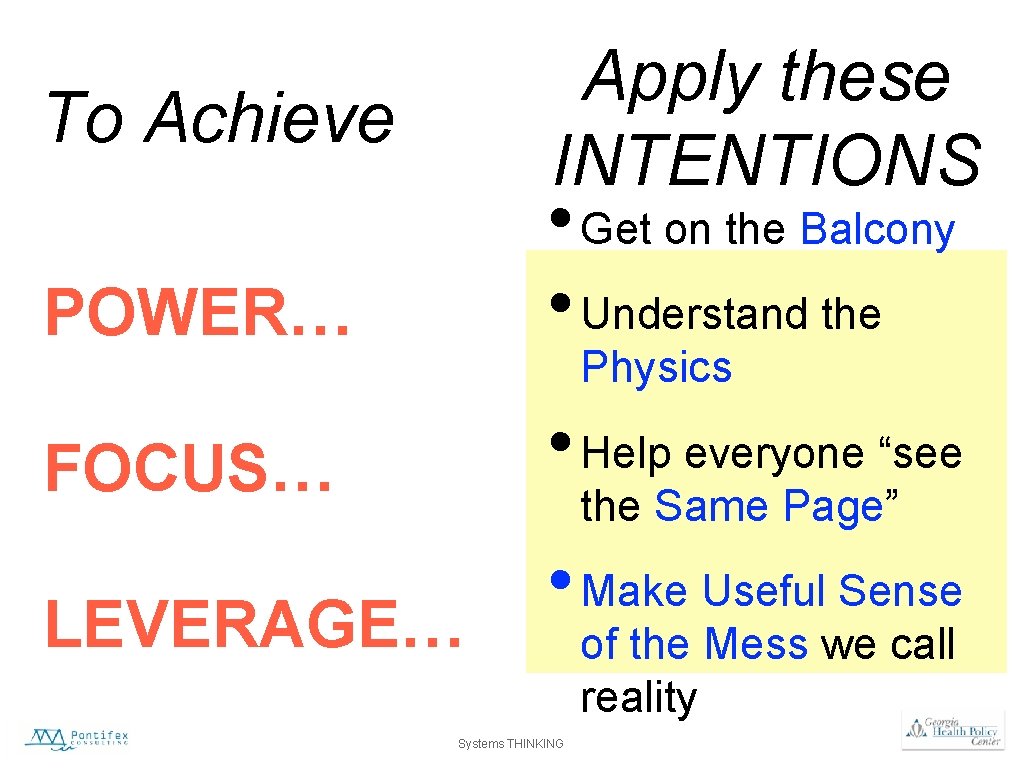
Apply these INTENTIONS To Achieve POWER… • Get on the Balcony • Understand the FOCUS… • Help everyone “see Physics the Same Page” LEVERAGE… • Make Useful Sense Systems THINKING of the Mess we call reality
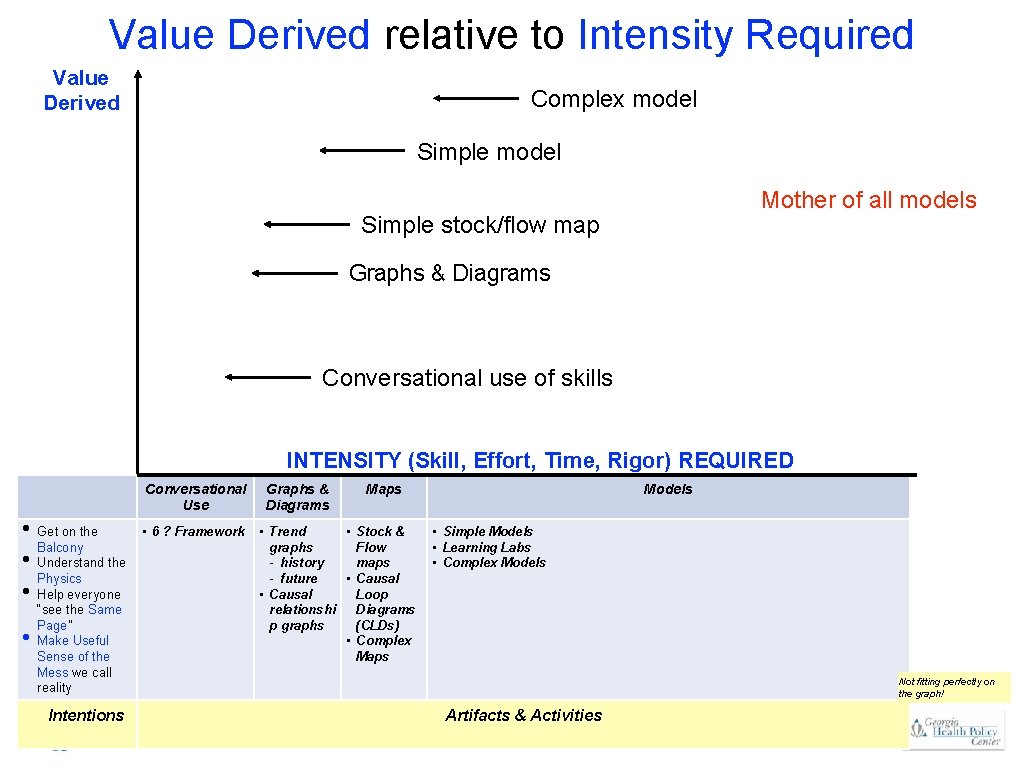
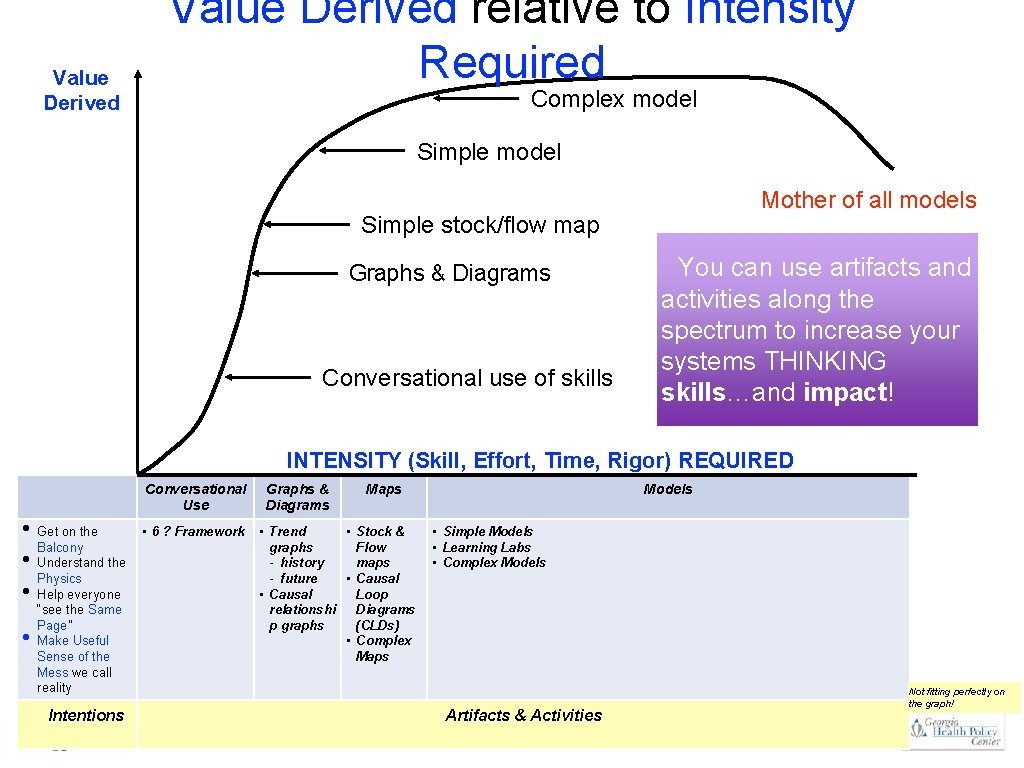
Value Derived relative to Intensity Required Value Derived Complex model Simple model Mother of all models Simple stock/flow map Graphs & Diagrams Conversational use of skills INTENSITY (Skill, Effort, Time, Rigor) REQUIRED Conversational Use • • Get on the Balcony Understand the Physics Help everyone “see the Same Page” Make Useful Sense of the Mess we call reality Intentions • 6 ? Framework Graphs & Diagrams Maps • Trend • Stock & graphs Flow - history maps - future • Causal Loop relationshi Diagrams p graphs (CLDs) • Complex Maps Models • Simple Models • Learning Labs • Complex Models Not fitting perfectly on the graph! Artifacts & Activities Systems THINKING
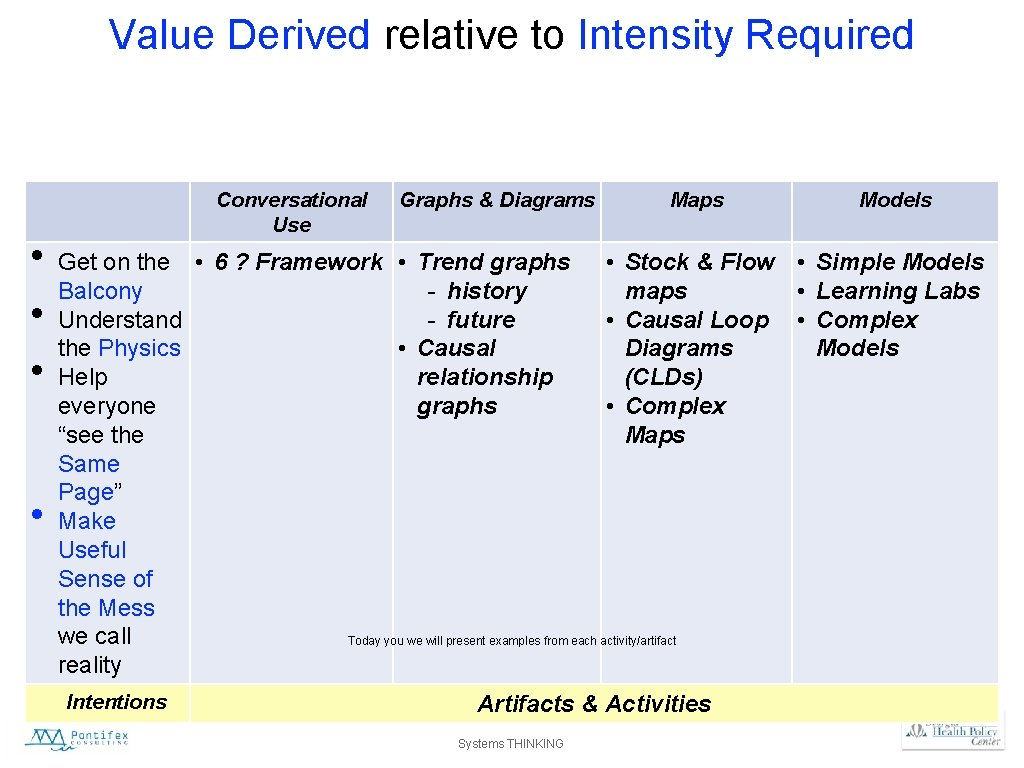
Value Derived relative to Intensity Required • • Conversational Use Graphs & Diagrams Maps Models Get on the • 6 ? Framework • Trend graphs • Stock & Flow • Simple Models Balcony - history maps • Learning Labs Understand - future • Causal Loop • Complex the Physics • Causal Diagrams Models Help relationship (CLDs) everyone graphs • Complex “see the Maps Same Page” Make Useful Sense of the Mess we call Today you we will present examples from each activity/artifact reality Intentions Artifacts & Activities Systems THINKING
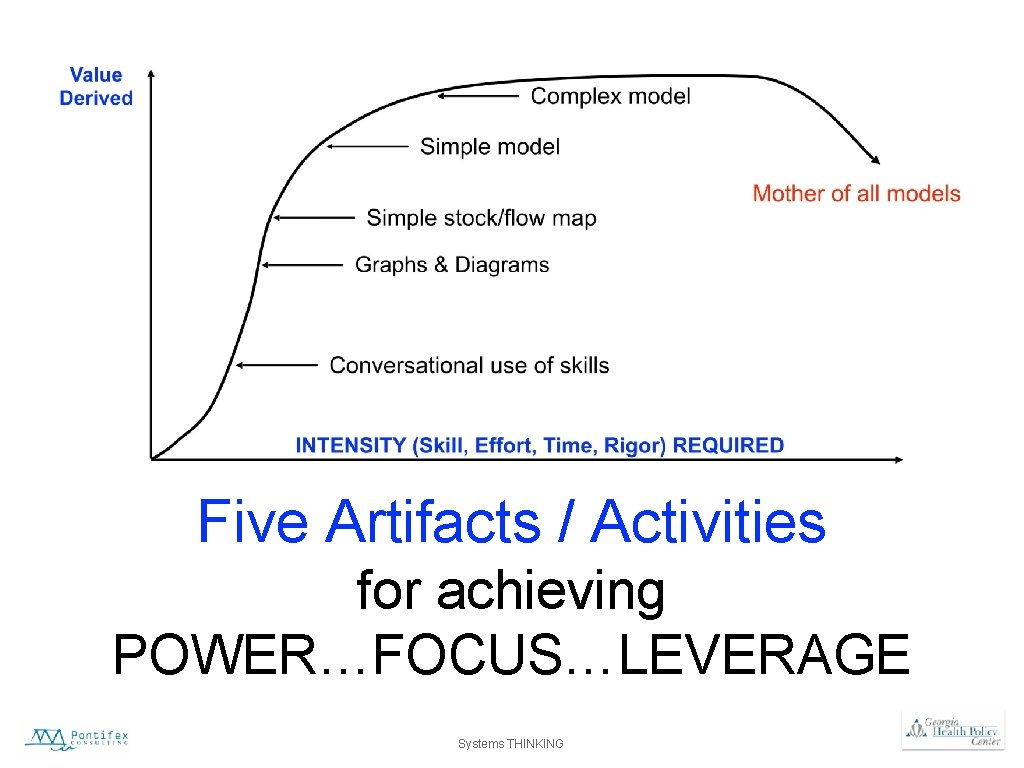
Five Artifacts / Activities for achieving POWER…FOCUS…LEVERAGE Systems THINKING
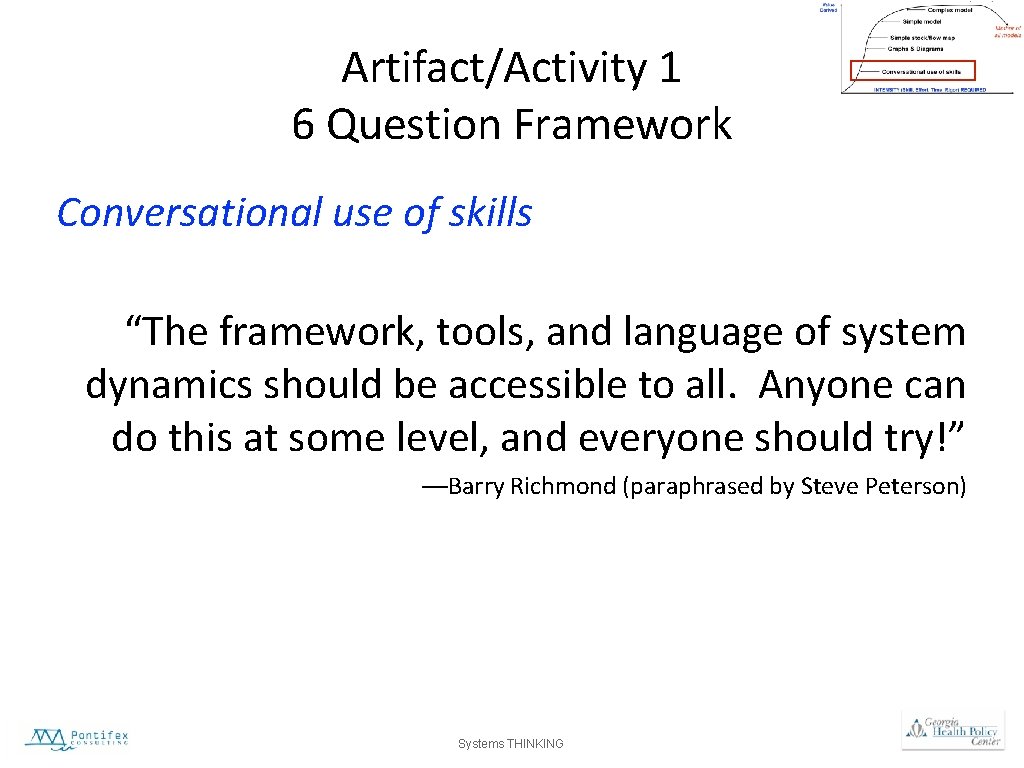
Artifact/Activity 1 6 Question Framework Conversational use of skills “The framework, tools, and language of system dynamics should be accessible to all. Anyone can do this at some level, and everyone should try!” ––Barry Richmond (paraphrased by Steve Peterson) Systems THINKING
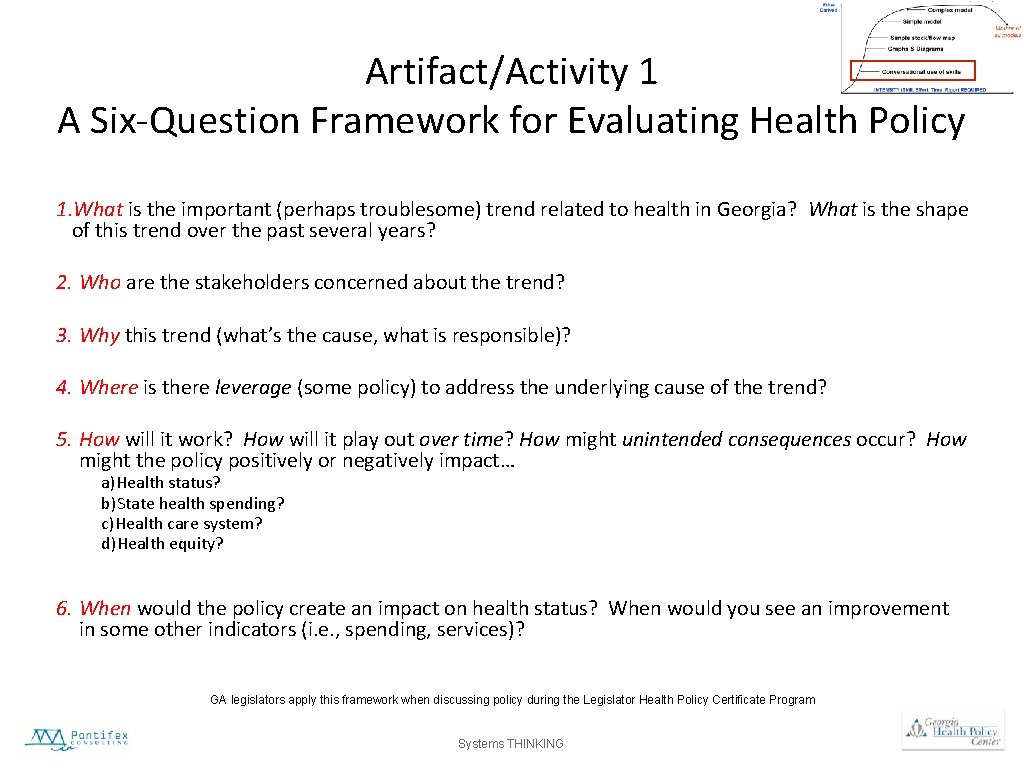
Artifact/Activity 1 A Six-Question Framework for Evaluating Health Policy 1. What is the important (perhaps troublesome) trend related to health in Georgia? What is the shape of this trend over the past several years? 2. Who are the stakeholders concerned about the trend? 3. Why this trend (what’s the cause, what is responsible)? 4. Where is there leverage (some policy) to address the underlying cause of the trend? 5. How will it work? How will it play out over time? How might unintended consequences occur? How might the policy positively or negatively impact… a)Health status? b)State health spending? c)Health care system? d)Health equity? 6. When would the policy create an impact on health status? When would you see an improvement in some other indicators (i. e. , spending, services)? GA legislators apply this framework when discussing policy during the Legislator Health Policy Certificate Program Systems THINKING
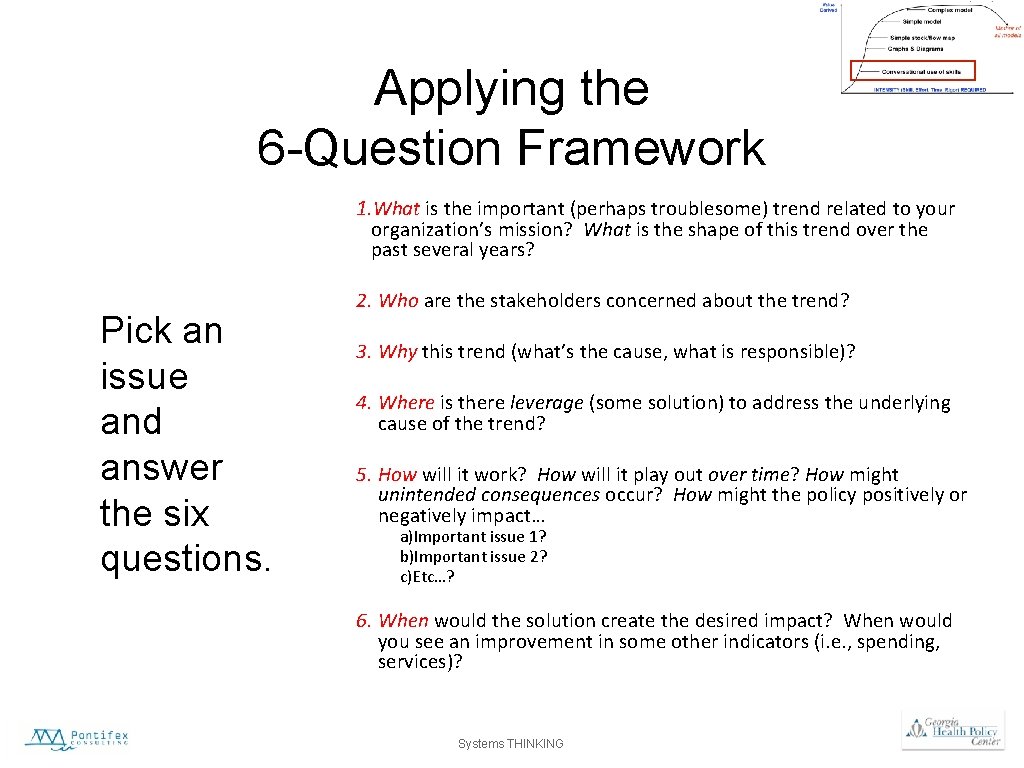
Applying the 6 -Question Framework 1. What is the important (perhaps troublesome) trend related to your organization’s mission? What is the shape of this trend over the past several years? Pick an issue and answer the six questions. 2. Who are the stakeholders concerned about the trend? 3. Why this trend (what’s the cause, what is responsible)? 4. Where is there leverage (some solution) to address the underlying cause of the trend? 5. How will it work? How will it play out over time? How might unintended consequences occur? How might the policy positively or negatively impact… a)Important issue 1? b)Important issue 2? c)Etc…? 6. When would the solution create the desired impact? When would you see an improvement in some other indicators (i. e. , spending, services)? Systems THINKING
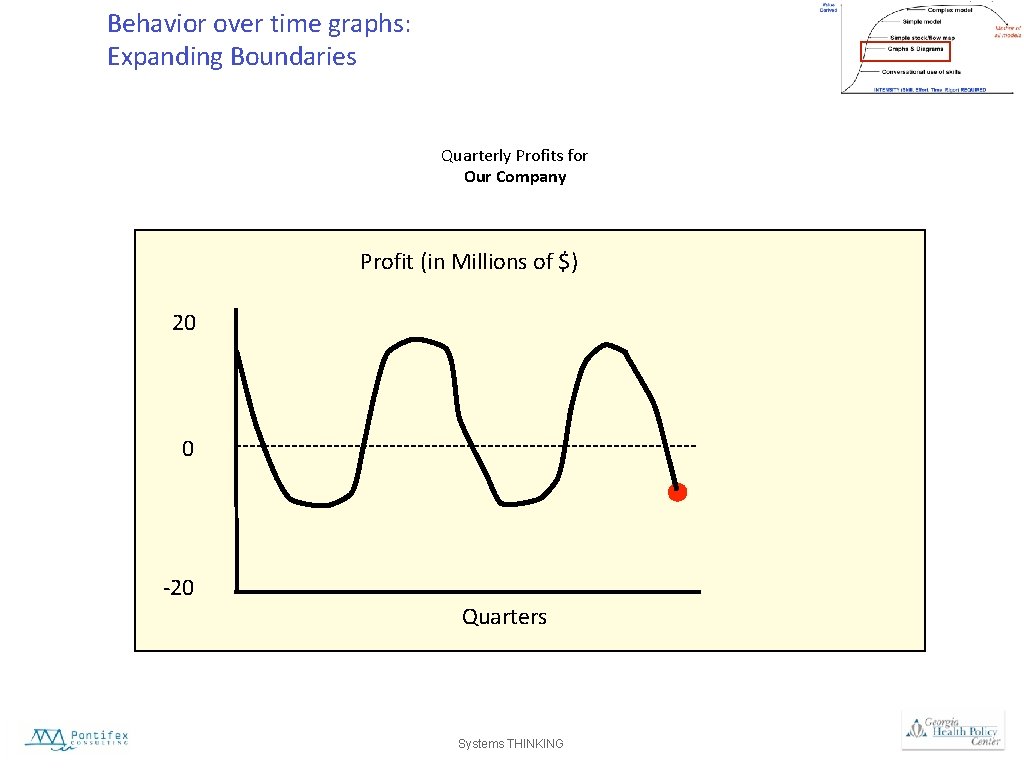
Behavior over time graphs: Expanding Boundaries Quarterly Profits for Our Company Profit (in Millions of $) 20 0 -20 Quarters Systems THINKING
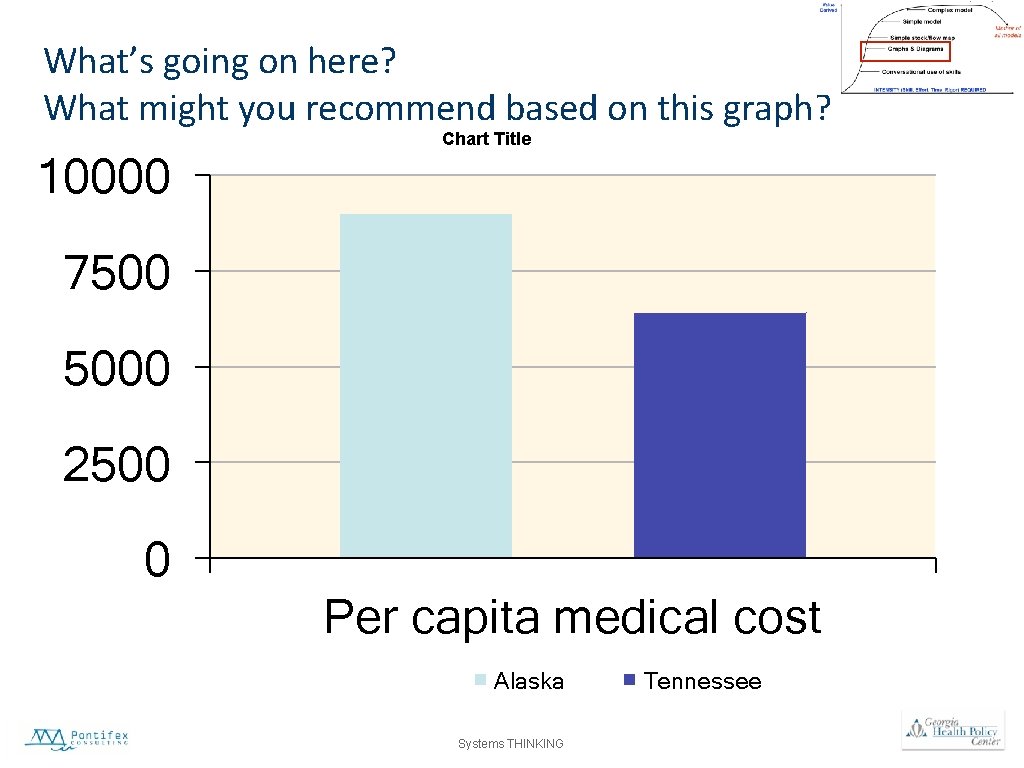
What’s going on here? What might you recommend based on this graph? 10000 Chart Title 7500 5000 2500 0 Per capita medical cost Alaska Systems THINKING Tennessee
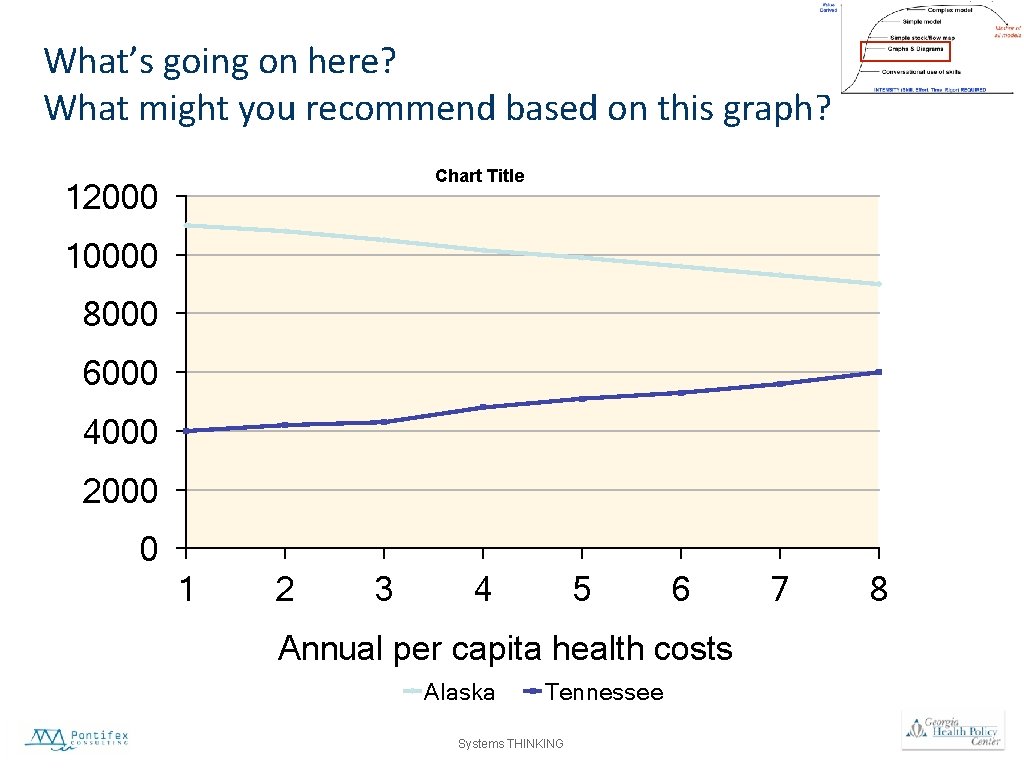
What’s going on here? What might you recommend based on this graph? Chart Title 12000 10000 8000 6000 4000 2000 0 1 2 3 4 5 6 Annual per capita health costs Alaska Tennessee Systems THINKING 7 8
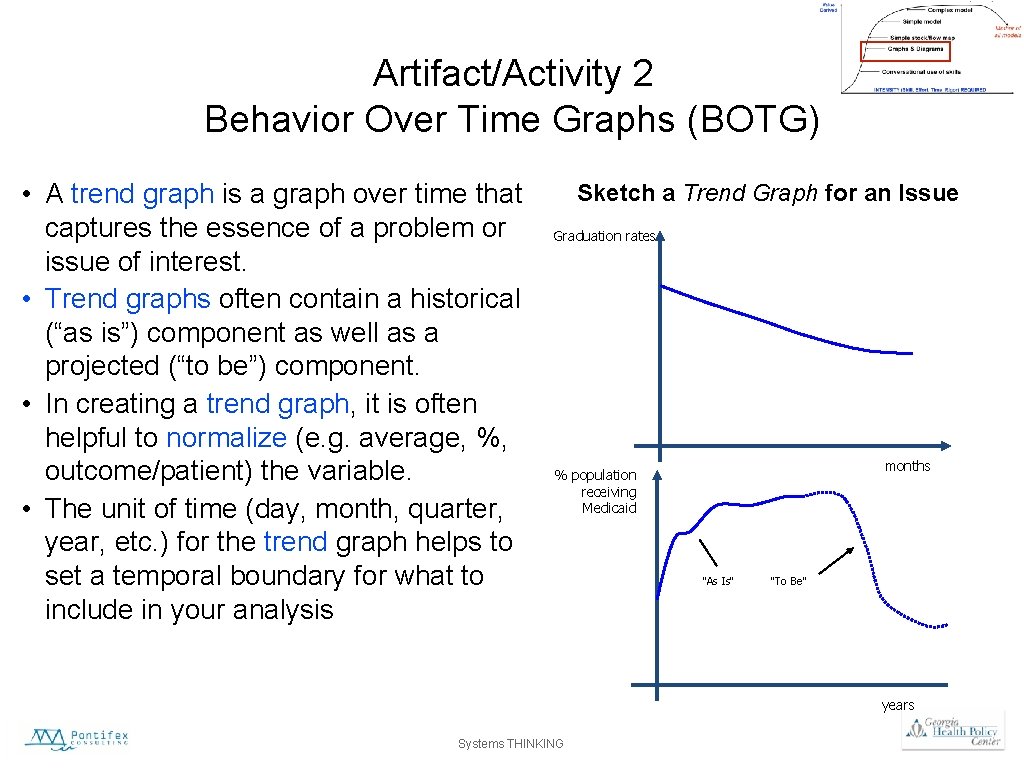
Artifact/Activity 2 Behavior Over Time Graphs (BOTG) • A trend graph is a graph over time that captures the essence of a problem or issue of interest. • Trend graphs often contain a historical (“as is”) component as well as a projected (“to be”) component. • In creating a trend graph, it is often helpful to normalize (e. g. average, %, outcome/patient) the variable. • The unit of time (day, month, quarter, year, etc. ) for the trend graph helps to set a temporal boundary for what to include in your analysis Sketch a Trend Graph for an Issue Graduation rates months % population receiving Medicaid “As Is” “To Be” years Systems THINKING
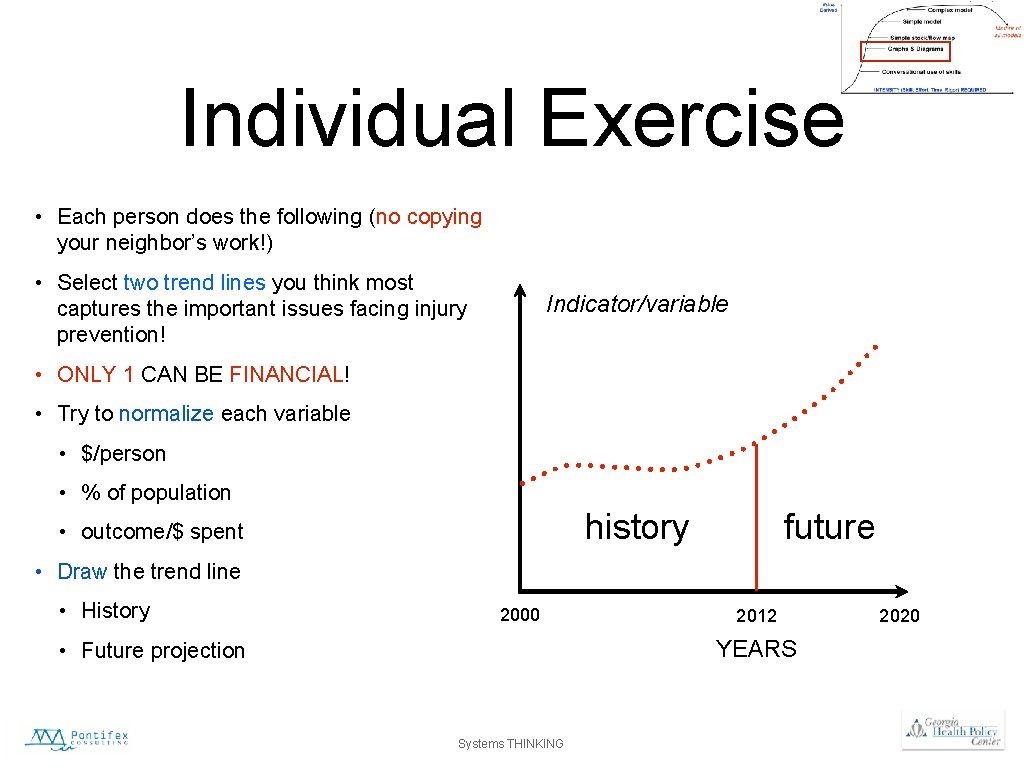
Individual Exercise • Each person does the following (no copying your neighbor’s work!) • Select two trend lines you think most captures the important issues facing injury prevention! Indicator/variable • ONLY 1 CAN BE FINANCIAL! • Try to normalize each variable • $/person • % of population history • outcome/$ spent future • Draw the trend line • History 2000 2012 YEARS • Future projection Systems THINKING 2020
Additional Trend Graph Artifacts Systems THINKING
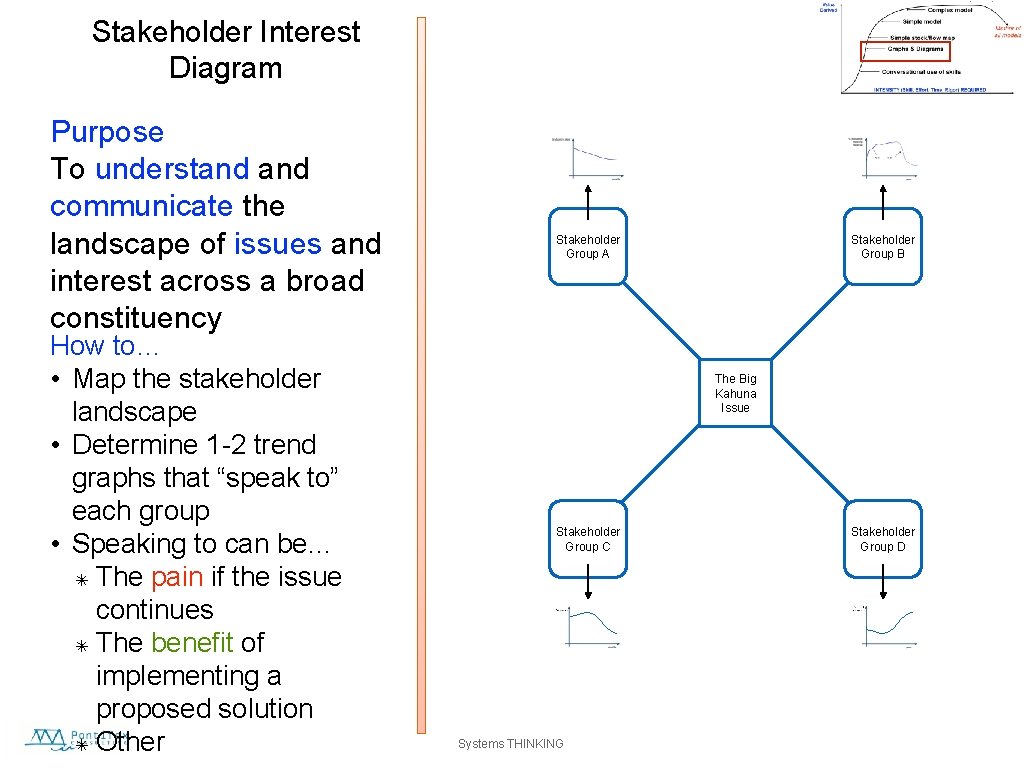
Stakeholder Interest Diagram Purpose To understand communicate the landscape of issues and interest across a broad constituency How to… • Map the stakeholder landscape • Determine 1 -2 trend graphs that “speak to” each group • Speaking to can be… ✴ The pain if the issue continues ✴ The benefit of implementing a proposed solution ✴ Other Stakeholder Group B Stakeholder Group A The Big Kahuna Issue Stakeholder Group C Systems THINKING Stakeholder Group D
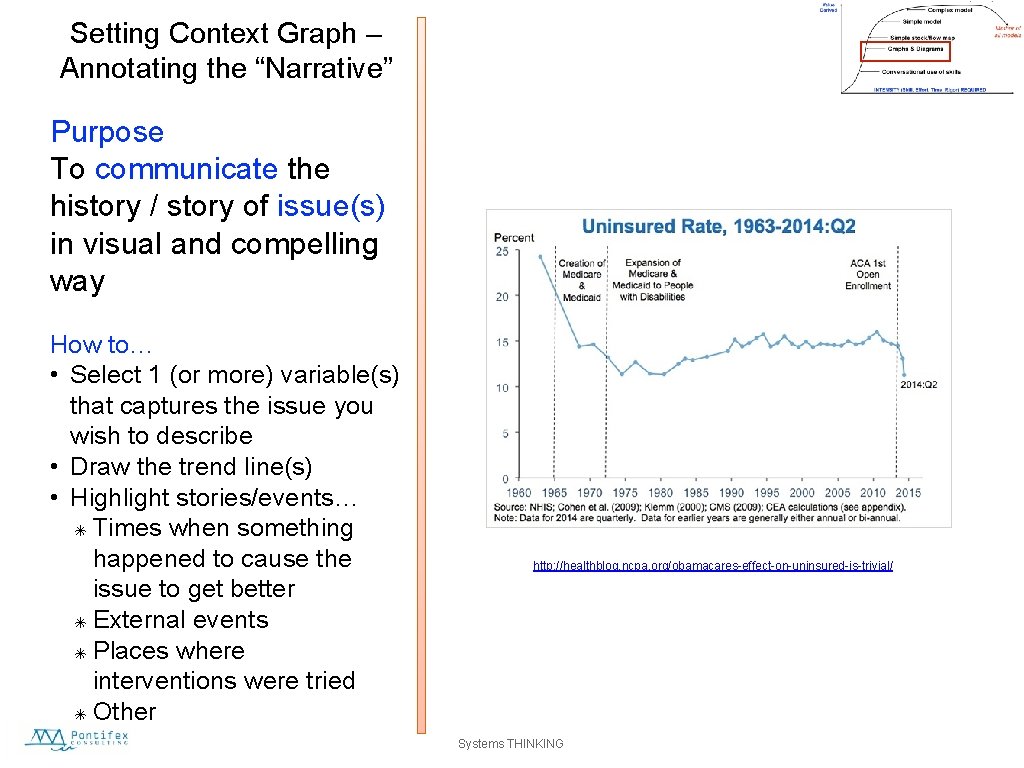
Setting Context Graph – Annotating the “Narrative” Purpose To communicate the history / story of issue(s) in visual and compelling way How to… • Select 1 (or more) variable(s) that captures the issue you wish to describe • Draw the trend line(s) • Highlight stories/events… ✴ Times when something happened to cause the issue to get better ✴ External events ✴ Places where interventions were tried ✴ Other http: //healthblog. ncpa. org/obamacares-effect-on-uninsured-is-trivial/ Systems THINKING
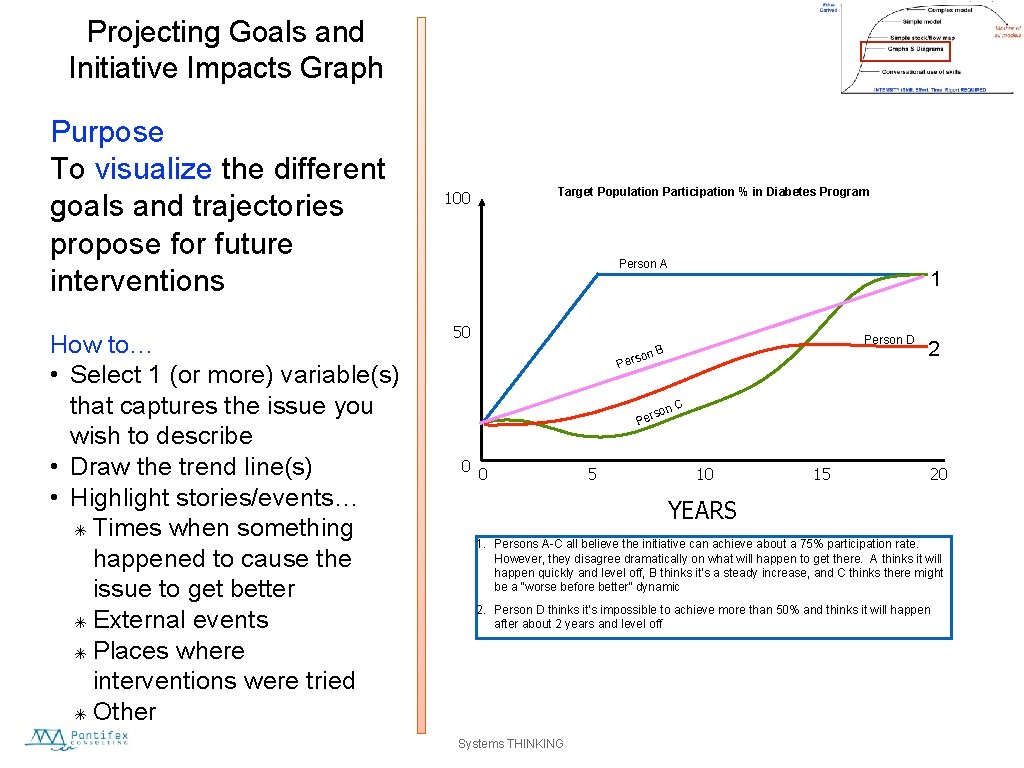
Projecting Goals and Initiative Impacts Graph Purpose To visualize the different goals and trajectories propose for future interventions How to… • Select 1 (or more) variable(s) that captures the issue you wish to describe • Draw the trend line(s) • Highlight stories/events… ✴ Times when something happened to cause the issue to get better ✴ External events ✴ Places where interventions were tried ✴ Other Target Population Participation % in Diabetes Program 100 Person A 1 50 Person D n. B erso P on s Per 0 0 5 2 C 10 15 20 YEARS 1. Persons A-C all believe the initiative can achieve about a 75% participation rate. However, they disagree dramatically on what will happen to get there. A thinks it will happen quickly and level off, B thinks it’s a steady increase, and C thinks there might be a “worse before better” dynamic 2. Person D thinks it’s impossible to achieve more than 50% and thinks it will happen after about 2 years and level off Systems THINKING
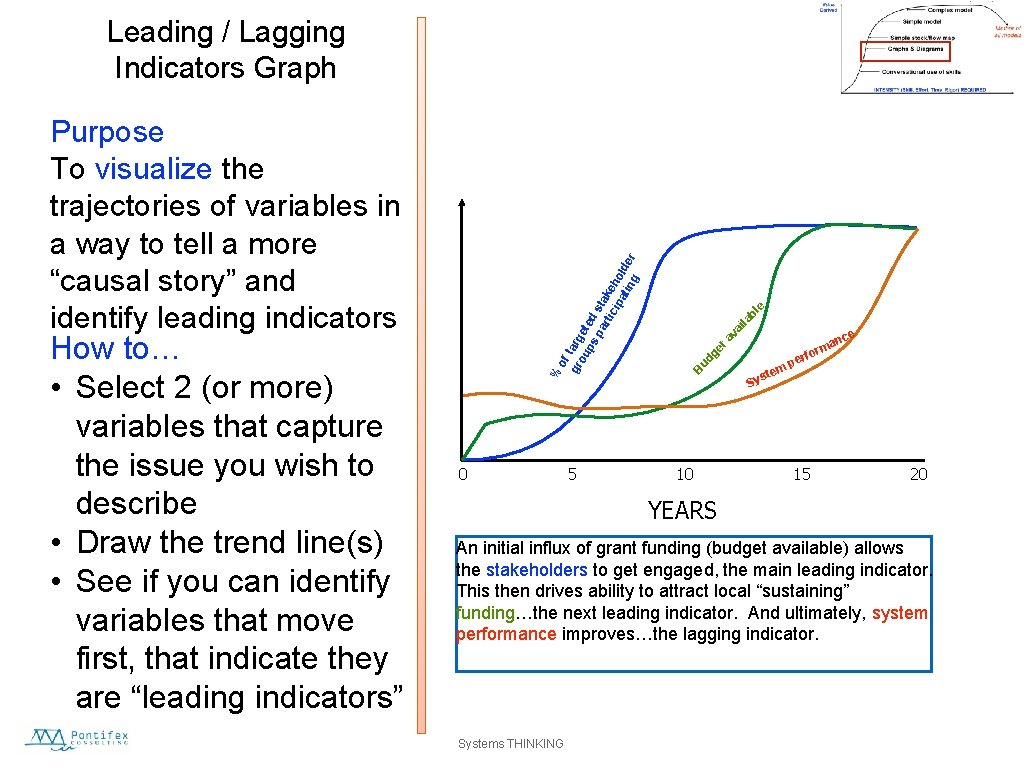
0 5 bl e va ila ge ta ud B % Purpose To visualize the trajectories of variables in a way to tell a more “causal story” and identify leading indicators How to… • Select 2 (or more) variables that capture the issue you wish to describe • Draw the trend line(s) • See if you can identify variables that move first, that indicate they are “leading indicators” of gr targ ou et ps ed pa sta rti ke cip ho ati lde ng r Leading / Lagging Indicators Graph 10 m ste Sy pe r rfo 15 ce n ma 20 YEARS An initial influx of grant funding (budget available) allows the stakeholders to get engaged, the main leading indicator. This then drives ability to attract local “sustaining” funding…the next leading indicator. And ultimately, system performance improves…the lagging indicator. Systems THINKING
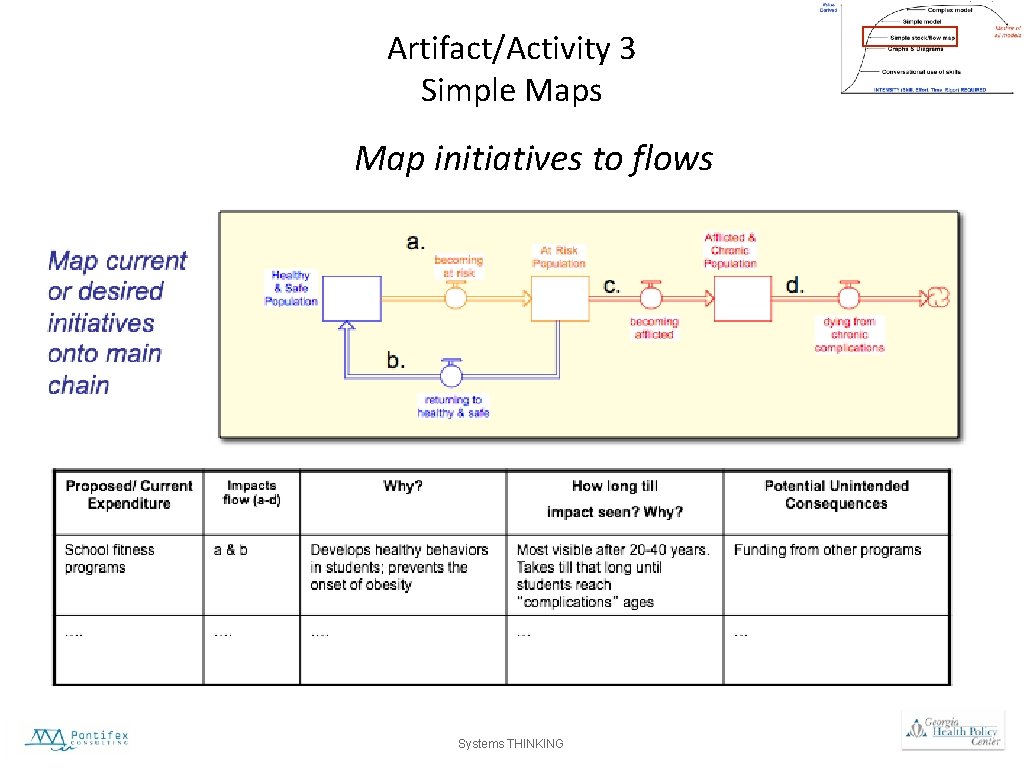
Artifact/Activity 3 Simple Maps Map initiatives to flows Systems THINKING
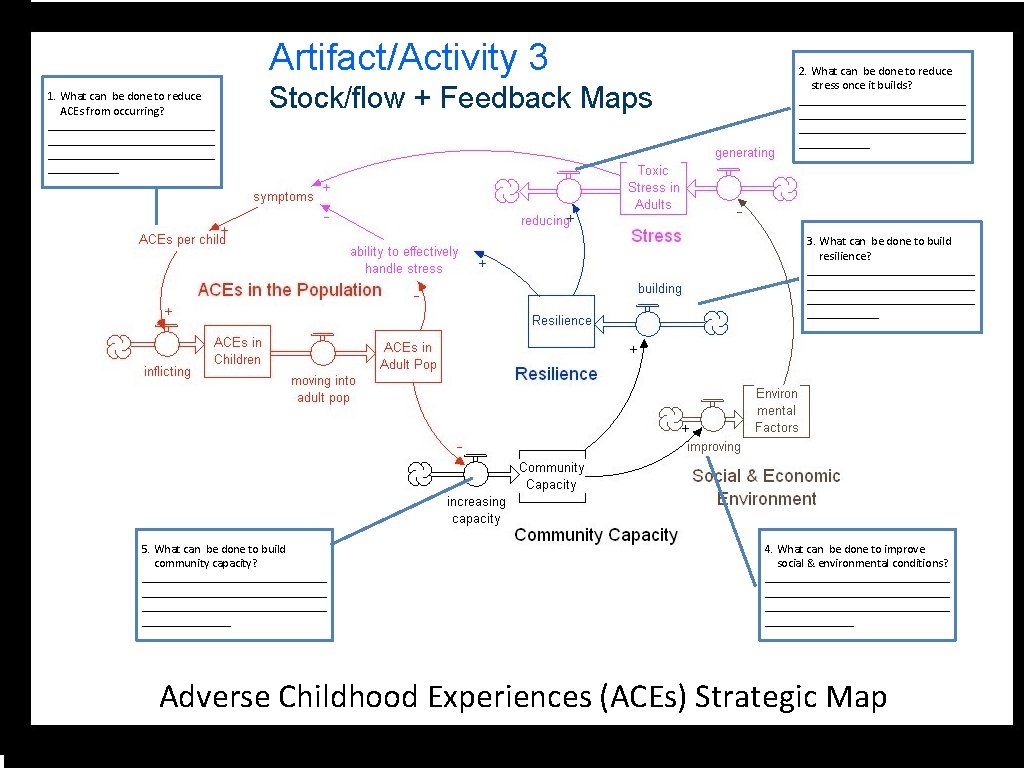
Artifact/Activity 3 1. What can be done to reduce ACEs from occurring? ____________________________ ______ Stock/flow + Feedback Maps 2. What can be done to reduce stress once it builds? ____________________________ ______ 3. What can be done to build resilience? ____________________________ ______ 5. What can be done to build community capacity? _______________________________ ________ 4. What can be done to improve social & environmental conditions? _______________________________ ________ Adverse Childhood Experiences (ACEs) Strategic Map Interventions occur at the flows! Systems THINKING
Systems THINKING
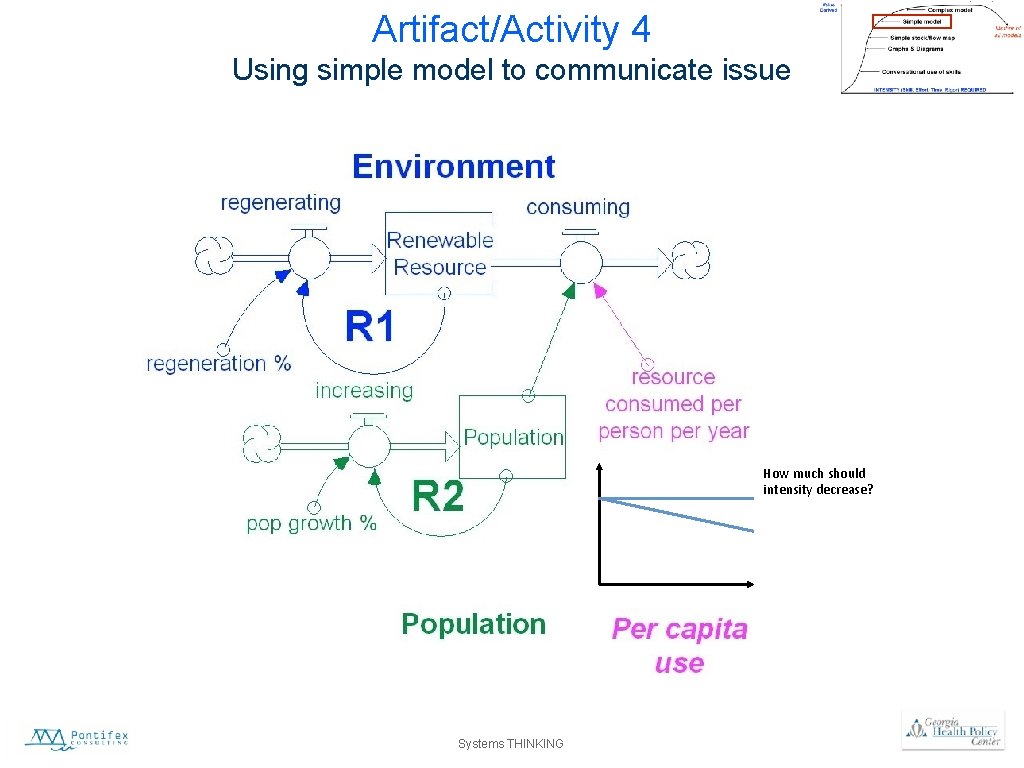
Artifact/Activity 4 Using simple model to communicate issue How much should intensity decrease? Systems THINKING
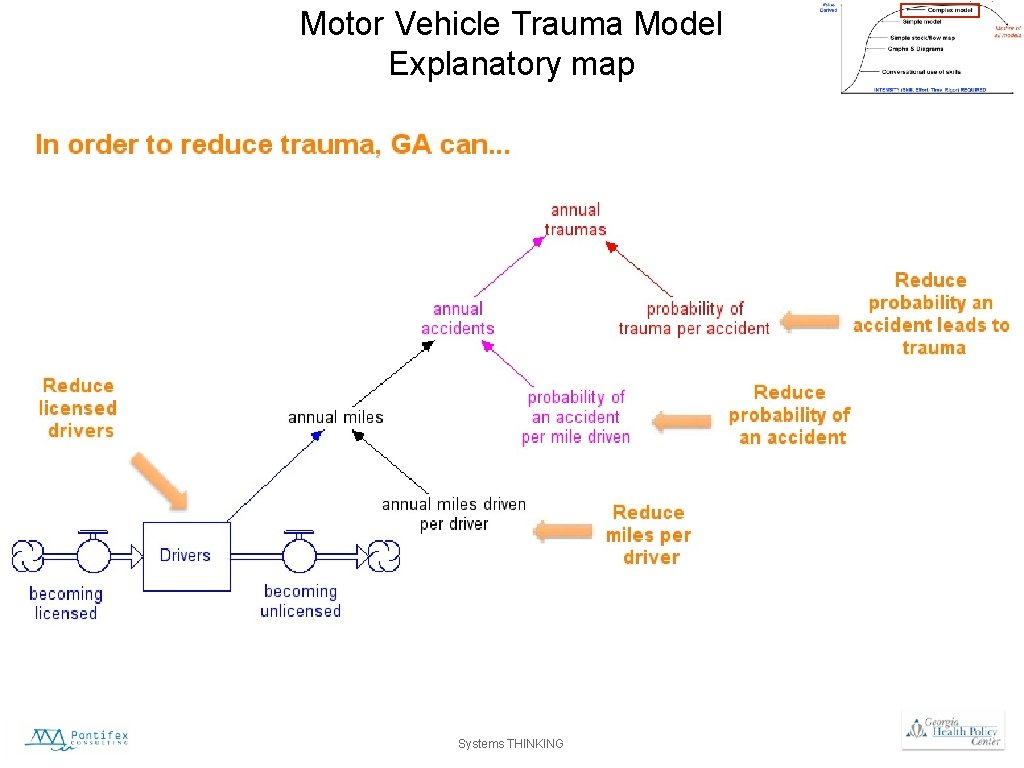
Motor Vehicle Trauma Model Explanatory map Systems THINKING
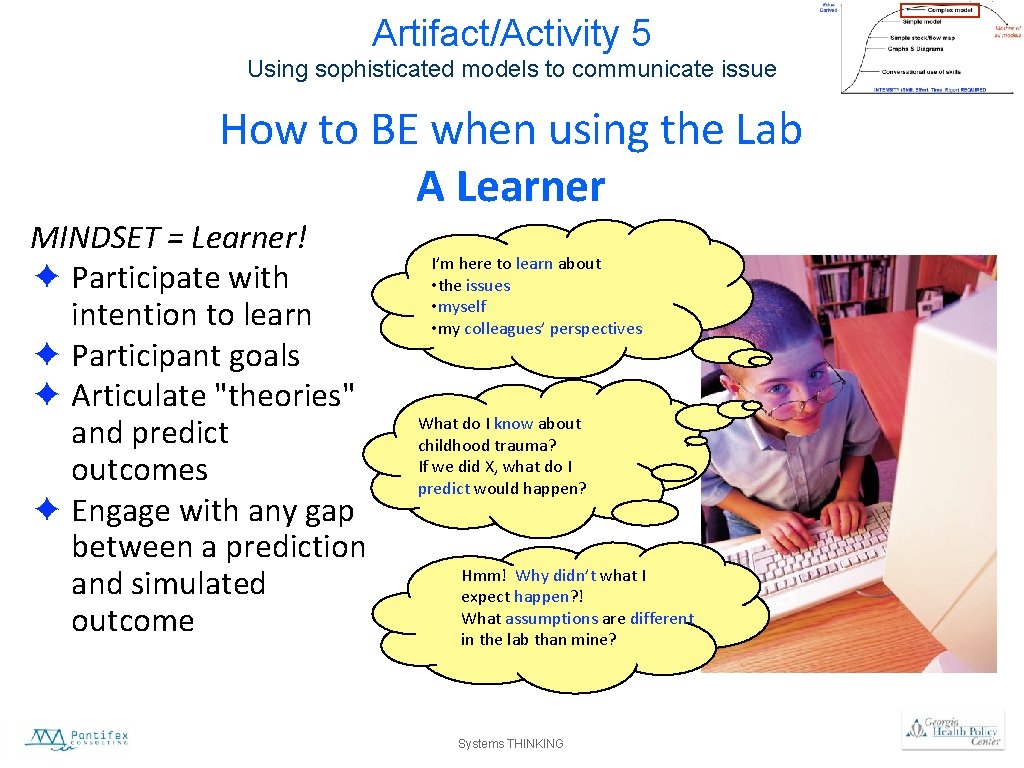
Artifact/Activity 5 Using sophisticated models to communicate issue How to BE when using the Lab A Learner MINDSET = Learner! ✦ Participate with intention to learn ✦ Participant goals ✦ Articulate "theories" and predict outcomes ✦ Engage with any gap between a prediction and simulated outcome I’m here to learn about • the issues • myself • my colleagues’ perspectives What do I know about childhood trauma? If we did X, what do I predict would happen? Hmm! Why didn’t what I expect happen? ! What assumptions are different in the lab than mine? Systems THINKING
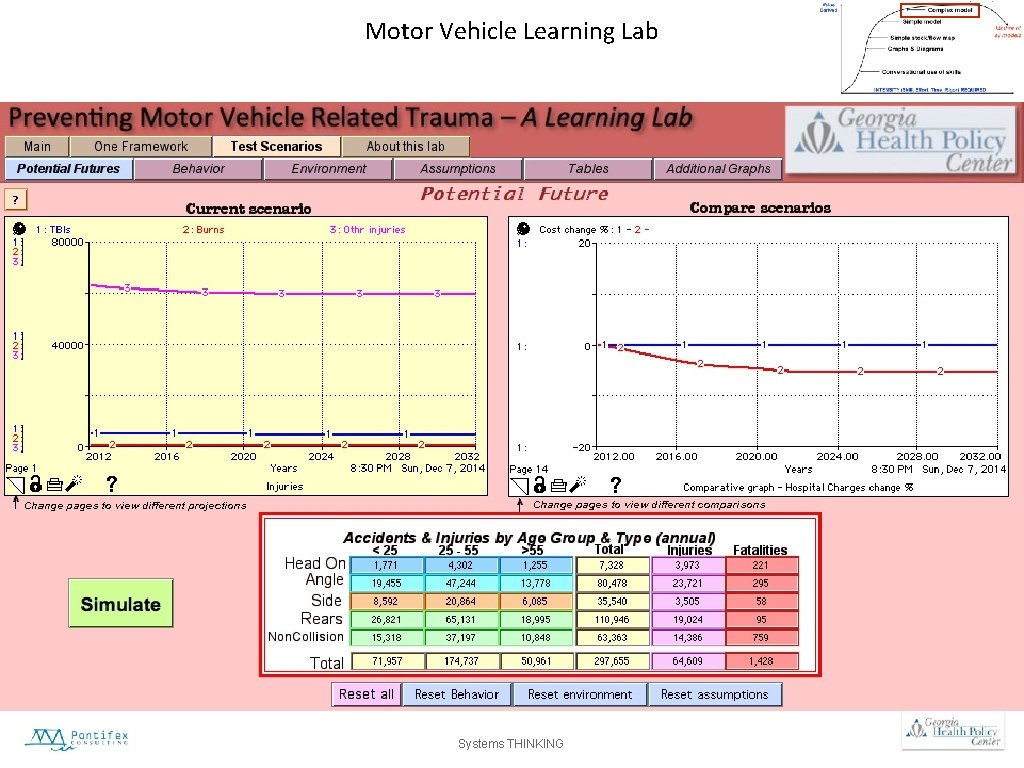
Motor Vehicle Learning Lab Systems THINKING
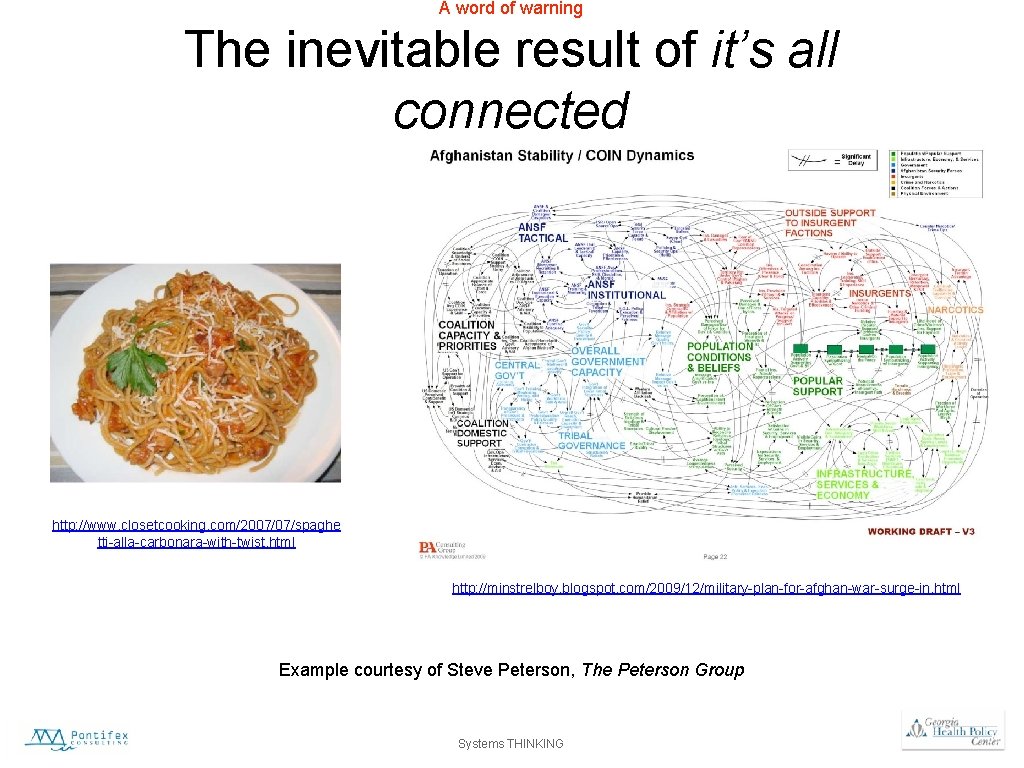
A word of warning The inevitable result of it’s all connected http: //www. closetcooking. com/2007/07/spaghe tti-alla-carbonara-with-twist. html http: //minstrelboy. blogspot. com/2009/12/military-plan-for-afghan-war-surge-in. html Example courtesy of Steve Peterson, The Peterson Group Systems THINKING
Value Derived relative to Intensity Required Complex model Simple model Mother of all models Simple stock/flow map Graphs & Diagrams Conversational use of skills You can use artifacts and activities along the spectrum to increase your systems THINKING skills…and impact! INTENSITY (Skill, Effort, Time, Rigor) REQUIRED Conversational Use • • Get on the Balcony Understand the Physics Help everyone “see the Same Page” Make Useful Sense of the Mess we call reality Intentions • 6 ? Framework Graphs & Diagrams Maps • Trend • Stock & graphs Flow - history maps - future • Causal Loop relationshi Diagrams p graphs (CLDs) • Complex Maps Models • Simple Models • Learning Labs • Complex Models Artifacts & Activities Systems THINKING Not fitting perfectly on the graph!
Q&A Systems THINKING
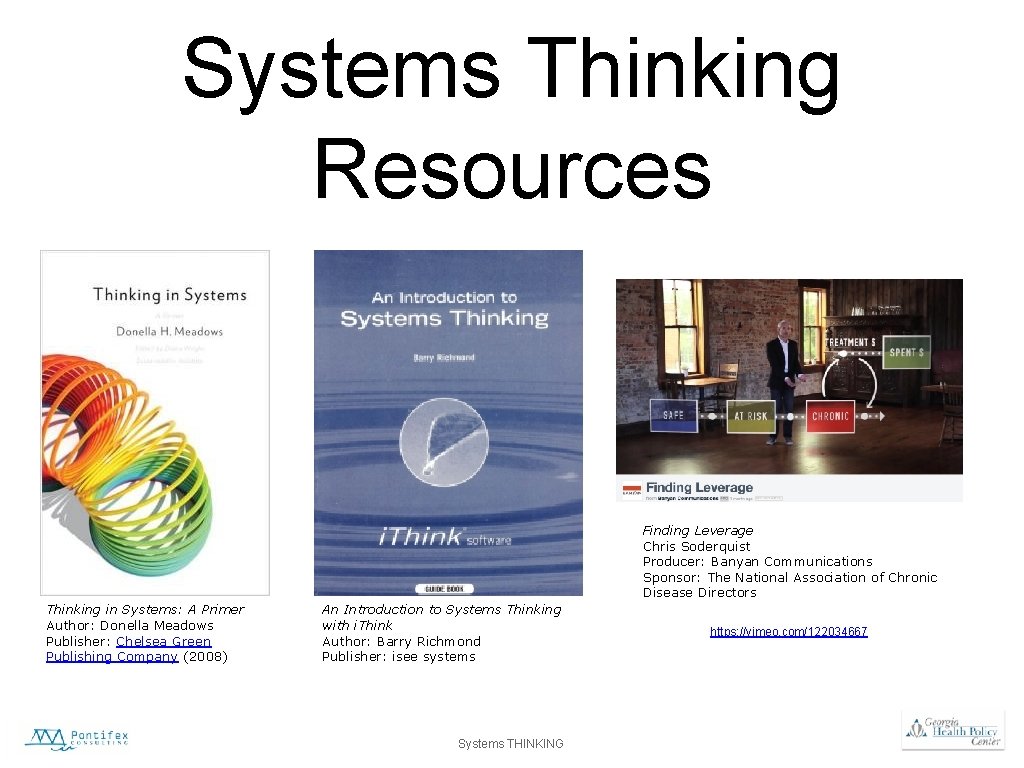
Systems Thinking Resources Finding Leverage Chris Soderquist Producer: Banyan Communications Sponsor: The National Association of Chronic Disease Directors Thinking in Systems: A Primer Author: Donella Meadows Publisher: Chelsea Green Publishing Company (2008) An Introduction to Systems Thinking with i. Think Author: Barry Richmond Publisher: isee systems Systems THINKING https: //vimeo. com/122034667
Contact Info Chris Soderquist Pontifex Consulting 11 Sargent Street Hanover, NH 03755 (603) 653 -0228 Pontifex. Consult@gmail. com www. pontifexconsulting. com Rachel Ferencik Georgia Health Policy Center 55 Park Place, 8 th Floor Atlanta, GA 30303 (404) 413 -0307 rachel@gsu. edu http: //ghpc. gsu. edu Systems THINKING