
Power Cyber SCADA Test Bed Team Dec 1311
Power. Cyber SCADA Test Bed Team Dec 13_11: Cole Hoven Jared Pixley Derek Reiser Rick Sutton Adviser/Client: Prof. Manimaran Govindarasu Graduate Assistant: Aditya Ashok
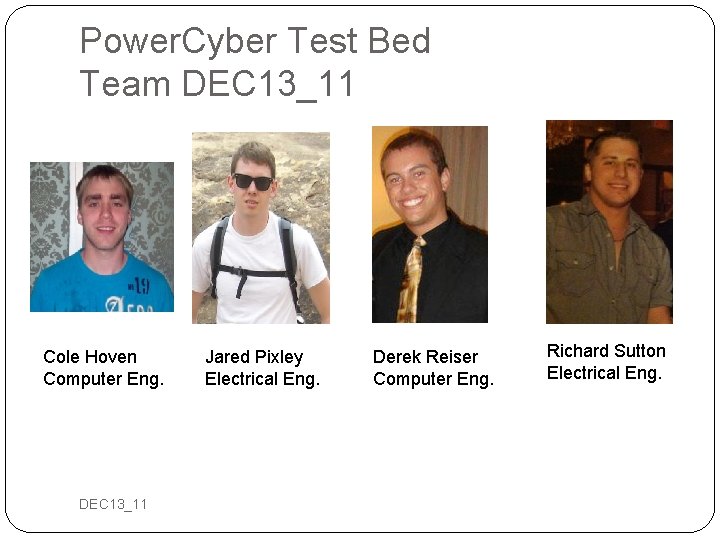
Power. Cyber Test Bed Team DEC 13_11 Cole Hoven Computer Eng. DEC 13_11 Jared Pixley Electrical Eng. Derek Reiser Computer Eng. Richard Sutton Electrical Eng.
What is a SCADA System? �“Supervisory Control and Data Acquisition” �A computer controlled Industrial Control System (ICS) that monitors and controls vital industrial processes �includes Power Transmission and Distribution, Oil, Gas, and Water DEC 13_11
SCADA System Breakdown �Control Center: �Human-Machine Interface (HMI). �Lets human operator view and control processed data �Supervisory Station: �Consists of servers, software and stations �Provides communication between the Control Center and RTU’s. DEC 13_11

SCADA System Breakdown Cont. �Remote Terminal Unit (RTU): �Typically connected to physical equipment. �Collected by the supervisory station. �Sensor: �Measures an analog or status value in an element of a process. �Collects raw process data used to make decisions. DEC 13_11
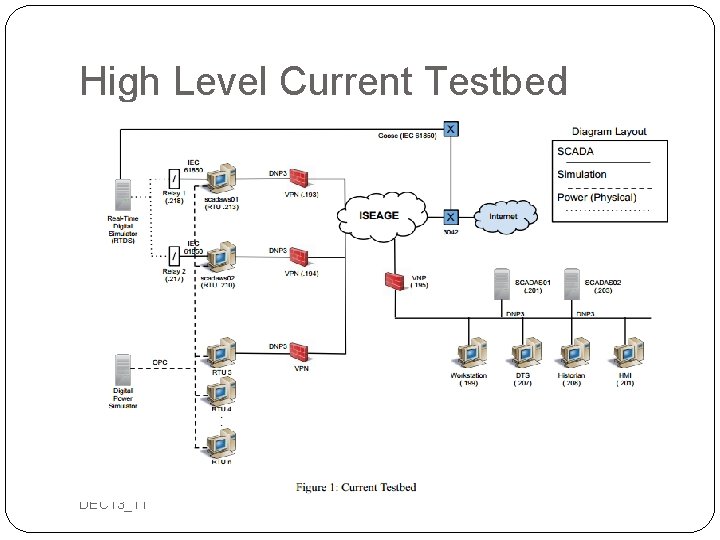
High Level Current Testbed DEC 13_11
Project Overview �The Power. Cyber testbed provides realistic electric grid control infrastructure �Uses a combination of physical, simulated, and emulated components �Provides an accurate smart grid representation DEC 13_11
Test Bed Research Capabilities �Cyber vulnerability assessment �Attack impact analysis �Mitigation strategy evaluations �Cyber-physical system studies DEC 13_11
Problem Statement �Electric power grid highly automated and complex network �Monitors, protects and controls �Security of SCADA systems are at risk �Security analysis of live systems is not practical �Lack of cyber-physical systems research �Testbed recently developed DEC 13_11
Functional Requirements This Semester �SEL_421 connected to system �Understanding MU security analyzer �Functioning 9 bus model �Implement automatic breaker and power generation control logic DEC 13_11
Nonfunctional Requirements �Power system models properly formatted �SEL-421 connected directly to RTU �More realistic setup than being connected to command center directly DEC 13_11
Assumptions �Test equipment will function properly. �Industry standard devices �Simulated devises function identical to physical devises �Test bed is similar to a real-world SCADA system. �Systems protocols accurately portray real-world protocols �Simulation results will be relevant to industry/research �Test bed will be continuously improved upon DEC 13_11
Limitations �We have two semesters to complete the project. �Only 120 V will be used by the relays. �Real-world systems exceed more than 230 k. V. �Only 2 physical relays will be used due to physical, financial and time limitations. �Other relays will be simulated. DEC 13_11
Risks and Mitigation �Risks �Mitigation 1. Causing current 1. Test system after system to be nonfunctional 2. If SEL PMU can be connect to the RTU 3. If testbed software can be started remotely 4. Learning curve DEC 13_11 adding components 2. Trial and error: Want SEL to connect to RTU 3. Test software early to find limitations and issues 4. Continue working and ask questions
New Components �Several new devices are going to be added to the testbed • OPAL-RT Simulator • SEL-421 • SEL-3378 DEC 13_11
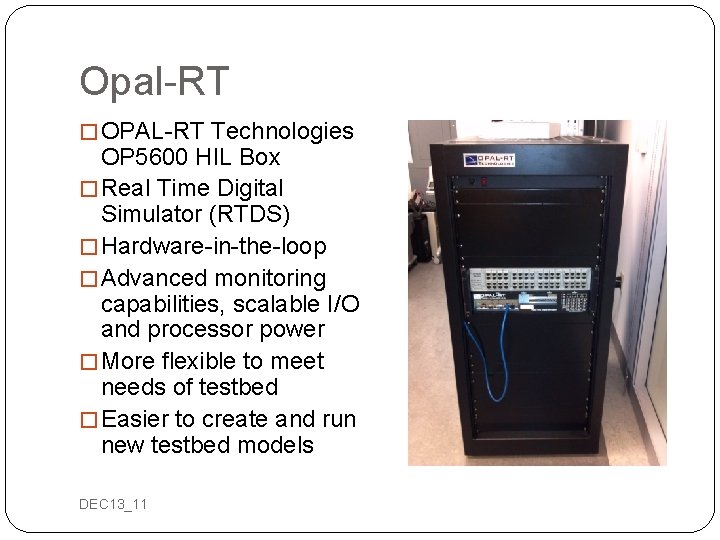
Opal-RT � OPAL-RT Technologies OP 5600 HIL Box � Real Time Digital Simulator (RTDS) � Hardware-in-the-loop � Advanced monitoring capabilities, scalable I/O and processor power � More flexible to meet needs of testbed � Easier to create and run new testbed models DEC 13_11
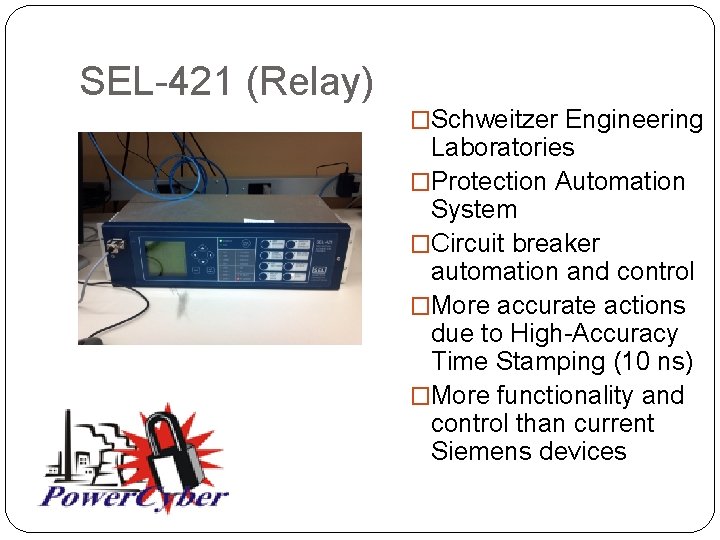
SEL-421 (Relay) �Schweitzer Engineering Laboratories �Protection Automation System �Circuit breaker automation and control �More accurate actions due to High-Accuracy Time Stamping (10 ns) �More functionality and control than current Siemens devices
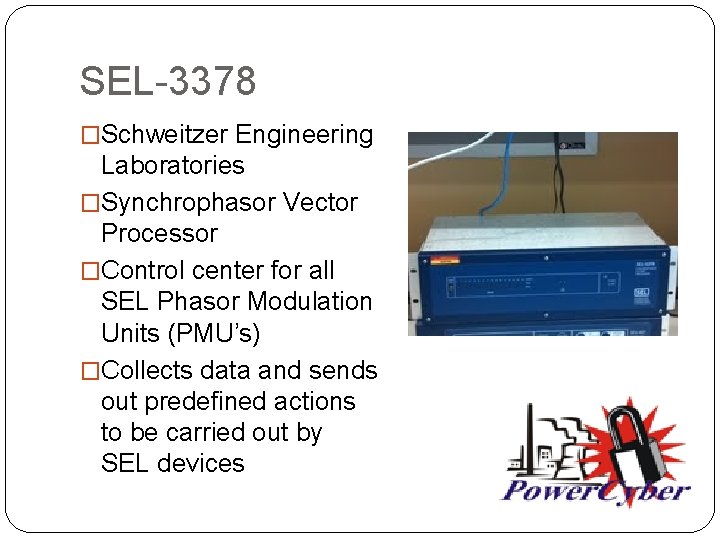
SEL-3378 �Schweitzer Engineering Laboratories �Synchrophasor Vector Processor �Control center for all SEL Phasor Modulation Units (PMU’s) �Collects data and sends out predefined actions to be carried out by SEL devices
RT-LAB/Simulink Models �RT-LAB �Runs a specified Simulink model on the OPAL-RT simulator �Special “OP-COM” blocks used and allow for monitoring and control of data � Simulink � Models created using block sets � Data transfer over different protocols for compatibility with devices
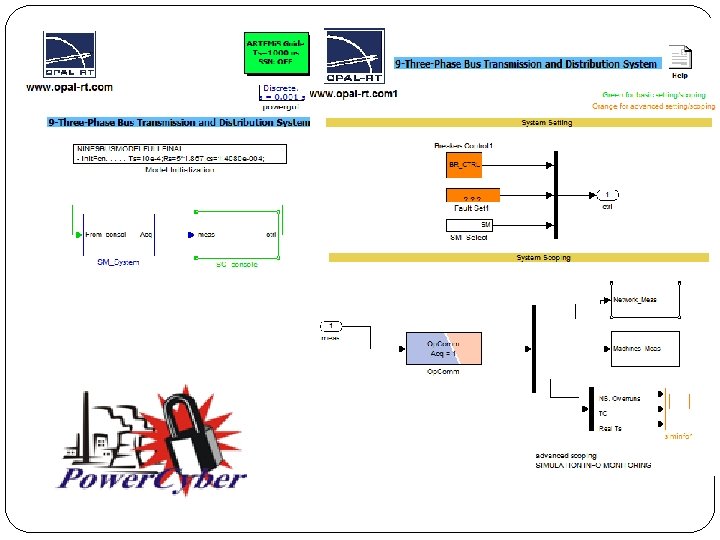
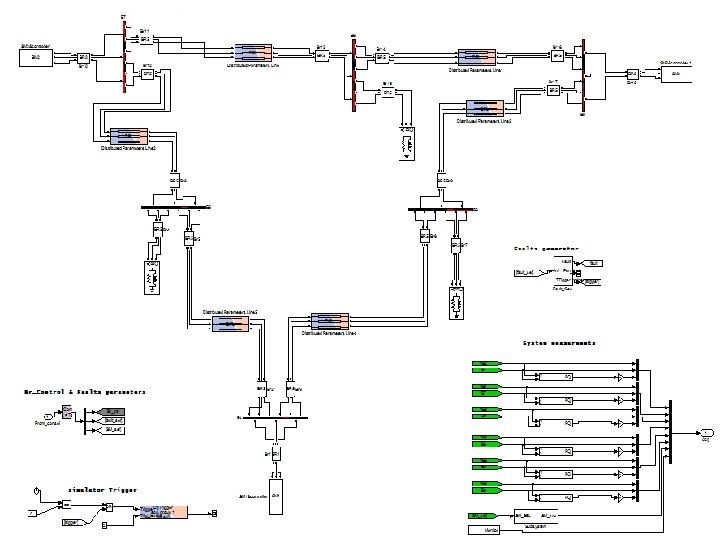
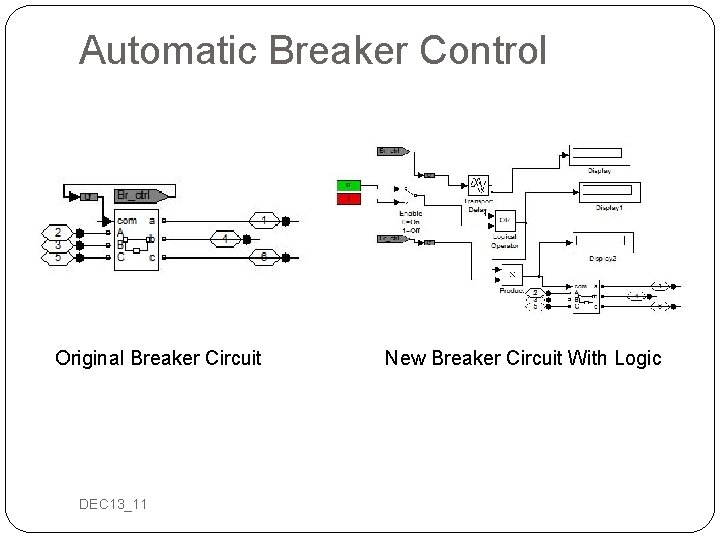
Automatic Breaker Control Original Breaker Circuit DEC 13_11 New Breaker Circuit With Logic
Current Status �Functioning 9 bus model in Simulink �Run test simulation on 9 bus model �Continue working on model data transfer through IEC 61850 protocol �SEL PMU connected to the network -Set communication protocols for SEL -Used security tools on current network DEC 13_11
Next Semesters Plan �Transfer of data between model and testbed components �Integration of the OPAL-RT Simulator �Complete 30 bus model in Simulink �Remote access server �Connect the SEL processor �Run further impact analysis DEC 13_11
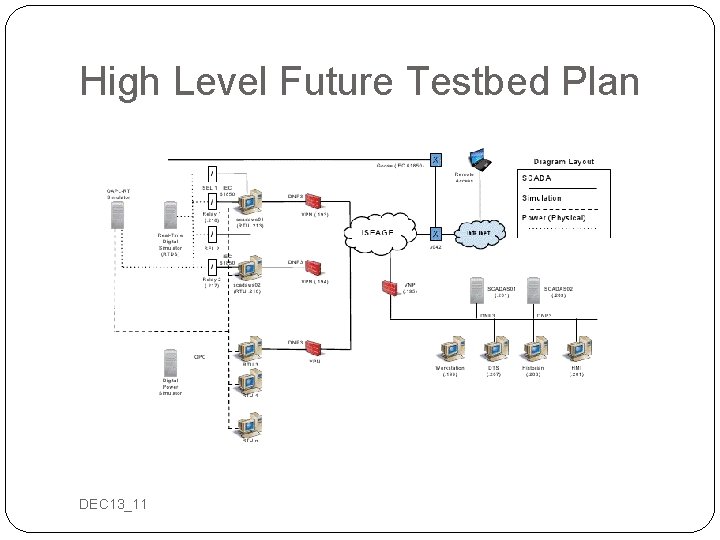
High Level Future Testbed Plan DEC 13_11
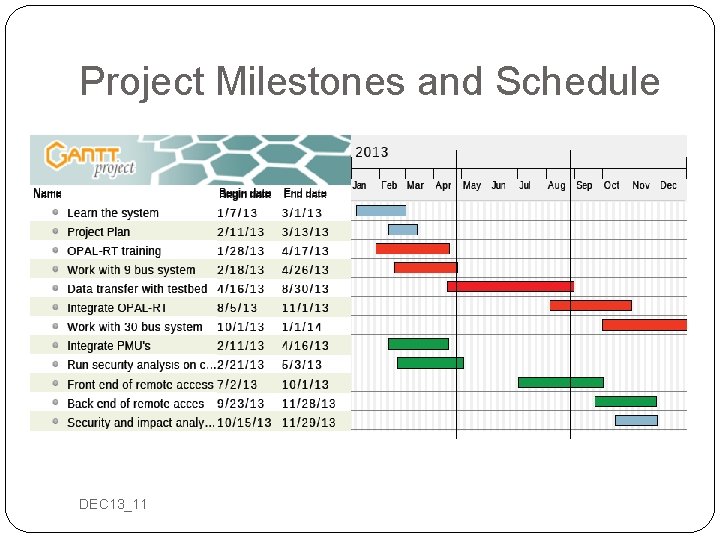
Project Milestones and Schedule DEC 13_11
Questions? DEC 13_11
- Slides: 27