
Poverty reduction and the New Global Middle class
Poverty reduction and the New Global Middle class Subject Guide Global and regional/continental progress towards poverty reduction, including the growth of the “new global middle class”
Reducing poverty – the MDGs and SDGs • READ: Kognity 3. 1. 1 Global and Regional Poverty Make notes on the contribution the MDGs made towards poverty reduction and the aims of the SDGs in poverty reduction
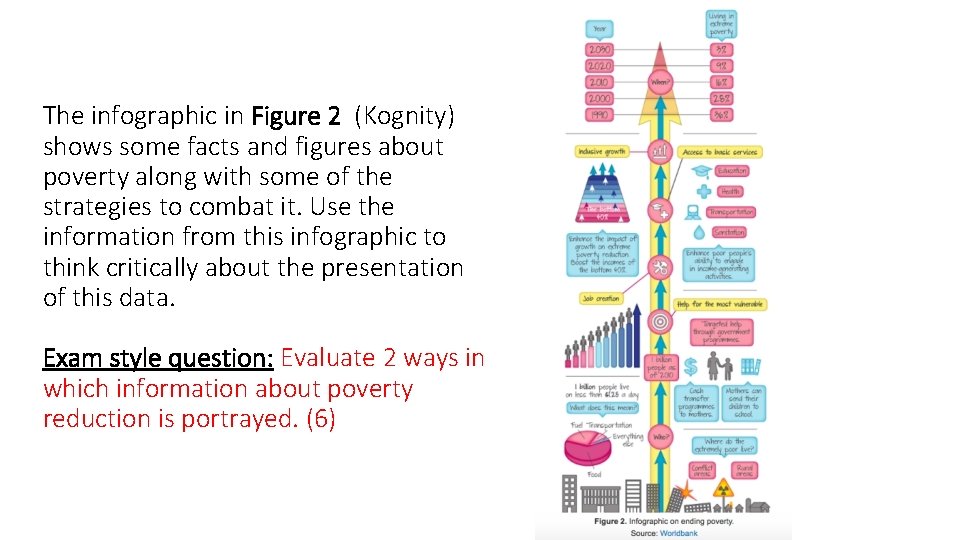
The infographic in Figure 2 (Kognity) shows some facts and figures about poverty along with some of the strategies to combat it. Use the information from this infographic to think critically about the presentation of this data. Exam style question: Evaluate 2 ways in which information about poverty reduction is portrayed. (6)
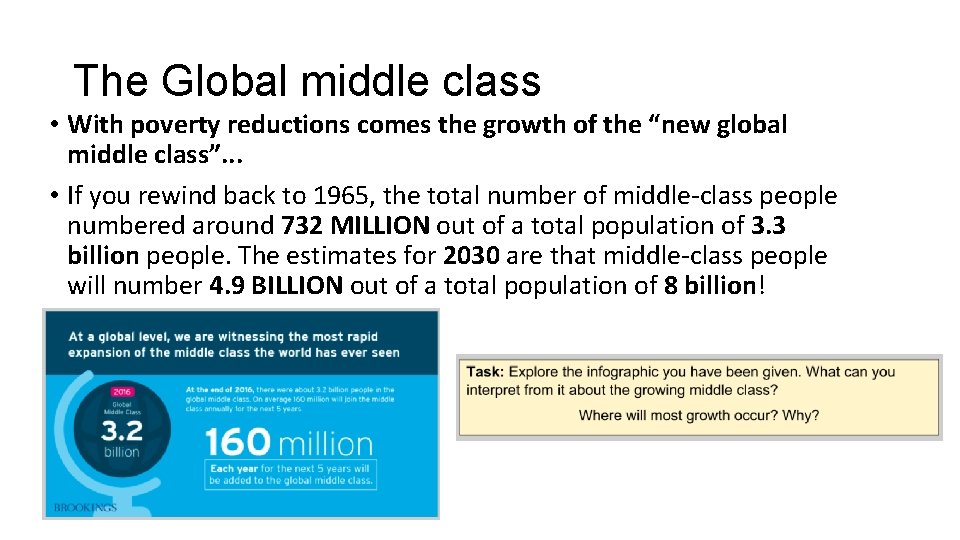
The Global middle class • With poverty reductions comes the growth of the “new global middle class”. . . • If you rewind back to 1965, the total number of middle-class people numbered around 732 MILLION out of a total population of 3. 3 billion people. The estimates for 2030 are that middle-class people will number 4. 9 BILLION out of a total population of 8 billion!
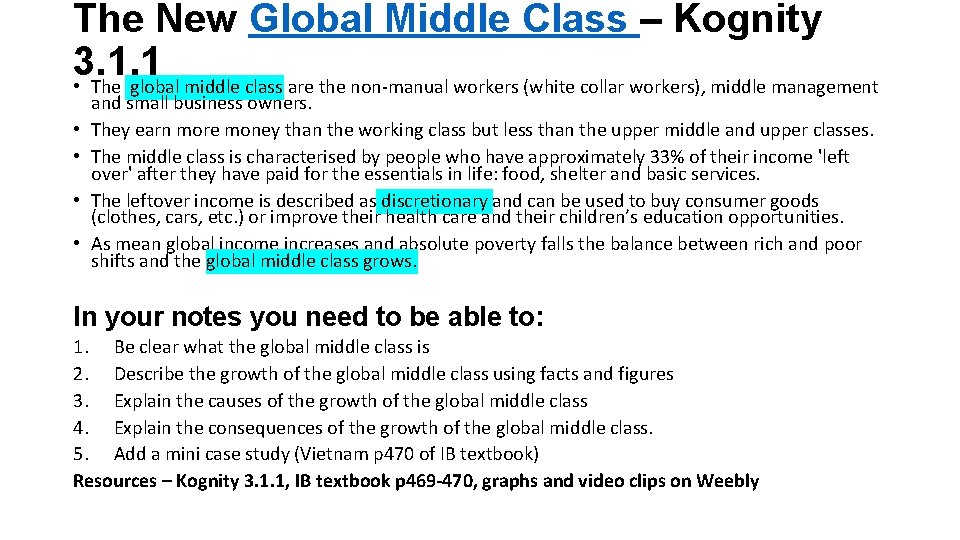
The New Global Middle Class – Kognity 3. 1. 1 • The global middle class are the non-manual workers (white collar workers), middle management • • and small business owners. They earn more money than the working class but less than the upper middle and upper classes. The middle class is characterised by people who have approximately 33% of their income 'left over' after they have paid for the essentials in life: food, shelter and basic services. The leftover income is described as discretionary and can be used to buy consumer goods (clothes, cars, etc. ) or improve their health care and their children’s education opportunities. As mean global income increases and absolute poverty falls the balance between rich and poor shifts and the global middle class grows. In your notes you need to be able to: 1. Be clear what the global middle class is 2. Describe the growth of the global middle class using facts and figures 3. Explain the causes of the growth of the global middle class 4. Explain the consequences of the growth of the global middle class. 5. Add a mini case study (Vietnam p 470 of IB textbook) Resources – Kognity 3. 1. 1, IB textbook p 469 -470, graphs and video clips on Weebly
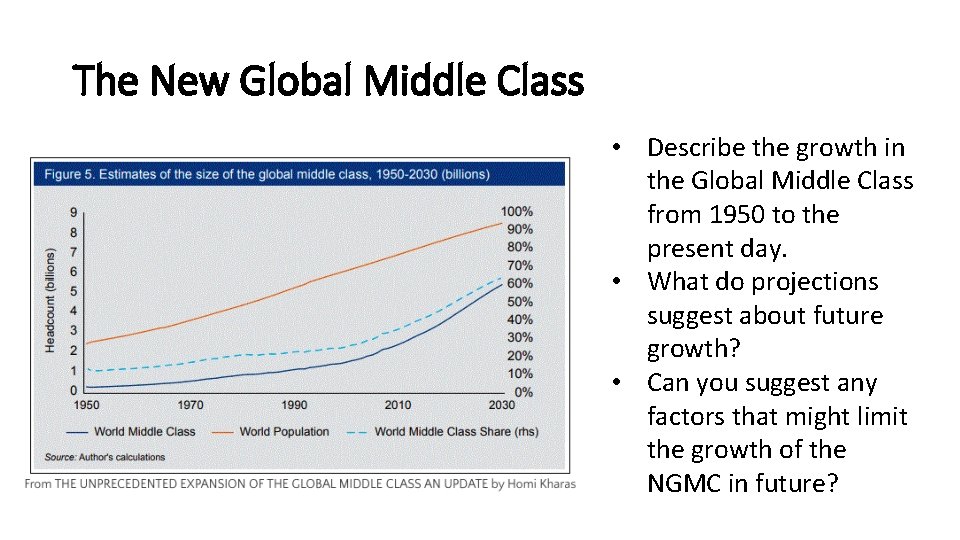
The New Global Middle Class • Describe the growth in the Global Middle Class from 1950 to the present day. • What do projections suggest about future growth? • Can you suggest any factors that might limit the growth of the NGMC in future?
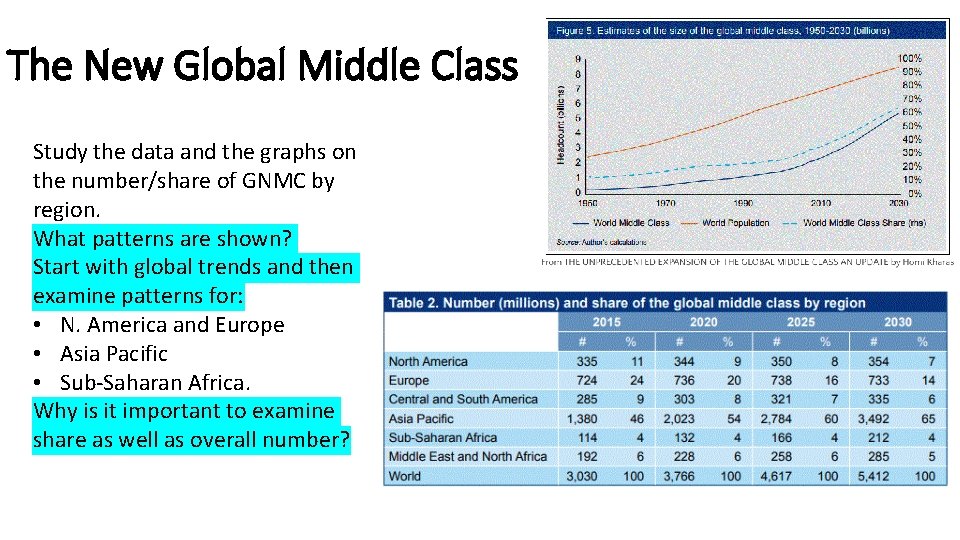
The New Global Middle Class Study the data and the graphs on the number/share of GNMC by region. What patterns are shown? Start with global trends and then examine patterns for: • N. America and Europe • Asia Pacific • Sub-Saharan Africa. Why is it important to examine share as well as overall number?
- Slides: 8