
POVERTY IN THE UNITED STATES Presented by IrinaMihaela
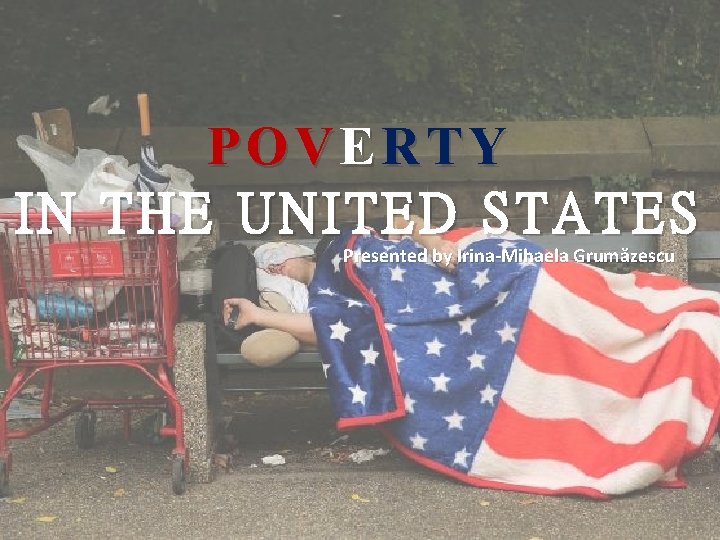
POVERTY IN THE UNITED STATES Presented by Irina-Mihaela Grumăzescu
Definition of poverty: Poverty is a state of deprivation, lacking the usual or socially acceptable amount of money or material possessions.
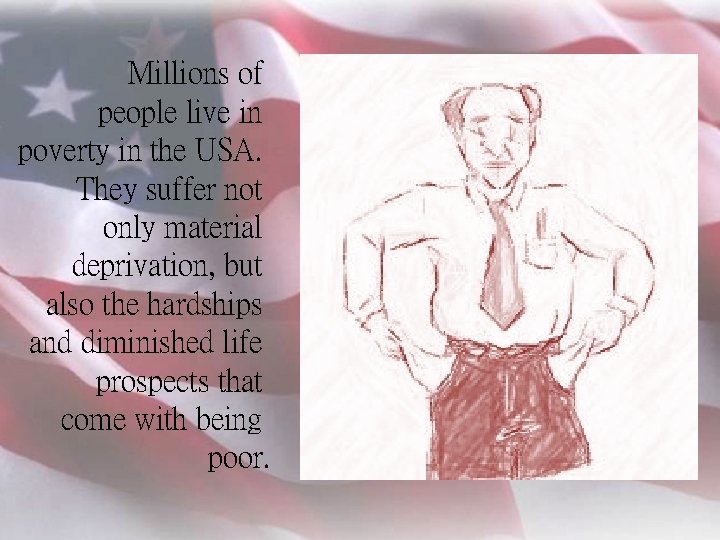
Millions of people live in poverty in the USA. They suffer not only material deprivation, but also the hardships and diminished life prospects that come with being poor.
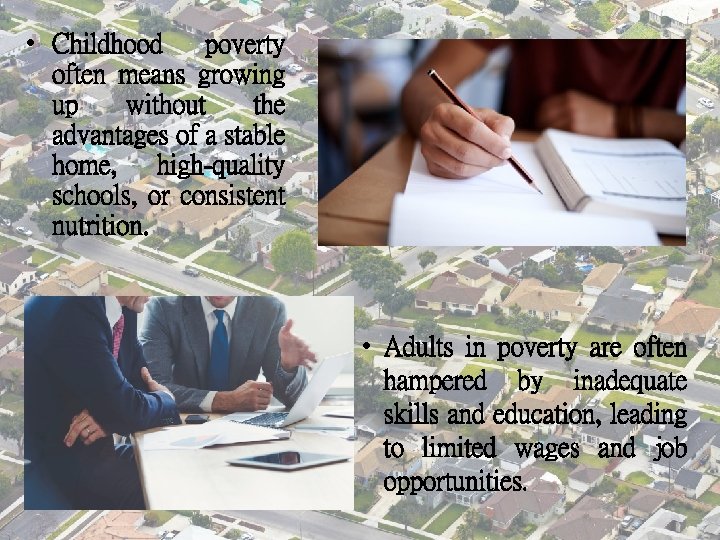
• Childhood poverty often means growing up without the advantages of a stable home, high-quality schools, or consistent nutrition. • Adults in poverty are often hampered by inadequate skills and education, leading to limited wages and job opportunities.
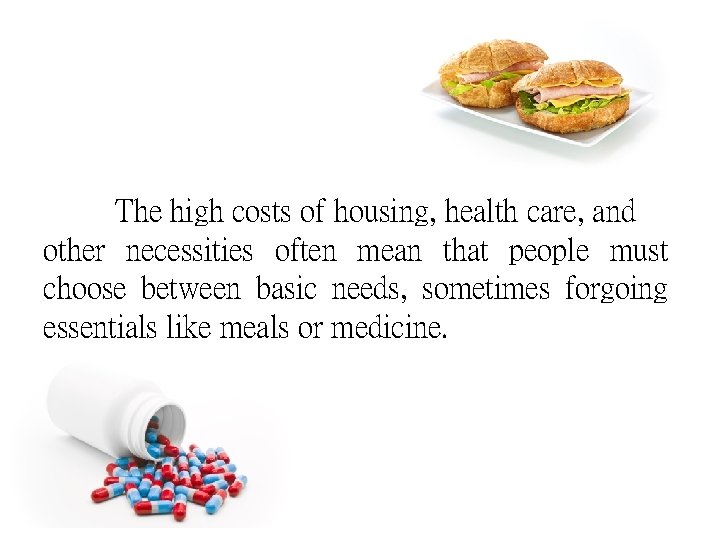
The high costs of housing, health care, and other necessities often mean that people must choose between basic needs, sometimes forgoing essentials like meals or medicine.
In 2015, 13. 5% (43. 1 million) of Americans lived in poverty. Starting in the 1930 s, relative poverty rates have consistently exceeded those of other wealthy nations. The lowest poverty rates are found in New Hampshire, Vermont, Minnesota and Nebraska, which have between 8. 7% and 9. 1% of their population living in poverty.
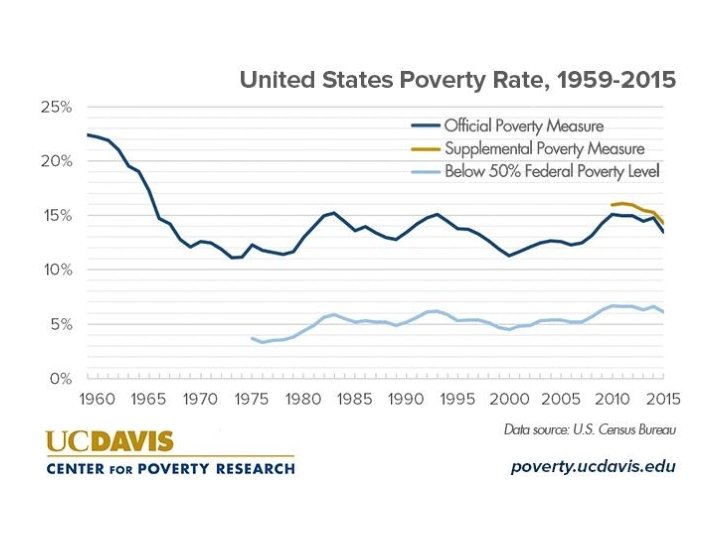
In 2009 the number of people who were in poverty was approaching 1960 s levels that led to the national War on Poverty. In 2011 extreme poverty in the United States, meaning households living on less than $2 per day before government benefits, was double 1996 levels at 1. 5 million households, including 2. 8 million children. In 2012 the percentage of seniors living in poverty was 14% while 18% of children were. The addition of Social Security benefits contributed more to reduce poverty than any other factor.
Furthermore, research demonstrates that poverty leads to substantial and sustained neurobiological stressors that can inhibit intellectual and emotional development and sound decision making. For children in particular, poverty means living with the stress that comes from insufficient nutritional intake, living in the presence of violence in their community or household, and not having a secure place to sleep at night. These challenges make it harder for children to learn and thrive in school, which, in turn, leads to problems that cumulate over childhood and into adulthood. The concern is that children born into deprivation will live their lives stuck in a perpetual poverty trap.
Poverty is a complex, multifaceted problem that can be overcome only through a comprehensive set of innovative policies and effective reforms.
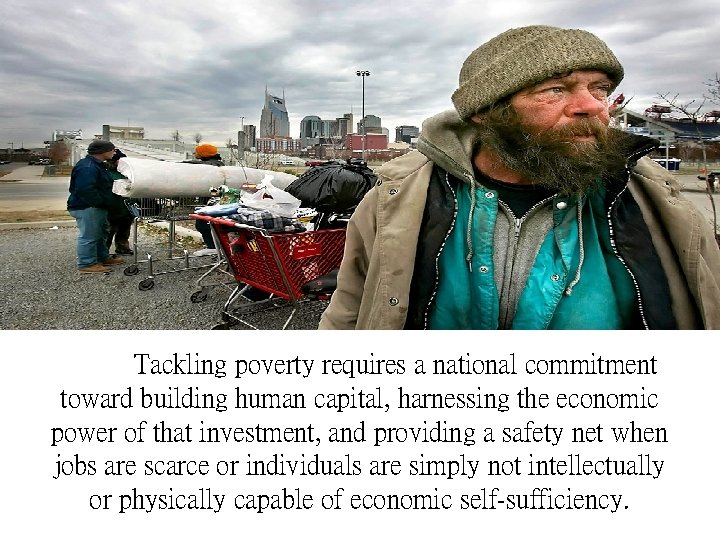
Tackling poverty requires a national commitment toward building human capital, harnessing the economic power of that investment, and providing a safety net when jobs are scarce or individuals are simply not intellectually or physically capable of economic self-sufficiency.
It means a commitment to addressing the causes and consequences of poverty throughout the life course.
END Thank you for your time!
- Slides: 13