
Pottery or clay sculpture fired at high temperatures


- Slides: 27
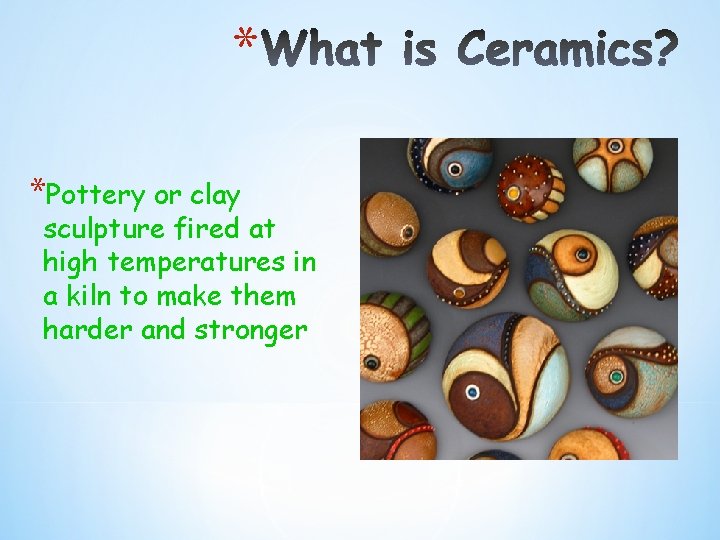
* *Pottery or clay sculpture fired at high temperatures in a kiln to make them harder and stronger
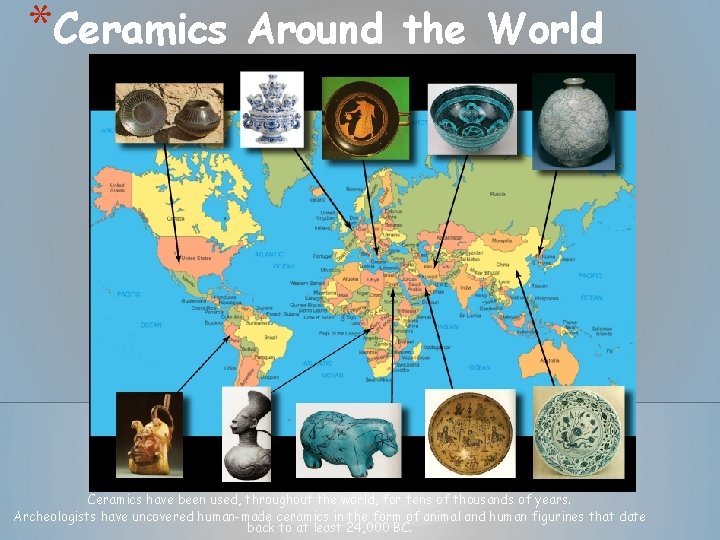
*Ceramics Around the World Ceramics have been used, throughout the world, for tens of thousands of years. Archeologists have uncovered human-made ceramics in the form of animal and human figurines that date back to at least 24, 000 BC.
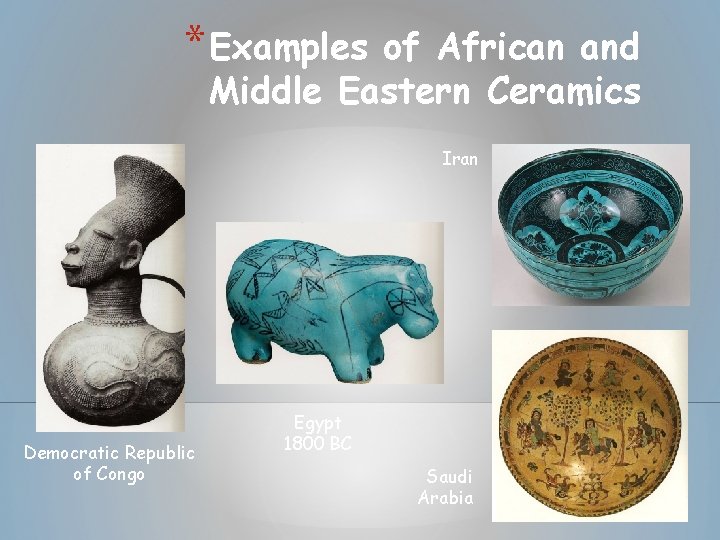
* Examples of African and Middle Eastern Ceramics Iran Democratic Republic of Congo Egypt 1800 BC Saudi Arabia
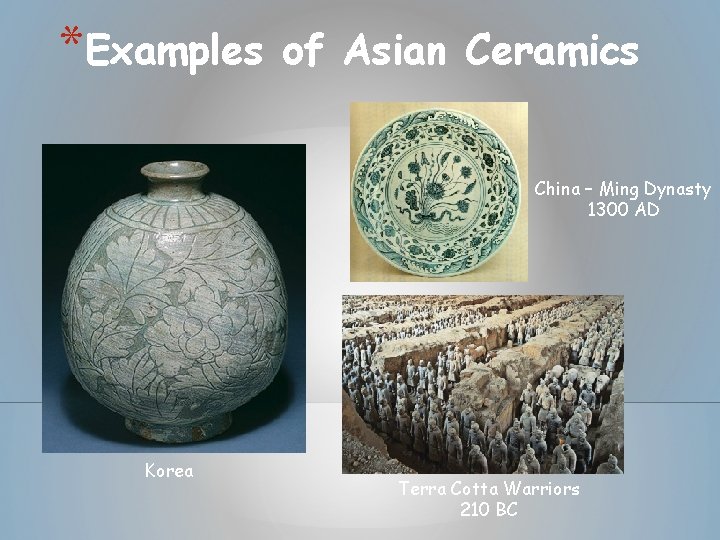
*Examples of Asian Ceramics China – Ming Dynasty 1300 AD Korea Terra Cotta Warriors 210 BC
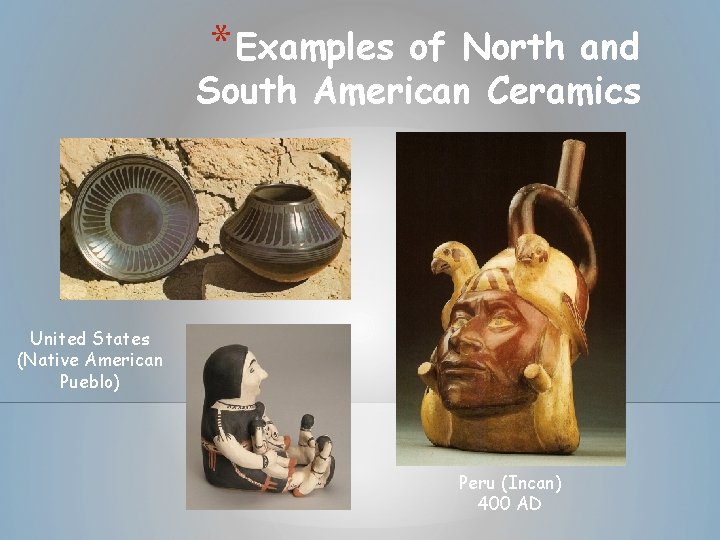
* Examples of North and South American Ceramics United States (Native American Pueblo) Peru (Incan) 400 AD
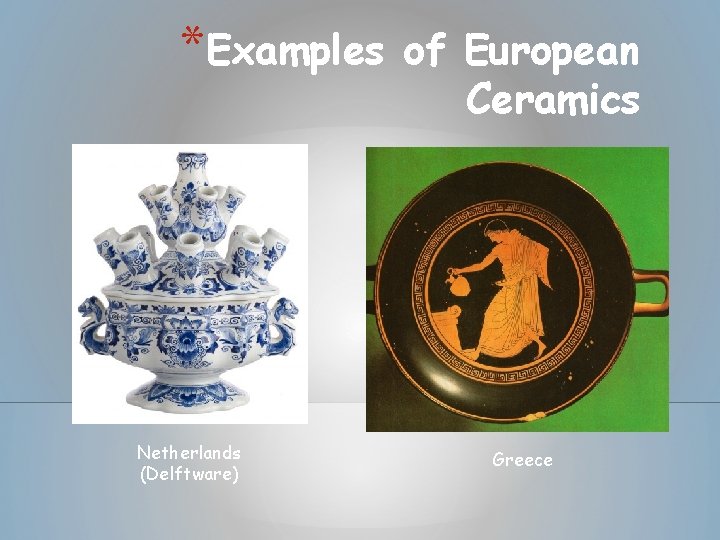
*Examples Netherlands (Delftware) of European Ceramics Greece
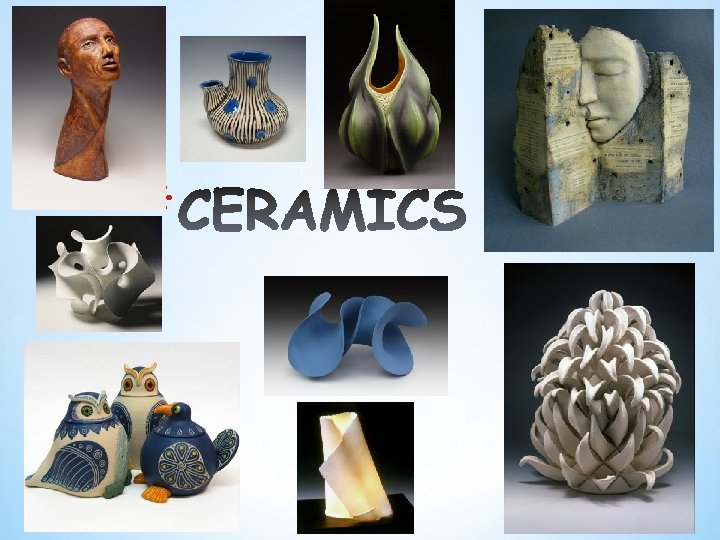
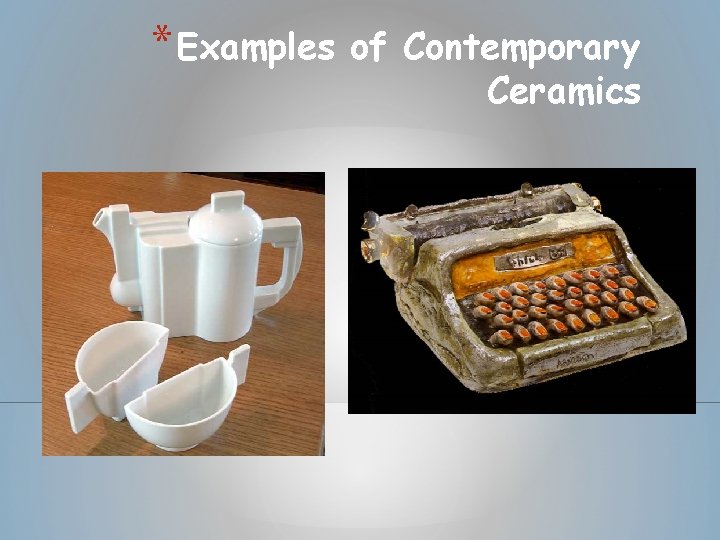
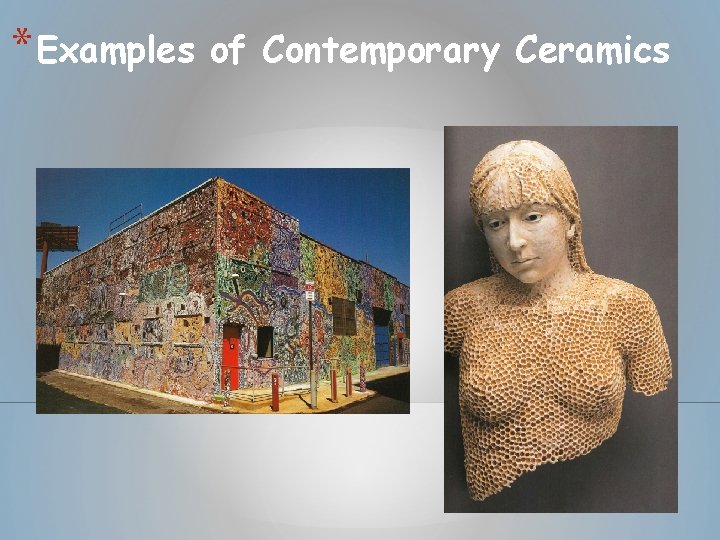
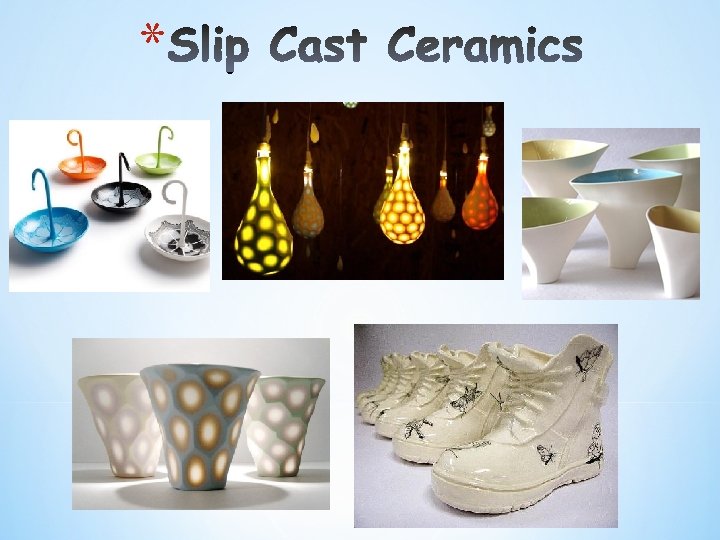
* Examples of Contemporary Ceramics
* Examples of Contemporary Ceramics
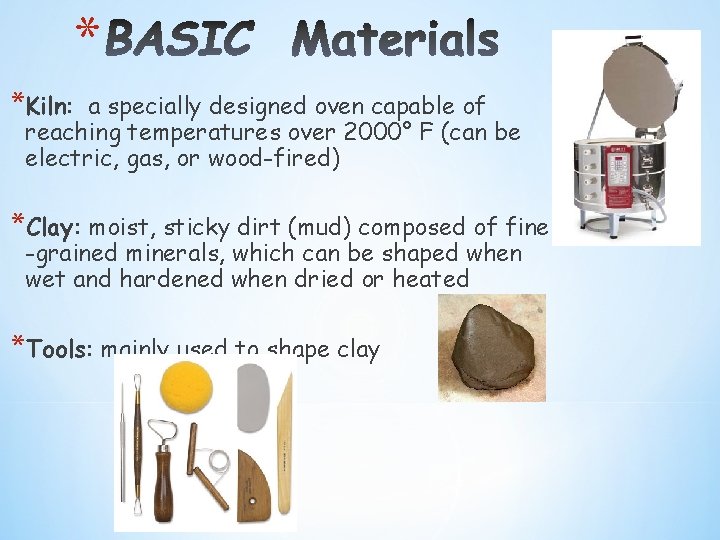
* *Kiln: a specially designed oven capable of reaching temperatures over 2000° F (can be electric, gas, or wood-fired) *Clay: moist, sticky dirt (mud) composed of fine -grained minerals, which can be shaped when wet and hardened when dried or heated *Tools: mainly used to shape clay
*Common Types of Clay *Earthenware: clay fired at relatively low temperatures (1800°F-2100°F), often contains iron and has a porous surface when fired *Stoneware: a buff, gray or brown clay which is heavy, opaque, and highly plastic in nature with a high firing temperature (2200°F-2400°F) *Porcelain: a very fine white clay with a high firing temperature (2200°F 2550°F), is non-porous, strong, and translucent when fired
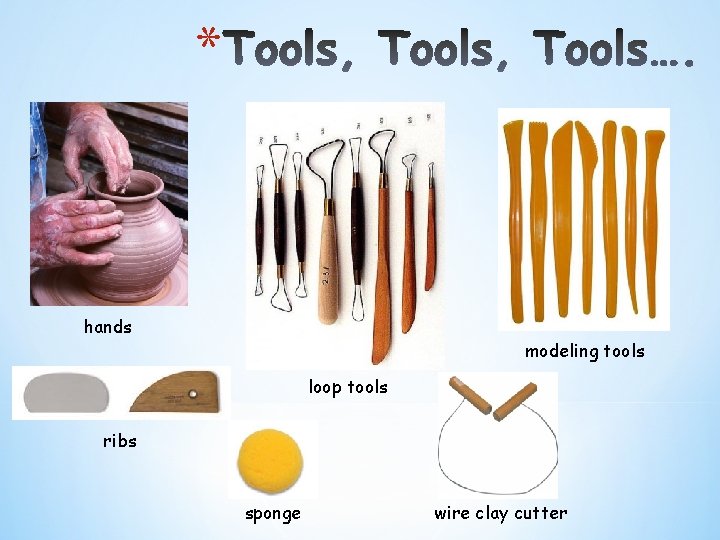
* hands modeling tools loop tools ribs sponge wire clay cutter
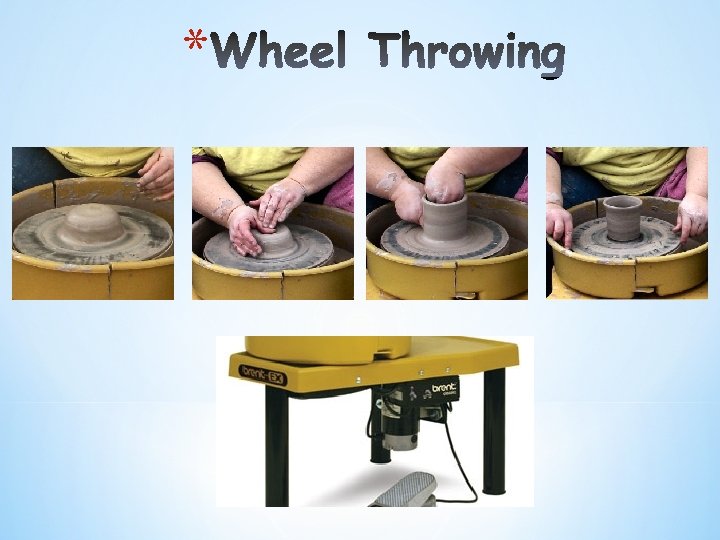
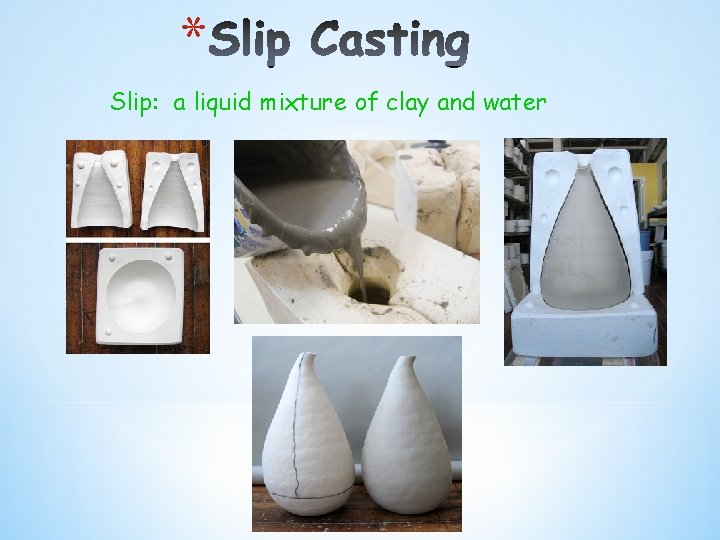
* *Wheel Throwing *Slip Casting *Hand Building
* Slip: a liquid mixture of clay and water
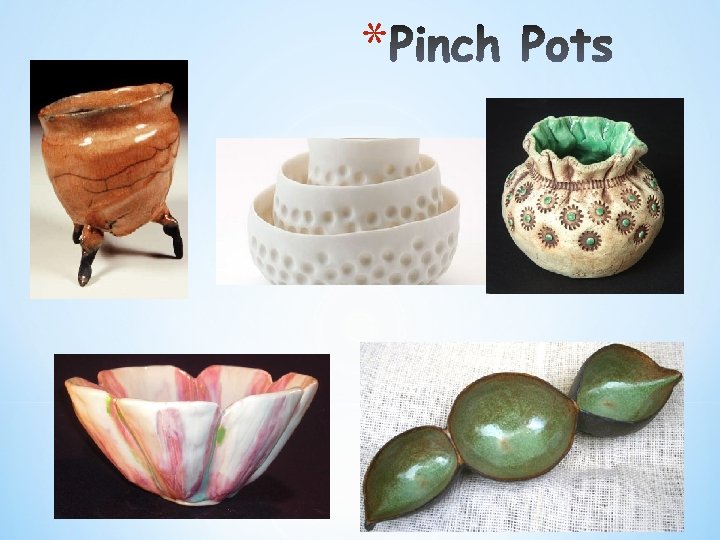
* *Pinch Pot *Coil Construction *Slab Construction
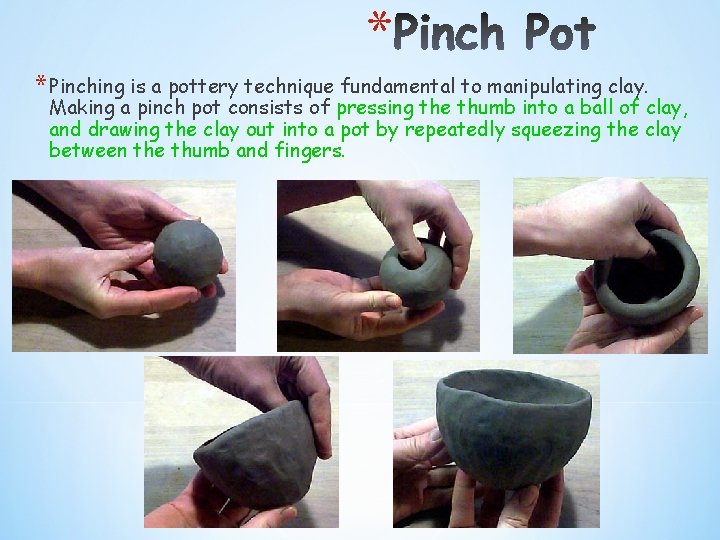
* * Pinching is a pottery technique fundamental to manipulating clay. Making a pinch pot consists of pressing the thumb into a ball of clay, and drawing the clay out into a pot by repeatedly squeezing the clay between the thumb and fingers.
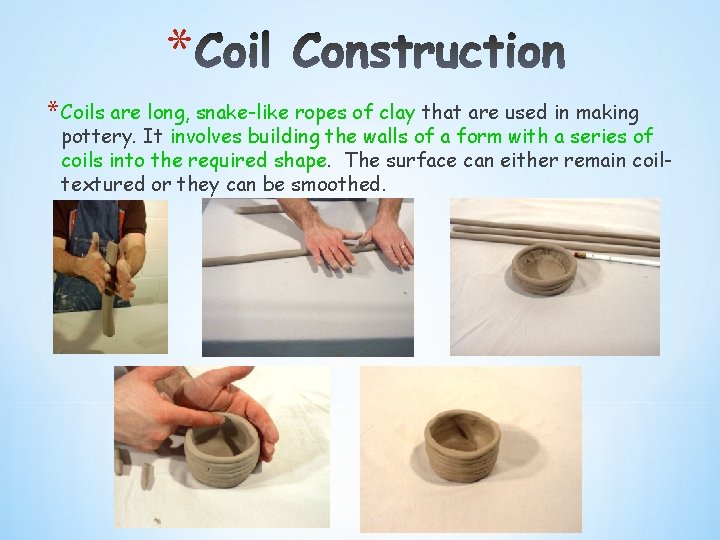
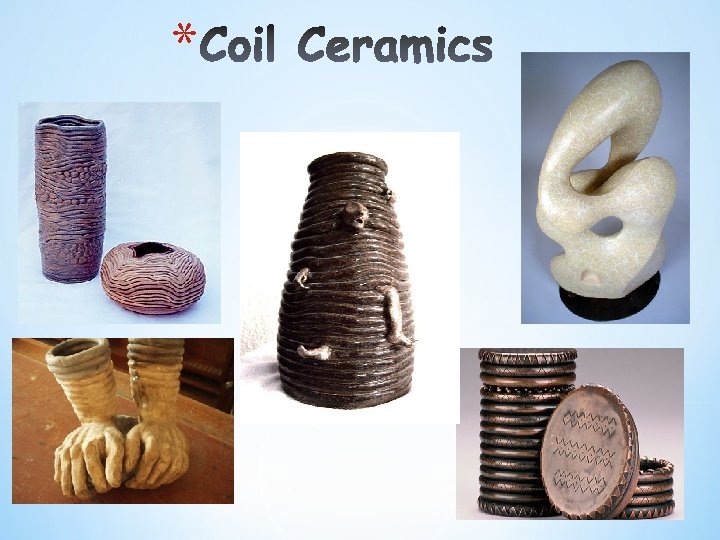
* * Coils are long, snake-like ropes of clay that are used in making pottery. It involves building the walls of a form with a series of coils into the required shape. The surface can either remain coiltextured or they can be smoothed.
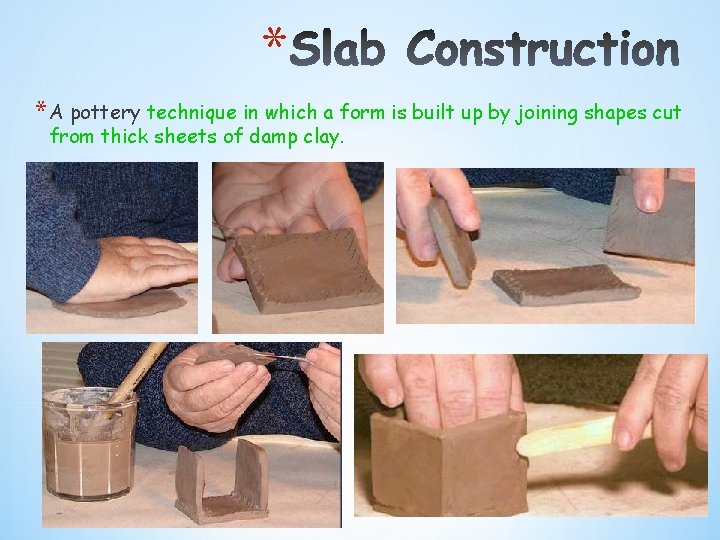
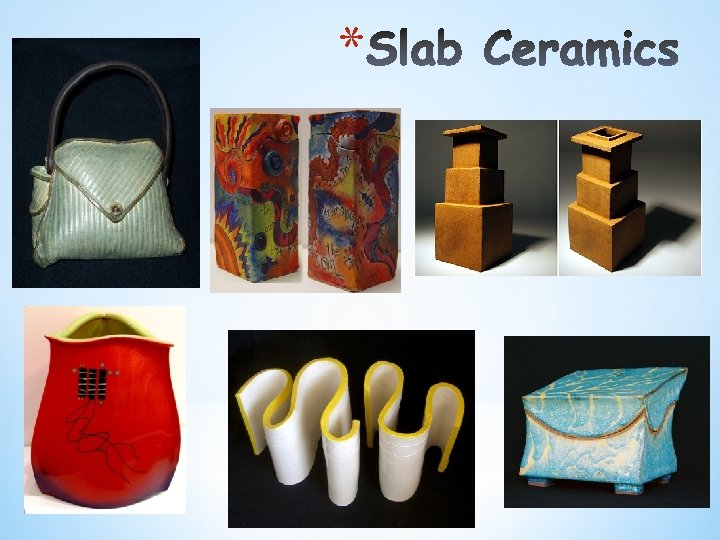
* * A pottery technique in which a form is built up by joining shapes cut from thick sheets of damp clay.
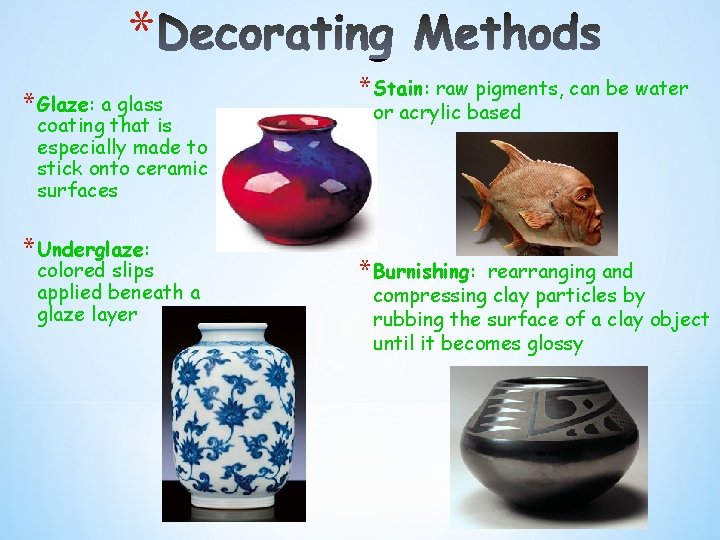
* * Glaze: a glass coating that is especially made to stick onto ceramic surfaces * Underglaze: colored slips applied beneath a glaze layer * Stain: raw pigments, can be water or acrylic based * Burnishing: rearranging and compressing clay particles by rubbing the surface of a clay object until it becomes glossy
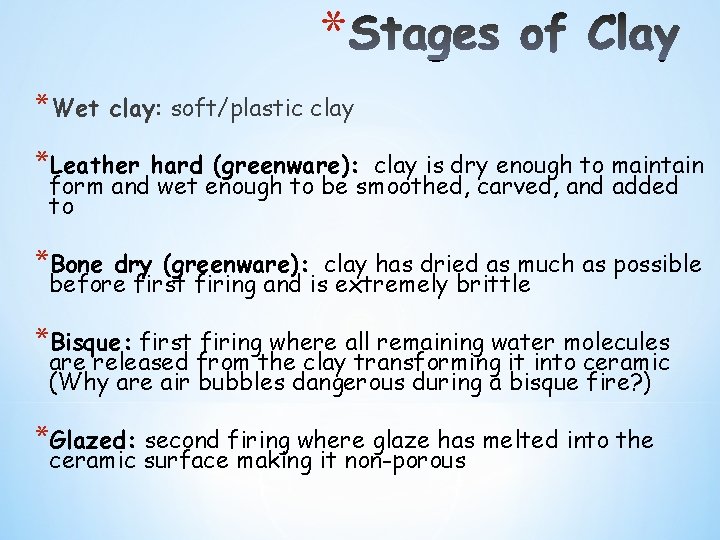
* *Wet clay: soft/plastic clay *Leather hard (greenware): clay is dry enough to maintain form and wet enough to be smoothed, carved, and added to *Bone dry (greenware): clay has dried as much as possible before first firing and is extremely brittle *Bisque: first firing where all remaining water molecules are released from the clay transforming it into ceramic (Why are air bubbles dangerous during a bisque fire? ) *Glazed: second firing where glaze has melted into the ceramic surface making it non-porous
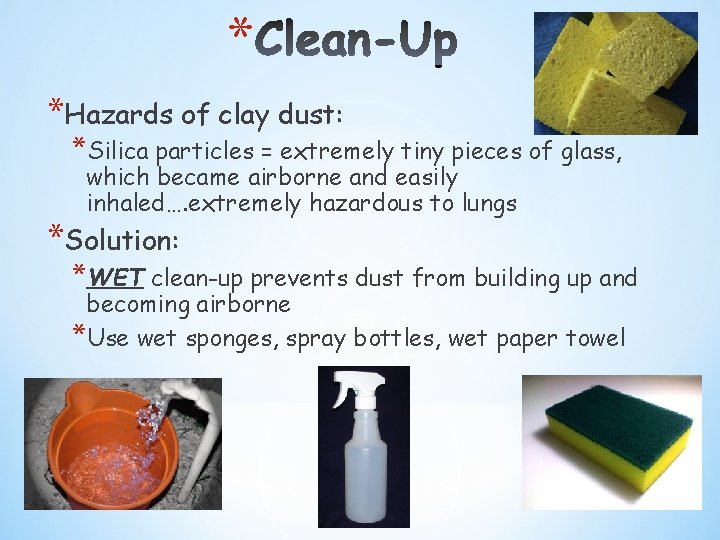
* *Hazards of clay dust: *Silica particles = extremely tiny pieces of glass, which became airborne and easily inhaled…. extremely hazardous to lungs *Solution: *WET clean-up prevents dust from building up and becoming airborne *Use wet sponges, spray bottles, wet paper towel