
Potential Roles and Limitations of Biomarkers in Alzheimers
Potential Roles and Limitations of Biomarkers in Alzheimer’s Disease Richard Mayeux, MD, MSc Columbia University
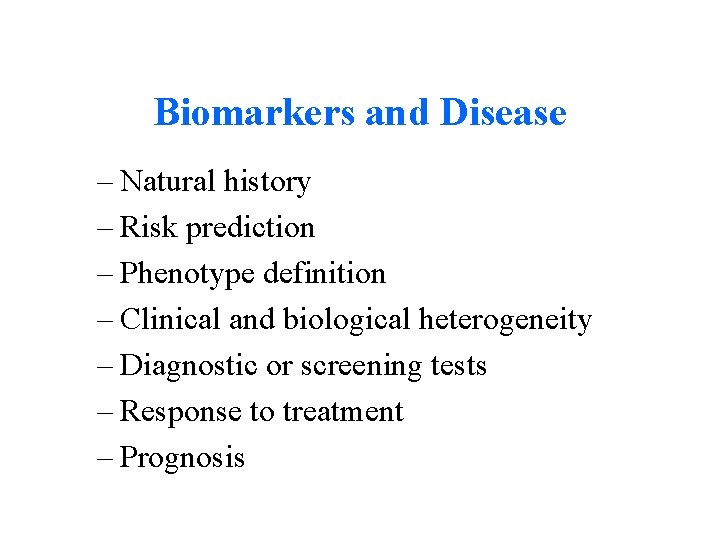
Biomarkers and Disease – Natural history – Risk prediction – Phenotype definition – Clinical and biological heterogeneity – Diagnostic or screening tests – Response to treatment – Prognosis
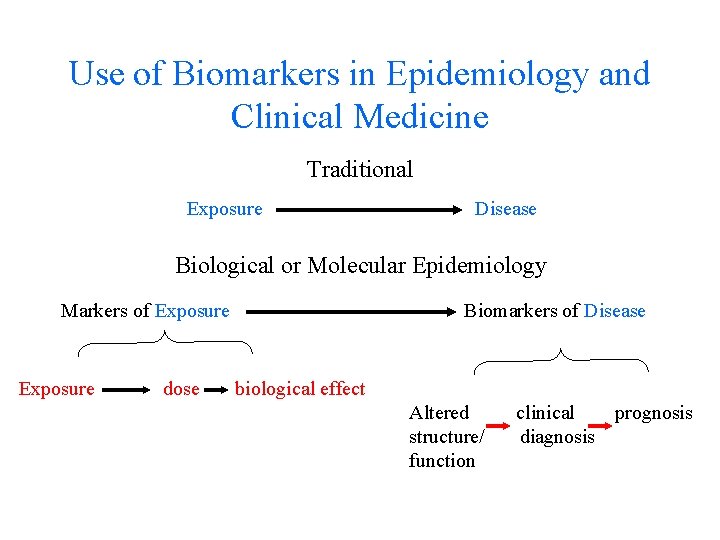
Use of Biomarkers in Epidemiology and Clinical Medicine Traditional Exposure Disease Biological or Molecular Epidemiology Markers of Exposure dose Biomarkers of Disease biological effect Altered structure/ function clinical prognosis diagnosis
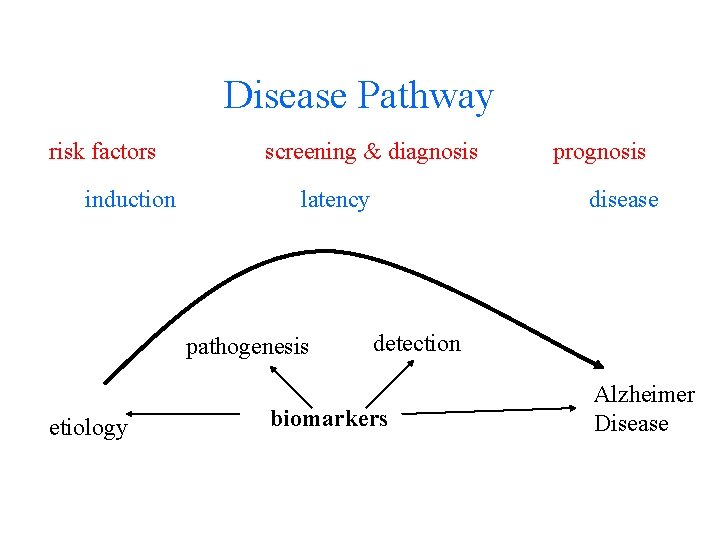
Disease Pathway risk factors induction screening & diagnosis latency pathogenesis etiology prognosis disease detection biomarkers Alzheimer Disease
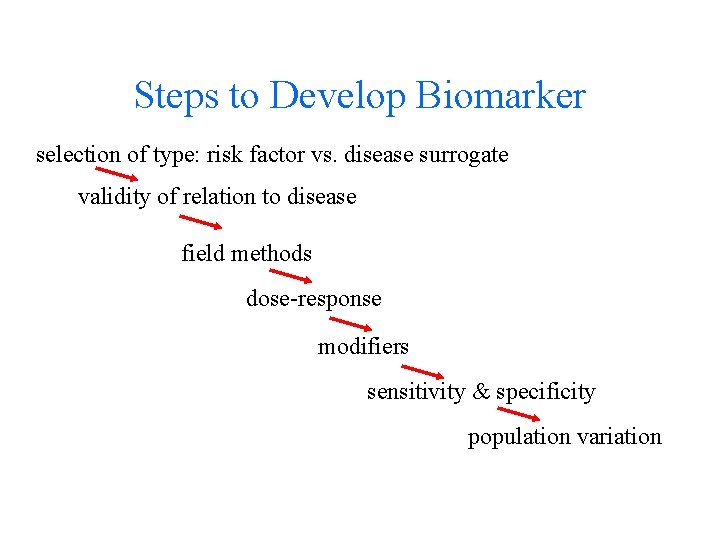
Steps to Develop Biomarker selection of type: risk factor vs. disease surrogate validity of relation to disease field methods dose-response modifiers sensitivity & specificity population variation
Risk or Predictors
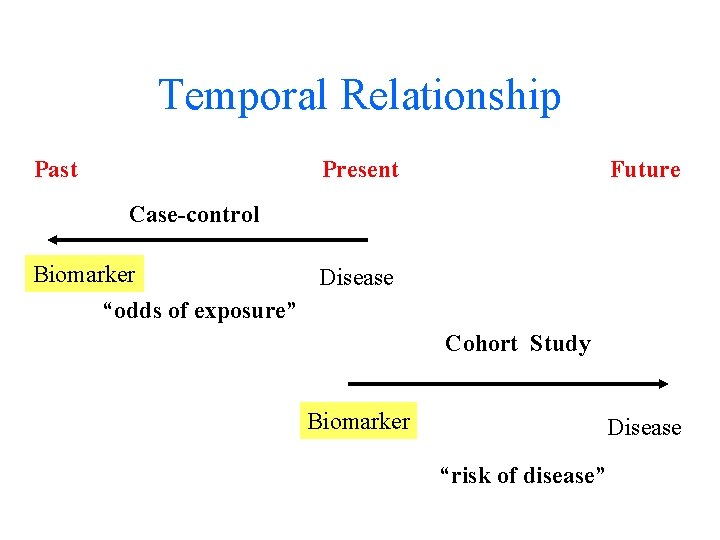
Temporal Relationship Past Present Future Case-control Biomarker Disease “odds of exposure” Cohort Study Biomarker Disease “risk of disease”
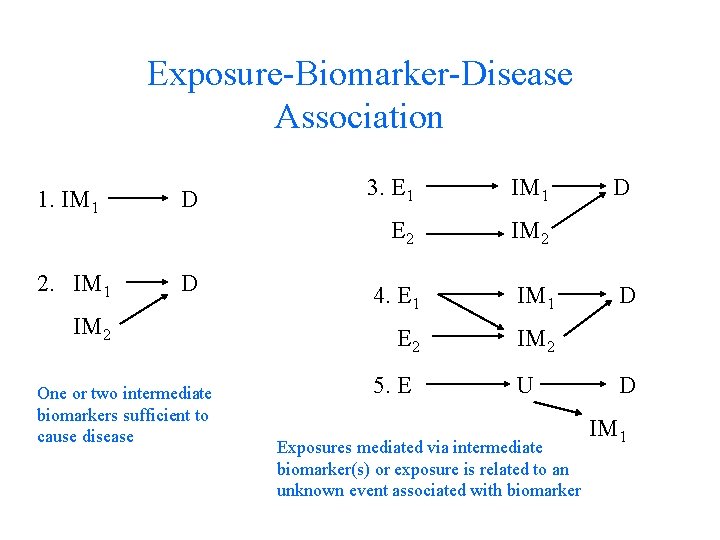
Exposure-Biomarker-Disease Association 1. IM 1 2. IM 1 D D IM 2 One or two intermediate biomarkers sufficient to cause disease 3. E 1 IM 1 E 2 IM 2 4. E 1 IM 1 E 2 IM 2 5. E U Exposures mediated via intermediate biomarker(s) or exposure is related to an unknown event associated with biomarker D D D IM 1
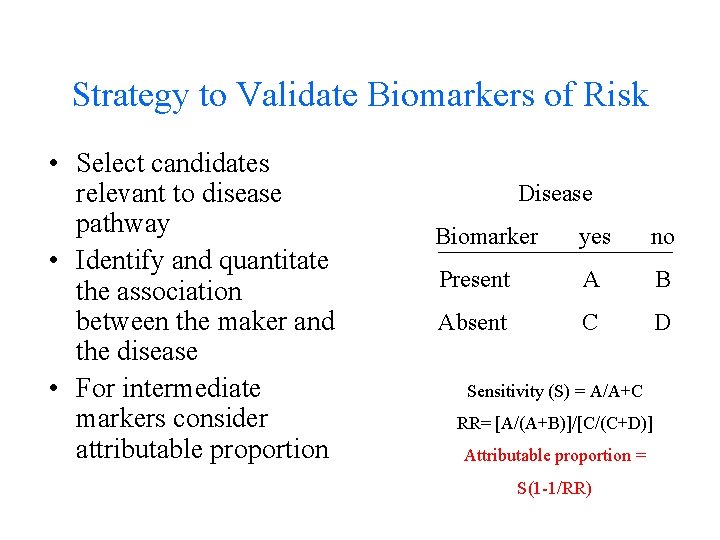
Strategy to Validate Biomarkers of Risk • Select candidates relevant to disease pathway • Identify and quantitate the association between the maker and the disease • For intermediate markers consider attributable proportion Disease Biomarker yes no Present A B Absent C D Sensitivity (S) = A/A+C RR= [A/(A+B)]/[C/(C+D)] Attributable proportion = S(1 -1/RR)
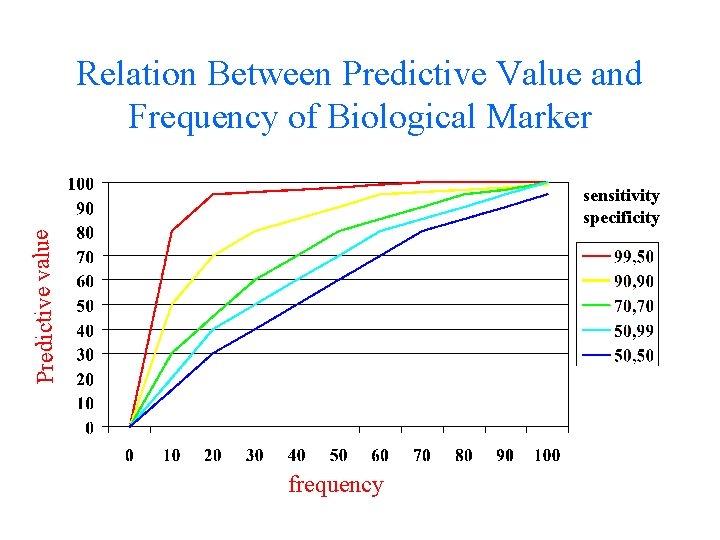
Relation Between Predictive Value and Frequency of Biological Marker Predictive value sensitivity specificity frequency

Screening & Diagnosis
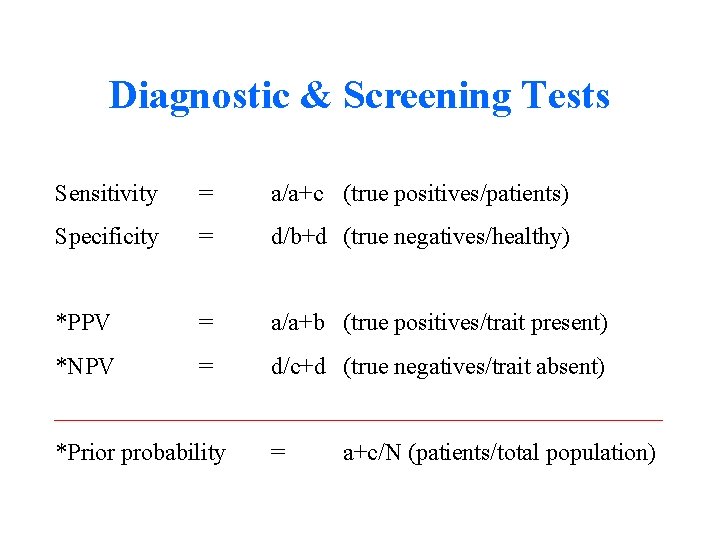
Diagnostic & Screening Tests Sensitivity = a/a+c (true positives/patients) Specificity = d/b+d (true negatives/healthy) *PPV = a/a+b (true positives/trait present) *NPV = d/c+d (true negatives/trait absent) *Prior probability = a+c/N (patients/total population)
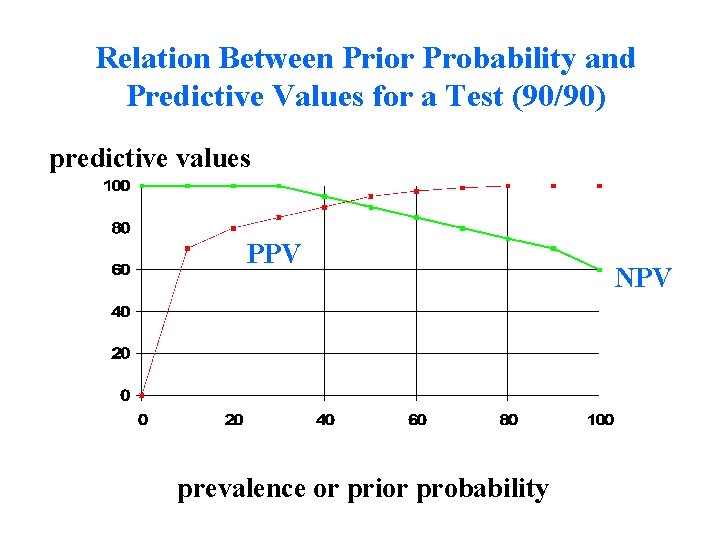
Relation Between Prior Probability and Predictive Values for a Test (90/90) predictive values PPV prevalence or prior probability NPV
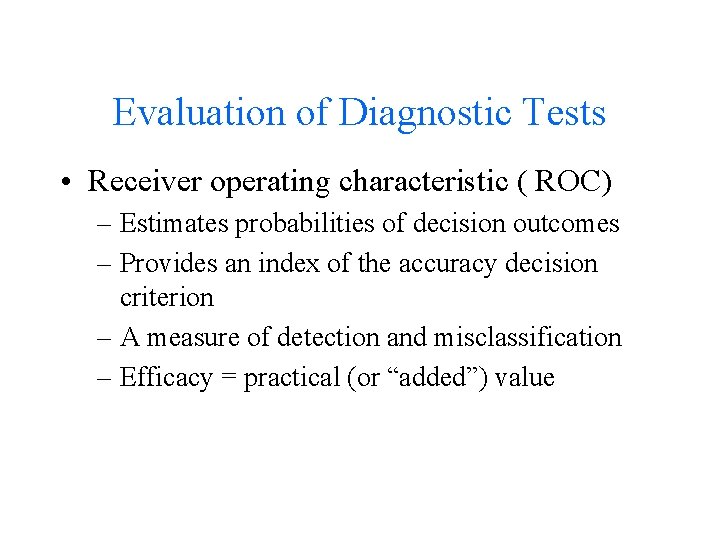
Evaluation of Diagnostic Tests • Receiver operating characteristic ( ROC) – Estimates probabilities of decision outcomes – Provides an index of the accuracy decision criterion – A measure of detection and misclassification – Efficacy = practical (or “added”) value
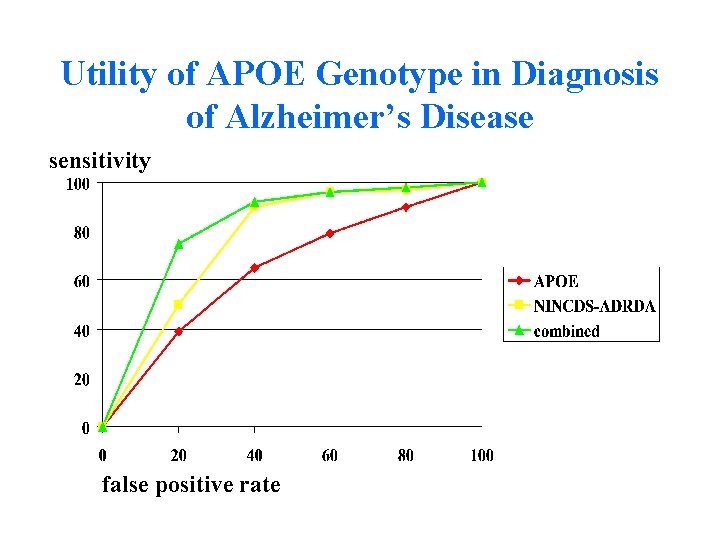
Utility of APOE Genotype in Diagnosis of Alzheimer’s Disease sensitivity false positive rate
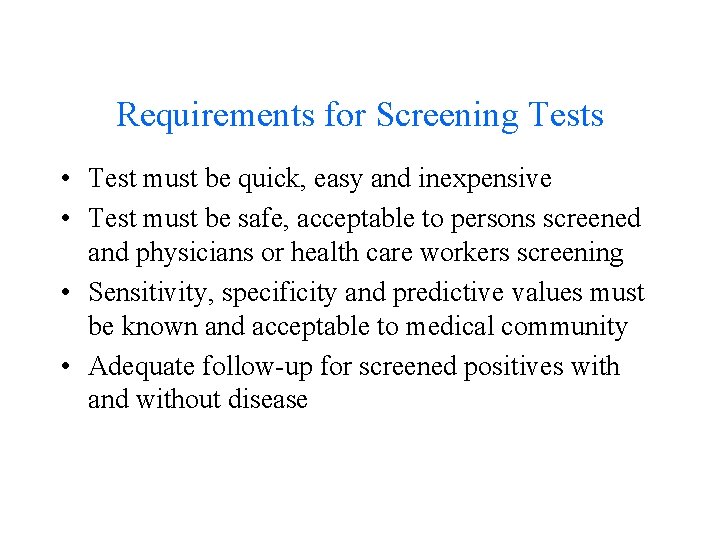
Requirements for Screening Tests • Test must be quick, easy and inexpensive • Test must be safe, acceptable to persons screened and physicians or health care workers screening • Sensitivity, specificity and predictive values must be known and acceptable to medical community • Adequate follow-up for screened positives with and without disease
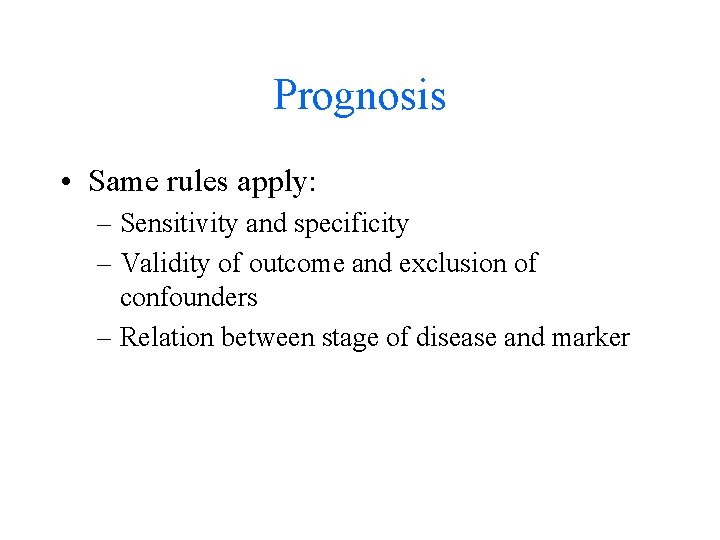
Prognosis • Same rules apply: – Sensitivity and specificity – Validity of outcome and exclusion of confounders – Relation between stage of disease and marker
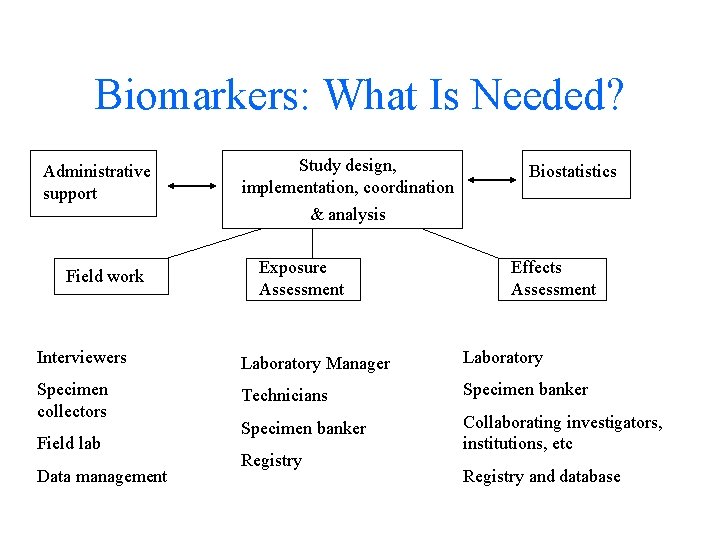
Biomarkers: What Is Needed? Administrative support Study design, implementation, coordination Biostatistics & analysis Field work Exposure Assessment Effects Assessment Interviewers Laboratory Manager Laboratory Specimen collectors Technicians Specimen banker Collaborating investigators, institutions, etc Field lab Data management Registry and database
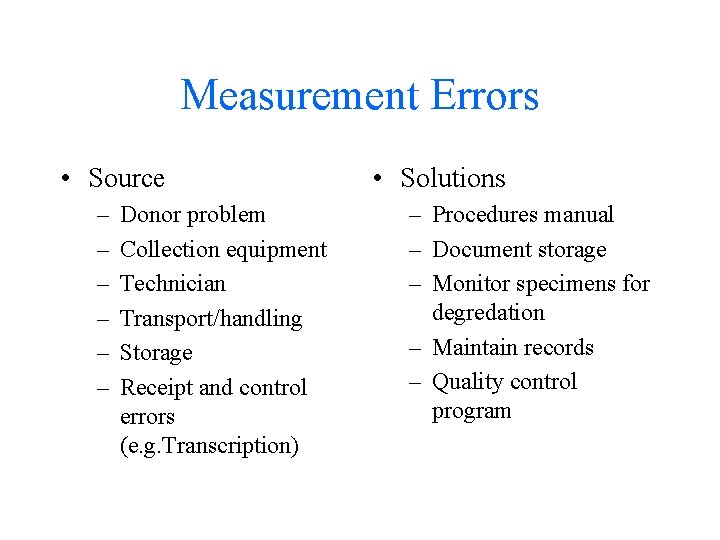
Measurement Errors • Source – – – Donor problem Collection equipment Technician Transport/handling Storage Receipt and control errors (e. g. Transcription) • Solutions – Procedures manual – Document storage – Monitor specimens for degredation – Maintain records – Quality control program
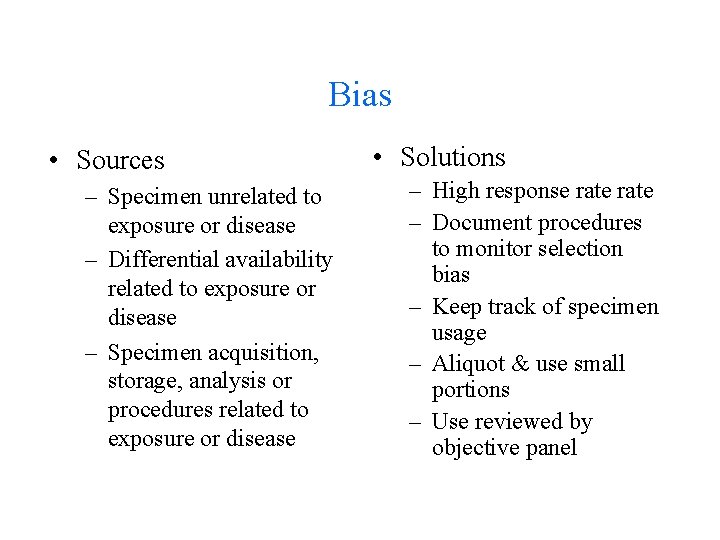
Bias • Sources – Specimen unrelated to exposure or disease – Differential availability related to exposure or disease – Specimen acquisition, storage, analysis or procedures related to exposure or disease • Solutions – High response rate – Document procedures to monitor selection bias – Keep track of specimen usage – Aliquot & use small portions – Use reviewed by objective panel
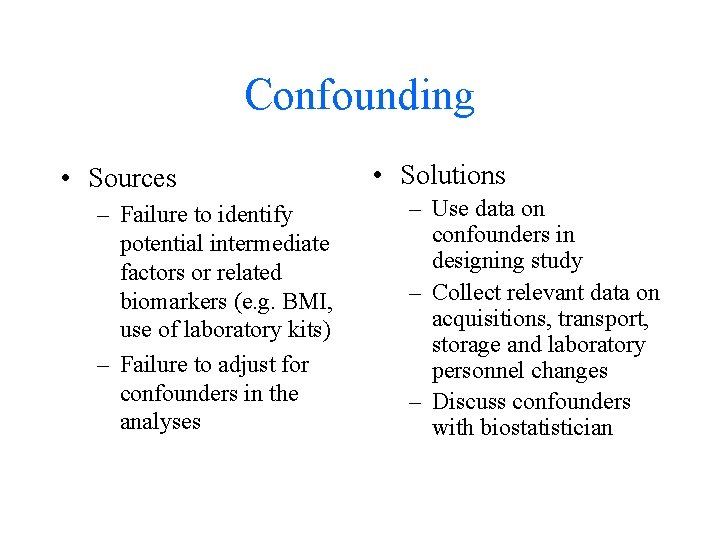
Confounding • Sources – Failure to identify potential intermediate factors or related biomarkers (e. g. BMI, use of laboratory kits) – Failure to adjust for confounders in the analyses • Solutions – Use data on confounders in designing study – Collect relevant data on acquisitions, transport, storage and laboratory personnel changes – Discuss confounders with biostatistician
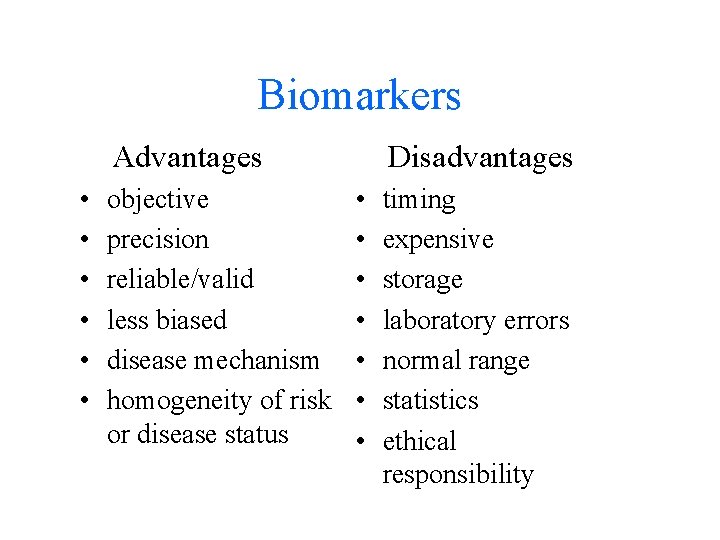
Biomarkers Advantages • • • objective precision reliable/valid less biased disease mechanism homogeneity of risk or disease status Disadvantages • • timing expensive storage laboratory errors normal range statistics ethical responsibility

It’s the Controls, Stupid!
- Slides: 23