
Potential role of igneous intrusions on hydrocarbon migration
Potential role of igneous intrusions on hydrocarbon migration, West of Shetland
Overview � Locality � Igneous Intrusions � Study Methods � How intrusions influence hydrocarbon (HC) migration ◦ Sill �Composition and porosity ◦ Proposed Models � Conclusion
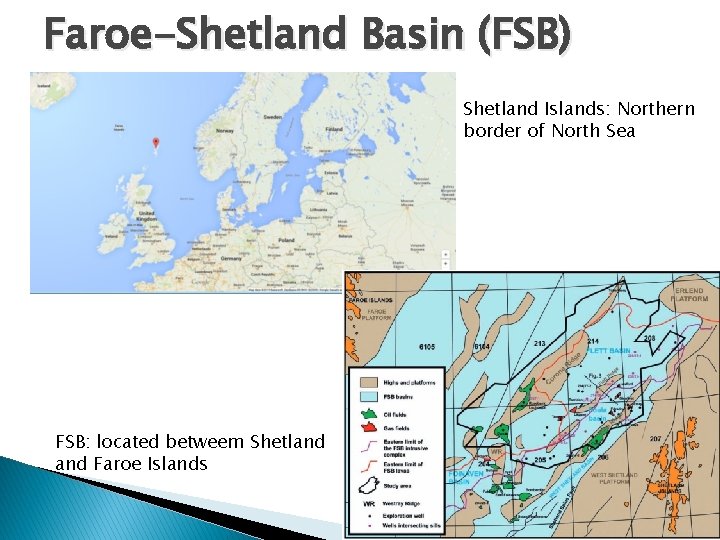
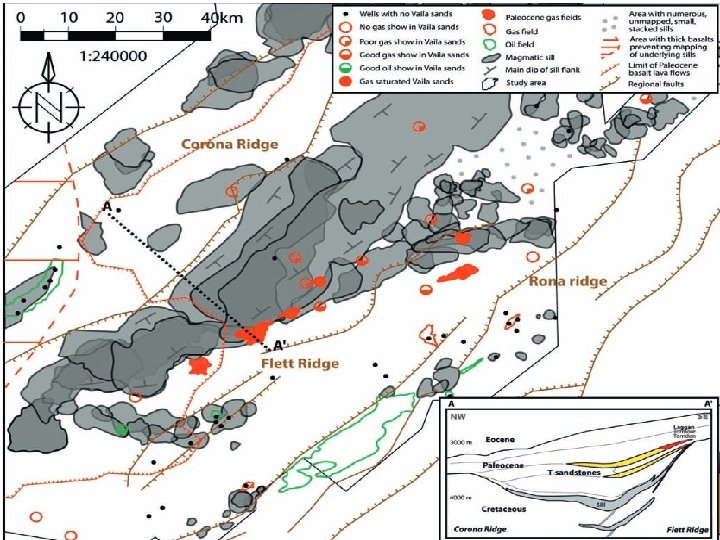
Faroe-Shetland Basin (FSB) Shetland Islands: Northern border of North Sea FSB: located betweem Shetland Faroe Islands

Igneous Intrusions � The GSA defines intrusions as magma that cools and solidifies before reaching the surface. ◦ Three common types: Sills, dykes, and batholiths � The FSB contains mostly large sills ◦ Sills: magma intrudes between rock layers, forming a horizontal sheet of igneous rock ◦ Cover and area of at least 40, 000 km 2 ◦ Intruded between 55 and 53 Ma
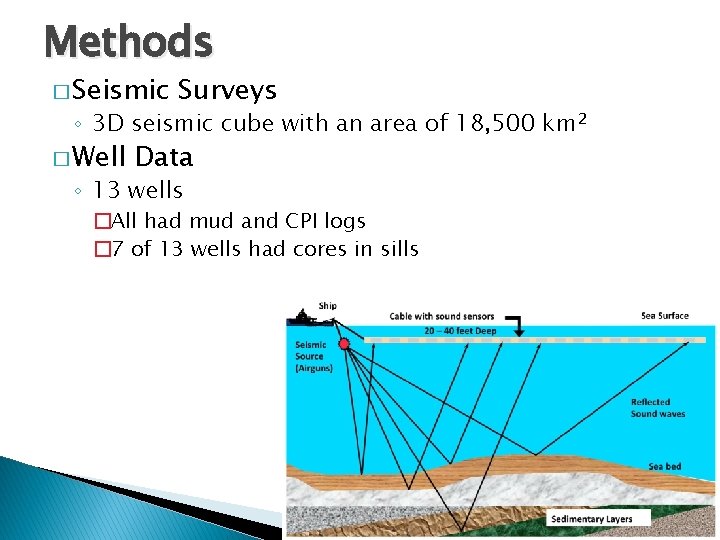
Methods � Seismic Surveys ◦ 3 D seismic cube with an area of 18, 500 km 2 � Well Data ◦ 13 wells �All had mud and CPI logs � 7 of 13 wells had cores in sills
Intrusions; Barrier or Carrier? � Sills are composed of Dolerite ◦ Similar to basalt, but with larger crystals. � Factors that lead to permeability in intrusions. ◦ Vesicles �Cores revealed vesicles that were low in frequency and many were cemented with secondary minerals ◦ Metasomatism (Hydrothermal alteration) �Log data showed little to no dolerite alteration ◦ Open/cemented fractures �Some cores had evidence of extensive fracturing
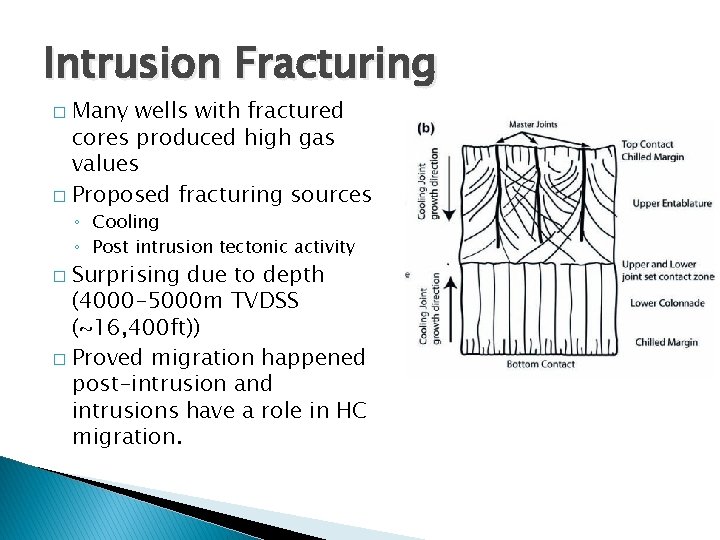
Intrusion Fracturing Many wells with fractured cores produced high gas values � Proposed fracturing sources � ◦ Cooling ◦ Post intrusion tectonic activity Surprising due to depth (4000 -5000 m TVDSS (~16, 400 ft)) � Proved migration happened post-intrusion and intrusions have a role in HC migration. �
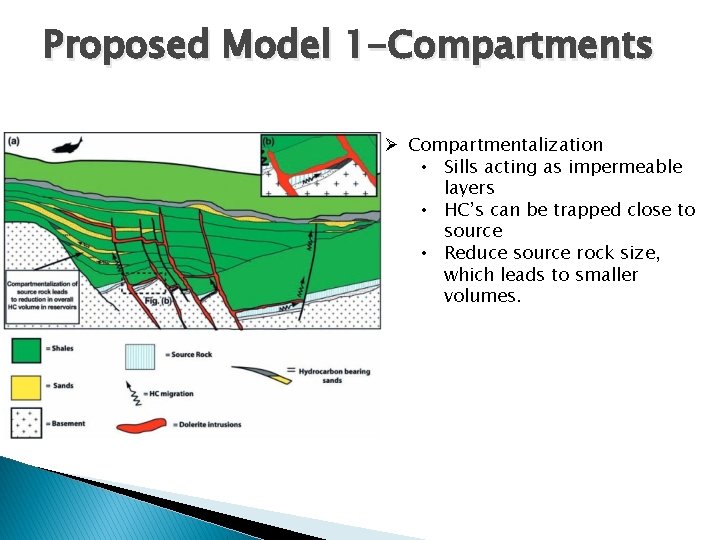
Proposed Model 1 -Compartments Ø Compartmentalization • Sills acting as impermeable layers • HC’s can be trapped close to source • Reduce source rock size, which leads to smaller volumes.
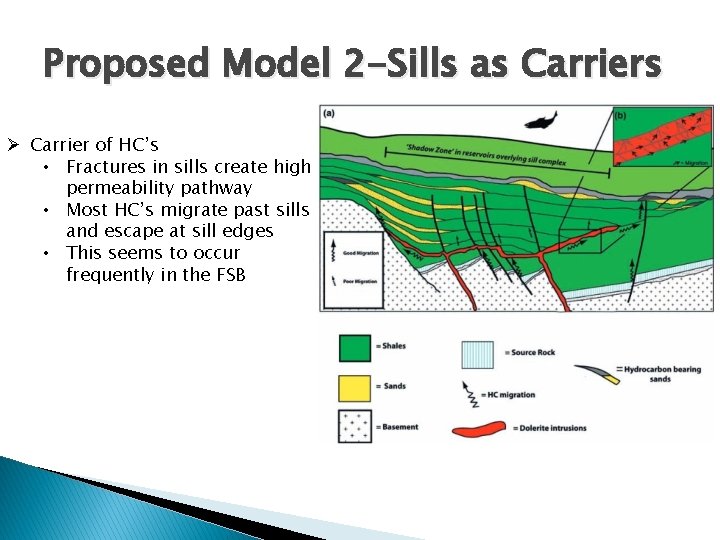
Proposed Model 2 -Sills as Carriers Ø Carrier of HC’s • Fractures in sills create high permeability pathway • Most HC’s migrate past sills and escape at sill edges • This seems to occur frequently in the FSB
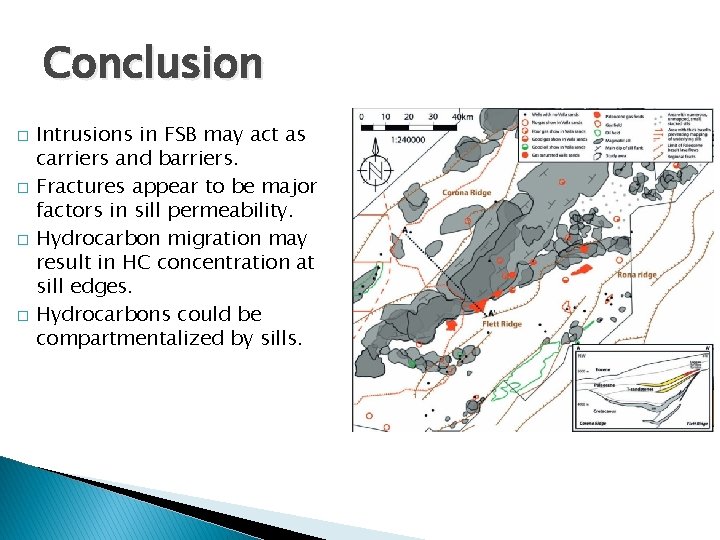
Conclusion � � Intrusions in FSB may act as carriers and barriers. Fractures appear to be major factors in sill permeability. Hydrocarbon migration may result in HC concentration at sill edges. Hydrocarbons could be compartmentalized by sills.
- Slides: 11