
Potential Energy Diagrams for Multistep Reactions The SN
- Slides: 10
Potential Energy Diagrams for Multistep Reactions: The SN 1 Mechanism
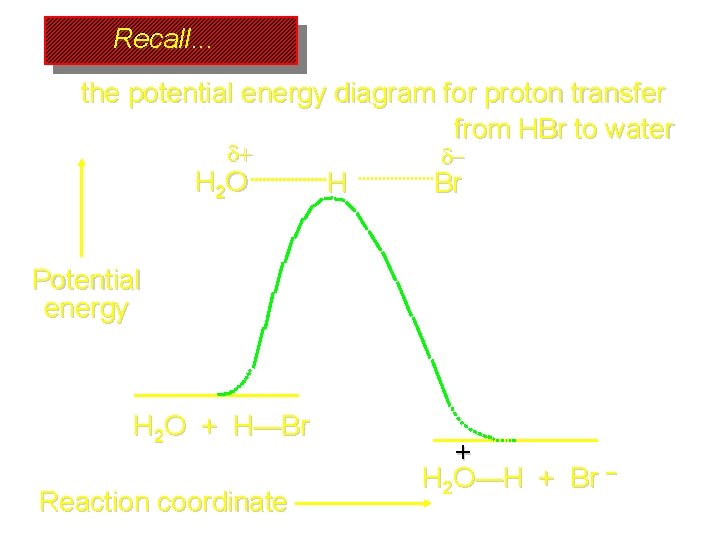
Recall. . . the potential energy diagram for proton transfer from HBr to water H 2 O H Br Potential energy H 2 O + H—Br Reaction coordinate + H 2 O—H + Br –
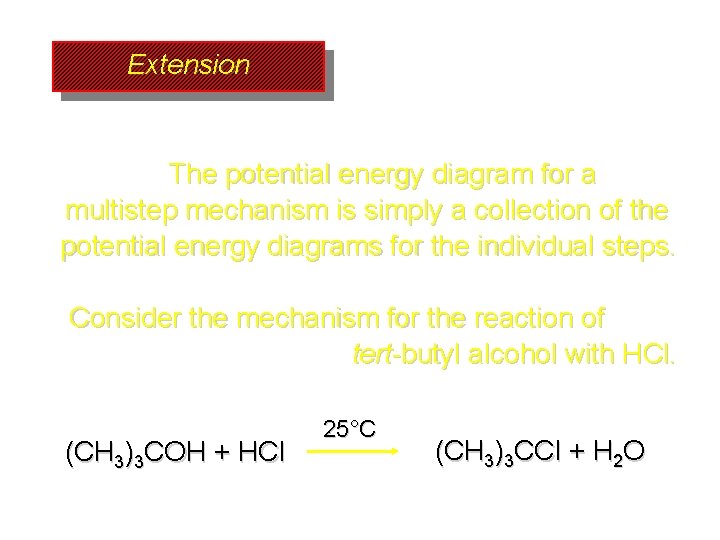
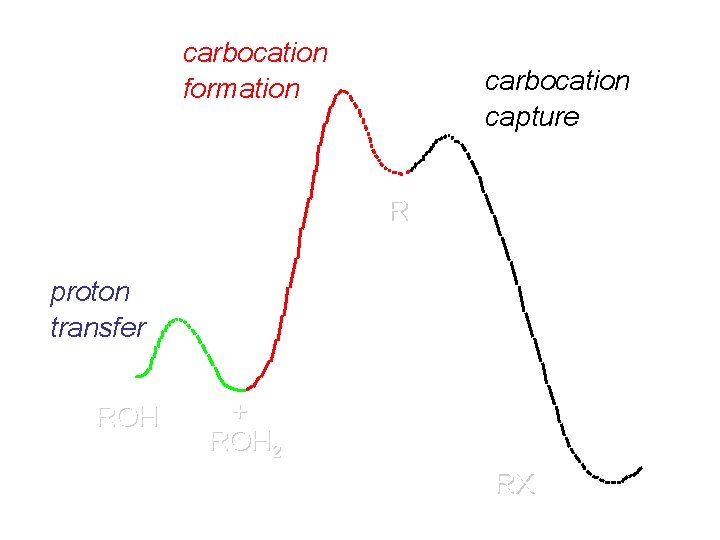
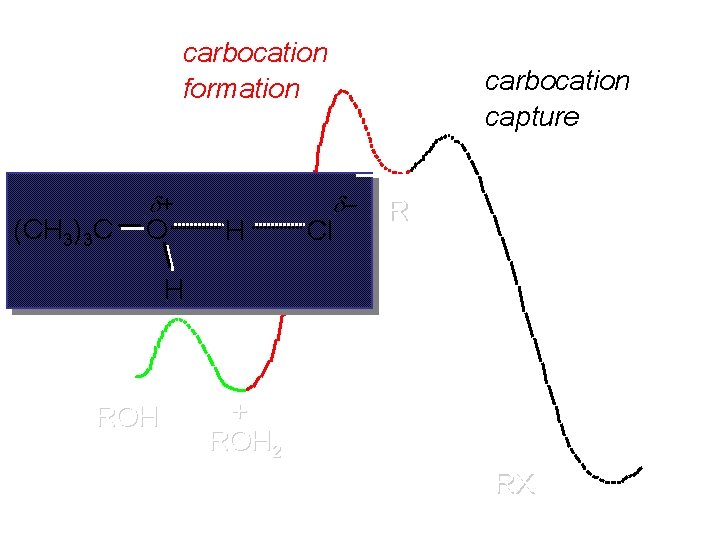
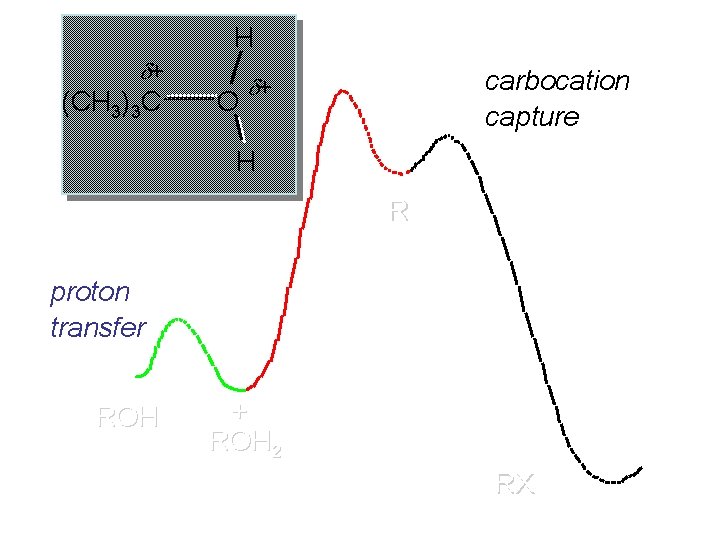
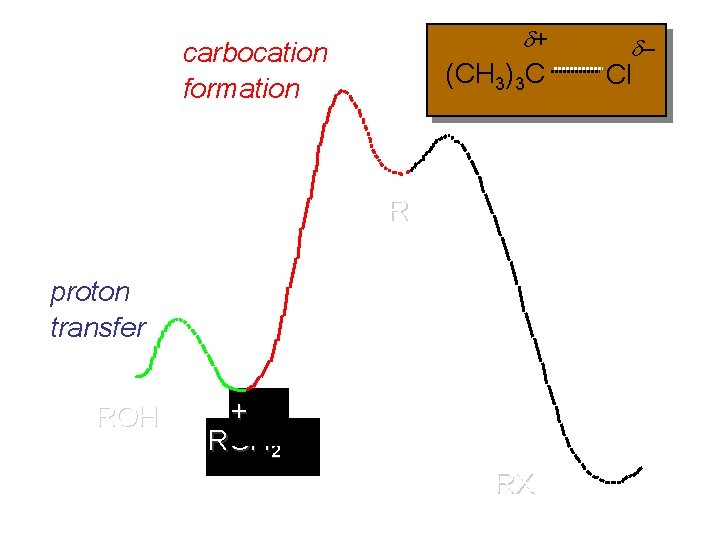
Extension The potential energy diagram for a multistep mechanism is simply a collection of the potential energy diagrams for the individual steps. Consider the mechanism for the reaction of tert-butyl alcohol with HCl. (CH 3)3 COH + HCl 25°C (CH 3)3 CCl + H 2 O
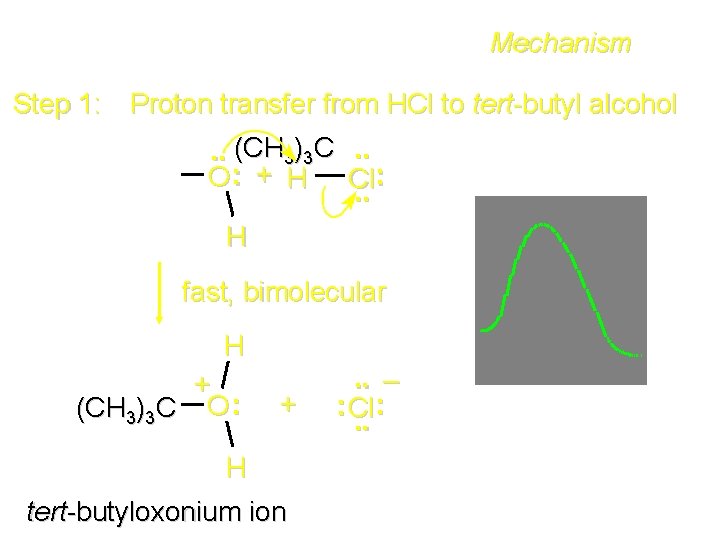
Mechanism Step 1: Proton transfer from HCl to tert-butyl alcohol. . (CH 3)3 C O: + H . . : Cl. . H fast, bimolecular H + (CH 3)3 C O : + H tert-butyloxonium ion . . – : Cl: . .
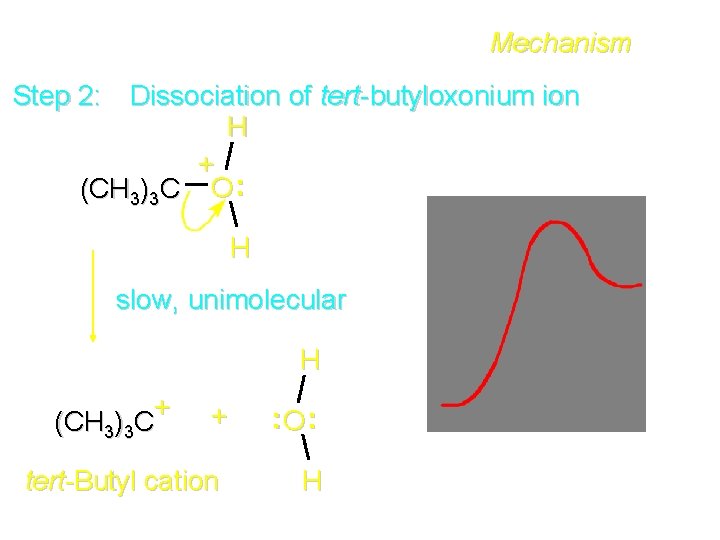
Mechanism Step 2: Dissociation of tert-butyloxonium ion H + (CH 3)3 C O : H slow, unimolecular H + (CH 3)3 C + tert-Butyl cation : O: H
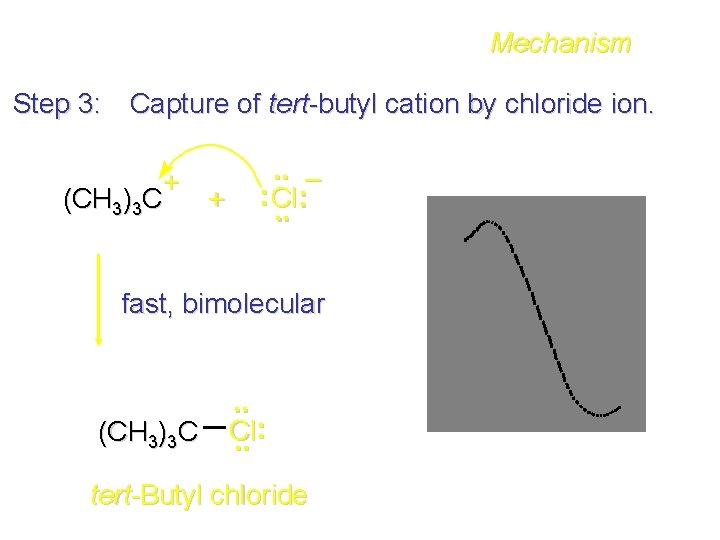
Mechanism Step 3: Capture of tert-butyl cation by chloride ion. + (CH 3)3 C + . . – : Cl: . . fast, bimolecular (CH 3)3 C . . Cl. . : tert-Butyl chloride
carbocation formation carbocation capture R+ proton transfer ROH + ROH 2 RX
carbocation formation (CH 3)3 C + O H carbocation capture – Cl R+ H ROH + ROH 2 RX
H + (CH 3)3 C O carbocation capture + H R+ proton transfer ROH + ROH 2 RX
+ carbocation formation (CH 3)3 C R+ proton transfer ROH + ROH 2 RX – Cl