
PostWar Normalcy The Roaring 20s For the Long




- Slides: 39
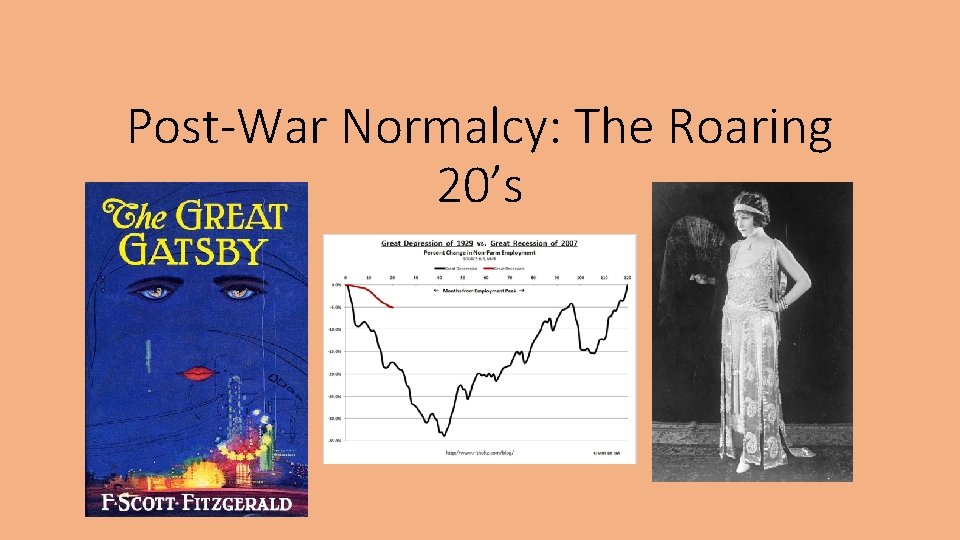
Post-War Normalcy: The Roaring 20’s
For the Long Essay topic, please write a thesis and a brief outline addressing the main points you would make. • United States involvement in World War I resulted in significant economic, cultural, and political developments in the United States between 1919 and 1929. Support, modify, or refute this contention using specific evidence.
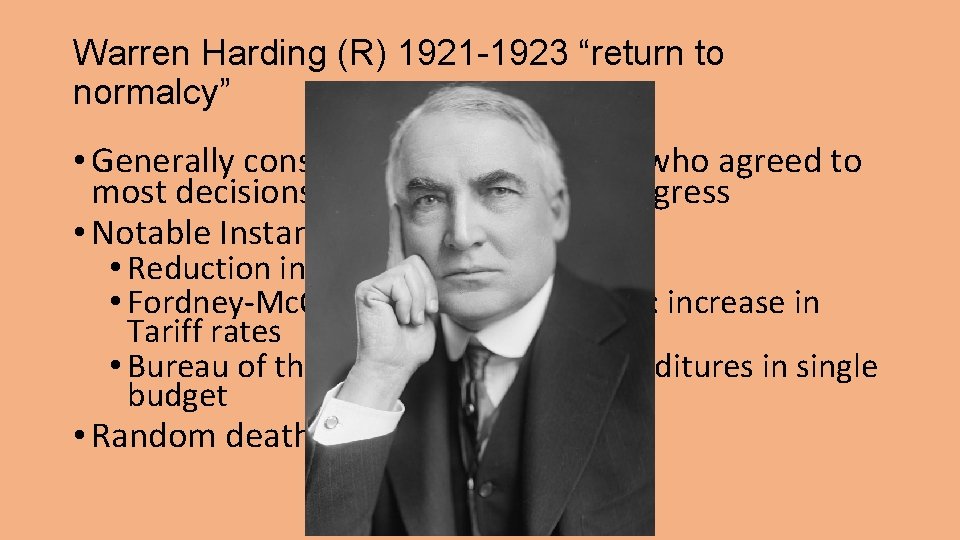
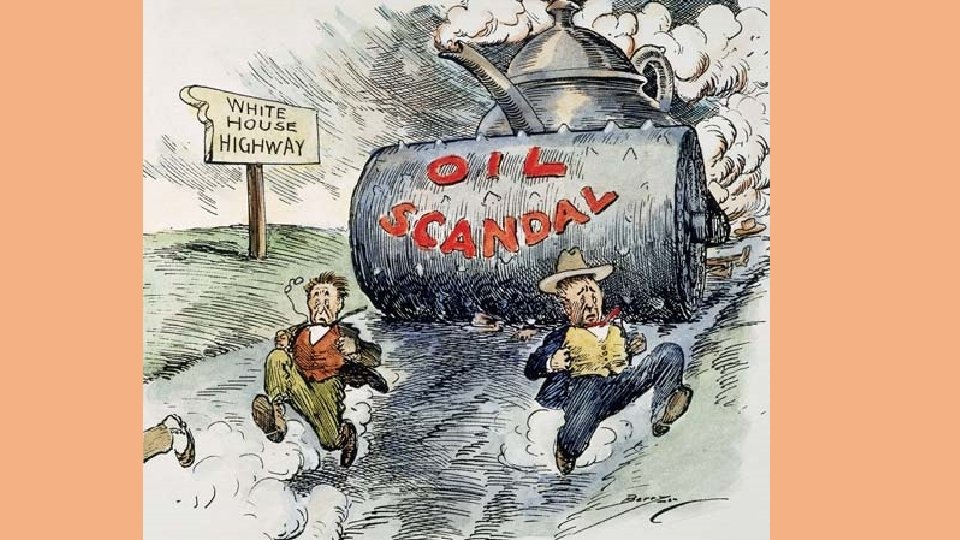
Politics of Normalcy • Republicans dominant once again after Woodrow Wilson exited office • Platform didn’t revert completely to pre-war status, instead stuck with model focusing on extremely limited gov’t control of business
Warren Harding (R) 1921 -1923 “return to normalcy” • Generally considered a weak leader, who agreed to most decisions of the Republican Congress • Notable Instances of Presidency: • Reduction in income tax • Fordney-Mc. Cumber Tariff Act (1922): increase in Tariff rates • Bureau of the Budget: all gov’t expenditures in single budget • Random death: August 1923
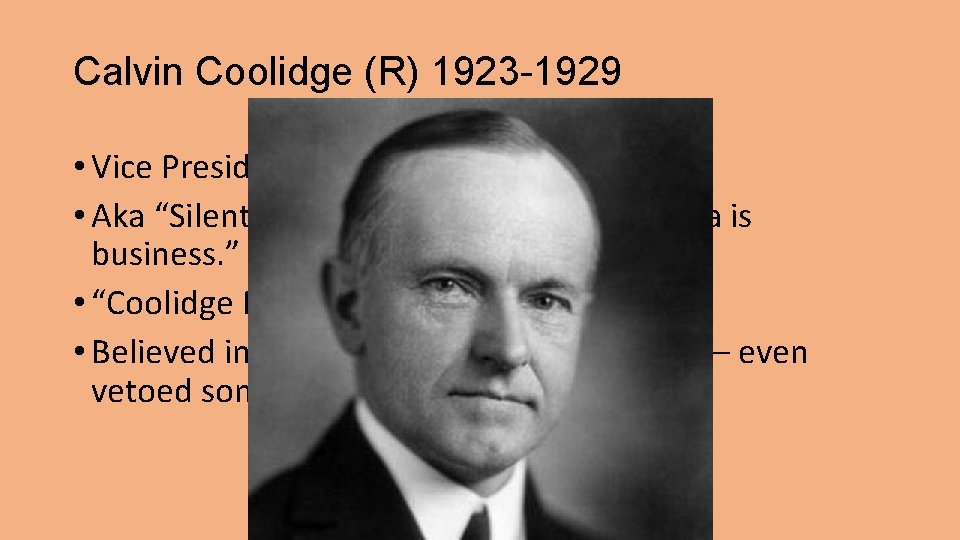
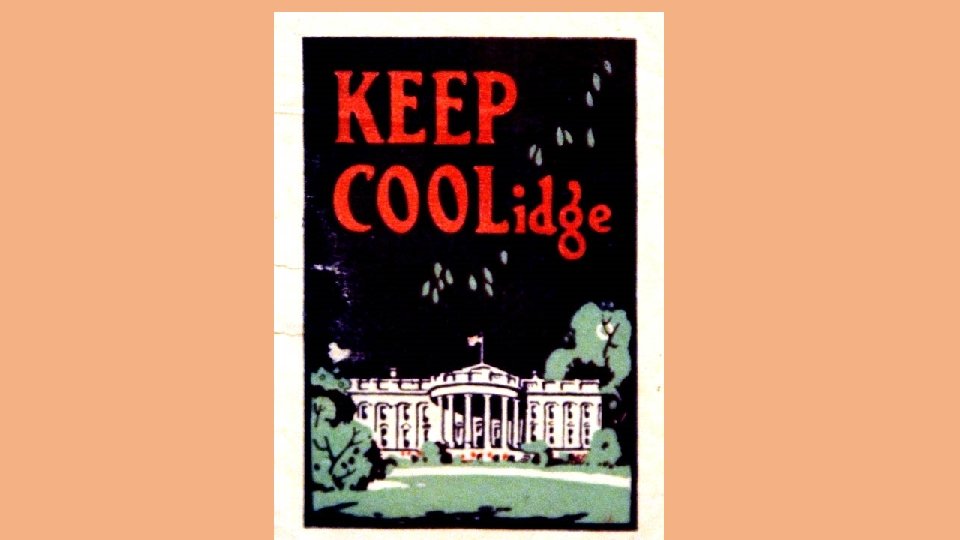
Calvin Coolidge (R) 1923 -1929 • Vice President of Harding • Aka “Silent Cal” – “The business of America is business. ” • “Coolidge Prosperity” • Believed in extremely limited government – even vetoed some Republican Bills
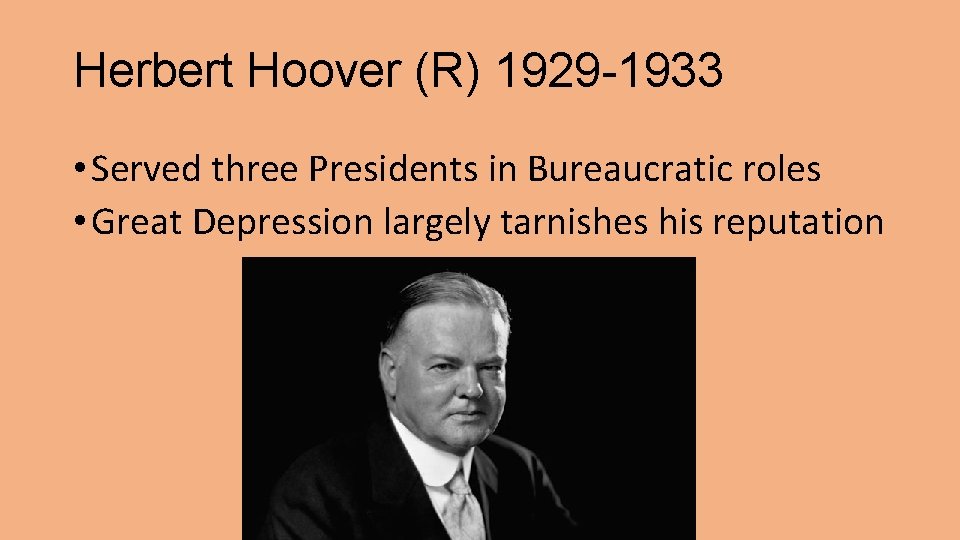
Herbert Hoover (R) 1929 -1933 • Served three Presidents in Bureaucratic roles • Great Depression largely tarnishes his reputation
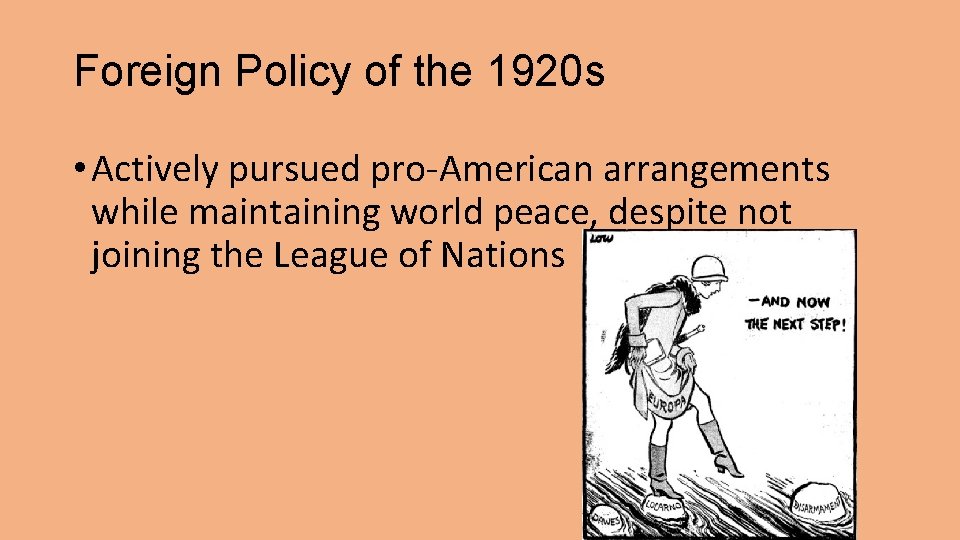
Foreign Policy of the 1920 s • Actively pursued pro-American arrangements while maintaining world peace, despite not joining the League of Nations
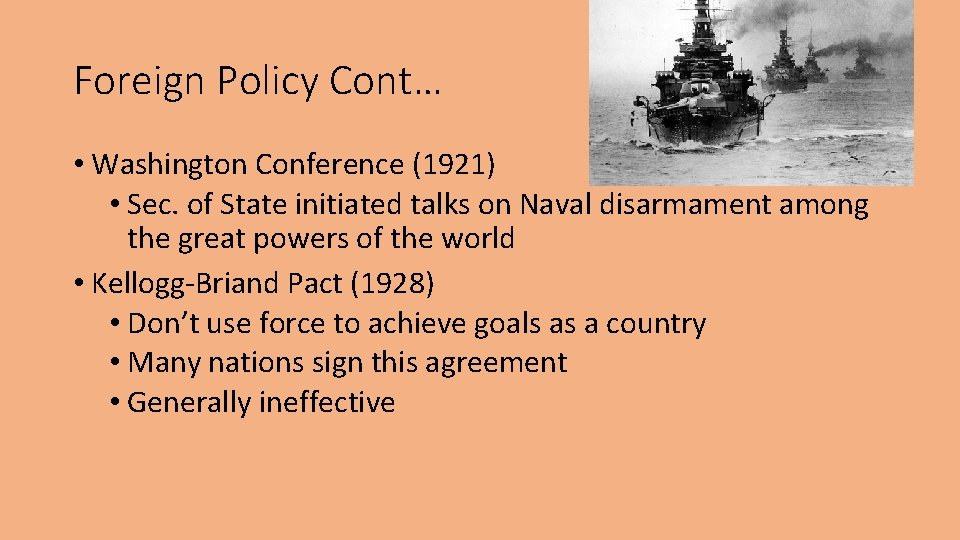
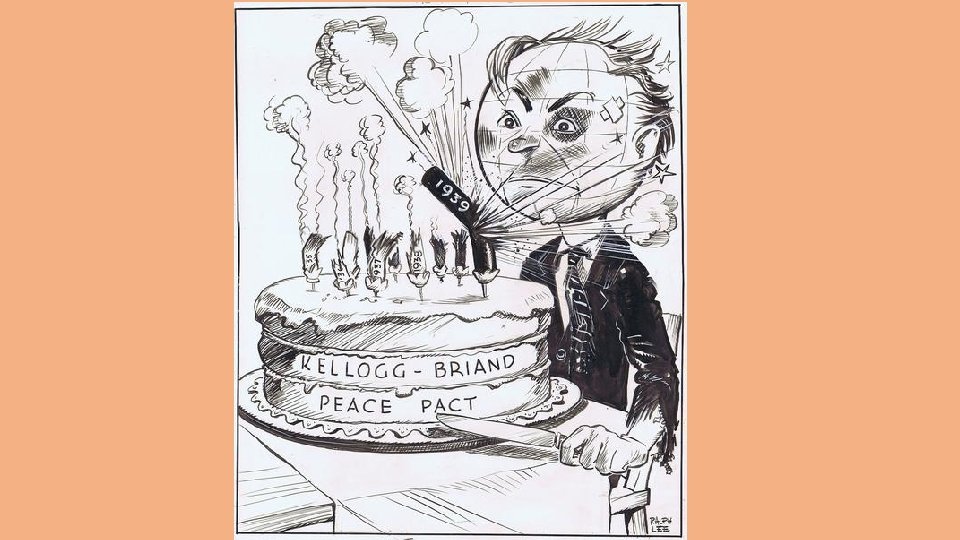
Foreign Policy Cont… • Washington Conference (1921) • Sec. of State initiated talks on Naval disarmament among the great powers of the world • Kellogg-Briand Pact (1928) • Don’t use force to achieve goals as a country • Many nations sign this agreement • Generally ineffective
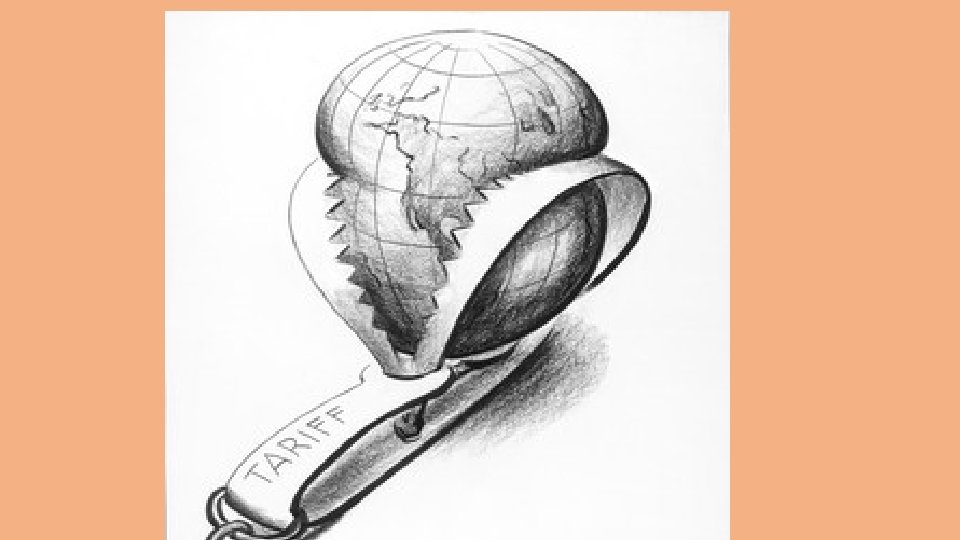
International Business • Increased investment by American enterprise in the 20’s in Latin America • Oil drilling by Britain and America in the Middle East • Fordney-Mc. Cumber Tariff (1922): increased duties on foreign manufactured goods by 25% • Slowed European nations abilities to recover from war, thus they also enacted protective tariffs • One reason for the Great Depression
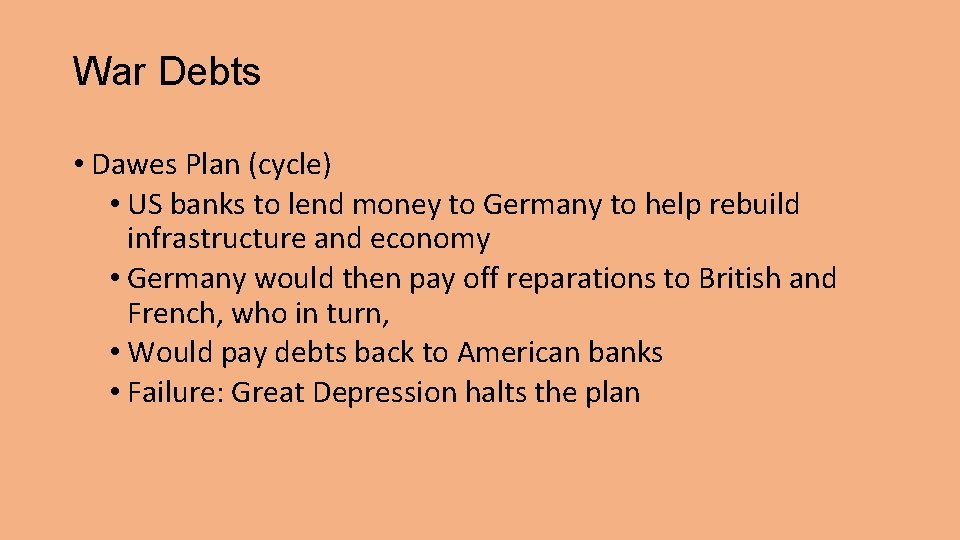
War Debts • Dawes Plan (cycle) • US banks to lend money to Germany to help rebuild infrastructure and economy • Germany would then pay off reparations to British and French, who in turn, • Would pay debts back to American banks • Failure: Great Depression halts the plan
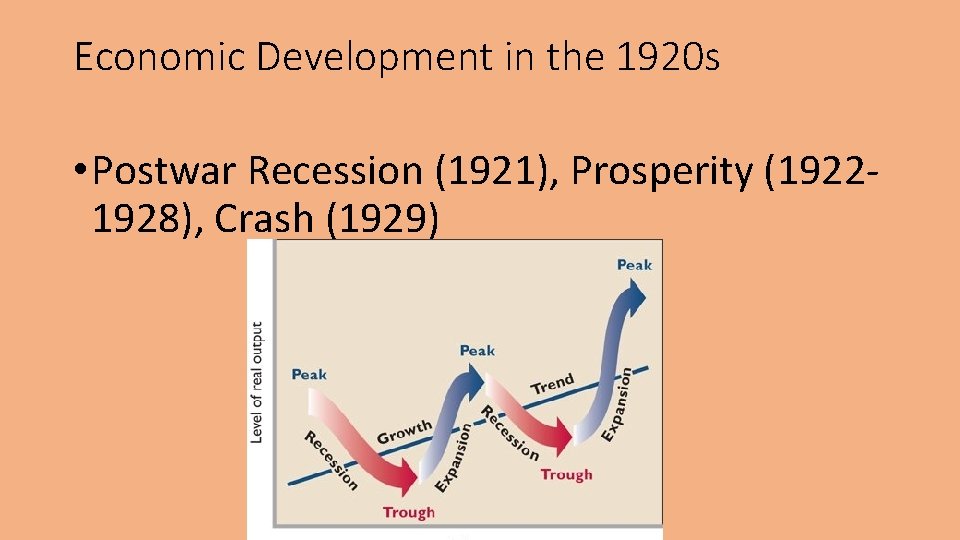
Economic Development in the 1920 s • Postwar Recession (1921), Prosperity (19221928), Crash (1929)
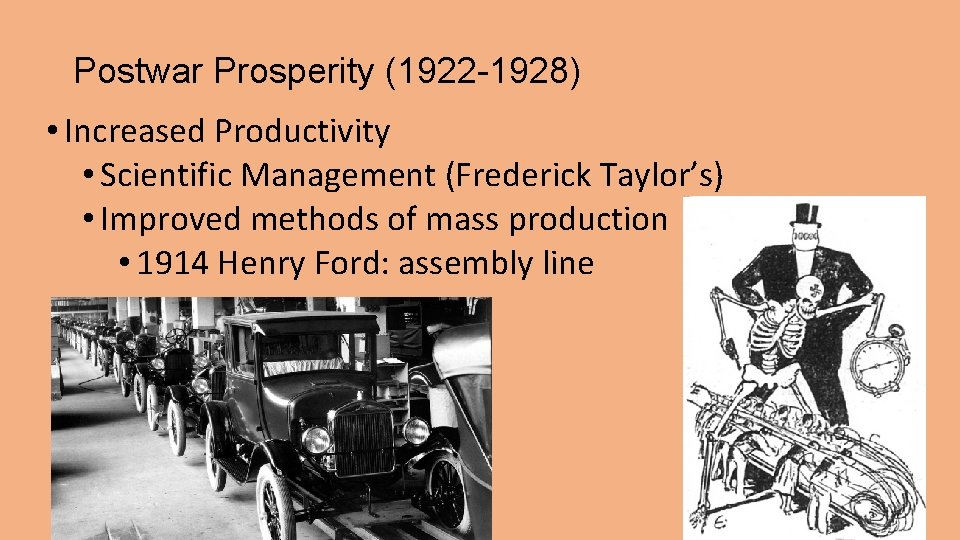
Postwar Prosperity (1922 -1928) • Increased Productivity • Scientific Management (Frederick Taylor’s) • Improved methods of mass production • 1914 Henry Ford: assembly line
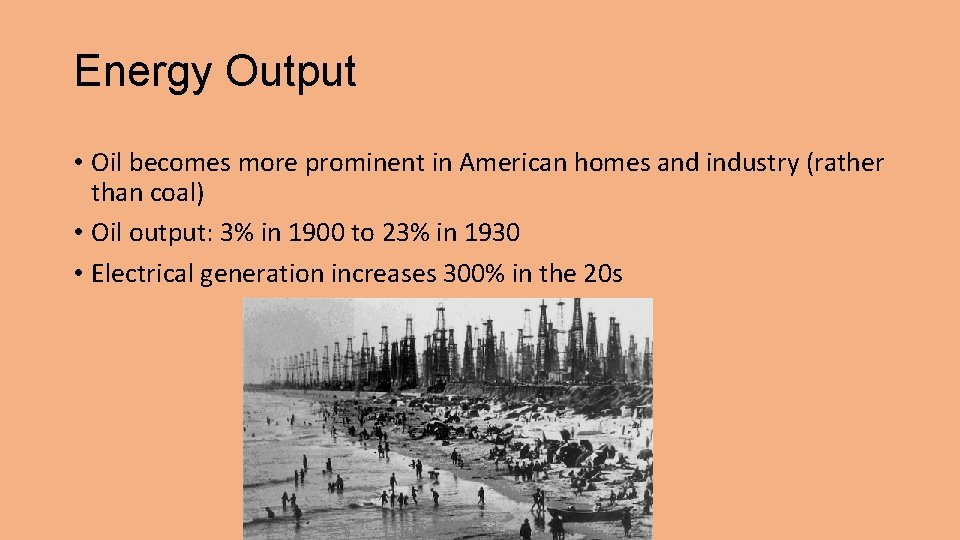
Energy Output • Oil becomes more prominent in American homes and industry (rather than coal) • Oil output: 3% in 1900 to 23% in 1930 • Electrical generation increases 300% in the 20 s
Limited Government • Corporate tax cuts and little enforcement of progressive era anti-trust laws • Tax cuts for the richest Americans • Federal Reserve: low interest rates and relaxed regulation of banks (loose money policy)
Consumers • New Technologies/appliances • Automobiles, home refrigerators, home washing machines, vacuum’s • Automobiles • 1. 2 million in 1913 to 26. 5 million in 1929 • Replaced railroad industry as key economic booster • Other industries dependent: oil, steel, glass, rubber, highway construction • Credit: allowing consumers to use loans and pay back later • Convenience stores: • Woolworths
Issues w/ Prosperity • Farmers • High debt among farmers due to heavy expansion during WWI years • New Technologies (fertilizers, tractors, etc) helped to increase production which further led to falling prices • Labor • Fall in unionization (memberships declined 20% in the 1920 s) • Welfare Capitalism: companies voluntarily offering increased benefits and wages to reduce union membership • Government assistance in stopping strikes (militia and injunctions)
Directions: • Using your notes, or what you have learned in class, write a short answer question. • Provide a possible response to this question.
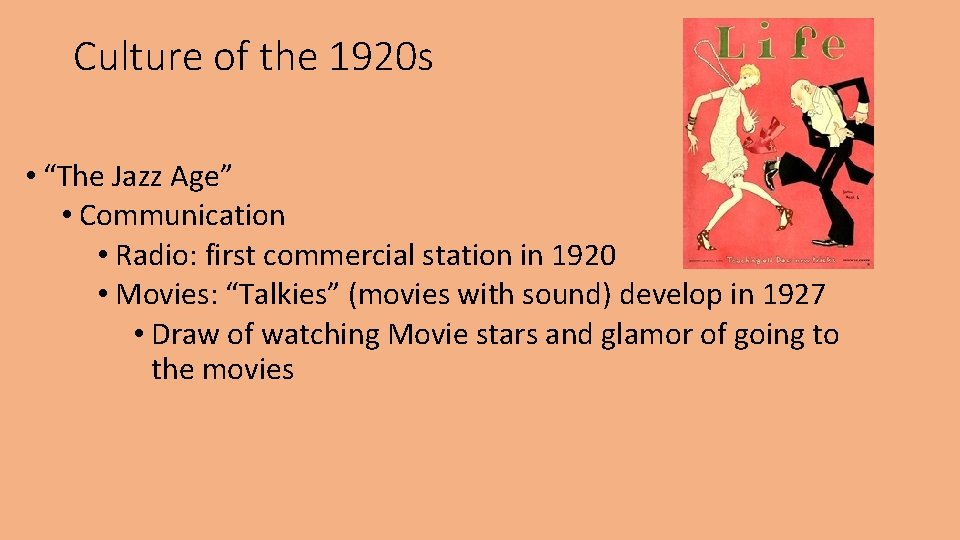
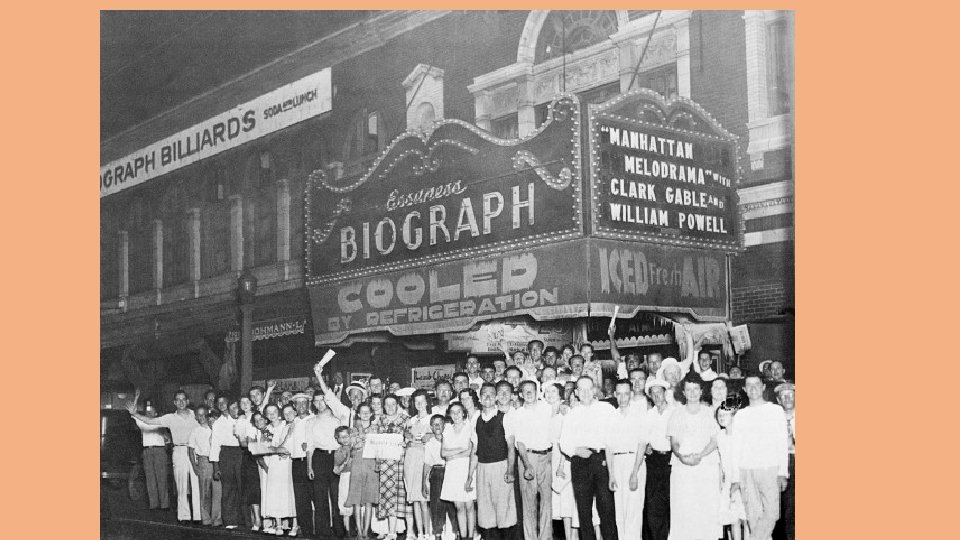
Culture of the 1920 s • “The Jazz Age” • Communication • Radio: first commercial station in 1920 • Movies: “Talkies” (movies with sound) develop in 1927 • Draw of watching Movie stars and glamor of going to the movies
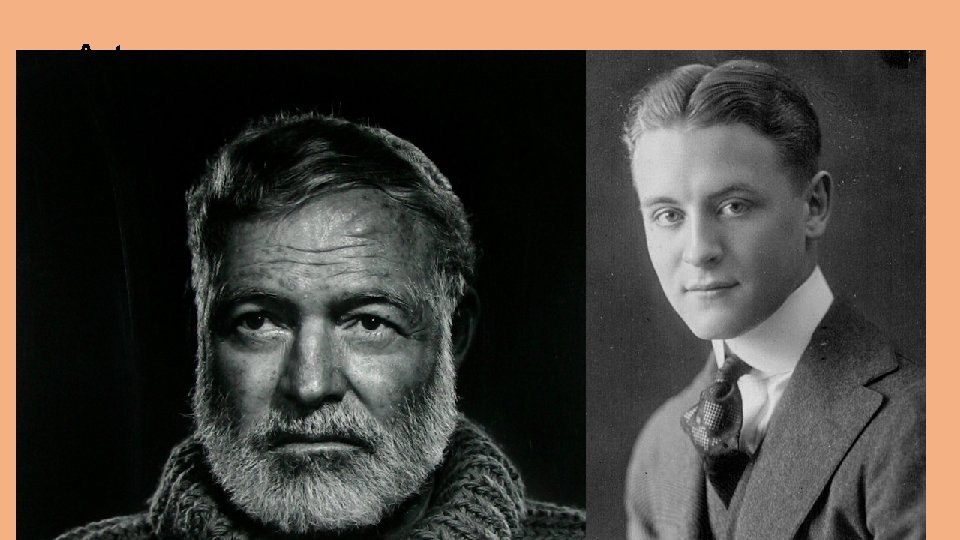
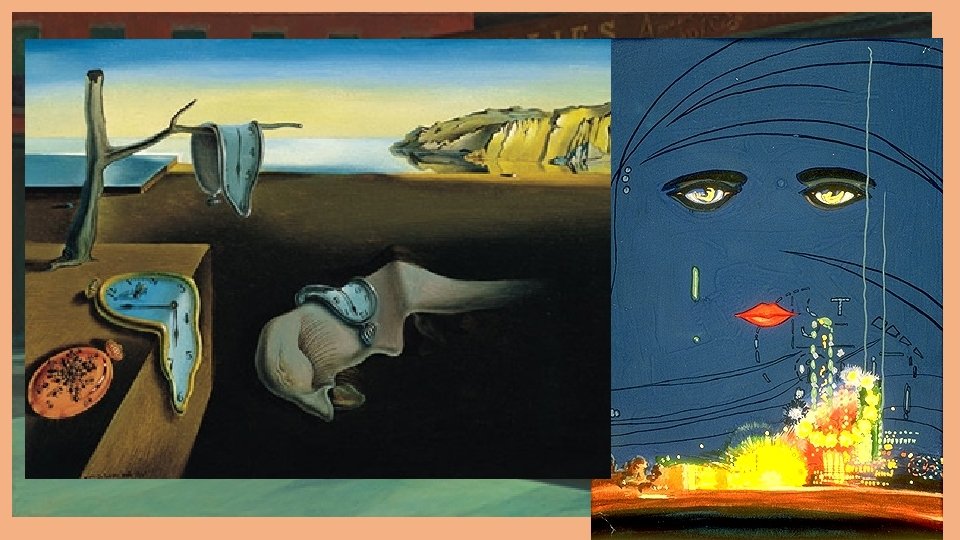
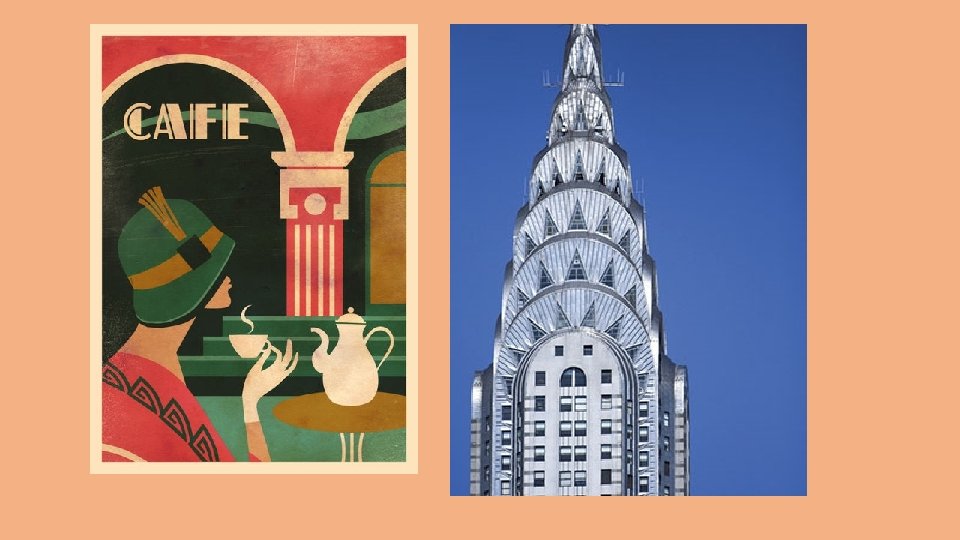
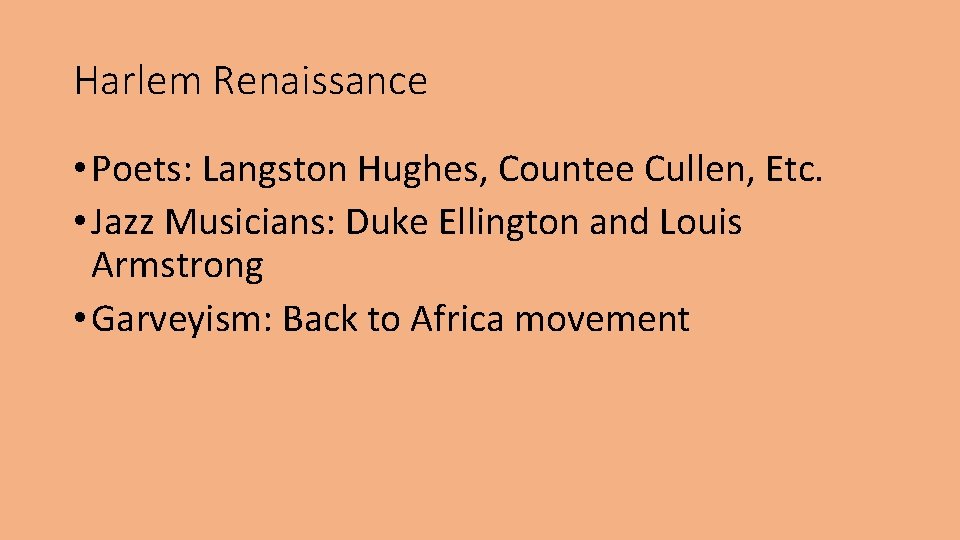
Art • The Lost Generation (Coined by Gertrude Stein) • F. Scott Fitzgerald, Ernest Hemingway, Sinclair Lewis, T. S. Eliot, etc. • Art Deco: modernist design mixed with machine age methods or materials • Painters: • Edward Hopper, Grant Wood, Thomas Hart Benton
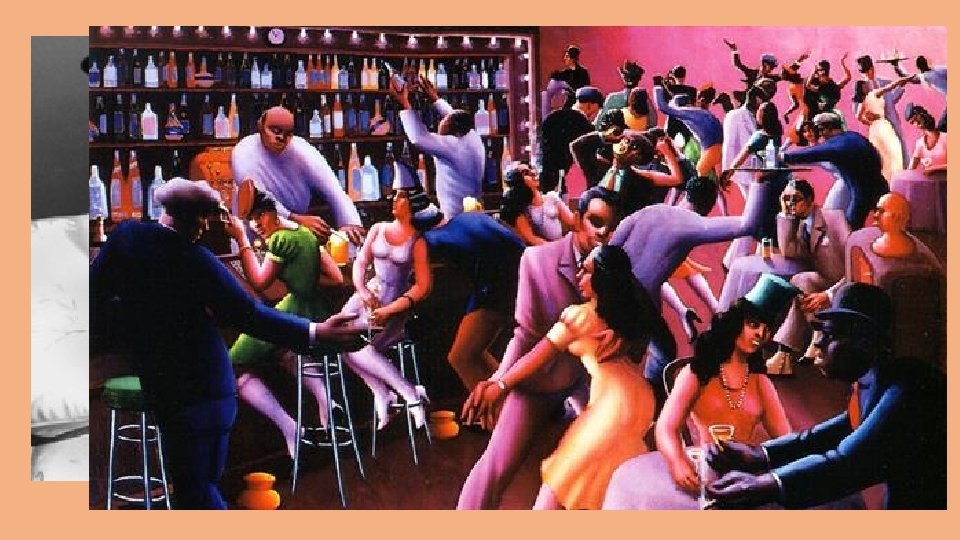
Harlem Renaissance • Poets: Langston Hughes, Countee Cullen, Etc. • Jazz Musicians: Duke Ellington and Louis Armstrong • Garveyism: Back to Africa movement
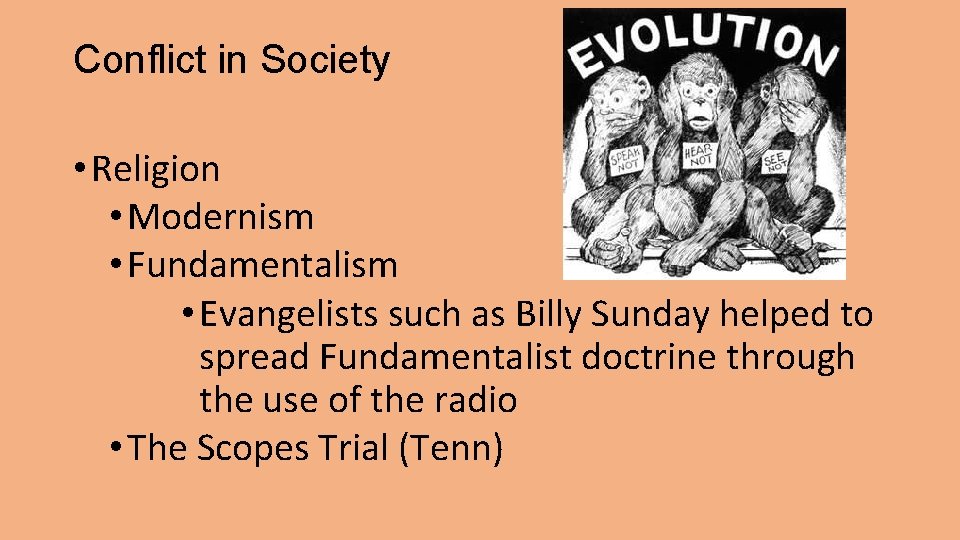
Conflict in Society • Religion • Modernism • Fundamentalism • Evangelists such as Billy Sunday helped to spread Fundamentalist doctrine through the use of the radio • The Scopes Trial (Tenn)
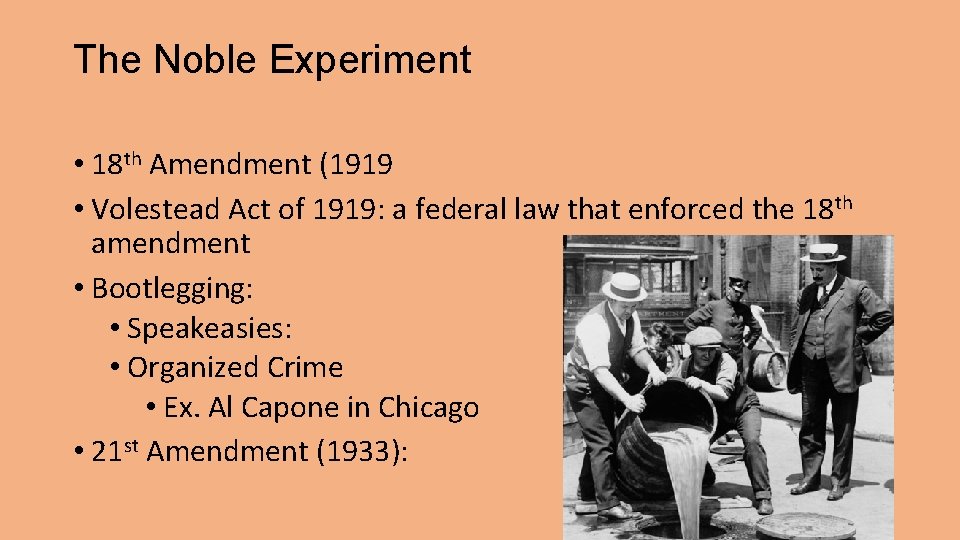
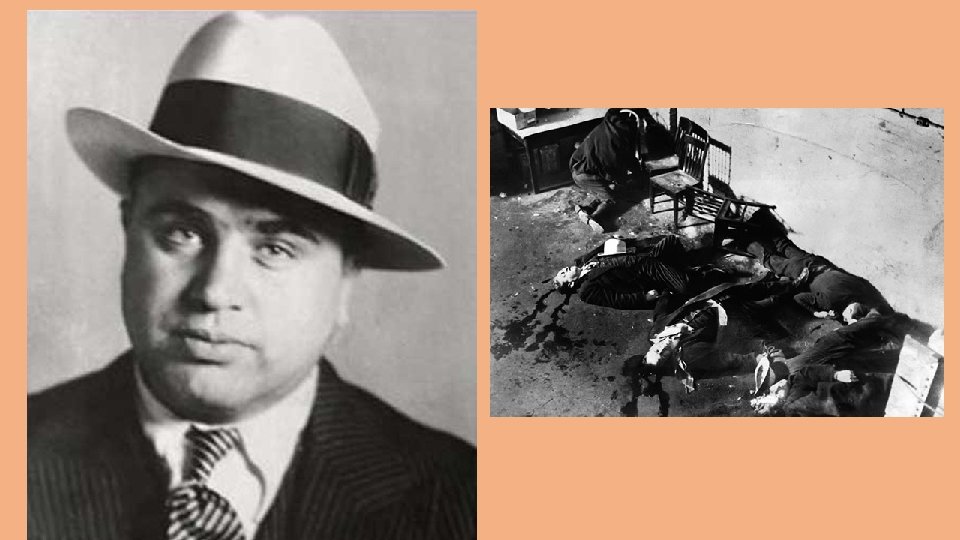
The Noble Experiment • 18 th Amendment (1919 • Volestead Act of 1919: a federal law that enforced the 18 th amendment • Bootlegging: • Speakeasies: • Organized Crime • Ex. Al Capone in Chicago • 21 st Amendment (1933):
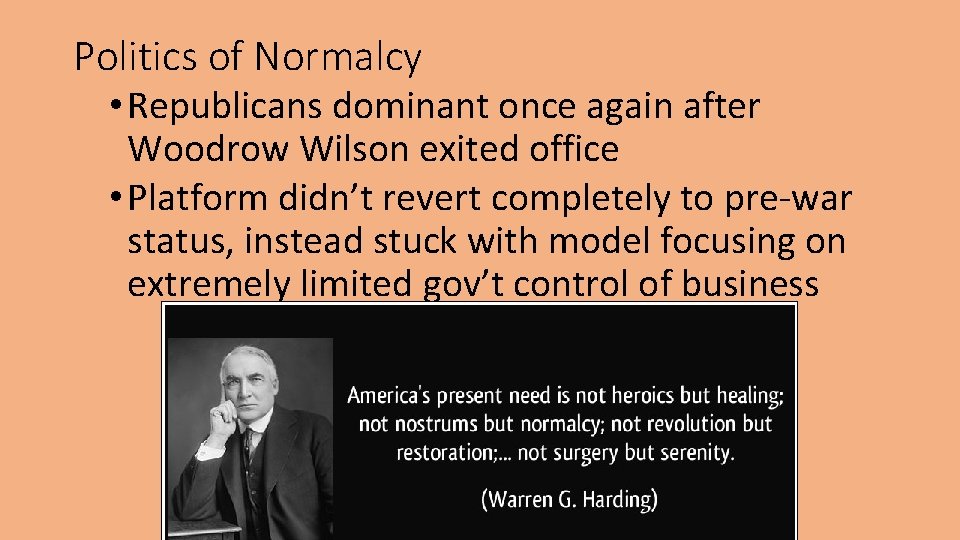
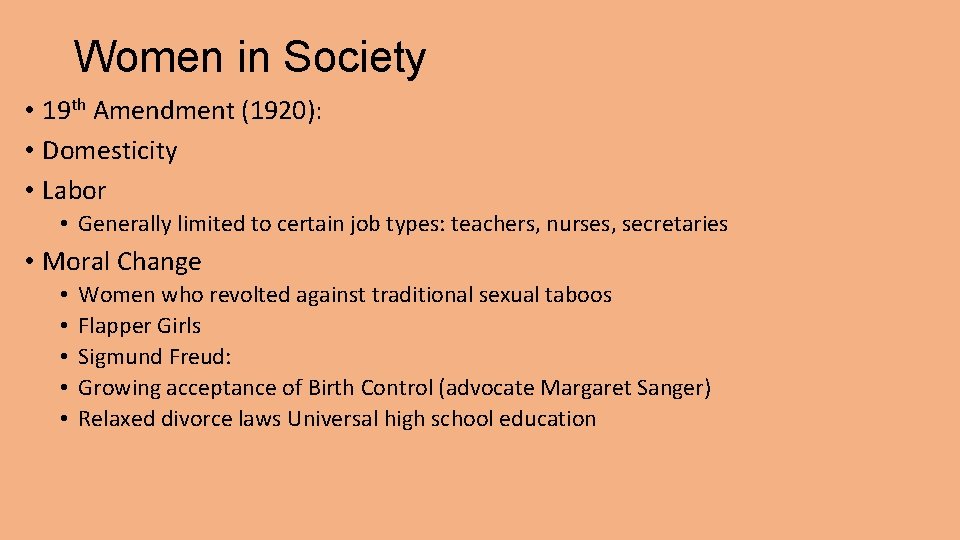
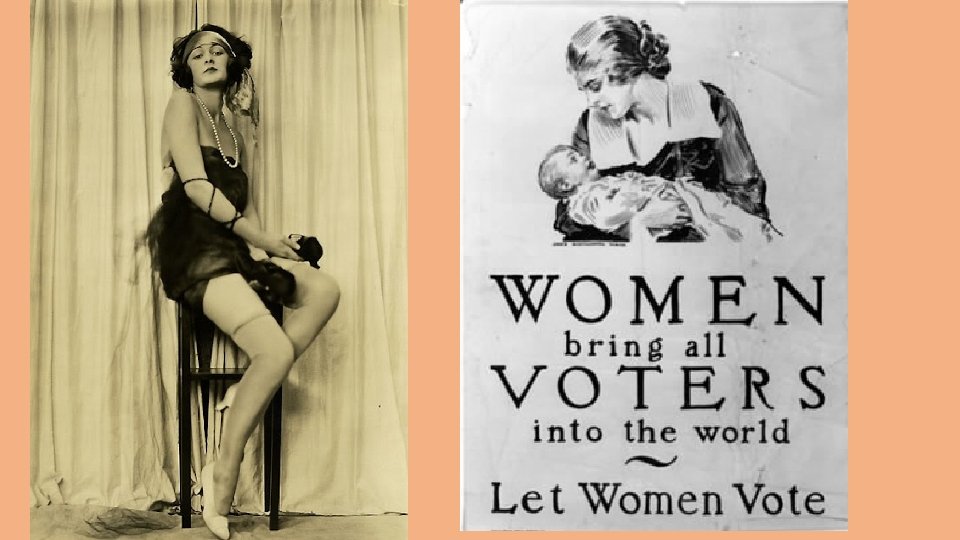
Women in Society • 19 th Amendment (1920): • Domesticity • Labor • Generally limited to certain job types: teachers, nurses, secretaries • Moral Change • • • Women who revolted against traditional sexual taboos Flapper Girls Sigmund Freud: Growing acceptance of Birth Control (advocate Margaret Sanger) Relaxed divorce laws Universal high school education
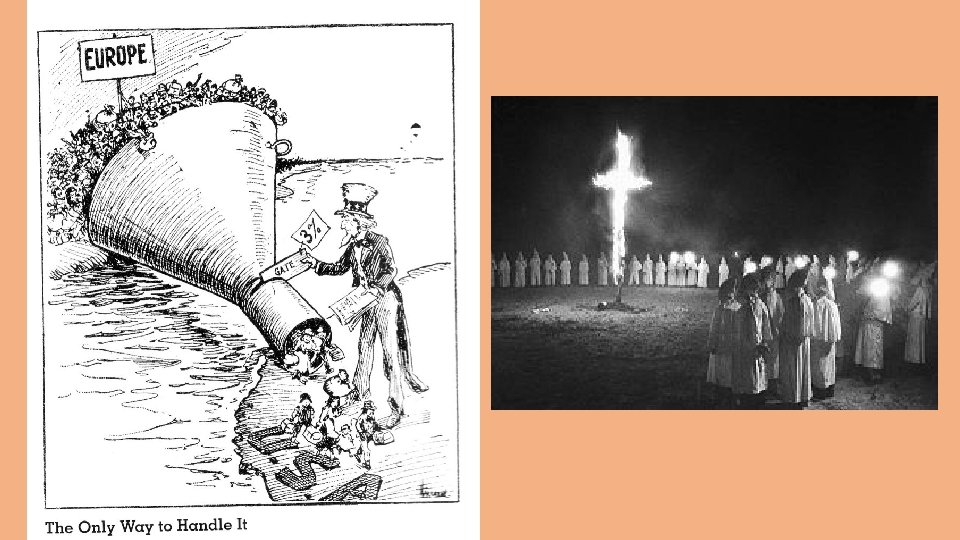
Nativism • Protestant isolationist prejudices and fear of job competition led to wide support for reducing immigrants into the US • Quotas • Quota Acts of 1921 and 1924: limited the amounts of immigrants from particular nationalities into the US • All Japanese barred from entering • Sacco and Vanzetti Case • The “new” Ku Klux Klan (1915)
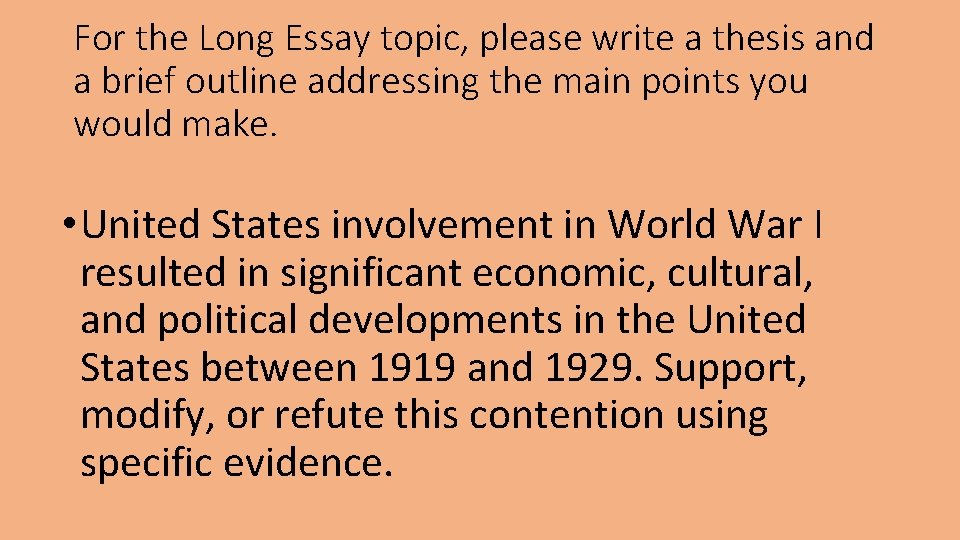
Causes of the Great Depression (19291933) • Stock Market Crash • Prosperous stock market during the 20 s caused a massive increase in investors • Black Thursday (October 24, 1929): • Bankers bought millions of dollars of stocks in attempt to save the market • Black Tuesday (October 29, 1929):
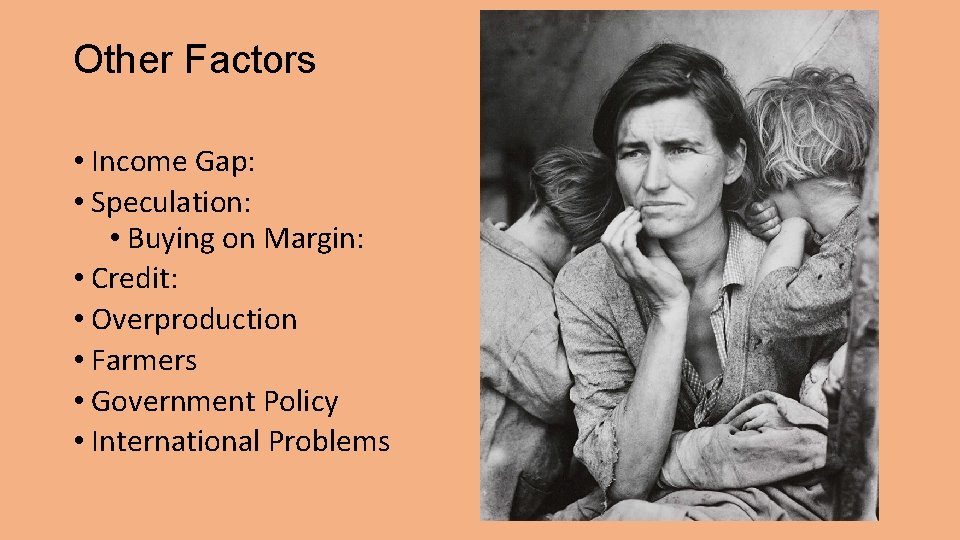
Other Factors • Income Gap: • Speculation: • Buying on Margin: • Credit: • Overproduction • Farmers • Government Policy • International Problems