
POSTWAR EUROPE What is Europe now A rubble
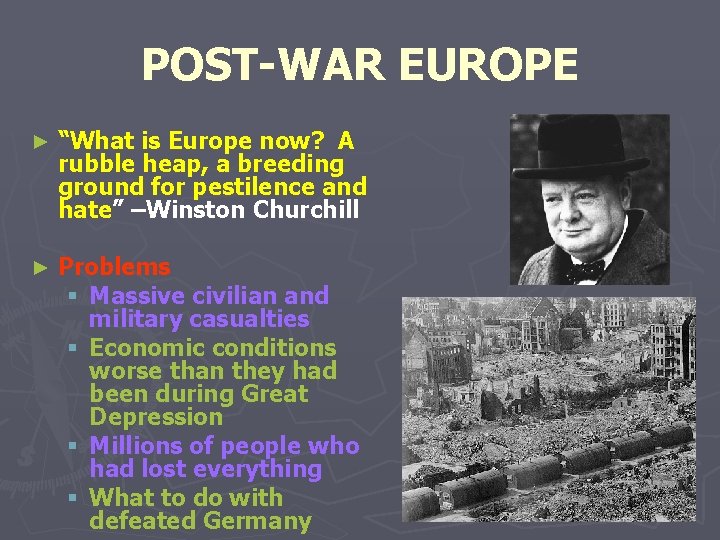
POST-WAR EUROPE ► “What is Europe now? A rubble heap, a breeding ground for pestilence and hate” –Winston Churchill ► Problems § Massive civilian and military casualties § Economic conditions worse than they had been during Great Depression § Millions of people who had lost everything § What to do with defeated Germany
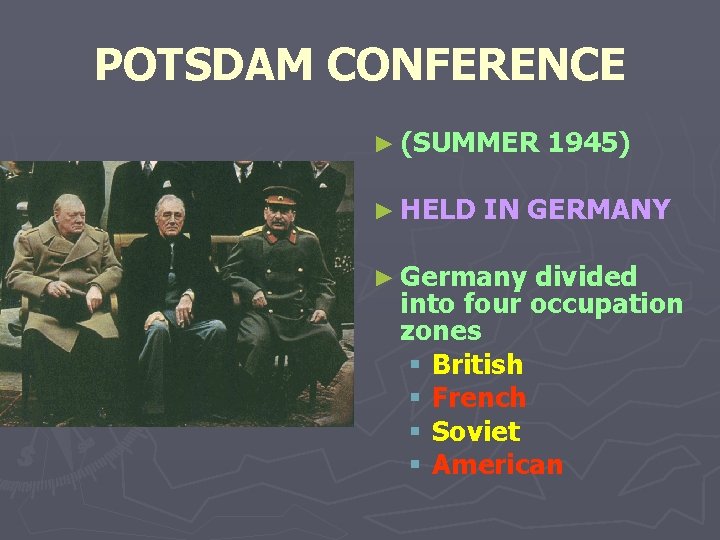
POTSDAM CONFERENCE ► (SUMMER ► HELD 1945) IN GERMANY ► Germany divided into four occupation zones § British § French § Soviet § American
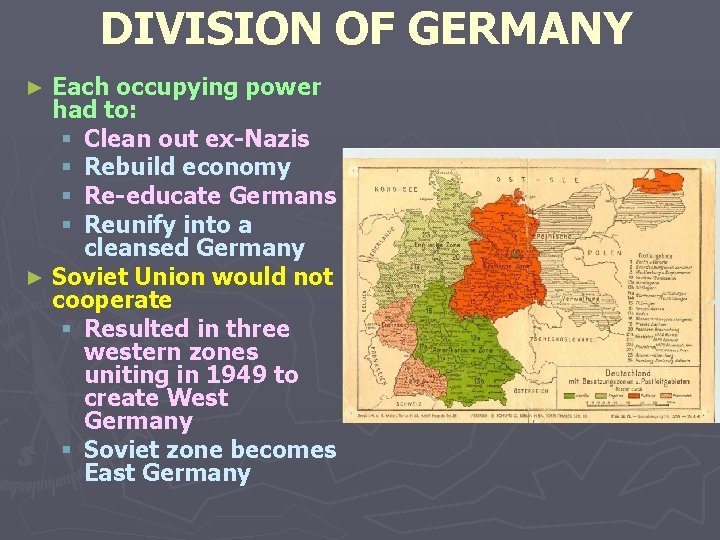
DIVISION OF GERMANY Each occupying power had to: § Clean out ex-Nazis § Rebuild economy § Re-educate Germans § Reunify into a cleansed Germany ► Soviet Union would not cooperate § Resulted in three western zones uniting in 1949 to create West Germany § Soviet zone becomes East Germany ►
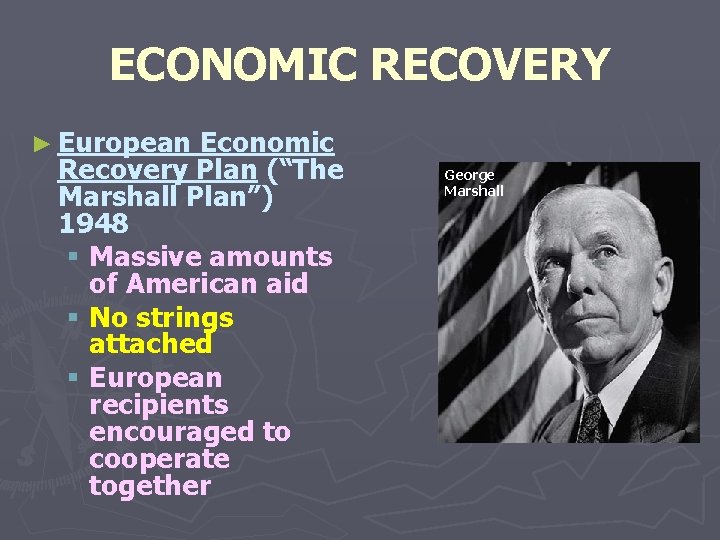
ECONOMIC RECOVERY ► European Economic Recovery Plan (“The Marshall Plan”) 1948 § Massive amounts of American aid § No strings attached § European recipients encouraged to cooperate together George Marshall
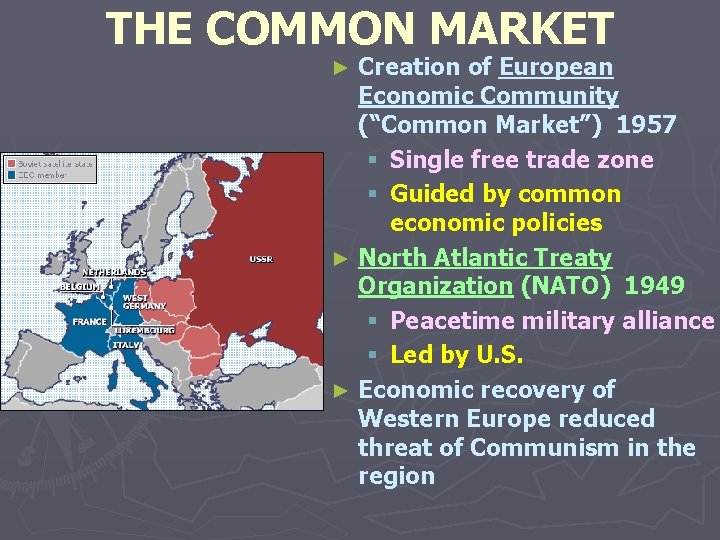
THE COMMON MARKET Creation of European Economic Community (“Common Market”) 1957 § Single free trade zone § Guided by common economic policies ► North Atlantic Treaty Organization (NATO) 1949 § Peacetime military alliance § Led by U. S. ► Economic recovery of Western Europe reduced threat of Communism in the region ►
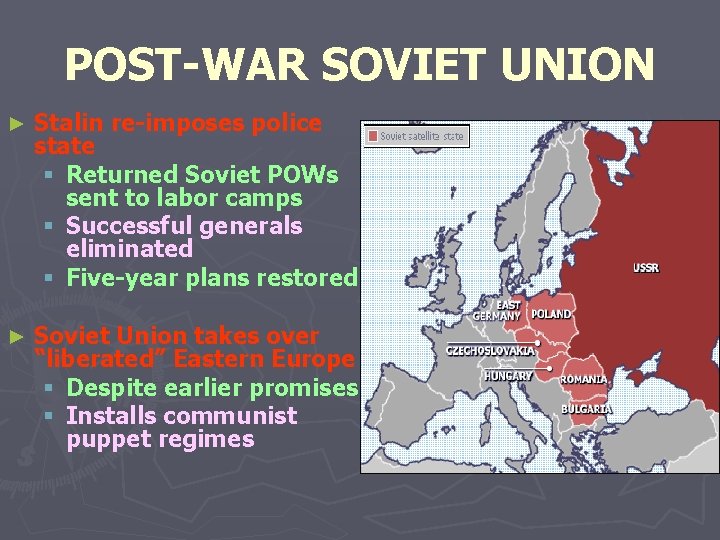
POST-WAR SOVIET UNION ► Stalin re-imposes police state § Returned Soviet POWs sent to labor camps § Successful generals eliminated § Five-year plans restored ► Soviet Union takes over “liberated” Eastern Europe § Despite earlier promises § Installs communist puppet regimes
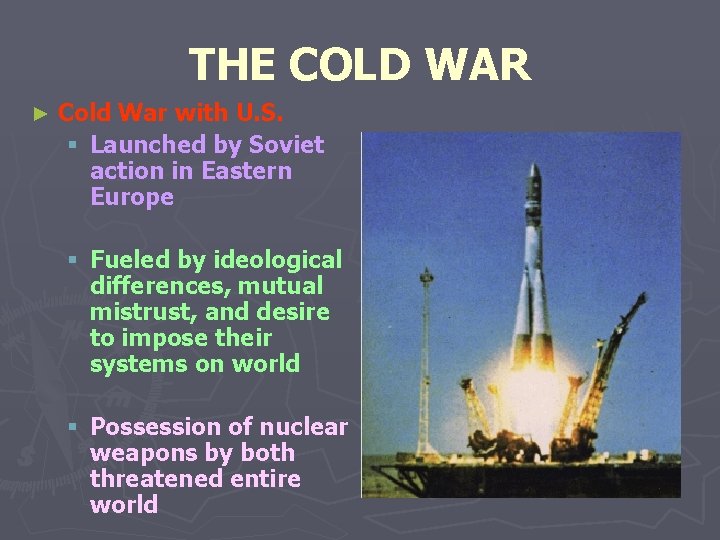
THE COLD WAR ► Cold War with U. S. § Launched by Soviet action in Eastern Europe § Fueled by ideological differences, mutual mistrust, and desire to impose their systems on world § Possession of nuclear weapons by both threatened entire world
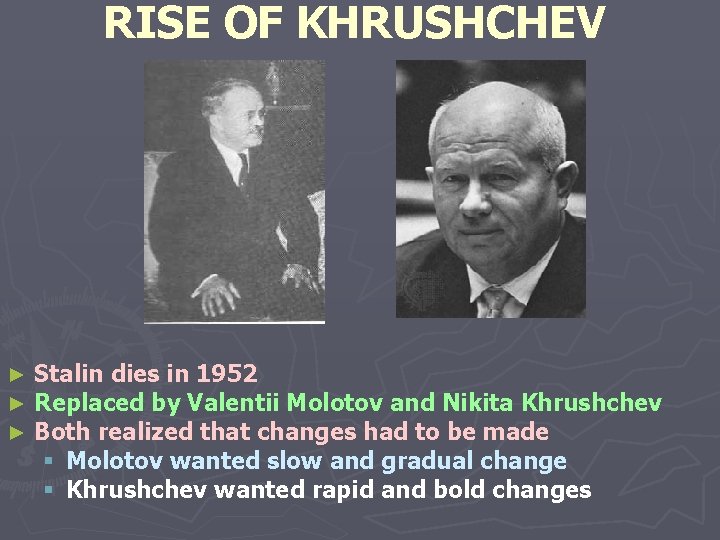
RISE OF KHRUSHCHEV ► ► ► Stalin dies in 1952 Replaced by Valentii Molotov and Nikita Khrushchev Both realized that changes had to be made § Molotov wanted slow and gradual change § Khrushchev wanted rapid and bold changes
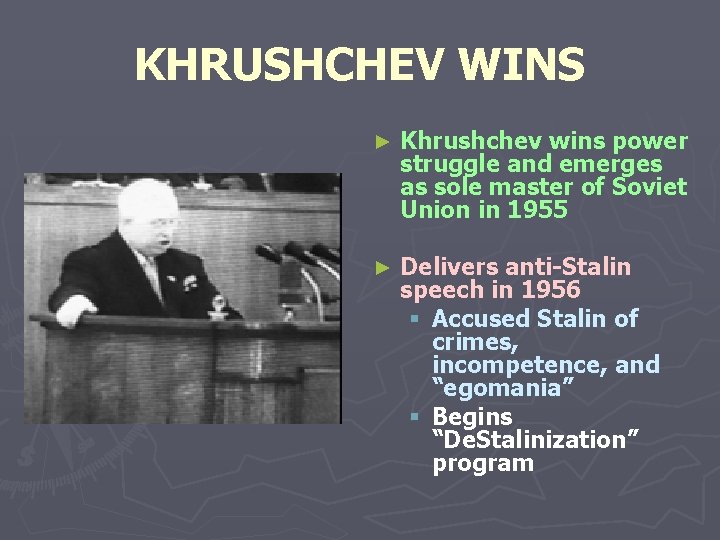
KHRUSHCHEV WINS ► Khrushchev wins power struggle and emerges as sole master of Soviet Union in 1955 ► Delivers anti-Stalin speech in 1956 § Accused Stalin of crimes, incompetence, and “egomania” § Begins “De. Stalinization” program
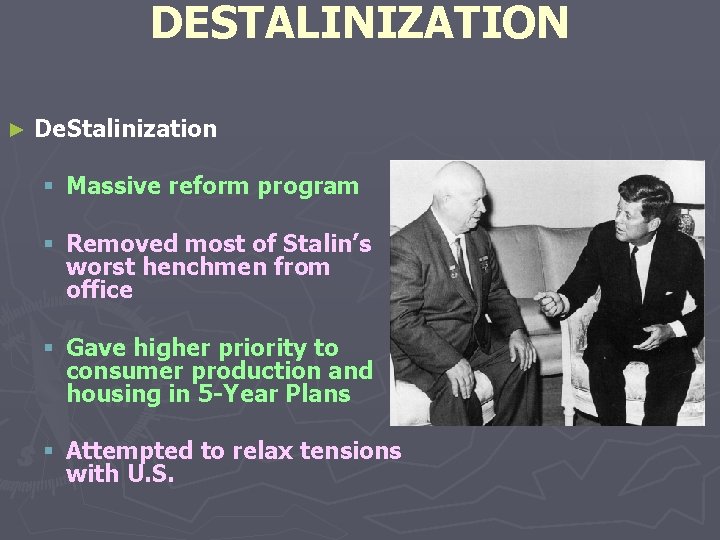
DESTALINIZATION ► De. Stalinization § Massive reform program § Removed most of Stalin’s worst henchmen from office § Gave higher priority to consumer production and housing in 5 -Year Plans § Attempted to relax tensions with U. S.
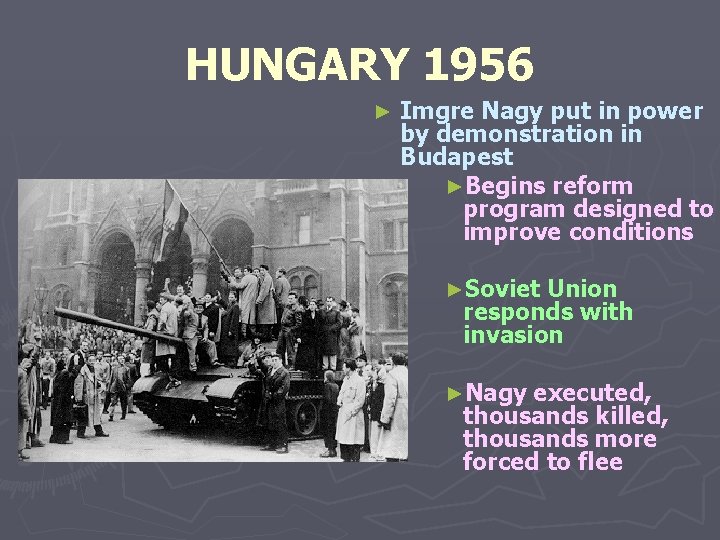
HUNGARY 1956 ► Imgre Nagy put in power by demonstration in Budapest ►Begins reform program designed to improve conditions ►Soviet Union responds with invasion ►Nagy executed, thousands killed, thousands more forced to flee
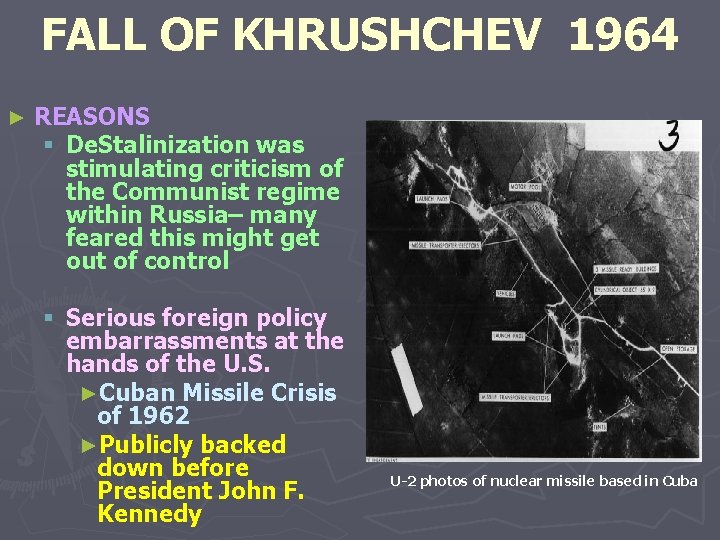
FALL OF KHRUSHCHEV 1964 ► REASONS § De. Stalinization was stimulating criticism of the Communist regime within Russia– many feared this might get out of control § Serious foreign policy embarrassments at the hands of the U. S. ►Cuban Missile Crisis of 1962 ►Publicly backed down before President John F. Kennedy U-2 photos of nuclear missile based in Cuba
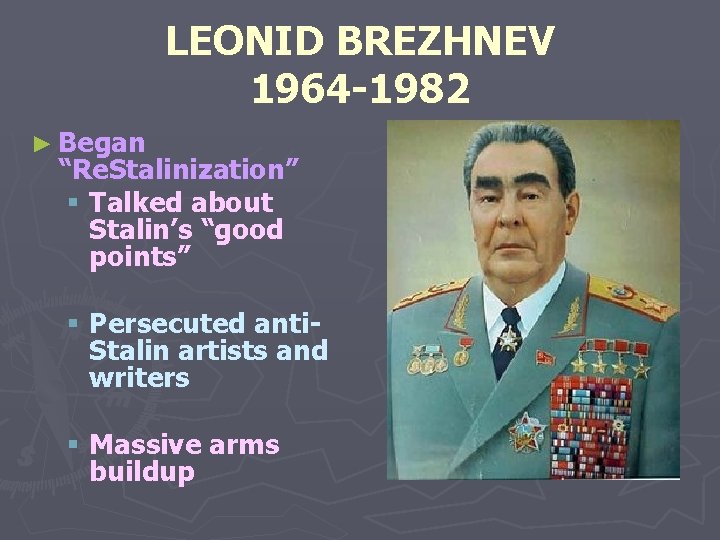
LEONID BREZHNEV 1964 -1982 ► Began “Re. Stalinization” § Talked about Stalin’s “good points” § Persecuted anti. Stalin artists and writers § Massive arms buildup
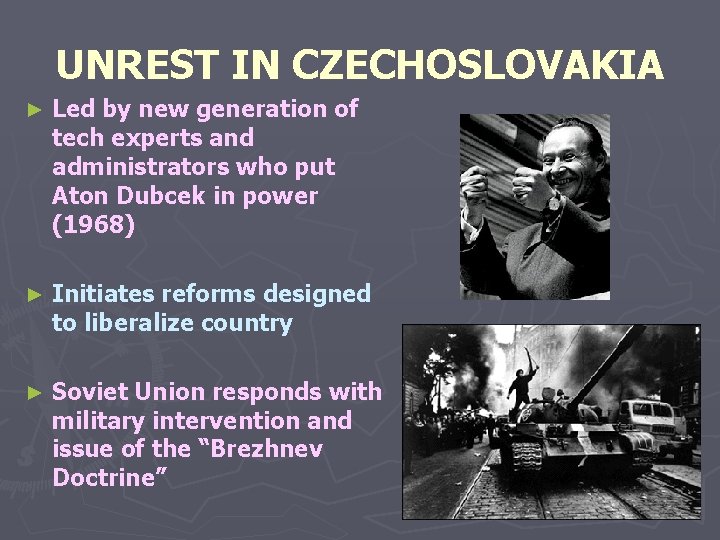
UNREST IN CZECHOSLOVAKIA ► Led by new generation of tech experts and administrators who put Aton Dubcek in power (1968) ► Initiates reforms designed to liberalize country ► Soviet Union responds with military intervention and issue of the “Brezhnev Doctrine”
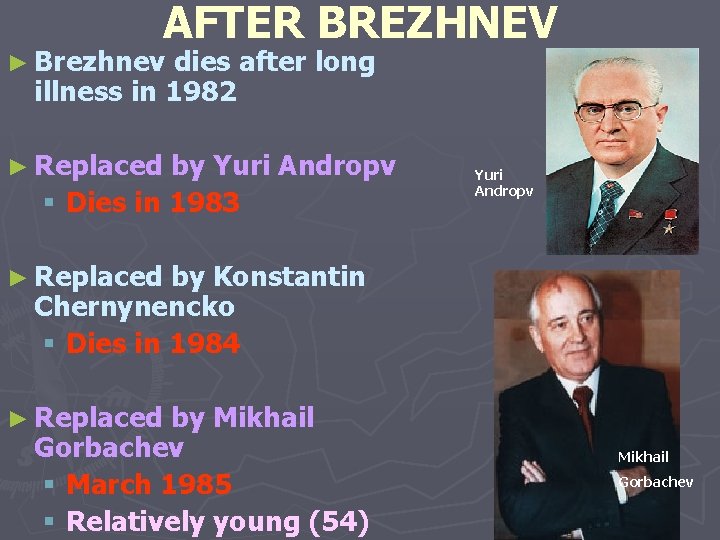
AFTER BREZHNEV ► Brezhnev dies after long illness in 1982 ► Replaced by Yuri Andropv § Dies in 1983 Yuri Andropv ► Replaced by Konstantin Chernynencko § Dies in 1984 ► Replaced by Mikhail Gorbachev § March 1985 § Relatively young (54) Mikhail Gorbachev
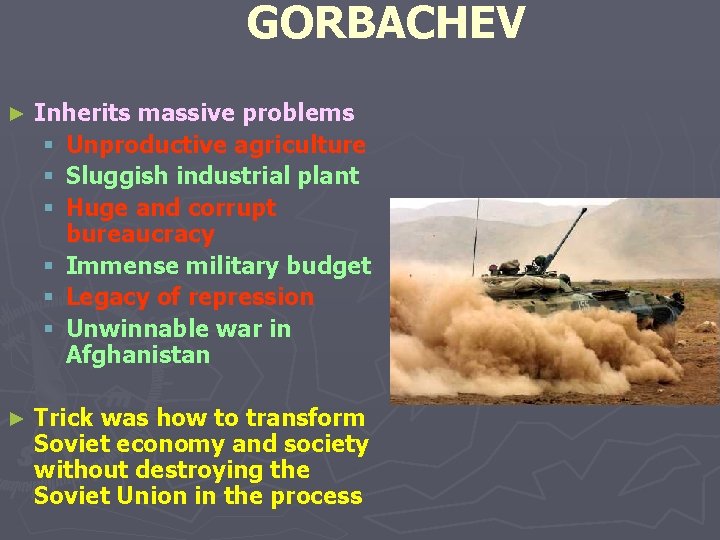
GORBACHEV ► Inherits massive problems § Unproductive agriculture § Sluggish industrial plant § Huge and corrupt bureaucracy § Immense military budget § Legacy of repression § Unwinnable war in Afghanistan ► Trick was how to transform Soviet economy and society without destroying the Soviet Union in the process
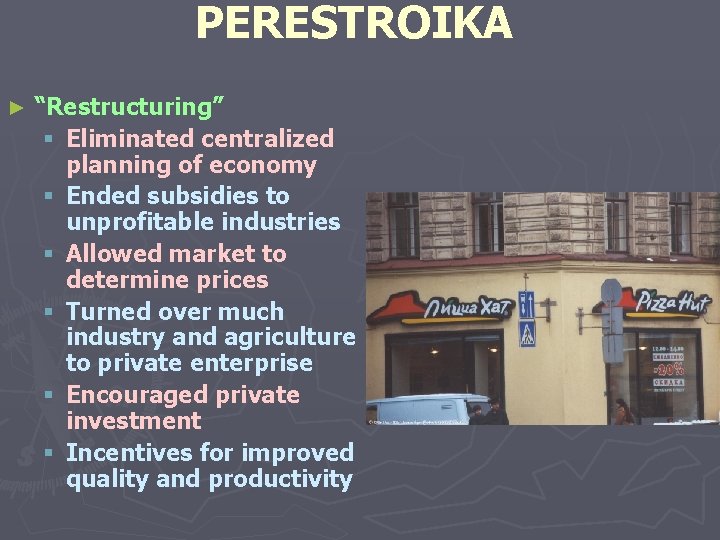
PERESTROIKA ► “Restructuring” § Eliminated centralized planning of economy § Ended subsidies to unprofitable industries § Allowed market to determine prices § Turned over much industry and agriculture to private enterprise § Encouraged private investment § Incentives for improved quality and productivity
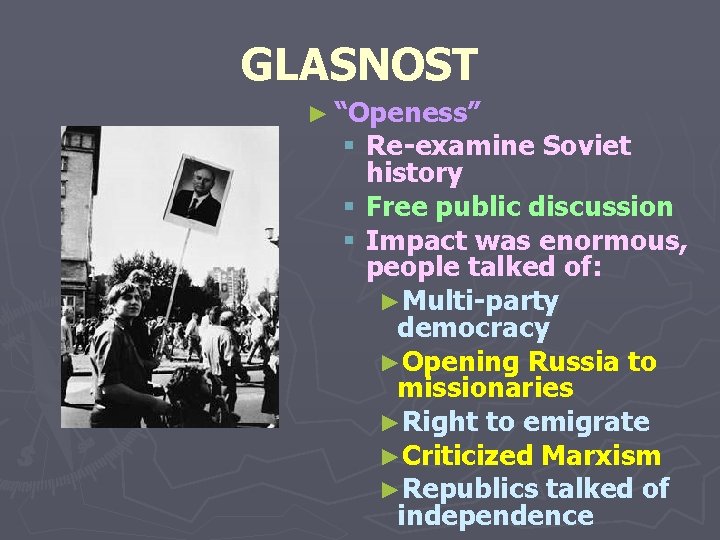
GLASNOST ► “Openess” § Re-examine Soviet history § Free public discussion § Impact was enormous, people talked of: ►Multi-party democracy ►Opening Russia to missionaries ►Right to emigrate ►Criticized Marxism ►Republics talked of independence
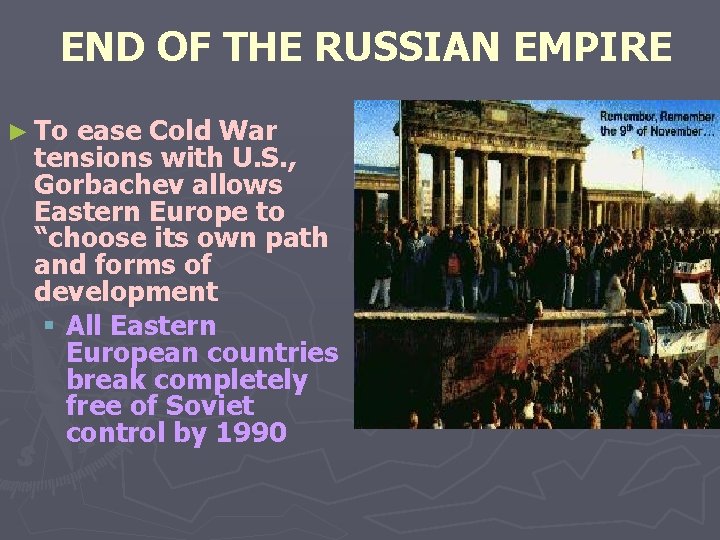
END OF THE RUSSIAN EMPIRE ► To ease Cold War tensions with U. S. , Gorbachev allows Eastern Europe to “choose its own path and forms of development § All Eastern European countries break completely free of Soviet control by 1990
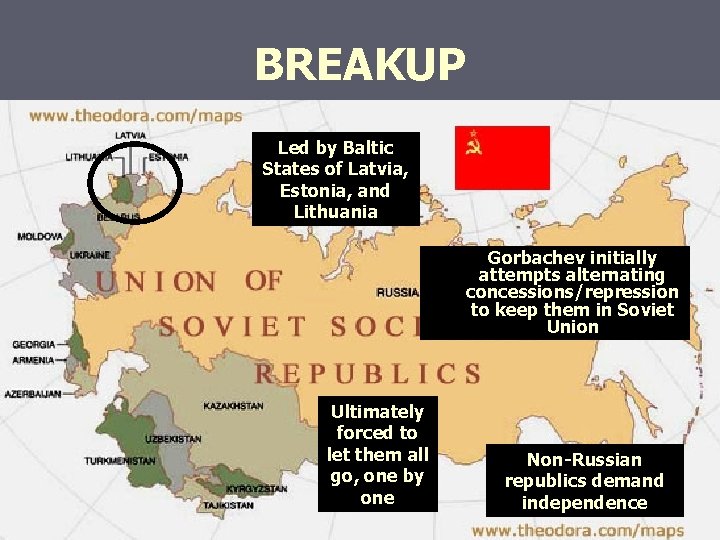
BREAKUP Led by Baltic States of Latvia, Estonia, and Lithuania Gorbachev initially attempts alternating concessions/repression to keep them in Soviet Union Ultimately forced to let them all go, one by one Non-Russian republics demand independence
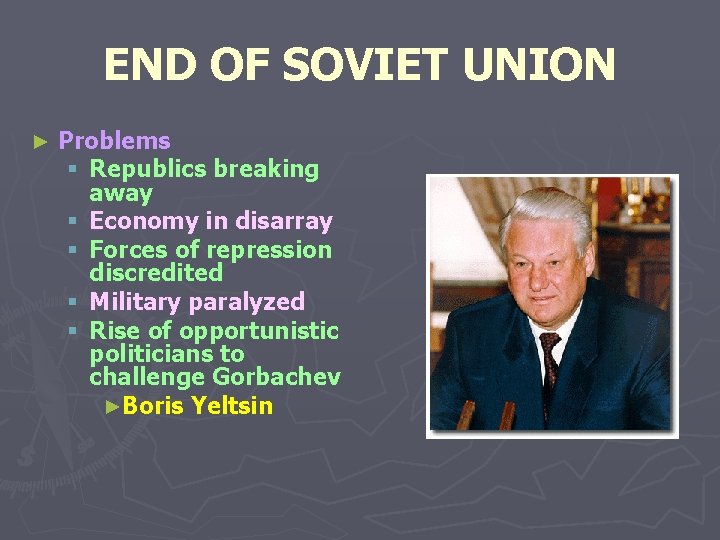
END OF SOVIET UNION ► Problems § Republics breaking away § Economy in disarray § Forces of repression discredited § Military paralyzed § Rise of opportunistic politicians to challenge Gorbachev ►Boris Yeltsin
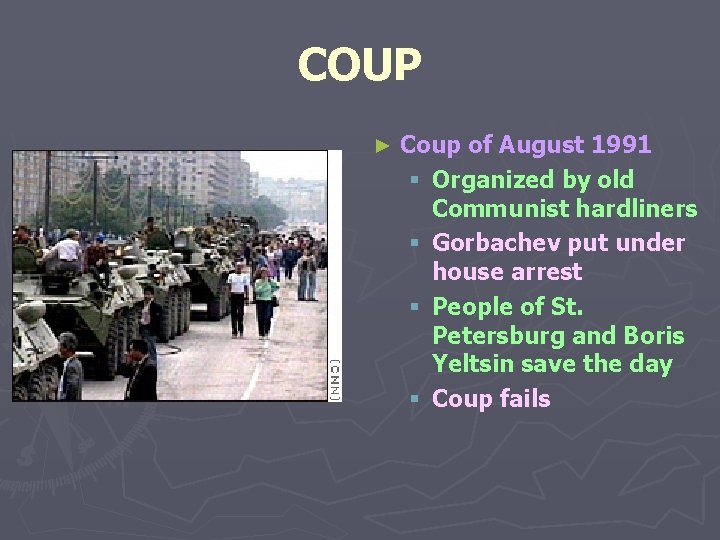
COUP ► Coup of August 1991 § Organized by old Communist hardliners § Gorbachev put under house arrest § People of St. Petersburg and Boris Yeltsin save the day § Coup fails
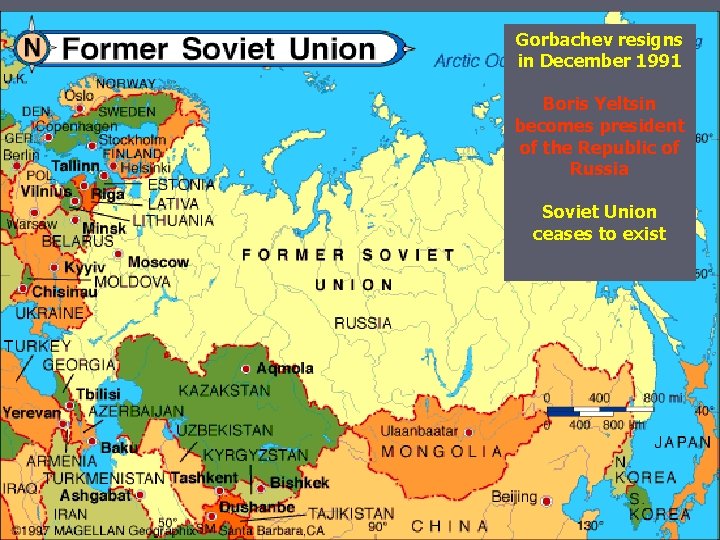
Gorbachev resigns in December 1991 Boris Yeltsin becomes president of the Republic of Russia Soviet Union ceases to exist
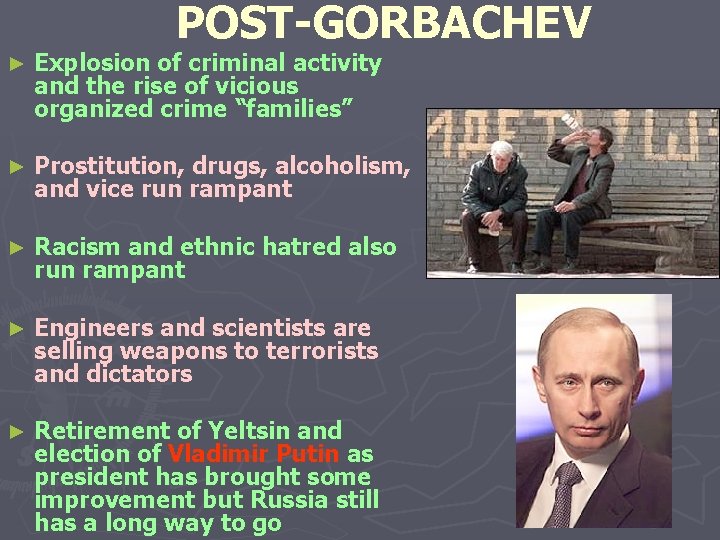
POST-GORBACHEV ► Explosion of criminal activity and the rise of vicious organized crime “families” ► Prostitution, drugs, alcoholism, and vice run rampant ► Racism and ethnic hatred also run rampant ► Engineers and scientists are selling weapons to terrorists and dictators ► Retirement of Yeltsin and election of Vladimir Putin as president has brought some improvement but Russia still has a long way to go
- Slides: 24