
PostTraumatic Stress Disorder National Institute of Medical Health
- Slides: 23
Post-Traumatic Stress Disorder National Institute of Medical Health
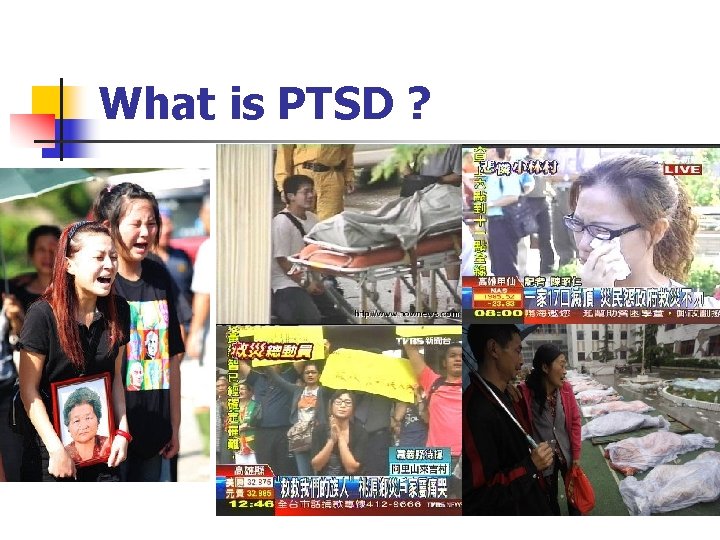
What is PTSD ?
What is PTSD ? n n n Anxiety disorder Get after seeing or living through a dangerous event “fight-or-flight” response This reaction is changed or damaged Even no longer in danger
Who gets PTSD? n n n At any age War veterans Survivors of physical and sexual assault, abuse Accidents Disasters… Not everyone with PTSD has been through a dangerous event.
What are the symptoms of PTSD? n n n Re-experiencing symptoms Avoidance symptoms Hyperarousal symptoms
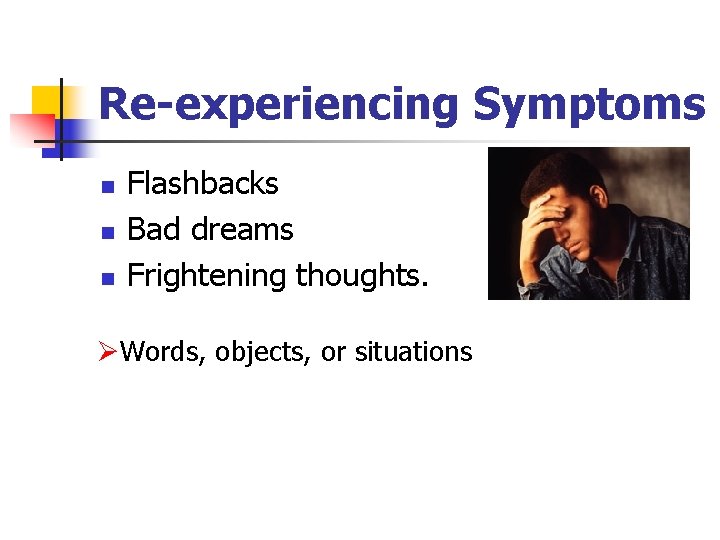
Re-experiencing Symptoms n n n Flashbacks Bad dreams Frightening thoughts. ØWords, objects, or situations
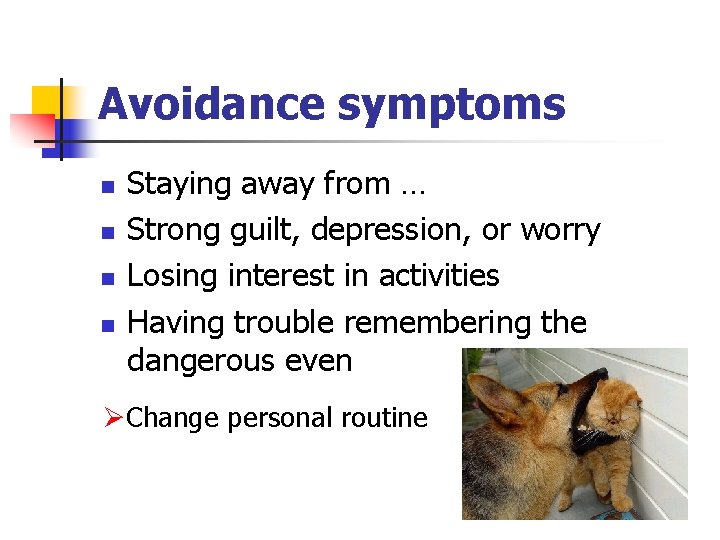
Avoidance symptoms n n Staying away from … Strong guilt, depression, or worry Losing interest in activities Having trouble remembering the dangerous even ØChange personal routine
Hyperarousal symptoms n n n Being easily startled Feeling tense or “on edge” difficulty sleeping, angry outbursts ØConstant ØTrigger by things that remind th traumatic event ØHard to do daily tasks (Sleep, eat, concentrate)
ASD Vs. PTSD n Ø Ø Ø ASD (Acute stress disorder) Detachment Being in a daze Derealization Depersonalization Dissociative amnesia Sustain at lesast 2 days - 4 week Within 4 week post accident n PTSD Duration: Over 1 month
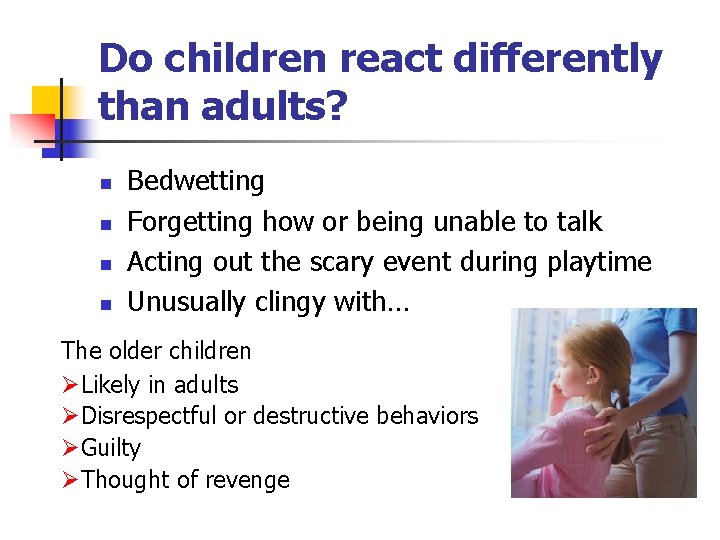
Do children react differently than adults? n n Bedwetting Forgetting how or being unable to talk Acting out the scary event during playtime Unusually clingy with… The older children ØLikely in adults ØDisrespectful or destructive behaviors ØGuilty ØThought of revenge
How is PTSD detected? n n n All of the following for at least 1 month At least one re-experiencing symptom At least three avoidance symptoms At least two hyperarousal symptoms Hard to go about daily life
Why do some people get PTSD and other people do not? Risk factors n n n n Living through dangerous events and traumas History of mental illness Getting hurt Seeing people hurt or killed Feeling horror, helplessness, or extreme fear Having little or no social support after the event Dealing with extra stress after the event (loss of a loved one, pain and injury, loss job or home)
Why do some people get PTSD and other people do not? Resilience factors n n n Seeking out support from other people( friends, family) Finding a support group after a traumatic event Feeling good about one’s own actions in the face of danger Having a coping strategy, or a way of getting through the bad event and learning from it Act and respond effectively despite feeling fear.
How is PTSD treated? n n n Ø Ø Psychotherapy Medications Other ongoing problems Panic disorder Depression Substance abuse Feeling suicidal
Psychotherapy n n Ø Ø Ø “talk” therapy 6 to 12 weeks and more Family and friends Cognitive behavioral therapy (CBT) Exposure therapy : Face and control, safe way Cognitive restructuring : What happen in a realistic way Stress inoculation training : How to reduce anxiety
Medications FDA approved n Sertraline (Zoloft) n Paroxetine (Paxil) Control PTSD symptom n Sadness, worry, anger, feeling numb in side, easier to go through n Side effect: Headache, nausea, sleeplessness, agitation, sexual problem.
Other medications n n n Benzodiazepines : Relax, sleep Antipsychotics : with other mental disorder Other antidepressants
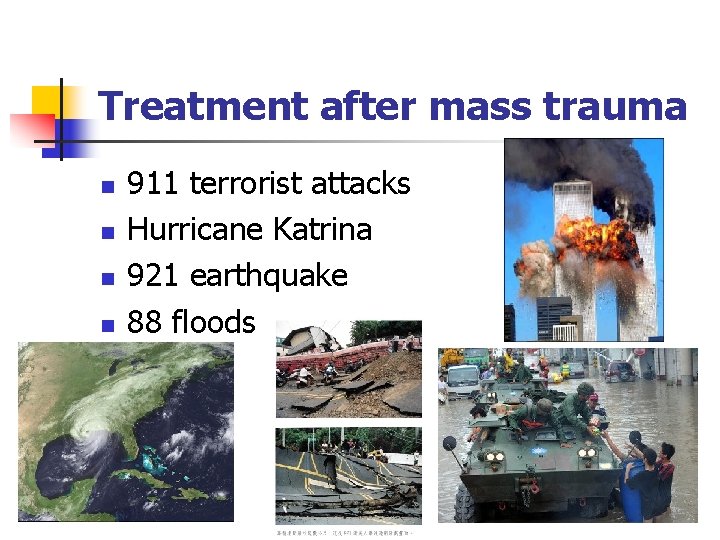
Treatment after mass trauma n n 911 terrorist attacks Hurricane Katrina 921 earthquake 88 floods
Treatment after mass trauma n n Ø Ø Ø Some PTSD symptoms Basic support Getting to a safe place Seeing a doctor if injured Getting food and water Contacting loved ones or friends Learning what is being done to help.
What efforts are under way to improve the detection and treatment of PTSD? n n n n brain imaging and the study of genes what leads to PTSD, when it happens, and who is most at risk. Why some people get PTSD and others do not. Knowing this can help Focusing on ways to examine pre-trauma, and posttrauma risk and resilience factors all at once. Looking for treatments that reduce the impact traumatic memories have on our emotions. Improving the way people are screened for PTSD, given early treatment, and tracked after a mass trauma. Developing new approaches in self-testing and screening Testing ways to help family doctors detect and treat PTSD or refer people with PTSD to mental health specialists.
How can I help a friend or relative who has PTSD? To help a friend or relative, you can: n Offer emotional support n Learn about PTSD n Talk to your friend or relative, and listen carefully. n Listen to feelings your friend or relative expresses n Situations that may trigger PTSD symptoms. n Positive distractions (walks, outings, and other activities ) n With time and treatment, he or she can get better.
How can I help myself? To help yourself: n Talk to your doctor about treatment options. n Mild activity or exercise to help reduce stress. n Set realistic goals for yourself. n Break up large tasks into small ones ( priorities, and do what you can as you can) n Confide in a trusted friend or relative. n Tell others about things that may trigger symptoms. n Expect your symptoms to improve gradually, not immediately. n Comforting situations, places, and people.
Thank you for your listening