
PostTraumatic Epilepsy Enrique Feoli MD North East Regional


- Slides: 31
Post-Traumatic Epilepsy Enrique Feoli MD North East Regional Epilepsy Group 2014
Videos n https: //www. youtube. com/watch? v=Bf. Q 8 Ox. Erihk n https: //www. youtube. com/watch? v=e. W 9 GRDe 4 v -Y n http: //www. youtube. com/watch? v=n. Z 8 p 90 Bfqng &feature=player_detailpage
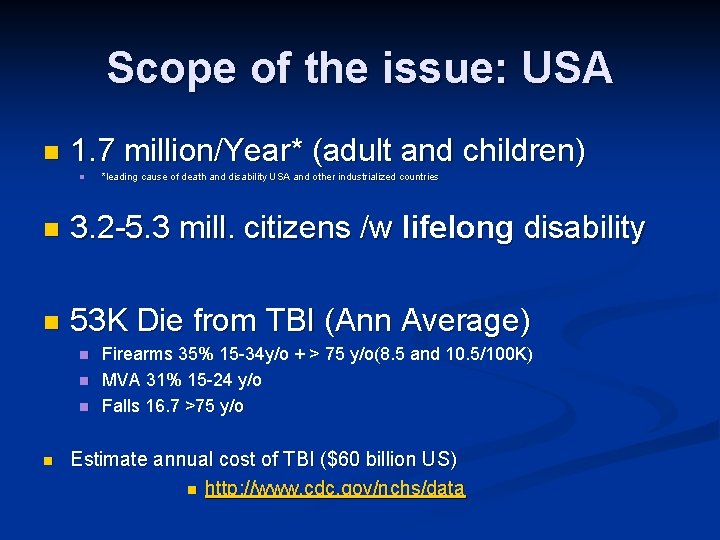
Scope of the issue: USA n 1. 7 million/Year* (adult and children) n *leading cause of death and disability USA and other industrialized countries n 3. 2 -5. 3 mill. citizens /w lifelong disability n 53 K Die from TBI (Ann Average) n n Firearms 35% 15 -34 y/o + > 75 y/o(8. 5 and 10. 5/100 K) MVA 31% 15 -24 y/o Falls 16. 7 >75 y/o Estimate annual cost of TBI ($60 billion US) n http: //www. cdc. gov/nchs/data
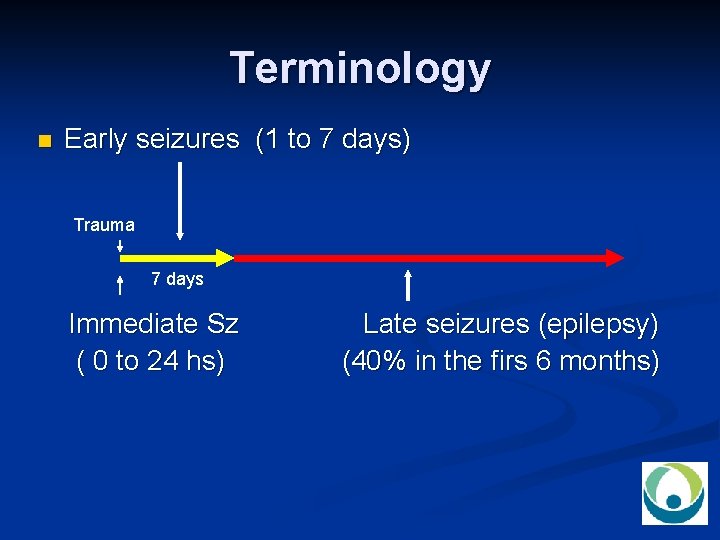
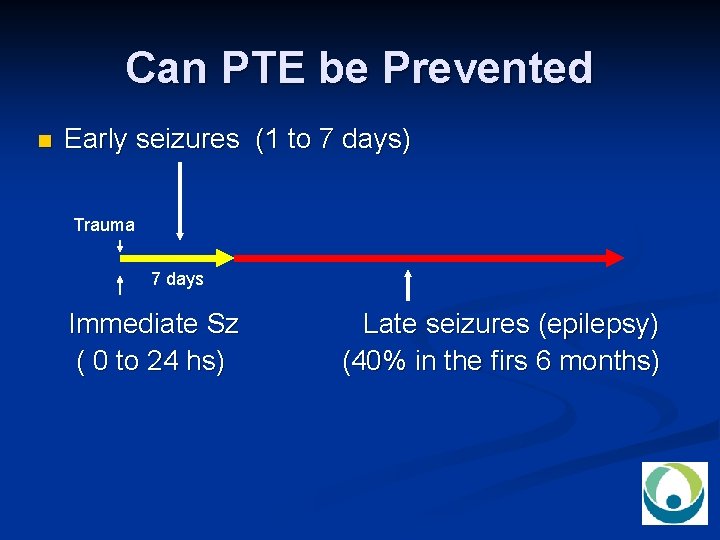
Terminology n Early seizures (1 to 7 days) Trauma 7 days Immediate Sz Late seizures (epilepsy) ( 0 to 24 hs) (40% in the firs 6 months)
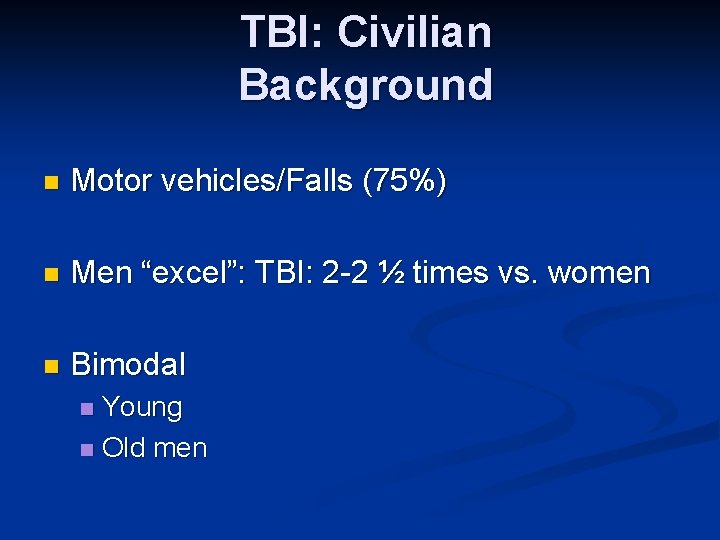
TBI: Civilian Background n Motor vehicles/Falls (75%) n Men “excel”: TBI: 2 -2 ½ times vs. women n Bimodal Young n Old men n
Criteria for TBI n Loss of Awareness (consciousness) n Sustained focal deficit n Imaging abnormality (ICH, Contusion…)
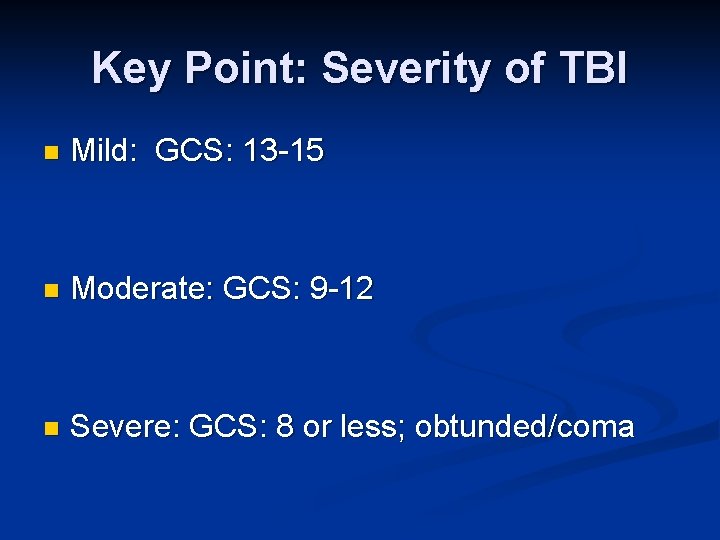
Key Point: Severity of TBI n Mild: GCS: 13 -15 n Moderate: GCS: 9 -12 n Severe: GCS: 8 or less; obtunded/coma
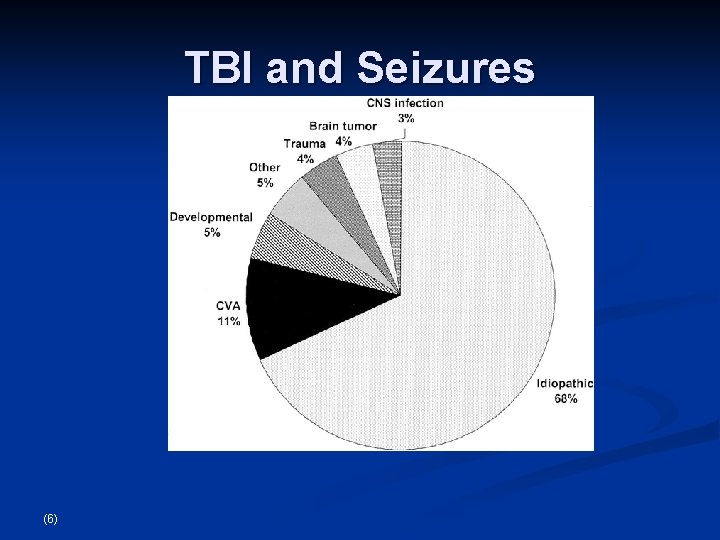
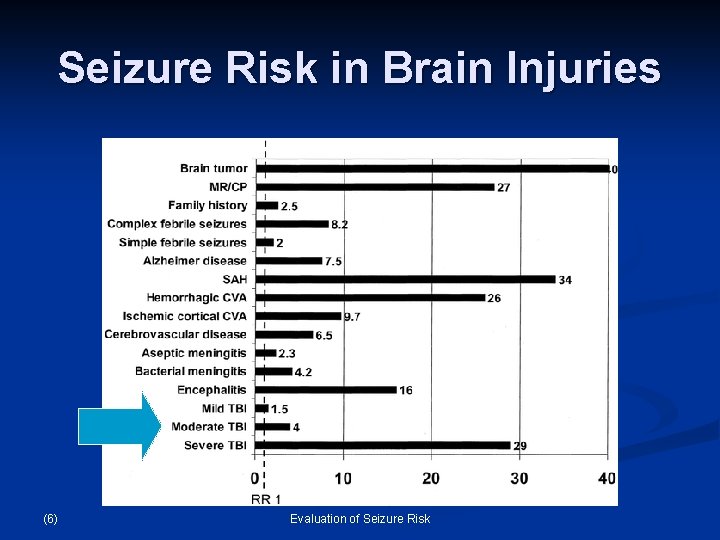
TBI and Seizures (6)
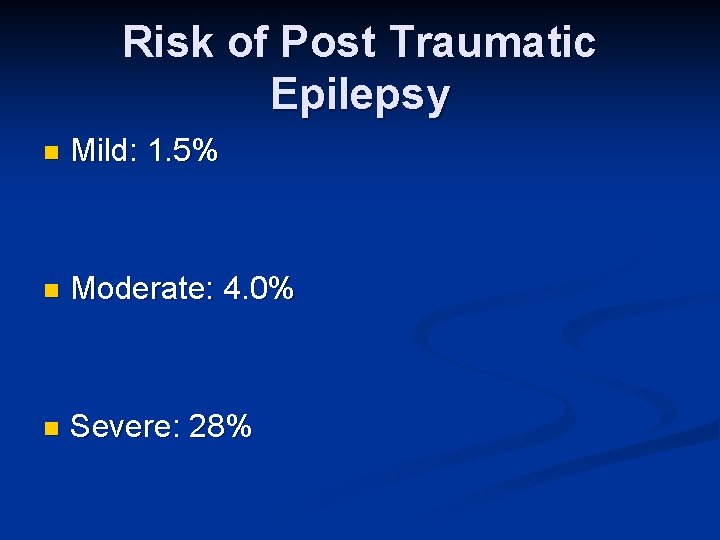
Risk of Post Traumatic Epilepsy n Mild: 1. 5% n Moderate: 4. 0% n Severe: 28%
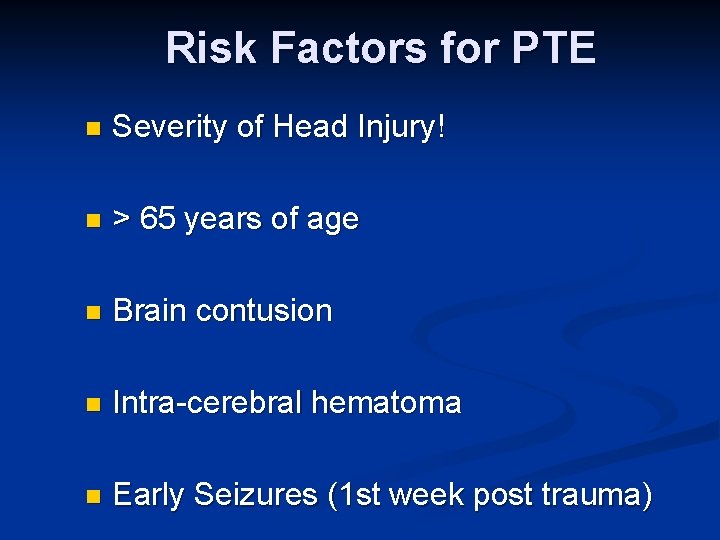
Risk Factors for PTE n Severity of Head Injury! n > 65 years of age n Brain contusion n Intra-cerebral hematoma n Early Seizures (1 st week post trauma)
Seizure Risk in Brain Injuries (6) Evaluation of Seizure Risk
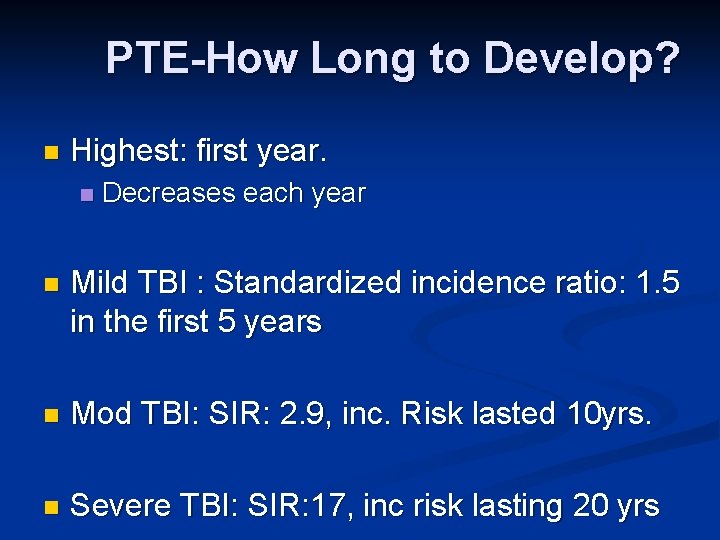
PTE-How Long to Develop? n Highest: first year. n Decreases each year n Mild TBI : Standardized incidence ratio: 1. 5 in the first 5 years n Mod TBI: SIR: 2. 9, inc. Risk lasted 10 yrs. n Severe TBI: SIR: 17, inc risk lasting 20 yrs
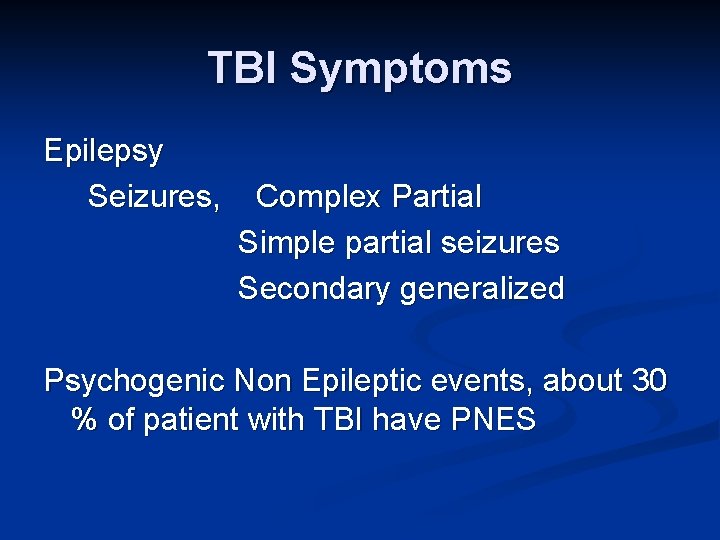
TBI Symptoms Epilepsy Seizures, Complex Partial Simple partial seizures Secondary generalized Psychogenic Non Epileptic events, about 30 % of patient with TBI have PNES
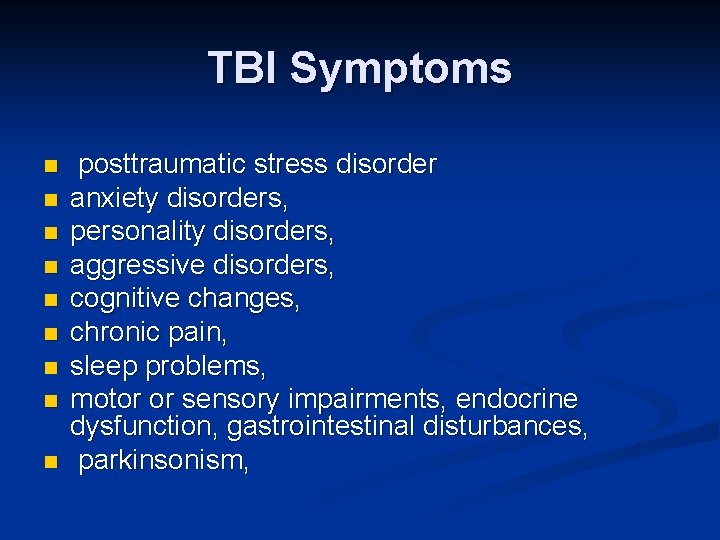
TBI Symptoms n n n n n posttraumatic stress disorder anxiety disorders, personality disorders, aggressive disorders, cognitive changes, chronic pain, sleep problems, motor or sensory impairments, endocrine dysfunction, gastrointestinal disturbances, parkinsonism,
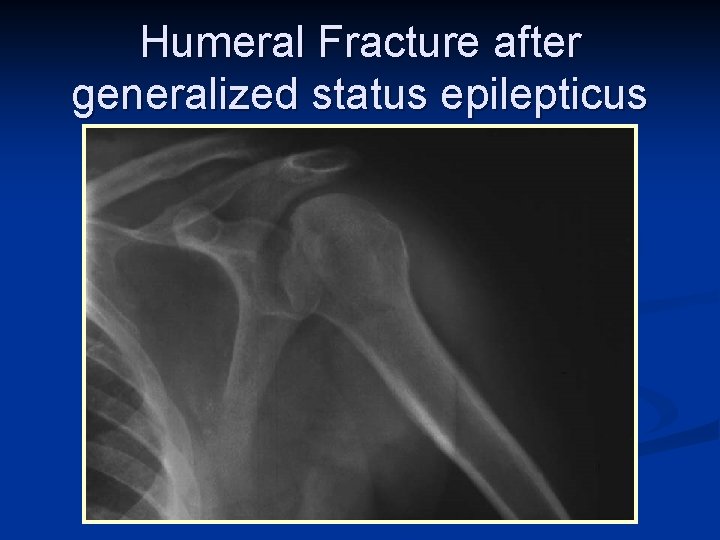
Humeral Fracture after generalized status epilepticus
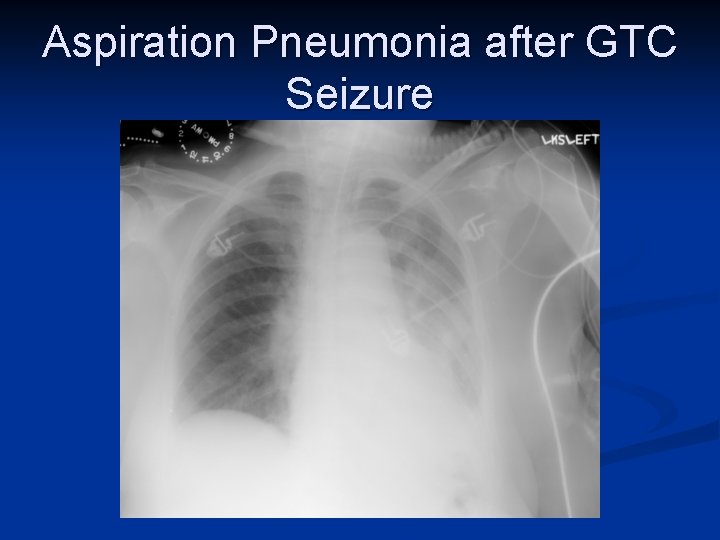
Aspiration Pneumonia after GTC Seizure
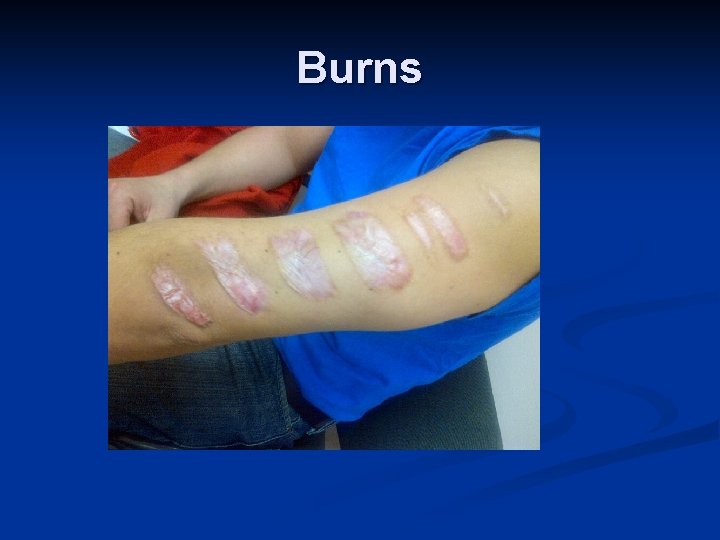
Burns
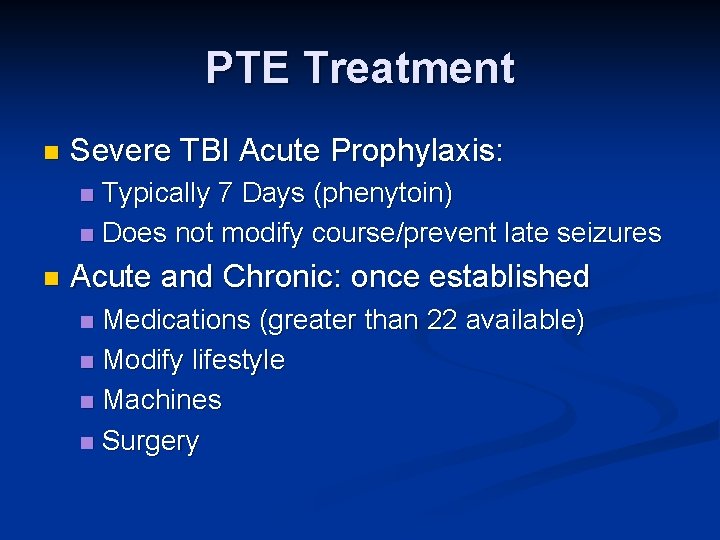
PTE Treatment n Severe TBI Acute Prophylaxis: Typically 7 Days (phenytoin) n Does not modify course/prevent late seizures n n Acute and Chronic: once established Medications (greater than 22 available) n Modify lifestyle n Machines n Surgery n
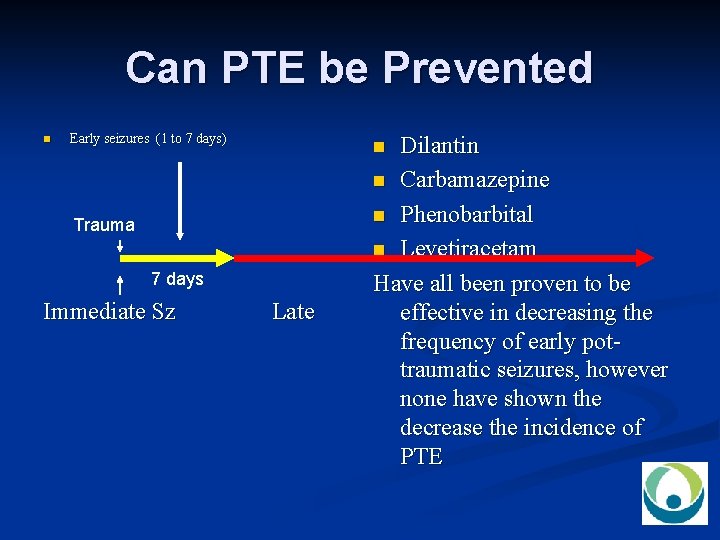
Can PTE be Prevented n Early seizures (1 to 7 days) Trauma 7 days Immediate Sz Late seizures (epilepsy) ( 0 to 24 hs) (40% in the firs 6 months)
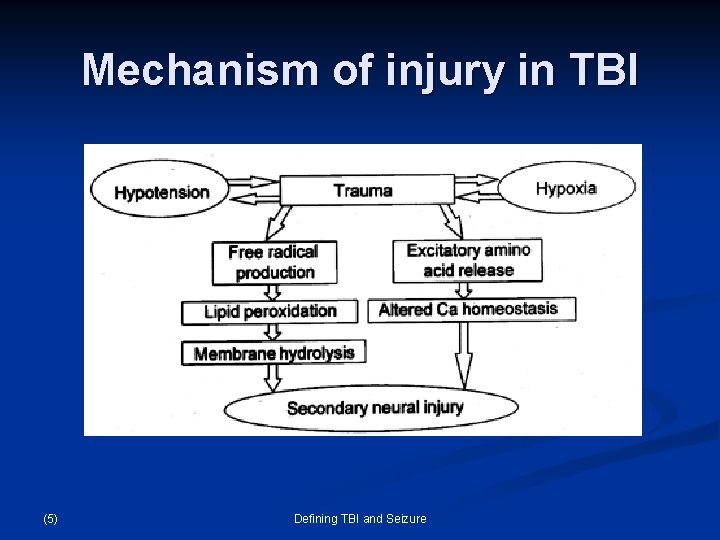
Mechanism of injury in TBI (5) Defining TBI and Seizure
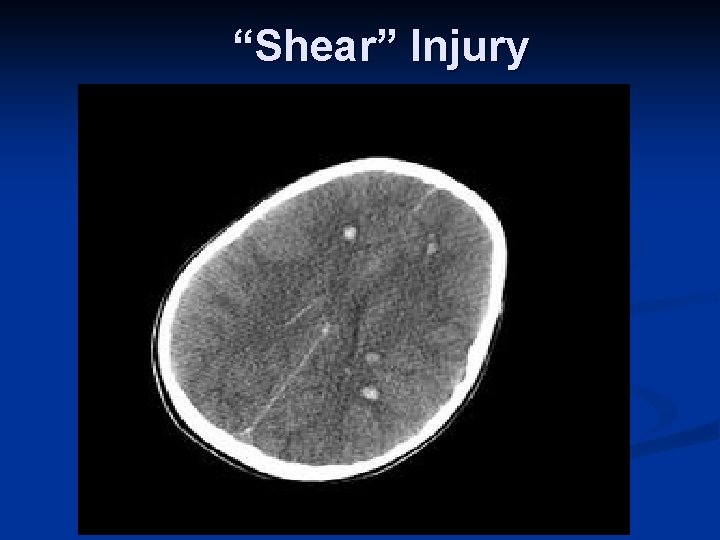
“Shear” Injury
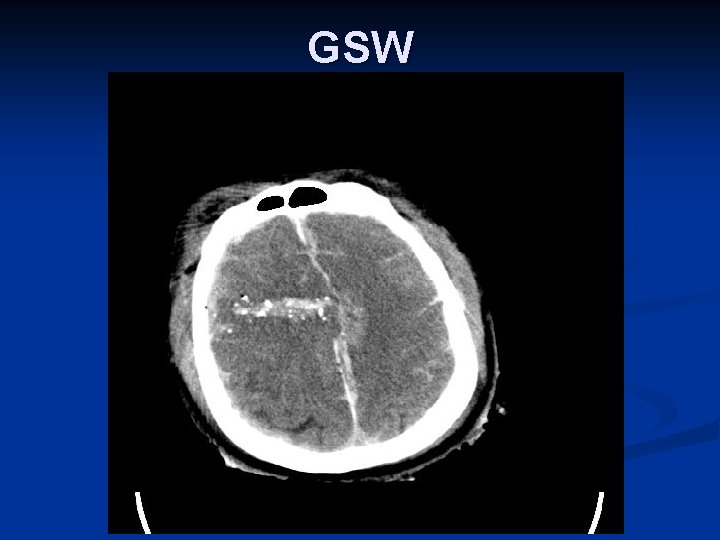
GSW
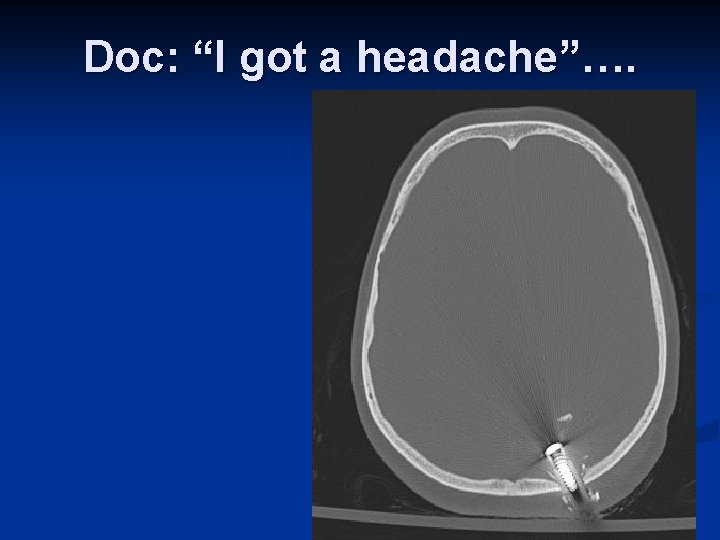
Doc: “I got a headache”….
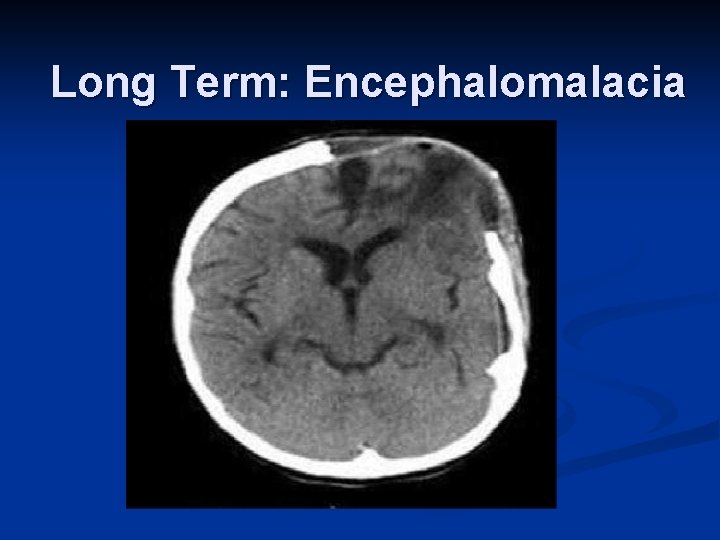
Long Term: Encephalomalacia
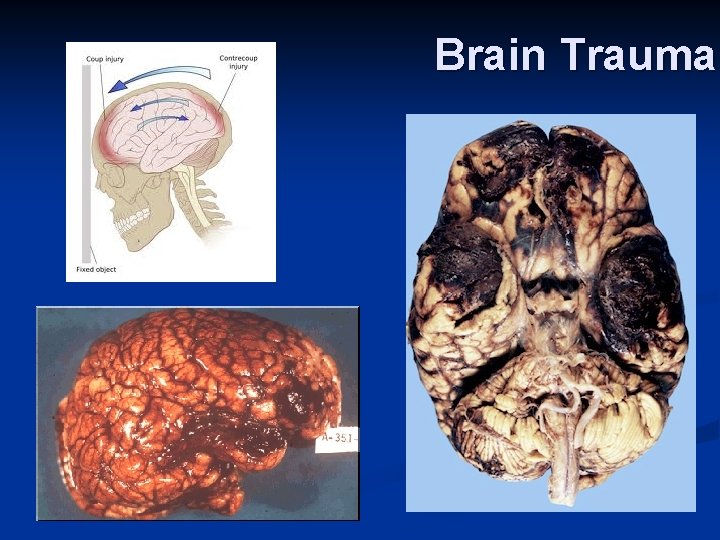
Brain Trauma
Prevention Trials Anti seizure medications n Hypothermia n Magnesium n
Can PTE be Prevented n Early seizures (1 to 7 days) Trauma 7 days Immediate Sz Dilantin n Carbamazepine n Phenobarbital n Levetiracetam Have all been proven to be effective in decreasing the frequency of early pottraumatic seizures, however none have shown the decrease the incidence of PTE n Late
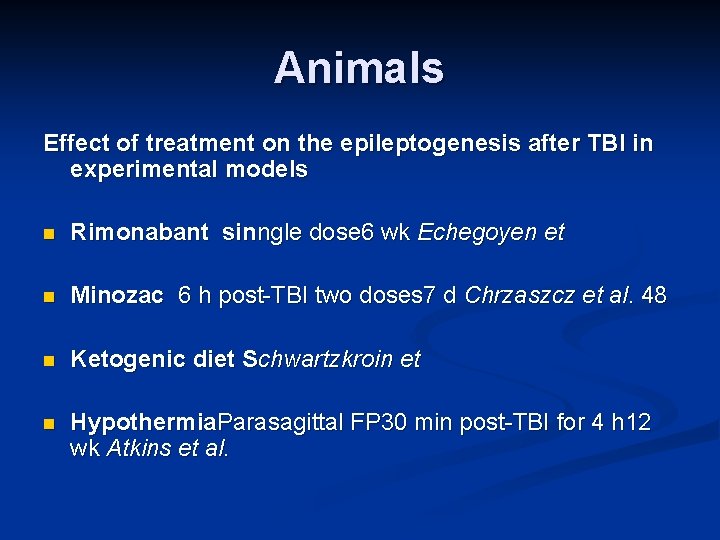
Animals Effect of treatment on the epileptogenesis after TBI in experimental models n Rimonabant sinngle dose 6 wk Echegoyen et n Minozac 6 h post-TBI two doses 7 d Chrzaszcz et al. 48 n Ketogenic diet Schwartzkroin et n Hypothermia. Parasagittal FP 30 min post-TBI for 4 h 12 wk Atkins et al.
Hypothermia n No studies in human
Magnesium n No studies in humans
Conclusions