
PostStructuralism Postmodern Texts 3 1 PostStructuralism Defined Marxism

- Slides: 16
Post-Structuralism & Postmodern Texts (3) 1. Post-Structuralism Defined & Marxism 2. 3. vs. Post-Structuralism Fiction and Reality: Examples 1: context into text, 2: life//story-telling , 3: parody 4. Other kinds of “fiction” Deconstruction 4. Subject and Power
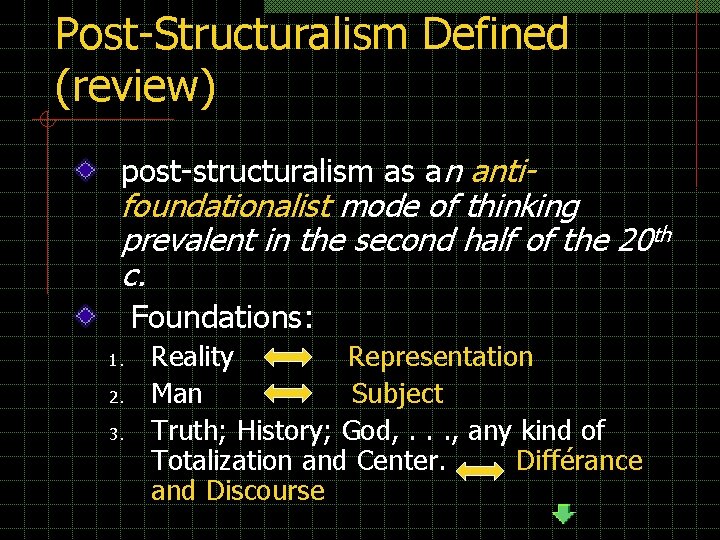
Post-Structuralism Defined (review) post-structuralism as an anti- foundationalist mode of thinking prevalent in the second half of the 20 th c. Foundations: 1. 2. 3. Reality Representation Man Subject Truth; History; God, . . . , any kind of Totalization and Center. Différance and Discourse
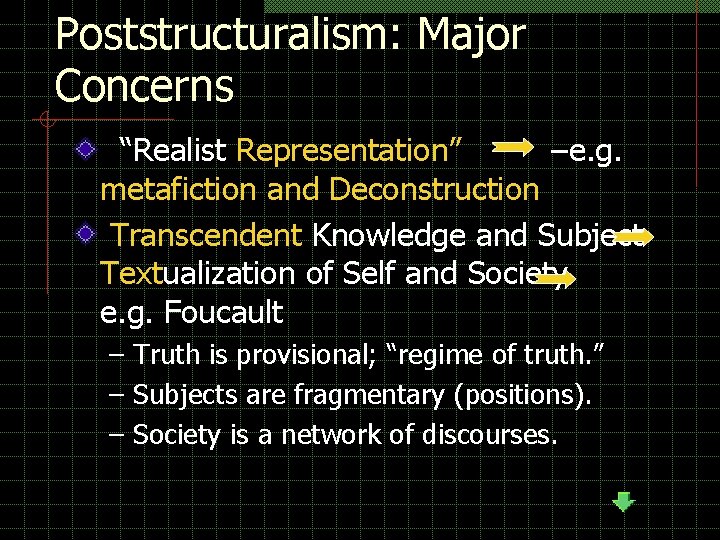
Poststructuralism: Major Concerns “Realist Representation” –e. g. metafiction and Deconstruction Transcendent Knowledge and Subject Textualization of Self and Society e. g. Foucault – Truth is provisional; “regime of truth. ” – Subjects are fragmentary (positions). – Society is a network of discourses.
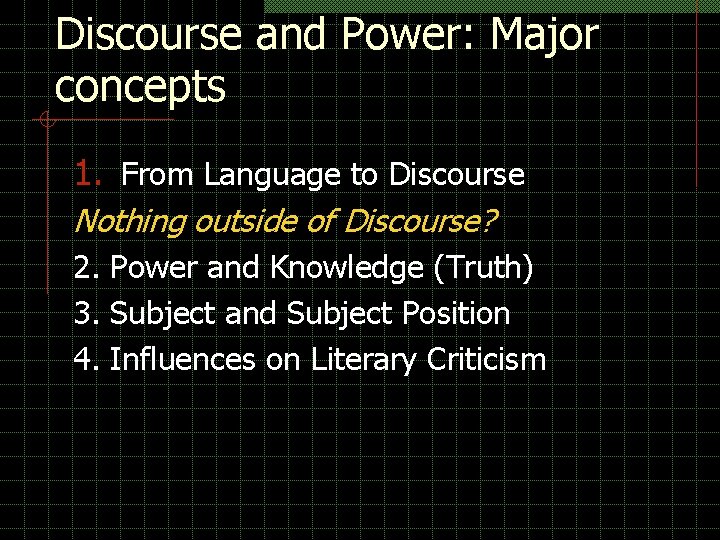
Discourse and Power: Major concepts 1. From Language to Discourse Nothing outside of Discourse? 2. Power and Knowledge (Truth) 3. Subject and Subject Position 4. Influences on Literary Criticism
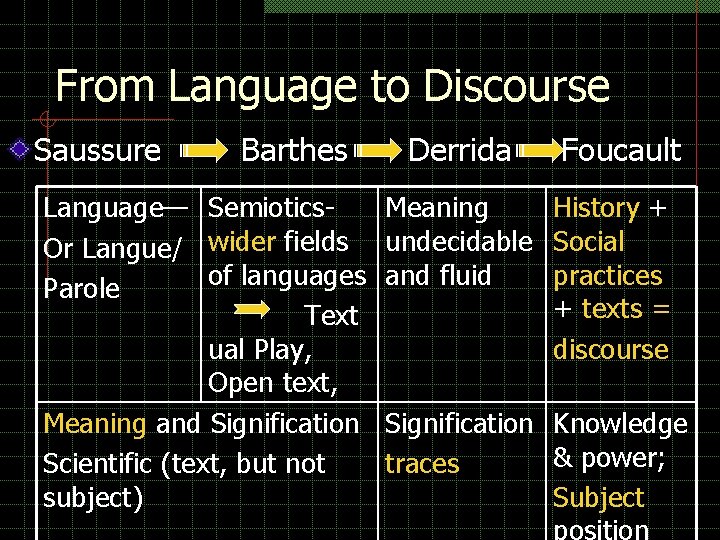
From Language to Discourse Saussure Barthes Language— Semiotics. Or Langue/ wider fields of languages Parole Text ual Play, Open text, Meaning and Signification Scientific (text, but not subject) Derrida Foucault Meaning History + undecidable Social and fluid practices + texts = discourse Signification Knowledge & power; traces Subject
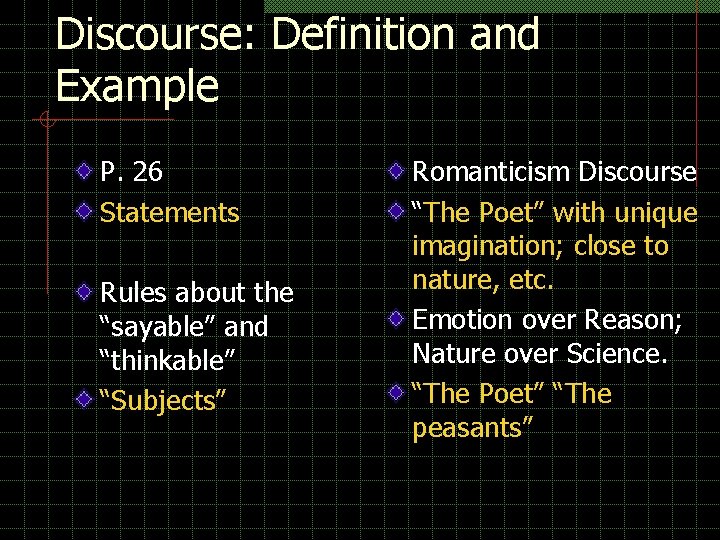
Discourse: Definition and Example P. 26 Statements Rules about the “sayable” and “thinkable” “Subjects” Romanticism Discourse “The Poet” with unique imagination; close to nature, etc. Emotion over Reason; Nature over Science. “The Poet” “The peasants”
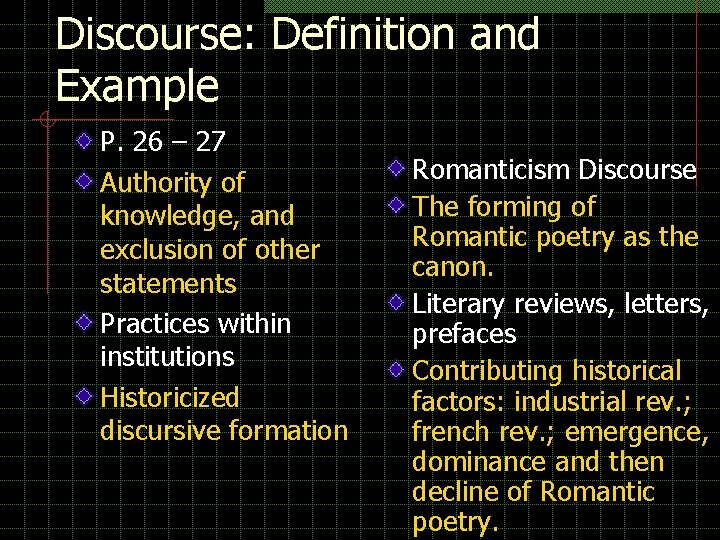
Discourse: Definition and Example P. 26 – 27 Authority of knowledge, and exclusion of other statements Practices within institutions Historicized discursive formation Romanticism Discourse The forming of Romantic poetry as the canon. Literary reviews, letters, prefaces Contributing historical factors: industrial rev. ; french rev. ; emergence, dominance and then decline of Romantic poetry.
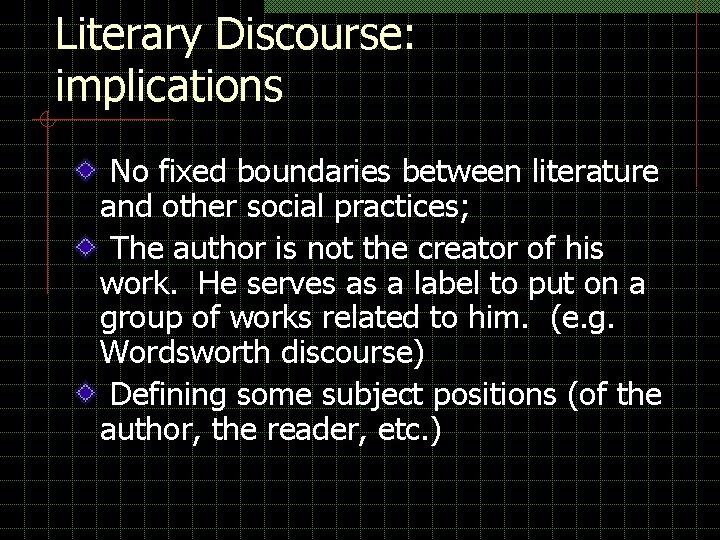
Literary Discourse: implications No fixed boundaries between literature and other social practices; The author is not the creator of his work. He serves as a label to put on a group of works related to him. (e. g. Wordsworth discourse) Defining some subject positions (of the author, the reader, etc. )
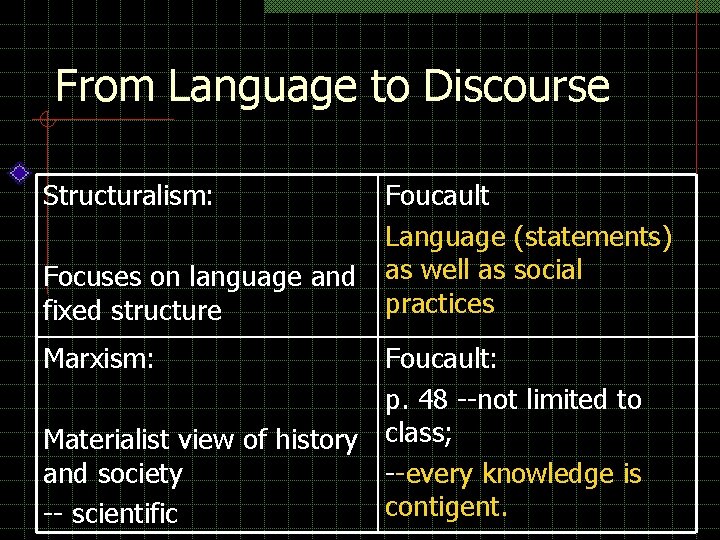
From Language to Discourse Structuralism: Focuses on language and fixed structure Marxism: Foucault Language (statements) as well as social practices Foucault: p. 48 --not limited to Materialist view of history class; and society --every knowledge is contigent. -- scientific
Discourse and “Truth” Which of the following is an objective and unchangeable fact? Madness is a mental illness. Masturbation causes sexual impotence. 帶衛生紙與手帕是乾淨的小孩. sodomy = gay = homosexual = queer = 怪胎 What is “the regime of truth” which make these statements valid?
Power and Knowledge power – both repressive, controlling and productive -- not just top-down; it circulates, working in multiple direction like “capillary movement. ” e. g. the operation of power in a hospital – exertion of power through spatial arrangement, the doctor’s examination, the posters, pamphlets, the different examination room, registration system, pharmacy, insurance co. , etc.
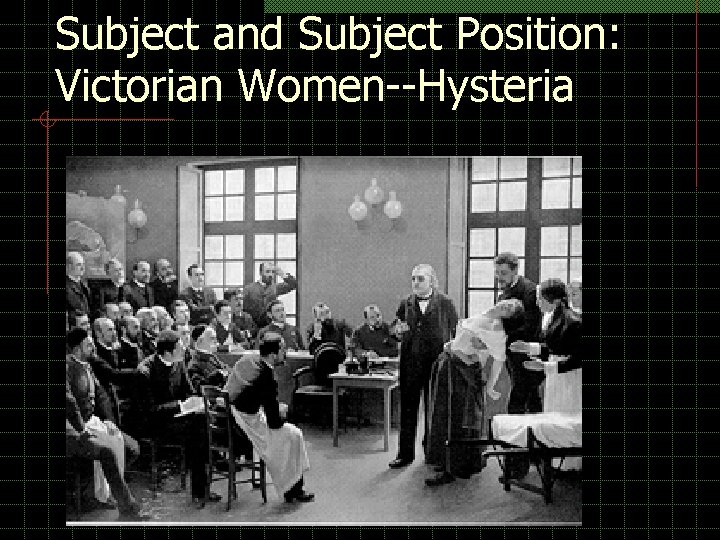
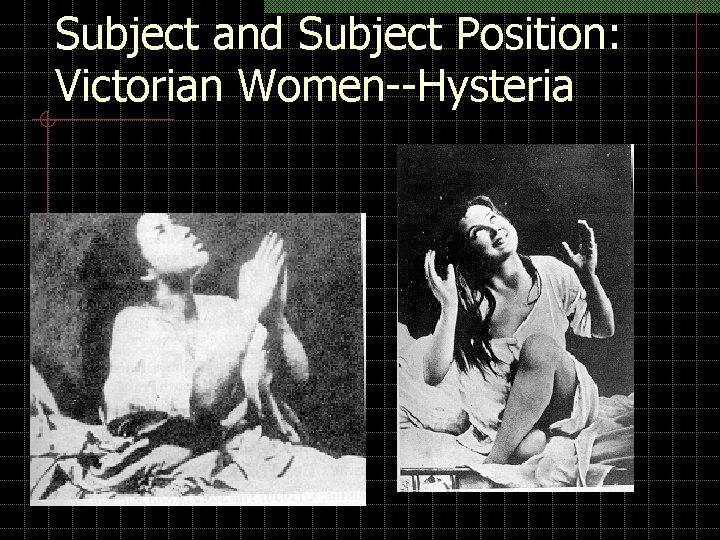
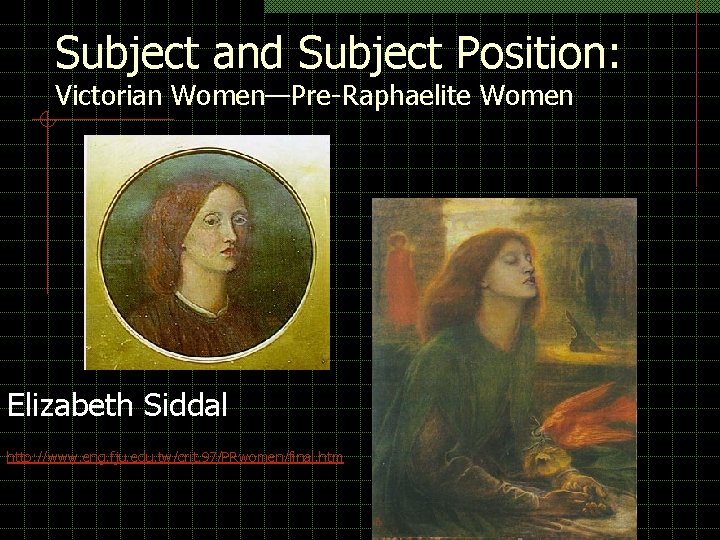
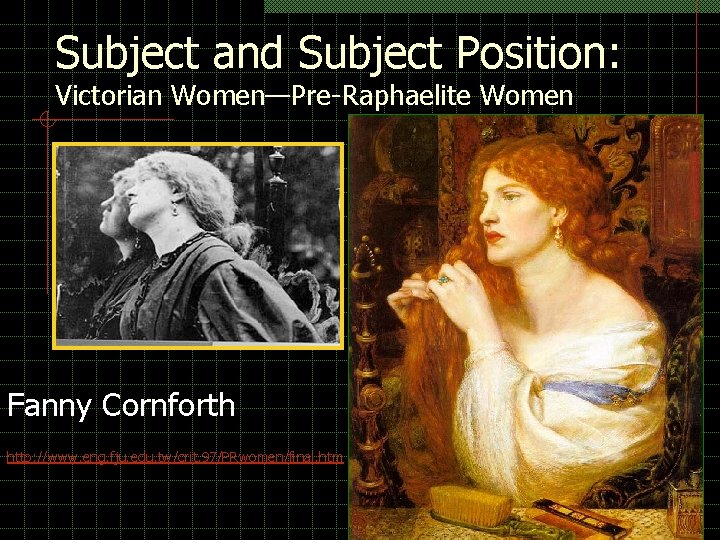
Subject and Subject Position: p. 55 – 56 Two ideas of subject: 1. Conscious & autonomous subject; 2. Subject to someone else’s control. Foucault 1. Constituted by a discourse to represent it (hysteric woman); 2. Subject positions.
Subject and Subject Position: Victorian Women--Hysteria
Subject and Subject Position: Victorian Women--Hysteria
Subject and Subject Position: Victorian Women—Pre-Raphaelite Women Elizabeth Siddal http: //www. eng. fju. edu. tw/crit. 97/PRwomen/final. htm
Subject and Subject Position: Victorian Women—Pre-Raphaelite Women Fanny Cornforth http: //www. eng. fju. edu. tw/crit. 97/PRwomen/final. htm