
Postpartum Depression Andrea Yates https www youtube comwatch
Postpartum Depression

Andrea Yates • https: //www. youtube. com/watch? v=Jt 6 a 1 OJcv. JU
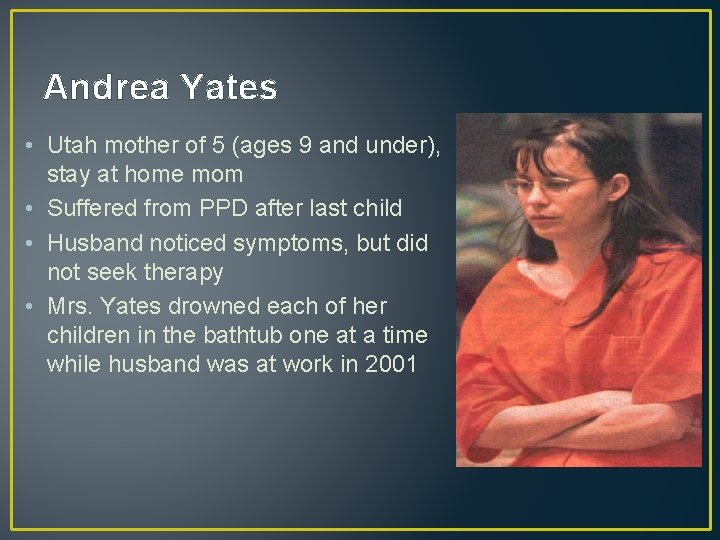
Andrea Yates • Utah mother of 5 (ages 9 and under), stay at home mom • Suffered from PPD after last child • Husband noticed symptoms, but did not seek therapy • Mrs. Yates drowned each of her children in the bathtub one at a time while husband was at work in 2001
You are the judge Think-Pair-Share • • What was Andrea Yates’ sentence? Do you agree or not? Please explain. Should her husband be charged as well? What, if anything, would have changed your mind about her conviction? • What or who could have helped her be healthy? • Should the state have stepped in when several children were living in a bus? Explain.
Statistics • 50 -80% of moms go through a “baby blues” period the first two weeks postpartum • 10% of Moms suffer from Postpartum Depression • Women are more likely to suffer from depression (in general), especially from ages 18 -44 (the childbearing years) • Women are at a higher risk of depression during hormonal fluctuation such as during menstrual cycles (especially during pregnancy)
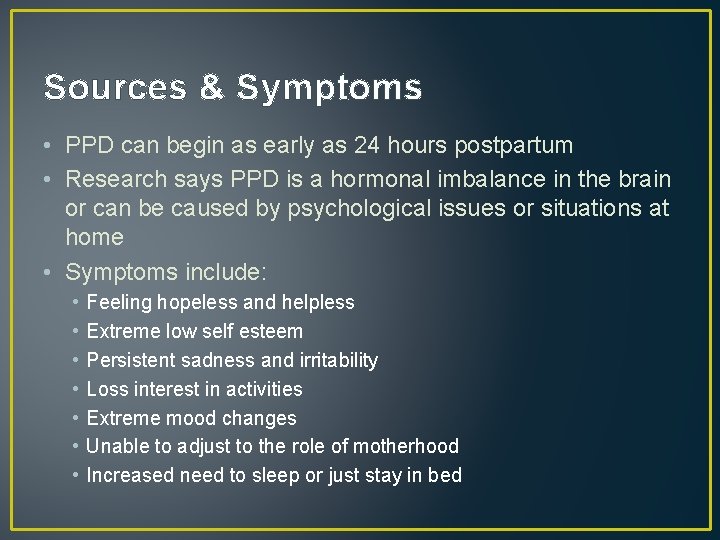
Sources & Symptoms • PPD can begin as early as 24 hours postpartum • Research says PPD is a hormonal imbalance in the brain or can be caused by psychological issues or situations at home • Symptoms include: • • Feeling hopeless and helpless Extreme low self esteem Persistent sadness and irritability Loss interest in activities Extreme mood changes Unable to adjust to the role of motherhood Increased need to sleep or just stay in bed
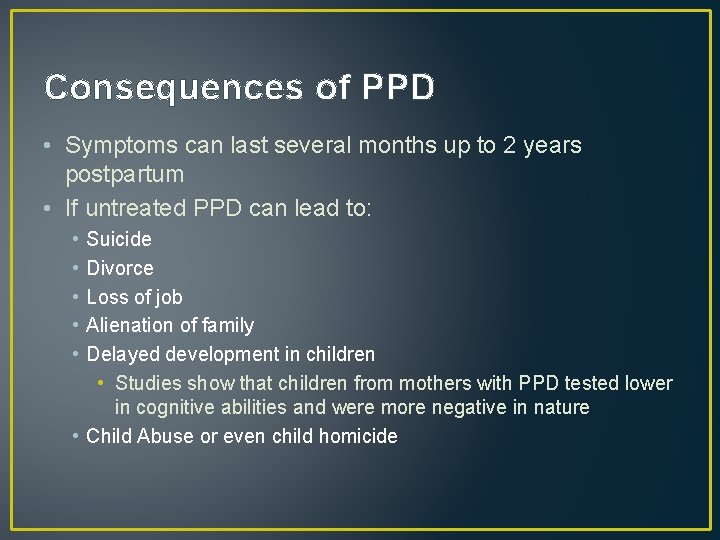
Consequences of PPD • Symptoms can last several months up to 2 years postpartum • If untreated PPD can lead to: • • • Suicide Divorce Loss of job Alienation of family Delayed development in children • Studies show that children from mothers with PPD tested lower in cognitive abilities and were more negative in nature • Child Abuse or even child homicide
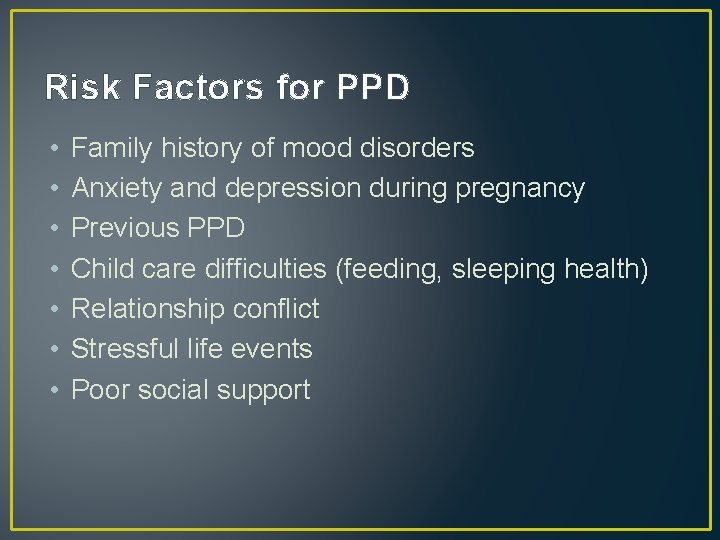
Risk Factors for PPD • • Family history of mood disorders Anxiety and depression during pregnancy Previous PPD Child care difficulties (feeding, sleeping health) Relationship conflict Stressful life events Poor social support
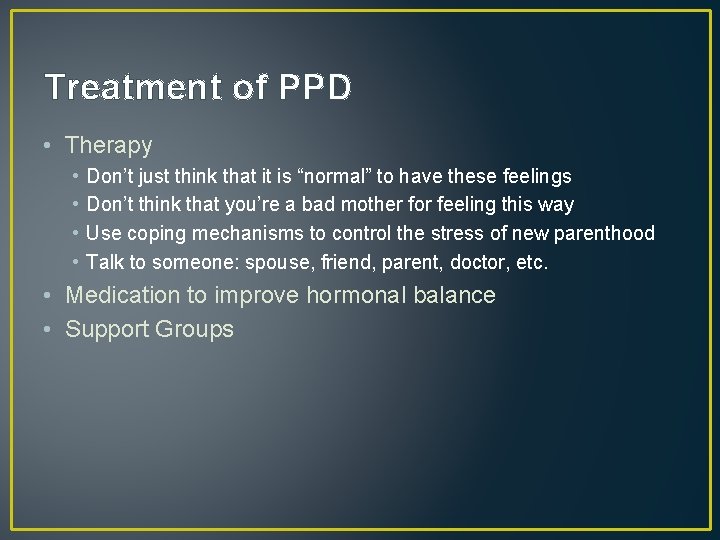
Treatment of PPD • Therapy • • Don’t just think that it is “normal” to have these feelings Don’t think that you’re a bad mother for feeling this way Use coping mechanisms to control the stress of new parenthood Talk to someone: spouse, friend, parent, doctor, etc. • Medication to improve hormonal balance • Support Groups
- Slides: 9