
Postoperative fever Dr S Parthasarathy MD DA DNB
Postoperative fever Dr. S. Parthasarathy MD, DA, DNB, Dip Diab. MD , DCA, Dip software based statistics, Ph. D (physiology)

What is it ? ? • Fever is regulated elevation of body temperature, in which a raised central set point---- • leads to “ intentional ” increased heat generation through some combination of shivering/muscle contraction, peripheral vasoconstriction, and increased metabolism in brown adipose tissue. • Dysregulation , 41 deg. + === hyperthermia

Pyrogens in fever Yes Hyperthermia. NO IL 6 production + Genetic predisposition 38 degree or 38. 5 degrees a few hours apart in two occasions

Incidence • 27 to 51 % • Upto 90 % in one study if time upto one week in a study • Infection < 50 %

Causes • 1. • Infectious ↓ • Surgery related & • Non surgery related 2. noninfectious

Surgery related infection • • • Wound infection • Intra-abdominal abscess • Leaking anastomosis with peritonitis • Infected prosthetic material • Acute cholecystitis • Transfusion-related infection

Nonsurgery related • • • Pneumonia Urinary tract infection Infected hematoma Systemic bacteremia Clostridium difficile enterocolitis Pharyngitis, sinusitis But infectious

Non infectious • Medications (anesthesia or other) • • Thrombophlebitis Common • • Deep vein thrombosis • • • Adrenal insufficiency • Malignancy • Pulmonary embolus • Myocardial infarction • Thyrotoxicosis

Surgical site infection • Superficial – easy to diagnose • But deep -- ? ? • Usually after 5 or 6 days • But fulminant myonecrosis in the site due to stretococcus or clostridia. Within hours after surgery

• Periop catheters • UTI • Fever , bacteriuria – UTI • Really the post op fever is due to this ? ?

Pneumonia • Intubated long duration • COPD Settings • Upper abdominal or thoracic surgery • Diagnose and treat – ( other causes )

Sinusitis • Nasotracheal intubation • Long term ryles tube • CT sinuses

• Cholecystitis is occasionally encountered in the postoperative setting, and may be either acalculous or calculous, • patients who are older, more debilitated, and/or on prolonged bowel rest. • The diagnosis may be challenging to make in patients with recent abdominal surgery • USG abdomen

• • Catheter related CVP IA lines Difficult to diagnose • Strict asepsis

• Transfusion - related infections manifesting as febrile illness may be seen after surgery, most commonly caused by cytomegalovirus. • Typically, these patients will develop fever after hospital discharge, although they manifest with cryptic fever as inpatients

• Infected hematoma • Days after surgery • Bleed – clot – infect • Clinical , USG Infected prosthesis
Non infectious

Why ? ? • Tissue damage alone results in the disruption of phospholipids from the cell membrane, leading to a cascade of prostaglandins and cytokines which eventually lead to a body temperature elevation 25 – 50 % day 1 fever

Noninfectious Etiologies • • Antibiotics, antihistamines, barbiturates Myelographin Ketamine (anaes) Drugs Amphetamine, methamphetamine Anti epileptic drugs • Alcohol and benzodiazepine withdrawal • Anticoagulants IV • Atropine solutions

DVT and pulmonary embolism major orthopedic procedures involving the lower extremities, oncologic, and trauma surgeries are complicated by significant rates of VTE events, even with appropriate prophylaxis. No need to get infarct to get fever

Gout • Acute exacerbation of crystal - associated arthropathy, particularly gout, is a reasonably common cause of fever after surgery, but its recognition in this situation is often delayed. • Continue anti gout drugs
Steroid withdrawal • chronic exposure to corticosteroid • not continued perioperatively • refractory hypotension, fever, abdominal symptoms, and delirium. • Correct with steroids

Fat embolism • The possibility of fat embolism needs to be entertained in the patient who has undergone long bone fracture, correction • Fever, respiratory distress, petechial rash, and confusion.

Thrombophlebitis • Look at the site of venous or arterial cannulations • By the side of a venflon – redness and tenderness !!

• • • Wind, Water, Wound, Walking Wonder Drugs

Wind -------- Water • Atelectasis 24 – 48 hours • Pneumonia later • UTI • Catheter related infections • Anastamotic leaks

Wound • Surgical site • Necrotizing fascitis • Infected prosthesis walking • DVT • Embolism Wonder drugs

What is when ? ? • • • Wind, → • Water, → • Wound, → • Walking → Wonder Drugs → • 1 -2 days 3 -5 days 5 -7 days ( 6 hours) 4 -5 days After seven days Generally

Approach


History • • • Allergy, alcohol arthrits past medical history, including history of gout, Blood medications and allergies, Cough chest alcohol and other drug use; pain details of the surgery itself, Drugs, dysuria receipt of blood products; diarhea, dyspnea Details – any complaints of cough, surgery Breathless , chest pain, diarrhea, ABCD joint pain, dysuria, flank pain,

Clinical features • Vitals • CVS , RS , abdomen • Skin and wound • Alcohol withdrawal may have also sinusitis !!
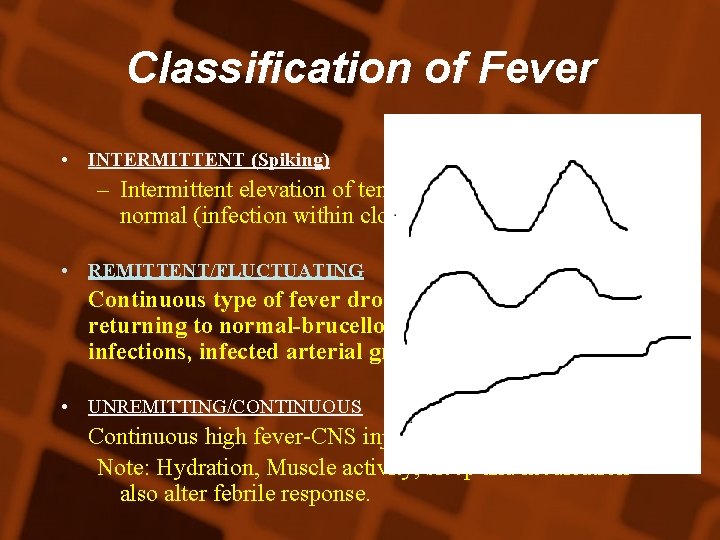
Classification of Fever • INTERMITTENT (Spiking) – Intermittent elevation of temp with regular return to normal (infection within closed space-abscess) • REMITTENT/FLUCTUATING Continuous type of fever drop in fever without returning to normal-brucellosis, blood stream infections, infected arterial grafts, phlebitis. • UNREMITTING/CONTINUOUS Continuous high fever-CNS injury, pneumonias, Note: Hydration, Muscle activity, sleep and medication also alter febrile response.

Sometimes – there is something matters • AGE; – INFANTS HAVE A HIGH TEMP ranging as high as 40. 6 – OLD AGED Patients - DIMNISHED RESPONSE • MEDICATIONS- NSAID, Steroids-absence of fever • TRAUMAtrauma to hypothalamus disturbs thermoregulatory mechanism. • IMMUNOSUPRESSION- Altered production of endogenous leukocyte, pyrogens, lack a febrile response
Investigate • TC , DC , urine, peripheral smear, chest Xray, • • All cultures ? ? USG, CT etc. . ECG, thyroid Serum procalcitonin – infectious ? ?
Do we need investigations ? ? • Many a time, the fever comes down normally within one to two weeks. • Lab tests are useful ? ? • Some bacteria results in lab but fever comes from some other cause ? ?

• surgery for malignancy, bowel resection, • number of febrile days, higher fever and moderately increased white blood cell count. • Our lab investigations may be useful.
Benign postoperative fever • Hypothalamus becomes inhibited by Anesthetic agents –fall in body temp, • Once anesthesia effect is gone- recovery of this mechanism • intracranial core temp still decreasedthermosenstive receptors in hypothalamus sense decreased temp and attempt to raise body temp to hypothalamic set point, • Over compensation with a mild febrile episode in post op period • This is diagnosed by exclusion
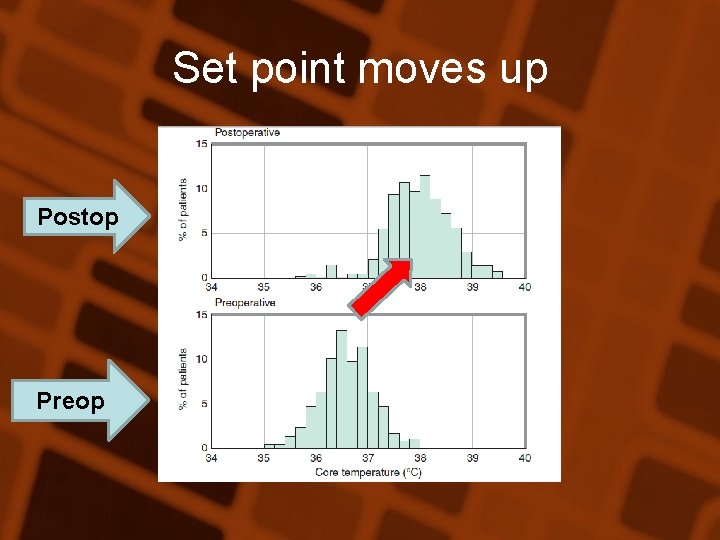
Set point moves up Postop Preop

Aims of treatment • To reduce the elevated hypothalamic set point • To facilitate heat loss • To reduce the demand for oxygen (i. e. , for every increase of 1°C over 37°C, there is a 13% increase in oxygen consumption) • Prevent to aggravate preexisting cardiac, CNS pulmonary disease • To prevent seizures in children with a history of

Prevention • Clean shave and preparation • Infection risk is reduced by using aseptic technique during catheter insertion with maximal barrier precautions including a mask, cap, sterile gown, and large sterile drape, • Less time catheter • Orogastric tube • Smoke stop, nutrition, preop nasal mupirocin , obesity ? ?

Treatment • • • Antipyretics Antibiotics need ? ? Stringent glycemic control Respiratory support Inotropes Surgery

Summary • • When to call ? ? Incidence Classification Common causes ? ? Wind water wound walk wonder drugs What is when ? ? Diagnosis , management
- Slides: 43