
Postnatal Exercise Rehab S Mamoon Assistant lecturer Womens
Postnatal Exercise Rehab S. Mamoon Assistant lecturer Women’s health
Guidelines for postnatal exercise � Postnatal exercise is as important as antenatal exercise. Its duration needs not be long but it should be done twice or thrice a day. Repeat each set of movements about ten times in every session � Mother should Keep her breathing smooth, work gradually according to her capability A physiotherapist may make modification to the exercise according to her physical conditions.
Purposes of postnatal exercise � Strengthen pelvic floor muscle to prevent incontinence � Prevent low back pain � Speed up the restoration of body shape � Stimulate blood circulation and enhance appetite � Maintain vitality and self-confidence
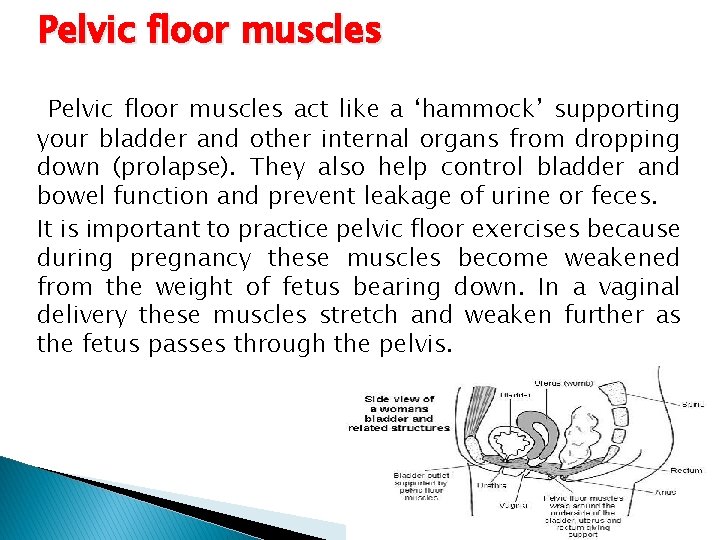
Pelvic floor muscles act like a ‘hammock’ supporting your bladder and other internal organs from dropping down (prolapse). They also help control bladder and bowel function and prevent leakage of urine or feces. It is important to practice pelvic floor exercises because during pregnancy these muscles become weakened from the weight of fetus bearing down. In a vaginal delivery these muscles stretch and weaken further as the fetus passes through the pelvis.
� Exercise 1: Pelvic floor exercise There are two types of muscle fiber in the pelvic floor: the fast twitch fibers contract quickly to prevent leakage when coughing, laughing and sneezing; the slow twitch provide constant tone to support you through day and night.
A) Strengthening the ‘slow’ twitch fibers � Teach the mother these exercises for home program � From supine lying position � Ask mother to flex her knees � Put her feet together with her knees about 1 feet apart � Tighten the vaginal, urethral and anal muscles as if trying to withhold urination or defecation � She can also do this exercise in sitting or standing position. � Hold 10 second � Repeat 10 times
B) Strengthening the ‘fast’ twitch fibers � Ask mother to squeeze and lift the muscles as previous exercise , as strong and fast as she can. Then relax. � See how many she can do. The aim is to manage 10, initially she may reach 4 or 5 before the muscle tires, the muscle will get stronger with practice. � If this is uncomfortable initially then do a gentle lift and let go, repeating 10 times
Abdominal muscles � The following exercises will help strengthen and tone abdominal muscles, to help protect spine and maintain a good posture. � Repeat each exercise 10 times, 3 x a day. Exercise 2: Deep abdominal muscles � From crock lying position. � Ask mother to breathe in from nose then breathe out from mouth , contract abdomen , press by her back on the floor , hold 10 seconds then relax. � Progress to do this exercise in sitting and standing. � Use these deep abdominal muscles when doing activities that require effort such as lifting baby.
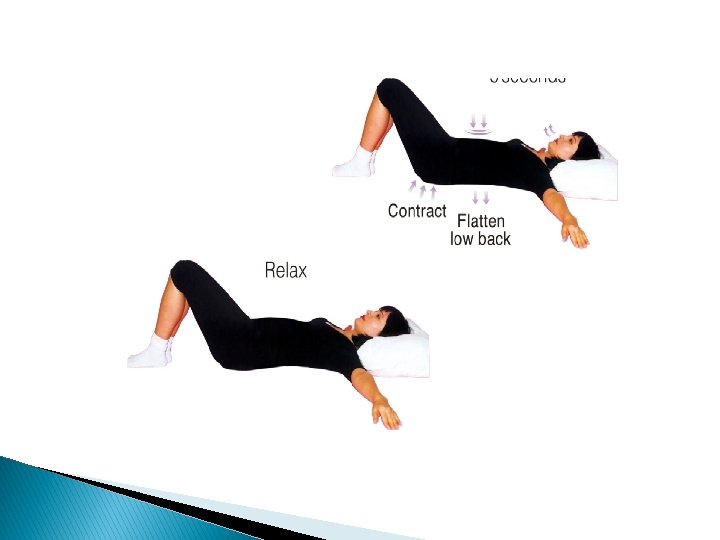
Exercise 3: Pelvic Tilt � Ask mother to Lie on her back with knees bent. � Ask her to Pull in stomach, tighten pelvic floor muscles and tilt her pelvis by gently flattening her back into the bed. � Hold for 3 - 5 seconds breathing normally, then relax. � Progress by trying different positions such as sitting, standing, side lying.
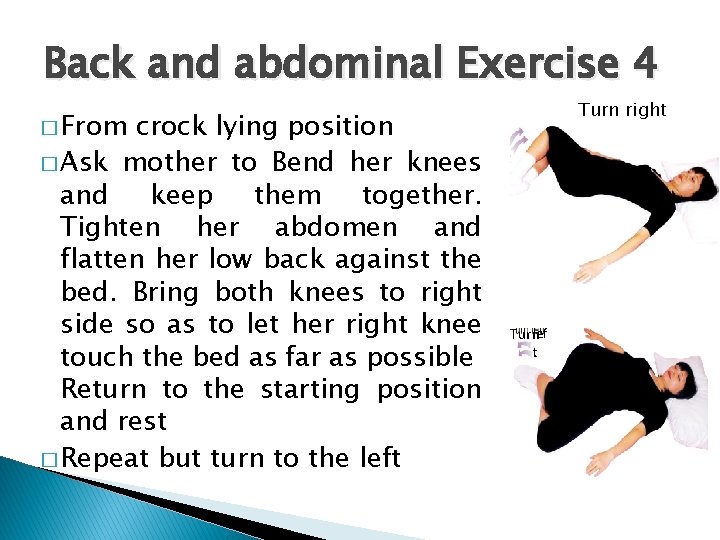
Back and abdominal Exercise 4 crock lying position � Ask mother to Bend her knees and keep them together. Tighten her abdomen and flatten her low back against the bed. Bring both knees to right side so as to let her right knee touch the bed as far as possible Return to the starting position and rest � Repeat but turn to the left Turn right � From Turnlef t
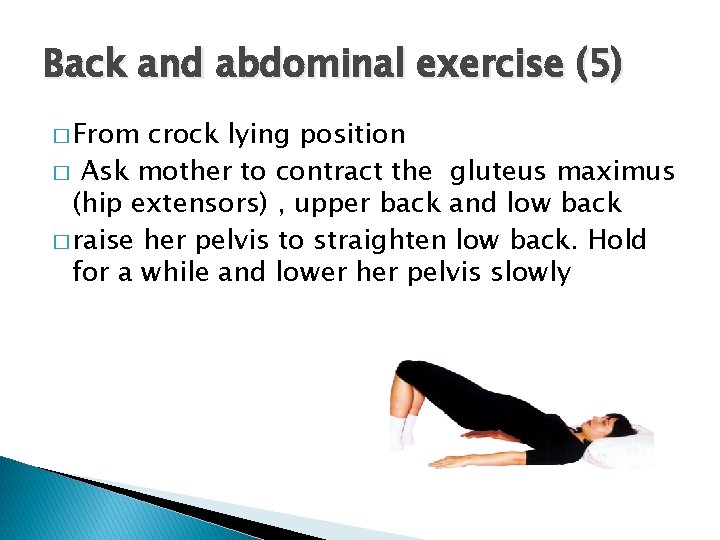
Back and abdominal exercise (5) � From crock lying position � Ask mother to contract the gluteus maximus (hip extensors) , upper back and low back � raise her pelvis to straighten low back. Hold for a while and lower her pelvis slowly
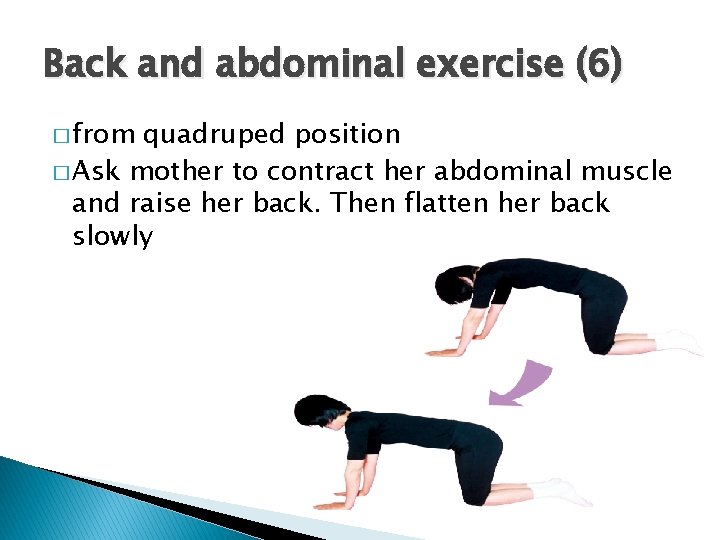
Back and abdominal exercise (6) � from quadruped position � Ask mother to contract her abdominal muscle and raise her back. Then flatten her back slowly
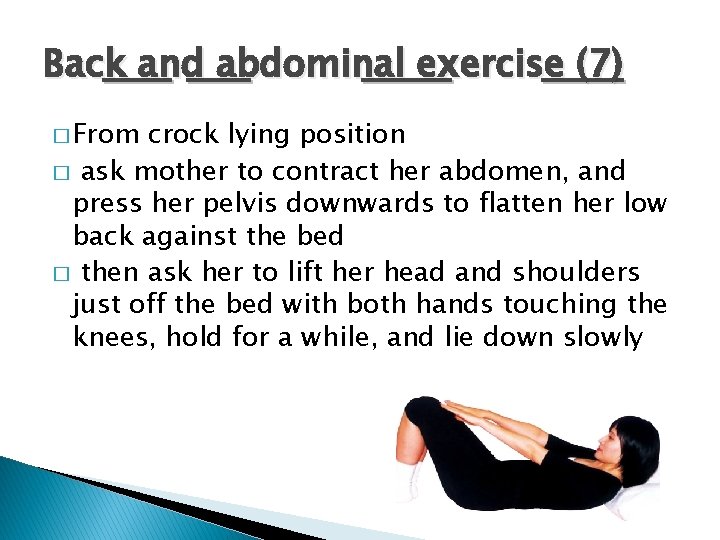
Back and abdominal exercise (7) � From crock lying position � ask mother to contract her abdomen, and press her pelvis downwards to flatten her low back against the bed � then ask her to lift her head and shoulders just off the bed with both hands touching the knees, hold for a while, and lie down slowly
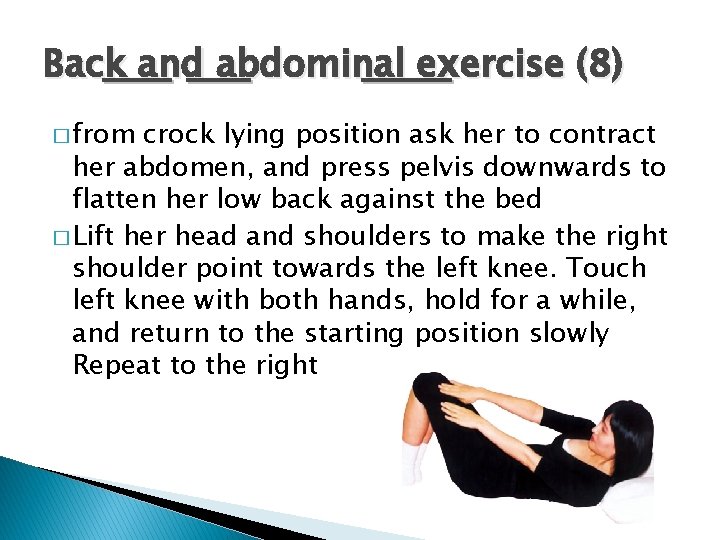
Back and abdominal exercise (8) � from crock lying position ask her to contract her abdomen, and press pelvis downwards to flatten her low back against the bed � Lift her head and shoulders to make the right shoulder point towards the left knee. Touch left knee with both hands, hold for a while, and return to the starting position slowly Repeat to the right
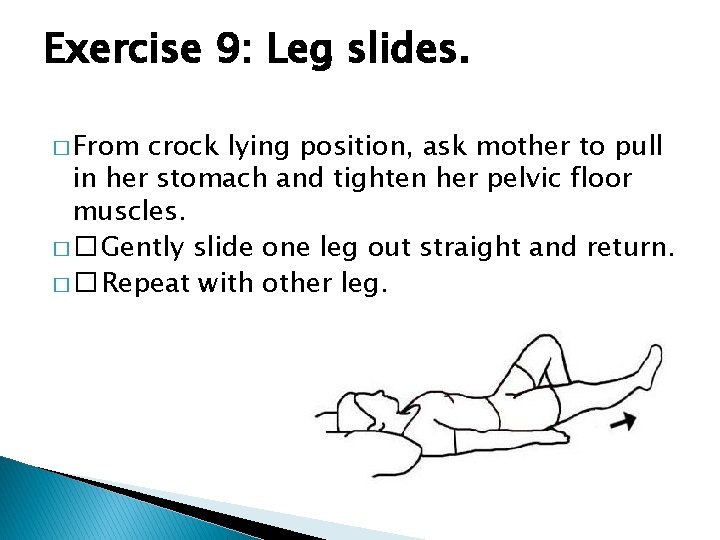
Exercise 9: Leg slides. � From crock lying position, ask mother to pull in her stomach and tighten her pelvic floor muscles. � � Gently slide one leg out straight and return. � � Repeat with other leg.
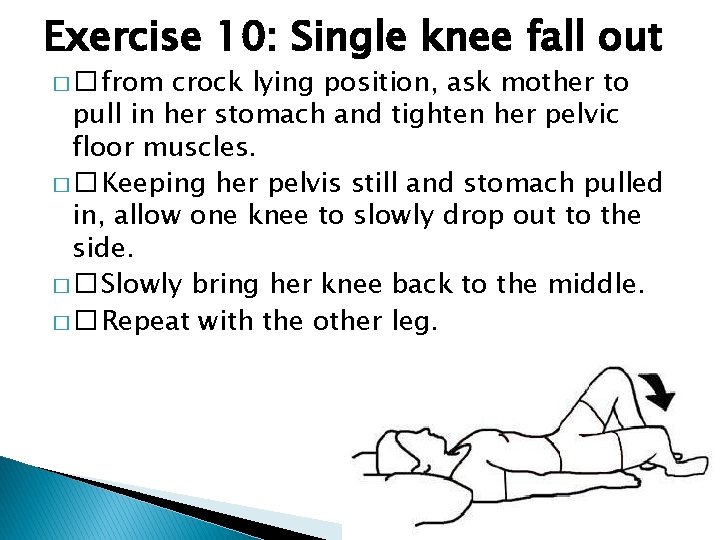
Exercise 10: Single knee fall out � � from crock lying position, ask mother to pull in her stomach and tighten her pelvic floor muscles. � � Keeping her pelvis still and stomach pulled in, allow one knee to slowly drop out to the side. � � Slowly bring her knee back to the middle. � � Repeat with the other leg.
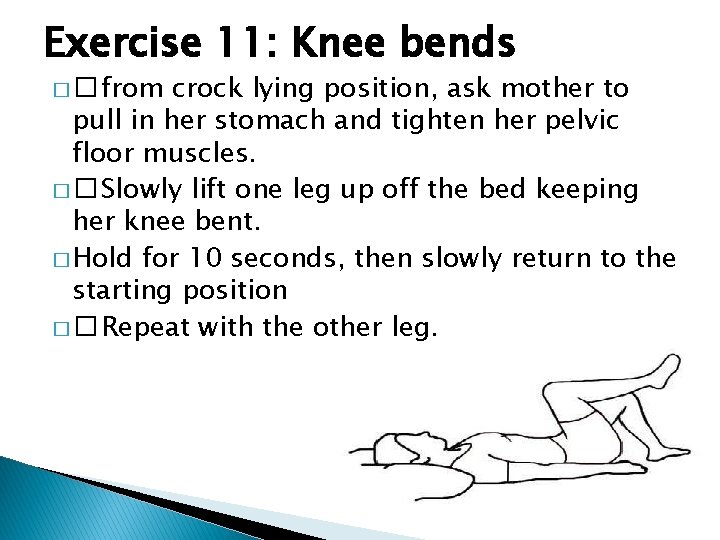
Exercise 11: Knee bends � � from crock lying position, ask mother to pull in her stomach and tighten her pelvic floor muscles. � � Slowly lift one leg up off the bed keeping her knee bent. � Hold for 10 seconds, then slowly return to the starting position � � Repeat with the other leg.
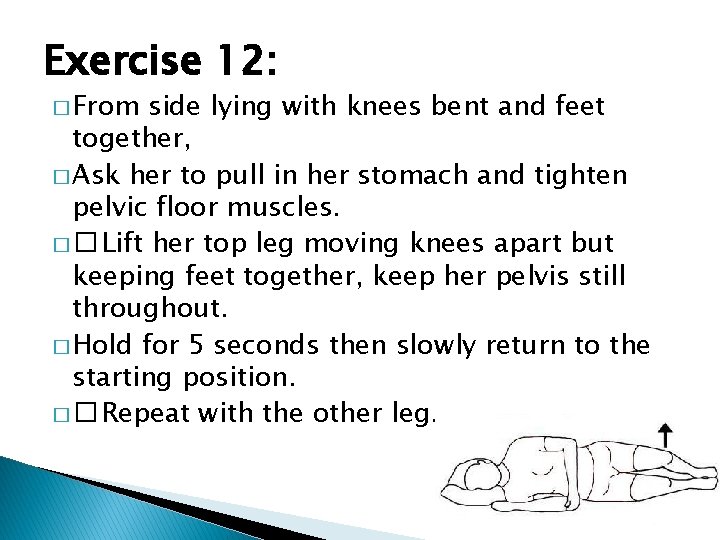
Exercise 12: � From side lying with knees bent and feet together, � Ask her to pull in her stomach and tighten pelvic floor muscles. � � Lift her top leg moving knees apart but keeping feet together, keep her pelvis still throughout. � Hold for 5 seconds then slowly return to the starting position. � � Repeat with the other leg.
Points to Note in Daily Life Constipation: A lot of women find that they are constipated initially following delivery. � The following tips may help mothers to deal with constipation: advice her to � � Try to drink at least 1 -2 litres fluid daily. � � Try not to miss meals. Eat 3 meals a day. � � empty bowels regularly � � Exercise helps to stimulate digestion e. g. walking � � Avoid relying on laxatives; use for short term only.
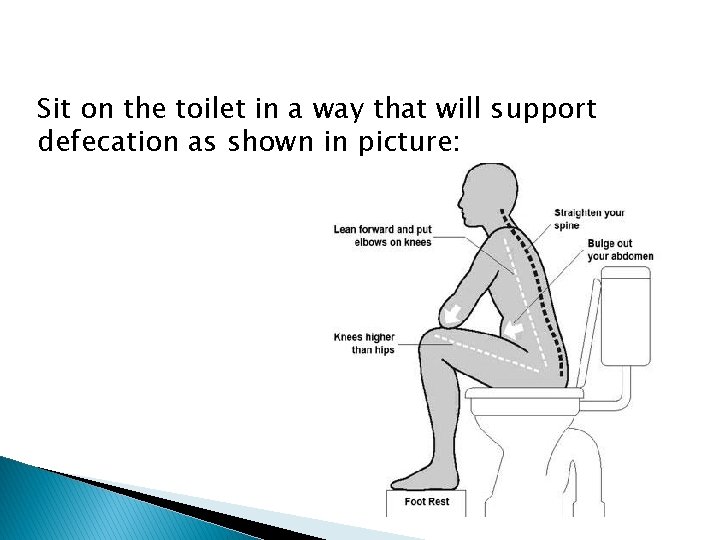
Sit on the toilet in a way that will support defecation as shown in picture:
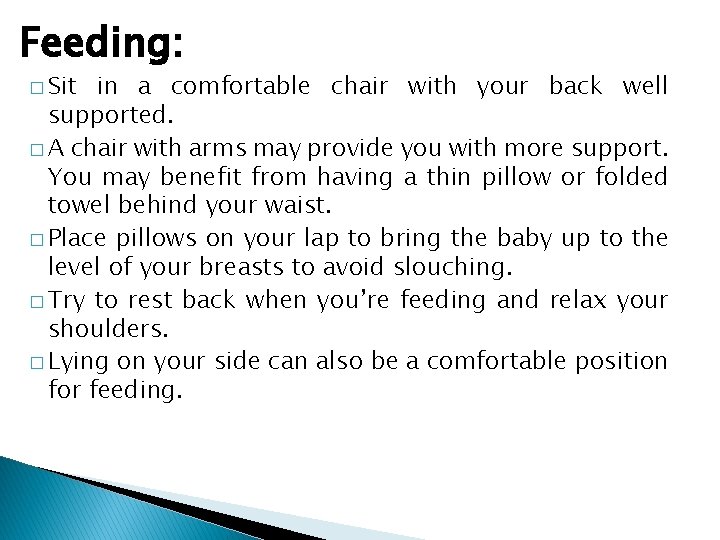
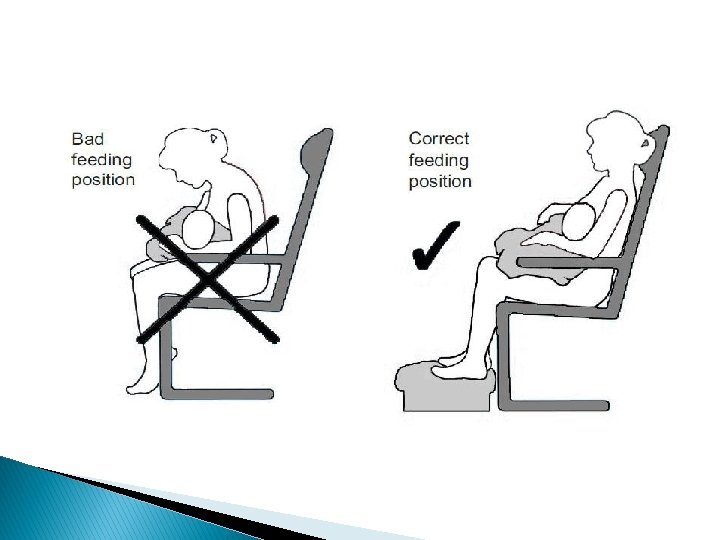
Feeding: � Sit in a comfortable chair with your back well supported. � A chair with arms may provide you with more support. You may benefit from having a thin pillow or folded towel behind your waist. � Place pillows on your lap to bring the baby up to the level of your breasts to avoid slouching. � Try to rest back when you’re feeding and relax your shoulders. � Lying on your side can also be a comfortable position for feeding.
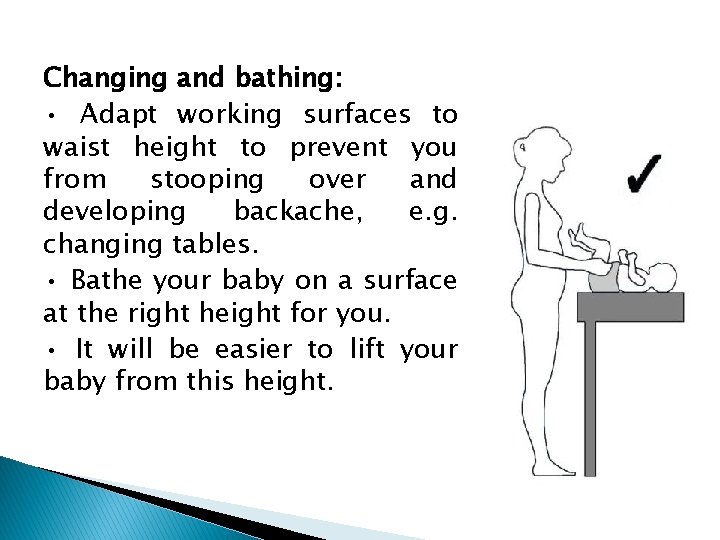
Changing and bathing: • Adapt working surfaces to waist height to prevent you from stooping over and developing backache, e. g. changing tables. • Bathe your baby on a surface at the right height for you. • It will be easier to lift your baby from this height.
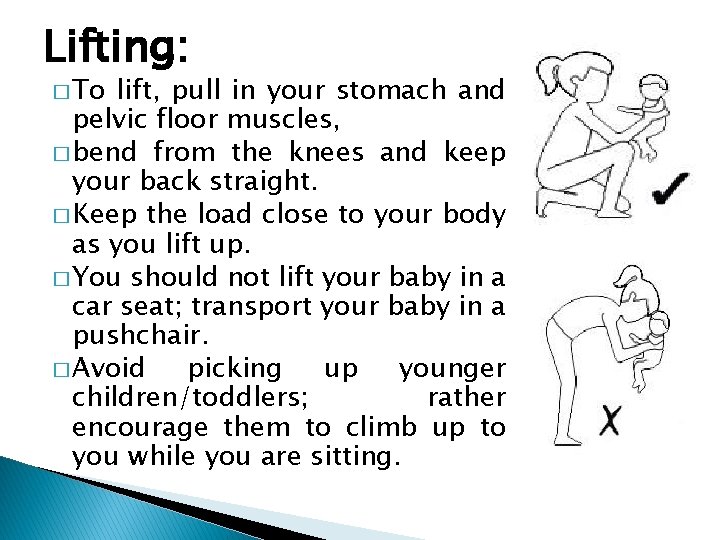
Lifting: � To lift, pull in your stomach and pelvic floor muscles, � bend from the knees and keep your back straight. � Keep the load close to your body as you lift up. � You should not lift your baby in a car seat; transport your baby in a pushchair. � Avoid picking up younger children/toddlers; rather encourage them to climb up to you while you are sitting.
Housework: � � Avoid activities that cause strain to your abdomen and pelvic floor during the first few weeks, e. g. prolonged standing. In the first 6 weeks avoid hoovering and heavy lifting, e. g. a basket of wet washing. Returning to sport: � � � � Walking is an ideal exercise to begin to build fitness levels Wait 6 weeks before swimming to allow blood loss to settle and any wounds to fully heal Wait 12 weeks before taking part in high impact or high intensity aerobic exercise to allow your pelvic floor muscles to recover and joints to begin to regain their strength Low impact exercise is safe to resume after approximately 6 -8 weeks, for example: pilates, yoga, gentle jogging, swimming, low resistance gym work High impact exercise such as aerobics, running, and resistance/weight training can be resumed gradually after 12 weeks. Ligaments still show some laxity for up to 5 months after birth so it may be wise to delay return to contact sports for the first few months.

- Slides: 27