
Postmortem Handling of Carcasses and Meat Quality Antemortem
- Slides: 18
Post-mortem Handling of Carcasses and Meat Quality
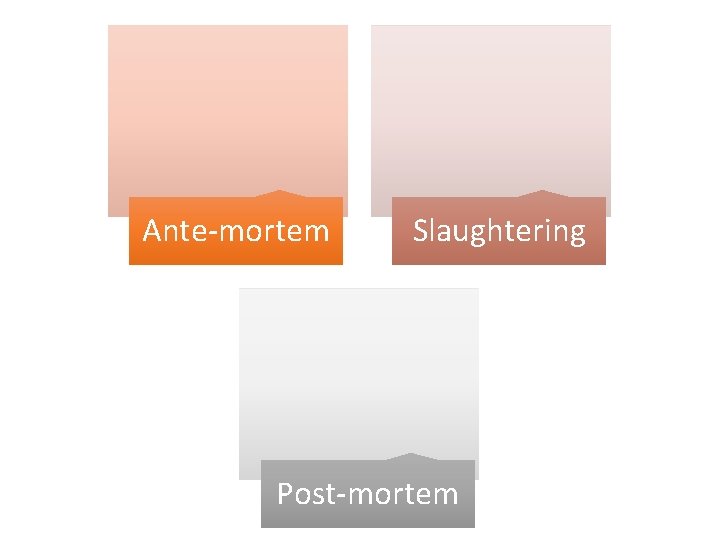
Ante-mortem Slaughtering Post-mortem
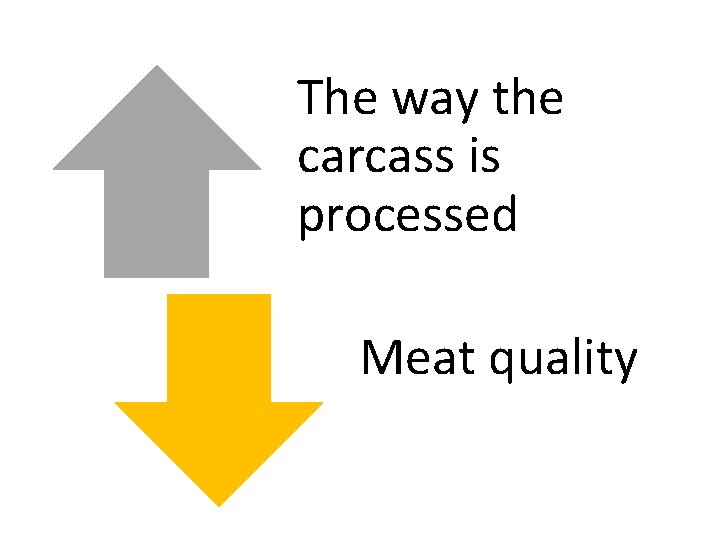
The way the carcass is processed Meat quality
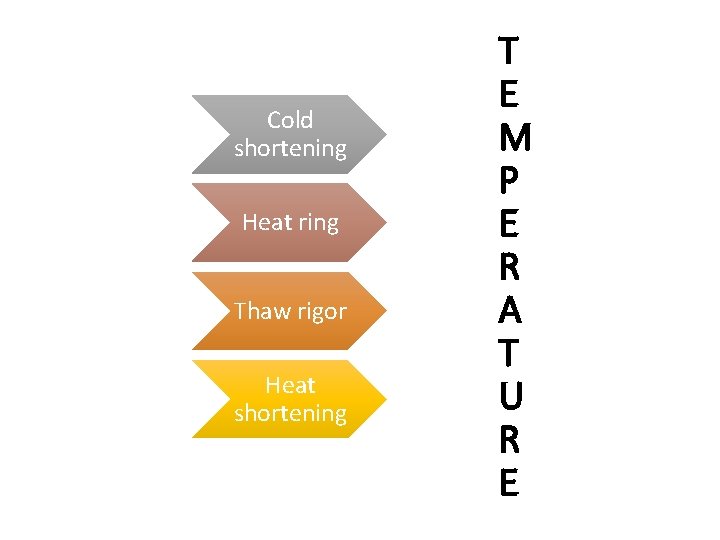
Cold shortening Heat ring Thaw rigor Heat shortening T E M P E R A T U R E
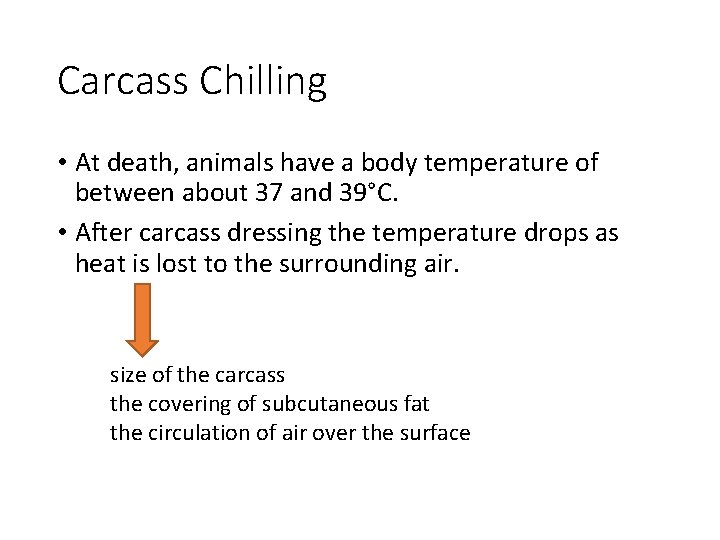
Carcass Chilling • At death, animals have a body temperature of between about 37 and 39°C. • After carcass dressing the temperature drops as heat is lost to the surrounding air. size of the carcass the covering of subcutaneous fat the circulation of air over the surface
Normal practice is to achieve a meat temperature of 7°C or below before further handling such as butchery, or transport from the plant
• In conventional chilling systems the carcasses are placed in chill rooms held at about 1°C as soon as possible after they have been dressed, washed and inspected. Because of the large amount of hot carcass meat, and therefore the large amount of heat that needs to be dissipated, the air temperature in the chiller may rise above 1°C for periods while hot carcasses are being loaded
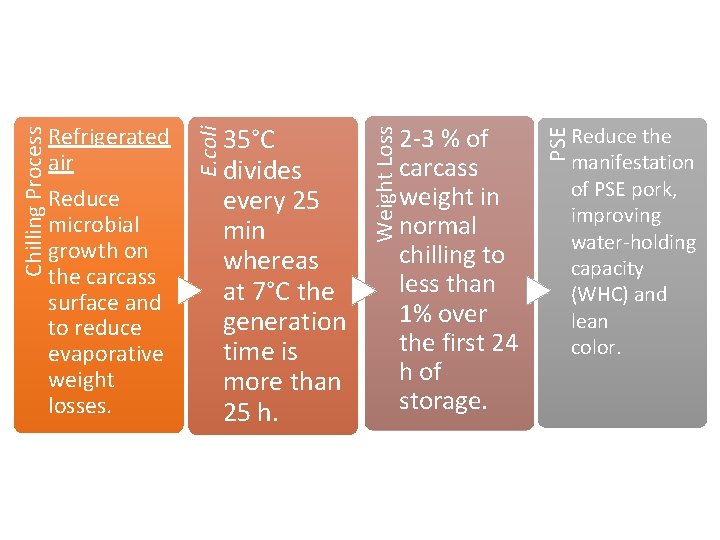
2 -3 % of carcass weight in normal chilling to less than 1% over the first 24 h of storage. Reduce the manifestation of PSE pork, improving water-holding capacity (WHC) and lean color. PSE 35°C divides every 25 min whereas at 7°C the generation time is more than 25 h. Weight Loss Reduce microbial growth on the carcass surface and to reduce evaporative weight losses. E. coli Chilling Process Refrigerated air
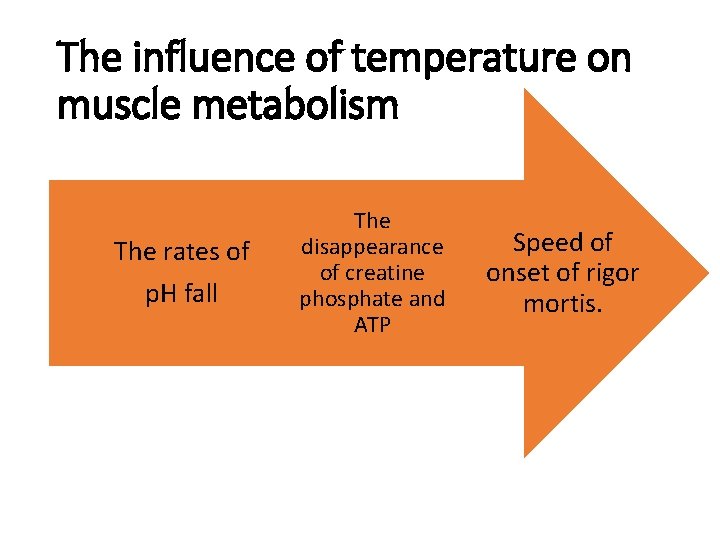
The influence of temperature on muscle metabolism The rates of p. H fall The disappearance of creatine phosphate and ATP Speed of onset of rigor mortis.
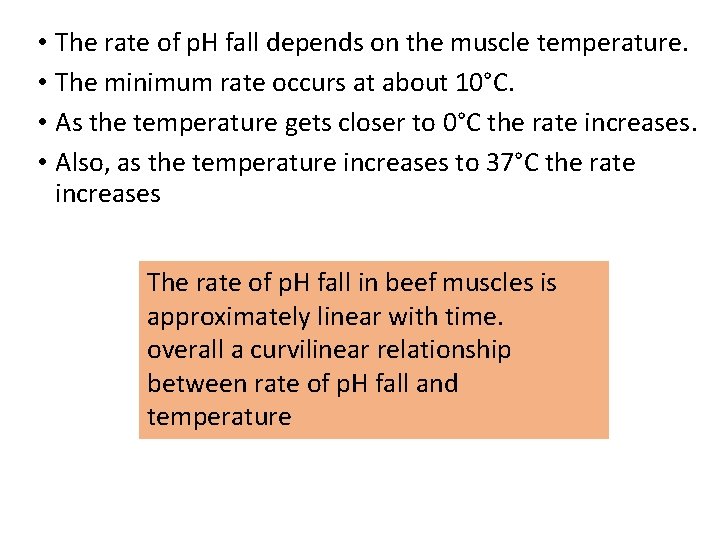
• The rate of p. H fall depends on the muscle temperature. • The minimum rate occurs at about 10°C. • As the temperature gets closer to 0°C the rate increases. • Also, as the temperature increases to 37°C the rate increases The rate of p. H fall in beef muscles is approximately linear with time. overall a curvilinear relationship between rate of p. H fall and temperature
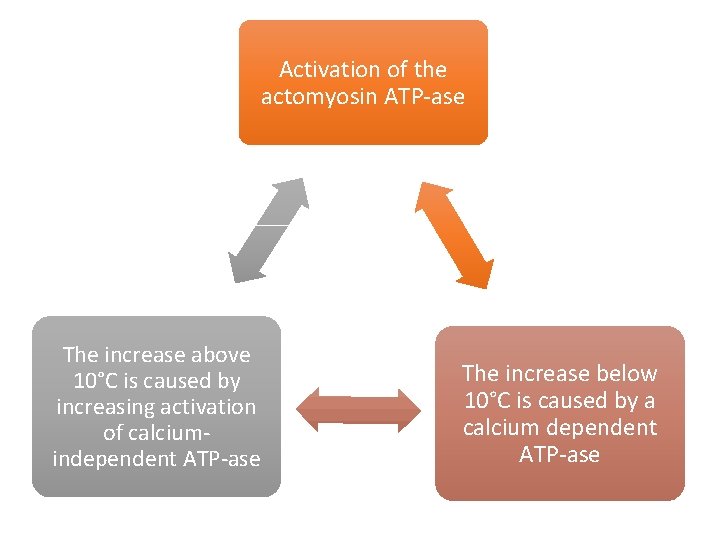
Activation of the actomyosin ATP-ase The increase above 10°C is caused by increasing activation of calciumindependent ATP-ase The increase below 10°C is caused by a calcium dependent ATP-ase
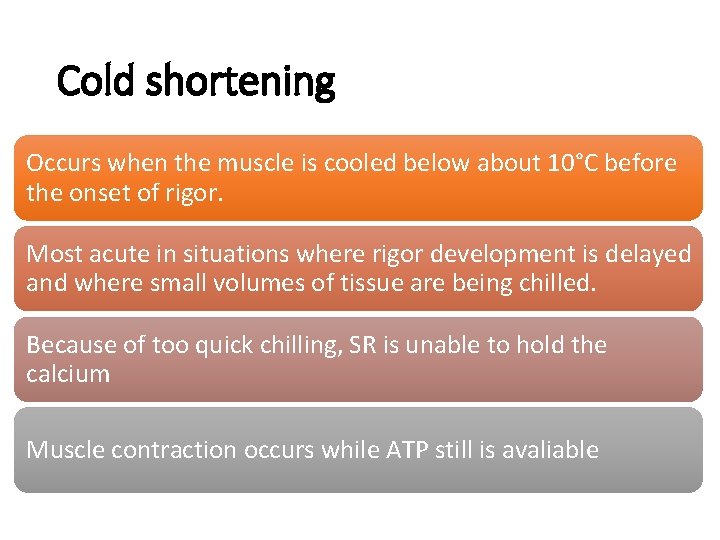
Cold shortening Occurs when the muscle is cooled below about 10°C before the onset of rigor. Most acute in situations where rigor development is delayed and where small volumes of tissue are being chilled. Because of too quick chilling, SR is unable to hold the calcium Muscle contraction occurs while ATP still is avaliable
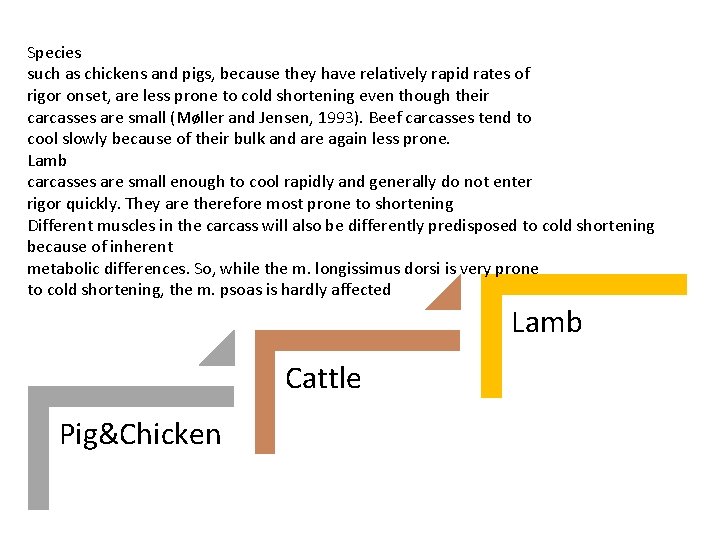
Species such as chickens and pigs, because they have relatively rapid rates of rigor onset, are less prone to cold shortening even though their carcasses are small (Møller and Jensen, 1993). Beef carcasses tend to cool slowly because of their bulk and are again less prone. Lamb carcasses are small enough to cool rapidly and generally do not enter rigor quickly. They are therefore most prone to shortening Different muscles in the carcass will also be differently predisposed to cold shortening because of inherent metabolic differences. So, while the m. longissimus dorsi is very prone to cold shortening, the m. psoas is hardly affected Lamb Cattle Pig&Chicken
In normal beef, cold shortening can be prevented by ensuring that muscle temperature does not fall below 10°C until the muscle p. H has reached 6. 1, which would normally take about 10 h. By this time, the progress of rigor will be sufficiently advanced to prevent cold contracture.
Heat Ring • The phenomenon of so-called ‘heat ring’ sometimes occurs in beef subjected to relatively fast chilling. • Found in carcasses with a thin rind. • In particular, the parts nearer the outside of the carcass cools more quickly than the inside so the rate of p. H fall is reduced. • This leads to a darker band of muscle forming. This has an unattractive appearance.
Thaw Rigor • If the rate of cooling of the carcass is sufficiently high and the meat freezes before the onset of rigor then, on thawing, the muscle shortens severely (to up to 50% of its length if unrestrained) and becomes very tough after cooking. • Additionally, very large amounts of drip or exudate (30 % of muscle weight) are lost during thawing.
On thawing, glycolysis is completed very rapidly and ATP breakdown is extremely rapid This rapid metabolism is accompanied by a very strong contraction The contraction is probably stimulated by the rapid and massive release of calcium ions from the sarcoplasmic reticulum on thawing
Heat shortening • If muscles are stimulated, and allowed to contract and shorten, at high temperatures, without subsequent relaxation, then they may subsequently become tough if they enter rigor in this state.