
Postharvest Handling of Fresh Produce Justin Ballew Commercial

Postharvest Handling of Fresh Produce Justin Ballew Commercial Horticulture Agent Lexington County
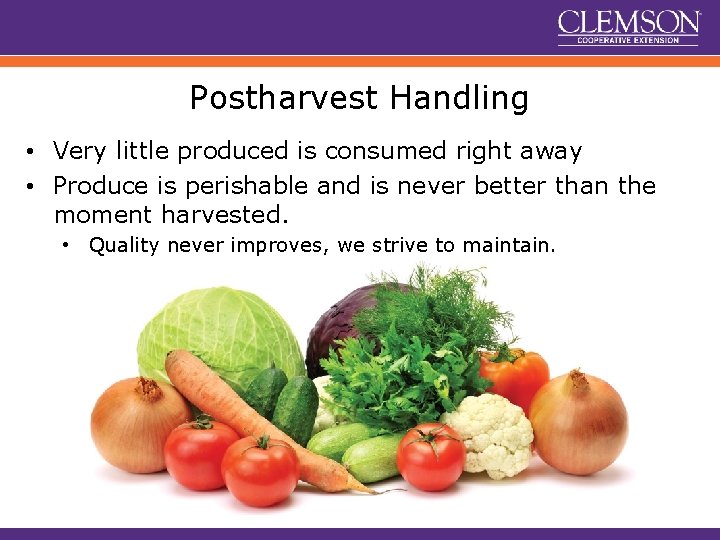
Postharvest Handling • Very little produced is consumed right away • Produce is perishable and is never better than the moment harvested. • Quality never improves, we strive to maintain.
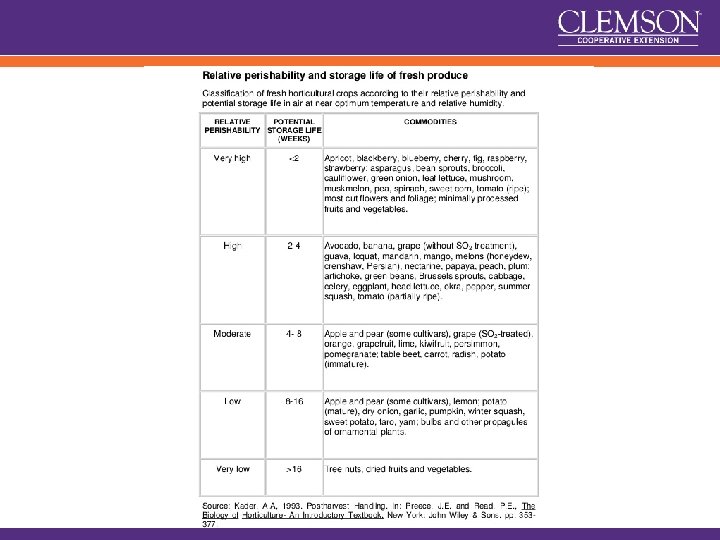
Harvesting • Be gentle with produce. • Abrasion, bruises, smashing • Harvest into clean smooth containers that are easily carried or loaded. • Containers should be sanitized daily. • Stacking can contaminate produce with soil. • Produce is alive, respiration continues after harvest • Young, flowering, and leafy respire rapidly • The higher the respiration rate, the faster the produce will perish. • Temperature is important. More later. • Harvest during coolest times of day
Transporting • Small delicate fruits are often damaged by field transport (strawberries, brambles). • Smaller loads taken to storage often is better • Get produce out of field environment (heat) faster. • Loads stored outside should be put in shade. • Shed • Under tree (watch out for birds) • Poorly suspended trucks/trailers can damage by bouncing. • Refrigerated trucks should be cooled ahead of time.
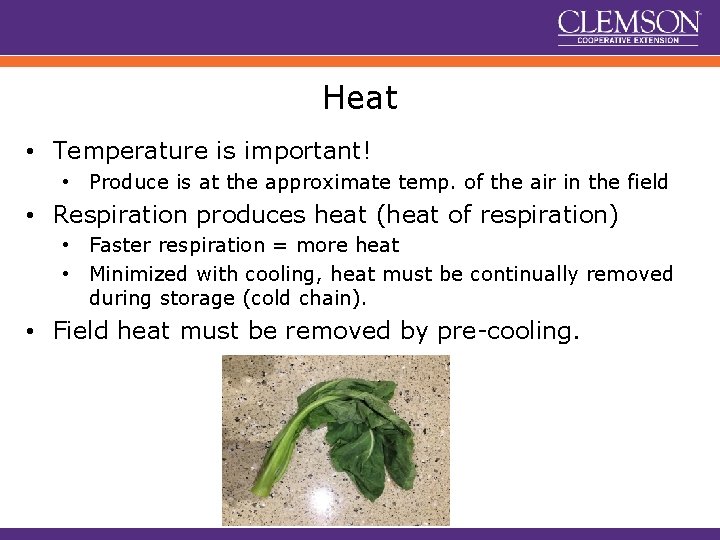
Heat • Temperature is important! • Produce is at the approximate temp. of the air in the field • Respiration produces heat (heat of respiration) • Faster respiration = more heat • Minimized with cooling, heat must be continually removed during storage (cold chain). • Field heat must be removed by pre-cooling.
Methods of Pre-Cooling • • • Air cooling (room cooling) Hydro-cooling Vacuum cooling Ice cooling Forced-air cooling Never break the cold chain once cooled!!!
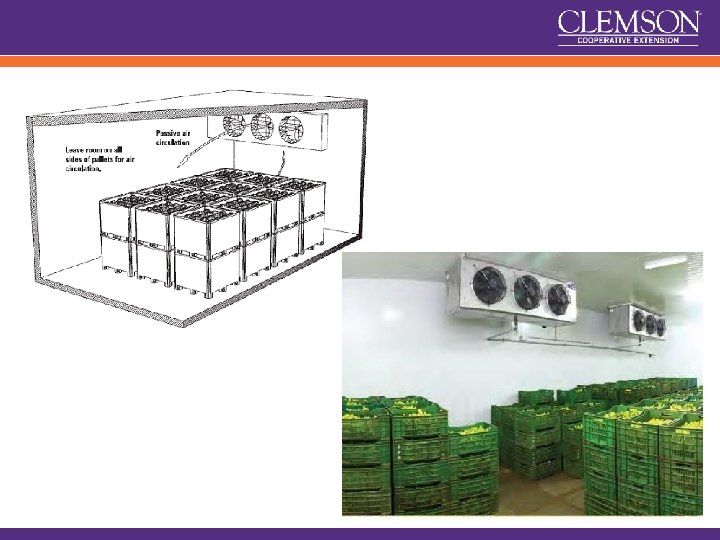
Air Cooling (Room Cooling) • Simply placing produce in a cold room for a period of time. • Cools very slowly • produce that doesn’t decay rapidly - apples, cabbage, pears, peaches • Air is the least efficient means of cooling
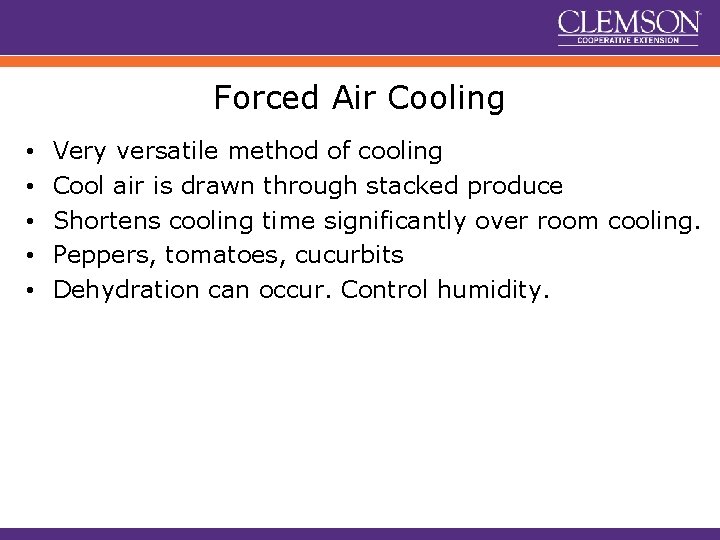
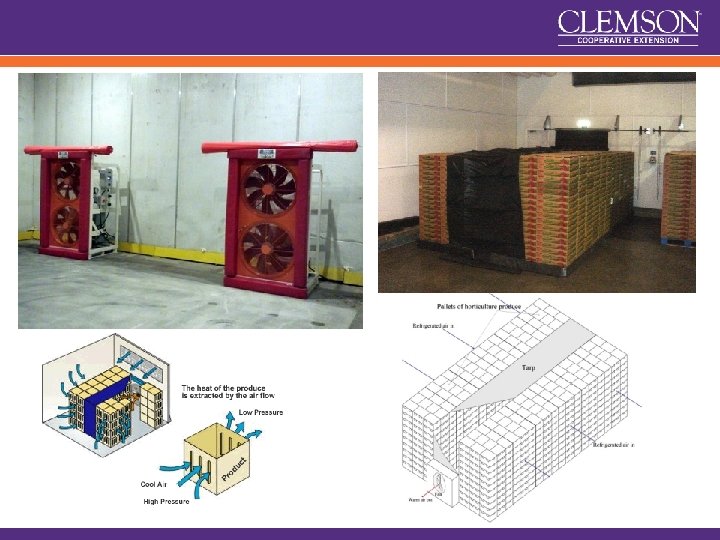
Forced Air Cooling • • • Very versatile method of cooling Cool air is drawn through stacked produce Shortens cooling time significantly over room cooling. Peppers, tomatoes, cucurbits Dehydration can occur. Control humidity.
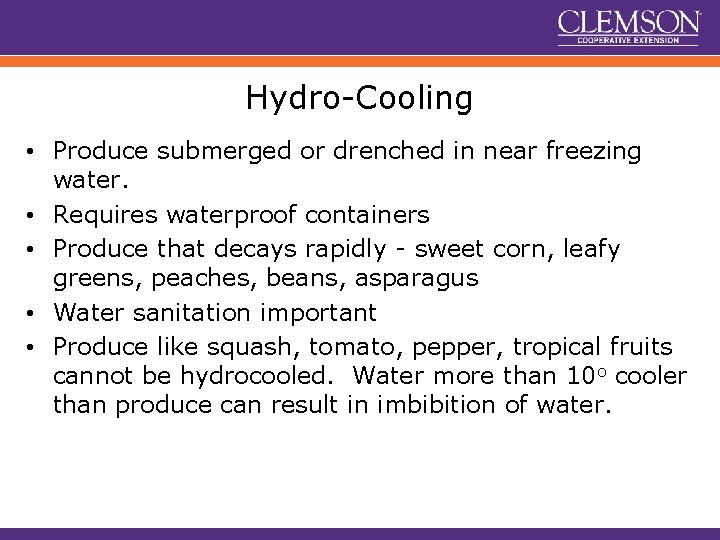
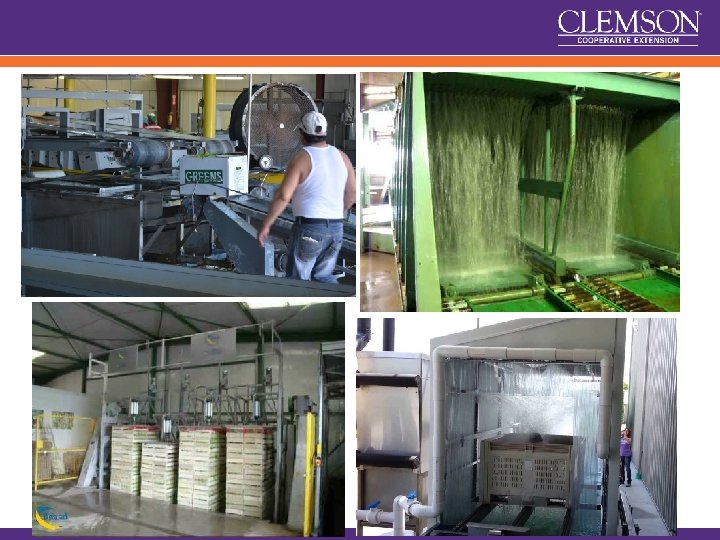
Hydro-Cooling • Produce submerged or drenched in near freezing water. • Requires waterproof containers • Produce that decays rapidly - sweet corn, leafy greens, peaches, beans, asparagus • Water sanitation important • Produce like squash, tomato, pepper, tropical fruits cannot be hydrocooled. Water more than 10 o cooler than produce can result in imbibition of water.
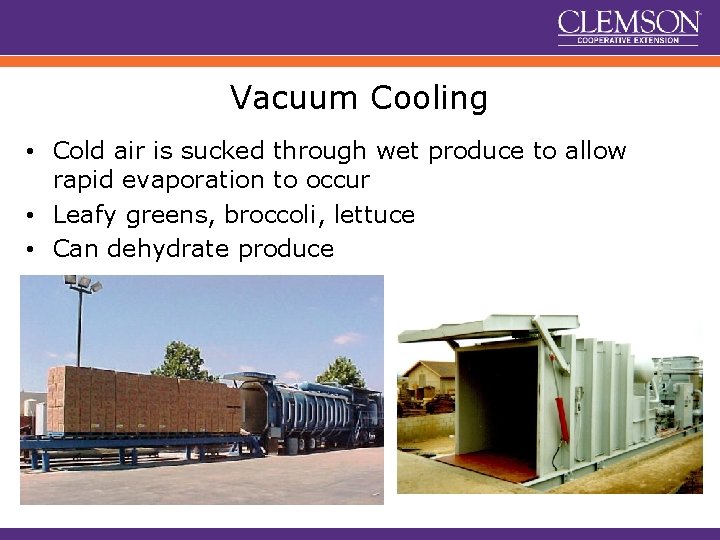
Vacuum Cooling • Cold air is sucked through wet produce to allow rapid evaporation to occur • Leafy greens, broccoli, lettuce • Can dehydrate produce
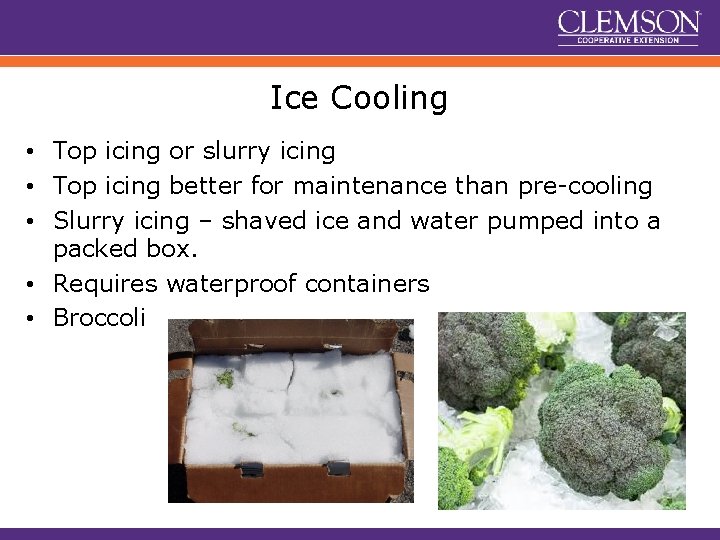
Ice Cooling • Top icing or slurry icing • Top icing better for maintenance than pre-cooling • Slurry icing – shaved ice and water pumped into a packed box. • Requires waterproof containers • Broccoli
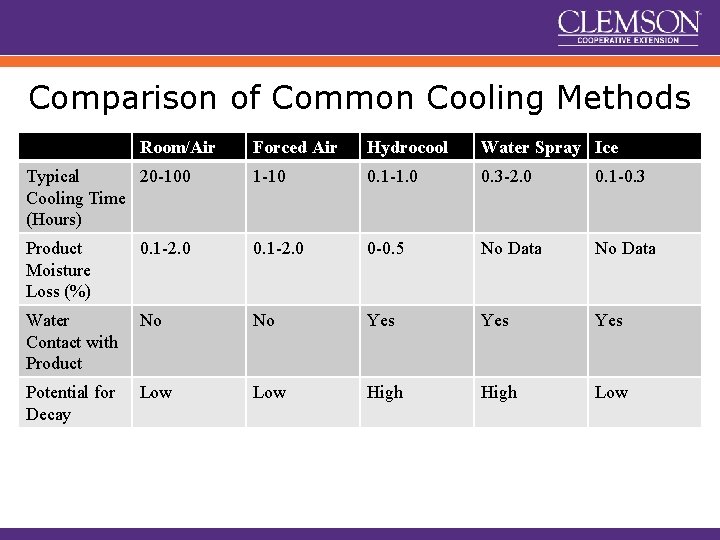
Comparison of Common Cooling Methods Room/Air Forced Air Hydrocool Water Spray Ice Typical 20 -100 Cooling Time (Hours) 1 -10 0. 1 -1. 0 0. 3 -2. 0 0. 1 -0. 3 Product Moisture Loss (%) 0. 1 -2. 0 0 -0. 5 No Data Water Contact with Product No No Yes Yes Potential for Decay Low High Low
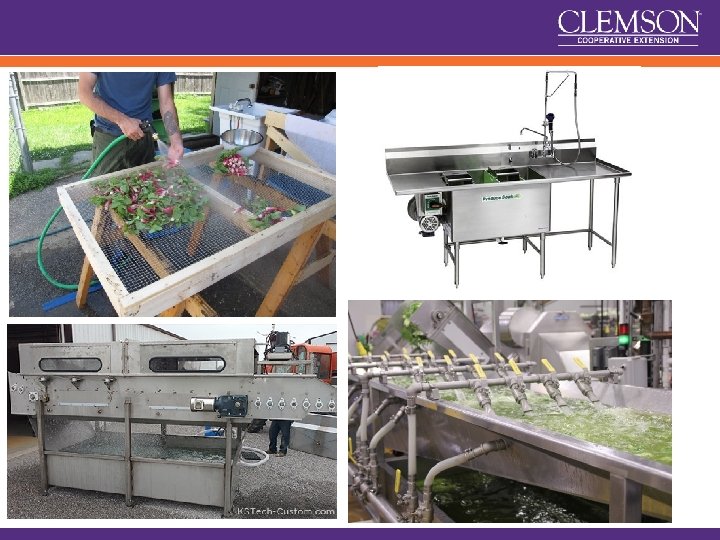
Washing • Many items must be washed • Water quality is extremely important - food safety • Contamination can quickly be spread to a large amount of product • Potable water for all washing, cooling, icing, and processing • Sanitization of water is often needed • Continually used dump tanks • Must be chlorinated or otherwise sanitized • Water temp is important • Cold water used for pre-cooling, though some items cannot be immersed in cold water (peppers, cantaloupe) • Avoid water temps more than 10 o. F cooler than produce • Water uptake can occur in blossom and stem scars.
Washing • For produce that cannot be immersed, brush washing and blow drying is a good alternative (cucumbers, peppers). • Highly delicate produce should not be washed • Water may be trapped under calyx leading to decay • strawberries, blackberries • Some produce should not or may not need to be washed • Just brush off dirt or other debris if needed • squash, zucchini, onions, okra, grapes, cabbage, tomato
Chlorination of Wash and Cooling Water • Chlorination reduces transfer of contamination • Maintain constant chlorine by monitoring. • In general 100 -150 ppm. • Monitor p. H of water. • Optimum range 6. 0 -7. 0 • Be conscious of water temp. • High temp results in quicker pathogen kill, but also results in rapid loss of chlorine due to gas formation. • Water disinfection options: • Chlorine gas, sodium hypochlorite, Calcium hypochlorite, Chlorine dioxide, Acidified sodium chlorite, Surfactants, Ozone, Ionizing radicals, Hydrogen peroxide, Peroxyacetic acid, Ultraviolet Illumination.
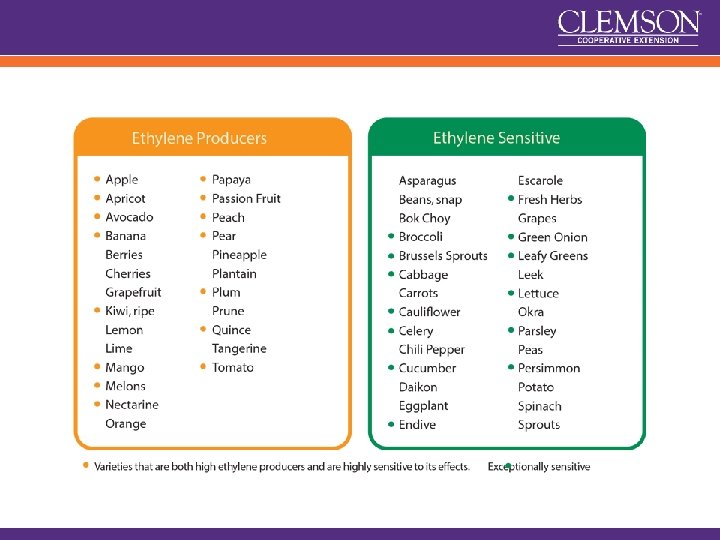
Ethylene • Ethylene is a simple hydrocarbon gas (C 2 H 4); produced when organic materials are burned with too little oxygen. • Poorly adjusted forklifts, gas or wood heaters • It is also a ripening hormone for plants. • Ethylene in a storage area can cause serious produce quality problems. • High ethylene producing produce stored with ethylene sensitive items can cause premature or over-ripening and quality loss. • Can cause yellowing or browning, softening, spotting, sprouting in potatoes, flavor degradation, etc.
Resources • ucce. ucdavis. edu/files/datastore/234 -1450. pdf • https: //attra. ncat. org/attrapub/summaries/summary. php? pub=378 • www. fruit. cornell. edu/berry/postharvest/posthar vestpdfs/FS 100. pdf • USDA Handbook 66 https: //www. ars. usda. gov/northeast-area/beltsvillemd/beltsville. . . research. . . /ah 66/ • http: //www. familyfarmed. org/publications/wholesale success/

QUESTIONS?
- Slides: 25