
Posterior surgery for Cervical Spondylotic Myelopathy Mehmet Zileli
- Slides: 23
Posterior surgery for Cervical Spondylotic Myelopathy Mehmet Zileli, M. D. Izmir - Turkey
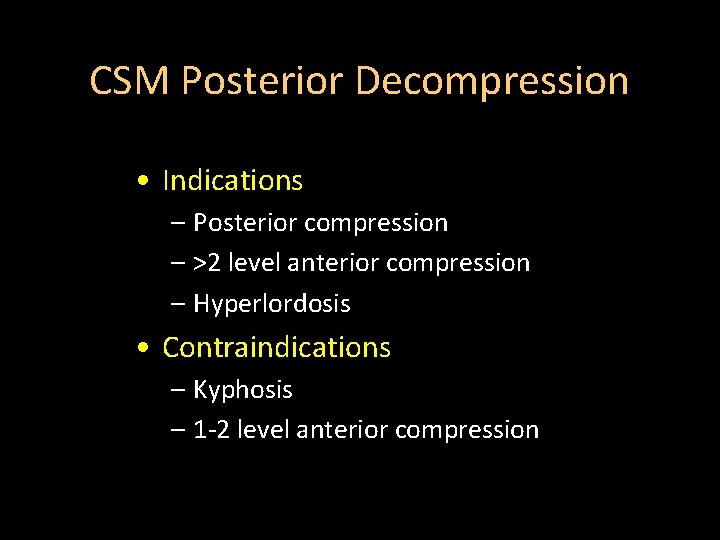
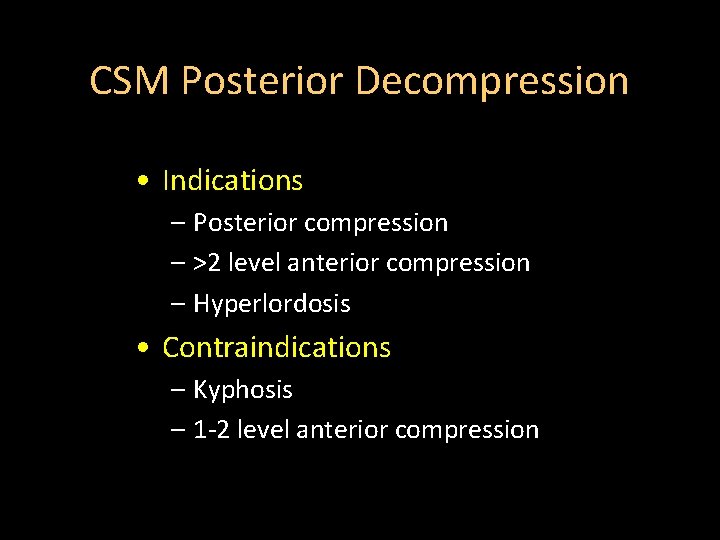
CSM Posterior Decompression • Indications – Posterior compression – >2 level anterior compression – Hyperlordosis • Contraindications – Kyphosis – 1 -2 level anterior compression
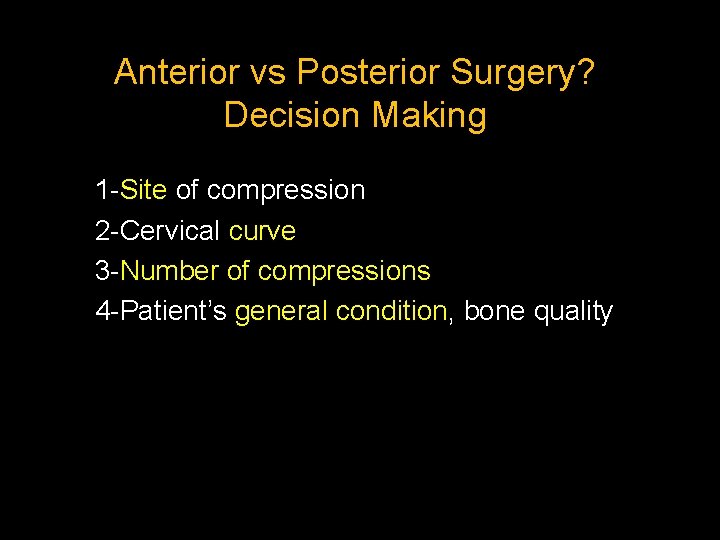
Anterior vs Posterior Surgery? Decision Making 1 -Site of compression 2 -Cervical curve 3 -Number of compressions 4 -Patient’s general condition, bone quality
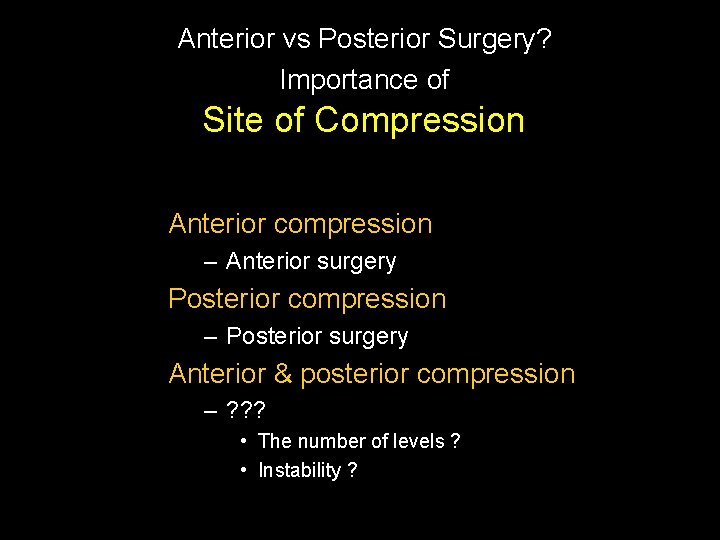
Anterior vs Posterior Surgery? Importance of Site of Compression Anterior compression – Anterior surgery Posterior compression – Posterior surgery Anterior & posterior compression – ? ? ? • The number of levels ? • Instability ?
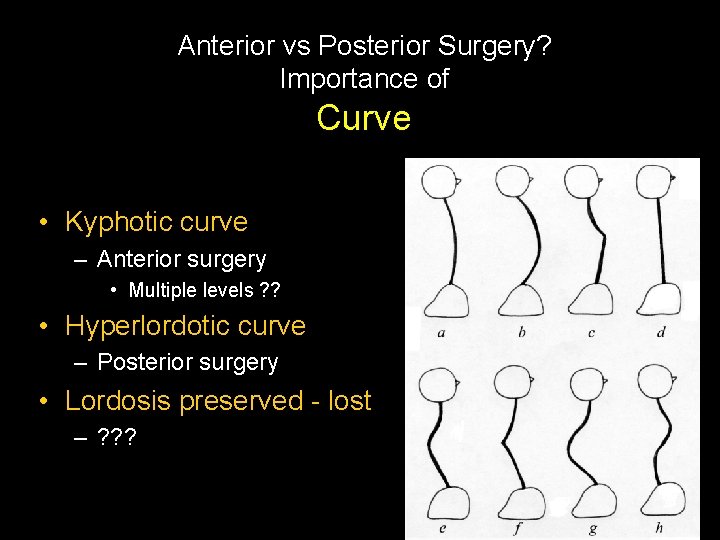
Anterior vs Posterior Surgery? Importance of Curve • Kyphotic curve – Anterior surgery • Multiple levels ? ? • Hyperlordotic curve – Posterior surgery • Lordosis preserved - lost – ? ? ?
Anterior vs Posterior Surgery? Patient’s age, general condition, bone quality • Age is not a factor alone • Graft problems if osteoporotic • Poor general condition – Posterior surgery > Anterior surgery
Complications of Anterior Surgery appr. 20 -25% 1 -Neurological complications 2 -Cervical site compl. Airway problems Hematom Esophageal injury Vascular Hoarseness Dysphagia Chylothorax 3 -Graft related compl. Graft dislocation Pseudarthrosis Adjacent level degeneration Plate & screw problems 4 -Graft site compl.
CSM: Posterior Surgery Advantages 1 -Very good technique for decompression of structures from posterior such as ligamentum flavum hypertrophy. Disadvantages 1 -Increasing instability resulting in osteophyte formation 2 -Hard discs and anterior osteophytes are not possible to remove, if attempted, it would cause root injury 3 -Neurological complications are more in comparison to anterior surgery
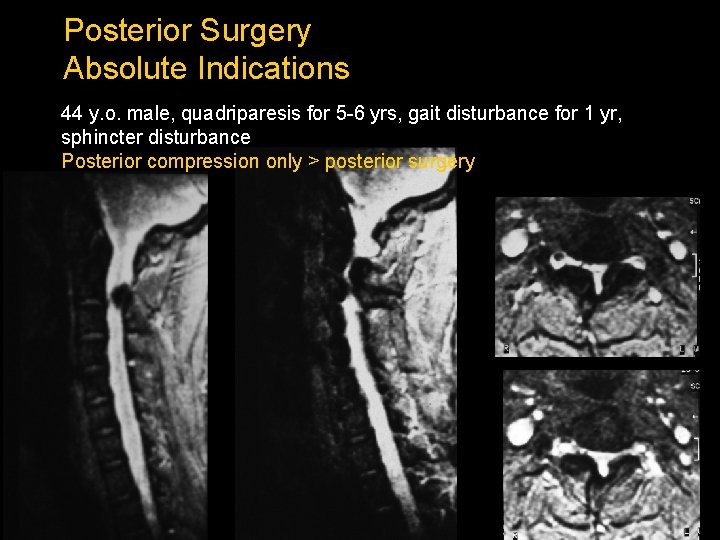
Posterior Surgery Absolute Indications 44 y. o. male, quadriparesis for 5 -6 yrs, gait disturbance for 1 yr, sphincter disturbance Posterior compression only > posterior surgery
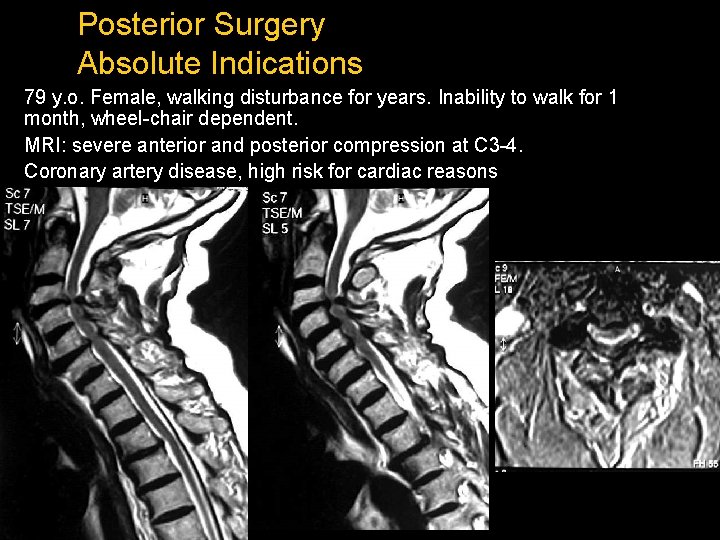
Posterior Surgery Absolute Indications 79 y. o. Female, walking disturbance for years. Inability to walk for 1 month, wheel-chair dependent. MRI: severe anterior and posterior compression at C 3 -4. Coronary artery disease, high risk for cardiac reasons
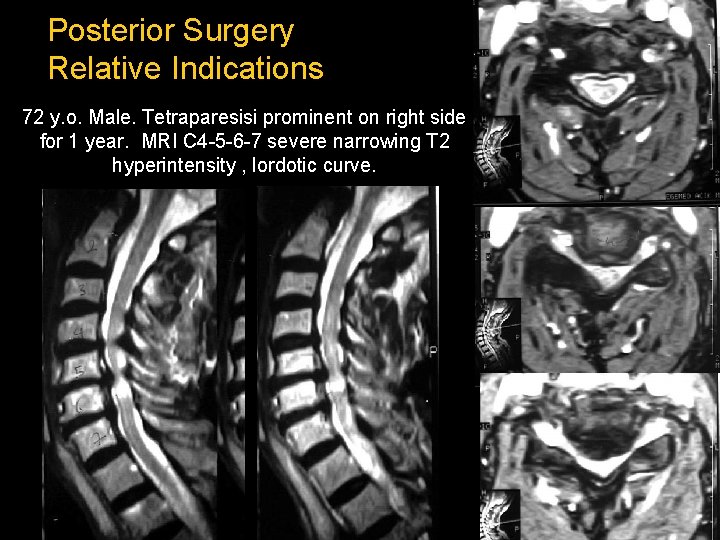
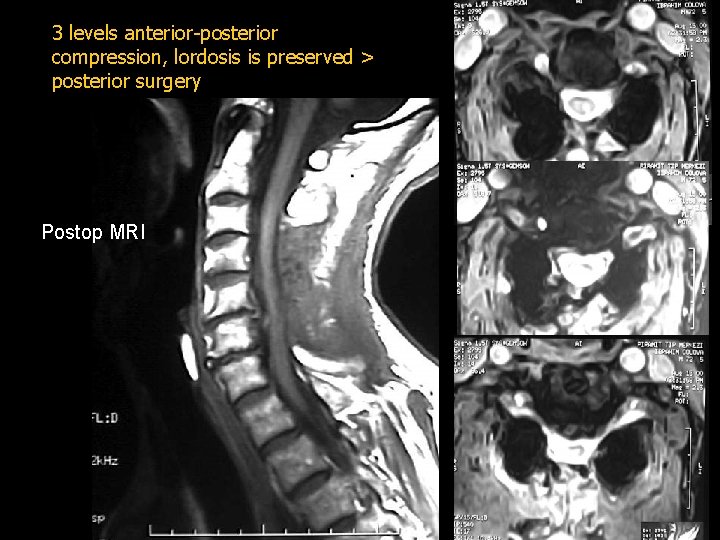
Posterior Surgery Relative Indications 72 y. o. Male. Tetraparesisi prominent on right side for 1 year. MRI C 4 -5 -6 -7 severe narrowing T 2 hyperintensity , lordotic curve.
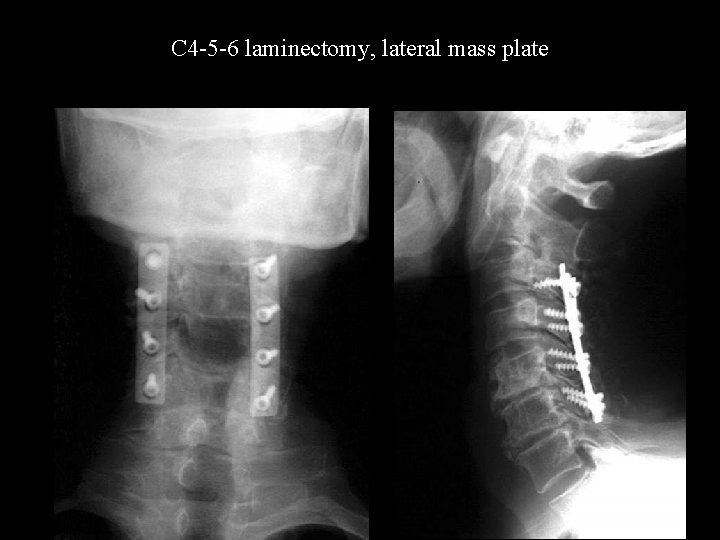
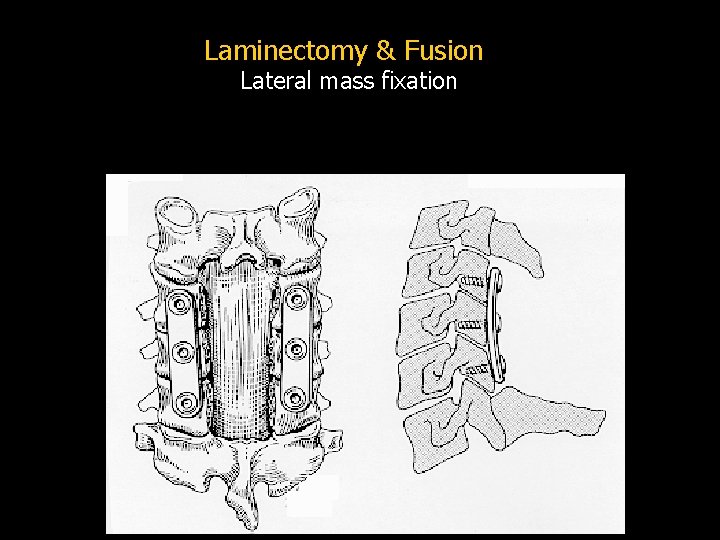
C 4 -5 -6 laminectomy, lateral mass plate
3 levels anterior-posterior compression, lordosis is preserved > posterior surgery Postop MRI
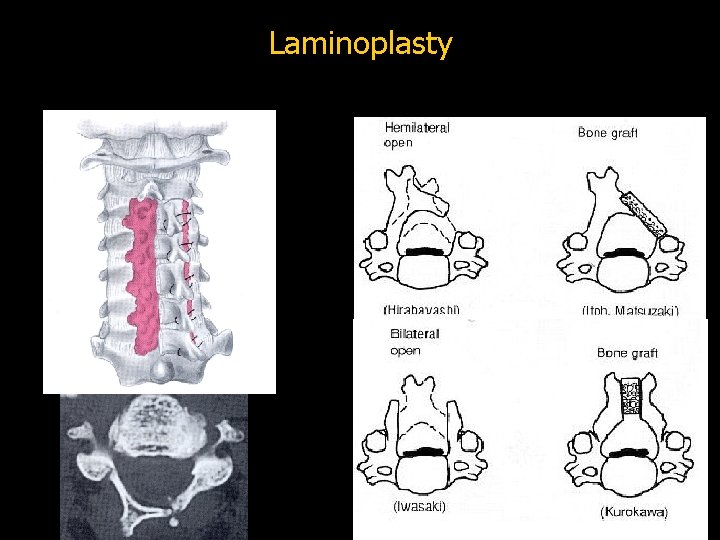
CSM: Posterior Surgery Laminectomy & Fusion Lateral mass fixation Laminoplasty Hemilateral opening Bilateral opening
Laminectomy & Fusion Lateral mass fixation
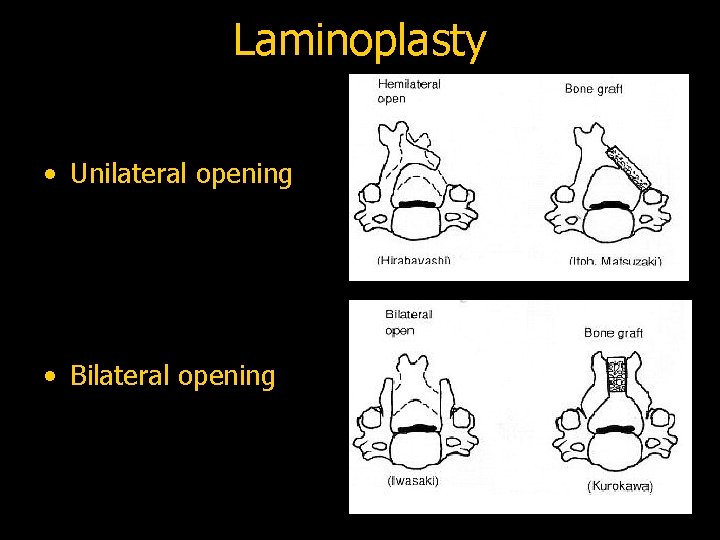
Laminoplasty • Unilateral opening • Bilateral opening
Laminoplasty
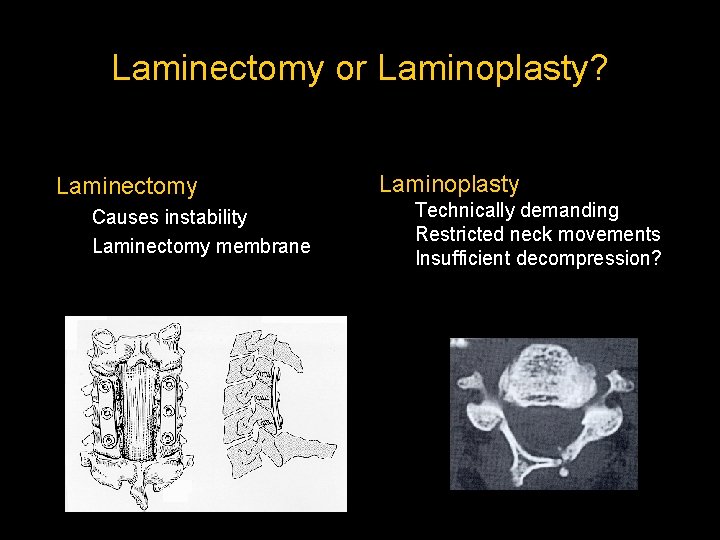
Laminectomy or Laminoplasty? Laminectomy Causes instability Laminectomy membrane Laminoplasty Technically demanding Restricted neck movements Insufficient decompression?
Outcome Anterior vs Posterior • Success rates range between 70 -85% in different series • Duration of symptoms are important
Complications Anterior vs Posterior • Functional outcomes similar • But complications greater with corpectomy Yonenobu, et. al. – Spine, 1992 Heller, et. al. – Spine, 2001 Wada, et. al. – Spine, 2001 Edwards, et. al. – Spine, 2002
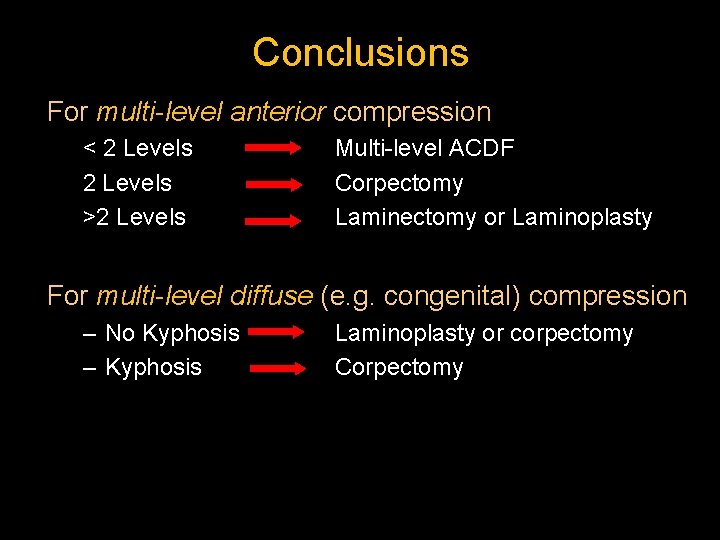
Conclusions For multi-level anterior compression < 2 Levels >2 Levels Multi-level ACDF Corpectomy Laminectomy or Laminoplasty For multi-level diffuse (e. g. congenital) compression – No Kyphosis – Kyphosis Laminoplasty or corpectomy Corpectomy
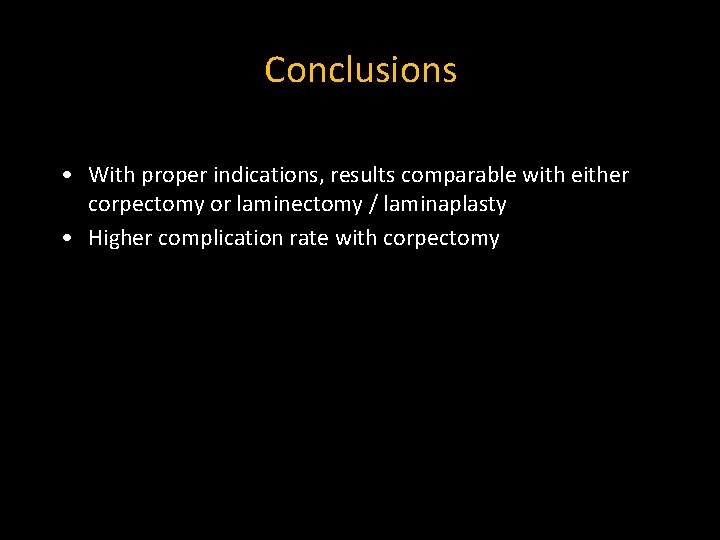
Conclusions • With proper indications, results comparable with either corpectomy or laminectomy / laminaplasty • Higher complication rate with corpectomy
CSM Posterior Decompression • Indications – Posterior compression – >2 level anterior compression – Hyperlordosis • Contraindications – Kyphosis – 1 -2 level anterior compression