
Posterior Pituitary Also known as Neurohypophysis Embryologically the
Posterior Pituitary: Also known as Neurohypophysis Embryologically the posterior pituitary originates from a neural tissue outgrowth from the hypothalamus, it is explained by the presence of large numbers of glial-type cells (pituicytes) in this gland. Its hormones are known as neuro-hormones Posterior pituitary don’t synthesize any hormones, its hormones are synthesized by the neurons whose cells bodies lies in the hypothalamus while their axons extends in neurohypophysis from where these hormones are released. It secrete two main hormones 1). Anti-diuretic Hormone or Arginine Vasopressin 2). Oxytocin 3). MSH
Oxytocin Secreted by posterior pituitary Neurohomone Octa-peptide Amino acid sequence Cys-Tyr-Ile-Gln-Asn-Cys-Pro-Leu-Gly. NH 2 Functions of Oxytocin: 1. It causes contraction of muscles of uterus during Parturition or birth of baby 2. It also causes contraction of oviduct and cloacal aperture during egg laying in reptiles and birds 3. It also helps in milk ejection from mammary glands.
Melanocyte stimulating hormone: Its target cells are melanocytes Melanocytes in response to MSH start synthesizing melanin pigment in the skin or other parts of body This system is very well developed in amphibians and reptiles. Its over secretion or hypersecretion causes over pigmentation. Under secretion or hyposecretion causes low pigmentation Mutations in MSH or non secretion of MSH causes albinism.

Todays question: Why our skin colour darkens when we are exposed to sunlight.
1). Anti-Diuretic Hormone (ADH): Also known as arginine vasopressin (vasopressins are chemical that causes vasoconstriction) Neurohormone Octapeptide, Consisting of nine aminoacids. Amino acids sequence: Cys-Tyr-Phe-Gln-Asn-Cys-Pro-Arg-Gly. NH 2 Secreted by Posterior pituitary It regulates osmoregulation Its secretion is stimulated by low levels of water in the blood. Its target cells are the epithelial cells of nephronic tubules.

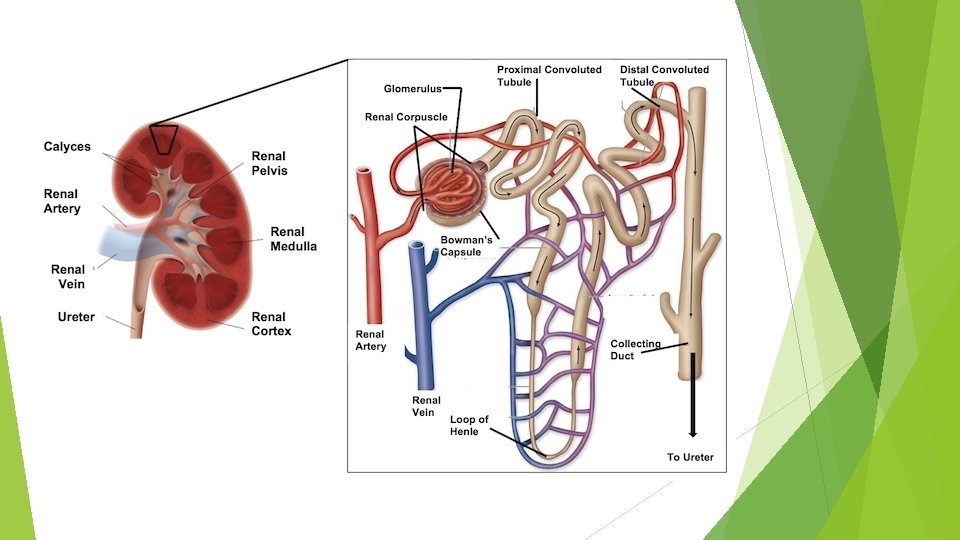
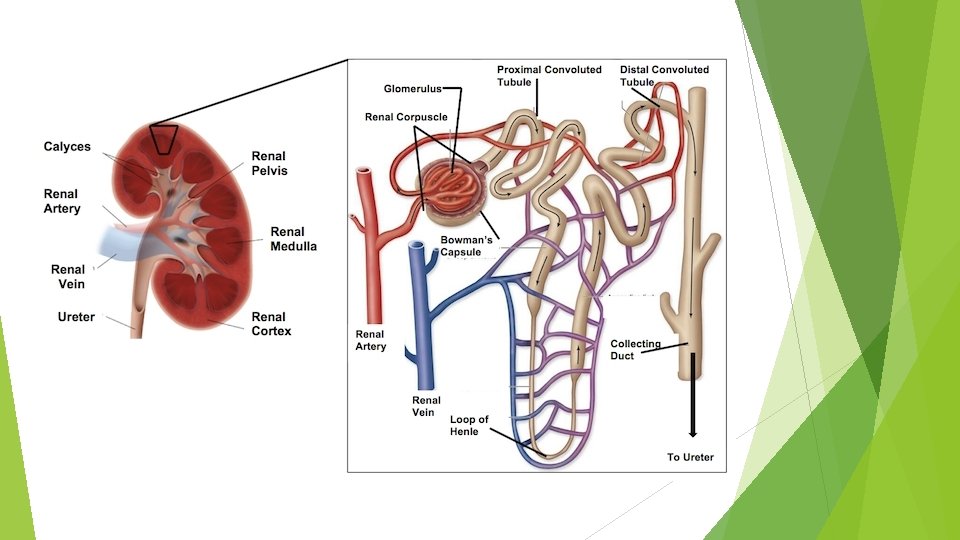
Function of ADH: ADH regulates osmoregulation ADH acts on the collecting ducts to increase their permeability for water. It also causes constriction of blood vessels, to increase blood pressure. It also causes constriction of efferent arteriole of nephrons that carry blood away from glomerulus.
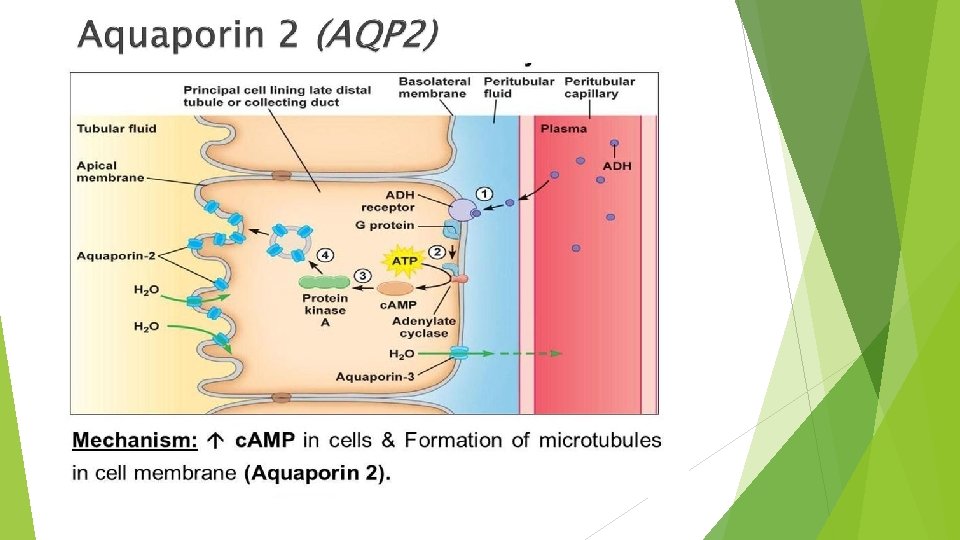
Mechanism of action of ADH: ADH acts on the collecting ducts to increase their permeability. Without ADH, the luminal membranes of the tubular epithelial cells of the collecting ducts are almost impermeable to water. However, immediately inside the cell membrane are a large number of special vesicles that have highly waterpermeable pores called aquaporins. When ADH acts on the cell, it first combines with membrane receptors. Hormone receptor complex then activates adenyl cyclase Adenyl cyclase causes the conversion of ATP into c. AMP inside the tubular cell cytoplasm. c. AMP then activates protein kinases. Protein kinases then activates elements present in special vesicles by phosphorylation, which then causes the vesicles to insert into the apical cell membranes, thus providing many areas of high water permeability. All this occurs within 5 to 10 minutes. Then, in the absence of ADH, the entire process reverses in another 5 to 10 minutes
Todays question: Why Anti-diuretic hormone causes constriction of efferent arteriole?
Deficiency of ADH: Deficiency of ADH causes diabetes incipidus. In this disease large volume of urine is excreted.
- Slides: 13