
Posterior Pituitary ADH is released when the blood

Posterior Pituitary ADH is released when the blood plasma concentration is high (and blood pressure is low). ADH stimulates the kidneys to absorb more water, which dilutes the blood plasma (and increases blood pressure). 20 -2
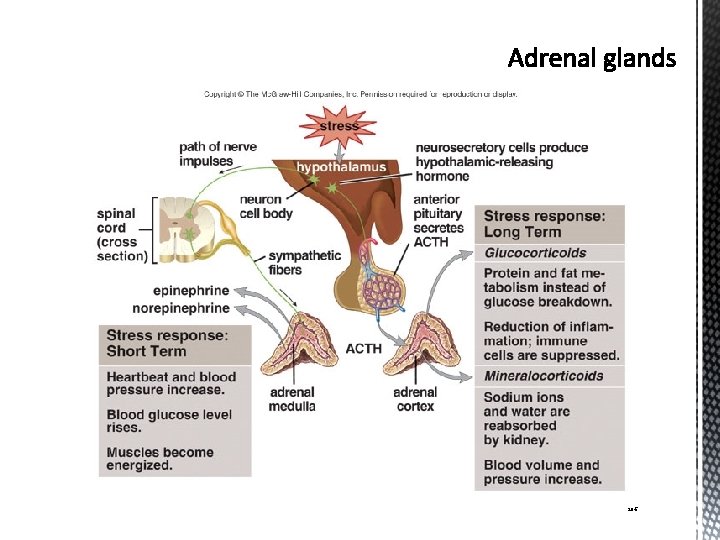
§ Adrenal glands sit atop the kidneys and have an inner adrenal medulla and an outer adrenal cortex. § The hypothalamus uses ACTHreleasing hormone to control the anterior pituitary’s secretion of ACTH that stimulates the adrenal cortex. § The hypothalamus regulates the medulla by direct nerve impulses. 20 -3
§ The adrenal medulla secretes epinephrine and norepinephrine, which bring about responses we associate with emergency situations. § On a long-term basis, the adrenal cortex produces glucocorticoids similar to cortisone and mineralocorticoids to regulate salt and water balance. § The adrenal cortex also secretes both male and female sex hormones in both sexes. 20 -4
20 -5
§ Cortisol promotes breakdown of muscle proteins to amino acids; the liver then breaks the amino acids into glucose. § Cortisol also promotes metabolism of fatty acids rather than carbohydrates, which spares glucose. § Both actions raise the blood glucose level. § High levels of blood glucocorticoids can suppress immune system function. 20 -6
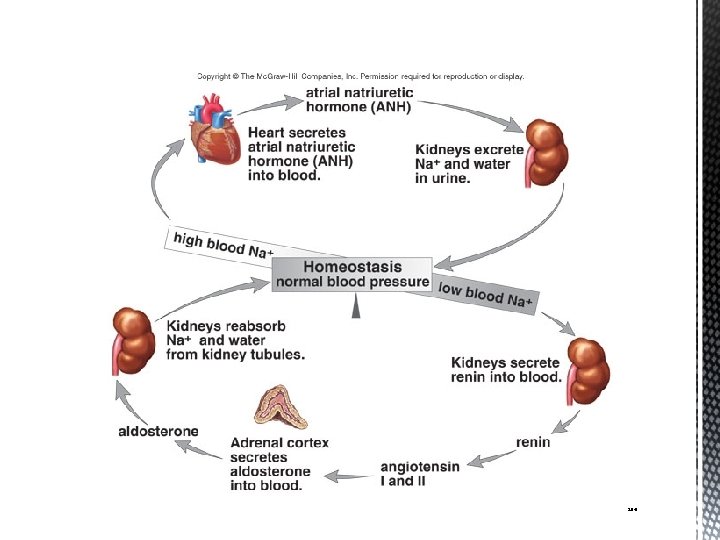
§ Aldosterone causes the kidneys to reabsorb sodium ions (Na+) and excrete potassium ions (K+). § When blood sodium levels and blood pressure are low, the kidneys secrete renin; the effect of the renin-angiotensin-aldosterone system is to raise blood pressure. 20 -7
20 -8
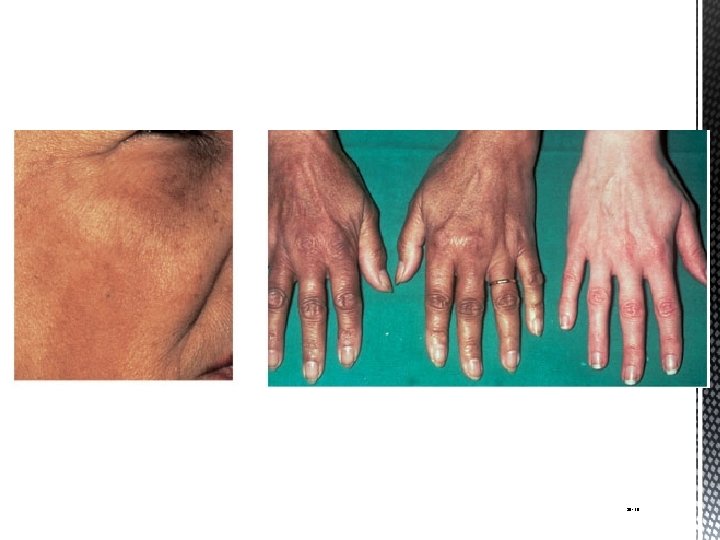
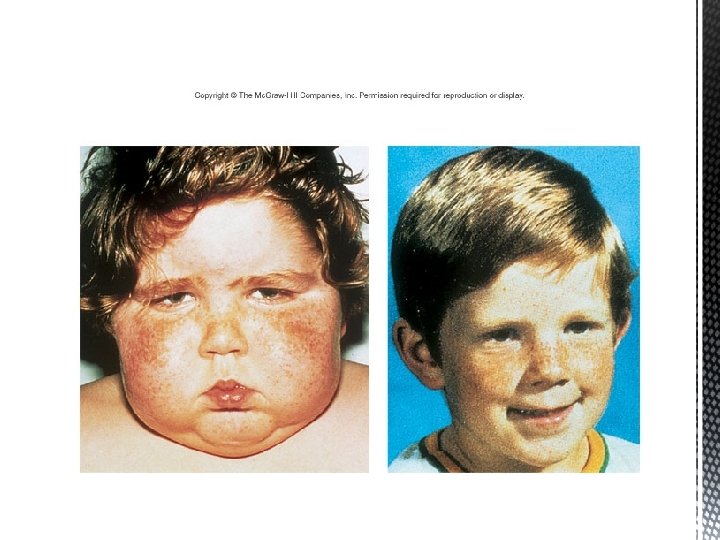
§ Addison disease develops when the adrenal cortex hyposecretes hormones. § A bronzing of the skin follows low levels of cortisol, and mild infection can lead to death; aldosterone is also hyposecreted, and dehydration can result. § Cushing syndrome develops when the adrenal cortex hypersecretes cortisol. § The trunk and face become round; too much aldosterone results in fluid retention. 20 -9
20 -10
20 -11
- Slides: 11