
Posterior Cruciate Ligament PCL Tear Development of PCL
- Slides: 10
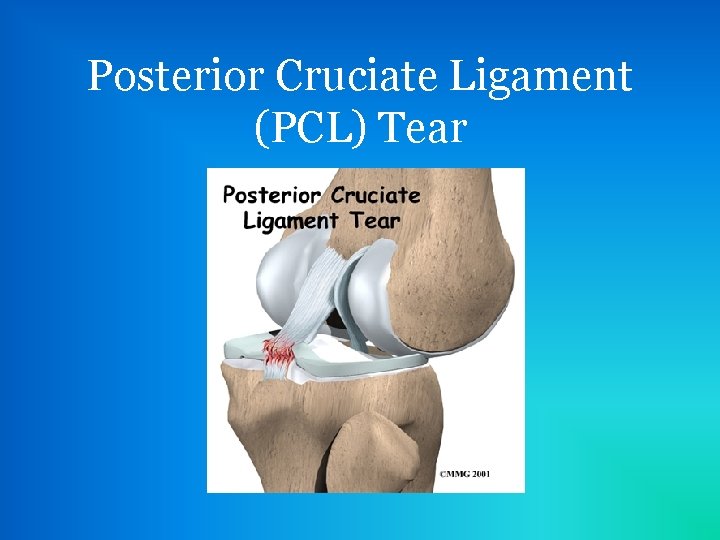
Posterior Cruciate Ligament (PCL) Tear
Development of PCL Tear • Injuries to the PCL are the most uncommon and also most difficult to diagnose • Motor vehicle accidents (“Dash board injury”) • Contact sport or fall injuries where an individual falls on a bent knee with foot in plantar flexion
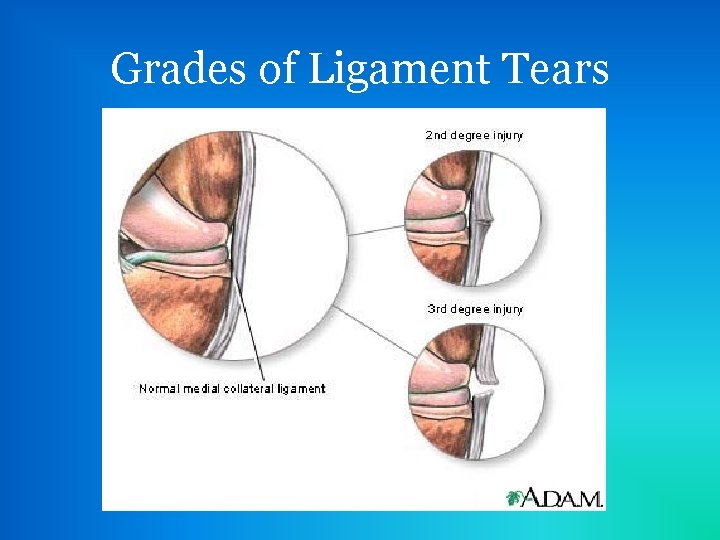
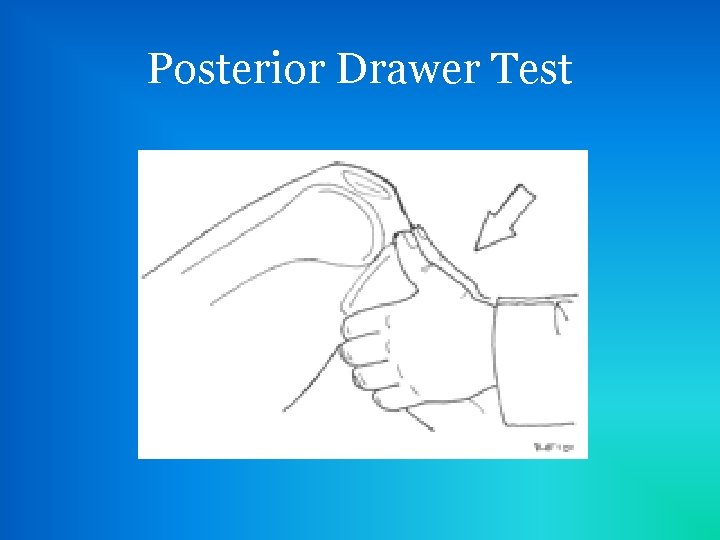
Symptoms of PCL Tear • There are three grades with different symptoms and severity • Grade 1 symptoms (stretched ligament) – Mild Tenderness on the inside of the knee – No swelling need be present – Pain on Posterior Drawer stress test but no laxity • Grade 2 symptoms (partial thickness tear of the ligament) – Significant pain in the medial aspect of the knee – Moderate swelling present – Posterior Drawer stress test will indicate moderate instability • Grade 3 symptoms (full thickness tear, or complete tear) – – Varied amounts of pain Significant joint laxity on Posterior Drawer stress test Complaints of instability (“wobbly” or “unstable” complaints) These injuries can also include tears to the ACL
Symptoms of PCL Tear • Knee swelling in a PCL tear appears rapidly – Within 3 hours • Difficulty walking or a slight limp • Pain with running, decelerating, or navigating stairs in any direction
Grades of Ligament Tears
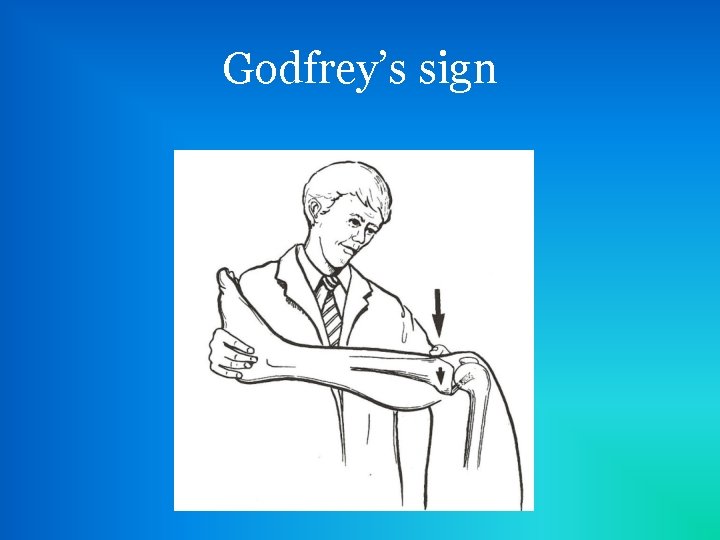
Differential Diagnosis Tests • • Godfrey sign Posterior Drawer test Ultrasound imaging MRI imaging
Godfrey’s sign
Posterior Drawer Test
Recommendation • Time from injury, location, severity, and concomitant injuries will indicate need for surgery or if conservative treatment will be sufficient – Surgery indicated immediately in presence of multiple ligamentous injuries • R. I. C. E. • Immobilization and use of functional brace • As swelling subsides Rehabilitation can begin stretching and strengthening exercises as well as weight bearing – Quadriceps muscles are key to strengthen in PCL rehabilitation
Prognosis • Combined injuries take longer to heal due do surgical necessity, but generally the outcomes are good with conservative treatment