
Post Translational Modification Zachry Theis Clarity Argall Overview
- Slides: 18
Post Translational Modification Zachry Theis Clarity Argall
Overview s Post Translational Modification s Glycosylation s Tyrosine Sulfonation
Glycosylation s s Description Purpose of Glycosylation Mechanism Types of Glycosylation
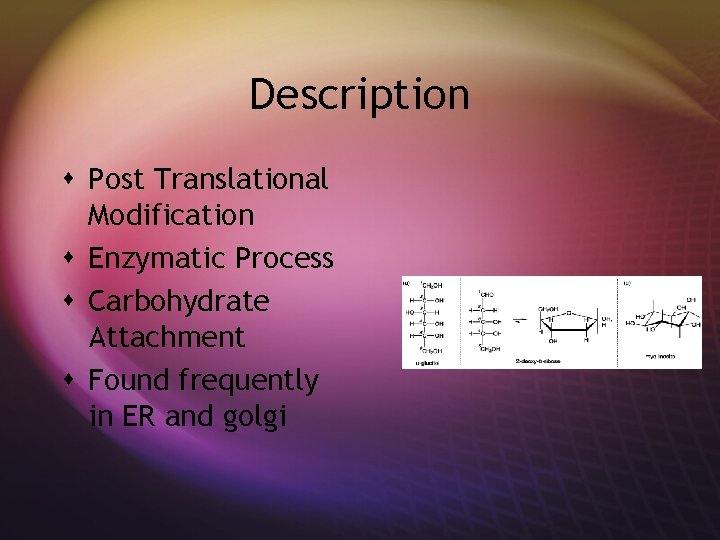
Description s Post Translational Modification s Enzymatic Process s Carbohydrate Attachment s Found frequently in ER and golgi
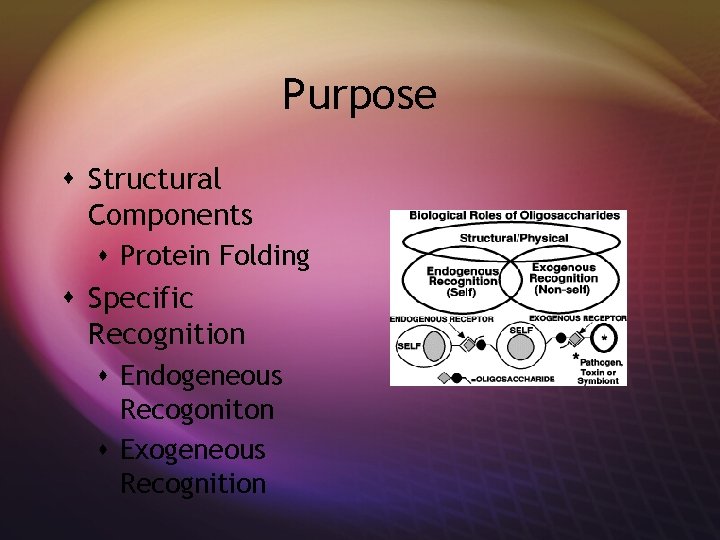
Purpose s Structural Components s Protein Folding s Specific Recognition s Endogeneous Recogoniton s Exogeneous Recognition
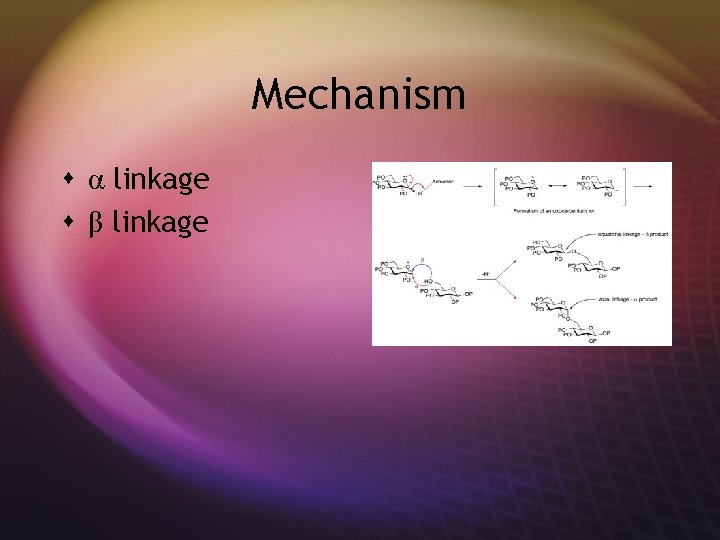
Mechanism s α linkage s β linkage
Types of Glycosylation s N-Linked s O-linked s C-Linked s Glycation
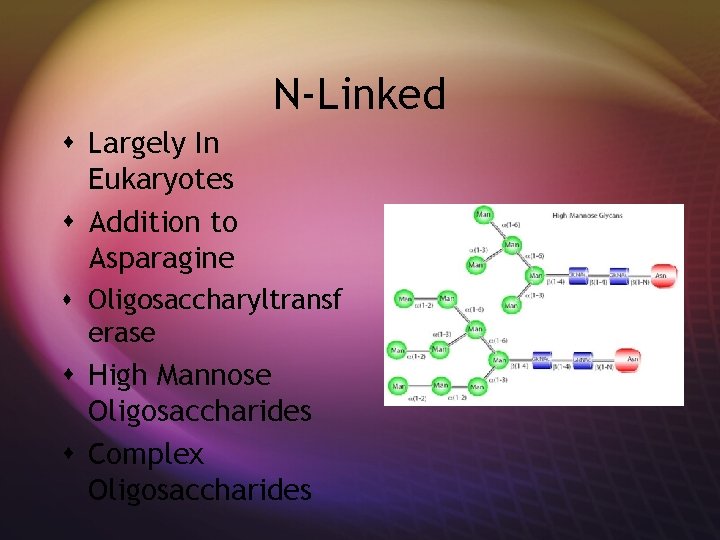
N-Linked s Largely In Eukaryotes s Addition to Asparagine s Oligosaccharyltransf erase s High Mannose Oligosaccharides s Complex Oligosaccharides
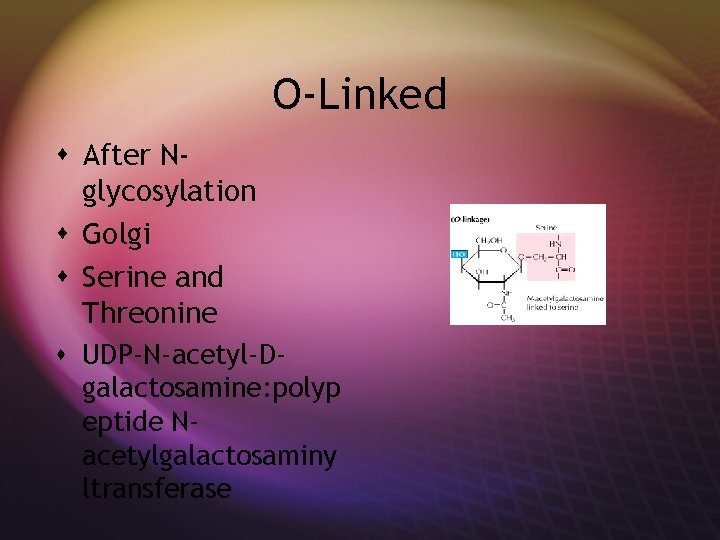
O-Linked s After Nglycosylation s Golgi s Serine and Threonine s UDP-N-acetyl-Dgalactosamine: polyp eptide Nacetylgalactosaminy ltransferase
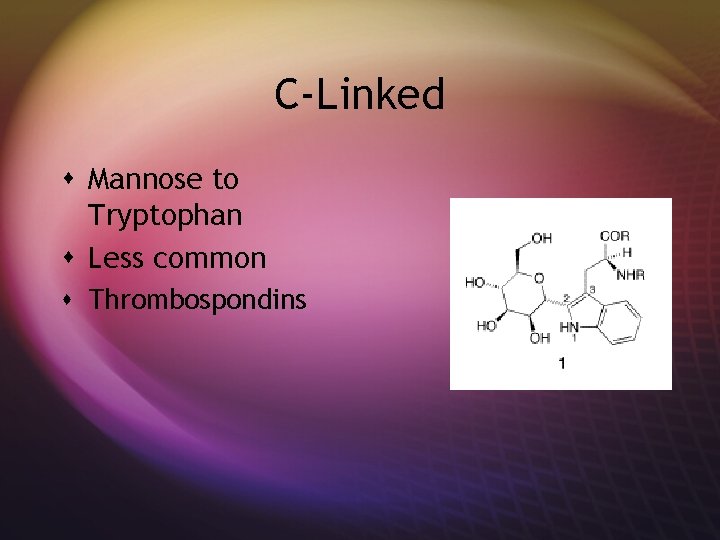
C-Linked s Mannose to Tryptophan s Less common s Thrombospondins
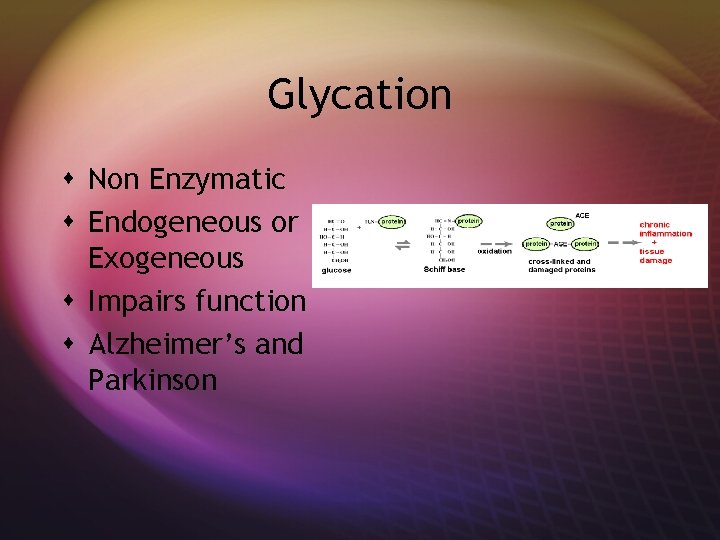
Glycation s Non Enzymatic s Endogeneous or Exogeneous s Impairs function s Alzheimer’s and Parkinson
Tyrosine Sulfation
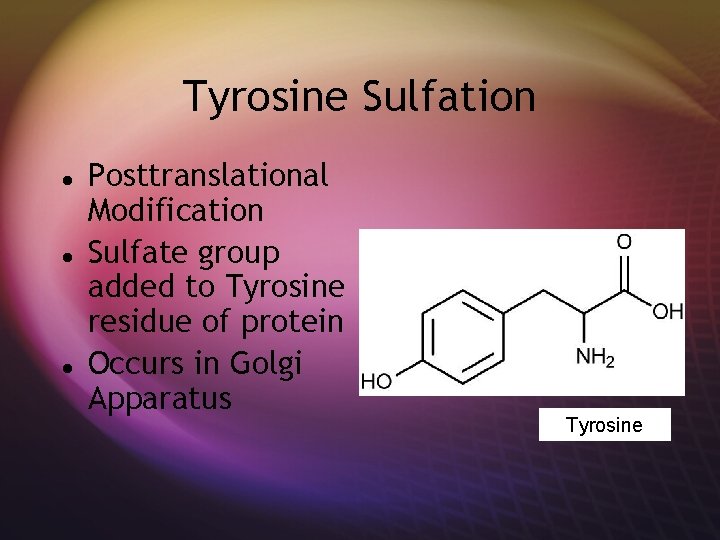
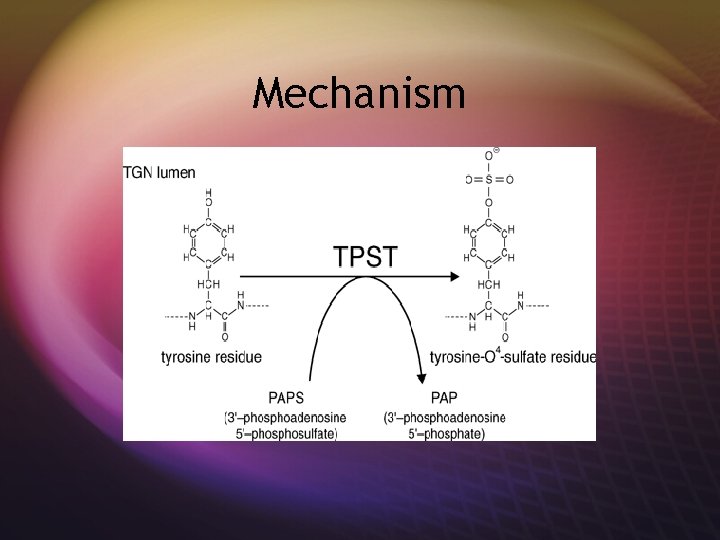
Tyrosine Sulfation Posttranslational Modification Sulfate group added to Tyrosine residue of protein Occurs in Golgi Apparatus Tyrosine
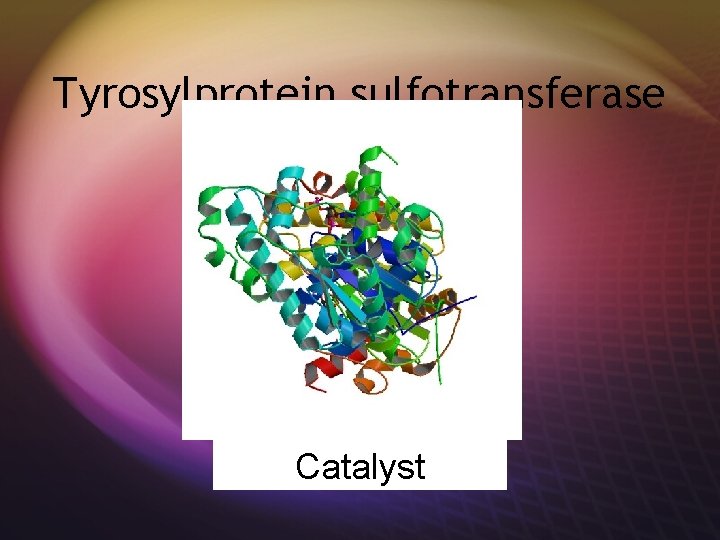
Tyrosylprotein sulfotransferase Catalyst
Mechanism
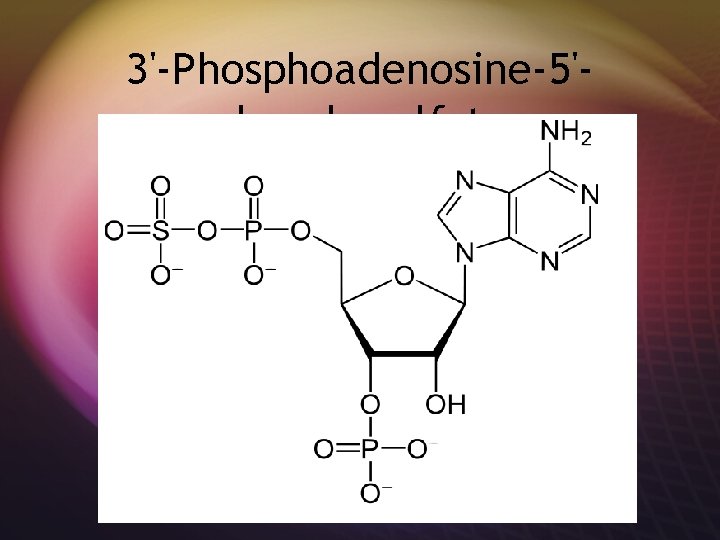
3'-Phosphoadenosine-5'phosulfate
Function Strengthens Protein-Protein Interactions h Examples: Serine Protease Inhibitors Adhesion Molecules Coagulation Factors
References s Alberts, Bruce. Molecular Biology of the Cell. New York: Garland Science, 2008. Print s "Glycosylation. " Uni. Prot, 20 July 2011. Web. 19 Nov. 2011. <http: //www. uniprot. org/manual/carb ohyd>. s Varki, Ajit. Essentials of Glycobiology. Cold Spring Harbor, NY: Cold Spring