
POST MORTEM CHANGES IN MUSCLE AND ITS CONVERSION






- Slides: 17
POST MORTEM CHANGES IN MUSCLE AND ITS CONVERSION INTO MEAT
Development of Rigor Mortis • In a resting muscle, ATP serves to keep the muscle in a relaxed state by preventing the formation of actomyosin bridges. • Rigor mortis occurs when the ATP level falls below the very low level (~ 5 mmol kg"1) required to maintain relaxation. • When this happens, the actin and myosin molecules of the thin and thick filaments combine irreversibly to form actomyosin and extensibility of the muscle is lost.
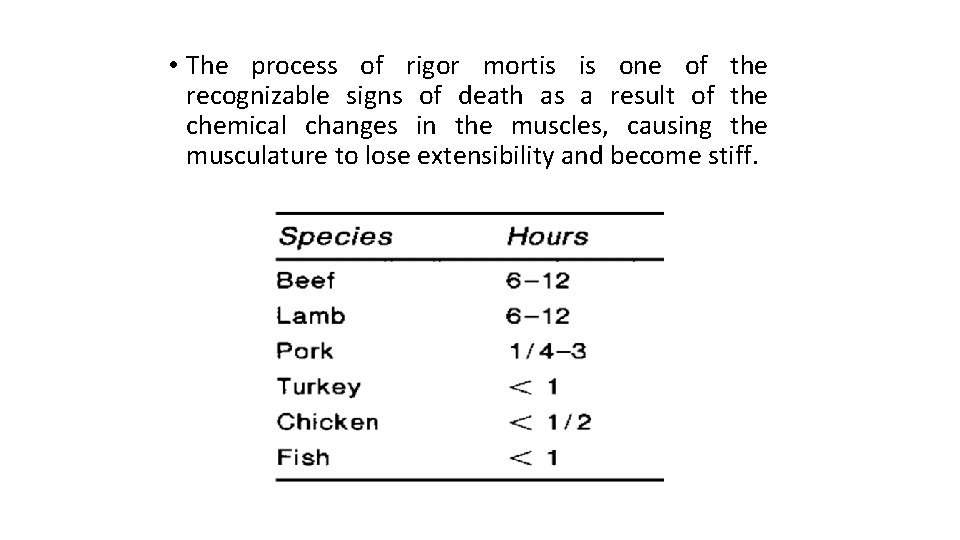
• The process of rigor mortis is one of the recognizable signs of death as a result of the chemical changes in the muscles, causing the musculature to lose extensibility and become stiff.
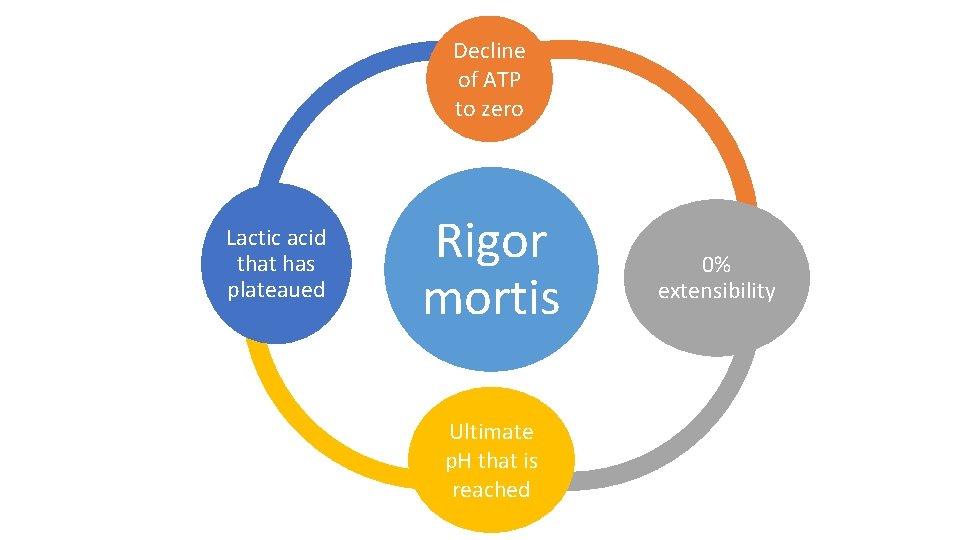
Decline of ATP to zero Lactic acid that has plateaued Rigor mortis Ultimate p. H that is reached 0% extensibility
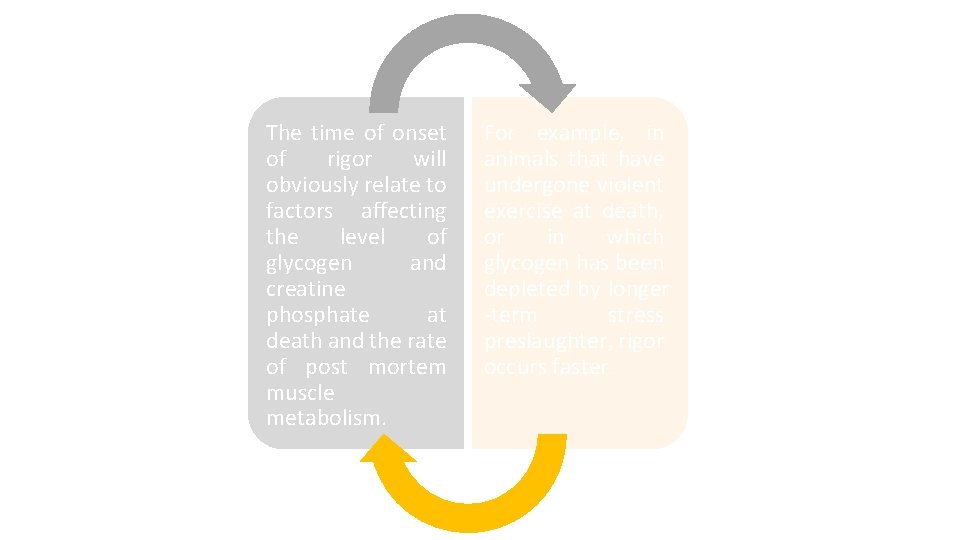
The time of onset of rigor will obviously relate to factors affecting the level of glycogen and creatine phosphate at death and the rate of post mortem muscle metabolism. For example, in animals that have undergone violent exercise at death, or in which glycogen has been depleted by longer -term stress preslaughter, rigor occurs faster.
• Rigor onset is determined only by the availability of ATP, not the p. H value of the muscle. • It is possible to have rigor in muscle in which the p. H is still high if the animal has been exhausted preslaughter.
The resolution of rigor and tenderization • After a variable period of time there is a progressive ‘resolution’ of rigor when the muscles soften. • Tenderization results from the activities of proteolytic enzymes present in the muscles. • There are two main sorts of enzyme involved, cathepsins and calpains, of which, at least in red meat species and poultry, the calpains are thought to be more important.
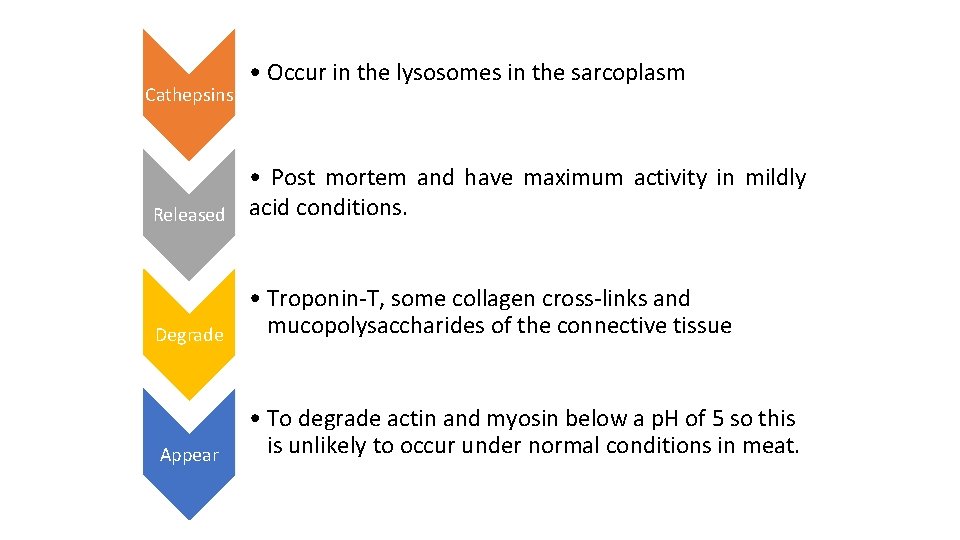
Cathepsins • Occur in the lysosomes in the sarcoplasm Released • Post mortem and have maximum activity in mildly acid conditions. Degrade • Troponin-T, some collagen cross-links and mucopolysaccharides of the connective tissue Appear • To degrade actin and myosin below a p. H of 5 so this is unlikely to occur under normal conditions in meat.
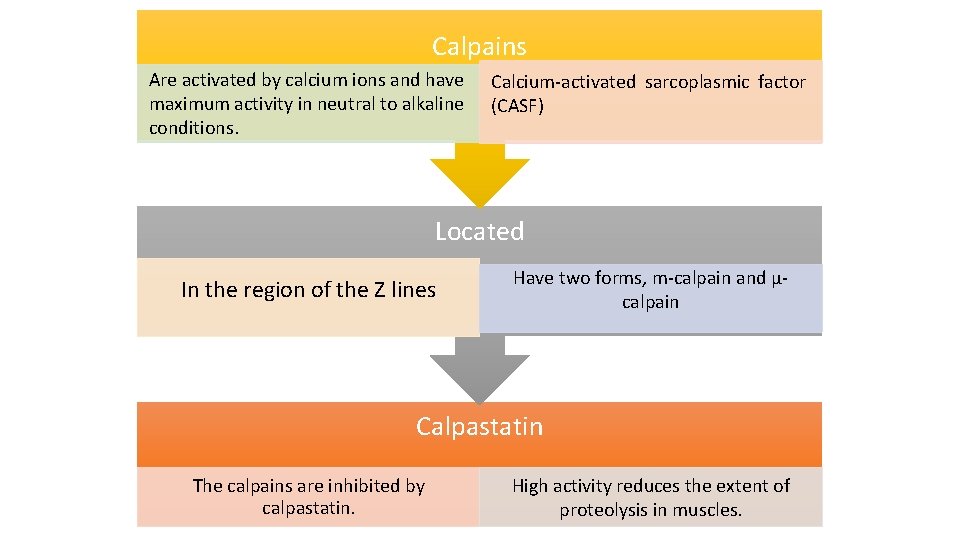
Calpains Are activated by calcium ions and have maximum activity in neutral to alkaline conditions. Calcium-activated sarcoplasmic factor (CASF) Located In the region of the Z lines Have two forms, m-calpain and μcalpain Calpastatin The calpains are inhibited by calpastatin. High activity reduces the extent of proteolysis in muscles.
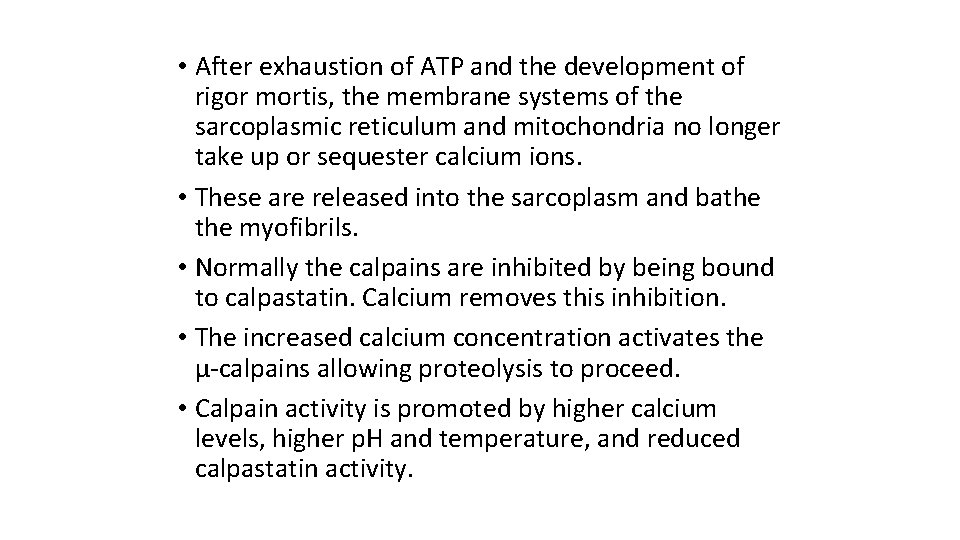
• After exhaustion of ATP and the development of rigor mortis, the membrane systems of the sarcoplasmic reticulum and mitochondria no longer take up or sequester calcium ions. • These are released into the sarcoplasm and bathe myofibrils. • Normally the calpains are inhibited by being bound to calpastatin. Calcium removes this inhibition. • The increased calcium concentration activates the μ-calpains allowing proteolysis to proceed. • Calpain activity is promoted by higher calcium levels, higher p. H and temperature, and reduced calpastatin activity.
Water Holding Capacity • WHC – the ability of meat to retain water during application of external forces such as cutting, heating, grinding, or pressing. • Isoelectric point of muscle - All charges equal not allowing any charge available to hold the bound and immobilized water.
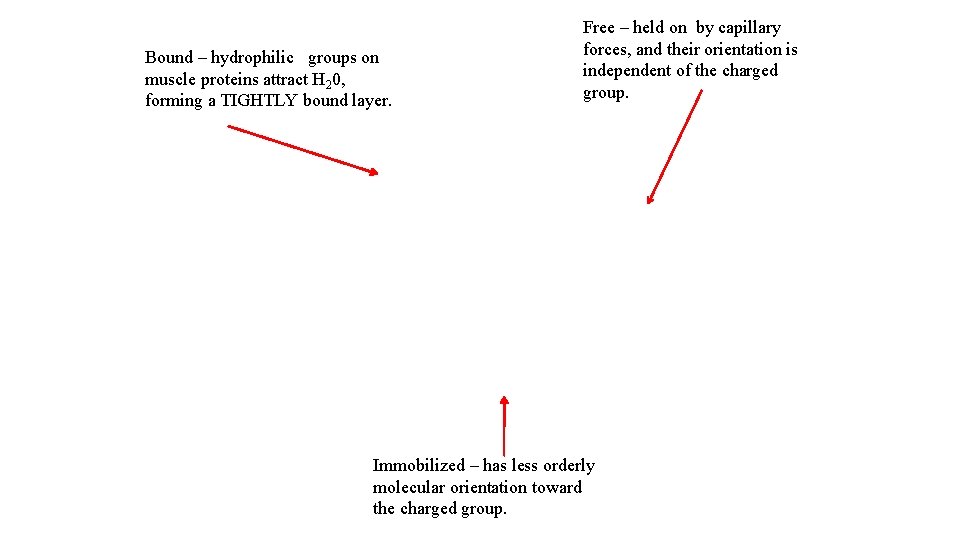
Bound – hydrophilic groups on muscle proteins attract H 20, forming a TIGHTLY bound layer. Free – held on by capillary forces, and their orientation is independent of the charged group. Immobilized – has less orderly molecular orientation toward the charged group.
• Postrigor muscle is about 75% water, with up to 87% of the volume of the muscle cell being myofibrils, which contain the majority of the water. • The decline in muscle p. H postharvest associated with the glycolysis and onset of rigor mortis results in a fall in p. H from about 7. 0 to about 5. 5, in a muscle of ‘normal’ quality.
• As the p. H drops, it comes closer to the isoelectric point of the muscle proteins (5. 0– 5. 1), resulting in a reduction in negative charge between the myofilaments, and these myofilaments can then approach each other more closely.
• As the myofilaments approach each other, with a consequent shrinkage in the diameter of the myofibril, less water is held in the myofibrillar structure and the water moves to the intracellular space, and subsequently to the extracellular space, and then is lost from the muscle structure as drip, with associated reduction in water-holding capacity