
POST FOSSA TUMORS DIAGNOSIS AND TREATMENT Introduction Primary

- Slides: 61
POST FOSSA TUMORS DIAGNOSIS AND TREATMENT
Introduction Primary brain tumor – 6 persons/100000/year Metastatic brain tumor – 6 persons/100000/year 1 in 15 primary brain tumors occur in children under 15 years In adults, the commonest tumors are gliomas, metastases and meniongiomas; most lie in the supratentorial compartment
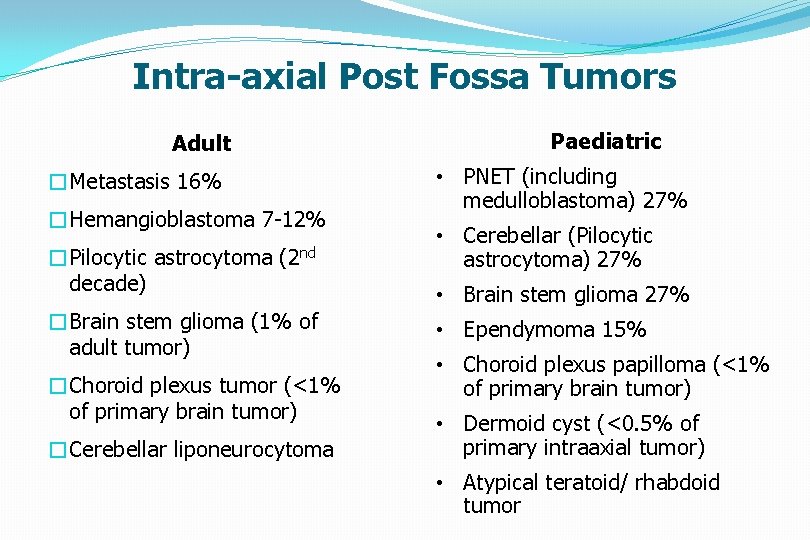
Intra-axial Post Fossa Tumors Adult �Metastasis 16% �Hemangioblastoma 7 -12% �Pilocytic astrocytoma (2 nd decade) �Brain stem glioma (1% of adult tumor) �Choroid plexus tumor (<1% of primary brain tumor) �Cerebellar liponeurocytoma Paediatric • PNET (including medulloblastoma) 27% • Cerebellar (Pilocytic astrocytoma) 27% • Brain stem glioma 27% • Ependymoma 15% • Choroid plexus papilloma (<1% of primary brain tumor) • Dermoid cyst (<0. 5% of primary intraaxial tumor) • Atypical teratoid/ rhabdoid tumor
Extra-axial Lesion �Vestibular schwannoma �Meningioma �Epidermoid �Metastases �Trigeminal neuroma �Facial nerve neuroma �Arachnoid cyst
Metastases �Cerebellum is a common site � 16% of cases of solitary brain mets �MC post fossa tumor in adults Primary �Lung – 44% �Breast – 10% �Kidney (renal cell) – 7% �GI – 6% �Melanoma – 3% �Undetermined – 10%
Pathology �Rounded solid partially cystic mass ± edema Age �Rare in children, most common in older adults (> 40 years) Location �Anywhere: grey white junction most common site Imaging �NECT: Iso / hyperdense; Ca++ rare in untreated metastases �CECT: Strong solid/ring enhancement �MR: Most hypointense on T 1, hyperintense on T 2 W 1, most enhance moderately intensely following contrast administration
Management �Mostly palliative �Median survival of patient 26 -32 weeks Medical �Corticosteroids �Anticonvulsants.
Surgical Management Solitary lesion Surgical excision of solitary lesion: �Primary disease quiescent or radioresistant �Lesion accessible, symptomatic or life threatening �For recurrent small cell lung carcinoma following XRT �Diagnosis unknown
Multiple Lesions �Worse prognosis than solitary lesion �Usually treated with XRT without surgery Situations where surgery is done: �One particular and accessible lesion symptomatic and/or life threatening �Multiple lesions that can all be completely removed Stereotactic Biopsy �Lesions not appropriate for surgery �Not candidates for surgical resection �To ascertain a diagnosis
Stereotactic Radiosurgery �No mass effect, no hydrocephalus �Advantage: No risk of hemorrhage, infection or mechanical spread of tumor cells, Can be used for 3 or fewer mets �Disadvantage: Histological proof not obtained, Cannot be used for lesion > 3 cm
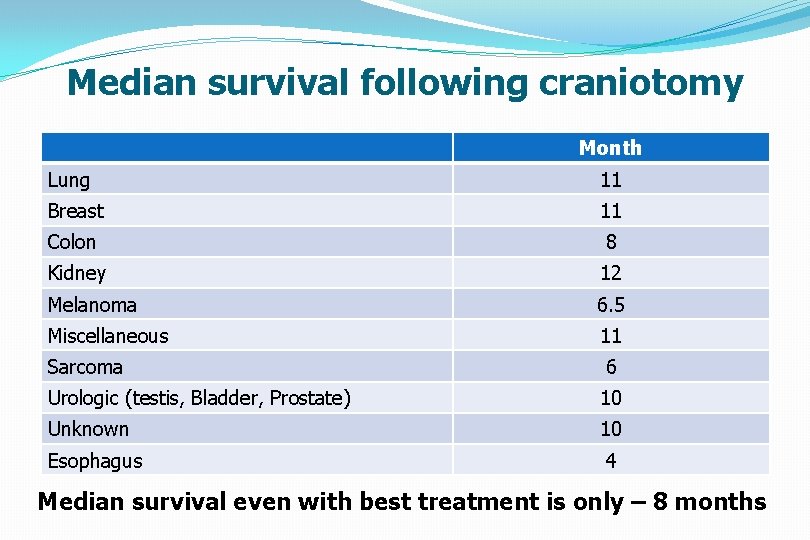
Median survival following craniotomy Month Lung 11 Breast 11 Colon 8 Kidney 12 Melanoma 6. 5 Miscellaneous 11 Sarcoma 6 Urologic (testis, Bladder, Prostate) 10 Unknown 10 Esophagus 4 Median survival even with best treatment is only – 8 months
Hemangioblastoma (HGB) �Most common primary intra-axial posterior fossa tumor in adults (7 -12% of post fossa tumors) �Highly vascular well circumscribed solid or cystic neoplasm of CNS or retina �May occur sporadically (4 th Decade) or as part of Von Hippel Lindau disease (3 rd decade) � 30% of patients with cerebellar HGB have VHL
Pathology � 60% cystic with nodule – 40% solid �Gross hemorrhage, calcification necrosis rare Age �Adults with peak during 40 to 60 years, rare in children Location � 80% to 85% cerebellum � 3% to 13% spinal cord � 2% to 3% Medulla Supratentorial lesions occur but are uncommon � 60% of patients with VHL have retinal lesions
Imaging �Vertebral Angiography: Vascular nodule with intense, prolonged stain ± avascular cyst �CT: Low density cyst with strongly enhancing mural nodule that abuts a pial surface �MR: Cyst slightly hyperintense to CSF on T 1 W 1; hyperintense to brain on T 2 W 1; mural nodule variable but enhances strongly Labs • Polycythemia • Catecholamine production from pheochromocytoma
Treatment �May be curative in cases of HGB, not in VHL �Preop embolisation reduces the vascularity �Cystic hemagloblastoma require removal of mural nodule. Stereotactic Radiosurgery �For asymptomatic HGB > 5 mm diameter if they are cystic or progressing in size during surveillance
Radiation Treatment �Effectiveness dubious �May be useful to reduce tumor size or to retard growth in patients who are not surgical candidates for multiple brainstem HGB Chemotherapy �Ongoing phase II trial with Sunitnib, an inhibitor of vascular endothelial growth factor and platelet derived growth factor
MEDULLOBLASTOMA Origin of cells (WHO- PNET) Static- external granular layer Origin from remnant of cells of the external granular layer of the cerebellum. Dynamic – neural progenitor cells Transformation of normal undifferentiated progenitor cells of superior medullary velum which migrate to the fourth ventricle
MEDULLOBLASTOMA Histology § Medulloblastoma (Grade 4) § Desmoplastic/nodular medulloblastoma § Medulloblastoma with extensive nodularity § Anaplastic medulloblastoma § Large cell medulloblastoma
MEDULLOBLASTOMA �Histology Cellular, small cells, scant cytoplasm, Homer-Wright rosettes Immuno histochemistry GFAP + EMA –
MEDULLOBLASTOMA CLINICAL FEATURES HYDROCEPHALUS : RAISED ICP � BEHAVIORAL CHANGE, LISTLESSNESS, IRRITABILITY, VOMITING, AND DECREASED SOCIAL INTERACTIONS. � HEADACHE � DOUBLE VISION. � HEAD TILT : TONSILLAR HERNIATION BELOW THE FORAMEN MAGNUM � CEREBELLAR � BRAIN SYMPTOMS STEM INVOLVEMENT � LEPTOMENINGEAL DISSEMINATION
MEDULLOBLASTOMA Examination • Increasing head circumference , full anterior fontanelle with widely split cranial sutures. • Papilledema 90% of patients • Diplopia and lateral gaze paresis • Fourth cranial nerve palsy ( should be considered in any patient with a head tilt ) • Nystagmus • Cerebellar signs ( ataxia > unilateral dysmetria )
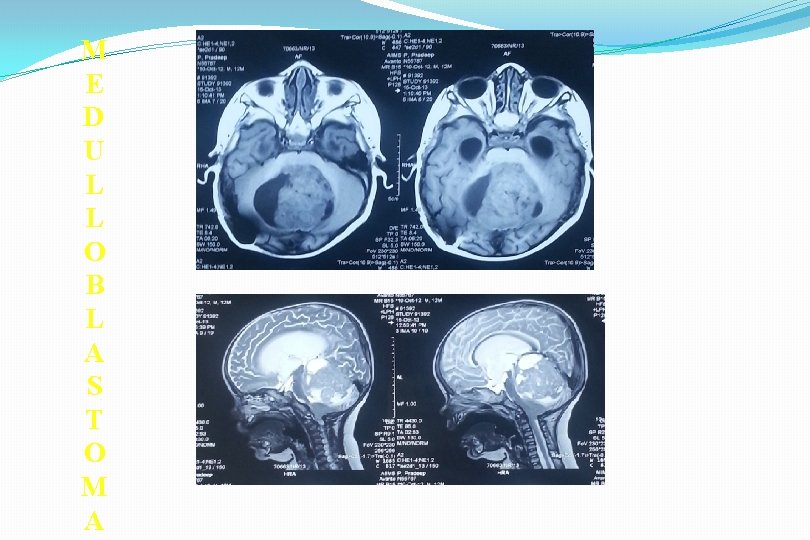
M E D U L L O B L A S T O M A
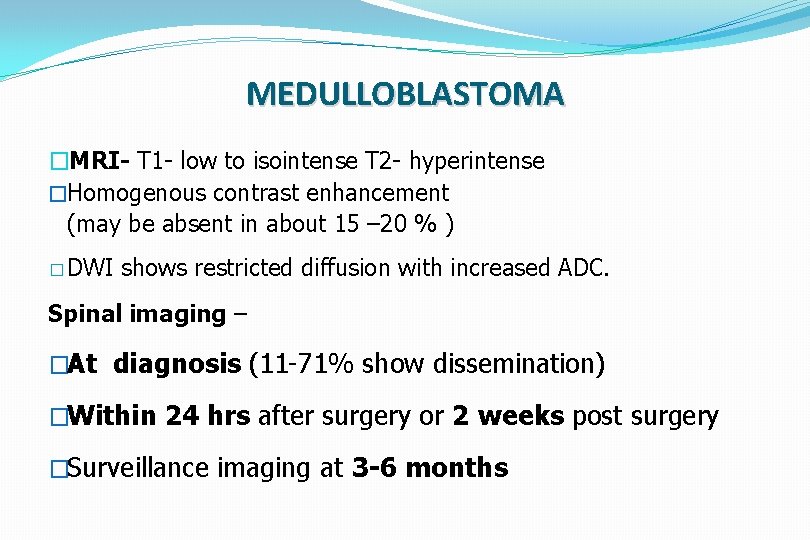
MEDULLOBLASTOMA �MRI- T 1 - low to isointense T 2 - hyperintense �Homogenous contrast enhancement (may be absent in about 15 – 20 % ) � DWI shows restricted diffusion with increased ADC. Spinal imaging – �At diagnosis (11 -71% show dissemination) �Within 24 hrs after surgery or 2 weeks post surgery �Surveillance imaging at 3 -6 months
MEDULLOBLASTOMA �Management Steroids CSF cytology- LP, EVD, Cisternamagna CSF diversion Definitive surgery Adjuvant therapy
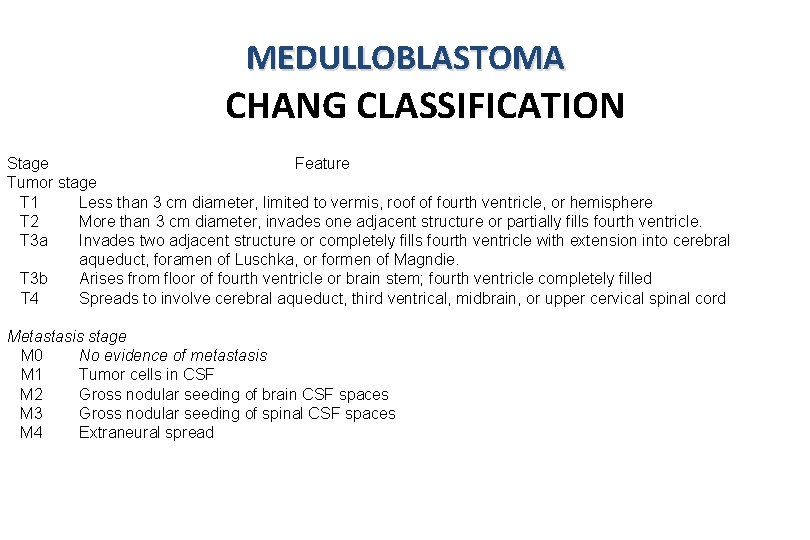
MEDULLOBLASTOMA CHANG CLASSIFICATION Stage Feature Tumor stage T 1 Less than 3 cm diameter, limited to vermis, roof of fourth ventricle, or hemisphere T 2 More than 3 cm diameter, invades one adjacent structure or partially fills fourth ventricle. T 3 a Invades two adjacent structure or completely fills fourth ventricle with extension into cerebral aqueduct, foramen of Luschka, or formen of Magndie. T 3 b Arises from floor of fourth ventricle or brain stem; fourth ventricle completely filled T 4 Spreads to involve cerebral aqueduct, third ventrical, midbrain, or upper cervical spinal cord Metastasis stage M 0 No evidence of metastasis M 1 Tumor cells in CSF M 2 Gross nodular seeding of brain CSF spaces M 3 Gross nodular seeding of spinal CSF spaces M 4 Extraneural spread
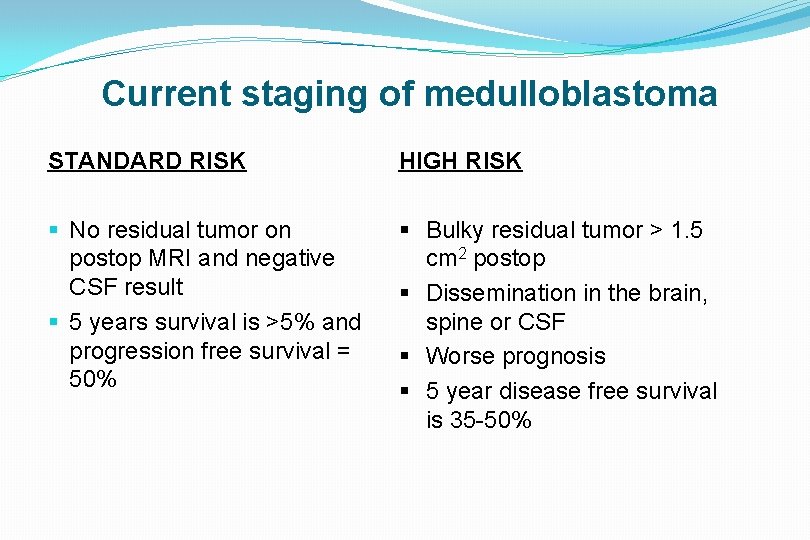
Current staging of medulloblastoma STANDARD RISK HIGH RISK § No residual tumor on postop MRI and negative CSF result § 5 years survival is >5% and progression free survival = 50% § Bulky residual tumor > 1. 5 cm 2 postop § Dissemination in the brain, spine or CSF § Worse prognosis § 5 year disease free survival is 35 -50%
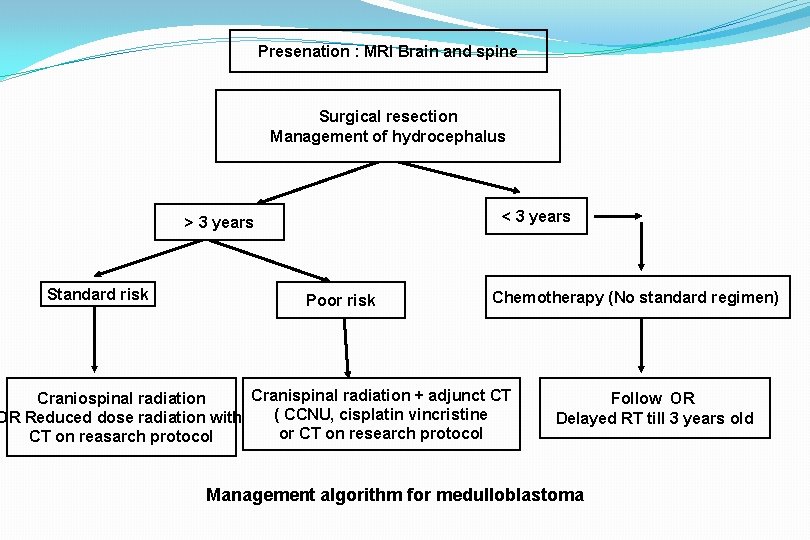
Presenation : MRI Brain and spine Surgical resection Management of hydrocephalus < 3 years > 3 years Standard risk Poor risk Chemotherapy (No standard regimen) Cranispinal radiation + adjunct CT Craniospinal radiation ( CCNU, cisplatin vincristine OR Reduced dose radiation with or CT on research protocol CT on reasarch protocol Follow OR Delayed RT till 3 years old Management algorithm for medulloblastoma
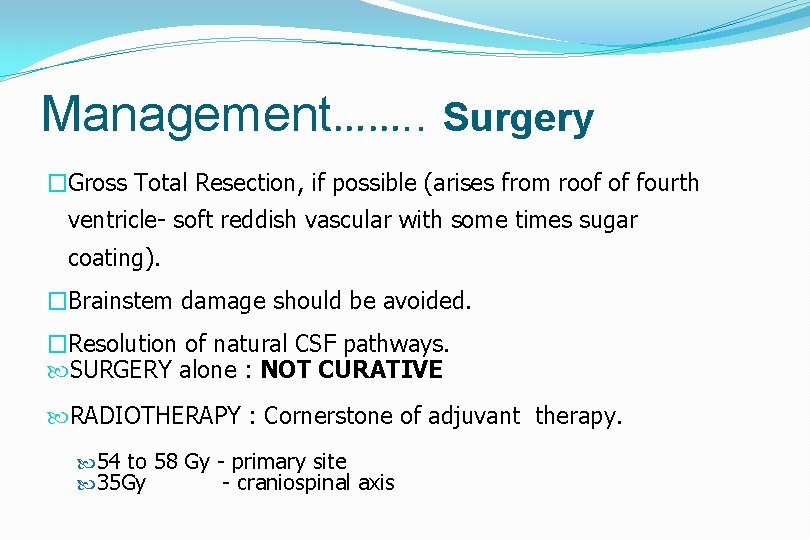
Management……. . Surgery �Gross Total Resection, if possible (arises from roof of fourth ventricle- soft reddish vascular with some times sugar coating). �Brainstem damage should be avoided. �Resolution of natural CSF pathways. SURGERY alone : NOT CURATIVE RADIOTHERAPY : Cornerstone of adjuvant therapy. 54 to 58 Gy - primary site 35 Gy - craniospinal axis
Management……. . Recurrent Medulloblastoma Chemotherapy : limited due to chemo resistance in those patients who have previously undergone CT Redosing with RT avoided due to radiation necrosis High-dose chemotherapy with autologous SCR or autologous BMR: subject of intense investigation Prognosis • 5 - year recurrence-free survival rates : 55% - 67%. • Most common site : PRIMARY TUMOR SITE
Ependymoma § 10% of brain tumors in children § Peak age - 0 -4 yrs § Male preponderance § Children 90% in cranium § Adults in spinal
EPENDYMOMA § MYXOPAPILLARY (WHO Grade 1) § SUBEPENDYMOMA (WHO Grade 1) § Ependymoma (WHO Grade 2) § Cellular § Papillary § Clear cell § Tanycytic § Anaplastic ependymoma (WHO Grade 3)
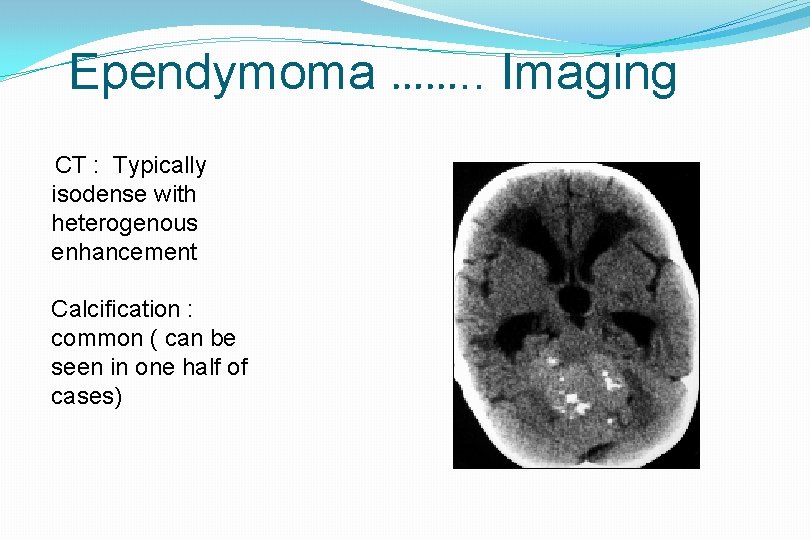
Ependymoma ……. . Imaging CT : Typically isodense with heterogenous enhancement Calcification : common ( can be seen in one half of cases)
Ependymoma…. . MRI • On MRI, heterogeneous secondary to necrosis, hemorrhage and calcification. • Heterogenous contrast enhancement • Plasticity • Extension to the cerebellopontine angle is characteristic of ependymomas
Ependymoma…. . § INTRA OP- Tumor arises from the floor and is greyish lobulated gritty and firm § Staging: No conventional staging criteria. § Postoperative MRI is recommended within 48 hours
Ependymoma…Role of Radiotherapy Post-operative radiation recommended for patients older than 3 years. Stereotactic radiosurgery : Therapeutic option in patients with residual, unresectable or recurrent tumor Role of Chemotherapy § May be useful < 3 years : Delay cranial radiation § Childhood intracranial ependymomas : in general chemo-resistant
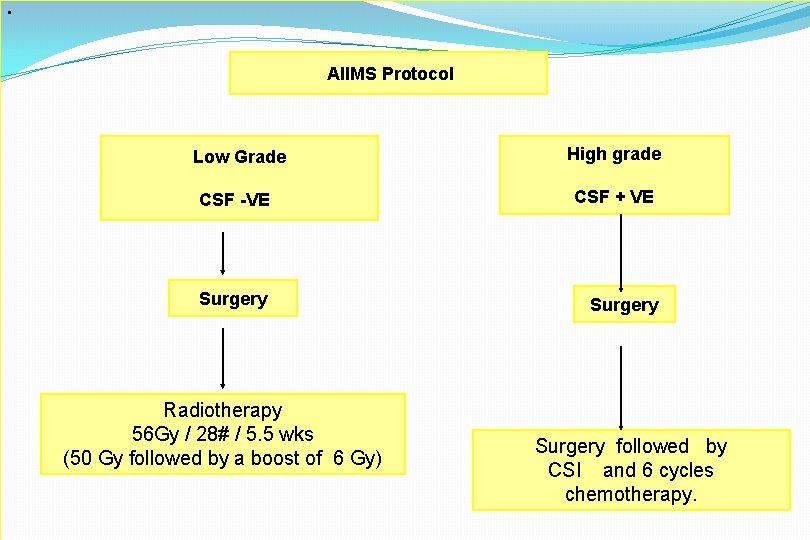
• AIIMS Protocol Low Grade High grade CSF -VE CSF + VE Surgery Radiotherapy 56 Gy / 28# / 5. 5 wks (50 Gy followed by a boost of 6 Gy) Surgery followed by CSI and 6 cycles chemotherapy.
Cerebellar (Pilocytic astrocytoma) � 10 -20% of pediatric brain tumour �Pilocytic astrocytoma is the most common pediatric central nervous system glial neoplasm �Benign : extremely high survival rate 94% at 10 years �Most patients present in the first 2 decades
Pilocytic astrocytoma…. MRI Four predominant imaging patterns : Mass with a nonenhancing cyst and an intensely enhancing mural nodule (21%) Mass with an enhancing cyst wall and an intensely enhancing mural nodule (46%) Necrotic mass with a central nonenhancing zone (16%), and Predominantly solid mass with minimal to no cyst like component (17%)
Pilocytic astrocytoma…. �Surgical resection of cerebellar pilocytic astrocytomas is considered the treatment of choice �Resection of mural nodule – key surgical objective �Resection of cyst wall – controversial ? ? �Radiation therapy is strictly avoided, given its risk of causing significant morbidity in children younger than 5 years of age
Brainstem gliomas (BSG) § 75% in children, 25 % in adults § Median-6. 5 years § 1 % of pediatric brain tumors and 25 % of pediatric post fossa tumors § 75% diffuse variety § Either very benign or malignant
HALLMARKS OF BSG § Bilateral long tract signs § Bilateral multiple contiguous cranial nerve palsies § Horner’s syndrome § Inter Nuclear Ophthalmoplegia
BSG……Classification �The most recent classification system by Choux et al based on both CT and MRI imaging �Type III �Type IV – – Diffuse Intrinsic, focal Exophytic, focal Cervicomedullary � Pediatric Neurosurgery. New York, Churchill Livingstone, 2000, pp 471– 491.
BSG…… �Type I : Diffuse brainstem gliomas § 75% of all BSG § Hypointense on CT § No significant enhancement on MRI. § Characterized by diffuse infiltration and § swelling of the brainstem. § Typically, are malignant fibrillary § astrocytomas (WHO grade III or IV).
BSG…… �Type II : Focal intrinsic tumors ( cystic/solid ) �Sharply demarcated from surrounding tissue on MRI and are associated with less brainstem edema. �Majority of these lesions are low grade gliomas (WHO I or II). �Contrast enhancement : variable
BSG…… �Type III : Exophytic tumors that arise from the subependymal glial tissue of the fourth ventricle and mostly grow dorsally or laterally. �MRI characteristics similar to type II lesions, and histologically, these lesions are usually low-grade lesions (WHO I or II) like type II lesions.
BSG…… �Type IV lesions are cervicomedullary brainstem gliomas. �Imaging, histology and behavior : similar to intramedullary spinal cord gliomas. �Majority are low-grade, non-infiltrative tumors.
BSG…. . Management �Biopsy : only for indeterminate lesions �Stereotactic biopsy: can provide diagnostic tissue. �Stereotactic radiosurgery �Not without risk: Damage to the cranial nerves and long tracts Tissue heterogeneity
MANAGEMENT �Focal cystic tumors- SX+RT �Focal solid tumors- SX �Dorsal Exophytic tumors- SX + Focal RT �Dorsal Exophytic malignant tumor- RT+CT �Diffuse infiltrating – RT + steroids
Choroid Plexus Tumors �Neoplasms of the choroid plexus. �Lateral ventricles : most common location in children. � 4 th ventricle : most common location in adults. � 4 -6% of the intracranial neoplasms in children younger than 2 years. �Choroid plexus tumors �Choroid plexus papilloma (WHO Grade 1) �Atypical choroid plexus papilloma (WHO Grade 2) �Choroid plexus carcinoma (WHO Grade 3)
Choroid Plexus TUMORS…. . Clinical �Hydrocephalus and raised ICT �The tumor itself can cause mass effect. �Surgery may not resolve HCP (derangement of reabsorption mechanisms or blockage at other sites in the ventricular system)
Choroid Plexus Papilloma…Management �Treatment of hydrocephalus must be considered both before and after any surgical procedures. �An acute increase in ICP : V P Shunt. �Hydrocephalus often resolves following removal of the mass.
Choroid Plexus Papilloma…Management �Total surgical resection is the goal. �Complete removal: generally curative in papilloma �Choroid plexus carcinoma -total resection leads to the best possible outcome. �Adjuvant CT and RT have been demonstrated to increase survival
Dermoid cyst § Congenital ectodermal inclusion cysts. § Extremely rare < 0. 5% of primary intracranial tumors § Midline sellar, parasellar, or frontonasal regions : most common sites. § Posterior fossa ( vermis or within the 4 th ventricle) § Growth can lead to rupture of the cyst contents, causing a chemical meningitis that may lead to vasospasm, infarction, and even death
Dermoid cyst § Well - defined, lobulated, “pearly” mass of variable size. § Characteristically - cyst contains thick, disagreeable, foul smelling, yellow material due to the secretion of sebaceous glands and desquamated epithelium § The cysts may also contain hair and/or teeth
Salient steps in surgery �Midline incision �V shaped fascia opening �Craniotomy �Dura opened in y shaped �Arachnoid opened �Cottonoid placed over cisterna magna and floor of fourth ventricle
Cerebellar tumors �Hemispheric tumor approached via thinnest portion through horizontal incision �Midline tumor via vermis splitting or Telovelar approach
th IV ventricular tumors § Telovelar approach or vermian splitting § Dorsal portion debulked, shave off the floor § Aqueduct , roof floor , lateral recess and obex inspection
Brainstem tumor Dorsal exophytic tumor. Identify superiorly and inferiorly normal brain stem Start superior pole till iv ventricular floor , tumor slowly separated till it is completely removed. Focal brainstem tumorsafe passage through brainstem using EMG and tumor bulking from core to periphery.
Complications § § § Pseudomeningocoele Cranial nerve paresis Mutism Subdural hygroma Aseptic meningitis Cerebellar cognitive affect syndrome
CONCLUSION �Pilocytic astrocytoma bears the best outcome. �Management of hydrocephalus still remains controversial. �Though surgery and RT remains the treatment of choice for medulloblastoma; optimal craniospinal radiation dose remains debatable. �Outcome for brainstem gliomas remains dismal.
Thank You