
Post Digital And New Aesthetics James Bridle and
Post Digital And New Aesthetics James Bridle and Glitch aesthetic
Post Digital o Post digital is a term that came into use in the 21 st century o It is used to describe our rapidly changed and changing relationships with digital technologies and art forms o It’s the present day opportunity to explore the consequences of the digital and computer age o Post digital is more than just a description for a contemporary culture trend, but it describes a media aesthetics which opposes such digital high-tech cleanness o Post digital art is a new media art made by using glitches, circuit bending and databending o Artists such as Mark Lecky, Daniel Arsham and Alice Anderson have all produced work with a collaborative digital/physical relationship
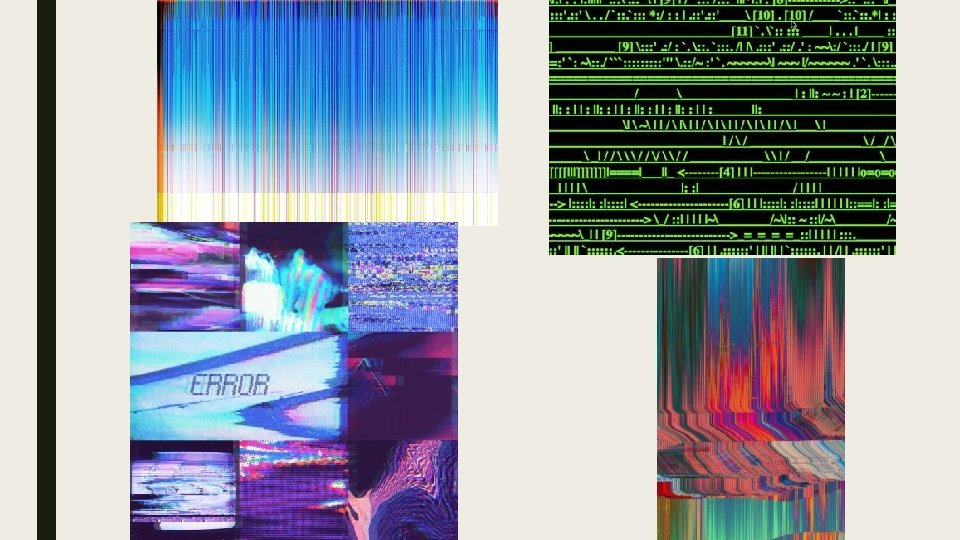
The Glitch Aesthetic o A glitch is a short-lived fault in a system, such as a momentary fault that corrects itself, making it difficult to troubleshoot o Glitch art typically means visual glitches, either in a still or moving image. It is the practice of using digital or analog errors for aesthetic purposes by either corrupting digital data or physically manipulating electronic devices o In a technical sense, a glitch is the unexpected result of a malfunction in video games, images, audio and other digital artefacts o The term glitch came to be associated with music in the mid 90 s to describe a genre of electronica o Glitch aesthetics is the visualization or making visible of errors and a way of organizing perception that emphasizes the artificiality of representation o The aesthetics of glitch makes the functionality and dysfunctionality of software appear
James Bridle o Born in 1980 in London but now lives in Athens, Greece o Artist, writer, journalist, publisher and technologist and has a master’s Degree in Computer Science from University College, London o Bridle created the New aesthetic o He has written for Wired, Icon, Domus, Cabinet and many other publications o He lectures regularly on radios, at conferences, universities and other events, including the Global Art Forum and TED o Bridle was named as one of the 1000 most influential people in London in 2007 and one of the most influential people in Europe by WIRED Magazine in 2015
The New Aesthetic The new aesthetic is an ongoing research project by James Bridle. It is a term, used to refer to the increasing appearance of the visual language of digital technology and the internet in the physical world. New Aesthetic is a collaborative attempt to draw a circle around several species of aesthetic activity. Central to the New Aesthetic is a sense that we’re learning to “wave at machines”—and that perhaps in their glitchy, buzzy, algorithmic ways, they’re beginning to wave back in earnest.
“Since May 2011 I have been collecting material which points towards new ways of seeing the world, an echo of society, technology, politics and people that coproduce them. The New Aesthetic is not a movement, it is not a thing which can be done. It is a series of artefacts of the heterogeneous network, which recognises differences, the gaps in our distant but overlapping realities ” One of the core themes of the New Aesthetic has been our collaboration with technology, whether that’s bots, digital cameras or satellites, and a useful visual shorthand for that collaboration has been glitchy and pixelated imagery, a way of seeing that seems to reveal a blurring between “the real” and “the digital”, the physical and the virtual, the human and the machine.
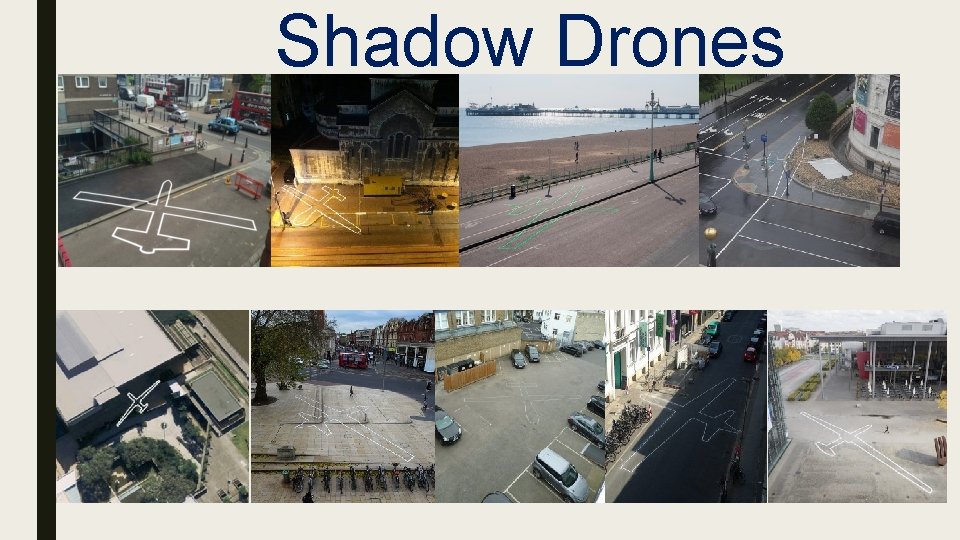
Shadow Drones
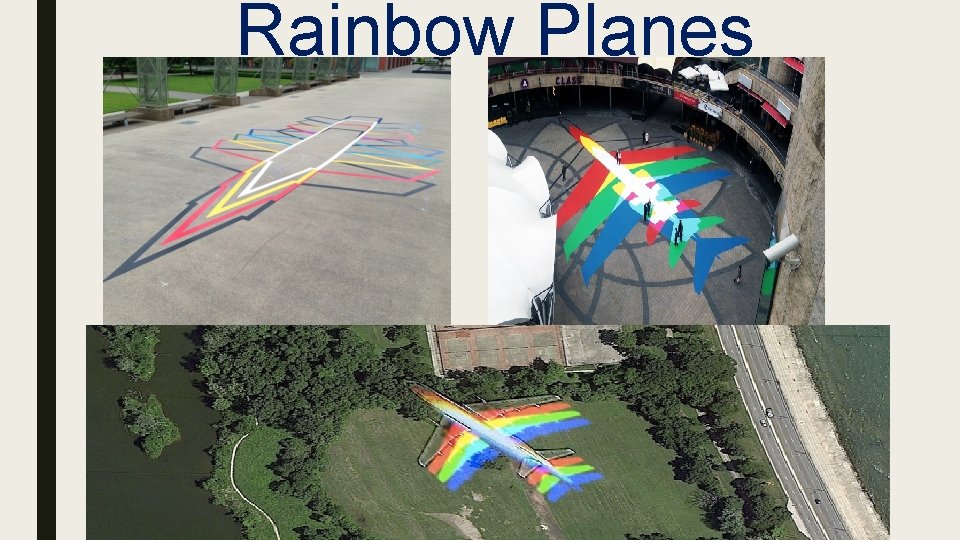
Rainbow Planes
Bibliography ■ https: //exposingtheinvisible. org/films/group/james-bridle/ ■ http: //booktwo. org/notebook/rainbow-plane/ ■ http: //www. aprja. net/what-is-post-digital/ ■ https: //www. artsy. net/gene/glitch-aesthetic
- Slides: 10